
2027 Can You Be a Teacher with an Associate's Degree?

Co-Founder and Chief Data Scientist
If you have an associate’s degree and want to teach, the main question is not whether you can work in education—it is which teaching roles you can legally qualify for and whether those roles match your long-term goals. An associate’s degree can open doors in preschool, childcare, paraprofessional support, tutoring, substitute teaching in some areas, and youth programs. It usually does not qualify you to become a fully licensed K–12 public school teacher.
This guide explains what a teacher with an associate’s degree can do for 2027, where the degree is useful, where it falls short, and how to turn it into a pathway toward certification or higher-paying education roles. It also covers state certification rules, early childhood education options, salary limits, transfer planning, professional development, and common mistakes to avoid.
Quick Answer: Can You Teach With an Associate’s Degree?
Yes, but usually not as a fully licensed K–12 teacher in a public school. With an associate’s degree, you may qualify for roles such as preschool teacher, childcare educator, teaching assistant, paraprofessional, substitute teacher in some states, instructional aide, or youth program instructor. For most elementary, middle, and high school teaching licenses, states require a bachelor’s degree, an approved teacher preparation program, student teaching, and required certification exams.
Key Things You Should Know About Becoming a Teacher With an Associate’s Degree
- An associate’s degree can help you enter education through preschool, daycare, paraprofessional, and classroom support roles, but it generally does not meet full K–12 public school licensure requirements.
- Most states require a bachelor’s degree and state-approved teacher preparation for certified elementary, middle, or high school teaching positions.
- Entry-level education roles available with an associate’s degree often pay less than licensed teaching jobs, with preschool teacher salaries typically ranging from $30,000 to $40,000.
- In 2023, about 42% of preschool teachers in the U.S. had an associate’s degree or less, showing that early childhood education remains one of the most realistic teaching-related paths for associate degree holders.
- The best long-term strategy is often to use the associate’s degree as a transfer foundation toward a bachelor’s degree in education, special education, early childhood education, or a subject-specific teaching field.
- Can you become a teacher with just an associate's degree for 2027?
- What teaching jobs can you get with an associate's degree?
- How do state certification rules affect your ability to teach with an associate's degree?
- How do you transition from an associate’s degree to a bachelor’s degree in teaching?
- What are the pros and cons of starting a teaching career with an associate’s degree?
- Can you teach in early childhood education with an associate's degree?
- What alternative pathways can help you teach with an associate's degree?
- How does teaching with an associate degree affect your salary and benefits?
- Can volunteer experience help you get hired in teaching?
- What professional development opportunities can boost your teaching credentials?
- What are long-term career options if you start teaching with an associate’s degree?
- Can advanced degrees accelerate your teaching career?
- How can you finance your advanced teaching degree?
- Can interdisciplinary studies enhance your teaching effectiveness?
- How can you assess the accreditation and quality of advanced teaching programs? Interdisciplinary study options Financing advanced teaching credentials Advanced degree pathways Long-term education careers
Can you become a teacher with just an associate's degree for 2027?
An associate’s degree can help you begin working in classrooms, but it is usually not enough for a standard K–12 teaching license. In most states, public school teachers need a bachelor’s degree, completion of a teacher preparation program, supervised student teaching, background clearance, and passing scores on required certification exams.
That does not mean the degree has no value. It can qualify you for several education-related jobs and can reduce the time and cost of earning a bachelor’s degree later if your credits transfer. If your long-term goal is a specialized school role, such as school librarian or media specialist, you may eventually need graduate-level preparation; one option to compare later is a master’s in library science online program.
The most realistic opportunities for associate degree holders are roles that support instruction rather than carry full responsibility for a K–12 classroom.
- Preschool teacher or early childhood educator: Many private preschools, childcare centers, and early learning programs consider candidates with an associate’s degree, especially when the degree is in early childhood education.
- Teaching assistant or paraprofessional: These roles involve supporting licensed teachers, working with small groups, helping students complete assignments, and assisting with classroom routines.
- Daycare or childcare teacher: Childcare centers often hire associate degree holders to plan age-appropriate activities, supervise children, and support early development.
- Substitute teacher in some states or districts: Requirements vary widely, but some districts allow substitute teaching with an associate’s degree plus background checks or short training.
- Alternative or provisional pathways: Some states, private schools, or charter schools may offer limited pathways into classroom work while candidates continue their education, but these options are not universal.
| Goal | Is an associate’s degree usually enough? | What you may need next |
| Work in preschool or childcare | Often yes, depending on employer and state rules | Early childhood coursework, CPR/first aid, background check, or childcare credentials |
| Become a K–12 public school teacher | Usually no | Bachelor’s degree, teacher preparation, student teaching, exams, and state certification |
| Work as a paraprofessional | Often yes | District requirements, possible assessment, and background clearance |
| Substitute teach | Sometimes | State or district approval, background check, training, and possible permit |
| Advance into school leadership or specialized roles | No | Bachelor’s degree, certification, experience, and often a graduate degree |
If you want a permanent certified teaching career, treat the associate’s degree as a starting point—not the final credential.
What teaching jobs can you get with an associate's degree?
With an associate’s degree, you can qualify for many classroom-adjacent and early education roles. These jobs let you work directly with students, build practical experience, and decide whether a longer teaching pathway is worth the investment.
Common options for 2027 include:
- Preschool teacher: Teach basic language, social, motor, and pre-academic skills to young children in preschool or early learning settings.
- Daycare teacher or childcare worker: Supervise infants, toddlers, or preschool-age children while leading play-based learning, routines, and safety practices.
- Teacher assistant: Support a licensed teacher by preparing materials, helping students complete assignments, monitoring behavior, and working with small groups.
- Special education instructional aide: Assist students with disabilities by helping implement classroom accommodations, behavior plans, and daily learning activities under teacher supervision.
- Library or media aide: Help students find books and learning resources, organize materials, and support school media center operations.
- After-school, camp, or youth program instructor: Lead educational, enrichment, recreational, or homework-support activities outside the traditional school day.
- Tutor or learning support aide: Provide targeted help in reading, math, study skills, or homework support, depending on your background and employer requirements.
| Role | Typical setting | Best fit for | Main limitation |
| Preschool teacher | Private preschool, childcare center, Head Start, early learning center | People interested in early childhood development | Pay and advancement may be limited without higher credentials |
| Teaching assistant | Public or private K–12 school | Future teachers who want classroom exposure | You support instruction but do not usually lead the classroom independently |
| Special education aide | K–12 classrooms, resource rooms, support programs | People interested in disability support or special education | Can be demanding and may require additional training |
| Substitute teacher | Public, private, or charter schools | Flexible workers who want broad classroom experience | Eligibility varies by state and district |
| Youth program instructor | Camps, nonprofits, after-school programs | People who enjoy informal education settings | May be seasonal or part-time |
These jobs are valuable if you want to test the education field before committing to a bachelor’s degree. They are less ideal if you need the salary, benefits, and job security typically associated with full teacher certification.
How do state certification rules affect your ability to teach with an associate's degree?
State rules determine whether your associate’s degree is enough for a specific role. Teaching is regulated differently across states, and even districts within the same state may have different hiring standards for paraprofessionals, substitutes, and early childhood educators.
For most public K–12 teaching jobs, the baseline requirement is a bachelor’s degree plus teacher preparation. An associate’s degree alone generally does not satisfy full certification requirements. The exceptions are usually support roles or early childhood positions that do not require a standard K–12 license.
Before applying, check three levels of requirements: your state education agency, the district or employer, and the specific program type. A private childcare center may accept your associate’s degree, while a public school pre-K program may require additional credentials.
- Paraprofessional rules: Many districts hire candidates with an associate’s degree, but some require exams, specific credit hours, or training tied to federal or state standards.
- Substitute teaching rules: Some states or districts allow associate degree holders to substitute, while others require a bachelor’s degree or a substitute permit.
- Preschool and childcare rules: Early childhood education requirements vary by setting. An associate’s degree in early childhood education may be enough in many private programs, but public pre-K or Head Start-related roles may have additional expectations.
- Private and charter school flexibility: Some nontraditional schools have more hiring flexibility, but that does not always lead to state certification.
- Specialized education support: If you are interested in behavior support, autism services, or special education-related roles, you may later compare online BCBA programs as part of a longer credential pathway.
| Question to ask | Why it matters |
| Does this role require state teacher certification? | If yes, an associate’s degree alone is unlikely to be enough. |
| Is the position in a public school, private school, childcare center, or charter school? | Different settings often follow different hiring and licensing rules. |
| Will this job help me meet future teacher preparation requirements? | Some classroom experience is useful, but it may not replace student teaching or certification coursework. |
| Are my credits transferable to a bachelor’s program? | Transferability affects how much time and money you save later. |
| Does the role include benefits, paid training, or tuition support? | Entry-level education jobs vary widely in compensation and advancement support. |
The safest approach is to verify requirements directly with your state education agency and the employer before enrolling in additional coursework or accepting a role.
How do you transition from an associate’s degree to a bachelor’s degree in teaching?
The most direct route from an associate’s degree to a licensed teaching career is transferring into a bachelor’s program that includes state-approved teacher preparation. Planning the transfer carefully matters because not all credits count toward education majors, certification prerequisites, or student teaching eligibility.
Use this step-by-step process:
- Choose your target teaching area. Decide whether you want early childhood, elementary education, special education, secondary education, or a specific subject such as math, science, English, or social studies.
- Confirm your state’s licensure requirements. Review the certification rules for the state where you plan to teach, not just the state where your college is located.
- Check accreditation and program approval. Make sure the bachelor’s program is recognized for teacher preparation in your state.
- Request a transfer credit evaluation. Ask the four-year school which associate degree courses will apply to your major, general education requirements, and certification pathway.
- Look for articulation agreements. Community colleges often have transfer pathways with universities that reduce credit loss.
- Ask about field experience and student teaching. Teacher preparation programs typically require supervised classroom placements.
- Compare total cost, not just tuition. Include fees, books, transportation, technology, unpaid student teaching time, and potential lost wages. If you need a cost benchmark, review current information on the average cost of college.
- Apply for financial aid early. Complete aid applications, search for educator scholarships, and ask employers about tuition reimbursement.
Some students later combine education with another field or pursue graduate study. If you are planning far beyond initial licensure, you can compare options such as the best online dual master’s degree programs, but those are usually better suited to experienced professionals or students who already know their advanced career direction.
| Transfer decision | Better choice | Risk to avoid |
| Selecting a bachelor’s program | Choose a state-approved teacher preparation program | Enrolling in a general education degree that does not lead to certification |
| Using associate credits | Get a written transfer evaluation before enrolling | Assuming every credit will count toward the major |
| Choosing online study | Confirm field placement and licensure alignment in your state | Assuming an online program automatically meets local certification rules |
| Budgeting | Compare total cost and available aid | Looking only at advertised tuition |
| Career planning | Match grade level and subject area to licensure requirements | Changing majors late and adding extra semesters |
What are the pros and cons of starting a teaching career with an associate’s degree?
Starting in education with an associate’s degree can be smart if you want classroom experience, lower upfront college costs, or a faster entry into the workforce. It can also be limiting if your goal is certified K–12 teaching, higher pay, or advancement into leadership.
Pros
- You can start sooner. Associate degree programs are shorter than bachelor’s programs, so you may be able to work in education earlier.
- You can test the profession before committing. Classroom support, childcare, and preschool roles help you see whether you enjoy working with students every day.
- You may reduce bachelor’s degree costs later. If your credits transfer well, the associate’s degree can lower the number of credits you need at a four-year school.
- You build relevant experience. Employers and teacher preparation programs often value hands-on work with children, even when it does not replace formal certification.
- You may qualify for employer support. Some childcare centers, districts, or education employers offer training support or tuition benefits, though availability varies.
Cons
- You will face licensure limits. Most public K–12 teaching positions require a bachelor’s degree and state certification.
- Your pay ceiling may be lower. Roles open to associate degree holders often pay less than certified teaching positions. Other education-related fields can have different salary patterns; for comparison, review career data connected to library science salary expectations if you are considering school library work later.
- Advancement may require more education. Lead teacher, curriculum, administrative, and specialist positions often require at least a bachelor’s degree and sometimes a graduate degree.
- Benefits can vary widely. Public school support roles may offer more structured benefits than some private childcare settings, but this depends on the employer.
- Some credits may not transfer cleanly. If your associate’s program is not aligned with a teacher preparation pathway, you may need extra coursework later.
| Starting with an associate’s degree makes sense if... | Consider another path if... |
| You want to work in preschool, childcare, or classroom support soon. | You need to become a licensed K–12 teacher as quickly as possible. |
| You want to explore teaching before investing in a bachelor’s degree. | You already know your state requires a bachelor’s degree for your target role. |
| You can transfer credits into an approved education program. | Your credits will not apply toward certification requirements. |
| You are comfortable starting in lower-paid entry-level roles. | You need the salary and benefits associated with full licensure. |
Some students discover through teaching-adjacent work that they prefer a different field involving education, health, technology, or workforce training. For example, if your interest shifts toward health science instruction or career education rather than traditional school teaching, researching options such as MRI technologist programs may help you compare a different professional route.
Can you teach in early childhood education with an associate's degree?
Yes. Early childhood education is one of the strongest fits for an associate’s degree. Many preschool and childcare employers consider candidates with associate-level preparation, especially when the degree focuses on child development, early learning, family engagement, classroom safety, and age-appropriate instruction.
Associate degree holders may work in settings such as:
- Infant and toddler classrooms: Support early growth through routines, sensory play, communication, and safe care practices.
- Preschool classrooms: Help children build social, emotional, language, and pre-literacy skills before kindergarten.
- Childcare centers: Plan and supervise structured activities, manage daily schedules, and communicate with families.
- Early intervention or developmental support programs: Assist children who need extra developmental or behavioral support under the supervision of qualified specialists.
Requirements can differ by employer and state. Some programs may ask for additional training in child development, mandated reporting, CPR, first aid, safety, or classroom management. If your long-term interests move toward child psychology, behavioral development, or clinical work, you may later compare advanced options such as accelerated PsyD programs, but those are not entry-level teaching credentials.
| Early childhood role | Associate’s degree value | Possible next step |
| Assistant preschool teacher | Can meet or strengthen basic hiring qualifications | Gain experience and complete employer-required training |
| Lead preschool teacher | May qualify in some settings, depending on state and employer | Add early childhood credentials or continue toward a bachelor’s degree |
| Childcare worker | Shows preparation beyond minimum care requirements | Build experience with specific age groups |
| Early childhood program supervisor | May help, but often not enough by itself | Pursue leadership training, higher education, or director credentials |
What alternative pathways can help you teach with an associate's degree?
If you do not yet have a bachelor’s degree, alternative pathways can help you gain classroom experience while you work toward stronger credentials. These options are useful, but they should not be confused with full teacher licensure unless your state explicitly says they lead to certification.
Teacher Assistant or Paraprofessional Roles
Paraprofessional jobs are among the most practical school-based options for associate degree holders. You may help with instruction, student supervision, small-group support, classroom materials, and special education services. Some states or districts require an assessment or additional training.
Substitute Teaching
Substitute teaching can expose you to different grade levels, classroom environments, and school cultures. Eligibility varies: some districts require a bachelor’s degree, while others may accept an associate’s degree plus a permit, background check, or training.
Private Schools and Charter Schools
Some private and charter schools have more flexible hiring requirements than public school systems. However, flexibility does not automatically mean long-term certification, so ask whether the role supports licensure or advancement.
Early Childhood Credentials
Adding early childhood training or a recognized childcare credential may improve your hiring prospects in preschool and daycare settings. This is especially useful if your associate’s degree is not specifically in early childhood education.
Adult Education, ESL Support, and Community Programs
Some community organizations, workforce programs, and adult education providers hire instructors or aides for basic skills, GED preparation, digital literacy, or English language support. If this route interests you, review strategies for teaching adult learners so you understand how adult instruction differs from K–12 teaching.
Specialized Subject Support
Skills outside traditional education can sometimes lead to teaching-adjacent roles, especially in enrichment programs, after-school programs, or career and technical education settings. For instance, students interested in geography, mapping, or environmental education may compare the best GIS programs if they want to build technical expertise that could later support instruction or curriculum work.
| Pathway | What it can do | What it cannot guarantee |
| Paraprofessional work | Builds school experience and references | Full teacher certification |
| Substitute teaching | Helps you practice classroom management | Permanent teaching placement |
| Private or charter school employment | May offer flexible entry requirements | Recognition across public school systems |
| Early childhood credentials | Can strengthen preschool and childcare eligibility | K–12 licensure by itself |
| Adult education support | Can open nontraditional teaching opportunities | Eligibility for public elementary or secondary teaching |
How does teaching with an associate degree affect your salary and benefits?
Teaching-related jobs available with an associate’s degree usually pay less than licensed K–12 teaching positions because they are often classified as entry-level, assistant, childcare, or support roles. Compensation also depends heavily on employer type, location, schedule, union coverage, and whether the job is full time.
Salary
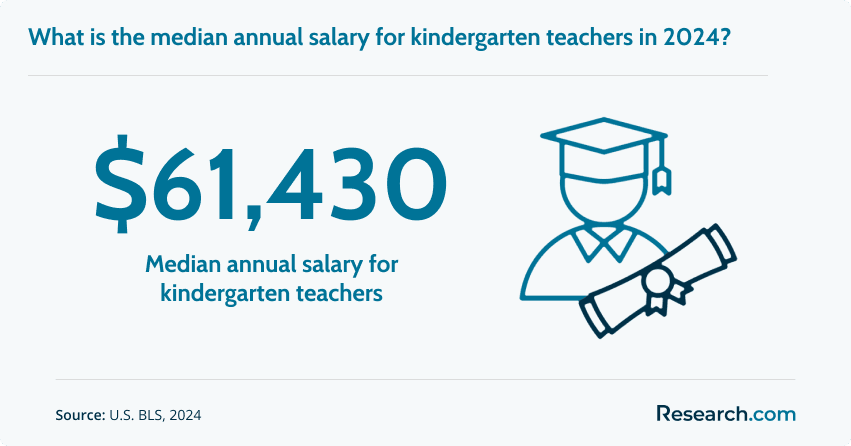
- Preschool teacher pay is typically lower than K–12 teacher pay. Preschool teachers with an associate’s degree often earn about $30,000 to $40,000 annually, while kindergarten teachers with a bachelor’s degree have a median salary of $61,430.
- Education level affects advancement. Many employers use salary schedules or pay bands that reward higher degrees, certification, and experience.
- Support roles may have limited raises. Teaching assistants and childcare workers may need additional credentials or degrees to move into lead teacher or administrative roles.
- Career comparisons can be useful. If income is a major factor and you are open to non-teaching fields, comparing degree pathways such as an online construction management degree can help you understand how education requirements and pay structures differ across industries.
Benefits
- Public school support roles may offer stronger benefits. Some paraprofessional and teacher assistant jobs in public districts include health insurance, retirement options, paid leave, or union protections.
- Private childcare benefits can vary. Some centers provide health insurance and paid time off, while others may offer fewer benefits, especially for part-time staff.
- Full-time status matters. Benefits are often tied to hours worked, contract type, and employer policy.
- Tuition support can change the equation. An employer that helps pay for further education may make a lower-paying job more valuable over time.
| Compensation factor | Why it matters | Question to ask before accepting a job |
| Hourly vs. salary pay | Hourly jobs may not pay during school breaks or closures | Will I be paid year-round or only when school is in session? |
| Full-time status | Benefits may depend on weekly hours | How many hours are guaranteed each week? |
| Employer type | Public schools, private schools, and childcare centers often differ | What benefits are included for this role? |
| Education-based raises | Higher credentials may increase pay | Does the employer reward additional college credits or degrees? |
| Tuition assistance | Employer support can reduce bachelor’s degree costs | Is tuition reimbursement available for education majors? |
Can volunteer experience help you get hired in teaching?
Yes. Volunteer experience can make you a stronger candidate for associate-level education jobs, especially if you have limited paid classroom experience. Schools and childcare employers want evidence that you can work reliably with children, follow safety procedures, communicate with adults, and support learning.
How Volunteer Experience Helps
- It shows commitment. Tutoring, mentoring, classroom volunteering, or after-school support demonstrates that you have taken action toward an education career.
- It builds practical skills. You may gain experience with behavior support, small-group instruction, lesson materials, routines, and student engagement.
- It strengthens your resume. Relevant volunteer work can help offset limited paid experience when applying for entry-level roles.
- It can lead to references. Teachers, coordinators, and program directors can speak to your reliability and ability to work with students.
- It expands your network. Volunteering can help you learn about openings before they are widely advertised.
Best Volunteer Options for Future Teachers
- Classroom aide volunteer work at local schools
- After-school homework help or tutoring
- Reading programs at libraries or community centers
- Summer camps or youth enrichment programs
- Special education support programs, when proper training and supervision are provided
- English language learner or adult literacy programs
When listing volunteer experience, describe what you actually did. “Helped second-grade students practice reading in small groups twice a week” is stronger than “volunteered at school.”
What professional development opportunities can boost your teaching credentials?
Professional development can help associate degree holders become more effective in classrooms and more competitive for entry-level education jobs. The best options are practical, recognized by employers, and connected to the age group or setting where you want to work.
Useful Professional Development Options
- Child development workshops: Helpful for preschool, childcare, and early learning roles.
- Classroom management training: Valuable for substitutes, paraprofessionals, and youth program instructors.
- CPR, first aid, and safety training: Often required or strongly preferred in childcare and early childhood settings.
- Special education support training: Useful for aides working with students who need accommodations or individualized support.
- Literacy and early math training: Helpful for candidates who want to support foundational academic skills.
- Micro-credentials: Short, focused credentials may show employers that you have targeted skills, but you should confirm whether they are recognized locally.
If you eventually move from classroom teaching into district leadership, curriculum, or education administration, doctoral study may become relevant. In that case, comparing affordable EdD programs online can help you understand the cost and structure of advanced education leadership options.
What are long-term career options if you start teaching with an associate’s degree?
An associate’s degree can be the first step toward several education careers, but most higher-responsibility roles require additional education, certification, or specialized training. Your best long-term path depends on whether you want to stay in early childhood, move into K–12 teaching, specialize in student support, or pursue leadership.
Career Paths to Consider
- Lead preschool teacher: Build experience in early childhood classrooms and add credentials required by your employer or state.
- Childcare center director: Move into program management, staff supervision, compliance, and family communication with added training or credentials.
- Certified K–12 teacher: Transfer into a bachelor’s program that includes state-approved teacher preparation and student teaching.
- Special education aide or teacher: Begin in classroom support and later pursue a special education degree and certification if you want to lead instruction.
- Instructional coach or curriculum developer: These roles typically come after teaching experience and additional education.
- School librarian or media specialist: This path may require graduate education and state-specific certification.
- Education-adjacent specialist: Some professionals combine education with psychology, behavior support, technology, healthcare training, or public policy.
If you are considering psychology-related education roles, check whether employers and licensing bodies recognize your degree format. A useful starting point is reviewing whether an online psychology degree is credible before committing to a program.
| Long-term goal | Likely next credential | Why it matters |
| K–12 classroom teacher | Bachelor’s degree with teacher preparation | Required for most public school certification |
| Preschool lead teacher | Early childhood credentials or bachelor’s degree, depending on setting | Can improve eligibility and advancement |
| Childcare director | Leadership training, director credential, or higher degree | Prepares you for management and compliance duties |
| Special education teacher | Bachelor’s degree and special education certification | Required to lead special education instruction in public schools |
| Education administrator | Graduate degree and experience | Often needed for leadership positions |
Can advanced degrees accelerate your teaching career?
Advanced degrees can help educators move into leadership, specialized instruction, curriculum design, administration, research, or higher-level school support roles. However, they are usually not the first step for someone who only has an associate’s degree. In most cases, the priority should be completing a bachelor’s degree and meeting state certification requirements first.
Graduate programs become more useful once you know your direction. A master’s in teaching may support licensure or instructional improvement. A master’s in education can support curriculum, leadership, or specialization. A doctorate may fit experienced educators pursuing district leadership, policy, or higher education roles. If you are comparing doctoral timelines, you may look at options such as the fastest EdD program, but speed should not matter more than accreditation, quality, and career fit.
How can you finance your advanced teaching degree?
Financing an education degree requires more than finding the lowest tuition. You need to compare total cost, transfer credit, financial aid, employer support, licensure value, and whether the degree is likely to improve your job options.
Ways to Reduce Education Costs
- Transfer as many credits as possible. A well-planned associate-to-bachelor’s pathway can reduce repeated coursework.
- Use federal and state financial aid when eligible. Grants, loans, and work-study may help cover costs.
- Ask employers about tuition reimbursement. Some districts and childcare employers support employees who pursue teaching credentials.
- Search for educator scholarships. Some scholarships target future teachers, early childhood educators, or high-need subject areas.
- Compare online and campus costs carefully. Online programs may reduce commuting or relocation costs, but fees and placement requirements still matter.
- Evaluate loan forgiveness carefully. Teacher-focused loan forgiveness programs can be valuable, but eligibility rules are specific and should not be assumed.
If you already hold a bachelor’s degree or are planning graduate study after certification, comparing affordable online master’s in teaching programs can help you understand lower-cost routes to advanced teaching credentials.
Can interdisciplinary studies enhance your teaching effectiveness?
Interdisciplinary study can make you a stronger educator when it directly supports the students, subject area, or setting you serve. A preschool teacher may benefit from child psychology and family studies. A secondary social studies teacher may benefit from political science or history. A STEM instructor may benefit from technology or applied science coursework.
The key is relevance. Additional degrees should not distract from certification requirements or add unnecessary debt. If you plan to teach civics, government, public affairs, or social studies, an affordable political science online degree may provide useful subject-matter depth, especially when paired with a teacher preparation pathway.
How can you assess the accreditation and quality of advanced teaching programs?
Before enrolling in any teaching, education, or advanced credential program, confirm that it is legitimate, properly accredited, and aligned with your career goal. This is especially important for online programs and programs that claim to support licensure.
What to Check Before You Enroll
- Institutional accreditation: Confirm that the college or university is accredited by a recognized accrediting agency.
- State approval for teacher preparation: If you need licensure, make sure the program is approved for the state where you plan to teach.
- Field placement support: Online programs should clearly explain how student teaching, practicum, or clinical hours are arranged.
- Licensure exam alignment: The curriculum should prepare students for required state assessments.
- Transfer credit policy: Ask how many of your associate degree credits will count toward the program.
- Graduation and licensure outcomes: Look for transparent information about completion rates, certification outcomes, and graduate support.
- Total cost and aid: Compare fees, books, technology, placement expenses, and financial aid options.
The same quality checks apply to related specialist fields. For example, if you are interested in speech and language support in educational settings, compare online master’s in SLP programs by accreditation, clinical placement requirements, curriculum quality, and professional standards.
Common mistakes to avoid when using an associate’s degree to enter teaching
- Assuming an associate’s degree leads to full teacher certification. It usually does not for public K–12 schools.
- Choosing a program without checking transferability. Credits that do not transfer can add time and cost to your bachelor’s degree.
- Ignoring state rules. Certification, substitute teaching, paraprofessional, and childcare requirements vary by location.
- Looking only at tuition. Fees, books, transportation, technology, and unpaid fieldwork can change the true cost.
- Assuming online programs meet licensure requirements everywhere. Online format does not guarantee state approval.
- Taking unrelated courses without a plan. Extra credentials are only useful if they support your target job.
- Overlooking benefits. A slightly higher hourly wage may not be better than a role with health insurance, retirement contributions, or tuition support.
- Relying only on rankings. Program fit, accreditation, transfer policy, and licensure alignment matter more than name recognition alone.
Important workforce and salary findings
- About 42% of preschool teachers in the U.S. had an associate’s degree or less as of 2023.
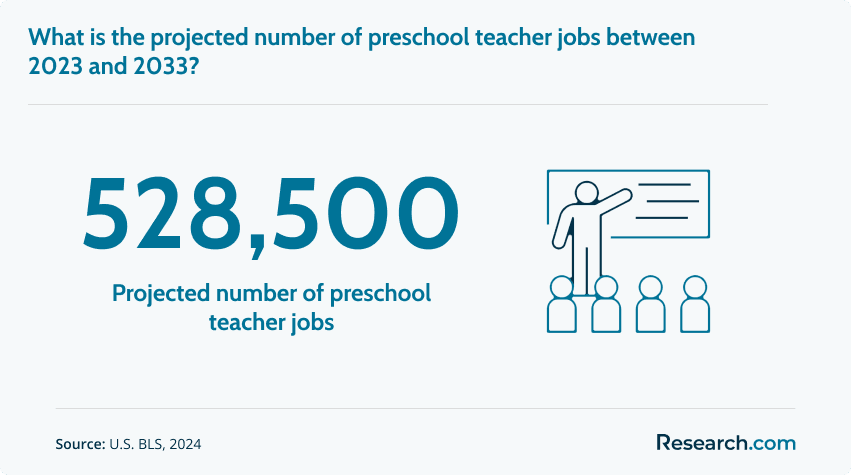
- The projected number of preschool teacher jobs between 2023 and 2033 is 528,500, indicating sustained demand.
- In public elementary schools, only 0.5% of teachers have less than a bachelor’s degree, while 90% hold a bachelor’s or master’s.
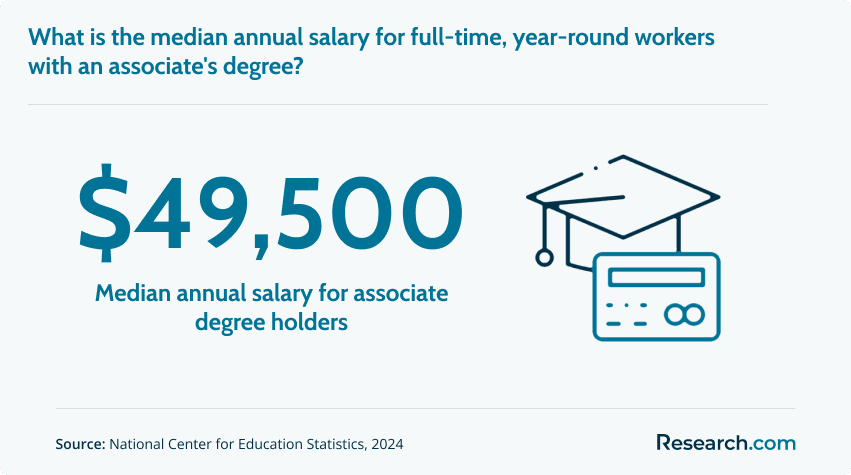
- The median salary for preschool teachers with an associate’s degree is approximately $30,000 to $40,000, compared to $61,430 for kindergarten teachers with a bachelor’s.
- 18% of the early childhood education workforce holds an associate’s degree, while 30% have a bachelor’s degree or higher.
References
- Center for the Study of Child Care Employment. (2024). 2024 Early Educator Workforce Index: Key findings. Center for the Study of Child Care Employment.
- National Center for Education Statistics. (2024). Annual earnings of young adults. Condition of Education. National Center for Education Statistics.
- National Center for Education Statistics. (2023). Characteristics of public school teachers. Condition of Education. National Center for Education Statistics.
- U.S. Bureau of Labor Statistics. (2024). Kindergarten and elementary school teachers. Occupational Outlook Handbook. U.S. Bureau of Labor Statistics.
- U.S. Bureau of Labor Statistics. (2024). Preschool teachers. Occupational Outlook Handbook. U.S. Bureau of Labor Statistics.
Key Insights
- An associate’s degree can get you into education, but it usually qualifies you for early childhood, childcare, paraprofessional, substitute, or support roles—not full K–12 public school certification.
- Early childhood education is the strongest teaching-related fit for associate degree holders, especially because many preschool employers accept associate-level preparation.
- If your goal is elementary, middle, or high school teaching, plan for a bachelor’s degree in a state-approved teacher preparation program.
- State rules matter. Always verify requirements for the exact role, school type, and state where you want to work before spending money on additional credentials.
- Salary growth is limited without further education. Preschool teachers with an associate’s degree typically earn about $30,000 to $40,000, while kindergarten teachers with a bachelor’s degree have a median salary of $61,430.
- The smartest pathway is often to work in an entry-level education role while transferring credits toward a bachelor’s degree, building references, and confirming that teaching is the right long-term career.
Other Things You Should Know About Becoming a Teacher with an Associate's Degree
In 2027, several states allow teaching in specific roles with an associate's degree, often as paraprofessionals or teacher aides. However, becoming a lead teacher usually requires a bachelor's degree, though some states have alternative pathways or pilot programs for associate degree holders.
In 2027, an associate's degree might be sufficient for teaching assistant roles or early childhood education, but typically, a bachelor's degree and teaching certification are required for a full teaching position in public schools.
An associate’s degree can qualify you for preschool, paraprofessional, and teacher aide roles, but not full K–12 classroom teaching in most states. Many states require at least a bachelor’s degree plus a state license from the education department or board of education.


