2027 Online BA in Psychology - Addictions for Psychology of Motivation and Change: Which Courses Should You Look For?
Audited and Verified:
Our Editorial and Data Verification Process
Research.com uses government datasets, official education statistics and primary institutional information to support its career and degree guides. Our review process checks factual accuracy, occupational definitions, source dates and the requirements associated with the credentials discussed.
How This Article Was Fact-Checked
Our editorial team verifies salary estimates, employment projections, education requirements and program information against original data providers and official organizations. Salary figures are checked against the relevant occupational definitions and reporting periods. Information about licensure, accreditation and required in-person training is reviewed separately.
Fact-checked and verified on:

Co-Founder and Chief Data Scientist
An addictions-focused psychology degree should explain why people change behavior, how researchers study that change, and what support looks like in real communities. A program title alone cannot tell you whether its courses deliver those skills.
This guide is for prospective online BA students comparing curricula, including those considering recovery-support work or later graduate study. It identifies the courses worth prioritizing, the gaps to watch for, and the program details to verify before committing time and money.
Key Things You Should Know
- Prioritize learning and motivation, addiction science, statistics, research methods, and ethics - not addiction-themed electives alone.
- Check whether the addictions focus is an official concentration, a set of electives, or simply a description of the degree; those distinctions affect what appears on your academic record.
- A psychology BA commonly requires about 120 semester credits, but neither the credit total nor an addictions focus independently qualifies you to provide therapy or obtain an addiction-counselor credential.
What is an online BA in Psychology of Motivation and Change with an addictions focus?
It is an undergraduate psychology pathway organized around how behavior develops and changes, with substance use and recovery as important applications. Students might examine reinforcement, decision-making, social influences, stress, readiness for change, and the conditions that help people sustain new habits. "Psychology of Motivation and Change" is not a standardized degree designation: one school might use it as a degree name, another as a concentration, and another as a theme for electives.
Before comparing programs, read the catalog for the exact awarded degree, major requirements, and any concentration notation. A course about addiction does not, by itself, create an addictions credential. If your eventual goal is graduate study, compare the BA's methods preparation with graduate prerequisites; an online psychology master's affordability guide can help frame the separate cost decision, but a general psychology master's is not necessarily a clinical qualification.
Which courses should an online addictions psychology bachelor's degree include?
Look for a sequence, not just appealing course titles. A strong curriculum builds general psychological science and evidence-evaluation skills before asking students to interpret addiction research or apply behavior-change concepts. The table separates essential preparation from valuable options that depend on your goal.
The course areas below show what each subject should help you understand and the curricular gap to investigate when comparing catalogs.
| Course area | Why it matters for motivation and addictions | What to check |
| Learning, cognition, and motivation | Explains reinforcement, habit formation, goals, attention, and decision-making. | Does the course connect theory to behavior change rather than rely only on self-help concepts? |
| Biological and health psychology | Provides foundations for understanding reward, stress, substance effects, and health behavior. | Are biological claims taught with appropriate attention to environment and individual differences? |
| Developmental and social psychology | Examines how age, relationships, norms, stigma, and context shape behavior. | Does the curriculum address different life stages and communities? |
| Statistics and research methods | Helps students judge intervention evidence, measurement quality, and the limits of causal claims. | Are both required, and can you take them before advanced addiction electives? |
| Addiction science and psychopathology | Introduces substance-use disorders, co-occurring concerns, prevention, and recovery research. | Are these distinct courses, or does one survey course cover the topics briefly? |
| Ethics, culture, and service systems | Addresses confidentiality, respectful communication, access to care, and referral boundaries. | Are nonclinical responsibilities distinguished from treatment? |
For research or graduate-school preparation, favor additional work in measurement, advanced statistics, or a faculty-supervised project. For community outreach, courses in public health, program evaluation, and service coordination may be more useful. A supervised nonclinical placement can provide practice with documentation and referrals, but verify its duties and approvals; it is not a clinical practicum. If your target is regulated treatment work, compare this curriculum with evaluating online addiction counseling programs against your state's credential rules rather than assuming the pathways are interchangeable.
How do you choose an accredited online psychology addictions program?
First, verify the institution's accreditation through the accreditor or the U.S. Department of Education's recognized-accreditor information, and confirm that the status applies to your enrollment period. Institutional accreditation does not certify an addictions concentration or establish eligibility for a state counseling credential. APA accreditation is not a standard accreditation designation for a general psychology BA.
Then request the current catalog and a sample degree plan. Confirm which addiction-related courses are required, how often they run, whether statistics precedes advanced courses, and whether a capstone, placement, live meeting, or campus visit is mandatory. Ask who approves placement sites and what happens if a needed course is unavailable. For a broader checklist on delivery and student support, see choosing an online psychology program.
Schools commonly request an application and prior academic records; first-year and transfer applicants may face different requirements. Some admit students to the institution before they formally enter the psychology major. A dedicated addictions focus may have additional prerequisites - or no separate admission process - so check the policy for your entry term.
If you have previous college coursework, ask for a written degree audit showing not only credits accepted but also which general-education, major, statistics, and research-methods requirements they satisfy. The receiving institution makes the final equivalency decision. This matters especially when an earlier course has a similar title but different methods content. For the questions to raise before enrolling, use psychology transfer eligibility and degree planning.
A bachelor's degree commonly totals about 120 semester credits; completion time depends on accepted transfer credit, course load, prerequisites, and when required courses are offered. An accelerated calendar does not remove the need to complete the degree requirements. Ask for a term-by-term plan that includes statistics, methods, addiction electives, and any placement or capstone - not merely an advertised fastest-finish estimate.
Compare timelines only across equivalent credentials. Even evaluating twelve-month forensic psychology master's routes describes graduate options for people who already meet admission requirements; their advertised duration is not a substitute for finishing a BA. If you work or provide care, test whether the proposed pace leaves room for scheduled meetings and any site hours.
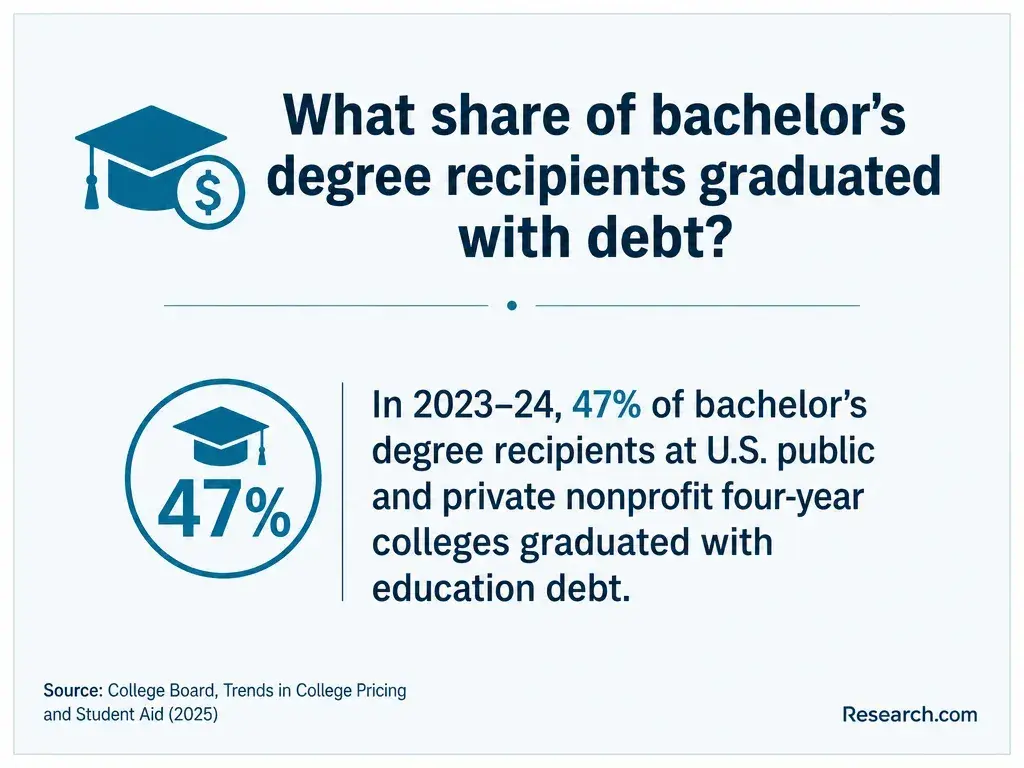
There is no reliable single price for this degree type. Your cost depends on the school's tuition basis, remaining credits after an official transfer evaluation, mandatory fees, materials, and any travel or unpaid placement obligations. Compare written estimates for your remaining degree plan, not advertised tuition alone. An apparently cheaper per-credit option can cost more if it accepts fewer applicable credits or requires additional terms.
Ask financial-aid staff how your planned enrollment intensity affects aid eligibility, and ask your employer whether education assistance applies to this specific program. For initial school comparisons, budget-conscious psychology program comparisons are a starting point; obtain a current, individualized cost estimate before deciding.
Online study can reduce commuting, but it does not necessarily make every course self-paced. Statistics tutoring, group research projects, live discussions, proctored assessments, or placements may have fixed times. Campus programs may make it easier to attend in-person research meetings or build local agency connections; online programs can also offer meaningful faculty supervision if access and expectations are clear.
Compare the actual weekly schedule and experiential opportunities, not the delivery label. Ask whether research participation is remote, whether placements must be near your home, and whether local sites are available. An intensive online format - such as those considered in intensive online forensic psychology bachelor's study - illustrates why a short calendar can still demand substantial weekly time; it does not indicate that a forensic curriculum covers addiction science.
Potential nonclinical directions include recovery-service support, community outreach, intake or referral coordination, human-services program support, and research assistance. Actual eligibility depends on the employer, duties, experience, and state rules. For example, a research-support applicant may benefit most from statistics, data handling, and a supervised project; an outreach applicant may need service-system knowledge, communication skills, and experience working with community partners.
Review job postings for the specific role you want before choosing electives. If postings consistently require a state addiction credential, prioritize that credential's approved pathway. If your interest is justice-system research rather than recovery services, faster routes through forensic psychology graduate coursework represent a different, later specialization - not a shortcut to an addiction-support job or clinical authority.
There is no defensible single salary for graduates of this BA. The U.S. Bureau of Labor Statistics reports wages by occupation, not by an addictions-focused undergraduate major. Its substance abuse, behavioral disorder, and mental health counselors category, for example, combines roles with different educational and credential requirements; its occupation-wide median should not be treated as a new BA graduate's expected pay.
For a useful estimate, match local postings to the exact nonclinical job title, required credential, location, and your experience, then compare the offered range with your projected education cost. A counseling master's may change the roles you can pursue if it meets applicable requirements, but it also adds education and supervised-training commitments. Treat choosing a shorter clinical mental health counseling master's as a separate pathway decision, not as a salary outcome of this BA.
Does an addictions psychology bachelor's degree qualify you for licensure or certification?
Not automatically. Studying substance use, motivation, or counseling approaches does not itself authorize diagnosis, psychotherapy, or independent treatment. State addiction-counselor credentials vary in required coursework, supervised experience, examinations, and permitted duties. Peer-support certification, where available, is a distinct pathway with its own rules.
Before enrolling, identify the credential and state where you intend to work. Ask the relevant regulator or certifying body whether this specific degree and its courses meet educational requirements, and request any school claim about eligibility in writing. If your aim is professional counseling rather than nonclinical support, compare a qualifying graduate route and its additional obligations; planning the time and cost of a counseling master's can help organize that separate decision.
Other Things You Should Know About Psychology
It can be a valuable introduction to a communication approach used in behavior-change settings. Check whether students analyze its evidence and practice appropriate communication skills; classroom exposure alone does not confer counseling competence.
It helps students understand approaches intended to reduce substance-related risks and engage people with different goals. Look for evidence-based, respectful treatment of the topic rather than assuming every person follows the same recovery path.
Only with the required institutional and site permissions and appropriate privacy safeguards. Access to records through a job or placement does not automatically permit their use in coursework or research.
Use precise, person-first terms such as "person with a substance-use disorder" when appropriate, and follow the terminology preferred by people or communities involved. Distinguish clinical diagnoses from everyday descriptions of behavior.
- Curricular Elements in Substance Use Disorders Training | samhsa.gov https://www.samhsa.gov/substance-use/treatment/resources/mat-act/training-requirements/curricular-elements-training
- "Culturally Responsive" Substance Use Treatment - PMC - NIH https://pmc.ncbi.nlm.nih.gov/articles/PMC12834561/
- Appendix I: Understanding what drives behavior change | cdc.gov https://www.cdc.gov/suicide/playbook/behavior-change.html
- Motivational interviewing | UW-Madison Continuing Education https://continuingeducation.wisc.edu/motivational-interviewing/
- Substance use disorders and addictions series | apa.org https://www.apa.org/education-career/training/substance-use-disorders-series
- Certificate of Intensive Training in Motivational Interviewing | umassmed.edu https://www.umassmed.edu/cipc/continuing-education/MotivationalInterviewing/
- Applied Psychology: Addictions Studies, B.S. - CPS, CPSO | University of New Hampshire https://www.unh.edu/program/bachelor-science/applied-psychology-addictions-studies
- Individual and Interpersonal Level Behavior Change | umaryland.edu https://cf.son.umaryland.edu/NRSG780/module9/subtopic2.htm
- Foundations in Addictions and Substance Use Disorders | maricopa.edu https://www.maricopa.edu/degrees-certificates/behavioral-science-human-services/workforce-development-foundations-addictions-substance-use-disorders-5894n-ccl
- Co-Occurring Disorders Treatment | University of Maryland School of Medicine https://ebpcenter.umaryland.edu/training-topics/co-occurring-disorders-treatment/