2027 Online MS in Psychology - Forensic Psychology for Jury Decision-Making Research: Which Courses Should You Look For?
Audited and Verified:
Our Editorial and Data Verification Process
Research.com uses government datasets, official education statistics and primary institutional information to support its career and degree guides. Our review process checks factual accuracy, occupational definitions, source dates and the requirements associated with the credentials discussed.
How This Article Was Fact-Checked
Our editorial team verifies salary estimates, employment projections, education requirements and program information against original data providers and official organizations. Salary figures are checked against the relevant occupational definitions and reporting periods. Information about licensure, accreditation and required in-person training is reviewed separately.
Fact-checked and verified on:

Co-Founder and Chief Data Scientist
A forensic psychology master's may offer courses on courts and crime yet provide little preparation to study how juries reach decisions. For prospective online students, the distinction matters: jury research depends on social and cognitive psychology, strong experimental methods, and access to supervised projects - not a concentration name alone.
This guide identifies the courses to prioritize, explains what to verify about research opportunities and online delivery, and puts cost, career prospects, and licensure limits in context so you can choose training that fits your goal.
Key Things You Should Know
- Prioritize social psychology, judgment and decision-making, memory and eyewitness evidence, experimental design, statistics, and a supervised thesis or comparable research project.
- Check whether online students can work with a suitable faculty mentor, recruit participants or use approved data, and complete the required methods courses - not merely whether the catalog lists forensic electives.
- A nonclinical forensic psychology master's does not itself confer psychologist licensure; compare total credits and program costs against the research experience you can actually obtain.
What is an online master's in forensic psychology for jury decision-making research?
It is a psychology master's program whose coursework and supervised research can support the study of how people evaluate evidence, deliberate, and reach verdicts. Jury decision-making may be a research topic within a general, experimental, applied, or forensic psychology degree; it is not necessarily a named concentration. A program focused mainly on clinical assessment or corrections may be a poor match even if it uses the word "forensic."
The strongest fit depends on your intended output. If you want to assist with empirical studies or prepare for a research doctorate, favor a thesis, faculty research access, and substantial methods training.
If you primarily want broad exposure to legal psychology, a course-based degree may suffice - but targeted coursework could be less costly. When reviewing online psychology education pathways, compare the research work available to students rather than treating the degree label as evidence of specialization.
Which courses prepare students for jury decision-making research?
Look for a sequence that connects psychological theory to a testable question about jurors. Course titles differ, so inspect descriptions, assignments, and prerequisites rather than searching only for "jury psychology." The following subjects have distinct roles in that sequence:
- Social psychology: Group influence, persuasion, stereotypes, and deliberation provide hypotheses about how jurors interpret and discuss evidence.
- Cognitive psychology and memory: Attention, recall, confidence, and misinformation help students evaluate claims about eyewitness evidence without assuming memory works like a recording.
- Judgment and decision-making: Heuristics, uncertainty, and evidence integration connect individual judgments to verdict choices.
- Psychology and law or legal psychology: Court procedures and the limits of psychological evidence help students frame questions that make sense in a US legal setting.
- Research seminar or thesis: A supervised project turns those subjects into a defensible design, analysis, and written interpretation.
If you are still building undergraduate preparation, planning a shorter undergraduate forensic psychology degree should not come at the expense of statistics and research methods. For jury research, those foundations are usually more useful than an additional survey course on criminal behavior.
Does a forensic psychology master's qualify you for licensure?
Generally, a nonclinical forensic psychology master's is academic or research preparation, not a route to independent psychologist licensure. Studying eyewitness evidence, assessment, or courtroom testimony does not authorize you to diagnose, provide psychotherapy, conduct restricted forensic evaluations, or use a protected professional title. Requirements depend on the occupation and state; psychologist licensure ordinarily entails qualifying doctoral education and additional requirements.
If your actual goal is to provide therapy, assess defendants, or practice another regulated profession, check the applicable state board's educational and supervision rules before enrolling. A qualifying counseling or social work program is a different pathway.
For someone balancing employment with that separate clinical goal, accredited clinical counseling timelines for working students may be more relevant than forensic research electives. Neither path grants legal authority to investigate cases or practice law.
For jury decision-making research, look beyond a single introductory statistics requirement. Experimental design should cover random assignment and comparison conditions; advanced statistics should support analysis of outcomes and uncertainty; and measurement coursework should address whether a survey or verdict measure captures the construct it claims to measure. Training in research ethics and transparent reporting matters just as much as software proficiency.
Consider a proposed study comparing how two versions of an expert-witness explanation affect mock jurors' understanding. Students would need to define "understanding," design a credible comparison, account for prior beliefs, and explain why mock-juror responses may not generalize to real deliberating juries. Group deliberation adds another challenge: responses from members of the same group are not independent, so an instructor or mentor should help select an appropriate analysis.
Methodological training can transfer across psychology topics, but subject courses are not interchangeable. For example, addiction-focused undergraduate psychology degrees may teach valuable foundations while offering little direct preparation in legal evidence or jury behavior. Ask which methods courses online students can take and whether a mentor can guide the particular design you hope to use.
The important difference is access to the work, not whether a lecture is delivered on a screen. Both formats can support literature reviews, statistical analysis, and remote research meetings; either can fall short if relevant mentorship or participant access is unavailable.
Before assuming an online program is more flexible, ask whether methods courses meet live, when research teams meet, whether a thesis supervisor accepts distance students, and whether any residency or local research activity is required. Campus programs may make collaboration easier through in-person labs, but those opportunities are not guaranteed. Online flexibility should be evaluated against your job, time zone, and ability to participate consistently.
Delivery mode also cannot fix a mismatch in career purpose. If you are deciding between jury research and direct service work, consider recovery support career planning as an example of a different, practice-oriented goal: the relevant training and supervised experience would differ substantially from a jury research thesis.
Requirements vary by institution. Programs may review an accredited bachelor's degree, transcripts, prior psychology and statistics coursework, a statement of purpose, recommendations, and evidence of research or professional preparation. A psychology major is not universally required: applicants from criminal justice, sociology, mathematics, or other fields may bring useful skills but need to fill specific psychology or methods gaps.
Compare each program's required prerequisites with its recommended preparation. An applicant who wants to study juries should be able to describe a focused research interest and show readiness to read studies and work with data; a publication or prior jury project should not be assumed mandatory. Ask whether missing prerequisites can be completed before enrollment or under a stated admission condition.
If your background is in a different applied area - for example, through online colleges offering addiction counseling study - explain which research and statistics skills transfer, then identify any legal-psychology knowledge you still need. The admissions office, not the degree title, determines whether prior courses satisfy its rules.
Completion time depends on required credits, course availability, enrollment pace, and whether the thesis has a fixed sequence. A course-only route may be easier to schedule, while a thesis can require extra time for mentoring, recruitment, approvals, analysis, and revision. Ask for a term-by-term plan that includes any required live meetings or campus visits.
For cost, calculate required credits multiplied by the applicable tuition rate, then add mandatory fees, software, travel, and any charges incurred while finishing a thesis. Compare that total with the research access and supervision you would receive. An advertised per-credit rate alone cannot establish the full price, and employment or assistantship funding should not be assumed.
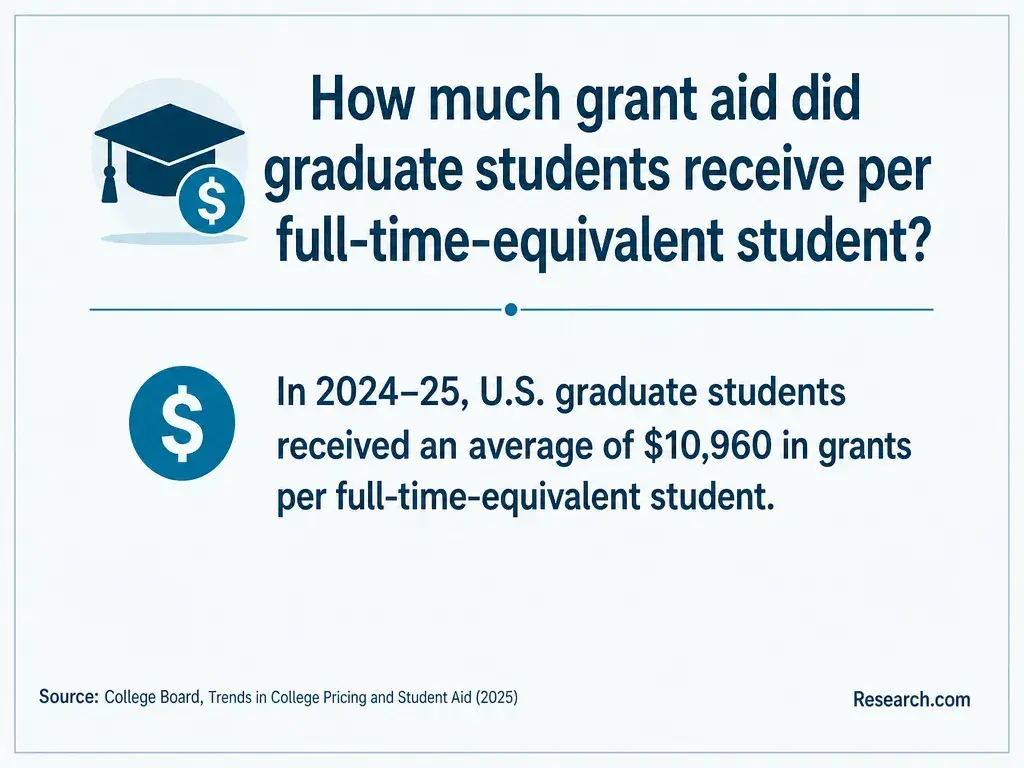
Funding rules also differ by degree level. Advice on substance use counseling bachelor's financial aid options should not be applied automatically to graduate study. Request the program's graduate cost estimate and confirm your own aid eligibility with its financial aid office.
Relevant work may include research assistant or coordinator positions, behavioral research analysis, evaluation roles in justice-related organizations, and research support in settings that study litigation or trial communication. Duties can involve literature searches, study materials, participant coordination, data management, and reports. Employers may require specific quantitative skills, legal-context knowledge, or prior project experience; the degree alone does not establish eligibility.
For research-focused doctoral study, a well-supervised thesis and strong recommendations may be more valuable than a concentration label. Jury consulting is a separate, experience-dependent market: employers may value research design, survey analysis, and communication, and a master's does not grant expert-witness status.
If your aim is direct support rather than studying decisions, compare the tasks before committing to graduate tuition. Affordable substance abuse counseling bachelor's costs and careers concern a different service pathway with its own role and credential rules - not an alternative name for jury research.
There is no single US occupational category for "forensic psychology master's graduate" or "jury decision-making researcher." Salary and outlook depend on the actual job, employer, location, experience, and, where applicable, credentials. The Bureau of Labor Statistics' psychologist figures should not be presented as expected earnings from a nonclinical master's, because psychologist roles generally have different educational and licensing requirements.
For a useful estimate, start with job postings for the duties you want - such as research coordination or data analysis - then compare their qualifications and pay with the matching US occupational data.
If a program reports graduate outcomes, ask how many graduates responded and which jobs the figures include. When assessing whether the degree is worth its price, graduate psychology tuition and program value are more meaningful when tied to attainable roles and demonstrated research skills than to an occupation-wide median.
How can you choose an accredited forensic psychology master's program?
First, verify the institution's recognized institutional accreditation and the exact degree awarded. Then examine the current catalog and ask the program director whether online students can complete social and cognitive psychology, experimental methods, appropriate statistics, and a supervised jury-related project. Request a sample course sequence and written clarification of thesis eligibility, mentor availability, and any in-person obligations.
Institutional accreditation does not prove that a program has a jury research lab or meets licensure requirements. APA accreditation should not be assumed for a general or nonclinical psychology master's. If your aim is clinical practice instead, evaluate the recognition and state eligibility of that different professional program; tuition-conscious mental health counseling degree choices should be assessed against counseling requirements, not forensic research credentials.
The deciding question is concrete: Can you name the courses, supervisor, and feasible project through which you would learn to investigate jury decisions? If a program cannot answer that question, compare a research-oriented psychology master's - or targeted methods coursework and supervised research experience - before paying for a forensic label.
Other Things You Should Know About Psychology
Do not assume access. Real juror deliberations are subject to legal and practical restrictions; many student projects instead use mock jurors, public materials, or approved existing datasets. Confirm access and permissions before proposing a study.
Not every classroom exercise has the same review status. Ask the institution's research office whether the proposed recruitment, data collection, and intended use require a formal determination or review before starting.
They should not be treated as evidence of how people or real juries behave. AI responses may help test wording or a workflow, but human-behavior claims require an appropriate research design and data source.
Not generally. Check each program's requirements; a strong methods assignment, research role, or carefully explained project proposal can demonstrate preparation even without publication.
- Human Research Protection Training | hhs.gov https://www.hhs.gov/ohrp/education-and-outreach/human-research-protection-training/index.html
- Comprehensive guidelines for appropriate statistical analysis methods in research - PMC https://pmc.ncbi.nlm.nih.gov/articles/PMC11467495/
- Science, Technology, or the Expert Witness: What Influences Jurors' Judgments About Forensic Science Testimony? https://nij.ojp.gov/library/publications/science-technology-or-expert-witness-what-influences-jurors-judgments-about
- Juror Selection Process | United States Courts https://www.uscourts.gov/court-programs/jury-service/juror-selection-process
- Capstone Requirement | University of North Texas https://forensic.unt.edu/student-resources/capstone-requirement.html
- jury instructions | Wex | US Law | LII / Legal Information Institute https://www.law.cornell.edu/wex/jury_instructions
- Human Subjects Protections Training - UW Research https://research.washington.edu/research/hsd/training/required-training/human-subjects-protections-training/
- Forensic Emphasis Area | wright.edu https://health-education-human-services.wright.edu/professional-psychology/forensic-emphasis-area
- A Career in Forensic and Public Service Psychology | apa.org https://www.apa.org/education-career/guide/subfields/forensic/education-training
- Human Subjects Protections - Research Ethics & Compliance https://research-compliance.umich.edu/glossary/human-subjects-protections