2027 Online BA in Psychology - General Psychology for Psychology of Lifelong Learning: Which Courses Should You Look For?
Audited and Verified:
Our Editorial and Data Verification Process
Research.com uses government datasets, official education statistics and primary institutional information to support its career and degree guides. Our review process checks factual accuracy, occupational definitions, source dates and the requirements associated with the credentials discussed.
How This Article Was Fact-Checked
Our editorial team verifies salary estimates, employment projections, education requirements and program information against original data providers and official organizations. Salary figures are checked against the relevant occupational definitions and reporting periods. Information about licensure, accreditation and required in-person training is reviewed separately.
Fact-checked and verified on:

Co-Founder and Chief Data Scientist
An online general psychology BA can help you understand how people learn across adulthood - but the course list matters more than the degree title. A program strong in lifespan development, cognition, research methods, and electives on education or aging will serve this goal differently from one built mainly around introductory surveys. This guide is for prospective and returning students who want to evaluate that difference. It explains which courses deserve priority, how to check whether online study supports meaningful research and applied work, and when a shorter learning route may be enough.
Key Things You Should Know
- Prioritize lifespan development, learning and memory, statistics, and research methods; then look for electives on adult learning, aging, motivation, or educational psychology.
- Most U.S. bachelor's degrees require about 120 semester credits, but transfer-credit decisions and course sequencing - not the online label - determine how much study remains.
- A general psychology BA can support nonclinical work and further study; it does not qualify graduates to diagnose conditions, provide psychotherapy, or practice as licensed psychologists.
What is an online BA in general psychology for lifelong learning?
A general psychology BA studies behavior and mental processes through broad coursework rather than training for one regulated occupation. For a student interested in the psychology of lifelong learning, its value lies in connecting childhood, adult, and later-life development with research on attention, memory, motivation, and social context. "Lifelong learning" is a goal here, not necessarily the name of an official concentration.
The BA is a good fit if you want sustained study, research literacy, and room to explore related work in education, community programs, or learning and development. If your goal is personal enrichment or a specific workplace skill, a few courses or targeted training may be more direct. When comparing psychology degree options for distance learners, check the actual catalog and elective rotation rather than assuming every general major offers adult-learning courses.
Is an online psychology bachelor's degree accredited and reputable?
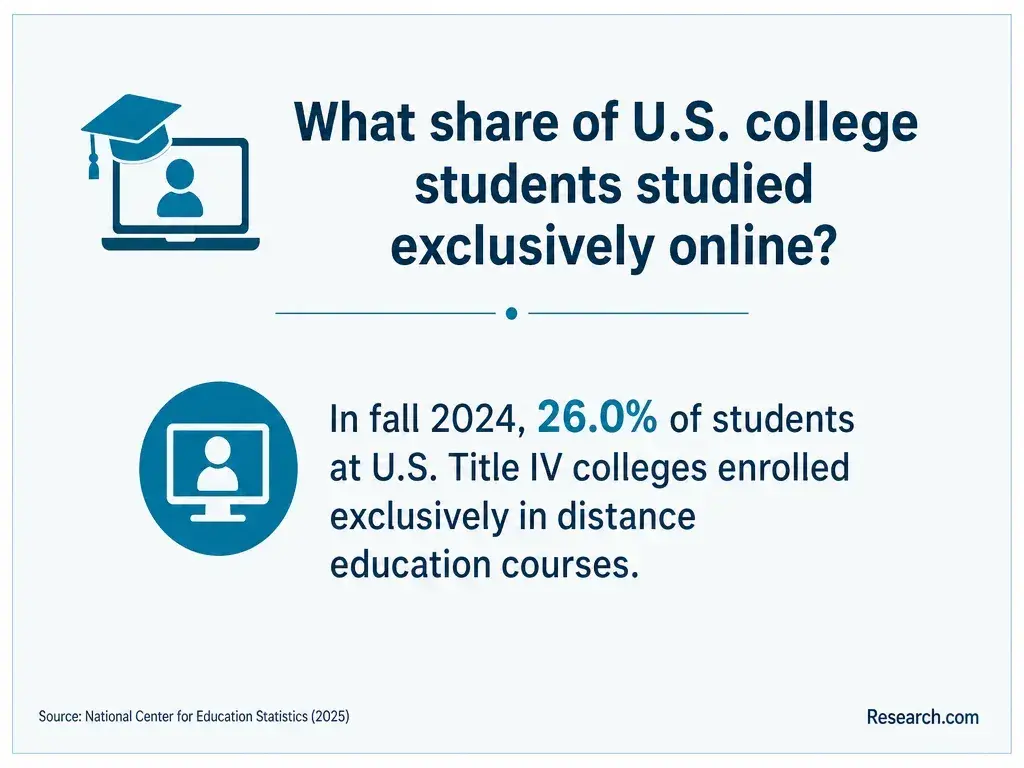
An online BA can be reputable when its institution holds recognized institutional accreditation and the program offers credible instruction, assessment, advising, and access to required courses. Verify the institution in the U.S. Department of Education's accreditation database or the accreditor's directory, then confirm that the specific online degree and your intended entry term appear in the school's current catalog. APA does not accredit general psychology bachelor's programs; the absence of APA accreditation is not a defect in a BA.
Reputation for this purpose is also curricular: ask who teaches upper-division courses, whether online students can receive research feedback, and whether graduating students can take the electives advertised. Compare those answers alongside total cost when choosing a cost-conscious psychology degree program. A low advertised rate is less useful if key courses are rarely offered or require an extra term.
What courses should you look for in a general psychology bachelor's program?
Look first for a coherent sequence, not a long collection of intriguing electives. The strongest preparation for understanding lifelong learning combines psychological theory with the ability to test claims about what helps people learn. Course titles vary, so compare descriptions, prerequisites, and recent schedules.
This table shows what each course area contributes and what to look for when reading a catalog.
| Course area | Why it matters for lifelong learning | Useful evidence in the syllabus |
| Lifespan developmental psychology | Places learning in childhood, adulthood, and later life. | Coverage beyond childhood, including aging and changing social contexts. |
| Cognition, learning, and memory | Explains attention, practice, remembering, and transfer of knowledge. | Work with research findings, not just study-tip lists. |
| Statistics and research methods | Helps you judge whether a learning claim is supported. | Research design, measurement, uncertainty, and interpretation of results. |
| Social psychology and motivation | Shows how goals, identity, belonging, and other people shape participation. | Attention to cultural context and limits on generalizing findings. |
| Education, adult development, or aging electives | Lets you apply the core to a preferred population or setting. | Regular availability and an appropriate prerequisite path. |
Start with introductory psychology and any required quantitative preparation; take statistics before or alongside research methods where the catalog permits. Then choose advanced learning and development courses, followed by an elective or capstone that lets you evaluate a clearly defined question - for example, how an adult education program measures continued participation. If you may pursue graduate study, check its prerequisites before using elective space. A specialized degree is not a substitute for missing methods preparation: even faster routes through forensic psychology graduate coursework address a different goal from studying lifelong learning.
The core academic expectations can be similar, but access to people and projects may differ. Online study can remove a commute and allow more control over reading and coursework; campus study may make it easier to attend research meetings, observe classes, or build relationships with faculty. Neither format automatically supplies a research placement or adult-learning practicum.
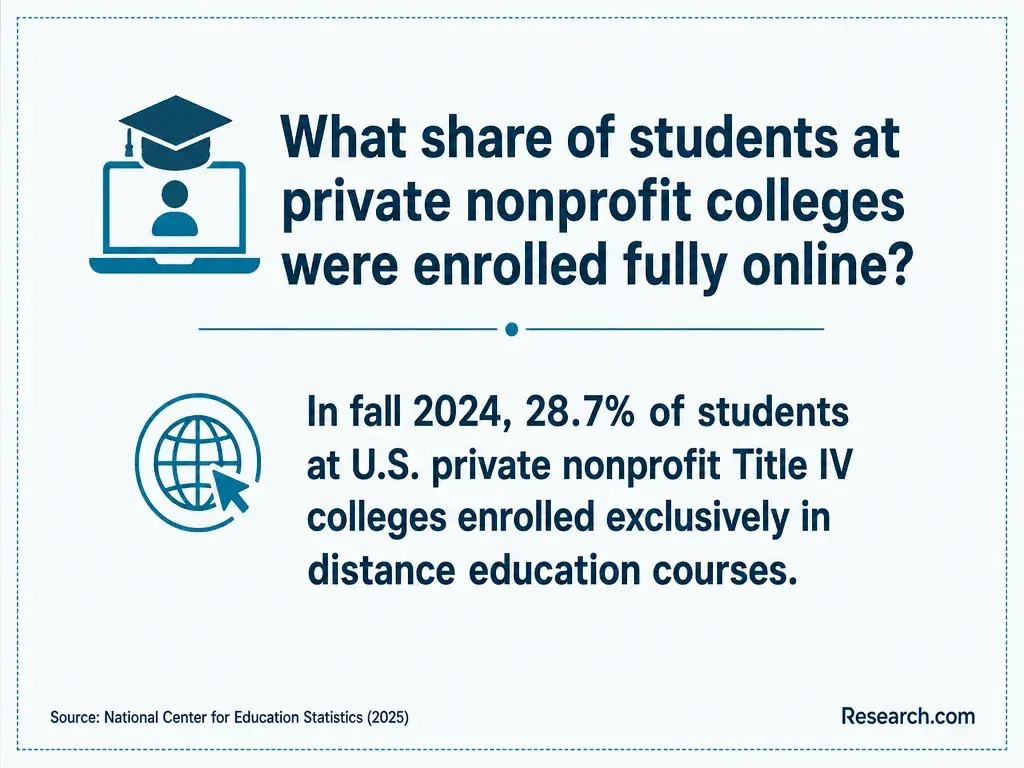
Ask whether lectures are asynchronous, whether exams and group projects have fixed times, and how online students join faculty research or receive capstone supervision. If you work or provide care, map those commitments onto a real term schedule rather than treating "online" as "self-paced." An intensive online psychology degree may shorten the calendar while increasing weekly workload; it is a poor trade if that pace leaves no time for the methods and writing practice you want.
First-year applicants generally need evidence of secondary-school completion and whatever application materials the institution requires. Transfer and returning students should expect to submit transcripts from prior colleges; policies on minimum grades, admission to the major, and prior coursework vary. An unrelated earlier major does not, by itself, rule out general psychology study.
For degree completion, the critical distinction is between credits accepted and requirements satisfied. Ask for a written degree audit showing where prior statistics, introductory psychology, general education, and electives apply, as well as any remaining residency requirement. Guidance on using previous coursework toward a psychology degree can help you prepare questions, but only the receiving institution can approve equivalencies. If a required course is not accepted, ask about a documented substitution or appeal before planning your schedule.
A typical U.S. bachelor's degree requires about 120 semester credits and is often planned as four years of full-time study. Your remaining time depends on approved transfer credits, enrollment pace, prerequisites, and when upper-division courses run. A school's estimated completion time is not a personalized graduation date.
To estimate cost, request the current per-credit or per-term tuition, mandatory online and technology fees, and a degree audit; then price only the credits you still need. Include books, software, any travel or placement costs, and the effect of part-time enrollment on aid eligibility. Submit the FAFSA if eligible and compare each school's actual aid offer. Advice on reducing undergraduate substance abuse counseling tuition through aid may suggest useful aid questions, but that is a different program type; verify every award against your general psychology BA.
The most transferable skill is evaluating learning claims. Statistics and methods help you distinguish a correlation from evidence that an instructional approach caused improvement. Developmental and cognitive coursework helps you ask whether findings from one age group, task, or setting apply to another. Writing assignments and projects teach you to communicate those limits clearly.
Look for opportunities to practice with research articles, ethically collected data, or an approved nonclinical project. A thoughtful analysis of an adult-learning program might define participation and learning outcomes, identify missing information, and avoid claiming effectiveness from a single satisfaction survey. If you later want advanced research training, compare the methods and thesis expectations of prospective programs; accelerated MS psychology options are useful only if their pace still allows the depth of work your goal requires.
Possible nonclinical directions include human-services support, community education, program coordination, research support, and workplace learning roles. Employers will assess the duties they need performed - not simply the degree title. A community program assistant may coordinate referrals and document participation; a research assistant may recruit participants under an approved protocol and manage data within assigned permissions. Relevant work experience, software skills, and supervision can matter as much as electives.
Choose coursework around a target function. For adult education, pair learning and development courses with facilitation or program experience; for research support, prioritize methods, data handling, and a faculty-supervised project. If your intended work is specifically in substance-use counseling, compare the applicable state credential rules and cost-conscious substance use counseling undergraduate options rather than assuming a general psychology BA includes qualifying training.
There is no single salary or employment-growth rate for general psychology BA graduates: graduates enter different occupations with different requirements. For a relevant benchmark, the U.S. Bureau of Labor Statistics reported a $45,120 median annual wage in May 2024 for social and human service assistants. That occupation-wide median includes workers with varied education and experience; it is not a starting salary or an outcome measure for online psychology programs.
Use the current Bureau of Labor Statistics Occupational Outlook Handbook entry for each job you are considering to compare its pay, projected employment change, typical entry education, and duties. Then inspect local postings for required experience and credentials. If a role calls for graduate study, weigh that additional investment separately; lists of affordable MA and MS psychology programs online do not establish that a master's degree is needed - or that it will raise your pay - in your target role.
What licenses or certifications require graduate psychology education?
A general psychology BA does not authorize independent diagnosis, psychotherapy, psychological assessment, or use of a protected psychologist title. Licensed psychologists generally need qualifying doctoral education and additional jurisdiction-specific requirements. Licensed professional counseling and clinical social work follow distinct qualifying graduate-degree and supervised-practice pathways; they are not automatic outcomes of a general psychology MA or MS. Some support-role certifications may not require graduate education, but their rules also vary by state and certifying body.
If licensed counseling is the goal, start with the relevant state board's educational and supervision requirements, then evaluate qualifying programs and their full costs. Information on mental health counseling tuition, fees, and financial aid belongs to that separate pathway. For lifelong learning or nonclinical program work, graduate clinical training may be unnecessary; choose it only when the intended role requires it.
Other Things You Should Know About Psychology
Possibly. Some institutions allow auditing or nondegree enrollment, but access, fees, and whether audited work appears on a transcript vary. It can suit personal enrichment when you do not need the credential.
That depends on the institution. Ask the registrar for the exact diploma and transcript wording rather than assuming it will match the campus version.
There is generally no age limit for applying to a bachelor's program. Check the school's ordinary admissions and financial-aid rules for your circumstances.
Often, if you own the work and have permission to share its contents. Remove confidential information and check faculty, research-team, and partner-organization restrictions before including a project in a portfolio.
- Adult Learning Principles and Presentation Pearls - PMC - NIH https://pmc.ncbi.nlm.nih.gov/articles/PMC4005174/
- DAPIP | Homepage - Office of Postsecondary Education (OPE) https://ope.ed.gov/dapip/
- Frequently Asked Questions - California Board of Psychology https://www.psychology.ca.gov/licensees/faq.shtml
- How to choose an accredited online university that fits your goals | Inside Capella | Capella University Blog https://www.capella.edu/blog/inside-capella/how-to-choose-an-accredited-online-university-that-fits-your-goals/
- Cognitive Psychology Track | virginia.edu https://psychology.as.virginia.edu/cognitive-psychology-track
- Self-motivated and directed learning across the lifespan | sciencedirect.com https://www.sciencedirect.com/science/article/pii/S0001691822003316
- Psychology careers guide | apa.org https://www.apa.org/education-career/guide/careers
- Psychology Degree Requirements | University of Bridgeport https://www.bridgeport.edu/news/psychology-education-requirements/
- Online Bachelor's in Psychology | University of Kansas https://online.ku.edu/undergraduate-programs/online-bachelors-psychology
- What's the Difference Between Asynchronous and Synchronous Learning? | Ohio State Online https://online.osu.edu/content-hub/blogs/whats-the-difference-between-asynchronous-and-synchronous-learning/