2027 Online MS in Psychology - Forensic Psychology After a BS in Applied Psychology: Compare Prerequisites and Admission Options
Audited and Verified:
Our Editorial and Data Verification Process
Research.com uses government datasets, official education statistics and primary institutional information to support its career and degree guides. Our review process checks factual accuracy, occupational definitions, source dates and the requirements associated with the credentials discussed.
How This Article Was Fact-Checked
Our editorial team verifies salary estimates, employment projections, education requirements and program information against original data providers and official organizations. Salary figures are checked against the relevant occupational definitions and reporting periods. Information about licensure, accreditation and required in-person training is reviewed separately.
Fact-checked and verified on:

Co-Founder and Chief Data Scientist
A BS in applied psychology can provide a strong starting point for an online MS in forensic psychology, but the degree title alone will not tell you whether you meet a program's prerequisites. Statistics and research methods may matter more than the words "applied psychology" on your diploma.
This guide is for graduates comparing admission routes and deciding whether forensic study fits their goals. It shows you what to check on your transcript, how to address gaps, and when a different graduate pathway would be the better investment.
Key Things You Should Know
- A BS in applied psychology is generally a relevant degree, but each program decides whether your statistics, research methods, and psychology coursework meet its requirements.
- Compare three admission routes: apply with completed prerequisites, finish missing courses before applying, or ask whether a program permits conditional admission or an approved waiver.
- An online forensic psychology MS can support nonclinical justice-related work; it does not, by itself, qualify you to practice as a licensed forensic psychologist.
What is an online MS in forensic psychology after a BS in applied psychology?
An online MS in forensic psychology is graduate study of psychological science in legal and justice-related settings.
Depending on the program, students may examine eyewitness evidence, violence research, correctional systems, victimization, or the ethical use of psychological information in court. A BS in applied psychology often supplies a useful foundation in behavior, research, and practical settings, but curricula differ substantially.
The best fit depends on what you want to do with the MS. For justice-system research, victim services, or program evaluation, compare methods training and applied projects. If your goal is licensed assessment or therapy, compare the qualifications required for that profession before choosing a nonclinical MS. Broader online psychology study and degree choices may be more useful if you have not yet settled on a forensic focus.
What prerequisites do online forensic psychology master's programs require?
There is no universal prerequisite list. Programs set their own rules for acceptable bachelor's degrees, minimum grades, prerequisite courses, and application materials. An applied psychology graduate should compare formal requirements with recommended preparation; work experience may strengthen an application without replacing a required course.
This comparison shows where an applied psychology transcript is most likely to need a closer review. The program's admissions office, not the course title alone, determines equivalency.
| Area to check | What may count | What to verify |
| Psychology foundation | Introductory and upper-level psychology courses | Whether applied courses satisfy any specified psychology credits |
| Quantitative preparation | Statistics, research methods, or experimental design | Required course level, grade, and accepted substitutions |
| Academic record | Bachelor's degree and GPA | Overall versus major GPA rules and treatment of repeated coursework |
| Application evidence | Statement, recommendations, résumé, or interview | Which items are required and whether a test is requested |
If your intended work is substance-use counseling rather than forensic research or support, check that occupation's credential rules before choosing a master's. Comparing degrees in addiction counseling can help you identify a more directly aligned route, but its admissions and professional requirements must be checked separately.
What are the admission options for applied psychology bachelor's graduates?
Start with your transcript and the exact requirements for your intended entry term. Your practical options depend on whether a missing course is mandatory, merely preferred, or eligible for an exception.
Use this sequence to avoid paying for coursework that a program would not accept:
- Identify a short list of programs that match your career goal, then compare their published degree, course, GPA, and deadline rules.
- Send admissions staff your transcript and syllabi for ambiguous statistics, methods, or psychology courses; request a written equivalency decision.
- If a requirement is missing, ask whether you may complete it before enrollment, take it after conditional admission, or seek a documented waiver.
- Apply with evidence of research, writing, and relevant supervised work, clearly distinguishing experience from formal prerequisite credit.
Conditional admission and waivers are options only where a program expressly offers them. If your review reveals that you actually want substance-use counseling, reassess both the credential and financing plan. Guidance on FAFSA and grants for substance abuse counseling students concerns that different educational route, not automatic funding for a forensic MS.
Check whether the institution holds recognized accreditation, then ask whether any separate accreditation applies to the specific program and the credential you seek. Online delivery does not itself determine accreditation.
The American Psychological Association does not generally accredit nonclinical forensic psychology master's programs, so a claim that a school is "APA-accredited" needs careful scrutiny of which program it actually covers.
Accreditation also does not establish licensure eligibility. If your aim is counseling, examine a qualifying counseling program's curriculum and your state board's rules instead.
Planning completion of accredited clinical counseling coursework is a distinct decision from selecting a forensic psychology MS. Before enrolling, confirm the institution's status through the accreditor and get any claimed professional-credential alignment in writing.
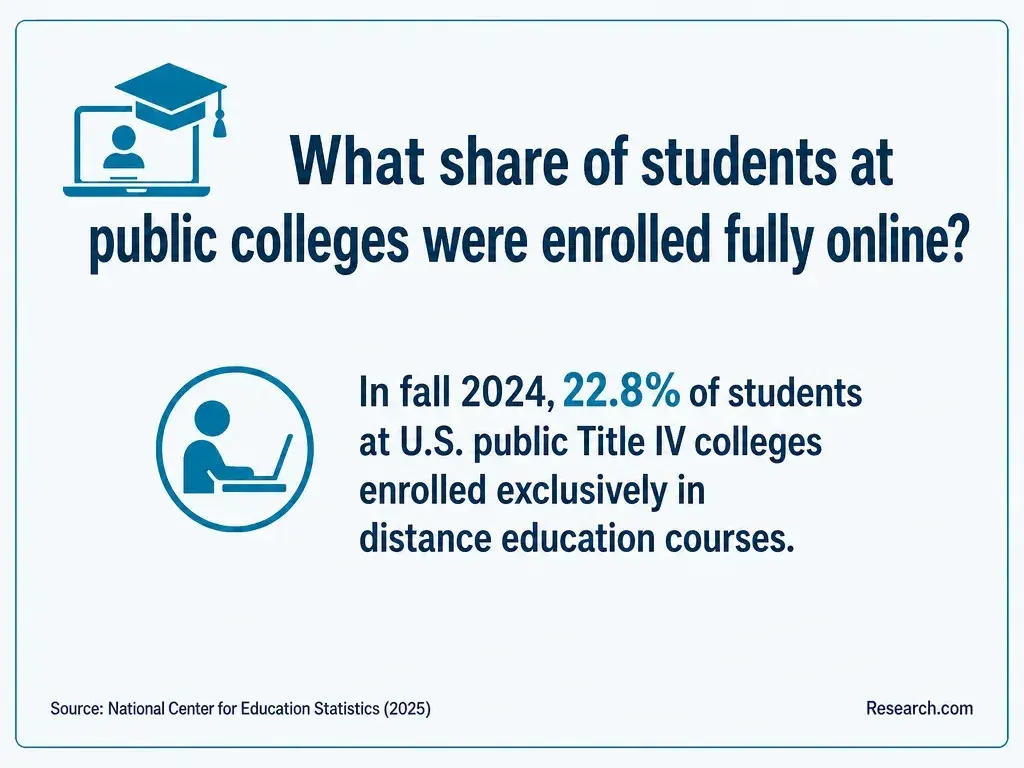
Online and campus programs can cover similar subject matter, but they may offer different access to faculty research, local justice agencies, and supervised projects. An online course may be asynchronous while research meetings, presentations, or an agency placement still require fixed hours. Campus attendance does not guarantee a placement, either.
Ask each program whether it requires live classes, a residency, a thesis defense, or an approved field site, and who must arrange supervision. These details matter more than the format label if you work full time or cannot travel.
If your objective changes to licensed counseling, compare its separate clinical placement obligations rather than assuming fast online clinical mental health counseling master's programs operate like nonclinical forensic degrees.
Common subjects include psychology and law, research methods, ethics, psychopathology as academic study, and behavior in criminal or civil legal contexts. Some programs emphasize statistics and a thesis; others emphasize applied assignments or a capstone. Verify the actual course sequence and whether electives you want are offered online during your expected enrollment period.
For an applied psychology graduate, the most valuable addition may be deeper research design: evaluating evidence without treating a correlation as proof of cause, recognizing limits of eyewitness research, and communicating findings without overstating them.
A course about assessment does not authorize a student to administer restricted tests or provide expert opinions. If your interest is instead delivering therapy, compare the required clinical curriculum and mental health counseling program costs before treating overlapping course titles as equivalent training.
Completion time depends on required credits, course availability, enrollment pace, and whether a thesis or placement has approval and scheduling steps.
Request a term-by-term plan for both your preferred pace and a slower one; an advertised accelerated timeline may assume uninterrupted enrollment and timely access to every course. Online forensic psychology master's graduation planning should account for these conditions, not just the number of courses.
For a reliable cost comparison, ask each school for its current charges and calculate the total against its required credits. Check these items before comparing offers:
- Tuition per credit or term, mandatory fees, and any differential online charges.
- Prerequisite courses that cannot count toward the MS.
- Travel, technology, materials, placement, and thesis-continuation expenses where applicable.
- Financial-aid eligibility at your planned enrollment pace and any employer reimbursement conditions.
A cheaper advertised tuition rate may not mean a lower total cost if prerequisites or extra terms are required. Compare written estimates using the same enrollment assumptions.
Potential nonclinical directions include victim-services coordination, justice-program support, research assistance, and evaluation or administrative work in correctional or community organizations.
Actual eligibility depends on the employer, prior experience, location, and duties. Public agencies may have civil-service requirements or specified qualifications that a forensic concentration does not replace.
Translate the MS into evidence an employer can assess: ethical data handling, a well-scoped evaluation, clear writing for nonpsychologists, or supervised work with a relevant organization.
Seek roles whose responsibilities match your qualifications rather than applying to "forensic psychologist" positions that require licensure and advanced clinical training. For a closer look at role differences, use career planning with a forensic psychology graduate degree as a starting point, then verify individual job postings.
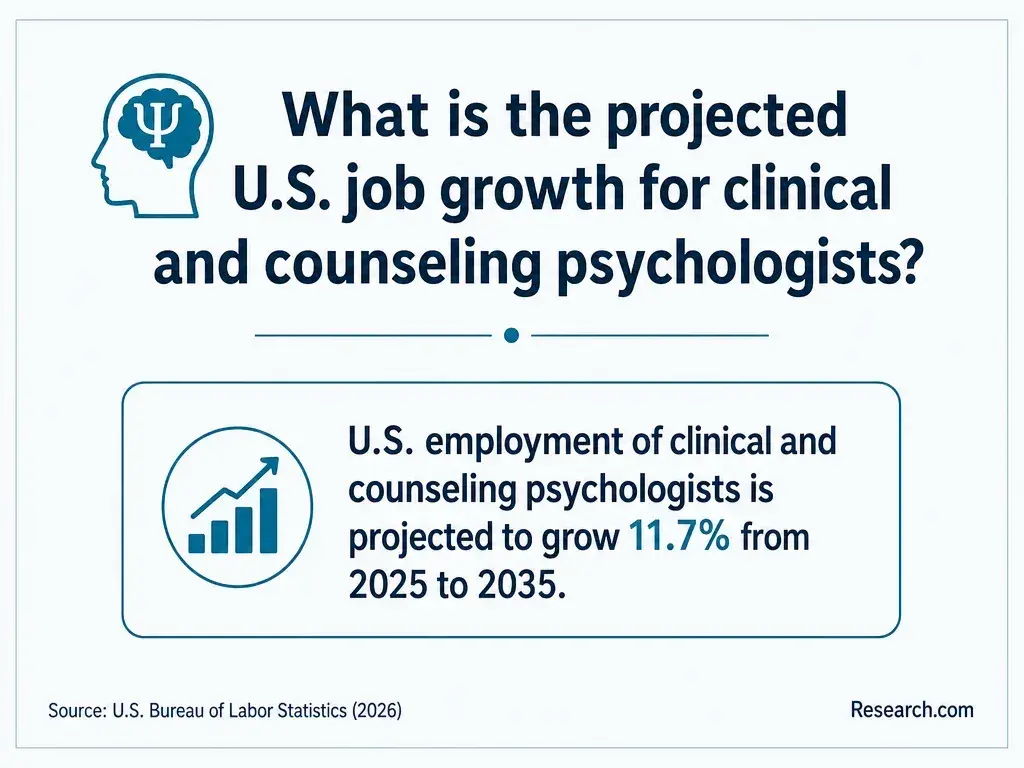
There is no single reliable salary or employment-growth figure for "forensic psychology MS graduates." The U.S. Bureau of Labor Statistics reports by occupation, not by degree concentration. Its psychologist figures describe an occupation with credential requirements that a nonclinical MS generally does not meet; using that median as an expected graduate salary would be misleading.
Instead, identify a target job title and compare its current Bureau of Labor Statistics Occupational Outlook Handbook profile with local postings that specify education and experience. A victim-services role, research position, and licensed psychologist role have different labor markets.
If you are also considering substance-use services, weighing tuition against substance abuse counseling career outcomes requires a separate comparison of that field's credentials and jobs. Neither field's occupation-wide wage is a promise of what your degree will earn.
Does a forensic psychology master's qualify you for licensure?
A nonclinical forensic psychology MS does not automatically qualify you to practice psychology, conduct independent forensic evaluations, diagnose conditions, provide psychotherapy, or testify as a licensed expert.
Psychologist licensure generally requires a qualifying doctoral pathway and additional jurisdiction-specific steps. Other licenses, such as professional counseling, have different educational and supervised-practice rules.
If licensure is your goal, start with the licensing board in the state where you intend to work. Ask whether a particular program meets its educational criteria and what additional supervised experience and examinations are required.
Only then compare the full cost of qualifying routes; comparing prices for online psychology master's degrees without checking credential fit can make an unsuitable program appear economical.
Other Things You Should Know About Psychology Programs
Ask the university whether it can enroll students in your state and whether any required field activity is permitted there. Enrollment permission is separate from professional licensure eligibility.
Diploma wording varies by institution. Ask the registrar for a sample or the official policy if this matters to you.
Not without the necessary employer and program permissions. Client or justice-system records may have strict access rules; a project can often use an approved, less sensitive data source instead.
Do not assume so. Ask the program whether it has a formal prior-learning or credit-by-examination policy, what evidence it accepts, and whether such credit can apply to the MS.
- Accreditation in the U.S. | ed.gov http://www.ed.gov/laws-and-policy/higher-education-laws-and-policy/college-accreditation/accreditation-in-the-us
- General Schedule Qualification Policies | U.S. Office of Personnel Management https://www.opm.gov/policy-data-oversight/classification-qualifications/general-schedule-qualification-policies/
- Frequently Asked Questions - California Board of Psychology https://www.psychology.ca.gov/licensees/faq.shtml
- GRE - Princeton Graduate School https://gradschool.princeton.edu/admission-onboarding/prepare/gre
- Department of Psychology - Catalog - Florida State University https://as.bulletin.fsu.edu/as-bulletin/psych
- MA in Forensic Psychology | John Jay College of Criminal Justice https://www.jjay.cuny.edu/academics/graduate-programs/ma-forensic-psychology
- APA Accreditation Process https://accreditation.apa.org/accreditation-process
- MS in Forensic Psychology | Neumann University https://www.neumann.edu/academics/grad/masters-degree-in-forensic-psychology