2027 Online MS in Psychology - Forensic Psychology After a BA in Mental Health Studies: Compare Prerequisites and Admission Options
Audited and Verified:
Our Editorial and Data Verification Process
Research.com uses government datasets, official education statistics and primary institutional information to support its career and degree guides. Our review process checks factual accuracy, occupational definitions, source dates and the requirements associated with the credentials discussed.
How This Article Was Fact-Checked
Our editorial team verifies salary estimates, employment projections, education requirements and program information against original data providers and official organizations. Salary figures are checked against the relevant occupational definitions and reporting periods. Information about licensure, accreditation and required in-person training is reviewed separately.
Fact-checked and verified on:

Co-Founder and Chief Data Scientist
A BA in mental health studies can be a strong starting point for an online MS in forensic psychology, but its title does not tell an admissions committee whether you have the psychology, statistics, and research preparation it expects. That distinction matters when you are deciding whether to apply now, complete a prerequisite first, or choose a different graduate pathway. This guide shows how to compare admissions policies against your transcript, evaluate online programs, and judge whether a forensic psychology master's fits your intended work - especially if that work may require a professional license.
Key Things You Should Know
- A mental health studies BA may satisfy the bachelor's-degree requirement, but eligibility depends on each program's course-level rules; compare your transcript against psychology, statistics, and research-methods prerequisites.
- Separate three admissions categories: required courses, recommended preparation, and qualifications that strengthen an application. Ask whether missing courses can be completed before enrollment or through conditional admission.
- An online forensic psychology MS is generally a nonclinical specialization, not a license to practice as a psychologist. Compare the program against the requirements of your target job or next degree before paying tuition.
What Is an Online Forensic Psychology Master's Degree?
An online forensic psychology master's examines psychological science in legal and justice-system settings. An MS may emphasize research methods, evidence evaluation, and applied analysis, but the degree label alone does not establish how much research training a particular program provides.
Courses may address behavior in courts and corrections, victimization, ethics, or psychological assessment as an academic subject. For a mental health studies graduate, the important distinction is between studying mental health in legal contexts and qualifying to provide clinical services or forensic evaluations.
Check the actual curriculum, final project, and placement requirements rather than relying on the concentration name. If your goal is broader psychology preparation rather than forensic specialization, compare inexpensive distance learning psychology options before committing to a specialized graduate degree.
Can You Enter Forensic Psychology Graduate School After a Mental Health Studies BA?
Many graduate admissions decisions turn on an accredited bachelor's degree and documented preparation, not an exact undergraduate major title. A mental health studies BA might include psychopathology and human-services coursework while offering less experimental psychology or statistics than a psychology major. Conversely, an interdisciplinary BA with substantial methods coursework may meet a program's requirements well.
Make a course-level comparison: record each prospective program's stated requirements, then match them to your transcript and course descriptions. Ask admissions staff whether courses housed outside a psychology department count and who makes the final equivalency decision.
Relevant work in community mental health, victim services, or justice settings can strengthen your explanation of fit, but it does not automatically replace a required class.
If you have not yet finished the BA, resolve its remaining requirements before treating graduate admission as settled. Undergraduate funding questions - including those discussed in paying for a substance abuse counseling bachelor's degree - are separate from graduate aid; do not assume the same eligibility or award will carry over.
What Are the Admission Requirements for an Online Forensic Psychology MS?
Programs commonly request transcripts and an application explaining academic interests and career goals. Some also require recommendations, a résumé, a writing sample, an interview, or a minimum GPA; test policies and deadlines differ. Verify the requirements for the specific entry term rather than treating a general graduate-school checklist as binding.
Read each requirement as one of three types: mandatory for admission, permitted to complete before starting, or helpful evidence of readiness. If a program advertises conditional admission, obtain written clarification about which courses remain, when they must be finished, and whether graduate enrollment can begin first. Ask whether an academic gap or lower GPA can be contextualized through recent coursework; do not assume a waiver exists.
Application fit matters as much as eligibility. Describe a specific interest - such as evaluating victim-service programs or studying decision-making in justice settings - and support it with coursework or experience. If your actual aim is therapist licensure, investigate clinical mental health master's programs by study pace instead of assuming a forensic MS will satisfy counseling admissions or licensing requirements.
There is no universal forensic psychology MS prerequisite list. The most consequential gaps for a mental health studies BA are often foundational psychology and quantitative preparation, but schools differ on course titles, acceptable substitutes, grades, and whether a course must be completed before applying.
The comparison below shows how to interpret common course categories - not requirements imposed by every program. Use it alongside each school's published policy and a written response to any equivalency question.
| Course area | What to check on your BA transcript | Why the distinction matters |
| Introductory psychology | Whether a broad psychology survey appears, rather than only a mental-health overview | A specialized course may not substitute for a required introduction. |
| Statistics | Coverage of statistical inference and the department offering the course | A program may accept statistics outside psychology - or specify otherwise. |
| Research methods | Training in study design, evidence appraisal, and research ethics | Service-learning experience is not necessarily a methods-course equivalent. |
| Upper-level psychology | Courses such as abnormal, developmental, social, or experimental psychology | These may be required, recommended, or useful preparation, depending on the program. |
Send admissions an unofficial transcript and descriptions or syllabi for ambiguous courses, then confirm how an official review works. If the missing preparation is substantial, taking targeted courses may be more efficient than entering a master's program that assumes skills you have not developed.
If your end goal is licensed counseling, compare that route's educational standards and costs separately; counseling degree affordability and accreditation involve different program criteria from those of a nonclinical forensic MS.
Online delivery changes where coursework happens, not necessarily when every obligation occurs. Live seminars, group projects, research meetings, exams, or an approved placement can constrain a working student's schedule. Campus programs may make face-to-face faculty contact and local agency connections easier, but access depends on the institution and the student's circumstances.
Use this comparison to identify questions that a program's "online" or "on-campus" label cannot answer by itself.
| Decision factor | Online program | Campus-based program |
| Scheduled participation | May be asynchronous, live, or mixed | Usually includes scheduled in-person classes |
| Research access | Depends on remote mentoring and available projects | May offer easier access to on-site teams; opportunities still vary |
| Applied experience | May require a locally approved site or travel | May have local partnerships, without guaranteeing a placement |
| Location-related costs | Check travel, technology, and any residency costs | Check commuting, relocation, and campus-related costs |
Ask for a sample term schedule, the current handbook's attendance rules, and the process for approving a placement near you. Compare completion policies as well as speed: shorter completion routes for psychology master's students are useful only if their course load and required experiences fit your life.
Look for a coherent combination of psychological theory, research design, statistics, and study of legal or justice contexts. Depending on the program, specialized courses may examine eyewitness memory, violence research, victim services, corrections, ethics, or assessment literature. Reading about a psychological test is not the same as being trained or authorized to administer restricted assessments.
For an applicant whose BA emphasized mental health services, methods training may be the most valuable addition: it helps you distinguish evidence about a program from assumptions about its effectiveness. A thesis, capstone, or applied project can demonstrate that skill if the program offers adequate supervision and lawful data access. Do not presume that a justice agency will release confidential records for student research.
Choose electives around a plausible role rather than the most dramatic-sounding topic. For example, coursework on substance use in justice settings may inform nonclinical service coordination; working in substance use recovery support has its own employer and, in some roles, state credential requirements.
Completion time depends on required credits, course availability, enrollment pace, and whether a thesis or placement must be arranged. An accelerated schedule can reduce time away from the workforce but leave less room for employment, caregiving, or substantial research work. Request a degree plan for your intended pace, including when required courses are actually offered.
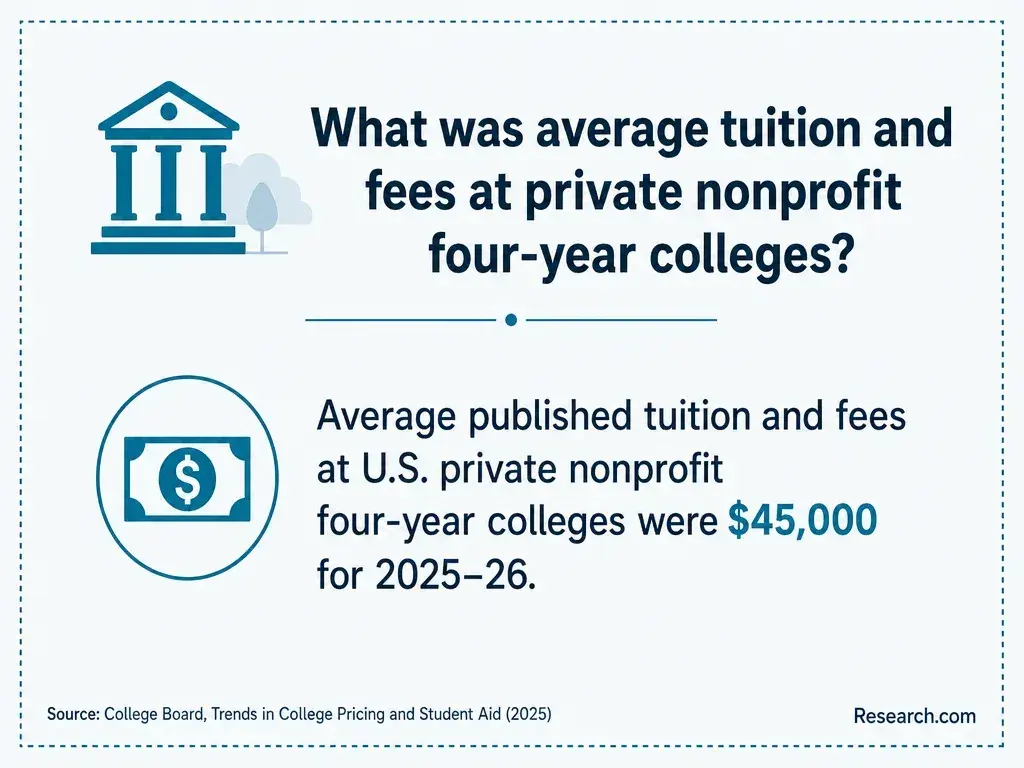
Compare total expected cost, not the advertised tuition rate alone: multiply the program's required credits by its applicable tuition rate, then add mandatory fees and likely expenses for books, software, travel, or fieldwork.
Ask whether tuition changes with residency or enrollment status and whether aid or employer assistance applies to your schedule. For a broader cost comparison, review psychology master's fees and total study costs while confirming every figure with the institution before enrolling.
The strongest career fit is usually a defined nonclinical function, not the title "forensic psychologist." Depending on prior experience and employer requirements, graduates may seek work in victim advocacy, justice-program coordination, corrections-related services, research support, or program evaluation.
Duties might include referrals, documentation, literature review, or analysis of service data - not independent diagnosis, therapy, or court-ordered psychological evaluation. Your BA and existing experience affect the value of the MS.
Someone already employed in a justice or human-services agency might use graduate research training to move toward evaluation work; someone seeking an entry-level advocate role may be better served by supervised experience and employer training first. When exploring better-paid roles related to forensic psychology, check each job's actual credential and experience requirements before attributing its pay to the master's degree.
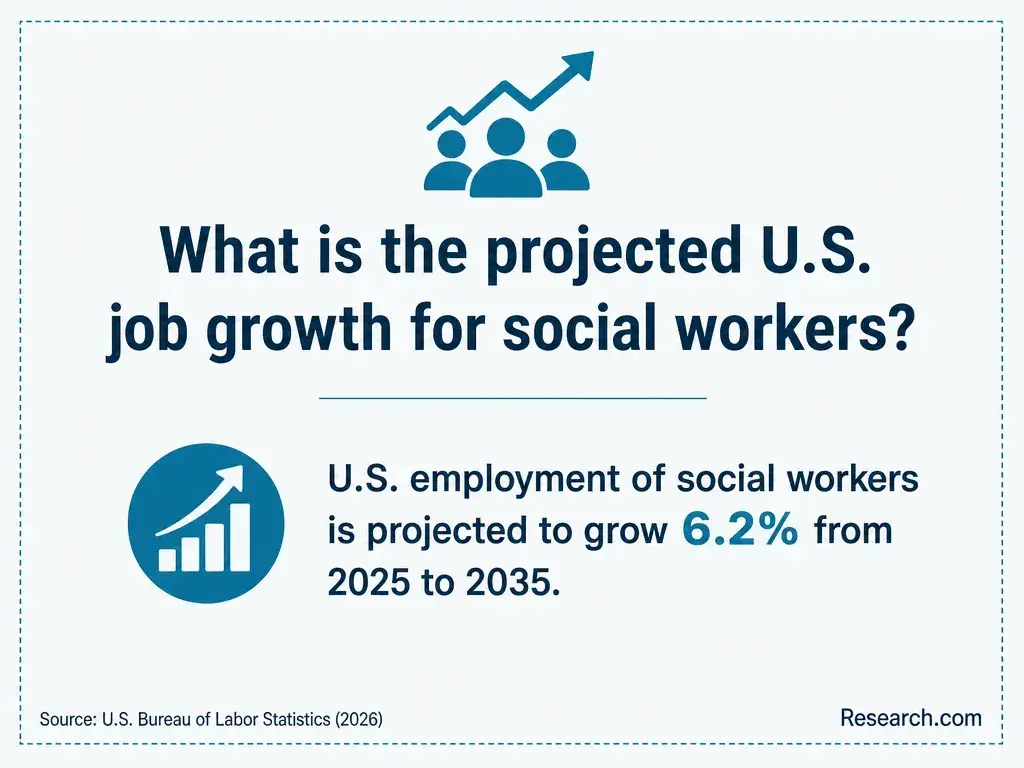
There is no single reliable salary or growth rate for "forensic psychology MS graduates." The U.S. Bureau of Labor Statistics reports wages and employment projections by occupation, not by this concentration. Its psychologist category is especially misleading as an MS outcome benchmark because psychologist roles generally require more advanced professional preparation and, for practice, state licensure.
First identify a realistic target occupation and locality - such as social and human service assistant or a specific agency research role - then consult the latest BLS Occupational Outlook Handbook entry and local job postings for that occupation.
Compare its stated education, experience, and pay with jobs you could pursue without the MS. That comparison makes the degree's time and cost meaningful; time-to-degree planning for forensic psychology graduate students is only one part of the return-on-investment decision.
Does an Online Forensic Psychology MS Lead to Licensure or Certification?
A nonclinical forensic psychology MS does not, by itself, authorize someone to practice as a licensed psychologist, conduct independent forensic assessments, provide psychotherapy, or use a protected professional title. State boards set licensing rules; certification bodies and employers set other requirements for particular roles.
Institutional accreditation is important to check, but it does not establish that this MS meets a clinical licensing pathway. APA accreditation applies to specified professional psychology training, not generally to nonclinical psychology master's programs.
Start with the credential required for your intended duties, then check the relevant state board's educational and supervised-experience rules against the exact program.
If you want to provide therapy, a qualifying counseling or social-work program may be a more direct choice; compare clinical counseling master's duration and earning potential without assuming any program qualifies in every state. If you want licensed forensic psychological practice, investigate the doctoral training and licensure pathway before deciding whether an intermediate MS would add value.
Other Things You Should Know About Psychology
Possibly. Ask whether the program reviews applicants before the final transcript arrives and when proof of degree completion is due. An offer may depend on completing the BA.
Usually, prior experience is considered application evidence rather than a substitute for a separately approved graduate requirement. Request the program's written fieldwork policy.
If the program accepts academic writing samples, a capstone may work. Check its length and formatting rules, and remove confidential client or agency information before submitting it.
That depends on the receiving school's limits, course-equivalency review, grade rules, and residency requirements. Seek an official evaluation before counting on a shorter degree plan.
- Licensed Professional Clinical Counselor - BBS - CA.gov https://www.bbs.ca.gov/applicants/lpcc.html
- Do I Need a Degree in Psychology to Apply to Graduate School? | William James College https://www.williamjames.edu/news/do-i-need-a-degree-in-psychology-to-apply.html
- Application Materials - Career Services - UW Bothell https://www.uwb.edu/career-services/resources/gradschool/application-materials
- APA-Accredited Programs https://accreditation.apa.org/accredited-programs
- Master's Degree - Forensic Psychology - On Campus | Monroe University https://www.monroeu.edu/academics/king-graduate-school/masters-forensic-psychology
- Forensic Psychology, MS - ASU degree programs https://degrees.asu.edu/masters-phd/major/ASU00/ASFPSYMS/forensic-psychology-ms
- Clinical Forensic Psychology MA | Fairleigh Dickinson University https://www.fdu.edu/program/ma-forensic-psychology/
- Requirements | Department of Psychology https://psychology.uchicago.edu/undergraduate-major/requirements
- Graduate Prerequisites - Department of Psychology https://csm.fresnostate.edu/psych/degrees-programs/graduate/overview/types.html
- Standardized tests | Office of Graduate Education https://oge.mit.edu/graduate-admissions/applications/standardized-tests/