2027 Online BA in Psychology - Mental Health vs. a BA in Social and Behavioral Sciences: Compare Curriculum, Cost, and Career Fit
Audited and Verified:
Our Editorial and Data Verification Process
Research.com uses government datasets, official education statistics and primary institutional information to support its career and degree guides. Our review process checks factual accuracy, occupational definitions, source dates and the requirements associated with the credentials discussed.
How This Article Was Fact-Checked
Our editorial team verifies salary estimates, employment projections, education requirements and program information against original data providers and official organizations. Salary figures are checked against the relevant occupational definitions and reporting periods. Information about licensure, accreditation and required in-person training is reviewed separately.
Fact-checked and verified on:

Co-Founder and Chief Data Scientist
An online BA in Psychology with a mental health focus and a BA in Social and Behavioral Sciences can both lead toward community-serving work, but they prepare students in different ways. That distinction matters if you are choosing courses around a job, planning graduate study, or hoping to enter behavioral-health services.
This comparison explains what each degree typically teaches, what costs and scheduling commitments to check, and which careers require further credentials. Use it to match the degree to your intended work, not to the appeal of its title alone.
Key Things You Should Know
- Choose the psychology BA for deeper study of individual behavior, psychological research, and mental health; choose social and behavioral sciences for a broader view of communities, institutions, and social problems.
- Neither bachelor's degree alone qualifies you to diagnose conditions or provide psychotherapy. A mental health concentration is academic preparation, not a clinical license.
- Compare the credits that actually remain on your degree audit, the total cost of those credits, and any required live classes or placements before deciding which online program is faster or cheaper.
What Is the Difference Between a Psychology Mental Health BA and a Social and Behavioral Sciences BA?
A BA in Psychology with a mental health focus is a psychology degree whose concentration or electives emphasize subjects such as psychological disorders, development, and mental-health services.
A BA in Social and Behavioral Sciences is usually interdisciplinary: it may combine psychology with sociology, anthropology, public policy, or other fields. The exact degree and concentration names depend on the institution.
The useful distinction is the level at which you want to understand a problem. Psychology may give you more sustained training in individual behavior and psychological research. Social and behavioral sciences may give you more room to examine how housing, institutions, culture, and policy shape behavior. Neither perspective is inherently better for all mental-health-related work.
Degree labels can also hide substantial differences. Compare required courses, not just catalog descriptions; an online forensic psychology program and its graduate outcomes, for example, answer a different career question from either of these broader BA options.
Which Degree Has the Better Curriculum for Mental Health Careers?
For mental-health research or preparation for psychology graduate study, the psychology BA is often the closer fit, provided it includes statistics, research methods, and opportunities to work with evidence.
For outreach, prevention programs, service coordination, or community policy, a social and behavioral sciences BA can be equally relevant or more useful if its electives and applied work match the role.
The table compares curricular strengths, not eligibility for a particular job. Check the actual catalog because a strong interdisciplinary program may teach more research methods than a lightly structured psychology major.
| Decision criterion | Psychology BA, mental health focus | Social and behavioral sciences BA |
| Primary lens | Psychological science and individual behavior | Behavior in social, cultural, and institutional settings |
| Potential strength | Psychology prerequisites, methods, and mental-health subject matter | Community needs, systems, policy, and cross-disciplinary analysis |
| Gap to check | Limited exposure to service systems or policy | Insufficient psychology or statistics coursework for a specific next degree |
| Best evidence of readiness | Methods coursework and supervised research or support experience | Relevant electives and a supervised community project or service role |
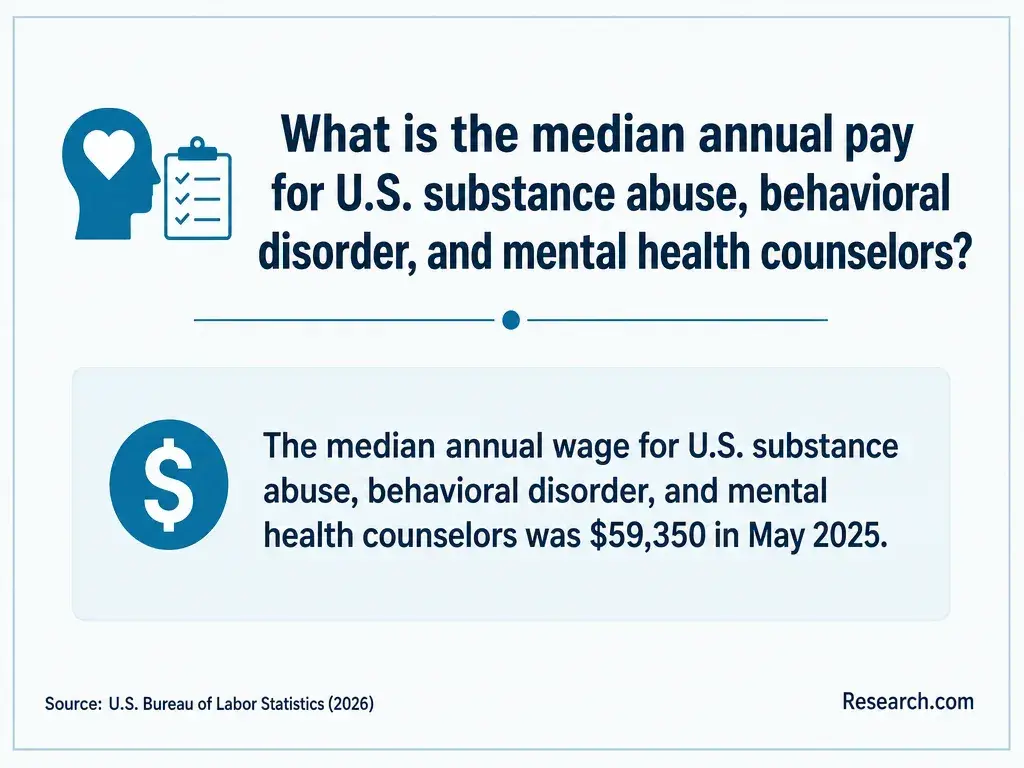
For recovery-service work, duties may center on outreach, documentation, referrals, and respectful support rather than psychological assessment. Explore career choices across recovery service settings, then check the specific employer's requirements and your state's credential rules. Classroom exposure to addiction does not authorize counseling.
How Much Does an Online Psychology or Social and Behavioral Sciences BA Cost?
There is no dependable price difference based on the two degree names. Schools set tuition and fees, while transfer evaluations determine how many credits you must pay to complete. A lower per-credit rate can still produce a higher total bill if more of your prior coursework counts only as electives.
Use an official degree audit and current tuition schedule to build a comparable estimate. These are the charges most likely to change the result:
- Tuition for the credits remaining, including any different rate for online or out-of-state enrollment
- Mandatory course, technology, and graduation fees
- Books, software, and travel or unpaid time associated with an approved placement
- The cost of prerequisite courses or extra terms caused by course sequencing
Ask each school for a written explanation of how transfer credits apply to the major, not merely how many are accepted. Compare that estimate with lower-cost online psychology study pathways, and confirm financial-aid eligibility, employer reimbursement conditions, and any borrowing limits with the relevant offices. Do not count aid you have not been awarded.
A psychology BA commonly builds from introductory psychology toward development, social psychology, statistics, and research methods. A mental health focus may add courses on psychopathology, health, addiction, or service systems. Studying those topics teaches concepts and evidence appraisal; it does not constitute supervised therapy training.
A social and behavioral sciences BA commonly draws from several disciplines and may include sociology, cultural analysis, social inequality, public policy, statistics, and research methods.
Some programs let students cluster electives around health or community services; others offer a fixed interdisciplinary sequence. A concentration exists only if the institution formally awards one.
For either degree, inspect the sequence rather than counting appealing electives. If you want addiction-focused study, compare required methods and service courses with those in online addiction counseling degree programs. Then ask whether the particular program meets any education requirement for the credential you want in your state; similar course titles are not proof that it does.
Some programs deliver all required academic courses online, but "online" does not necessarily mean asynchronous or entirely home-based. Live seminars, timed exams, group meetings, or an optional or required local internship can affect whether the program fits a work schedule.
Before applying, ask whether every required course is offered online during your expected enrollment terms, whether attendance is synchronous, and whether a capstone or placement requires an approved site. A local nonclinical placement may involve support, outreach, or research tasks; it is not a license-supervised clinical practicum merely because it occurs in a mental-health organization.
Accelerated formats need the same scrutiny. Published shorter routes through forensic psychology bachelor's coursework illustrate how pacing can differ, but their timelines should not be assumed for either degree compared here. Course availability and accepted credits determine your schedule.
First-year applicants generally need the institution's required secondary-school record and application materials. Transfer applicants typically submit transcripts from every college attended. Individual schools may set GPA, prerequisite, or major-entry rules, so institutional admission does not automatically mean admission to a particular concentration.
If you have prior college coursework, request a degree audit showing which credits satisfy general education, the major, methods prerequisites, and remaining residency requirements. That distinction is especially important for a student returning with an associate degree or substantial work experience: accepted credit does not necessarily shorten the major sequence.
Applicants using the BA as a step toward specialized graduate study should check the graduate program's requirements separately. Even intensive forensic psychology master's admissions and study plans cannot establish what every future program will accept. Save course descriptions and syllabi for statistics, methods, and psychology prerequisites so an admissions office can evaluate them.
Completion time depends less on the degree title than on remaining requirements, enrollment pace, and when required courses run. A full-time student entering without college credit should plan for a conventional bachelor's sequence.
A transfer student may finish sooner, but only an approved audit can establish the remaining path. Part-time enrollment can make either option workable alongside employment while extending the calendar time.
Look for bottlenecks: statistics before research methods, a capstone offered only in certain terms, or a placement that needs advance approval. Ask an advisor to map those requirements term by term and identify what happens if you pause enrollment.
If your longer-term plan includes graduate school, keep its timeline separate from the BA's. Under-two-year forensic psychology graduate program options are examples of later study, not time saved on an undergraduate degree or a substitute for any required professional training.
Either BA can support applications for nonclinical roles such as human-services assistant, community outreach worker, program coordinator, or research support worker, depending on experience and the employer's requirements. The psychology route may help you explain individual behavior and research evidence; the interdisciplinary route may help you work across agencies and community systems.
Job titles alone are unreliable. An intake role might involve scheduling and referrals, while a research assistant role might require data cleaning and consent procedures. Seek internships, employment, or supervised projects that demonstrate the actual tasks you want to perform. Never assume that access to clients or records permits independent assessment or treatment.
If your goal is forensic work, distinguish support and research jobs from licensed evaluation or expert practice. Information on forensic psychology master's careers and earning potential concerns a different educational level; it should not be read as a job or salary promise for either BA.
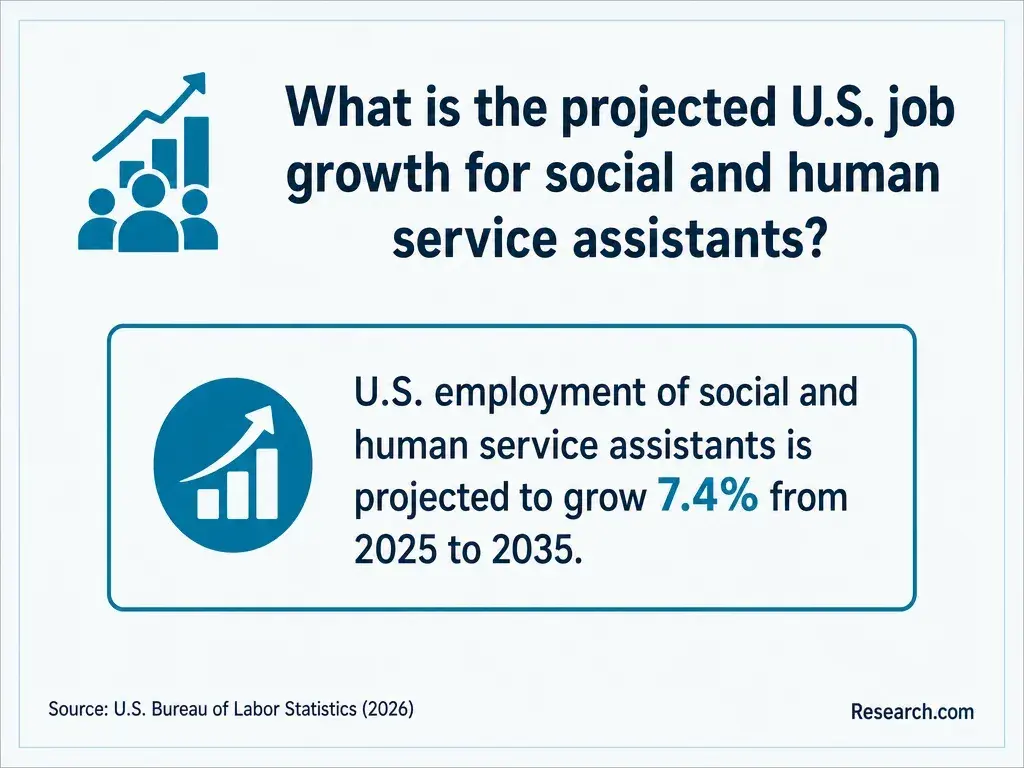
Neither degree has a single salary or employment-growth rate. The U.S. Bureau of Labor Statistics reports wages and projections by occupation, not by whether a worker earned a psychology or social and behavioral sciences BA. For a defensible comparison, identify a target job's duties and typical entry requirements, then consult its latest Occupational Outlook Handbook profile and local postings.
For example, social and human service assistant data may inform a support-role decision, but it cannot predict a particular graduate's pay. Location, employer, prior experience, and whether a position requires a separate credential all matter. Be especially cautious about comparing a bachelor's-entry support job with a licensed counseling occupation.
Licensed counseling also involves additional education costs and time. If that is your intended occupation, assess clinical counseling master's fees and graduation timelines alongside occupation-specific wage data rather than attributing counselor earnings to either BA.
How Do Accreditation and Licensing Affect Your Career Options?
Check whether the university holds recognized institutional accreditation, then check any separate approval relevant to your eventual profession. Do not assume APA accredits a general psychology BA or that institutional accreditation makes a bachelor's graduate eligible for a clinical license.
A mental health focus is not a counseling credential. Licensed counselor, clinical social worker, psychologist, and some addiction-counselor roles follow distinct education, supervised-experience, examination, and state requirements.
Before choosing either BA for one of those goals, identify the state and occupation, read the responsible board's rules, and ask prospective graduate programs which undergraduate courses they expect.
For a counseling goal, a qualifying graduate program may be the pivotal decision. Compare its credential alignment and options for paying for an online mental health counseling degree before investing in bachelor's electives solely because they sound clinical. Neither BA replaces the subsequent professional pathway.
Other Things You Should Know About Psychology Programs
Possibly. Check whether the school offers the minor, permits it with that major, and allows courses to count toward both. A minor may fill knowledge gaps, but it is not the same as a psychology major.
Usually you can request a change, subject to school rules. Get a new degree audit first: courses already completed may become electives, and a different prerequisite sequence may delay graduation.
That depends on the institution's credential and transcript policies. Ask the registrar for the exact wording rather than assuming the online and campus records are identical.
Only if the academic program approves the work and your employer authorizes the proposed activities. Clarify supervision, confidentiality, data access, and what you may submit before using workplace materials.
- TNReconnect | Prior Learning Assessment Information https://tnreconnect.gov/Choose-a-Degree-College-Path/Prior-Learning-Assessment-Information
- Department Expectations: Curriculum | New York State Education Department https://www.nysed.gov/college-university-evaluation/department-expectations-curriculum
- Online Bachelor's in Psychology | University of Kansas https://online.ku.edu/undergraduate-programs/online-bachelors-psychology
- Community Mental Health: Why It Matters in Public Health Today | National University https://www.nu.edu/blog/community-mental-health-why-it-matters/
- A Guide To Experiential Learning, Internships, Capstones, and Practicums - UOnline - The University of Utah https://online.utah.edu/blog/posts/learning-experiences.php
- Online Bachelor's of Psychology Degree | Capella University https://www.capella.edu/online-psychology-degrees/bs-psychology-program/
- Transfer Credits - Undergraduate - Policies - Campus Offices https://campus.collegeforcreativestudies.edu/policy/transfer-credits-undergraduate/
- What's the Difference Between Asynchronous and Synchronous Learning? | Ohio State Online https://online.osu.edu/content-hub/blogs/whats-the-difference-between-asynchronous-and-synchronous-learning/
- Tuition Rates | University of South Florida https://www.usf.edu/business-finance/controller/student-services/tuition-rates.aspx
- Online Bachelor's in Psychology | University of Louisville https://online.louisville.edu/programs/bachelors/online-bachelor-of-science-in-psychology