2027 Obstetrics Nurse Salary and Careers

Co-Founder and Chief Data Scientist
Choosing obstetrics nursing means choosing a specialty where clinical skill, fast judgment, patient education, and emotional support all matter at the same time. Obstetrics nurses care for patients before birth, during labor and delivery, and after pregnancy, often working with families during some of the most important and stressful moments of their lives.
This guide explains what obstetrics nurses do, how the obstetrics nurse salary compares with other nursing roles, what education and certifications are usually expected, and how to decide whether this career path fits your goals. It also covers online nursing degrees, LPN-to-RN pathways, continuing education, advanced practice options, technology trends, legal responsibilities, financial aid considerations, and practical steps for career advancement.
Quick answer: Is obstetrics nursing a good career path?
Obstetrics nursing can be a strong career choice for registered nurses who want to specialize in pregnancy, labor and delivery, postpartum care, women’s health, neonatal support, or maternal health education. The obstetrics nurse salary range is $62,000 $139,000 per year, and experienced OB nurses may improve their career options through certifications, clinical experience, and advanced education.
However, this specialty is not ideal for everyone. OB nurses often work nights, weekends, holidays, and high-pressure shifts. The role can be emotionally rewarding, but it can also involve emergencies, pregnancy loss, complex patient needs, and difficult conversations with families.
Key benefits of becoming an obstetrics nurse
- The obstetrics nurse salary range is $62,000 $139,000 per year.
- Certification can show employers that you have advanced knowledge and clinical competence in obstetric nursing.
- Two relevant credentials for this specialty include registered nurse-obstetrics (RNC-OB) and certified women’s health nurse (CWHN).
- OB nursing can lead to roles in labor and delivery, postpartum care, high-risk obstetrics, women’s health clinics, lactation support, public health, nurse-midwifery, and advanced practice nursing.
- What does an obstetrics nurse do?
- How much do obstetrics nurses make?
- How does OB nurse pay compare with other nursing specialties?
- Obstetrics nurse vs. nurse midwife: what is the difference?
- What are the requirements to become an obstetrics nurse?
- How long does it take to become an obstetrics nurse?
- Which certifications help OB nurses?
- What career paths are available in obstetrics nursing?
- How does continuing education help obstetrics nurses?
- Can online nursing degrees work for future OB nurses?
- How is technology changing obstetrics nursing?
- What legal and ethical issues should OB nurses understand?
- Can LPNs transition into obstetrics nursing?
- What financial aid options can help with OB nursing education?
- What advanced practice roles can OB nurses pursue?
- Can an online biology degree support obstetrics nursing research?
- What is the job outlook for obstetrics nursing?
- What is the typical education pathway for OB nurses?
- What should nurses know about easy online RN-to-BSN programs?
- How can a public health MSN strengthen an OB nursing career?
- How can you advance in obstetrics nursing?
What does an obstetrics nurse do?
An obstetrics nurse, often called an OB nurse, is a registered nurse who cares for patients during pregnancy, labor, childbirth, and postpartum recovery. Some OB nurses also work in gynecology, reproductive health, prenatal education, fertility-related care, and community maternal health programs.
Students often start by asking practical questions such as how difficult nursing school is, but the bigger career decision is whether the daily work of OB nursing fits their temperament. This specialty requires clinical accuracy, calm communication, comfort with rapidly changing conditions, and the ability to support patients and families through both joyful and difficult outcomes.
In the US, where up to 50% of mothers are not seen by a healthcare professional, obstetrics nurses can play an important role in maternal health access, education, and follow-up support (Policy Center for Maternal Mental Health, 2023). There is no single “OB nursing degree.” Instead, nurses usually become licensed RNs first and then gain maternal health experience through clinical placements, hospital roles, specialty units, and certifications.
Common responsibilities of an obstetrics nurse
- Monitoring pregnant patients and reporting changes in condition to physicians, midwives, or advanced practice providers.
- Assisting during labor and delivery, including fetal monitoring, patient positioning, documentation, and patient education.
- Providing postpartum care, including recovery checks, newborn assessments, breastfeeding support, and discharge teaching.
- Administering medications as ordered and following safety protocols for maternal and newborn care.
- Supporting families during emergencies, complications, pregnancy loss, or unexpected clinical developments.
- Educating patients about prenatal care, warning signs, postpartum recovery, newborn care, and follow-up appointments.
Where obstetrics nurses work
| Work setting | What OB nurses typically do there | Best fit for nurses who want |
| Hospitals | Work in labor and delivery, maternity units, postpartum units, outpatient prenatal services, and gynecology-related care. | Fast-paced clinical work, higher-acuity cases, and team-based care. |
| Birthing centers | Support low-risk deliveries in a setting that may feel less institutional than a hospital. | A more patient-centered birth environment with lower-risk cases. |
| Women’s health clinics | Assist with prenatal visits, gynecological care, family planning, education, and follow-up. | More predictable schedules and ongoing patient relationships. |
| Public health programs | Promote maternal and child health through outreach, education, prevention, and access initiatives. | Community health, advocacy, and population-level impact. |
| Research institutions | Support studies related to pregnancy, childbirth, postpartum care, neonatal outcomes, or women’s health. | Evidence-based practice, data, and clinical innovation. |
| Private practice | Assist obstetricians, gynecologists, or midwives in office-based patient care. | Ambulatory care and a schedule that may be more stable than hospital shifts. |
What OB nurses often say about the work
- Helping families through pregnancy and birth is deeply meaningful. The work can be intense, but being present when a baby arrives makes the hard shifts worthwhile. -Emily
- The best part of obstetric nursing is the variety. One shift may involve labor support, and another may focus on teaching new parents how to care for themselves and their newborn. -Mark
- I chose obstetrics because patients need more than clinical care. They need reassurance, clear explanations, and someone who can stay steady during a life-changing moment. -Jennifer
How much do obstetrics nurses make?
According to the US Bureau of Labor Statistics (BLS), newly qualified nurses can expect an average annual salary of $81,220. OB nurse earnings can rise with experience, location, employer type, specialty unit, shift differentials, and certifications.
The median salary for experienced OB nurses in the US is around $83,242, with a range from $71,000 to $99,500 depending on location, employer, certifications, and experience. Nurse midwives and OB/GYN nurse practitioners generally earn more because they complete additional graduate education and advanced practice preparation. Their median annual salary is $125,900.
OB nurses in California, Washington, and Colorado tend to earn the most, with average salaries exceeding $90,000. Higher pay in these states may reflect demand, union contracts, staffing patterns, cost of living, and employer competition, so salary should be evaluated alongside housing costs, commute time, benefits, and schedule expectations.
| Role or salary measure | Salary figure stated | How to interpret it |
| Newly qualified registered nurses | $81,220 | A useful baseline for new RNs entering the workforce. |
| Experienced OB nurses | Around $83,242 | A specialty-specific midpoint that varies by market and employer. |
| Experienced OB nurse range | $71,000 to $99,500 | Shows how much location, experience, setting, and credentials can affect pay. |
| Nurse midwives and OB/GYN nurse practitioners | $125,900 | Reflects advanced practice education, broader responsibility, and higher clinical autonomy. |
| High-paying states named | Exceeding $90,000 | California, Washington, and Colorado are cited as higher-paying markets, but cost of living matters. |
What affects an OB nurse salary?
- Employer type: Hospitals often pay more than small clinics or lower-acuity settings, but hospital shifts may be more demanding.
- Clinical unit: Labor and delivery, high-risk obstetrics, and neonatal-related units may require stronger emergency skills.
- Experience level: Nurses with several years of maternal health experience are usually more competitive for specialty openings.
- Certifications: Credentials such as ACLS, NRP, RNC-OB, or lactation-related certification may strengthen job prospects.
- Location: Pay can differ widely by state, metro area, staffing demand, and cost of living.
- Schedule: Nights, weekends, holidays, and on-call work may influence total compensation depending on employer policy.
How does OB nurse pay compare with other nursing specialties?
OB nursing pay is competitive with registered nursing overall, but it is not always the highest-paying nursing specialty. The median annual salary for OB nurses in the US is around $83,242, while the median annual salary for registered nurses is $82,750. This places OB nursing close to the broader RN median.
Some specialties, including critical care, cardiac nursing, and nurse anesthetist roles, can pay more, with medians exceeding $100,000. Other specialties, such as psychiatric nursing or home health nursing, tend to have lower median salaries, around $75,000 or less. Licensed vocational nursing can also be an entry point into healthcare; if you are considering that route first, review how to become a LVN before comparing long-term RN and BSN options.
| Nursing path | Salary information stated | Decision point |
| Registered nurse overall | $82,750 median annual salary | Good comparison point for OB nurse pay. |
| Obstetrics nurse | Around $83,242 median annual salary | Competitive with RN pay, with specialization in maternal care. |
| Critical care, cardiac, and nurse anesthetist roles | Medians exceeding $100,000 | May pay more, but often require different training, intensity, or advanced credentials. |
| Psychiatric or home health nursing | Around $75,000 or less | May offer different schedules, patient populations, and work environments. |
| Nurse midwife or OB/GYN nurse practitioner | $125,900 median annual salary | Requires graduate education and advanced practice preparation. |
When comparing nursing specialties, do not look at salary alone. A higher-paying role may involve more call time, more acute cases, greater liability, additional education costs, or a work environment that does not fit your strengths.
Obstetrics nurse vs. nurse midwife: what is the difference?
Obstetrics nurses and nurse midwives both support maternal and women’s health, but they differ in education level, scope of practice, autonomy, and daily responsibilities.
A certified nurse midwife (CNM) typically completes a master’s degree in midwifery, earns advanced certification, and may also complete neonatal resuscitation training. CNMs can manage low-risk pregnancies and deliveries, provide well-woman care, perform gynecological exams, offer family planning services, and deliver postpartum care. They also collaborate with obstetricians and gynecologists when pregnancy risks or complications require physician involvement.
An obstetrics nurse is an RN who usually completes an ADN or BSN, passes the NCLEX-RN, gains clinical experience, and may pursue specialty certifications. OB nurses assist with labor and delivery, monitor patients, administer medications, provide pre- and post-procedure care, educate patients, and support the care plan. They do not independently manage deliveries or prescribe medications.
| Category | Obstetrics nurse | Nurse midwife |
| Typical starting education | ADN or BSN leading to RN licensure | Graduate-level midwifery education |
| Licensure or credential focus | RN license plus optional OB certifications | Advanced practice midwifery certification |
| Scope of practice | Provides nursing care under the clinical care plan | Can manage low-risk pregnancy and birth care within scope |
| Prescribing authority | Not independent | May have prescribing authority depending on state rules |
| Best fit | Nurses who want bedside maternal care, labor support, postpartum work, or women’s health nursing | Nurses who want advanced practice autonomy and direct management of low-risk births |
What are the requirements to become an obstetrics nurse?
If you are asking how to become an OBgyn nurse, the first step is becoming a registered nurse. Most aspiring OB nurses complete either an Associate Degree in Nursing (ADN) or a Bachelor of Science in Nursing (BSN), then pass the NCLEX-RN exam.
A BSN is commonly preferred by hospitals and may be required for some obstetrics nursing positions. ADN programs can still lead to RN licensure, and some employers hire ADN-prepared nurses if they have relevant clinical experience or agree to continue toward a BSN. Nurses who already hold an ADN may consider affordable RN to BSN online programs if they want to keep working while completing a bachelor’s degree.
Basic pathway to OB nursing
- Complete an ADN or BSN: Choose a nursing program that prepares you for RN licensure and, if possible, offers maternal health clinical exposure.
- Pass the NCLEX-RN: RN licensure is required before you can practice as a registered nurse.
- Gain relevant experience: Work in women’s health, medical-surgical nursing, postpartum units, labor and delivery, clinics, or related areas.
- Apply for OB-focused roles: Look for positions in maternity units, labor and delivery, postpartum care, gynecology clinics, or physician offices.
- Add certifications: Credentials such as NRP, ACLS, RNC-OB, or lactation-related certification can support advancement.
What to look for in a nursing program if you want OB nursing
- Clinical rotations or practicum opportunities in maternal-child health, labor and delivery, postpartum care, or women’s health.
- Accreditation and eligibility for state RN licensure.
- Strong NCLEX-RN preparation and student support services.
- Transfer credit policies if you already completed coursework or hold an ADN.
- Flexible schedules if you plan to work while studying.
- Clear information about clinical placement requirements, especially for online or hybrid programs.
How long does it take to become an obstetrics nurse?
The timeline depends on your starting point, degree choice, clinical experience, and whether you pursue specialty certification. A BSN program typically takes four years to complete. An ADN program is a two-year program that prepares students to become RNs, after which they can take the NCLEX-RN exam.
After completing a BSN and passing the NCLEX-RN, some hospitals may hire new graduates directly into obstetrics-related roles. Other employers prefer one to two years of general nursing experience first, especially in women’s health, medical-surgical nursing, postpartum care, or related hospital units.
Specialty certifications such as RNC-OB or CWHN can take one to two years post-BSN plus exam preparation, depending on eligibility rules and clinical experience. Nurses who want to become a CNM or WHNP should expect two to three additional years after the BSN. Some nurses also explore accelerated NP programs, but they should carefully compare clinical requirements, accreditation, and state authorization before enrolling.
| Stage | Approximate timing stated | What happens during this stage |
| ADN route | Two-year program | Prepares students for RN licensure and the NCLEX-RN exam. |
| BSN route | Typically four years | Often preferred for hospital-based obstetrics roles. |
| General nursing experience | One to two years | Builds clinical judgment before specializing more deeply in OB care. |
| OB certification preparation | One to two years post-BSN plus exam preparation | Supports advancement into specialized or leadership roles. |
| CNM or WHNP preparation | Two to three more years after the BSN | Leads toward advanced practice roles in women’s health or midwifery. |
| Experienced OB nurse status | Approximately five to seven years | Reflects deeper specialty competence and broader clinical confidence. |
Which certifications help OB nurses?
The best certification depends on the unit you want, the patient population you serve, and whether you plan to move into leadership, lactation support, high-risk obstetrics, or advanced practice. Certifications do not replace licensure, but they can make your qualifications clearer to employers.
| Certification or training | Why it matters for OB nurses | Best for |
| Basic Life Support | Maintains CPR and emergency response skills required in most healthcare jobs. | All OB nurses. |
| Advanced Cardiac Life Support (ACLS) | Supports response to cardiac emergencies involving pregnant or postpartum patients. | Labor and delivery, high-risk units, and hospital-based roles. |
| Neonatal Resuscitation Program (NRP) | Prepares nurses to assist with newborn resuscitation after delivery. | Labor and delivery and newborn-related care settings. |
| Inpatient Obstetric Nursing (RNC-OB) | Offered by the National Certification Corporation (NCC) for experienced OB nurses with at least two years of clinical experience. | Experienced OB nurses seeking specialty validation or leadership roles. |
| Fetal Monitoring Certification (FMCP) | Shows skill in interpreting fetal heart rate tracings and recognizing possible risks. | Labor and delivery nurses and high-risk obstetrics nurses. |
| Certified Lactation Consultant (CLC) | Supports breastfeeding education and troubleshooting for mothers and newborns. | Postpartum nurses, clinic nurses, and lactation-focused roles. |
| High-Risk Perinatal Nurse (HRPN) | Focuses on pregnancies involving complications and higher-acuity maternal care. | Nurses working with complex pregnancies. |
What career paths are available in obstetrics nursing?
Obstetrics nursing is not a single job. It is a group of related pathways across hospitals, clinics, public health, education, research, and advanced practice. With 63% of women considering fertility, pregnancy, pregnancy loss, and post-natal support a priority in healthcare, maternal health remains an important area for nursing specialization.
If you want to compare broader options, review common nursing career paths before narrowing your focus to obstetrics.
Hospital-based OB nursing roles
- Labor and delivery nurse: Supports patients through labor, birth, immediate recovery, fetal monitoring, documentation, and coordination with the care team.
- Postpartum nurse: Cares for patients and newborns after delivery, including recovery checks, education, feeding support, and discharge preparation.
- High-risk obstetrics nurse: Works with complex pregnancies and collaborates closely with specialists when complications arise.
- Neonatal intensive care nurse (NICU): Provides highly specialized care for premature or critically ill newborns.
- Nurse-midwife pathway: Requires advanced preparation and can lead to greater autonomy in low-risk pregnancy and birth care. Nurses considering this path may compare affordable nurse practitioner programs online as part of their graduate school research.
Outpatient, community, and education roles
- Prenatal clinic nurse: Provides prenatal education, routine visit support, and follow-up coordination.
- Women’s health clinic nurse: Supports gynecological care, family planning, screenings, breastfeeding education, and reproductive health services. Nurses pursuing advanced women’s health roles may explore nurse practitioner online programs.
- Public health nurse: Works on community maternal-child health programs, prevention, education, and care access.
- Lactation consultant: Helps families with breastfeeding technique, supply concerns, latch issues, and infant feeding support.
- Research or nurse educator: Contributes to clinical studies, quality improvement, or the preparation of future nurses.
For nurses who want leadership, teaching, or advanced clinical options, affordable MSN programs online may make graduate study more manageable while continuing to work.
| Career direction | Best fit | Education or preparation to consider |
| Labor and delivery | Nurses who thrive in fast-moving, team-based environments. | RN licensure, hospital experience, fetal monitoring, NRP, and OB certification. |
| Postpartum care | Nurses who enjoy education, newborn care, and family support. | RN licensure, mother-baby experience, lactation training. |
| High-risk obstetrics | Nurses comfortable with complex cases and urgent clinical decisions. | OB experience, advanced monitoring skills, specialty certifications. |
| Women’s health clinic | Nurses who prefer outpatient care and longer-term patient relationships. | RN licensure, gynecology or reproductive health experience. |
| Advanced practice | Nurses who want more autonomy, diagnosis, management, or midwifery roles. | Graduate nursing education and role-specific certification. |
How does continuing education help obstetrics nurses?
Continuing education helps OB nurses keep their skills current as maternal care protocols, monitoring tools, patient safety standards, and technology change. It can also support career mobility into high-risk maternity, lactation consulting, gynecologic oncology, perinatal mental health, public health, leadership, or advanced practice.
For example, earning or maintaining credentials such as Registered Nurse Certified in Inpatient Obstetric Nursing (RNC-OB) or Certified Lactation Consultant (CLC) can strengthen a nurse’s professional profile. Continuing education can also help nurses respond more effectively to emerging maternal healthcare policies, diagnostic tools, telehealth workflows, and documentation requirements.
OB nurses interested in perinatal mental health may consider whether a bridge or certificate route, such as a 1 year PMHNP program online, aligns with their goals. This can be relevant because pregnancy and postpartum care often intersect with anxiety, depression, trauma, grief, and family stress.
Can online nursing degrees work for future OB nurses?
Online nursing degrees can be useful for aspiring or current OB nurses, but only when the program is properly accredited, meets licensure requirements, and provides appropriate clinical experiences. Nursing is a hands-on profession, so even online and hybrid programs typically require in-person clinical placements.
Prospective students should verify whether an online program is accepted in their state, whether it prepares them for the correct licensure pathway, and whether employers in their area recognize the credential. If you are unsure how employers evaluate online nursing education, review whether an online nursing degree is credible before enrolling.
Questions to ask before choosing an online nursing program
- Is the program accredited by a recognized nursing accreditor?
- Does it meet RN licensure requirements in my state?
- Who arranges clinical placements, the school or the student?
- Are maternal-child health, OB, or women’s health clinical opportunities available?
- Can I transfer previous credits from an ADN, LPN, or prior college coursework?
- What are the total costs beyond tuition, including fees, books, travel, uniforms, and exams?
- What is the school’s support for NCLEX-RN preparation or RN-to-BSN completion?
How is technology changing obstetrics nursing?
Technology is reshaping obstetrics nursing through electronic health records, remote patient monitoring, telemedicine, fetal monitoring tools, digital patient education, and simulation-based training. These tools can improve documentation, expand access to follow-up care, and support earlier communication when symptoms or risk factors change.
OB nurses increasingly need digital fluency in addition to bedside skill. They may document complex labor events, interpret monitoring data, teach patients how to use remote tools, and communicate across multidisciplinary teams. Nurses moving toward advanced acute care roles may compare options such as acute care nurse practitioner programs online, especially if they want broader preparation in complex patient management and evidence-based practice.
Technology skills that matter in OB nursing
- Accurate electronic documentation during fast-moving labor and delivery events.
- Competence with fetal monitoring systems and escalation protocols.
- Comfort using telehealth platforms for prenatal or postpartum education.
- Ability to explain digital tools clearly to patients and families.
- Awareness of privacy, consent, and secure communication standards.
What legal and ethical issues should OB nurses understand?
OB nurses work in a specialty where patient safety, privacy, informed consent, documentation, and communication are especially important. They must follow state scope-of-practice rules, employer policies, federal privacy requirements, and ethical standards while supporting patients who may be making urgent or emotionally difficult decisions.
Important issues include informed consent, refusal of treatment, patient confidentiality, cultural respect, fetal and maternal risk communication, emergency escalation, and accurate documentation. Nurses considering graduate education that bridges clinical practice and leadership may explore programs such as ADN to MSN-FNP, but they should always confirm that any program meets their professional goals and state requirements.
Common legal and ethical responsibilities in OB care
- Protecting patient privacy when discussing pregnancy, reproductive health, newborn care, or family matters.
- Documenting patient status, interventions, communication, and changes in condition accurately and promptly.
- Escalating concerns when maternal or fetal signs suggest possible deterioration.
- Supporting informed consent without pressuring the patient toward a decision.
- Recognizing cultural, religious, and family preferences while maintaining patient safety.
- Following facility policy when emergencies, abuse concerns, pregnancy loss, or complex family dynamics arise.
Can LPNs transition into obstetrics nursing?
Yes. Transitioning from LPN to RN can be a practical route for nurses who want to move into obstetrics nursing, because most OB nursing positions require RN licensure. LPN-to-RN bridge programs can help practical nurses build the clinical, theoretical, and licensure preparation needed for registered nursing roles.
Some accelerated options, such as the 6-month LPN to RN program online Texas, are designed to help students move more quickly toward RN preparation. Before enrolling, confirm accreditation, state authorization, clinical placement requirements, NCLEX-RN eligibility, and whether the program includes maternal health exposure.
| If you are currently... | Next logical step | What to verify |
| An LPN interested in OB nursing | Compare LPN-to-RN bridge programs. | Accreditation, RN licensure eligibility, clinical placements, and state approval. |
| An ADN-prepared RN | Consider an RN-to-BSN program if employers prefer BSN-prepared nurses. | Transfer credits, cost, schedule, and clinical or practicum expectations. |
| A BSN-prepared RN | Seek OB experience and specialty certifications. | Unit requirements, mentorship, residency options, and certification eligibility. |
| An experienced OB nurse | Evaluate MSN, DNP, CNM, WHNP, education, or leadership pathways. | Scope of practice, tuition, clinical hours, board certification, and state rules. |
What financial aid options can help with OB nursing education?
OB nursing education can involve tuition, fees, books, uniforms, clinical costs, exam fees, certification costs, commuting, and reduced work hours. Students and working nurses should compare total program cost, not tuition alone.
Possible funding sources include federal and state grants, scholarships from nursing organizations, employer tuition reimbursement, and low-interest student loans. If you are already an RN and want to complete a BSN quickly, a program such as an RN to BSN fastest program may help shorten the timeline, but speed should not come at the expense of accreditation, clinical quality, or state eligibility.
Ways to reduce nursing education costs
- Use transfer credits from prior college coursework whenever possible.
- Ask employers about tuition reimbursement, certification reimbursement, or paid professional development.
- Compare total program cost, including fees and clinical expenses.
- Apply for scholarships through schools, hospitals, professional associations, and community organizations.
- Choose accredited programs that support licensure and career mobility.
- Avoid enrolling before confirming that the program is authorized in your state.
What advanced practice roles can OB nurses pursue?
OB nurses who want more responsibility, greater autonomy, specialized clinical authority, or leadership options can move into advanced practice, education, management, or research. This is not always the quickest way to become a nurse, but it can be a meaningful long-term path for nurses committed to maternal and women’s health.
Around 10% of nurses in the US work in obstetrics, neonatal care, or pediatric care, according to the 2022 National Nursing Workforce Survey. Within that broader maternal-child health space, OB nurses can specialize in several directions.
- High-risk obstetrics: Focuses on complex pregnancies involving conditions such as preeclampsia, gestational diabetes, or multiple births.
- Neonatal intensive care (NICU): Centers on premature or critically ill newborns and may involve resuscitation, ventilator support, and intensive monitoring.
- Labor and delivery (L&D): Specializes in labor support, fetal monitoring, delivery procedures, pain management support, and emergency response.
- Perinatal nursing: Covers care before pregnancy, during pregnancy, through childbirth, and into postpartum recovery.
- Nurse-midwifery: Requires advanced education and certification to provide care for low-risk pregnancies and births while collaborating with physicians for complex cases.
- Lactation consulting: Helps families establish breastfeeding, solve feeding challenges, and support infant nutrition.
- Public health and community outreach: Addresses access to care, health education, prevention, cultural awareness, and maternal-child health disparities.
- Genetics and prenatal testing: Involves genetic counseling support, prenatal testing education, and helping families understand results and decisions.
Nurses interested in top-level clinical leadership, systems improvement, or teaching may compare online DNP programs. If you are not yet in nursing and want a shorter entry point before committing to a longer pathway, a fast track LPN option may help you understand the field before pursuing RN-level obstetrics work.
Can an online biology degree support obstetrics nursing research?
A stronger biology background can help OB nurses who are interested in research, evidence-based practice, genetics, reproductive health, fetal development, maternal physiology, or innovation in neonatal and obstetric care. It does not replace nursing licensure or clinical training, but it can deepen scientific understanding.
Nurses who want to collaborate with academic researchers, contribute to care protocols, or understand emerging technologies may benefit from additional science preparation. An online biology degree can be one way to build that foundation, especially for nurses interested in research or interdisciplinary work.
What is the job outlook for obstetrics nursing?
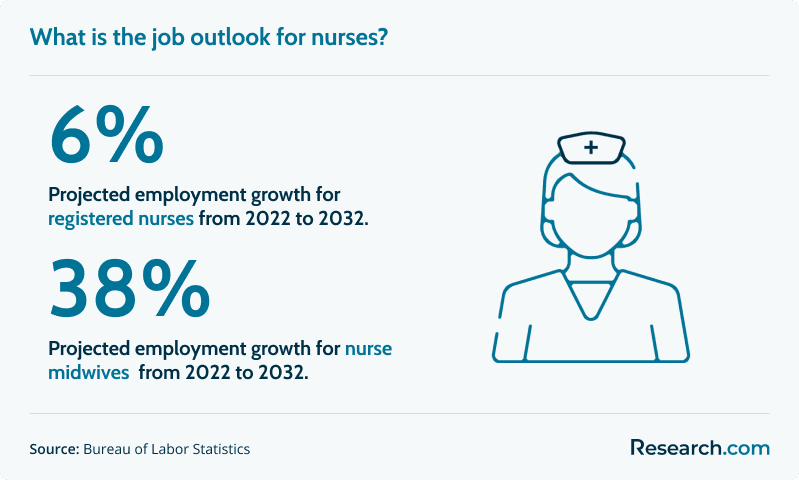
The employment outlook for obstetrics nursing is tied to the broader registered nursing workforce, maternal health needs, hospital staffing patterns, access to prenatal care, and demand for advanced practice providers. Employment for registered nurses is expected to grow by 6% from 2022 to 2032. Employment for nurse midwives is expected to grow much faster at 38% for the same period.
Demand may be stronger in regions with population growth, shortages of healthcare professionals, or limited access to maternal care. Growing attention to maternal health disparities and preventive care also creates opportunities for OB nurses in hospitals, clinics, community health, education, and public health settings.
At the same time, birth rates, facility closures, regional workforce shortages, and healthcare policy changes can affect local hiring. The best way to evaluate your market is to review job postings in your state, talk with nurse recruiters, compare hospital residency programs, and ask whether employers prefer BSN-prepared nurses or specialty certifications.
What challenges do obstetrics nurses face?
OB nursing can be fulfilling, but it is not an easy specialty. Nurses should understand the emotional, physical, and clinical demands before pursuing this path.
- High-pressure clinical situations: Labor and delivery can change quickly, and nurses must respond calmly when complications occur.
- Long shifts and nontraditional schedules: Hospitals often require nights, weekends, holidays, and extended shifts.
- Emotional strain: OB nurses support families through birth, fear, trauma, pregnancy loss, and unexpected outcomes.
- Complex patient needs: Patients may have high-risk pregnancies, chronic conditions, mental health concerns, social barriers, or limited access to care.
- Team coordination: OB nurses work closely with obstetricians, midwives, pediatricians, anesthesiology teams, lactation specialists, and social workers.
- Ongoing learning demands: Maternal care standards, monitoring tools, safety protocols, and technologies continue to evolve.
What is the typical education pathway for OB nurses?
The usual pathway is to earn an ADN or BSN, pass the NCLEX-RN, gain RN licensure, and then pursue experience in women’s health, maternal-child health, postpartum nursing, or labor and delivery. A BSN is sufficient for many entry-level roles and may be preferred or required by hospitals.
Obstetrics nurses typically need a Master of Science in Nursing (MSN) degree to advance their careers and qualify for leadership or specialty positions. If you want the quickest route to graduate-level nursing education, compare the shortest online MSN programs while checking accreditation, clinical requirements, and state authorization.
What should nurses know about easy online RN-to-BSN programs?
An online RN-to-BSN program can be a practical option for licensed RNs who want to strengthen their qualifications for OB nursing while continuing to work. The “easiest” program is not simply the one with the lightest workload. It should be accredited, accepted by employers, reasonably priced, flexible, and supportive of working nurses.
Before choosing a program, review curriculum structure, transfer policies, cost, student support, practicum requirements, and scheduling. This guide to What is the easiest online RN to BSN program? can help nurses compare programs more carefully instead of choosing based only on convenience.
How can a public health MSN strengthen an OB nursing career?
A public health MSN can complement obstetrics nursing by preparing nurses to think beyond individual patient care and address broader maternal health patterns. This can include prevention, community education, access to prenatal services, postpartum support programs, policy work, and population health research.
Nurses who want to combine maternal care with program leadership, community outreach, or health systems improvement may benefit from reviewing public health MSN degree jobs. This pathway can be especially relevant for nurses interested in reducing barriers to maternal and child health services.
Common mistakes to avoid when planning an OB nursing career
| Mistake | Why it can hurt you | Better approach |
| Choosing a nursing program without checking accreditation | It may affect licensure eligibility, transfer options, and employer acceptance. | Confirm accreditation and state approval before applying. |
| Assuming every online nursing program meets licensure rules | Online format does not guarantee eligibility in every state. | Ask the program and your state board of nursing directly. |
| Looking only at tuition | Fees, travel, books, clinical costs, and exam costs can change the real price. | Compare total cost of attendance and available aid. |
| Ignoring clinical placement quality | OB nursing requires hands-on maternal health experience. | Ask where students complete clinicals and who arranges placements. |
| Assuming salary outcomes are guaranteed | Pay depends on region, employer, experience, shift, and credentials. | Research local job postings and talk with recruiters. |
| Waiting too long to build OB-related experience | Specialty units may prefer applicants with relevant exposure. | Seek maternal-child health rotations, postpartum roles, volunteer experience, or related clinical work. |
How can you advance in obstetrics nursing?
Career growth in OB nursing usually comes from a combination of clinical experience, specialty certifications, advanced education, leadership readiness, and a clear understanding of your preferred work environment. You can advance at the bedside, move into high-risk care, become a charge nurse, transition into education, pursue advanced practice, or shift toward public health and research.
- Build strong bedside experience: Start with postpartum, women’s health, medical-surgical nursing, labor and delivery, or another unit that develops assessment and communication skills.
- Pursue targeted certifications: RNC-OB and CWHN can help demonstrate specialty expertise. NRP, ACLS, fetal monitoring, lactation, and high-risk perinatal credentials may also be useful depending on your unit.
- Consider advanced practice roles: CNM and NP pathways can lead to greater autonomy, broader responsibility, and higher salary potential, but they require graduate education and role-specific credentialing.
- Move into leadership or education: Experienced OB nurses may become charge nurses, nurse managers, clinical educators, preceptors, quality improvement leaders, or simulation instructors.
- Keep learning: Obstetrics changes as research, technology, safety protocols, and maternal health priorities evolve. Continuing education helps nurses remain clinically current.
- Complete a BSN if needed: If your employer prefers bachelor’s-prepared nurses, compare cheapest RN to BSN online programs that fit your schedule, budget, and state requirements.
Key Insights
- Obstetrics nurses are registered nurses who specialize in pregnancy, labor and delivery, postpartum recovery, women’s health, and maternal-child care.
- The obstetrics nurse salary range is $62,000 $139,000 per year, while experienced OB nurses have a median salary around $83,242 and a range from $71,000 to $99,500.
- OB nurse pay is close to the broader RN median of $82,750, while nurse midwives and OB/GYN nurse practitioners earn a median annual salary of $125,900 because they complete advanced education and have broader responsibilities.
- A BSN is commonly preferred for hospital-based OB roles, but ADN-prepared nurses can enter RN practice and later complete an RN-to-BSN pathway.
- Certifications such as NRP, ACLS, RNC-OB, fetal monitoring, lactation, and high-risk perinatal credentials can improve competitiveness for specialized roles.
- Online nursing programs can be viable only if they are accredited, meet state licensure rules, and provide appropriate clinical experiences.
- Do not choose an OB nursing pathway based only on salary or program speed. Accreditation, clinical placement quality, state authorization, total cost, schedule demands, and long-term career goals matter just as much.
References:
- Centers for Disease Control and Prevention (2023). Obstetric Professionals.
- National Center for Health Statistics (2023). Maternal mortality rates in the United States, 2021.
- The Commonwealth Fund (2022). Health and health care for women of reproductive age.
- US Bureau of Labor Statistics (2023). Occupational Outlook Handbook. Registered Nurses
Other Things You Should Know About Obstetrics Nursing
In 2027, factors affecting an obstetrics nurse's salary include location, level of education, years of experience, and certifications held. Nurses in metropolitan areas or with advanced degrees and specialized certifications typically earn more than those in rural locations or with basic qualifications.
Obstetrics nurses in 2027 must obtain the Inpatient Obstetric Nursing (RNC-OB) certification from the National Certification Corporation. Eligibility requires licensure as a registered nurse and a minimum of 24 months and 2,000 hours of specialty experience within the last five years.
Night, weekend, and holiday shifts usually increase obstetrics nurse earnings through shift differentials and overtime. Many hospitals add hourly premiums for evenings and nights, and union contracts may require higher rates for call coverage, especially in labor and delivery units with 24-hour staffing.