
2027 Nursing Career Paths: 11 Least Stressful Nursing Jobs to Explore

Co-Founder and Chief Data Scientist
Many nurses enter the profession because they want meaningful work, stable employment, and the chance to help people through difficult moments. The challenge is that not every nursing role offers the same level of pressure, schedule control, physical demand, or emotional intensity. If bedside, emergency, or high-acuity work is no longer sustainable, choosing a lower-stress nursing specialty can help you stay in healthcare without sacrificing your health.
This guide explains which nursing jobs are commonly considered less stressful, what makes them different from traditional hospital roles, how much they pay based on the figures cited in this article, and how to decide whether a specialty fits your personality, education level, lifestyle, and long-term career goals. It is designed for current nurses considering a transition, nursing students comparing career paths, and career changers wondering whether nursing can offer work-life balance.
Quick answer: What are the least stressful nursing jobs?
The least stressful nursing jobs are typically roles with more predictable schedules, fewer emergencies, lower physical intensity, less direct exposure to trauma, or more control over daily workflow. Examples include case management nurse, dermatology nurse, nurse educator, nurse informaticist, public health nurse, school nurse, occupational health nurse, telephone triage nurse, nurse researcher, nurse administrator, and home health nurse.
These roles are not “stress-free.” They still involve responsibility, documentation, patient needs, compliance requirements, and communication challenges. However, they may be more sustainable for nurses who want to reduce burnout risk while continuing to use their clinical training.
What should nurses know before choosing a lower-stress career path?
- Nurse burnout is a serious workforce issue. In 2021, among nurses aged 34 years and younger, 81% reported feeling exhausted, 71% reported feeling overwhelmed, and 65% reported being anxious or unable to relax. In 2020, 62% of all nurses and 69% of nurses under 25 reported feelings of burnout.
- Among the lower-stress specialties discussed here, the highest-paying examples are dermatology nurses, with an average annual salary of $148,569, and nurse informaticists, with an average annual salary of $134,219.
- The lowest-paying lower-stress options in this list are school nurses at $51,532, public health nurses at $70,573, and nurse educators at $84,009 annually. Lower pay may be offset by better schedules, less acute-care pressure, or stronger alignment with personal goals.
- The best role depends on why your current job feels stressful. A nurse who wants fewer emergencies may choose dermatology or school nursing, while a nurse who wants less physical strain may prefer informatics, education, research, or case management.
- 11 Least Stressful Nursing Jobs to Explore for 2027
- What are the biggest rewards of working as a nurse?
- What are the common causes of stress in nursing careers?
- What are practical strategies for managing emotional stress in healthcare settings?
- How do nurses collaborate with other healthcare professionals?
- What technical skills do nurses need in modern practice?
- How can you tell if nursing fits your skills and personality?
- What trends are changing nursing careers?
- What are the average salaries for the 11 least stressful nursing specialties?
- What are the best states for nursing jobs for 2027?
- How can specialized certifications reduce nursing career stress?
- What financial factors should nurses consider before returning to school?
- Could ADN to MSN programs lead to less stressful nursing roles?
- How can mentorship programs reduce stress in nursing careers?
- How can nurses maintain a healthy work-life balance?
- How can continuing education improve job satisfaction in nursing?
- Can interdisciplinary expertise lead to more manageable nursing roles?
- Can an MSN in public health support a lower-stress nursing career?
- How does moving into a specialty lower nursing stress?
- What affordable and accessible nursing programs can help you enter the field?
- Can advanced academic credentials reduce nursing stress?
- How can self-care and resilience training further lower nursing stress?
11 Least Stressful Nursing Jobs to Explore for 2027
If you are wondering, “Is nursing hard?” the honest answer is that nursing can be demanding, but the stress level varies widely by setting and specialty. The roles below are often more manageable because they usually involve fewer emergencies, more routine schedules, less high-acuity bedside care, or more autonomy over daily tasks.
| Lower-stress nursing role | Average salary cited | Why it may feel less stressful | Best fit for nurses who want |
| Case Management Nurse | $90,057 per year (Indeed) | Work centers on care coordination, discharge planning, insurance communication, and resource navigation rather than constant bedside response. | Planning, advocacy, communication, and a role with less physical patient care. |
| Dermatology Nurse | $148,569 per year (Indeed) | Many positions are clinic-based, condition-specific, and more predictable than acute-care hospital assignments. | A specialty environment, regular hours, and focused patient education. |
| Home Health Nurse | $86,228 per year (Indeed) | Care happens in patients’ homes, often with more one-on-one interaction and less unit-based urgency. | Independence, relationship-based care, and time away from hospital floors. |
| Nurse Administrator | $86,618 per year (Salary.com) | The work shifts toward staffing, operations, compliance, budgeting, and leadership rather than direct clinical care. | Management responsibility, systems improvement, and organizational leadership. |
| Nurse Educator | $84,009 per year (Payscale) | Teaching roles often follow academic or training schedules and focus on instruction, evaluation, and mentoring. | Teaching, curriculum development, and supporting future nurses. |
| Nurse Informaticist | $134,219 per year (Indeed) | This role combines nursing knowledge with health technology, data, electronic records, workflow design, and system improvement. | Technology, problem-solving, fewer bedside demands, and analytical work. |
| Nurse Researcher | $81,500 per year (Salary.com) | Research work emphasizes study design, data analysis, literature review, and evidence-based practice rather than rapid-response care. | Scientific inquiry, structured projects, and improving healthcare through evidence. |
| Occupational Health Nurse | $92,676 per year (Salary.com) | Workplace health roles focus on prevention, employee wellness, injury management, and compliance in corporate or industrial settings. | Preventive care, employee education, and a non-hospital environment. |
| Public Health Nurse | $70,573 per year (Salary.com) | Public health roles emphasize prevention, outreach, education, population health, and community programs rather than acute bedside care. | Community impact, health education, and systems-level prevention. |
| School Nurse/Summer Camp Nurse | $51,532 per year (Salary.com) | Schedules often align with school or camp calendars, and care is usually focused on routine health needs, medication support, and first aid. | Predictable hours, pediatric or adolescent care, and prevention-focused work. |
| Telephone Triage Nurse | $85,582 per year (Salary.com) | Nurses assess symptoms and guide patients remotely, reducing exposure to physically demanding direct care. | Remote assessment, patient communication, and protocol-based decision-making. |
This list is a starting point, not a guarantee. A “low-stress” job at one employer can be stressful at another if staffing, management, workload, documentation expectations, or scheduling are poor. Before changing roles, ask about caseloads, call requirements, patient volume, training, overtime, and how performance is measured.
How to choose among lower-stress nursing roles
| If your main stressor is... | Roles to consider | Why these may help |
| Physical exhaustion from bedside care | Nurse informaticist, nurse educator, nurse researcher, case management nurse | These roles usually involve less lifting, standing, and direct physical care. |
| Unpredictable emergencies | Dermatology nurse, school nurse, occupational health nurse, public health nurse | These settings often have more routine patient needs and fewer acute crises. |
| Night shifts or rotating schedules | Clinic-based dermatology nurse, nurse educator, occupational health nurse, school nurse | Many positions align more closely with daytime business or academic hours. |
| Emotional trauma from acute care | Public health nurse, nurse informaticist, nurse researcher, nurse educator | These paths may reduce repeated exposure to critical illness, death, and trauma. |
| Feeling stuck in one specialty | Case management nurse, nurse administrator, home health nurse, public health nurse | These roles broaden your view of healthcare systems, resources, and patient needs outside one unit. |
Nurses interested in community health and prevention can also compare affordable online public health degree options if they want to move toward public health, health education, or population-based work.
What are the biggest rewards of working as a nurse?
Even when nurses seek less stressful roles, many still want to remain in the profession because nursing offers rewards that are hard to find in other careers. The most meaningful benefits often combine purpose, stability, skill development, and human connection.
- Direct impact: Nurses help patients understand illness, recover from procedures, manage chronic conditions, and navigate frightening situations.
- Career flexibility: Nursing credentials can lead to bedside care, education, case management, informatics, public health, administration, research, telehealth, and advanced practice.
- Professional respect: Nurses are trusted because they combine clinical knowledge, observation, patient advocacy, and compassion.
- Ongoing learning: Healthcare changes constantly, so nurses continue developing new clinical, technical, communication, and leadership skills.
- Mentorship opportunities: Experienced nurses often guide students, new graduates, and colleagues moving into specialties. For example, nurses exploring women’s health may seek guidance from professionals who can explain what an ob-gyn nurse does.
- Stable demand: Nurses work across hospitals, clinics, schools, public agencies, home health organizations, employers, insurers, and technology teams.
- Personal fulfillment: Many nurses value the chance to be useful, calm, and competent when patients and families need support most.
What are the common causes of stress in nursing careers?
Nursing stress usually comes from several sources at once. Understanding the cause matters because the right solution may be a new unit, a new employer, a specialty transition, better boundaries, additional training, or a move away from direct patient care.
| Stress source | How it shows up | Possible career response |
| Workload and staffing pressure | Heavy patient loads, short staffing, missed breaks, constant urgency, and difficulty completing documentation. | Explore settings with smaller caseloads, stronger staffing models, or more predictable workflows. |
| Schedule disruption | Long shifts, rotating shifts, night work, overtime, and sleep disruption. | Consider school nursing, occupational health, education, clinic-based specialties, or informatics roles. |
| Emotional strain | Repeated exposure to suffering, death, conflict, trauma, and moral distress. | Look at public health, research, informatics, dermatology, education, or non-acute care settings. |
| Physical demands | Standing for long periods, lifting, repositioning patients, missed meals, and injury risk. | Move toward care coordination, telephone triage, education, research, informatics, or administration. |
| Communication problems | Unclear orders, poor teamwork, difficult handoffs, conflict with patients or families, and inconsistent leadership support. | Evaluate organizational culture carefully before accepting a new position. |
| Administrative burden | Documentation overload, compliance tasks, insurance requirements, and technology frustrations. | Seek employers with strong EHR training, realistic productivity expectations, and supportive managers. |
| Safety concerns | Verbal abuse, physical aggression, workplace violence, or unsafe staffing. | Ask about safety protocols, reporting systems, security support, and incident response. |
| Personal stressors | Family responsibilities, financial pressure, health issues, caregiving duties, or limited recovery time. | Prioritize schedule fit, commute, benefits, paid time off, and role flexibility. |
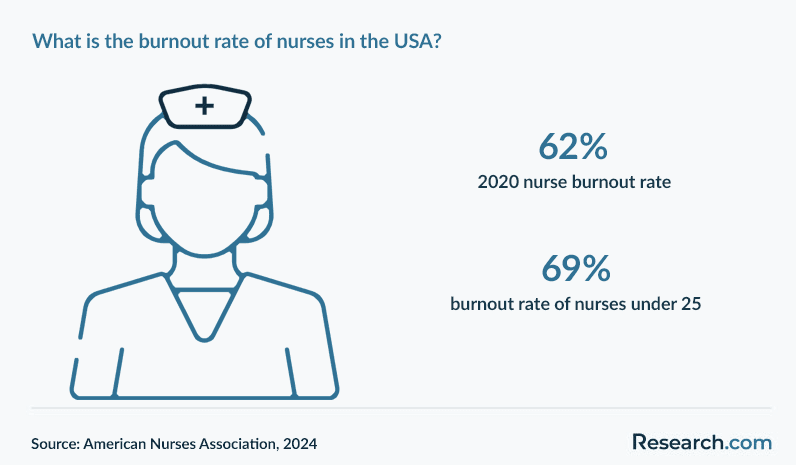
The American Nurses Association reported in a 2020 survey that 62% of all nurses and 69% of nurses under 25 reported burnout. Those numbers help explain why many nurses are not leaving healthcare entirely, but instead looking for roles that provide more control, stability, and recovery time.
What are practical strategies for managing emotional stress in healthcare settings?
Career change can reduce some stressors, but nurses also need practical tools for managing emotional load. These strategies are most effective when they are specific, realistic, and supported by the workplace.
- Name the stressor clearly: Instead of saying “I hate nursing,” identify whether the problem is staffing, schedule, patient acuity, leadership, moral distress, conflict, documentation, or physical fatigue.
- Protect recovery time: Sleep, meals, hydration, movement, and time away from work are not optional extras for nurses. They are part of safe professional functioning.
- Use brief reset techniques: Deep breathing, grounding exercises, stretching, and short walks can help between stressful encounters, even when a full break is not possible.
- Build peer support: Trusted colleagues can provide perspective, debriefing, humor, and practical advice that outsiders may not fully understand.
- Set limits where possible: Avoid routinely accepting overtime or extra responsibilities if they are harming your health, family life, or clinical judgment.
- Debrief difficult cases: After traumatic events, ask whether your workplace offers formal debriefings, employee assistance programs, counseling, or peer support.
- Reduce avoidable stress outside work: Limiting news overload, social media conflict, and unnecessary obligations can preserve mental energy.
- Seek professional help when needed: Persistent anxiety, depression, sleep disruption, panic symptoms, or emotional numbness should be discussed with a qualified mental health professional.
- Celebrate meaningful wins: A thank-you from a patient, a safe discharge, a well-taught student, or an improved process can help reconnect you with why the work matters.
How do nurses collaborate with other healthcare professionals?
Lower-stress nursing roles still require strong collaboration. In fact, roles such as case management, public health, informatics, education, occupational health, and administration often depend heavily on cross-functional teamwork.
- Advanced practice providers: Nurses may coordinate care with nurse practitioners, clinical nurse specialists, and other advanced practice professionals. Nurses planning this route may compare the cheapest online nurse practitioner programs when evaluating graduate study.
- Assistive personnel: Nurses delegate appropriate tasks to CNAs, LNAs, and other support staff while remaining accountable for safe supervision.
- Care managers: Nurses coordinate services across hospitals, clinics, rehabilitation settings, home care, and community resources. Those exploring support roles can review how to become a nursing assistant before moving further into nursing.
- Dietitians: Nurses work with nutrition professionals on meal planning, disease-specific diets, patient education, and nutrition risk.
- Informatics specialists: Nurses collaborate with technology teams to improve electronic records, reduce workflow friction, protect data quality, and support safer care.
- Kinesiologists and exercise specialists: In rehabilitation, wellness, and occupational health settings, nurses may coordinate with movement specialists on injury prevention, mobility, ergonomics, and exercise plans. Nurses interested in this adjacent field can explore an affordable online exercise science degree.
- Pharmacists: Medication reconciliation, drug interaction checks, patient counseling, and safe medication use often require close nurse-pharmacist communication.
- Physicians: Nurses provide clinical observations, implement care plans, flag changes in patient condition, and advocate for timely intervention.
- Respiratory therapists: For patients with breathing problems, nurses coordinate treatments, monitor response, and support airway management plans.
- Social workers: Nurses often identify housing, transportation, food, mental health, and family support needs that affect health outcomes.
- Physical, occupational, and speech therapists: Nurses reinforce therapy goals, monitor progress, and help patients practice safe techniques.
What technical skills do nurses need in modern practice?
Modern nursing increasingly combines clinical judgment with technology, documentation, data, and remote care tools. Even lower-stress nursing jobs require technical confidence because healthcare systems rely on accurate information and safe workflows.
- Clinical assessment: Nurses must recognize changes in physical, emotional, and social status and know when findings require escalation.
- Medication safety: Accurate administration, dose calculation, patient education, storage awareness, and monitoring for side effects remain core nursing responsibilities.
- Basic emergency readiness: Nurses in many settings need current Basic Life Support training and the ability to respond appropriately when a patient deteriorates.
- Electronic documentation: Competence with electronic health records is essential for charting, orders, communication, care coordination, quality tracking, and legal documentation.
- Telehealth communication: Telephone triage, virtual visits, remote monitoring, and patient portal messaging require clear questioning, careful documentation, and sound clinical judgment.
- Medical equipment use: Depending on the role, nurses may use infusion pumps, nebulizers, pulse oximeters, glucometers, monitoring systems, and other devices.
- Data awareness: Informatics, quality improvement, case management, and public health roles often require nurses to interpret dashboards, reports, risk scores, and population-level trends.
- Critical thinking: Technology supports decision-making, but it does not replace clinical reasoning. Nurses still need to connect symptoms, history, medications, vital signs, and patient context.
How can you tell if nursing fits your skills and personality?
Nursing can be rewarding for the right person, but it is not a good fit for everyone. Before investing in a program or changing specialties, evaluate both your strengths and your stress triggers.
| Question to ask yourself | Why it matters | What to do next |
| Do I enjoy helping people when they are confused, afraid, or frustrated? | Nursing requires patience and emotional steadiness, not just scientific interest. | Volunteer, shadow a nurse, or conduct informational interviews. |
| Can I manage details while multitasking? | Medication safety, documentation, patient assessment, and prioritization depend on accuracy. | Practice structured note-taking, checklists, and time management. |
| How do I respond under pressure? | Even lower-stress roles can involve urgent calls, difficult conversations, or unexpected problems. | Seek healthcare experience before committing to a degree path. |
| Do I prefer teamwork, independent work, or a mix? | Some roles are highly collaborative, while home health, research, and informatics may involve more independent work. | Match your preferred work style to the setting, not just the job title. |
| Am I physically prepared for direct care? | Many bedside roles require long periods of standing, lifting, and moving quickly. | If physical strain is a concern, compare non-bedside options early. |
| Can I maintain professional boundaries? | Compassion without boundaries can contribute to burnout. | Develop self-care routines and learn how experienced nurses manage emotional distance. |
If you are not ready to commit to an RN pathway, you can test your interest by becoming a CNA, taking prerequisites, shadowing nurses, or exploring an LPN fast track program. Nurses aiming for advanced clinical or leadership roles may eventually consider online DNP programs, while career changers balancing school with employment can also compare online degree programs for working adults.
What trends are changing nursing careers?
The future of nursing is being shaped by technology, workforce shortages, patient demographics, employer expectations, and growing attention to clinician well-being. These trends can create both pressure and opportunity.
- Technology and AI: Artificial intelligence, automated documentation tools, clinical decision support, remote monitoring, and workflow analytics may reduce some repetitive tasks, but nurses will still need to verify information, protect patient safety, and apply judgment.
- Telehealth growth: More care is being delivered through phone, video, remote monitoring, and patient portals, expanding opportunities for triage nurses, care coordinators, chronic disease nurses, and informatics specialists.
- Aging patients and chronic disease: Demand for nurses skilled in geriatric care, care coordination, prevention, and chronic disease management is likely to remain important as patient needs become more complex.
- Greater specialization: Nurses with focused expertise in areas such as informatics, public health, telehealth, dermatology, occupational health, education, and advanced practice may have more options outside traditional bedside roles.
- Expanded practice authority: In some locations, advanced practice nurses may have broader authority to prescribe, diagnose, or order tests. Nurses considering this path can compare the best affordable online nurse practitioner programs.
- More focus on nurse well-being: Burnout, retention, scheduling, workplace violence, and mental health support are receiving greater attention from employers and professional organizations.
- Higher education expectations: Many nurses continue comparing BSN vs ASN pathways because degree level can affect mobility, advancement, and access to specialized or leadership roles.
What are the average salaries for the 11 least stressful nursing specialties?
Salary should not be the only factor in choosing a nursing specialty, but it matters. Higher pay may come with more responsibility, advanced skills, productivity expectations, or competitive hiring requirements. Lower pay may be acceptable if the role offers better hours, less physical strain, stronger personal fit, or a more sustainable work environment.
| Rank by salary in this list | Nursing specialty | Average annual salary cited | Source cited |
| 1 | Dermatology Nurse | $148,569 | Indeed |
| 2 | Nurse Informaticist | $134,219 | Indeed |
| 3 | Occupational Health Nurse | $92,676 | Salary.com |
| 4 | Case Management Nurse | $90,057 | Indeed |
| 5 | Nurse Administrator | $86,618 | Salary.com |
| 6 | Home Health Nurse | $86,228 | Indeed |
| 7 | Telephone Triage Nurse | $85,582 | Salary.com |
| 8 | Nurse Educator | $84,009 | Payscale |
| 9 | Nurse Researcher | $81,500 | Salary.com |
| 10 | Public Health Nurse | $70,573 | Salary.com |
| 11 | School Nurse/Summer Camp Nurse | $51,532 | Salary.com |
In this list, the highest cited averages are for dermatology nurses at $148,569 and nurse informaticists at $134,219. The lowest cited averages are school nurses at $51,532, public health nurses at $70,573, and nurse educators at $84,009. Many RNs who want broader career mobility compare affordable RN to BSN online programs before moving into leadership, public health, education, informatics, or specialty roles.
What are the best states for nursing jobs for 2027?
Location can change a nursing career dramatically. Pay, cost of living, patient population, union presence, staffing norms, licensure requirements, employer mix, and commute can all affect stress. The states below are commonly discussed as strong nursing markets based on demand and compensation factors cited in this article.
- California: Demand is high because of the state’s large population and many healthcare facilities. The cited median annual wage exceeds $100,000, though cost of living can also be high.
- Texas: Healthcare growth in cities such as Houston and Dallas creates significant demand. The cited salary is around $80,000 annually, with a lower cost of living than some higher-paying states.
- Florida: The aging population supports continued need for nurses, especially in nursing homes and related care settings. The cited average annual salary is about $75,000.
- New York: Hospitals, clinics, and large healthcare systems create many opportunities. The cited salaries often exceed $90,000, and professional development options are broad.
- Washington: Urban areas such as Seattle have growing need for nurses. The cited median annual wage is around $85,000, and the state may appeal to nurses who value outdoor recreation and quality-of-life factors.
Questions to ask before relocating for a nursing job
- Will the salary still be attractive after housing, taxes, transportation, childcare, and insurance costs?
- Does the state require additional licensing steps or compact license considerations?
- What are typical patient ratios, overtime expectations, and union protections?
- Are lower-stress specialties available locally, or are most openings in acute-care settings?
- Will the schedule, commute, and climate support your long-term well-being?
How can specialized certifications reduce nursing career stress?
Certifications can reduce career stress when they help nurses qualify for roles that match their interests, strengths, and preferred pace of work. A credential may also build confidence, clarify a career direction, and make a nurse more competitive for specialty openings. However, certification is not automatically stress-reducing. It should be chosen because it supports a specific job goal.
For example, nurses interested in women’s health may compare WHNP online programs if they want a specialized advanced practice path. Before enrolling, confirm whether the program aligns with your state’s licensure rules, clinical placement needs, work schedule, and financial limits.
What financial factors should nurses consider before returning to school?
Education can open doors to less physically demanding or more autonomous nursing roles, but it can also create financial pressure. Before choosing a nursing program, compare total cost, not just tuition. Include fees, books, technology, uniforms, exams, background checks, commuting, clinical travel, lost work hours, and loan interest.
Prospective students should also ask whether the program is accredited, whether credits transfer, whether the schedule is realistic for working nurses, and whether graduates qualify for the roles or licenses they want. For a deeper budgeting overview, review how much nursing school costs.
| Cost factor | Why it matters | Question to ask |
| Tuition and fees | The advertised price may not include all required expenses. | What is the full program cost from start to finish? |
| Work reduction | Some students must cut hours to complete clinicals or coursework. | Can I maintain my income while enrolled? |
| Clinical placement | Travel, scheduling, and placement availability can affect stress. | Does the school secure placements, or must I find them? |
| Accreditation | Accreditation can affect licensure, transfer credit, employment, and graduate study. | Is the program properly accredited for my goals? |
| Return on investment | A degree should support a realistic career move, not just add credentials. | Which specific jobs will this program help me pursue? |
Could ADN to MSN programs lead to less stressful nursing roles?
An ADN to MSN bridge program can help experienced nurses move toward advanced clinical, leadership, education, or specialized roles without following a separate step-by-step degree path. These programs may appeal to nurses who want more autonomy, broader scope, or alternatives to physically demanding bedside work.
That said, an accelerated academic route can be intense. Before enrolling in ADN to MSN programs, compare admission requirements, clinical hours, specialty tracks, state authorization, accreditation, schedule format, and whether the degree clearly supports the lower-stress role you want.
How can mentorship programs reduce stress in nursing careers?
Mentorship helps nurses handle stress by giving them access to practical guidance from someone who understands the role. A strong mentor can help a nurse interpret workplace culture, manage conflict, prepare for difficult conversations, identify growth opportunities, and avoid common career mistakes.
Mentorship is especially valuable during transitions, such as moving from LPN to RN, bedside care to case management, or clinical practice to leadership. Some educational pathways, including LPN to RN bridge programs online, may include advising or mentorship elements that help students adjust academically and professionally.
How can nurses maintain a healthy work-life balance?
Work-life balance in nursing is not only about working fewer hours. It is about designing a career that allows enough recovery time, emotional space, financial stability, and schedule predictability to remain healthy and effective.
- Choose roles based on real schedule details: Ask about weekends, holidays, call, rotating shifts, overtime, and documentation completed after hours.
- Set limits on overtime: Extra shifts may help financially, but routine overextension can worsen burnout.
- Use time off intentionally: Protect vacation and recovery days instead of using every break for errands or additional work.
- Create a post-shift decompression routine: A short walk, shower, quiet drive, stretching, or journaling can help create separation between work and home.
- Build support outside work: Family, friends, peers, childcare help, counseling, and community connections can make a demanding job more sustainable.
- Keep hobbies alive: Activities unrelated to nursing protect identity and reduce the feeling that work consumes everything.
- Monitor warning signs: Chronic irritability, sleep problems, dread before shifts, emotional numbness, and frequent illness may signal that your current role is not sustainable.
- Negotiate when possible: Some nurses can request consistent shifts, reduced hours, clinic transfers, remote triage, or specialty training before leaving an employer.
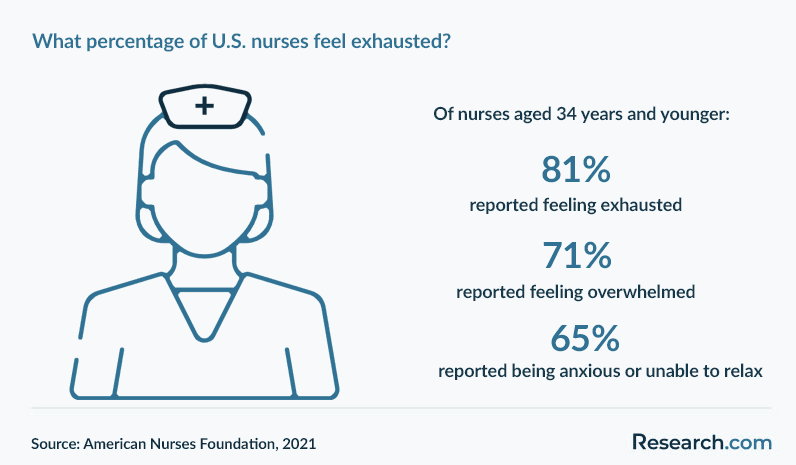
As shown in the graphic above, in 2021, among nurses aged 34 years and younger, 81% reported feeling exhausted, 71% reported feeling overwhelmed, and 65% reported being anxious or unable to relax. For many nurses, work-life balance is not a luxury; it is a retention issue and a patient safety issue.
How can continuing education improve job satisfaction in nursing?
Continuing education can improve satisfaction when it helps nurses move toward work they actually want. Short courses, certificates, BSN completion programs, graduate degrees, and specialty training can support transitions into education, public health, administration, informatics, nurse practitioner roles, telehealth, consulting, or research.
The key is to connect education to a specific outcome. Do not enroll only because a program sounds impressive. Ask whether the credential will qualify you for a role with better hours, stronger pay, less physical demand, more autonomy, or a population you prefer serving. Nurses considering advanced practice can compare the cheapest online nurse practitioner programs as part of a cost-conscious plan.
Can interdisciplinary expertise lead to more manageable nursing roles?
Some nurses reduce stress by combining clinical experience with another field, such as biology, data analytics, public health, education, exercise science, health policy, or technology. Interdisciplinary expertise can lead to roles in research, diagnostics, quality improvement, occupational health, policy, product development, or healthcare operations.
For example, an online bachelor's degree in biology may support nurses who want stronger scientific preparation for research, laboratory-adjacent work, graduate study, or healthcare roles that rely less on high-pressure direct patient care.
Can an MSN in public health support a lower-stress nursing career?
An MSN in public health can help nurses move from individual bedside care into community health, prevention, policy, program planning, epidemiology-related work, health education, and population wellness initiatives. These roles may involve fewer clinical emergencies and more predictable project-based work, depending on the employer.
This path can be rewarding for nurses who want broad impact rather than constant direct care. However, public health work can bring its own pressures, including grant deadlines, limited resources, emergency response duties, and community-level crises. Nurses comparing this route should review potential duties and earnings, including MSN public health salary information.
How does moving into a specialty lower nursing stress?
Specialization can lower stress by narrowing the range of problems a nurse handles every day. Instead of managing many unpredictable conditions on a high-acuity unit, a specialized nurse may work with a defined patient population, body system, technology platform, care process, or administrative function.
Examples include dermatology, informatics, public health, school health, occupational health, care coordination, and certain nurse practitioner specialties. Nurses considering advanced practice may explore the easiest NP specialties, but “easiest” should not be the only deciding factor. Fit, licensure rules, clinical placement, job demand, patient population, and scope of practice matter more.
Common mistakes when trying to move into a lower-stress nursing role
| Mistake | Why it can backfire | Better approach |
| Choosing only by salary | Higher-paying roles may bring more responsibility, pressure, or competition. | Compare pay with schedule, workload, autonomy, and emotional demand. |
| Assuming every non-bedside job is easy | Case management, informatics, and administration can involve deadlines, metrics, and conflict. | Ask current professionals what a typical difficult day looks like. |
| Ignoring accreditation | Unaccredited programs may limit licensure, employment, transfer credit, or graduate study. | Verify accreditation before applying or paying deposits. |
| Underestimating clinical placement demands | Graduate and bridge programs may require time-consuming clinical hours. | Ask how placements are arranged and whether working nurses can manage the schedule. |
| Relying only on rankings or admissions ease | A school that is easy to enter may not be the best fit for outcomes, support, or licensure. | Compare completion support, faculty access, graduate outcomes, and state authorization. |
| Leaving a job before identifying the real stressor | The same stress pattern may repeat in another setting. | Identify whether the problem is role type, employer culture, schedule, or personal fit. |
What affordable and accessible nursing programs can help you enter the field?
For future nurses, the lowest-stress path is often the one that balances cost, admissions requirements, schedule, accreditation, and career fit. Entry-level options may include CNA training, LPN programs, ADN programs, BSN programs, and bridge programs. Shorter programs can help students enter the workforce sooner, but long-term mobility may require additional education.
Affordable program options: Community colleges and public institutions often provide cost-conscious routes into nursing. LPN programs typically take 12-18 months to complete, while ADN programs require about two years of study. These pathways may lead to entry-level roles and later bridge options.
Accessible admissions routes: Students worried about admission competitiveness may compare programs with flexible entry requirements, prerequisite support, or bridge options for CNAs and LPNs. If you are researching accessible schools, review guidance on what the easiest nursing school to get into may mean in practice.
Online and hybrid formats: Many nursing programs use online coursework combined with in-person labs or clinical placements. This can help working adults, parents, and rural students, but clinical requirements still require local availability and schedule planning.
Questions to ask before choosing a nursing program
- Is the program accredited and approved for nursing licensure in the state where I plan to work?
- What are the total costs, including fees, supplies, exams, clinical travel, and lost work time?
- Who arranges clinical placements?
- What percentage of students complete the program?
- What support is available for tutoring, advising, simulation practice, and exam preparation?
- Can credits transfer into a BSN, MSN, or other future pathway?
- Will the schedule be realistic with my job, family responsibilities, and commute?
Can advanced academic credentials reduce nursing stress?
Advanced credentials can reduce stress when they move a nurse into a better-fitting role. A BSN, MSN, DNP, certificate, or bridge degree may support advancement into leadership, education, public health, informatics, advanced practice, research, or quality improvement. These roles may offer more autonomy, more predictable schedules, or less physical bedside work.
However, more education is not automatically the answer. School can increase short-term stress and debt if the program is expensive, poorly supported, or disconnected from a clear goal. Nurses who want a faster bachelor’s pathway may compare an accelerated RN to BSN program, but should confirm workload, accreditation, transfer credits, and employer tuition support before enrolling.
How can self-care and resilience training further lower nursing stress?
Self-care and resilience training cannot fix unsafe staffing or poor workplace culture, but they can help nurses respond more effectively to stressors they cannot fully control. Useful approaches include mindfulness, peer debriefing, structured stress management workshops, physical activity, sleep protection, and realistic boundary-setting.
Education can also be part of a resilience plan if it gives nurses more options. For example, easy RN to BSN online programs may help some working nurses pursue advancement without stepping away from employment, provided the program is credible, affordable, and manageable.
References
- American Nurses Association. (2024). What is Nurse Burnout & How to Prevent It. American Nurses Association.
- American Nurses Foundation. (2021, March 10). Foundation Releases Comprehensive 2021 Nurses Survey. American Nurses Foundation.
- Centers for Disease Control and Prevention. (2023). Vital Signs: Health Worker Mental Health. Centers for Disease Control and Prevention.
- Indeed. (2024). Average Registered Nurse - Home Health Salary in the United States. Indeed.
- Indeed. (2024). Average Registered Nurse - Medical/Surgical Salary in the United States. Indeed.
- Payscale. (2024). Average Nurse Educator Salary. Payscale.
- Payscale. (2024). Average Nursing Informatics Specialist Salary. Payscale.
- Salary.com. (2024). Home Health Nurse Salary in the United States. Salary.com.
- Salary.com. (2024). Nurse Administrator Salary in the United States. Salary.com.
- Salary.com. (2024). Nurse Researcher Salary in the United States. Salary.com.
- Salary.com. (2024). Occupational Health Nurse Salary in the United States. Salary.com.
- Salary.com. (2024). Registered Nurse RN Telephone Triage Salary in the United States. Salary.com.
- Salary.com. (2024). Telephone Triage Nurse Salary in the United States. Salary.com.
- U.S. Bureau of Labor Statistics. (2024). Registered Nurses. U.S. Bureau of Labor Statistics.
Key Insights
- The least stressful nursing jobs are usually not stress-free; they are roles with more predictable schedules, less acute-care pressure, fewer physical demands, or more control over workflow.
- Dermatology nursing and nursing informatics have the highest cited average salaries in this list at $148,569 and $134,219, while school nursing, public health nursing, and nurse education have the lowest cited averages.
- The best specialty depends on your specific stressor. If bedside care is physically exhausting, consider informatics, education, research, or case management. If emergencies are the problem, consider dermatology, school health, occupational health, or public health.
- Education can improve career options, but only when the program is accredited, affordable, realistic for your schedule, and connected to a clear role you want.
- Before accepting a “low-stress” nursing job, ask about caseloads, overtime, documentation, call requirements, patient volume, training, leadership support, and workplace culture.
- Burnout data shows why sustainable nursing paths matter: in 2021, 81% of nurses aged 34 years and younger reported feeling exhausted, and in 2020, 62% of all nurses reported burnout.
- A strong long-term nursing career is not always about choosing the highest-paying role. It is about finding the best balance of purpose, health, income, schedule, and professional growth.
Other Things You Need to Know About the Least Stressful Nursing Jobs
Certifications can strengthen applications for lower-stress specialty roles. Common examples include the Certified Case Manager (CCM), Ambulatory Care Nursing Certification (AMB-BC), and Medical-Surgical Nursing Certification (MEDSURG-BC). Most require an active RN license and recent clinical experience, often 2,000 hours in the specialty within three years.
Yes, even less stressful nursing jobs require a nursing license in 2027. Nurses must pass the NCLEX exam and meet state-specific licensing requirements to practice, ensuring they have the necessary skills and knowledge to provide safe patient care.


