2027 Online BA in Psychology - Mental Health Admissions with a Recent Upward Grade Trend: What to Ask Before Applying
Audited and Verified:
Our Editorial and Data Verification Process
Research.com uses government datasets, official education statistics and primary institutional information to support its career and degree guides. Our review process checks factual accuracy, occupational definitions, source dates and the requirements associated with the credentials discussed.
How This Article Was Fact-Checked
Our editorial team verifies salary estimates, employment projections, education requirements and program information against original data providers and official organizations. Salary figures are checked against the relevant occupational definitions and reporting periods. Information about licensure, accreditation and required in-person training is reviewed separately.
Fact-checked and verified on:

Co-Founder and Chief Data Scientist
An earlier stretch of weak grades does not necessarily define your online psychology BA application, especially if your recent coursework shows sustained improvement. But schools differ in how they calculate GPA, evaluate transfer work, and consider explanations of academic setbacks. If you hope to study mental health, you also need to know whether the degree fits your career goal. This guide helps you document an upward grade trend, ask admissions offices precise questions, and compare programs without mistaking admission - or a psychology BA - for a clinical qualification.
Key Things You Should Know
- Ask whether admission is based on cumulative GPA, recent coursework, or a separate transfer and major-admission review; an upward trend matters only if the decision-maker can consider it.
- Document improvement with official transcripts and a brief explanation that identifies what changed and how you now manage academic demands.
- Before applying, confirm how credits satisfy degree requirements and whether the program supports your intended nonclinical job or later professional training.
What is an online BA in psychology for mental health careers?
An online bachelor of arts in psychology studies behavior and psychological science through coursework delivered primarily online. A mental-health emphasis may be an official concentration, a set of electives, or simply a program description; ask which appears on the transcript. Students can learn about mental disorders, development, research, and service systems without being trained to diagnose or treat clients.
For an applicant rebuilding an academic record, the degree can serve two different purposes: preparation for nonclinical support work or a foundation for later professional education. If your goal is specifically substance-use counseling, compare the BA with academic routes into addiction counseling, then check your state's credential rules. A broader psychology major may offer more flexibility, while a credential-oriented route may be more direct.
Is an online psychology bachelor's degree accredited and reputable?
Start with the institution's accreditation status and confirm that it applies to the school awarding the degree. Online delivery alone does not determine academic legitimacy. The American Psychological Association does not accredit general psychology bachelor's programs, so an advertisement implying "APA-accredited BA" warrants clarification.
Reputation is more useful when translated into verifiable features: accessible advising, predictable course offerings, qualified instruction, transfer-credit review, and opportunities to build research or supervised nonclinical experience. If you later compare specialized graduate options, evaluate them separately rather than assuming your BA's accreditation establishes their quality. That distinction also matters when choosing forensic psychology study by cost and entry criteria; a specialty name does not establish clinical eligibility.
Can an online psychology BA lead to mental health careers?
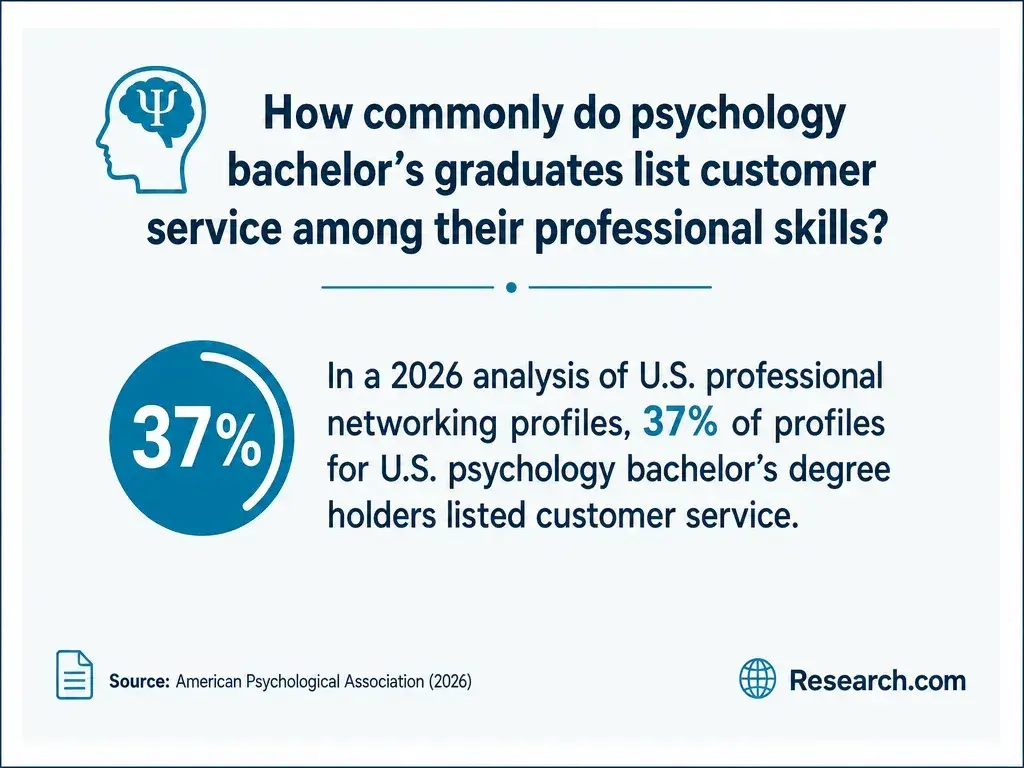
It can support applications for some nonclinical roles, but it does not qualify its holder to practice psychotherapy. Depending on the employer and state, relevant work may include service coordination, outreach, intake support, research assistance, or recovery-program support. Hiring managers may value documented client-facing experience, careful recordkeeping, and knowledge of referral boundaries as much as a particular elective.
Read job descriptions for duties and required credentials, not just titles. For example, addiction recovery job families include support roles and regulated counseling roles with different entry rules. If you already work in community services, ask whether the BA fills an actual advancement requirement; if not, targeted training or supervised experience may be the more efficient next step.
Requirements vary by institution and by applicant category. A first-time applicant, transfer student, and returning student may face different transcript, GPA, and prerequisite rules. Admission to the university may also be separate from admission to the psychology major.
Before paying an application fee, ask an admissions counselor to identify the policy that applies to your record. These questions distinguish a promising grade trend from an assumption that it will override a stated threshold:
- Is the GPA threshold calculated from all attempted college work, transferable courses, or a specified recent period?
- Are repeated courses, academic renewal, and grades from other institutions treated differently?
- Who reviews an upward trend or an academic explanation, and is admission possible if the published minimum is not met?
- Are statistics or introductory psychology required for admission to the school, entry to the major, or graduation?
Submit complete official transcripts, including the earlier grades. For prior college work, request a written degree audit that separates accepted credits from credits meeting general education, major, and residency requirements. Guidance on moving existing credits into psychology study can help you frame the questions, but only the receiving institution can approve your equivalencies.
Expect foundational psychology, research methods, statistics, and study of behavior across the lifespan, alongside general education requirements. Mental-health-related offerings might cover psychopathology, health psychology, addiction, or community services. Confirm which courses are required, which are electives, and whether the advertised focus is a formal concentration.
Your recent grades are especially useful evidence when they come from courses relevant to the major. A strong result in statistics or research methods, for example, speaks more directly to readiness for upper-level psychology work than an unrelated course alone. If professional counseling is your eventual goal, compare the BA's preparation with clinical counseling master's course sequencing before choosing electives. Undergraduate coverage of counseling topics does not substitute for a qualifying professional program.
Your remaining time depends on the degree audit, required course sequence, course availability, and how many classes you can complete successfully each term. An accepted transfer credit may count only as an elective. For someone with an upward grade trend, the fastest schedule is not necessarily the best one if a heavier load risks reversing that progress.
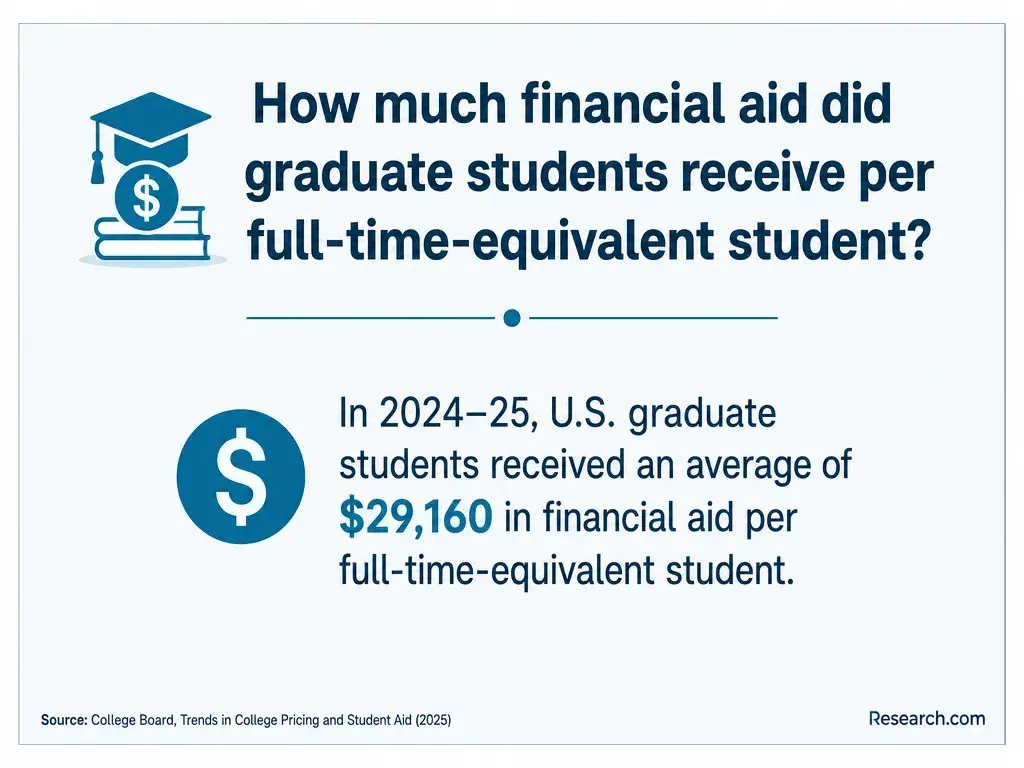
Request an individualized estimate showing remaining credits, tuition, mandatory fees, books or software, and any travel or unpaid experience costs. Ask financial aid staff how your enrollment level and academic history affect aid eligibility; admission and aid approval are separate decisions. If comparing a psychology BA with a more specialized undergraduate route, information about funding an online bachelor's in substance abuse counseling can help you identify aid questions to put to each school. Do not rely on an advertised total before your transfer evaluation is complete.
Online study can remove a commute, but it does not guarantee self-paced classes. Check deadlines, live meetings, group projects, exam arrangements, faculty access, and whether research or agency experiences require travel. A campus program may offer easier access to local faculty and placements; an online program may fit work or caregiving better if its actual schedule is manageable.
If a later counseling degree is part of your plan, do not assume its delivery rules will match those of your BA. Compare clinical mental health counseling course pace and accreditation separately, including any live instruction and in-person clinical training. For the BA itself, ask how online students obtain recommendations, research experience, and approved nonclinical placements.
Explain a meaningful, sustained improvement that is visible on your transcript - not merely one better grade. Specify the period of difficulty, the change you made, and the evidence that the change has held across later coursework. You can acknowledge a disruption without disclosing private health or family details you do not wish to share.
Keep the explanation brief and accountable: "My earlier grades fell during a period when I could not maintain a workable study schedule. Since changing my work hours and using a weekly study plan, my later courses - including statistics - show stronger, consistent performance." Use your actual circumstances and results; do not imply that improvement erases earlier grades.
Ask whether the school accepts an additional statement, how repeat grades affect its GPA calculation, and whether an advisor can recommend a manageable first-term load. If you are considering speeding up an online psychology degree, first establish that the proposed pace protects the study habits behind your recent improvement.
"Mental health professional" covers distinct occupations. Licensed counselors and clinical social workers generally need qualifying graduate education and additional state-required steps; licensed psychologists typically follow a doctoral pathway. Exact degree, supervised-practice, examination, and title rules depend on the occupation and jurisdiction. A psychology BA, including one with a mental-health concentration, does not independently authorize diagnosis or psychotherapy.
Before choosing an undergraduate program around a future license, identify the precise occupation and state where you intend to practice. Then check that regulator's requirements and the admissions prerequisites of prospective professional programs. If you are considering a nonclinical psychology graduate degree instead, compare its purpose and full cost with finding a lower-cost psychology master's degree; lower tuition is useful only if the degree serves your actual goal.
What salaries and job outlooks can psychology graduates expect?
There is no single salary or job-growth figure for "psychology BA graduates." Pay and hiring prospects depend on the occupation, location, employer, experience, and any required credential. Federal occupation-wide wage figures can help compare specific roles, but they are not a forecast of what an applicant will earn after this degree.
Choose a realistic target job first, then compare its current Bureau of Labor Statistics occupational profile with local postings and their stated requirements. Avoid using a licensed clinician's median wage to estimate returns on a nonclinical BA. The same caution applies to graduate specializations: figures about earning potential after a master's in forensic psychology should be interpreted by occupation and required credentials, not treated as a degree-wide pay promise.
Other Things You Should Know About Psychology
If letters are accepted, a recent instructor who can describe your improved work habits and academic performance may provide more useful evidence than someone who knows only your earlier record. Check the program's letter requirements first.
Applications commonly require disclosure of every college attended and official transcripts. Follow each school's instructions; omitting earlier coursework can create a separate admissions problem.
Relevant experience can add context and show responsibility, but it does not automatically replace a minimum GPA. Ask whether the school uses holistic review and what evidence that review accepts.
Ask whether the school will consider an updated transcript after grades post and whether its decision deadline allows that review. An in-progress course is not evidence of a final grade.
- Accreditation in the U.S. | ed.gov http://www.ed.gov/laws-and-policy/higher-education-laws-and-policy/college-accreditation/accreditation-in-the-us
- Holistic Review in Applicant Selection: A Scoping Review - PMC https://pmc.ncbi.nlm.nih.gov/articles/PMC11776880/
- Episode 21: A Deep Dive Into GPA Calculation | Bucknell University https://www.bucknell.edu/episode-21-deep-dive-gpa-calculation
- Transfer Requirements | UIC Admissions https://admissions.uic.edu/undergraduate/requirements-deadlines/transfer-requirements
- Admission Requirements - SDSU Psychology Department https://psychology.sdsu.edu/graduate/masters-programs/prospective-students/applications/
- Do I Need a Degree in Psychology to Apply to Graduate School? | William James College https://www.williamjames.edu/news/do-i-need-a-degree-in-psychology-to-apply.html
- Bachelor of Arts in Psychology - Texas State's online programs https://online.txst.edu/degrees/undergraduate/ba-psychology/
- Psychology careers guide | apa.org https://www.apa.org/education-career/guide/careers
- GPA requirement - UC Admissions - University of California https://admission.universityofcalifornia.edu/admission-requirements/first-year-requirements/gpa-requirement.html
- Admissions | Department of Psychology - Illinois State University https://psychology.illinoisstate.edu/academics/specialist-in-school-psychology/admissions/