2027 Online BA in Psychology - Mental Health for Psychology of Migration and Adjustment: Which Courses Should You Look For?
Audited and Verified:
Our Editorial and Data Verification Process
Research.com uses government datasets, official education statistics and primary institutional information to support its career and degree guides. Our review process checks factual accuracy, occupational definitions, source dates and the requirements associated with the credentials discussed.
How This Article Was Fact-Checked
Our editorial team verifies salary estimates, employment projections, education requirements and program information against original data providers and official organizations. Salary figures are checked against the relevant occupational definitions and reporting periods. Information about licensure, accreditation and required in-person training is reviewed separately.
Fact-checked and verified on:

Co-Founder and Chief Data Scientist
A program can advertise mental health electives yet offer little preparation for understanding how migration affects adjustment, family relationships, and access to care. If you hope to work with migrant communities or study these issues further, course titles alone are not enough.
This guide shows which psychology and adjacent courses matter most, how to check whether an online program actually offers them, and what experience can turn classroom learning into responsible nonclinical work. It also clarifies when a different degree or later professional training would better fit your goal.
Key Things You Should Know
- Prioritize cultural and social psychology, lifespan development, psychopathology, research methods, and coursework on migration or displacement; examine actual syllabi rather than relying on a "mental health" label.
- Look for supervised community work and training in ethics, language access, and referral boundaries. An online BA does not qualify you to diagnose or provide therapy.
- A typical US bachelor's degree requires about 120 semester credits, but the credits, course availability, and placement arrangements that matter for this goal vary by school.
What Is an Online BA in Psychology Focused on Migration and Adjustment?
It is usually a psychology bachelor's degree whose electives, projects, or approved field experience examine how people adapt after moving across borders. Migration can involve voluntary relocation, forced displacement, family separation, or changing legal and social circumstances. Adjustment refers to changes in relationships, identity, daily functioning, and well-being; it is not a diagnosis.
Few programs use this exact focus as an official concentration. A general BA may be a better choice than a narrowly named degree if it offers strong psychology methods courses and lets you add relevant sociology, public health, language, or migration-studies electives. Ask whether the focus appears on the transcript, is an approved minor or concentration, or is simply a set of electives you select.
Match the academic lens to your intended work. Studying adjustment and service access differs from studying behavior in legal settings; students primarily interested in the latter can compare accredited online pathways in forensic psychology rather than assuming a migration-focused BA covers that field.
Which Courses Prepare Students for Mental Health Work With Migrant Populations?
The strongest course selection combines psychological science with the social conditions that shape migration experiences. The table distinguishes essential foundations from useful additions; an elective's title is less important than its readings, assignments, and availability to online students.
| Course area to seek | What it helps you understand | What to check in the syllabus |
| Cultural and social psychology | Identity, belonging, discrimination, social support, and variation within communities | Whether students examine power, context, and within-group differences rather than cultural stereotypes |
| Lifespan and family development | Age-related adjustment, family roles, and transitions across generations | Whether examples include children, caregivers, and older adults |
| Psychopathology and health psychology | Mental-health concepts, stress, and health behavior | Whether coursework distinguishes distress and screening from clinical diagnosis |
| Research methods and statistics | How to judge claims about migration and mental health | Whether assignments address sampling, measurement, and the limits of causal claims |
| Migration, public health, or community studies | Policy, language access, displacement, and barriers to services | Whether the course is open to psychology majors and offered in an accessible format |
Choose among electives according to the population and task you hope to understand. For work involving substance-use recovery, an academic preparation through an addiction psychology bachelor's can offer a more relevant comparison, but neither focus authorizes treatment. If your goal is psychotherapy, plan around a qualifying professional graduate program and its supervised training requirements, not undergraduate course titles.
How Can You Choose an Accredited Online Psychology Bachelor's Program?
First confirm that the institution holds accreditation recognized by the US Department of Education or the Council for Higher Education Accreditation, and that the specific BA is authorized for students where you live. APA accreditation does not apply to general psychology bachelor's programs. Accreditation establishes an institutional baseline; it does not verify migration-related coursework or professional eligibility.
Then compare current catalogs and ask an advisor for the online course rotation, approved cross-department electives, faculty interests, and rules for internships or research projects. Request syllabi where possible. A course listed in a catalog may be offered infrequently, restricted to another major, or available only on campus. Ask who approves community sites and whether a local organization can host a supervised nonclinical experience.
If you are comparing a migration focus with justice-system work, review accredited online pathways or a compressed online master's study in forensic psychology for that separate curricular emphasis. Neither an accredited institution nor a forensic or mental-health label establishes licensure eligibility.
Most psychology BAs combine general education with introductory psychology, statistics, research methods, and courses across developmental, social, cognitive, biological, and clinical subject matter. The BA may leave room for language study or electives outside psychology, but confirm this in the degree audit; BA and BS requirements differ by institution.
A useful sequence is to take introductory psychology and statistics before research methods, then pair social and developmental psychology with migration-related electives. Finish with an approved project that tests your ability to evaluate evidence - for example, a literature review on language access and service use. If a capstone involves an organization's clients or records, obtain faculty and site approval and check consent, confidentiality, and institutional-review requirements before collecting or using information.
Courses on addiction may be valuable when community services address co-occurring needs. Explore addiction recovery job families to distinguish support and coordination work from credential-regulated counseling before selecting electives for a target role.
Schools set their own undergraduate admission rules, commonly requesting prior school transcripts and, for transfer applicants, college transcripts. Some admit students to the university first and require a separate step before entering the psychology major. Ask about any prerequisite grades, application deadlines, and rules for enrolling in upper-level psychology courses.
Transfer students should request a written degree audit showing not just which credits are accepted, but which satisfy statistics, research methods, general education, electives, and residency requirements. A previously completed sociology or public-health course may be valuable without automatically meeting a psychology-major requirement. Compare psychology degree transfer pathways, then have each institution evaluate your own transcripts.
If applying to a US online program from outside the country, confirm overseas enrollment eligibility, credential-evaluation and English-language policies, time-zone expectations, and whether local placements are permitted. Online admission does not provide a US visa or work authorization.
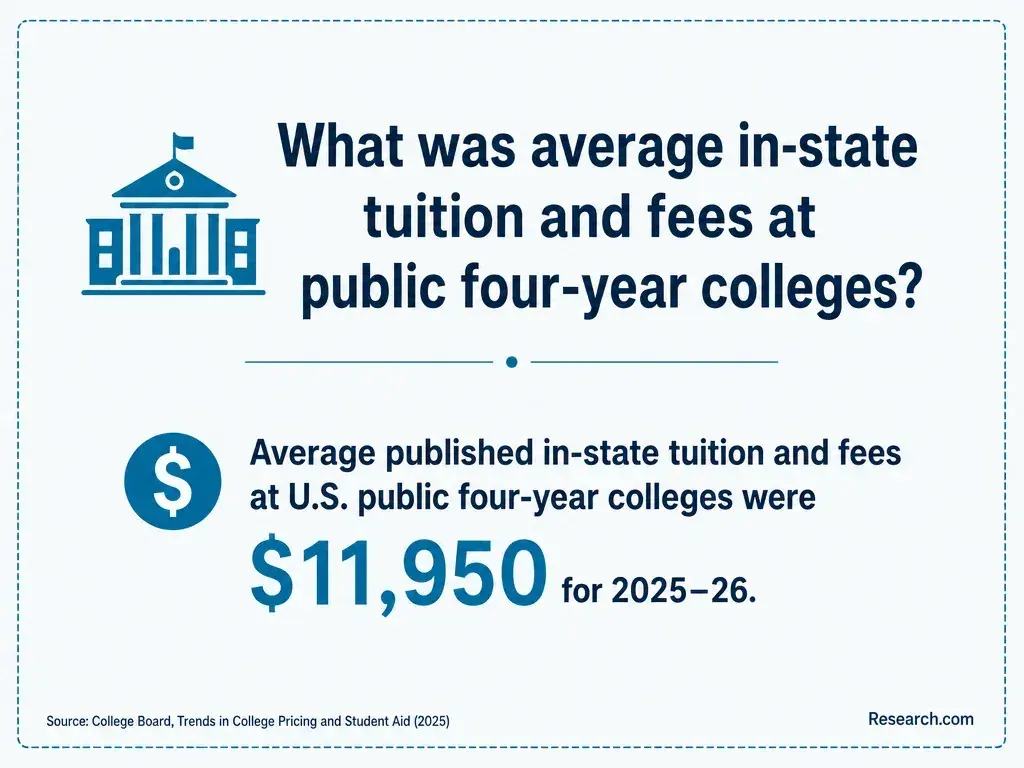
A typical US bachelor's program is designed around roughly 120 semester credits and can take about four years of full-time study from the start. Your remaining time depends on accepted credits and which requirements they fulfill, course sequencing, enrollment pace, and whether relevant electives run often enough. An online label does not make an internship or live seminar asynchronous.
Compare total expected spending, not advertised tuition alone: include required fees, books and software, possible travel, and the earnings or hours you may give up for unpaid field experience. Ask for a term-by-term plan and the tuition and fee schedule applicable to your residency and entry term. Lower-tuition undergraduate psychology options are a useful starting point, but a low per-credit price may not minimize total cost if credits do not apply or needed courses delay graduation.
Online study can develop the same academic foundations when students can access rigorous methods courses, timely feedback, library resources, faculty guidance, and substantive discussion. For this topic, effectiveness also depends on opportunities to examine research critically and learn from appropriately supervised community work. A delivery format alone does not establish equivalent experiences or outcomes.
Before enrolling, ask whether courses require live attendance, group meetings, campus visits, or a locally arranged placement. Check who finds and approves sites, how supervision works, and whether the program can support students studying from another state. If you expect to continue online at the graduate level, compare those requirements separately: forensic psychology graduate programs with shortened study plans, for example, answer a different academic question and should not be treated as evidence that a BA offers comparable applied experience.
A BA can support applications for nonclinical roles in human services, community outreach, research support, and program administration. Hiring depends on the employer's requirements, your experience, language and communication skills, and demonstrated ability to work within referral and confidentiality rules. An undergraduate internship can provide relevant evidence, but it is not a clinical practicum.
The distinction below helps you choose experience that matches actual job tasks rather than a broad "mental health" label.
| Potential role | Relevant work | Preparation to verify |
| Community outreach or service coordinator | Explain services, arrange referrals, document contacts, and work with partner agencies | Employer training, language-access procedures, and safeguarding policies |
| Research assistant | Support recruitment, literature reviews, data handling, or study administration | Methods skills, research oversight, and permitted access to participant information |
| Program assistant or evaluator | Track activities and help summarize service data | Spreadsheet and reporting skills, data-use permissions, and evaluation supervision |
If your interests center on courts or justice agencies rather than community adjustment services, compare the duties and qualifications behind claims about earning potential after a master's in forensic psychology. A graduate degree's title does not by itself qualify someone for forensic evaluation or a particular salary.
A psychology BA alone does not qualify you to practice as a licensed psychologist, diagnose conditions, or provide independent psychotherapy. Counseling, social work, psychology, and other regulated professions have distinct degree, supervised-experience, examination, and state-board rules. An undergraduate class about counseling techniques does not replace a qualifying professional program.
Some support or peer roles have state-specific certifications, training, or lived-experience criteria; a BA may be helpful without being required or sufficient. Identify the exact job title and state before relying on any credential claim. If therapy is the goal, compare qualifying graduate programs, including their clinical training and recognition requirements; accelerated counseling study and accreditation requirements illustrate why a shorter advertised timeline must be checked against the full licensure pathway.
What Are the Salaries and Job Outlook for Psychology Graduates?
There is no single salary or job-growth figure for "psychology graduates." US Bureau of Labor Statistics wages and projections describe occupations, not everyone who earned a particular major. A community-service support role, a research position, and licensed counseling also have different entry requirements, so a counselor's occupational median is not a sound estimate for a new BA graduate.
For a useful comparison, first select a specific entry-level job title and location. Then check that occupation's current Bureau of Labor Statistics wage reference year, projection period, and typical entry education, alongside local postings that describe the duties you could actually perform. Weigh likely starting pay against your remaining degree cost and any subsequent training. If substance-use counseling is your intended route, consider its separate credential rules and substance use counseling bachelor's financial aid options before assuming a psychology BA is the most direct investment.
Other Things You Should Know About Psychology
Not necessarily. Language study can strengthen community work, but proficiency requirements depend on the role and employer. Speaking a language also does not automatically qualify you to interpret sensitive health information.
Yes, when an assignment permits reflective work. Separate personal experience from research evidence, and do not share another person's identifiable story without appropriate permission.
No. These terms can describe different experiences and legal circumstances. Use the definitions appropriate to the study or service setting, and avoid assuming that people within either group share the same needs.
A focused question, credible literature, clear definitions, and an honest discussion of sampling and measurement limitations. A careful review is more useful than unsupported claims about a whole population.
- Refugee and migrant mental health | who.int https://www.who.int/news-room/fact-sheets/detail/refugee-and-migrant-mental-health
- Post-migration factors and mental health outcomes in asylum-seeking and refugee populations: a systematic review - PMC https://pmc.ncbi.nlm.nih.gov/articles/PMC7717836/
- Culturally Responsive Evaluation and Treatment Planning | nih.gov https://www.ncbi.nlm.nih.gov/books/NBK248423/
- 3.1 Research Methods and Culture - The Connected Mind | First Year Experience @ MCC https://open.maricopa.edu/psy132/chapter/read-3-1-research-methods-and-culture/
- Trauma and Migration | Springer Nature Link https://link.springer.com/chapter/10.1007/978-3-030-67712-1_2
- Disorders related to trauma | apa.org https://www.apa.org/education-career/training/psyclearn-trauma-disorders.html