2027 Online BA in Psychology - Addictions: How to Compare an Applied Project Versus a Literature Review
Audited and Verified:
Our Editorial and Data Verification Process
Research.com uses government datasets, official education statistics and primary institutional information to support its career and degree guides. Our review process checks factual accuracy, occupational definitions, source dates and the requirements associated with the credentials discussed.
How This Article Was Fact-Checked
Our editorial team verifies salary estimates, employment projections, education requirements and program information against original data providers and official organizations. Salary figures are checked against the relevant occupational definitions and reporting periods. Information about licensure, accreditation and required in-person training is reviewed separately.
Fact-checked and verified on:

Co-Founder and Chief Data Scientist
An addictions-focused psychology capstone can produce two very different kinds of work: a practical resource for a service setting or a careful synthesis of research. For online BA students, the better choice depends on the intended audience, access to supervision and information, and what the finished work must demonstrate.
This guide compares applied projects with literature reviews, shows how each can support nonclinical work or further study, and identifies the approvals and program details to check before committing. It also places the decision in the context of degree costs and addiction-related career requirements.
Key Things You Should Know
- Choose an applied project when you have an approved, feasible nonclinical problem and need to show how evidence informs a usable resource; choose a literature review when your goal is to evaluate research or access to a suitable setting is uncertain.
- Before choosing, compare the capstone's required deliverables, supervision, data permissions, and schedule - not just its title. Online coursework does not guarantee remote or asynchronous project work. Neither capstone grants counseling authority.
- For career planning, the more useful figures are your remaining degree credits, total project-related costs, and your state's requirements for the specific addiction-service role.
What Is an Online Bachelor's Degree in Psychology With an Addictions Focus?
It is an undergraduate psychology degree that pairs broad study of behavior and research with coursework on substance use, prevention, recovery, or service systems. The addictions focus might be an official concentration, a set of electives, or simply a theme in a student's projects. Check the degree audit rather than assuming those labels mean the same thing.
The BA typically develops writing, evidence-evaluation, and behavioral-science skills; it is not, by itself, professional counseling training. If you are comparing online psychology programs and academic pathways, confirm that addictions courses and the capstone option you want are actually available to online students in your entry term. Ask whether meetings, research participation, or community-based work require fixed hours or travel.
How Do Applied Projects and Literature Reviews Differ in Addictions Psychology?
An applied project uses relevant evidence to develop or evaluate a bounded, nonclinical response to a practical need. A student might draft a referral-resource guide for review by an agency; drafting it does not establish that the agency adopted it or that it improved outcomes. A literature review searches, selects, compares, and critically interprets published work to answer a defined question, such as what evidence exists for particular approaches to improving access to recovery support.
The comparison below focuses on what a student must be able to produce and defend. Actual capstone rules, including whether either option is offered, belong to the university.
| Decision factor | Applied project | Literature review |
| Main output | A proposed tool, protocol, resource, or evaluation plan with supporting rationale | A structured synthesis of existing studies, including limitations and evidence gaps |
| Essential inputs | Defined user need, appropriate evidence, stakeholder feedback if authorized, and implementation constraints | Answerable question, documented search and selection approach, and suitable published sources |
| Principal risk | Assuming access, partner approval, or permission to use service data | Producing a descriptive summary instead of critically comparing evidence |
| Strongest demonstration | Translating research into a feasible, ethically bounded deliverable | Assessing methods, conflicting findings, and limits on conclusions |
For either option, narrow the question before collecting material. For example, "What information should a proposed referral guide give adults seeking local recovery support?" is more manageable than "How do we solve addiction?" An applied guide needs an intended user, a verification plan for service information, and a statement of what it cannot do. A review needs search terms, inclusion criteria, an evidence table, and an explanation of why studies may disagree. Neither format turns an observational association into proof of cause.
These research-writing skills can transfer to other areas of psychology, but a capstone should stay aligned with the student's actual objective. Someone comparing twelve-month forensic psychology master's routes, for example, would need to check those programs' preparation requirements separately rather than assume an addictions project establishes forensic specialization.
Which Capstone Option Best Prepares You for Addiction-Related Careers?
Choose the applied project if your likely work involves outreach, resource development, program support, or evaluation and you can secure the necessary academic and site approvals. It can show a prospective employer how you define a service problem, use evidence, account for accessibility, and revise a nonclinical deliverable. Its value falls sharply if the proposed partner cannot supervise the work or the output depends on restricted records.
Choose the literature review if you want research-assistant work, stronger preparation for methods-intensive study, or a capstone that does not rely on site access. A strong review demonstrates more than reading volume: it explains study designs, sampling and measurement weaknesses, applicability to a particular population, and what remains uncertain. It may also be the more dependable option for a student whose work or caregiving schedule cannot accommodate recurring agency meetings.
Neither route substitutes for supervised experience or a required credential. If your target is substance-use counseling rather than nonclinical program work, investigate academic routes into addiction counseling against your state's rules before choosing a capstone for its apparent clinical relevance. The decisive question is which option produces credible evidence of skills the target role actually uses.
Relevant preparation commonly combines psychology foundations with statistics, research methods, and study of substance use and recovery. Depending on the school, students may also take developmental, social, biological, or abnormal psychology and courses on prevention, public health, or community services. Those courses help a student frame a capstone question; a course describing treatment does not authorize the student to deliver it.
For an applied project, look for coursework in evaluation, ethical data handling, and communicating with intended users. For a literature review, prioritize research design, statistics, database searching, and critical appraisal. Check prerequisites and the term in which each course runs so the necessary methods training comes before the capstone.
Compare electives by fit, not by how specialized their names sound. Intensive online forensic psychology bachelor's study may suit a different objective, but forensic coursework is not a replacement for addiction-specific evidence or methods preparation when the deliverable concerns recovery services.
Check the institution's accreditation through the accreditor's current directory and confirm that it covers the institution awarding the online degree. Then check the university catalog for the exact BA, the status of the addictions focus, and the capstone rules applying to your enrollment term. Institutional accreditation does not prove that a particular project option is offered or that graduates meet a state credential requirement.
Do not look for APA accreditation as a general test of undergraduate psychology BAs; APA's accreditation scope does not cover ordinary BA psychology programs. If later licensure is your aim, verify the subsequent professional program and state board requirements separately. That distinction also matters when assessing shorter clinical mental health master's program outcomes: a counseling master's must be evaluated for its own educational and supervised-practice pathway, not inferred from undergraduate accreditation.
Admission requirements depend on the institution and on whether you enter as a first-year or transfer student. Review the published requirements for transcripts, prior coursework, and any program-specific entry conditions. Admission to the university is not the same as confirmation that previous statistics or research-methods courses satisfy the major.
Request an official degree audit showing accepted credits, credits applied to the major, remaining prerequisites, and when you can begin the capstone. Ask an advisor whether the applied-project and review routes have different eligibility rules or approval deadlines. That information is more useful than assuming an earlier human-services job or volunteer activity will count as an approved project setting.
Explore aid before committing to a course sequence. Guidance on grants for substance abuse counseling bachelor's study can help generate questions, but an institution's financial-aid office must confirm your eligibility and how enrollment intensity affects an award.
Completion time depends on the approved transfer-credit evaluation, remaining requirements, course availability, and enrollment pace. Capstone timing adds another variable: a literature review may fit a regular course calendar, while a site-based project may require earlier approval and coordination with someone outside the university. Neither is automatically quicker.
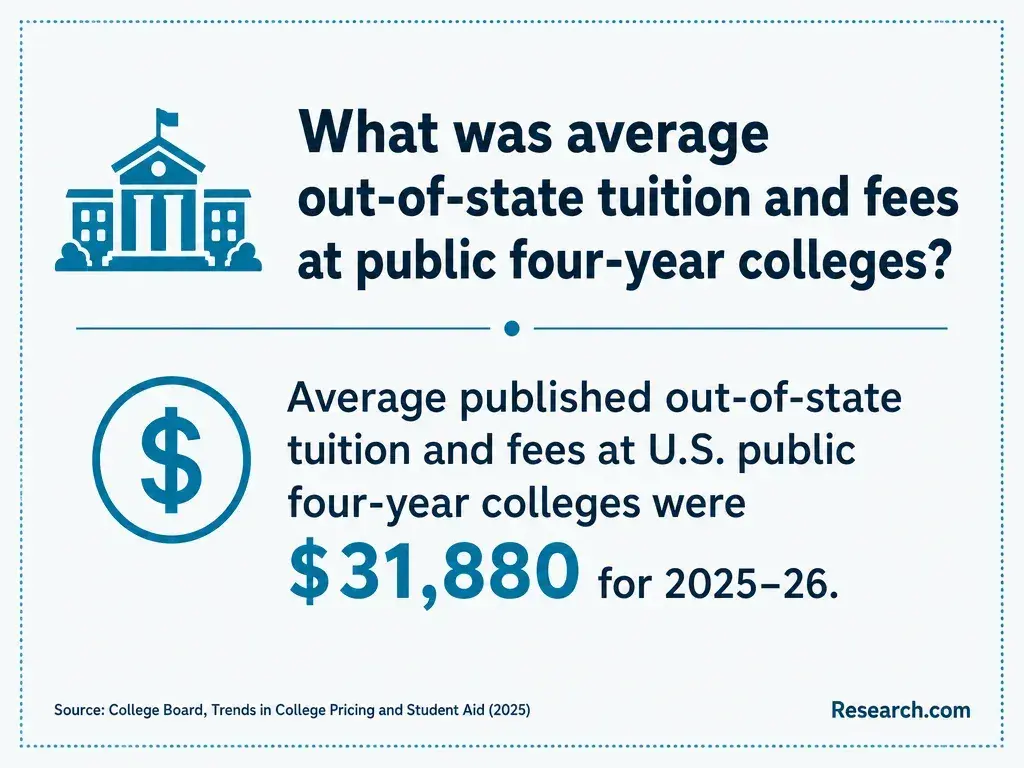
Build a cost estimate from the school's current per-credit or per-term charges, mandatory fees, and your audited remaining credits. Add expenses specific to the chosen capstone, such as travel, required software, or time away from paid work. Ask whether changing projects, delaying site approval, or extending enrollment creates additional charges. For a broader tuition comparison, use choosing a cost-conscious psychology degree program as a starting point, then calculate your own remaining cost rather than relying on an advertised tuition figure.
Depending on the employer and jurisdiction, graduates may pursue nonclinical work in recovery-service outreach, intake support, resource navigation, case coordination, prevention programming, or research and evaluation assistance. Duties matter more than titles: an outreach worker might maintain a referral directory, while a research assistant might organize approved study materials and document data-quality checks. Neither task is independent diagnosis or psychotherapy.
An applied capstone can provide a relevant work sample for service or program-support roles; a literature review can demonstrate evidence appraisal and writing for research-oriented roles. Pair either with suitable supervised experience, references, and any training the employer requires. When exploring addiction recovery job families, compare posted duties and credentials rather than assuming a psychology BA qualifies you for every recovery-related title.
There is no single reliable salary or job-growth figure for "addictions psychology BA graduates." Pay depends on the occupation, location, employer, experience, and credentials. The US Bureau of Labor Statistics groups substance abuse, behavioral disorder, and mental health counselors in an occupational category, but its wage and outlook figures describe people employed in those occupations - not the expected pay of BA graduates or an outcome attributable to either capstone.
For a useful estimate, identify a specific job title you can qualify for, compare local postings, and then consult the corresponding Bureau of Labor Statistics occupational profile. Keep unrelated specialties out of the comparison: pay comparisons across forensic psychology-related careers do not predict earnings in addiction recovery support. A capstone may strengthen an application, but it cannot establish a salary premium on its own.
What Licenses or Certifications Do Addiction Professionals Need?
Requirements follow the role and state, not the words "addictions focus" on a transcript. States may regulate substance-use-disorder counselors through specified education, supervised experience, examinations, and defined scopes of practice. Peer-support credentials and employer training can follow different rules. A psychology BA, applied project, or literature review does not independently authorize counseling, diagnosis, or use of a protected title.
Start with the state regulator or credentialing authority for the precise job you want. Compare its required coursework and supervised hours with the university's documented curriculum; ask both organizations to clarify any uncertain match before enrolling. If the rules call for dedicated counseling preparation, comparing undergraduate substance use counseling costs and outcomes may be more relevant than choosing between two psychology capstones. Confirm credential eligibility independently rather than treating a program's subject-matter overlap as approval.
Other Things You Should Know About Psychology
Check the course's AI and citation policies first. If use is permitted, verify every source and claim yourself, disclose assistance as required, and never enter confidential service information into an unapproved tool.
Possibly, but the instructor or program may require approval and a revised proposal. Ask about deadlines and whether a switch changes your graduation timeline before withdrawing from an approved plan.
Follow the assignment rules and the question. Recent studies can show the state of current evidence, while older foundational work may be necessary to explain a theory or measure.
Agree on roles with the instructor early and retain a record of drafts, decisions, and individual work. Obtain permission before presenting a shared deliverable as your own portfolio sample.
- Approaching literature review for academic purposes - PMC https://pmc.ncbi.nlm.nih.gov/articles/PMC6862708/
- Chapter 9 Methods for Literature Reviews - NCBI - NIH https://www.ncbi.nlm.nih.gov/books/NBK481583/
- NACDA Guidelines for Administration of Drugs to Human Subjects | National Institute on Drug Abuse (NIDA) https://nida.nih.gov/research/clinical-research/nacda-guidelines-administration-drugs-to-human-subjects
- CDC Approach to Program Evaluation https://www.cdc.gov/evaluation/php/about/index.html
- Assessing by Capstone Project | UNSW Staff Teaching Gateway https://www.teaching.unsw.edu.au/capstone-project
- Bachelor of Arts in Psychology - Degree Completion | Notre Dame de Namur University https://www.ndnu.edu/psychology/ba-completion-psychology.html
- Design effective assessments | Portland State University | OAI+ Faculty Teaching Resources https://oaiplus.pdx.edu/design-effective-assessments/
- A systematic literature review of capstone courses in software engineering - ScienceDirect https://www.sciencedirect.com/science/article/pii/S0950584923000459
- Human research protections | apa.org https://www.apa.org/research-practice/conduct-research/human
- Systematic Reviews: Types of Reviews | LibGuides at Duke University Medical Center https://guides.mclibrary.duke.edu/sysreview/types