2027 Online BA in Psychology - Mental Health for Work in Refugee Resettlement Agencies: Compare Degree Fit and Hiring Requirements
Audited and Verified:
Our Editorial and Data Verification Process
Research.com uses government datasets, official education statistics and primary institutional information to support its career and degree guides. Our review process checks factual accuracy, occupational definitions, source dates and the requirements associated with the credentials discussed.
How This Article Was Fact-Checked
Our editorial team verifies salary estimates, employment projections, education requirements and program information against original data providers and official organizations. Salary figures are checked against the relevant occupational definitions and reporting periods. Information about licensure, accreditation and required in-person training is reviewed separately.
Fact-checked and verified on:

Co-Founder and Chief Data Scientist
If you want to support refugees' mental health through a resettlement agency, an online psychology BA may help - but its value depends on the job you want. Agencies hire for service coordination, outreach, and referrals as well as licensed treatment, and those roles have different requirements. This guide compares the degree with hiring expectations, alternative qualifications, online study, and the costs of reaching your goal. It is intended for prospective students and community-service workers deciding whether a psychology degree is the most direct next step.
Key Things You Should Know
- An online psychology BA can prepare you for nonclinical resettlement support, but it does not qualify you to diagnose or provide psychotherapy.
- A typical bachelor's degree requires about 120 semester credits; the time and cost remaining depend on approved transfer credits, course availability, and fieldwork requirements.
- For agency hiring, language skills, supervised service experience, and knowledge of referral systems may matter as much as the major; licensed mental health roles require a separate qualifying pathway.
What is an online psychology bachelor's degree for refugee resettlement work?
It is a bachelor of arts in psychology completed primarily online and applied to work with people navigating resettlement. Students study behavior, development, research, and mental health as academic subjects. A BA labeled "mental health" may offer relevant electives, but the label alone does not establish specialized field training or a clinical credential.
Resettlement agencies may help clients access housing, benefits, schools, employment, health care, and community support. Mental health needs can intersect with those tasks, but an agency's support worker is not necessarily its therapist. Psychology is a reasonable choice if you want broad behavioral-science preparation and may later pursue graduate study. If your goal is immediate casework, compare it with human services or social work programs that offer more direct service training.
Do not choose a specialization because its name sounds close to your goal. For example, faster forensic psychology master's study for working professionals addresses a different field and does not substitute for resettlement experience or qualifying clinical education.
What jobs can you get in refugee resettlement with a psychology degree?
A psychology graduate may be considered for nonclinical positions such as resettlement case aide, service coordinator, employment or youth-program assistant, community outreach worker, or behavioral-health referral coordinator. Duties may include explaining services, documenting needs, arranging appointments, coordinating with interpreters, and following up on referrals. Employers often weigh relevant experience, languages, local resource knowledge, and grant-funded job specifications alongside education.
The distinctions below help you read a posting by its duties rather than its title. Requirements vary by employer and location.
| Role direction | Likely preparation | Important boundary |
| Case aide or outreach assistant | Relevant degree or experience, communication skills, agency training | Supports access to services; does not provide therapy |
| Service or referral coordinator | Often a bachelor's degree or substantial related experience; knowledge of local systems | Coordinates care without diagnosing clients |
| Mental health clinician | Qualifying professional education and applicable state license or supervised status | Clinical duties depend on the credential and supervision |
A useful first move is to collect local postings and compare their required duties with your existing experience. Work in schools, health navigation, interpretation, or community organizations may already support an application. Forensic psychology graduate occupations and salary considerations involve different employers and duties; do not use them as a pay or hiring proxy for resettlement work.
What education do refugee resettlement agencies require for mental health roles?
There is no single agency-wide degree requirement. A support position may accept psychology, social work, human services, or another relevant major - and sometimes equivalent experience. A role providing psychotherapy instead calls for education that meets the applicable state's professional requirements, plus any required supervision and licensure. A psychology BA alone meets neither condition.
Read each posting for the difference between "required" and "preferred." Check whether it calls for a BSW or MSW, a counseling degree, a clinical license, language proficiency, experience with displaced communities, or a particular funding contract's qualifications. If you already work in a nonprofit, ask whether your duties and employer training position you for advancement before committing to another degree.
If your target is therapy rather than coordination, investigate a qualifying graduate program and the full route to practice. Mental health counseling graduate costs and career outcomes are more relevant to that decision than the price of a psychology BA alone.
An online BA can be a recognized bachelor's degree when the institution holds accreditation recognized by the U.S. Department of Education or the Council for Higher Education Accreditation. Verify the institution and the exact program in official listings, then confirm that the degree and online format appear in the school's current catalog. Employer acceptance still depends on the posting and whether your preparation fits its duties.
Do not look for APA accreditation as a test of a general psychology BA: APA accreditation applies to specified professional psychology programs and training, not ordinary undergraduate psychology majors. Likewise, institutional accreditation does not make a BA licensure-qualifying. Even lists of online forensic psychology tuition admissions and outcomes should not be treated as evidence that a particular program prepares graduates for refugee mental health roles. Check accreditation scope and career fit separately.
Online study can let a student remain employed or live near a resettlement agency, making local experience possible during school. Campus study may offer easier access to faculty, research teams, and established placement relationships. Neither format automatically supplies the supervised, client-facing experience an employer may value.
Before choosing online delivery, ask whether courses are asynchronous, when live meetings occur, and whether internships require daytime availability or in-person supervision. Ask who finds and approves a local site, and whether current nonprofit employment can count; approval is not automatic. A shorter calendar is useful only if required courses and suitable experience still fit your schedule. Compare faster psychology degree timelines online against those practical constraints, not just an advertised completion date.
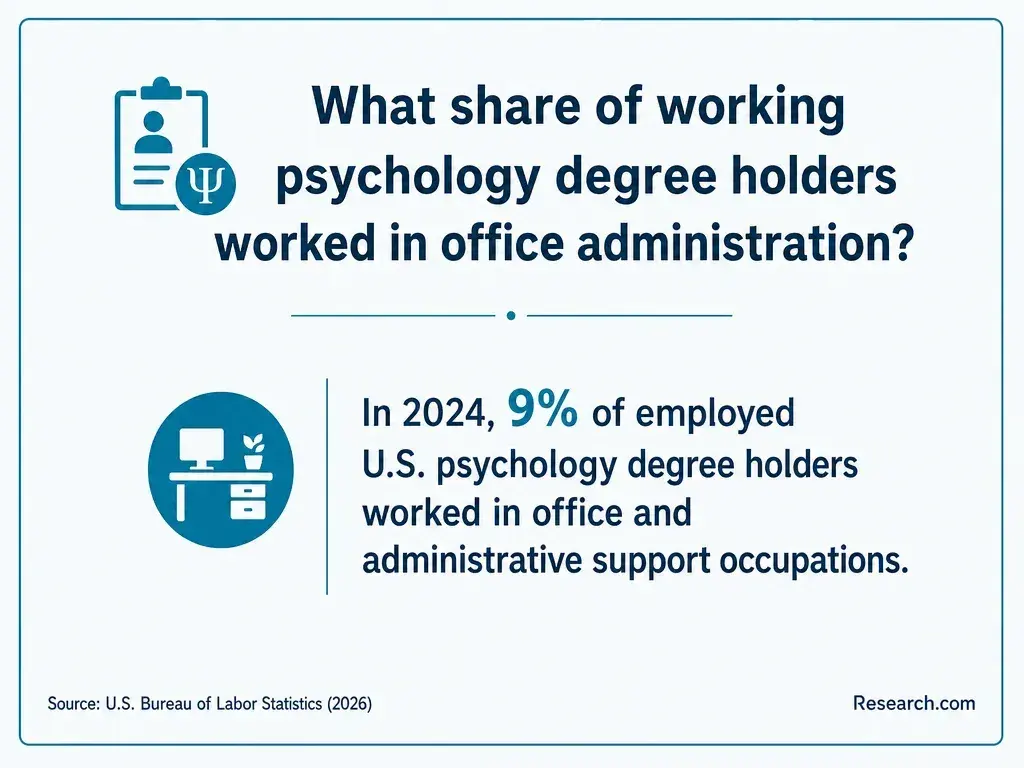
Prioritize developmental and social psychology, cultural psychology where available, research methods, statistics, and coursework on mental health and community services. These subjects can help you interpret evidence, understand how circumstances affect well-being, and communicate without turning a screening concern into a diagnosis. Courses on migration or trauma may add context, but classroom exposure is not clinical training.
For a strong nonclinical application, pair coursework with supervised practice in respectful intake, accessible communication, documentation, referrals, and confidentiality. An agency-approved project might map referral options using public information; access to client records or interviews would require the appropriate permissions and safeguards. If a program markets a specialized track, verify its actual courses and placement options. Forensic psychology bachelor's study with accelerated pacing, for instance, should not be mistaken for preparation specific to refugee services.
First-time applicants generally need secondary-school completion and the institution's application materials. Transfer applicants typically submit college transcripts; schools may also set GPA or major-entry rules. Confirm the requirements for your entry term rather than assuming that admission to the university means admission to every major course.
If you have prior credits, request a written degree audit showing what applies to general education, psychology, statistics, and residency requirements. A credit can be accepted without satisfying a specific requirement. Ask when methods courses are offered and whether a needed prerequisite could delay graduation. When comparing online bachelor's program choices in psychology, use the remaining-credit audit - not a headline transfer-credit allowance - to judge your likely path.
A typical U.S. bachelor's program is built around roughly 120 semester credits and is commonly planned as four years of full-time study. Your remaining time depends on accepted credits, whether they satisfy requirements, enrollment pace, and course scheduling. Online delivery does not by itself reduce the number of credits.
For a useful cost comparison, obtain each school's written estimate for your remaining credits, mandatory fees, books or technology, and any travel or unpaid placement. Compare that total with your available aid and the earnings you might give up to complete fieldwork. Lower-cost online psychology study pathways are worth examining, but the lowest published tuition may not produce the lowest cost to graduation after a transfer audit.
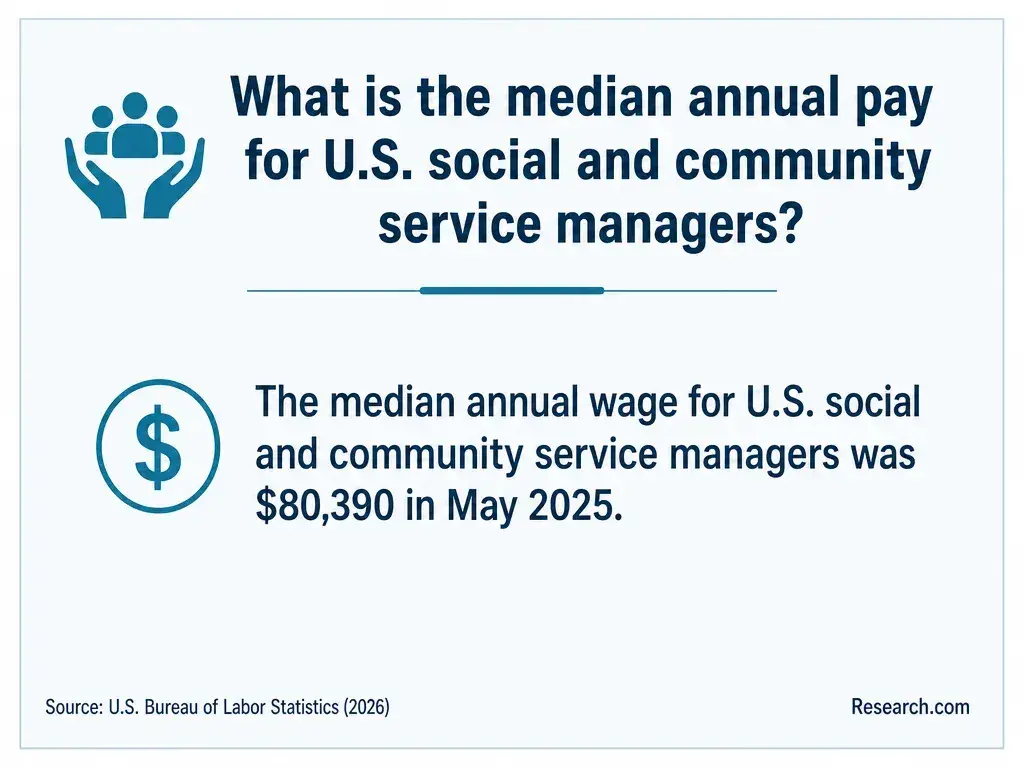
There is no reliable national salary category for "refugee mental health worker." A resettlement case aide, social and human service assistant, and licensed counselor may appear in different occupation groups and have different qualifications. For a broad benchmark, consult the U.S. Bureau of Labor Statistics Occupational Outlook Handbook category closest to a posting's duties, then compare actual local agency postings. An occupation-wide median or growth projection is not a forecast for psychology BA graduates or for a particular nonprofit job.
Salary comparisons also need to account for the education required to reach each role. A licensed counseling position may have a different pay range from a support position, but it also entails further qualifying study and supervised experience. If that is your goal, compare fast-track mental health counseling master's formats against licensing requirements and total costs, rather than assuming the quickest advertised format leads to faster employment.
Does a psychology bachelor's degree lead to counseling or social work licensure?
No. A psychology BA can supply background knowledge or prerequisites, but counseling and clinical social work are separate professional pathways. State boards determine the qualifying degree, supervised experience, examinations, and permitted duties. For social work, check whether the intended program has the CSWE recognition relevant to your state's rules; for counseling, check the specific degree and state educational criteria rather than assuming every psychology or counseling course counts.
A general psychology master's is not automatically a shortcut to either license. Faster pathways through graduate psychology coursework may serve nonclinical or research goals, but prospective clinicians should ask the licensing board and graduate program whether a proposed degree satisfies the intended credential's requirements. Make that check before paying for a BA concentration or later master's program on the assumption that its mental health title confers practice authority.
Other Things You Should Know About Psychology
Not for every job. Some positions require a specific language; others use qualified interpreters. Check the posting, and never assume conversational fluency qualifies you to interpret sensitive information.
It can bring valuable perspective and community knowledge, but employers still assess the role's stated skills and credentials. You need not disclose personal experiences beyond what you choose to share.
Follow agency policy and use an appropriately qualified interpreter when required. Relying on relatives can create accuracy, privacy, and consent concerns, especially for sensitive discussions.
Ask prospective employers about supervision, training, caseloads, referral procedures, and staff support. Good boundaries and a clear route for escalating concerns matter more than expecting a psychology course to prepare you for every situation.
- Exploring Refugee Officer Careers | uscis.gov https://www.uscis.gov/about-us/careers/career-opportunities/exploring-refugee-officer-careers
- Licensed Clinical Social Worker | floridasmentalhealthprofessions.gov https://floridasmentalhealthprofessions.gov/licensed-clinical-social-worker/
- 45 CFR Part 400 -- Refugee Resettlement Program | ecfr.gov https://www.ecfr.gov/current/title-45/subtitle-B/chapter-IV/part-400
- US Refugee Admissions Program: Reception and Placement | United States Department of State https://2017-2021.state.gov/refugee-admissions/reception-and-placement/
- DAPIP | Homepage - Office of Postsecondary Education (OPE) https://ope.ed.gov/dapip/
- Federal Agencies' Roles in the U.S. Refugee Resettlement Program | The Administration for Children and Families https://acf.gov/orr/programs-services/refugees/resettlement-program
- Choosing a Program - APA Accreditation https://accreditation.apa.org/choosing-a-program
- Online Bachelor's Degree in Psychology | Purdue Global https://www.purdueglobal.edu/degree-programs/psychology/bachelor-degree-psychology-online/
- Career Pathways in Psychological & Brain Sciences | Information Technology Services https://artsandsciences.louisville.edu/psychological-and-brain-sciences/career-pathways
- FOCUS ON RESETTLEMENT AGENCIES | purdue.edu https://hammer.purdue.edu/ndownloader/files/24112016