2027 Online BA in Psychology - Addictions: How to Evaluate a Virtual Research Lab
Audited and Verified:
Our Editorial and Data Verification Process
Research.com uses government datasets, official education statistics and primary institutional information to support its career and degree guides. Our review process checks factual accuracy, occupational definitions, source dates and the requirements associated with the credentials discussed.
How This Article Was Fact-Checked
Our editorial team verifies salary estimates, employment projections, education requirements and program information against original data providers and official organizations. Salary figures are checked against the relevant occupational definitions and reporting periods. Information about licensure, accreditation and required in-person training is reviewed separately.
Fact-checked and verified on:

Co-Founder and Chief Data Scientist
A virtual research lab can be a valuable part of an online psychology degree - or little more than a collection of prerecorded demonstrations. For students interested in addictions, the difference matters: useful research training should build skills in evaluating evidence about substance use and recovery without implying clinical qualification. This guide explains what to look for in a lab, what questions to ask about supervision and data access, and how to weigh that experience against the degree's cost and your intended next step.
Key Things You Should Know
- Favor labs where students complete supervised research tasks and receive feedback, not just watch demonstrations or run preset simulations.
- Ask who approves projects and data access: working with addiction-related records or participants can require permissions that online enrollment does not provide.
- Check the full degree plan, often built around approximately 120 semester credits at U.S. bachelor's programs; an impressive lab cannot offset missing methods courses, unaffordable tuition, or a mismatch with your career goal.
What Is an Online BA in Psychology With an Addictions Focus?
It is a bachelor of arts degree in psychology that adds coursework about substance use, behavior change, prevention, and recovery. "Addictions focus" may mean an officially recorded concentration, a set of electives, or simply a marketing description. Ask the school which designation will appear on your transcript and which courses are required.
The BA normally provides broad psychological-science preparation, including research methods and statistics. Its addictions courses can help a student interpret research or prepare for nonclinical support work; they do not confer authority to diagnose or treat substance use disorders. When comparing degree plans, use addiction psychology bachelor's degree planning to frame questions about the concentration, then confirm answers in each school's current catalog.
How Does a Virtual Research Lab Work in an Online Psychology Degree?
A virtual lab is an online setting for practicing parts of the research process. Depending on the course, students might evaluate published studies, analyze an approved dataset, design a proposed survey, document coding decisions, or discuss findings with a faculty member and peers. A simulation, a class project, and a faculty-led research assistantship are different experiences; the school should identify which one it offers.
The distinction matters most when you need evidence of independent research readiness. A simulation may teach concepts effectively, while a supervised project may also produce work you can discuss in a job or graduate-school application. The comparison below shows what each format can - and cannot - reasonably demonstrate.
| Lab format | Potential learning evidence | Important limit |
| Guided simulation | Practice choosing methods and interpreting preset results | Does not establish experience collecting or managing real data |
| Course-based project | A proposal, analysis, research brief, or poster with instructor feedback | Scope and data access may be limited to one term |
| Faculty-led research team | Documented contributions to an ongoing project under supervision | Places, tasks, and mentoring time may be limited or selective |
Before enrolling, request a recent lab syllabus or assignment description. Ask whether meetings are live, how often feedback arrives, what software and accessible alternatives are available, whether online students can join faculty projects, and whether participation requires set hours. For a working student, a "fully online" lab with daytime team meetings may be less feasible than an asynchronous course with substantive individual feedback. Compare those obligations alongside broader psychology degree planning for prospective online students, rather than treating delivery mode as proof of flexibility.
How Can You Evaluate an Online Psychology Program's Accreditation?
Confirm the institution's accreditation with the accreditor and the U.S. Department of Education's recognized-accreditor information, then confirm that the online BA is offered by that institution for your intended entry term. Institutional accreditation addresses the institution; it does not verify the quality, availability, or supervision of a particular virtual lab.
Do not reject a psychology BA because it lacks American Psychological Association accreditation: APA accreditation applies to specified professional psychology training programs, not general bachelor's degrees. Likewise, accreditation does not turn an addictions concentration into a counseling credential. If you are weighing a different specialty, comparing accredited forensic psychology degree programs can help clarify why degree level, specialty, and applicable recognition must be checked separately.
Ask the psychology department - not only admissions - who teaches the lab, whether online students have the same research opportunities advertised to campus students, and what happens if a required lab course is unavailable. Obtain the current catalog and written answers before relying on a program description.
Course names vary, but the most useful degree plan connects addictions content to psychological science. Look for introductory psychology, statistics, research methods, and coursework in development, biological or behavioral foundations, and social psychology. Addictions-focused offerings may cover substance use across the lifespan, prevention, recovery systems, and ethical or cultural issues.
For evaluating a virtual lab, sequencing matters more than a long elective list. A student who takes statistics and methods before an advanced project can make more informed choices about measures, sampling, and interpretation. Ask whether the lab has prerequisites, whether it runs every term, and whether a capstone requires a separately approved project. A course about counseling techniques is academic exposure, not supervised clinical training.
If your interests might shift toward legal-system research, compare actual prerequisite and methods requirements rather than assuming any specialty elective will prepare you. Resources on forensic psychology master's course sequencing for faster completion illustrate why the next program's required courses - not the undergraduate concentration's name - should guide elective choices.
A strong lab teaches students to turn a question about addiction or recovery into a researchable question, distinguish a construct from its measure, evaluate a sample, analyze data appropriately, and explain uncertainty. For example, students might examine how a published study measured treatment retention. They should be able to identify selection bias and avoid claiming that an observed association proves a treatment caused the outcome.
Ask to see the lab's assessed learning outcomes and the kinds of feedback students receive. Particularly useful outputs include a reproducible analysis with documented decisions, a critique of a published measure, or a research brief that states limitations. Those are more informative than a promise that students will "conduct cutting-edge research" without defined tasks or supervision.
Addiction-related data require care. Publicly available data, restricted research files, and identifiable service records carry different permissions. A student must not assume that removing names permits use of client records, that a class assignment authorizes recruitment, or that every project has the same institutional review requirements. Faculty and any participating organization must determine the necessary approvals and safeguards before work begins. If the lab is primarily a stepping-stone to graduate study, weigh its mentoring and methods depth against the later investment; psychology master's fees and total study costs are a separate decision from the BA's advertised lab features.
First-year applicants generally need the institution's required secondary-school documentation; transfer applicants typically submit transcripts from prior colleges. GPA thresholds, testing policies, application deadlines, and admission to the psychology major vary by school. A lab or concentration may also have prerequisites or a separate application even when admission to the university is straightforward.
If you have prior credits, request a degree audit showing not just what transfers but what satisfies statistics, methods, general education, major, and residency requirements. Ask when you can first take the lab and whether a transferred methods course meets its prerequisite. The receiving institution makes the final equivalency decision; psychology programs that accept transfer credits are a starting point for comparison, not a promise that particular credits will apply.
Many U.S. bachelor's degrees are designed around approximately 120 semester credits, but remaining credits - not the advertised degree length - determine a transfer student's likely timeline. Lab prerequisites, course rotation, part-time enrollment, and a required capstone can extend it. Request a term-by-term plan that shows when the lab is available, including any live meetings, campus visits, or approved off-campus activities.
For cost, calculate required credits at the tuition rate that applies to you, then add mandatory fees, books, software, and any travel. Ask whether lab software is provided, whether a research course has extra charges, and whether changing enrollment pace affects aid. Do not compare schools using tuition per credit alone if one requires substantially more remaining coursework.
Accelerated schedules can reduce elapsed time but may leave little room for a selective research opportunity or sequential methods courses. If speed is your overriding priority, forensic psychology bachelor's study with accelerated pacing offers a contrasting degree-planning lens; judge any accelerated option against the addictions coursework and lab experience you actually need.
A graduate may pursue nonclinical roles in recovery-service coordination, prevention outreach, research support, or human-services administration, subject to each employer's requirements. Typical tasks could include scheduling services, maintaining permitted records, explaining referral options, supporting program delivery, or helping a research team organize approved data. A virtual lab is most valuable when its documented tasks match the target role - for example, careful data handling for research support or evidence summaries for program work.
Job titles do not reliably define scope. A "recovery support" opening may require a state-recognized credential or lived-experience qualification, while a research assistant opening may prioritize spreadsheet skills and experience following a study protocol. Read postings for duties, supervision, and required credentials. For a closer look at role distinctions and advancement, see understanding career progression in addiction recovery.
If your goal is direct counseling rather than research or support work, compare qualifying professional training early. Another bachelor's degree may not be the most direct next step if you already hold one and can meet the prerequisites for an appropriate graduate pathway.
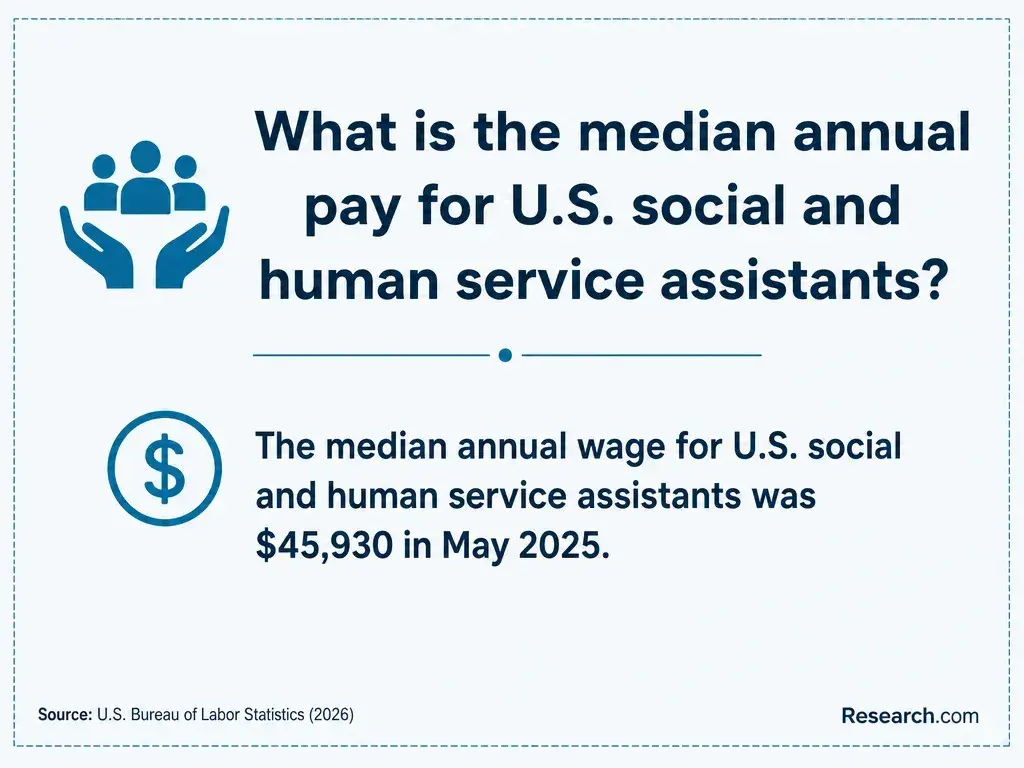
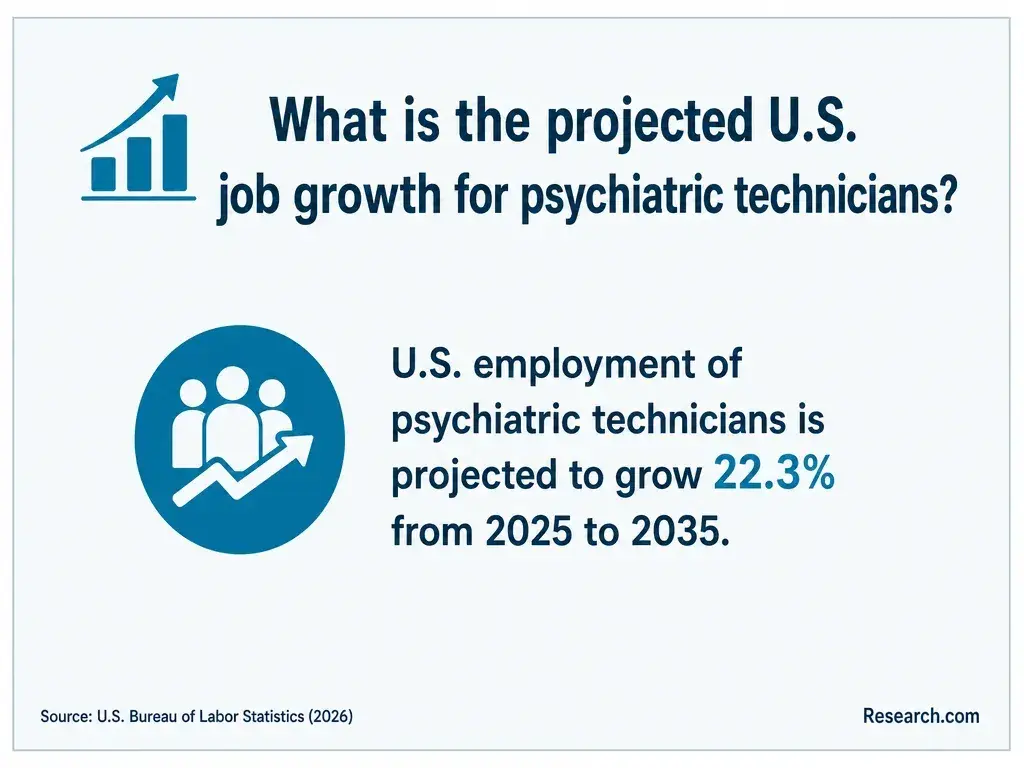
There is no single salary or job-growth figure for graduates of an addictions-focused psychology BA. Pay depends on the occupation, location, employer, experience, and credentials. The U.S. Bureau of Labor Statistics reports wages and projections by occupation - not by undergraduate concentration - so a counselor's occupational median should not be presented as the expected pay for a new BA graduate in a support role.
For a useful comparison, identify two or three jobs you would realistically qualify for, check current local postings, and compare their stated pay and requirements with the latest Bureau of Labor Statistics occupational figures. If the better-paid role requires a qualifying graduate degree and supervised practice, include that additional time and expense in your decision. Accelerated online master's preparation in mental health counseling is relevant only if that distinct professional pathway fits your goal; a shorter advertised timeline does not remove credential requirements.
Does an Online Psychology BA Qualify You for Addiction Counseling Licensure?
Not by itself. State rules for substance-use-disorder counselors differ in required education, supervised experience, examinations, credentials, permitted duties, and job titles. Some states have credential levels with different entry requirements. An addictions concentration or virtual research lab may supply useful academic preparation, but neither establishes eligibility to counsel independently.
Start with the licensing or certification authority in the state where you intend to work. Compare its current requirements with the school's written course and placement details; ask the authority how it evaluates the specific degree if the answer is unclear. A research lab should not be counted as a clinical practicum or license-supervised experience unless the responsible authority explicitly accepts it.
For a licensed mental-health counseling goal, investigate a qualifying graduate program as a separate pathway. Accredited clinical counseling timelines for working students can help frame scheduling questions, but the relevant state board remains the authority on licensure eligibility.
Other Things You Should Know About Psychology
Yes. Contact the institution's accessibility office before the course begins to discuss software, recorded materials, live meetings, and assignment formats. Ask how approved accommodations work for collaborative research tasks.
Usually, you can describe your own skills and share work you are permitted to disclose. Obtain permission before sharing team materials, restricted data, unpublished findings, or an instructor's materials, and remove confidential information as required.
It can if an instructor sees your research reasoning, revisions, and reliability over time. Ask whether the lab includes direct faculty feedback; enrollment alone gives a recommender little specific evidence to discuss.
Not necessarily. Requirements depend on the lab. Ask which tools it uses and whether instruction is provided; a course built around research critique may require different preparation from one involving statistical analysis.
- IRBs | ORI https://ori.hhs.gov/content/chapter-3-The-Protection-of-Human-Subjects-IRBs
- Eligibility Requirements | Federal Student Aid https://studentaid.gov/understand-aid/eligibility/requirements
- Cost of Attendance (Budget) | 2025-2026 Federal Student Aid Handbook https://fsapartners.ed.gov/knowledge-center/fsa-handbook/2025-2026/vol3/ch2-cost-attendance-budget
- Statistical Standards Program - Accessing and Using Restricted-Use Data Frequently Asked Questions https://nces.ed.gov/statprog/instruct_access_faq.asp
- Ethical Guidelines and the Institutional Review Board - PMC https://pmc.ncbi.nlm.nih.gov/articles/PMC10885741/
- Regular and Substantive Interaction | MSU Denver https://www.msudenver.edu/digital-faculty/regular-substantive-interaction/
- Full article: Evaluation of a student clinical research education program in addiction medicine | tandfonline.com https://www.tandfonline.com/doi/full/10.1080/07853890.2022.2154833
- Substance Use & Addiction Research at the UW https://adai.uw.edu/research/addiction-research-at-the-uw/
- Online and Remote Research Opportunities | University of Arizona https://ur.arizona.edu/find-research/online-and-remote-research-opportunities
- Substantive Interaction - Learning and Teaching Consulting https://sites.lsa.umich.edu/learningteachingconsulting/home/teaching-methods/online-blended-teaching/substantive-interaction/