2027 Online BA in Psychology - Mental Health for Employee Benefits Specialists: Compare Prerequisites, Workload, and Career Fit
Audited and Verified:
Our Editorial and Data Verification Process
Research.com uses government datasets, official education statistics and primary institutional information to support its career and degree guides. Our review process checks factual accuracy, occupational definitions, source dates and the requirements associated with the credentials discussed.
How This Article Was Fact-Checked
Our editorial team verifies salary estimates, employment projections, education requirements and program information against original data providers and official organizations. Salary figures are checked against the relevant occupational definitions and reporting periods. Information about licensure, accreditation and required in-person training is reviewed separately.
Fact-checked and verified on:

Co-Founder and Chief Data Scientist
If you help employees navigate mental health benefits, a psychology degree may deepen your understanding of behavior and research - but it may not be the quickest way to improve a benefits program or advance in your role. This guide compares online BA prerequisites, workload, costs, and career fit for employee benefits specialists. It also shows where psychology knowledge helps, where benefits expertise matters more, and what to verify before committing to a degree.
Key Things You Should Know
- An online psychology BA can strengthen research literacy, communication, and understanding of mental health, but it does not qualify you to diagnose employees or provide therapy.
- Many bachelor's degrees are built around roughly 120 semester credits; your actual remaining workload depends on an approved transfer evaluation, course sequence, and enrollment pace.
- If your goal is better benefits administration rather than a bachelor's credential or career change, targeted training in benefits, privacy, and program evaluation may be more direct.
What Is an Online BA in Psychology for Employee Benefits Specialists?
An online BA in psychology is a broad undergraduate degree in psychological science, usually covering behavior, development, social processes, research methods, and statistics. It is not generally a degree designed specifically for benefits administration. A mental health course or elective adds subject knowledge; it does not necessarily create a formal concentration.
For a specialist who already understands enrollment, vendors, and employee communications, the degree's value lies in filling a different gap: evaluating behavioral claims and communicating about sensitive needs without treating employees as patients. If you want to move into substance-use services instead, planning a degree focused on addiction counseling involves a different curriculum and potentially different state credential requirements.
How Can Psychology Support Mental Health Employee Benefits Work?
Psychology can help a benefits specialist assess whether communications are understandable, whether employees can find appropriate support, and whether a vendor's claims match the evidence. Research-methods training is particularly useful when comparing survey results or utilization reports: increased use of a benefit may indicate improved access, greater need, or both. It does not, by itself, prove that employees' mental health improved.
In practice, the specialist's job is to explain coverage and referral routes, coordinate with qualified providers, and evaluate aggregate program information - not to interpret an individual's symptoms. Handle employee disclosures under applicable workplace policies and privacy rules, and seek appropriate legal or clinical guidance rather than assuming every benefits record is governed by the same rule. An accredited college pathway in addiction psychology may offer more focused academic study if substance-use benefits are central to your work, but specialization still does not confer treatment authority.
What Careers Can You Pursue With an Online Psychology Bachelor's Degree?
Your existing benefits experience may matter more than the BA alone for advancement in benefits operations, vendor management, employee education, or people-analytics support. The degree may also help you compete for nonclinical program-coordination or research-support roles, provided you can demonstrate the required data, communication, and project skills. Employers set their own experience requirements; a degree is not a promotion or hiring guarantee.
The distinctions below help separate realistic transitions from jobs requiring additional credentials.
| Target work | How the BA may help | What else to verify |
| Mental health benefits or wellbeing program specialist | Supports evidence appraisal and employee-centered communication | Benefits experience, vendor oversight, privacy responsibilities, and employer requirements |
| Nonclinical service or research support | Provides behavioral-science and methods foundations | Supervised experience, data skills, and the position's actual duties |
| Counselor, therapist, or psychologist | May provide undergraduate preparation | Qualifying graduate education, supervised practice, and jurisdiction-specific licensure |
If you are considering a move from benefits into direct support services, compare actual job duties before choosing a program. Recovery-focused roles and qualifications, for example, differ substantially from benefits administration and from licensed treatment.
First-year applicants generally need to meet the university's undergraduate admission requirements; a prior psychology major is not ordinarily the starting point for a bachelor's degree. Transfer applicants may face separate minimum-credit, GPA, or course-equivalency rules. Some schools admit students to the institution before confirming entry to the psychology major.
If you have prior college credit, request an official evaluation showing not just credits accepted, but which ones satisfy general education, psychology, statistics, and research-methods requirements. Ask whether a course must be taken before another, whether transfer credits meet residency rules, and which required courses are offered online in your intended terms. Requirements can differ even among programs with related subject matter, including forensic psychology degree formats and academic requirements; the destination institution has final authority over your credits.
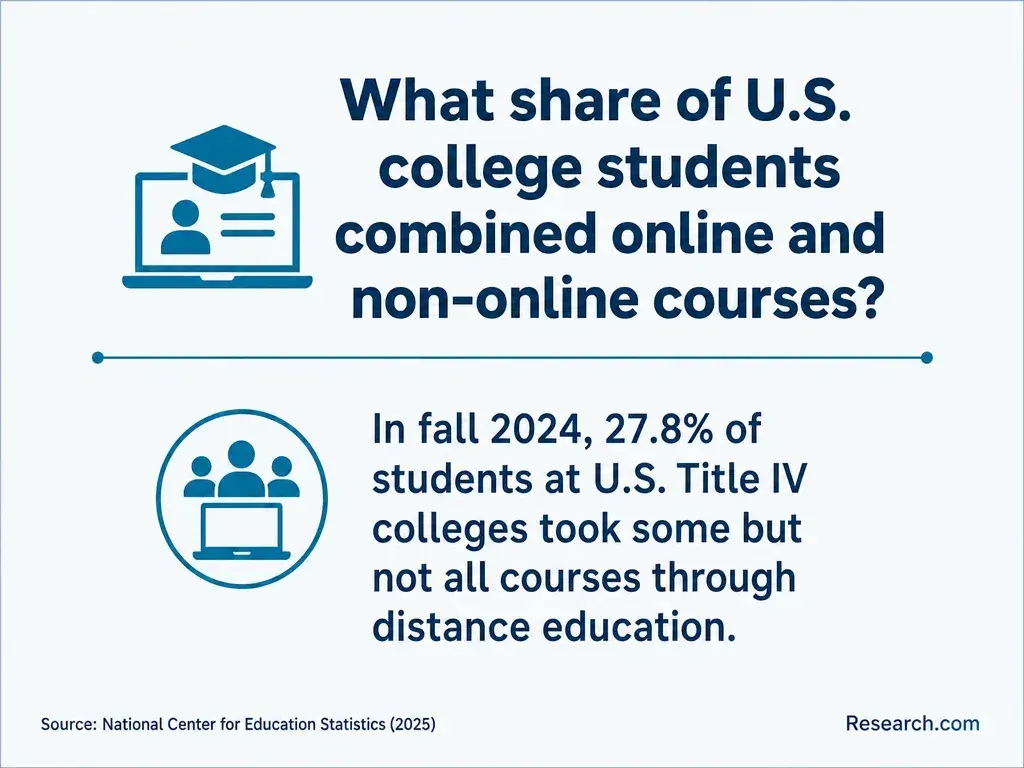
Online delivery may remove a commute without reducing the reading, statistics, writing, or group work. Asynchronous courses let you choose when to complete much of the work, while scheduled discussions, exams, research meetings, or a capstone can still conflict with benefits-enrollment season. Campus study may offer easier access to in-person faculty and research activities, though availability varies by school.
Compare the actual timetable rather than the format label: required live sessions, weekly deadlines, course availability, and any local placement or campus visits. Faster formats can compress - not eliminate - the work. That distinction also matters when considering a shorter undergraduate forensic psychology degree: its advertised pace should not outweigh whether its subject matter fits mental health benefits work.
Expect introductory psychology, statistics, research methods, and upper-level study that may include social, developmental, cognitive, biological, or abnormal psychology. Exact requirements vary. For benefits work, statistics and methods help you question vendor evidence; social psychology and health-related electives can inform communication and access; abnormal psychology provides academic context without teaching independent diagnosis.
Look for an applied assignment you can complete ethically, such as a literature-based review of benefit communications using public information. Do not assume your employer will authorize a project using identifiable employee records. If you might later seek clinical training, compare graduate prerequisites separately: mental health counseling graduate costs and career outcomes belong to a distinct professional pathway, not an automatic extension of a psychology BA.
A bachelor's degree commonly requires about 120 semester credits, often planned as four years of full-time study from the beginning. For a working specialist, completion time depends more on credits that apply to requirements, the number of courses taken each term, and the sequence of statistics, methods, and upper-level courses than on whether classes are online.
Ask for a term-by-term plan showing remaining requirements and when each course is offered. Test that plan against your busiest work periods before choosing an accelerated schedule. Planning an intensive online psychology degree can clarify the pace trade-off, but only your school's approved degree audit can establish a realistic finish date.
There is no reliable single price for an online psychology BA. Compare each school's tuition basis - per credit, course, or term - plus mandatory fees, books, technology, and any required travel. Then price your remaining applicable credits, not the full degree, if you already have college coursework. A slower pace may also change aid eligibility or extend the time you pay fees.
Request a written cost estimate based on your degree audit and ask your employer about tuition assistance, eligibility conditions, and repayment obligations. Complete the appropriate aid application and confirm the school's aid rules before assuming assistance is available. Guidance on undergraduate substance abuse counseling education funding may help you identify funding questions, but awards and eligibility must be checked for your chosen psychology program.
No psychology license is required to earn a BA or to use its general knowledge in a nonclinical benefits role. The degree itself does not authorize psychotherapy, diagnosis, independent psychological assessment, or use of a protected clinical title. Benefits-related certifications, if valued by your employer, are separate from the academic degree.
If your goal changes to counseling employees rather than administering their benefits, check the licensing board in the state where you intend to practice for qualifying education and supervised-experience rules. Tuition-conscious mental health counseling degree choices should be evaluated against those rules; lower tuition alone cannot establish licensure eligibility.
How Do You Choose an Accredited Online Psychology Program?
Confirm the institution's recognized institutional accreditation through the institution and its accreditor, then verify the exact BA title, online requirements, and current catalog for your entry term. APA accreditation is not a general accreditation requirement for psychology bachelor's programs; institutional accreditation also does not make a BA a clinical qualification.
For this career decision, prioritize a usable transfer audit, methods coursework, scheduling that survives enrollment season, and opportunities to produce an ethical, nonclinical work sample. Ask advising and career services what support is available remotely. If you are considering later graduate study, assess that program independently: psychology master's programs with intensive pacing vary in purpose and should not be mistaken for licensure-track counseling programs. Enroll only when the bachelor's credential or its specific learning opportunities justify the cost compared with targeted professional training.
Other Things You Should Know About Psychology
Possibly, but obtain faculty and employer approval first. Agree on the project's scope and data permissions; do not use identifiable employee information merely because you can access it at work.
Neither label establishes stronger preparation. Compare the required statistics, research methods, writing, and relevant electives in the actual programs.
Yes, if you already have a bachelor's degree and need selected psychology courses rather than another degree. Check whether a minor is available to you and whether targeted courses would be less costly.
Ask which skills would improve your current work, whether the credential affects advancement, and whether tuition assistance or time for approved projects is available. Use those answers to test the degree's practical value.
- Employers may help with college expenses through educational assistance programs | Internal Revenue Service https://www.irs.gov/newsroom/employers-may-help-with-college-expenses-through-educational-assistance-programs
- Requirements Related to the Practice of Counseling - NCBI https://www.ncbi.nlm.nih.gov/books/NBK259170/
- How Many Hours a Week Does an Online College Take? | University of the People https://www.uopeople.edu/blog/how-many-hours-a-week-does-an-online-college-take/
- Employer Tuition Assistance Plans May Help Pay for College | Campus https://campus.edu/blog/financial-aid/employer-tuition-assistance-programs-can-help-pay-for-college
- 4 Types of Psychology Degrees: Picking the Right Program | Bouvé College of Health Sciences https://bouve.northeastern.edu/news/4-types-of-psychology-degrees-picking-the-right-program/
- Can You Work in HR With a Psychology Degree? | University at Albany https://www.albany.edu/psychology/communications/hr-with-a-psychology-degree
- How many hours a week do online courses require? | Penn State World Campus https://www.worldcampus.psu.edu/about-us/news-and-features/how-many-hours-a-week-do-online-courses-require
- Psychology subfields | apa.org https://www.apa.org/education-career/guide/subfields
- Transfer Credits - Undergraduate - Policies - Campus Offices https://campus.collegeforcreativestudies.edu/policy/transfer-credits-undergraduate/
- How Many Hours of Work Per Online Course Credit | ASU Online https://asuonline.asu.edu/newsroom/online-learning-tips/discover-weekly-number-hours-online-students-study/