2027 Online BA in Psychology - Mental Health for Stress and Coping Research: Which Courses Should You Look For?
Audited and Verified:
Our Editorial and Data Verification Process
Research.com uses government datasets, official education statistics and primary institutional information to support its career and degree guides. Our review process checks factual accuracy, occupational definitions, source dates and the requirements associated with the credentials discussed.
How This Article Was Fact-Checked
Our editorial team verifies salary estimates, employment projections, education requirements and program information against original data providers and official organizations. Salary figures are checked against the relevant occupational definitions and reporting periods. Information about licensure, accreditation and required in-person training is reviewed separately.
Fact-checked and verified on:

Co-Founder and Chief Data Scientist
A mental-health label on an online psychology BA does not tell you whether you will learn to study stress and coping. For that goal, research methods, statistics, measurement, and supervised opportunities matter more than the concentration name.
This guide is for prospective and returning undergraduates who want to compare course catalogs, build a workable sequence, and distinguish research preparation from clinical training. You will leave with specific courses to seek, questions to ask programs, and a clearer sense of whether a psychology BA fits your next step.
Key Things You Should Know
- Prioritize statistics, research methods, psychological measurement, and a supervised project; mental-health electives alone will not establish research readiness.
- Look for health, developmental, social, and abnormal psychology courses that explain stressors, coping resources, and mental-health outcomes without treating classroom study as clinical training.
- A bachelor's degree often involves about 120 semester credits, but transfer decisions, course sequencing, and access to research supervision determine your actual time and cost.
What Is an Online BA in Psychology Focused on Mental Health Research?
It is a psychology bachelor's program in which you use psychological science to investigate questions such as how people perceive stress, which coping strategies they report using, and how social conditions relate to well-being. "Mental health" may be an official concentration, a group of electives, or simply a program description. Confirm which it is in the catalog; the title alone does not establish what you will study.
Research preparation differs from preparation to provide care. A BA can help you evaluate studies, assist with approved research, or pursue nonclinical support work. It does not qualify you to diagnose conditions or provide psychotherapy. If your primary goal is clinical practice rather than research, compare the subsequent professional training and licensure requirements, including clinical counseling master's duration and earning potential, before choosing undergraduate electives around that goal.
Which Courses Should an Online Psychology BA Include for Stress and Coping Research?
Build the schedule from methods outward. Stress is a response to perceived demands, while coping refers to efforts to manage those demands; neither is captured adequately by a single course on mental disorders. The following course groups show what each should contribute.
| Course group | Contribution to stress and coping research | What to check in the syllabus |
| Statistics and research methods | Design studies and evaluate associations, uncertainty, and alternative explanations. | Hands-on data analysis, research proposals, and interpretation of findings. |
| Psychological measurement | Examine whether questionnaires meaningfully and consistently measure stress or coping. | Reliability, validity, sampling, and limits of self-report. |
| Health or biological psychology | Connect stress to health behavior and physiological processes without reducing experience to biology alone. | Coverage of stress mechanisms and health disparities. |
| Developmental and social psychology | Consider age, relationships, culture, and social support when interpreting coping. | Attention to context and differences across populations. |
| Abnormal psychology or psychopathology | Place mental-health outcomes in context without equating a screening score with diagnosis. | Critical treatment of diagnostic concepts and research evidence. |
After introductory psychology, take statistics early enough to use it in research methods; then pursue measurement and a seminar, independent study, or supervised capstone if offered. Ask whether electives run regularly and whether prerequisites would delay the sequence. An addictions elective can be useful if your question concerns substance use as a coping behavior, but it is not a substitute for methods training. If addiction-service employment is your main objective, compare that route with affordable substance abuse counseling bachelor's costs and careers; state credential rules may make the better course choice different.
How Can You Verify an Online Psychology Program's Accreditation and Quality?
Check the institution's current accreditation status with its recognized institutional accreditor and confirm that the online BA is offered by that institution. Do not look for APA accreditation of a general psychology BA: APA accreditation applies to specified professional psychology training, not ordinary bachelor's majors. Accreditation establishes an institutional baseline, not the availability or quality of a stress-research mentor.
Quality is more specific: request the current degree requirements, recent course schedules, faculty research interests, and rules for online students joining research or completing a capstone. Ask who supervises projects, whether students can work with approved existing datasets, and whether any campus visits are required. This verification approach also matters when comparing specialized options through a forensic psychology program review before enrollment: a specialization's name is not evidence of accreditation scope, research access, or professional eligibility.
A strong online sequence should teach you to turn a broad interest into a testable question. For example, you might ask whether reported social support is associated with reported coping among a defined group. You would then examine how each construct is measured, who is included, when responses are collected, and what alternative explanations remain. An association would not show that social support caused a change in coping.
Look for practice with descriptive statistics, data visualization, correlation, basic group comparisons, confidence intervals, missing data, and clear reporting. You should also learn why a measure's reliability and validity matter, how selection bias affects conclusions, and when interviews add context that a survey misses. The software matters less than being able to document your steps and explain the limits of the result.
Online access does not grant permission to collect sensitive information. A class exercise, program evaluation, and human-subjects study may face different approval requirements; check with the instructor, institution, and any partner organization before recruiting people or accessing records. These habits transfer across research specialties, including work that informs graduate-level forensic psychology career research, but methods coursework does not confer clinical or forensic assessment authority.
Both formats can teach the same research concepts. The consequential difference is how reliably you can get feedback, collaborators, and supervised experience. An online program may make lectures easier to schedule around work or caregiving, while a campus program may make it easier to attend lab meetings or form a project team. Neither advantage is automatic.
Ask how often research courses require live meetings, how group projects are scheduled, whether faculty accept remote assistants, and whether an internship or capstone requires local travel. A program described as asynchronous may still have fixed deadlines and scheduled supervision. Short formats demand the same scrutiny: examples of forensic psychology graduate study in an intensive format illustrate why "online" and "fast" should not be mistaken for unrestricted scheduling, even though graduate programs have different requirements from a BA.
Requirements depend on whether you are applying as a first-year or transfer student and whether the psychology major has separate entry rules. Schools commonly request prior transcripts; some have GPA, general-education, or prerequisite conditions. Ask admissions which conditions apply to your entry term rather than assuming that admission to the university completes admission to the major.
If you have prior college credit, obtain a written degree audit showing not merely which credits are accepted, but which satisfy statistics, methods, major, general-education, and residency requirements. A previously completed statistics course may still need a departmental equivalency decision. Students considering later graduate study should also check that program's prerequisites separately; even a shorter forensic psychology graduate pathway may have entry expectations that the BA's admission rules do not address.
A bachelor's curriculum commonly totals about 120 semester credits and takes roughly four years at a conventional full-time pace. Your remaining time depends on the approved transfer audit, credit load, prerequisite order, and how often required courses are offered. Research seminars or capstones available only in certain terms can matter more than an advertised accelerated calendar.
Compare the full cost of completing your remaining requirements, not just tuition per credit. Include mandatory fees, textbooks or software, possible travel, and the cost of any extra term caused by course availability. Ask financial-aid staff how your enrollment pace affects eligibility, and compare the written degree audits alongside lower-cost online psychology study pathways. A lower advertised rate is not necessarily a lower completion cost if fewer prior credits apply.
Relevant possibilities include research assistant, program assistant, intake or referral coordinator, and behavioral-health support roles. Duties may include recruiting participants under a supervisor's direction, maintaining approved data, explaining services, documenting contacts, or coordinating referrals. Employers set their own experience and credential requirements, and some roles require additional training or checks.
For research-oriented hiring, show evidence beyond the course title: a faculty-supervised project, a literature review, a documented analysis using permitted data, or a clearly labeled research proposal. For direct-service work, prioritize respectful communication, confidentiality, and referral boundaries. If addiction support is the target, compare the qualifications and financing of a more specialized route, including scholarship options for online addiction counseling undergraduates; a psychology BA alone may not meet a state's counseling credential rules.
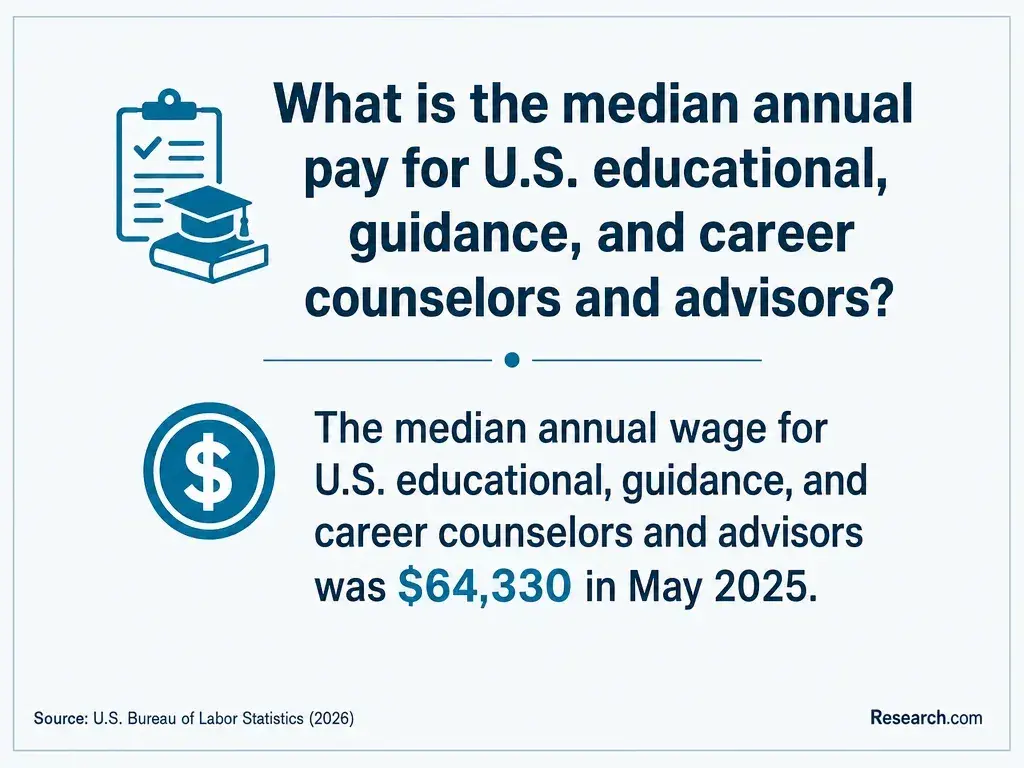
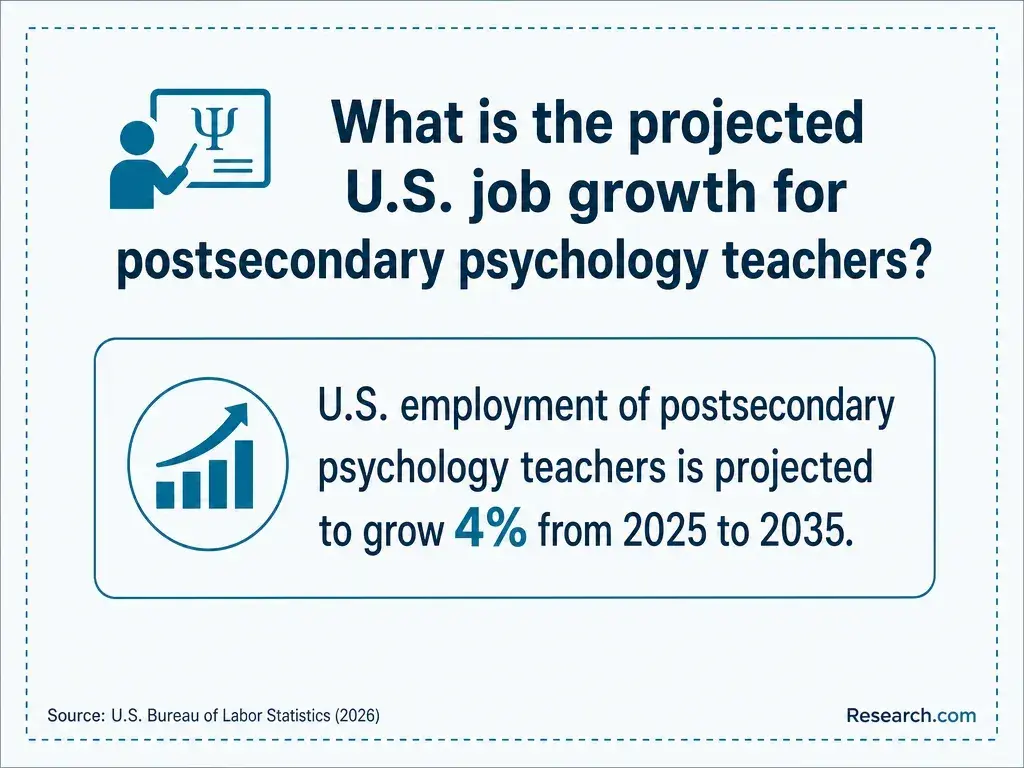
There is no single salary or growth rate for "psychology BA graduate." A research assistant, human-services worker, and licensed counselor occupy different labor markets, and a graduate's first job also depends on location, experience, employer, and duties. Use the US Bureau of Labor Statistics Occupational Outlook Handbook for the specific occupation you are considering, checking its wage reference year, projection period, and typical entry requirements. Its occupation-wide median is not a forecast of your starting pay.
For an education-cost decision, compare plausible local entry-level openings and their stated qualifications with your remaining tuition and time commitment. An accelerated option may reduce time out of the workforce if its pace is manageable, but comparing accelerated psychology degree options should not be treated as evidence that a faster degree produces higher wages. If you mainly need one research skill for an existing job, a targeted methods or statistics course may offer a more direct return.
What Graduate Degrees and Licenses Lead to Mental Health Practice?
Clinical practice requires a pathway tied to the intended profession and state. Licensed professional counselors typically complete a qualifying counseling master's program and additional supervised and examination requirements; clinical social workers follow a qualifying social-work route. Licensed psychologists generally need doctoral-level professional training and jurisdiction-specific requirements. Titles, required program features, and permissible duties vary by state.
A general or research-oriented psychology MS is not automatically a licensure-qualifying counseling degree, just as an undergraduate mental-health concentration is not a treatment credential. Before selecting BA electives for a future practice goal, identify the target license, consult the relevant state board's requirements, and ask prospective graduate programs which undergraduate courses they require. If counseling is the goal, comparing clinical counseling master's completion times is useful only after confirming that each program's training and placement arrangements fit the jurisdiction where you intend to practice.
Other Things You Should Know About Psychology
Compare the actual requirements rather than the letters. Choose the route that lets you complete strong methods, statistics, measurement, and supervised research coursework; a BS may require more science courses, but policies vary.
Only after checking your instructor's rules and your employer's permission. Staff responses can be sensitive even when names are removed, and a class project does not automatically authorize access or publication.
No. A carefully documented literature review, research proposal, or analysis of data you are permitted to use can demonstrate sound reasoning without recruiting participants.
Ask what tasks undergraduates actually perform, how often supervision occurs, what preparation is expected, and whether remote participation is possible. Do not assume a faculty member has an opening because their interests match yours.
- How to measure psychological stress in health research - PMC https://pmc.ncbi.nlm.nih.gov/articles/PMC7359652/
- Behavioral Health Career Descriptions | samhsa.gov https://www.samhsa.gov/about/careers/behavioral-health-workforce/careers-by-state/descriptions
- Online Bachelor in Fundamental and Applied Research | EFMU: The Euler-Franeker Memorial University and Institute https://euler.euclid.int/programs/online-bachelor-fundamental-applied-research/
- Stress Management - StatPearls - NCBI Bookshelf - NIH https://www.ncbi.nlm.nih.gov/books/NBK513300/
- Psychosocial Pathways | cdc.gov https://www.cdc.gov/dhdsp/health_equity/psychosocial.htm
- 11 Healthy Ways to Handle Life's Stressors | apa.org https://www.apa.org/topics/stress/tips
- Psychology and Behavioral Health Associate Degree Online | The Pennsylvania Institute of Technology https://www.pit.edu/programs/psychology-and-behavioral-health/
- Clinical Psychology | Hunter College - CUNY https://www.hunter.cuny.edu/artsci/psychology/undergraduate/undergraduate-focus-areas/clinical-psychology/
- Courses | Counseling & Clinical Psychology | Columbia University https://www.tc.columbia.edu/counseling-and-clinical-psychology/courses/
- Stress management interventions for college students | apa.org https://psycnet.apa.org/doiLanding