2027 Online BA in Psychology - Addictions: How to Compare a Formal Concentration and a Custom Elective Plan
Audited and Verified:
Our Editorial and Data Verification Process
Research.com uses government datasets, official education statistics and primary institutional information to support its career and degree guides. Our review process checks factual accuracy, occupational definitions, source dates and the requirements associated with the credentials discussed.
How This Article Was Fact-Checked
Our editorial team verifies salary estimates, employment projections, education requirements and program information against original data providers and official organizations. Salary figures are checked against the relevant occupational definitions and reporting periods. Information about licensure, accreditation and required in-person training is reviewed separately.
Fact-checked and verified on:

Co-Founder and Chief Data Scientist
An online psychology BA can let you study addiction through an official concentration or through electives you select yourself. The distinction matters if you want relevant preparation without paying for extra courses or losing room for graduate-school prerequisites.
This guide is for prospective and returning undergraduates weighing those routes. It explains what each option actually documents, how to compare course access and applied learning, and why neither route alone qualifies you to provide addiction treatment.
Key Things You Should Know
- Choose a formal concentration when its required courses fit your goal and the school confirms it will be recorded on your academic record; choose custom electives when flexibility better serves your prerequisites or transfer credits.
- Many bachelor's degrees require roughly 120 semester credits, but the credits and cost remaining depend on the school's degree audit, not the number of credits it accepts for transfer.
- Neither route is an addiction-counseling license. In the broader Bureau of Labor Statistics counselor occupation, projected employment growth is 17% for 2024-2034; that figure includes roles with different credential requirements.
What Is an Online BA in Psychology With an Addictions Focus?
It is a psychology bachelor's degree that applies psychological science to substance use, behavior change, prevention, and recovery.
The focus may be an official concentration with prescribed requirements, or it may be a student-designed selection of courses within a general psychology major. A BA typically also includes general education, statistics, research methods, and psychology foundations; "online" describes course delivery, not the credential's scope.
Program names alone do not establish how much addictions coursework is available. When comparing psychology degrees available through online study, inspect the current catalog and an actual course schedule. A listed elective is useful only if it is offered online when you can take it and counts toward your degree.
How Do Formal Addictions Concentrations Compare With Custom Elective Plans?
Start with the outcome you need: documented specialization, preparation for a particular next degree, or knowledge useful in a nonclinical role. The label matters less than the courses and experience you can complete.
This comparison shows where the routes commonly diverge; confirm each detail in the institution's catalog and degree audit.
| Decision factor | Formal concentration | Custom elective plan |
| Curriculum | Prescribed addictions-related courses, potentially with prerequisites | Courses selected around a goal, subject to availability and approvals |
| Academic record | May be recorded as an official concentration; confirm how | Individual courses appear, but no formal concentration is awarded |
| Flexibility | Less room to redirect electives or use certain transfer credits | More room for methods, public health, or graduate prerequisites |
| Applied learning | May include a specified project or placement; not guaranteed | Must be arranged from available courses and approved opportunities |
| Professional qualification | Does not itself grant a counseling credential | Does not itself grant a counseling credential |
A formal route is strongest when its courses are reliably offered and match a defined goal. A custom plan can be stronger when it preserves statistics or research preparation for later study.
If your intended field changes—for example, toward forensic psychology graduate study in an intensive format—unused elective space may be more valuable than an addictions label. Ask an advisor to compare both routes on a term-by-term degree audit before declaring one.
What Accreditation Should an Online Addictions Psychology Program Have?
Verify that the university has recognized institutional accreditation and that its status applies to the institution awarding the degree. Check the accreditor and status in the U.S. Department of Education or Council for Higher Education Accreditation directories, then confirm the program's location and delivery details with the school.
Do not look for APA accreditation of a general psychology BA. APA's professional accreditation does not serve as a standard accreditation for these undergraduate majors.
Likewise, a university's institutional accreditation does not establish that an addictions concentration meets a state's counselor-credential rules. This distinction matters when comparing affordable bachelor's study in psychology online. Check accreditation first, then assess price and any claimed professional pathway separately.
Expect the psychology core to build skills in research methods, statistics, development, social behavior, and biological or behavioral foundations. Addictions-focused offerings may examine substance use across the lifespan, prevention, recovery systems, co-occurring conditions, and the evaluation of interventions.
Course titles and required sequences vary; an academic course about counseling techniques is not authorization to counsel clients.
For a formal concentration, check how many required courses are available online and whether prerequisites delay them. For a custom plan, ask which electives fulfill major requirements rather than counting only as free electives. If future research study is the goal, retain quantitative and methods coursework.
Intensive online graduate psychology study may leave less time to remedy gaps in that preparation. Either route benefits from practice evaluating evidence and communicating respectfully about people affected by substance use.
The meaningful difference is access to learning opportunities, not whether psychological science changes by format. An online student may have asynchronous lectures yet still need scheduled group work, live research meetings, or an approved local placement. A campus student may find it easier to meet faculty or join a research team, but those opportunities should be confirmed rather than assumed.
Request a sample term schedule and ask who arranges placements, whether campus visits are required, and how remote students obtain research supervision. These questions are especially important when planning an intensive online psychology degree. Faster coursework does not necessarily make a site's supervision hours or a prerequisite sequence run faster.
Schools set their own requirements for first-year and transfer applicants, including prior transcripts and any minimum academic standing. Admission to the university does not necessarily mean admission to a restricted major or concentration.
An applicant changing fields may not need prior psychology coursework, but should check whether statistics or other courses must be completed before upper-level study.
For returning students, the decisive document is a degree audit showing how accepted credits satisfy general education, psychology core, electives, and any residency requirement.
Ask for written decisions on statistics or research-methods equivalencies and on whether transferred courses can satisfy concentration requirements. Guidance on transfer credit reviews for psychology applicants can help frame those questions, but only the receiving institution can approve how its requirements are met.
A conventional full-time bachelor's plan often spans four academic years and roughly 120 semester credits; your remaining time depends on applicable transfer credit, enrollment pace, prerequisites, and course availability.
A concentration can extend the plan if a required course runs infrequently. A custom plan can also create delays if an elective you counted on is unavailable.
Compare the remaining cost to graduate, not an advertised per-credit price alone. Request a term-by-term estimate covering tuition, mandatory online fees, books or software, and any travel or unpaid placement time. Aid eligibility and out-of-pocket expense can change with enrollment intensity.
Resources on substance use counseling bachelor's financial aid options may suggest questions to ask your financial aid office; they do not establish eligibility for a particular psychology BA.
The BA can support applications for nonclinical work in outreach, prevention programs, intake support, service coordination, and research or program support. Employers may also require relevant experience, training, background checks, or a specific credential. Job titles can conceal different duties, so read postings for what you would actually be allowed and expected to do.
For example, a recovery-service assistant might help people navigate referrals and document program activity under organizational procedures; that is different from diagnosing a substance use disorder or delivering psychotherapy.
Explore jobs supporting addiction recovery, then compare their stated requirements with your coursework and supervised experience. If your target is direct treatment, determine the applicable credential route before selecting either undergraduate plan.
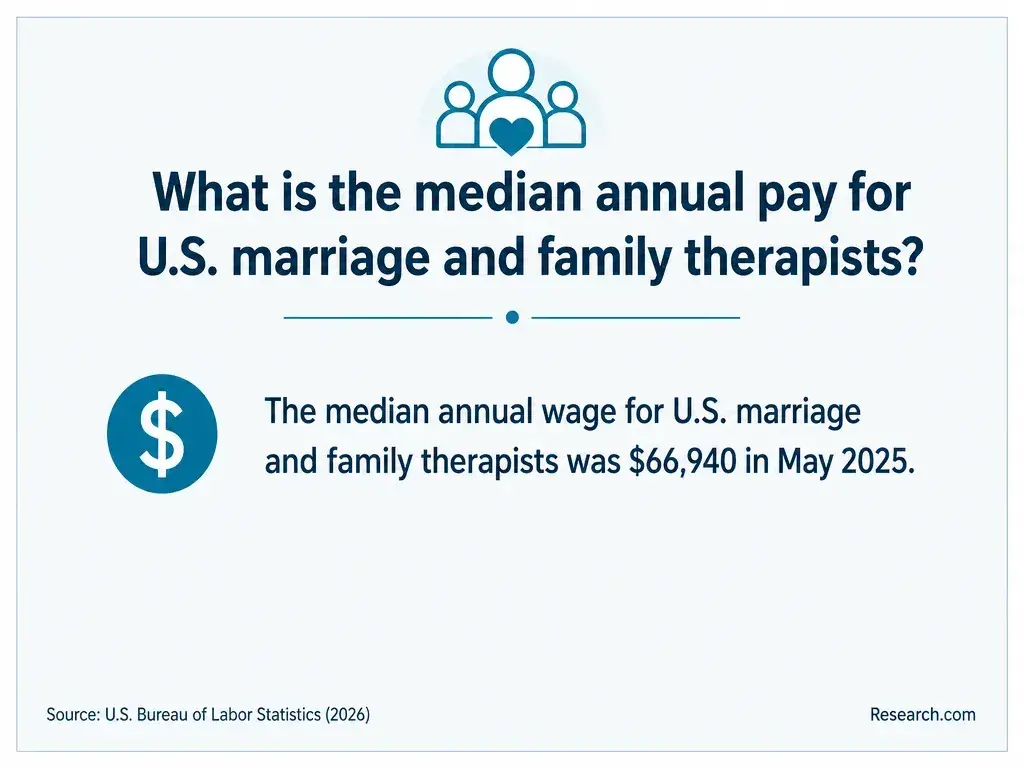
The U.S. Bureau of Labor Statistics reports a 2024 median annual wage of $59,190 for the combined occupation of substance abuse, behavioral disorder, and mental health counselors, with employment projected to grow 17% from 2024 to 2034.
Those figures describe an occupation that includes workers with different education and licensing requirements. They are not a starting salary or hiring forecast for graduates of an addictions-focused psychology BA.
For a useful return-on-cost comparison, collect local postings for roles you can qualify for upon graduation and separate them from licensed counselor openings. Then compare their requirements and pay with the credits, fees, and experience each academic route requires.
That is more informative than weighing tuition against substance abuse counseling career outcomes without first checking whether the advertised counseling jobs require a separate credential.
What Licenses and Certifications Follow an Addictions Psychology Degree?
Neither an addictions concentration nor a custom elective plan automatically leads to licensure, certification, permission to provide treatment, or the title "psychologist." State addiction-counselor requirements differ and may specify particular coursework, a qualifying degree, supervised practice, and an examination.
Peer-support credentials follow different state or employer rules. Obtain the requirements from the regulator or certifying body for the state and role where you intend to work, and ask the university for a written course-to-requirement comparison.
If the goal is licensed mental health counseling rather than undergraduate support work, investigate a qualifying professional graduate pathway and its total cost. Mental health counseling degree fees and aid planning addresses a different financial decision.
A psychology BA, regardless of its addictions focus, is not a substitute for the required professional preparation.
Other Things You Should Know About Psychology Programs
Often, but the school controls declaration deadlines and how completed courses apply. Request a revised degree audit before changing plans.
Yes. It can shape questions and perspective, but academic work should still use evidence and respect privacy. Ask the instructor about sensitive-content and participation policies if needed.
Possibly. Confirm the dataset's permitted uses, limitations, and your instructor's requirements. Public availability does not make every analysis ethical or suitable for publication.
Contact the institution's disability or accessibility office early. Ask how approved accommodations apply to live sessions, assessments, and any off-campus activity.
- Virginia Board of Counseling - CSAC application info https://www.dhp.virginia.gov/Boards/Counseling/ApplicantResources/CSACapplicationinfo/
- Accreditation in the U.S. | ed.gov http://www.ed.gov/laws-and-policy/higher-education-laws-and-policy/college-accreditation/accreditation-in-the-us
- Bachelor of Social Work Field Education Manual | Academics at Walden University https://academicguides.waldenu.edu/bsw-field-education-manual/field-education
- Bachelor of Science in Psychology in Addictions | Purdue University Global Academic Catalog https://catalog.purdueglobal.edu/undergraduate/social-behavioral-sciences/psychology-addictions-bs/
- Practicums, Internships and Projects What's the Difference? | Oregon State University https://health.oregonstate.edu/internships/types-of-experiential-learning
- How to Become an Addiction Counselor: 5 Key Steps (2026) | Touro University Worldwide https://www.tuw.edu/health/how-to-become-an-addiction-counselor/
- Regional vs. National Accreditation: Which is Better? | Drexel University Online https://www.online.drexel.edu/news/national-vs-regional-accreditation.aspx
- Online Substance Abuse and Addictions Degree | ASU Online https://asuonline.asu.edu/online-degree-programs/undergraduate/counseling-psychological-sciences/
- What's the Difference Between a B.A. & B.S. in Psychology? | The Chicago School https://www.thechicagoschool.edu/insight/career-development/difference-between-ba-and-bs-in-psychology/
- Applied Psychology: Addictions Studies, B.S. - CPS, CPSO | University of New Hampshire https://www.unh.edu/program/bachelor-science/applied-psychology-addictions-studies