2027 Online BA in Psychology - Mental Health vs. a BA in General Psychology: Compare Curriculum, Cost, and Career Fit
Audited and Verified:
Our Editorial and Data Verification Process
Research.com uses government datasets, official education statistics and primary institutional information to support its career and degree guides. Our review process checks factual accuracy, occupational definitions, source dates and the requirements associated with the credentials discussed.
How This Article Was Fact-Checked
Our editorial team verifies salary estimates, employment projections, education requirements and program information against original data providers and official organizations. Salary figures are checked against the relevant occupational definitions and reporting periods. Information about licensure, accreditation and required in-person training is reviewed separately.
Fact-checked and verified on:

Co-Founder and Chief Data Scientist
A mental health focus can make a psychology BA more relevant to support-service work, but it does not make the degree a clinical qualification. A general psychology BA may offer more room for research, other electives, or graduate-school prerequisites.
For prospective online students, the choice also affects scheduling, placement opportunities, and cost. This comparison explains what each route typically teaches, where graduates can realistically start working, and what to verify before enrolling - so you can choose the curriculum that serves your goal rather than the more appealing degree label.
Key Things You Should Know
- Choose a mental health focus for relevant service-system and psychopathology coursework; choose general psychology when elective flexibility or research preparation matters more. Neither BA qualifies you to diagnose or provide psychotherapy.
- A psychology BA commonly requires about 120 semester credits and roughly four years of full-time study, but transfer evaluations, pacing, and placement requirements determine your actual time and cost.
- The U.S. Bureau of Labor Statistics reports a May 2024 median annual wage of $45,120 for social and human service assistants - an occupation some BA graduates pursue, not a salary promised by either degree.
What Is the Difference Between a Mental Health and General Psychology BA?
Both are undergraduate psychology degrees. A general psychology BA usually combines core psychological science with electives across the field. A mental health psychology BA may be a separately named major or a concentration within a psychology major; its distinguishing coursework typically addresses psychological disorders, support services, or related community needs. Schools - not the labels - determine the actual requirements.
The distinction matters most when electives are limited. If a mental health focus replaces research, statistics, or broad electives with specialized courses, it may suit service-oriented work but require more planning for a research-focused next degree. Compare the official degree audit and elective rules, not just the program description. A broader comparison of undergraduate psychology degree program choices can help you identify the features worth checking at each school.
Which Psychology BA Is Better for Mental Health Careers?
For entry-level outreach, intake support, referral coordination, or behavioral-health program work, a mental health focus may provide more directly relevant vocabulary and context. Its advantage is strongest when it includes approved, supervised nonclinical experience - not merely additional lectures about disorders. Employers may still require specific experience, training, background checks, or state-recognized credentials.
A general psychology BA can be the better choice if you can select mental health electives while retaining strong methods coursework or fitting an internship around work. It can also support applications to qualifying graduate programs, provided you meet each program's prerequisites. Neither option substitutes for the professional education and supervised experience required of licensed therapists. If addiction services are your target, compare job duties and state credential rules alongside understanding career progression in addiction recovery.
How Does the Curriculum Compare in Each Psychology BA Program?
The table shows a typical curricular trade-off, not a universal template. Check the catalog for your entry term: two programs with similar titles can allocate their electives very differently.
| Decision point | Mental health focus | General psychology BA |
| Shared foundation | Typically introductory psychology, development, statistics, and research methods | Typically the same disciplinary foundations |
| Distinctive coursework | More prescribed study of psychopathology, services, or prevention | More choice among cognitive, social, biological, organizational, and applied topics |
| Applied learning | May offer agency-oriented projects or placements; availability varies | May offer research or broadly applicable internships; availability varies |
| Main trade-off | Clearer subject focus, potentially fewer open electives | More customization, potentially less built-in service context |
If you might later pursue a different specialty, protect space for its prerequisites and relevant experience. For example, online forensic psychology programs and graduate outcomes involve questions distinct from choosing mental health electives; coursework in either field does not confer professional authority.
Possible courses include abnormal psychology or psychopathology, developmental psychology, health psychology, substance use, and community mental health. Statistics and research methods remain important: they help graduates evaluate evidence rather than mistake a screening result for a diagnosis or a correlation for a cause. Course names and required credits vary by institution.
Look for assignments that teach appropriate nonclinical skills, such as evaluating a prevention program, explaining referral resources, or writing clearly about confidential information without using client records improperly. A course titled "counseling" may survey theories without teaching or authorizing therapy. If substance-use services are your main interest, compare the actual course requirements with undergraduate psychology programs with an addictions focus; then check your state's rules for any specific counseling or recovery credential.
Online and campus programs can teach the same academic material, but access to people and facilities may differ. Online students should ask how often classes meet live, whether statistics support and faculty research opportunities are available remotely, and how local internships are approved. A remote class does not mean a placement can be completed remotely.
For students balancing employment or caregiving, request a sample term schedule showing live sessions, group work, exams, and any site hours. Campus study may make informal faculty contact and local research opportunities easier; online study may reduce commuting while shifting more responsibility to the student to arrange connections. If the intended occupation is specifically addiction counseling, compare online study options for addiction counseling against the psychology BA rather than assuming the programs have interchangeable training or credential outcomes.
First-year applicants commonly submit a secondary-school record; transfer applicants generally submit records from prior colleges. A school may have separate admission standards for the university and the major. Testing policies, minimum grades, and application deadlines differ, so use the requirements for your applicant category and entry term.
Transfer students should obtain a written degree audit before relying on an advertised completion timeline. A course can be accepted as credit without satisfying psychology statistics, research methods, or another major requirement. Ask the registrar or transfer-credit office what has been accepted and the psychology department which requirements those credits fulfill. Ask financial aid staff how enrollment level and accepted credits affect aid; students considering a substance-use-focused alternative can also review financial aid for substance abuse counseling bachelor's degrees, then confirm eligibility with the school.
A bachelor's degree commonly totals about 120 semester credits and takes roughly four years at a full-time pace. That is a planning benchmark, not a transfer-student promise. The remaining credits, required course sequence, frequency of course offerings, and approved transfer evaluation determine your finish date. An optional concentration that fits within existing electives may add no credits; one with extra prerequisites can extend the path.
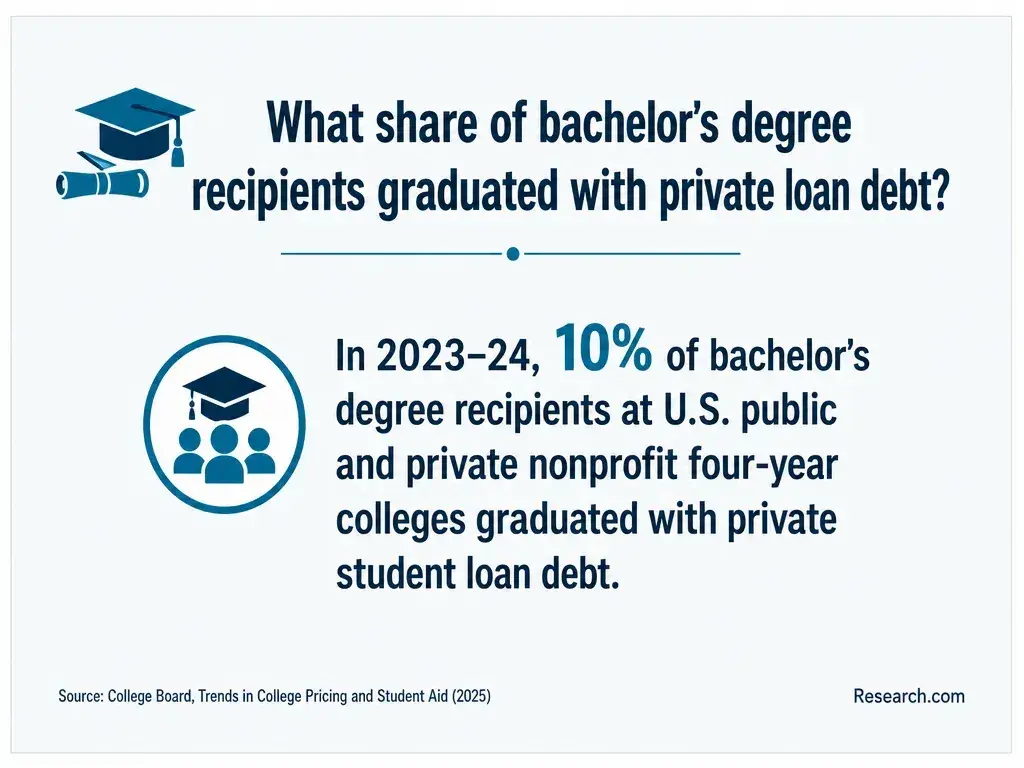
For a useful cost comparison, request each school's current per-credit or per-term tuition, mandatory fees, required remaining credits, and likely enrollment schedule. Add books, technology, travel, and any unpaid placement costs; subtract aid only after you have an actual award estimate. Compare the resulting remaining cost to graduate, not an advertised annual tuition figure. An online psychology tuition comparison guide can help narrow options, but your degree audit and school-specific charges control the personal calculation.
Confirm the university's institutional accreditation through the accreditor and the U.S. Department of Education's recognition information. Accreditation applies to an institution or a defined program within an accreditor's scope; do not assume that the American Psychological Association accredits a general online psychology BA. Also confirm that the specific online degree, not merely the campus institution, is the program you are evaluating.
Neither a mental health nor a general psychology BA alone qualifies someone to practice as a licensed psychologist or psychotherapist. A future credential depends on the occupation, qualifying graduate program, supervised experience, examinations, and jurisdiction. A short graduate program is not automatically a shortcut: even one-year online forensic psychology master's options must be evaluated against the requirements of the precise role sought. Before enrolling, ask the relevant licensing board which education it accepts rather than relying on a concentration title.
Potential nonclinical roles include social and human service assistant, intake or referral coordinator, program assistant, and research support worker. Actual eligibility depends on the employer and duties. A mental health focus may help you discuss service systems; a general BA with data or research experience may be stronger for research support. In either case, supervised experience and evidence of skills matter more than the concentration name alone.
The U.S. Bureau of Labor Statistics reports a May 2024 median annual wage of $45,120 for social and human service assistants. That occupation-wide midpoint includes workers with different education and experience; it is not the starting salary or expected earnings of psychology BA graduates. Licensed counseling and psychologist salaries should not be used to estimate returns from a BA because those roles require additional qualifications. Likewise, evaluating shorter graduate psychology degree options is worthwhile only after confirming that a specific graduate credential advances your intended job or next degree.
What Is the Job Outlook After a Mental Health or General Psychology BA?
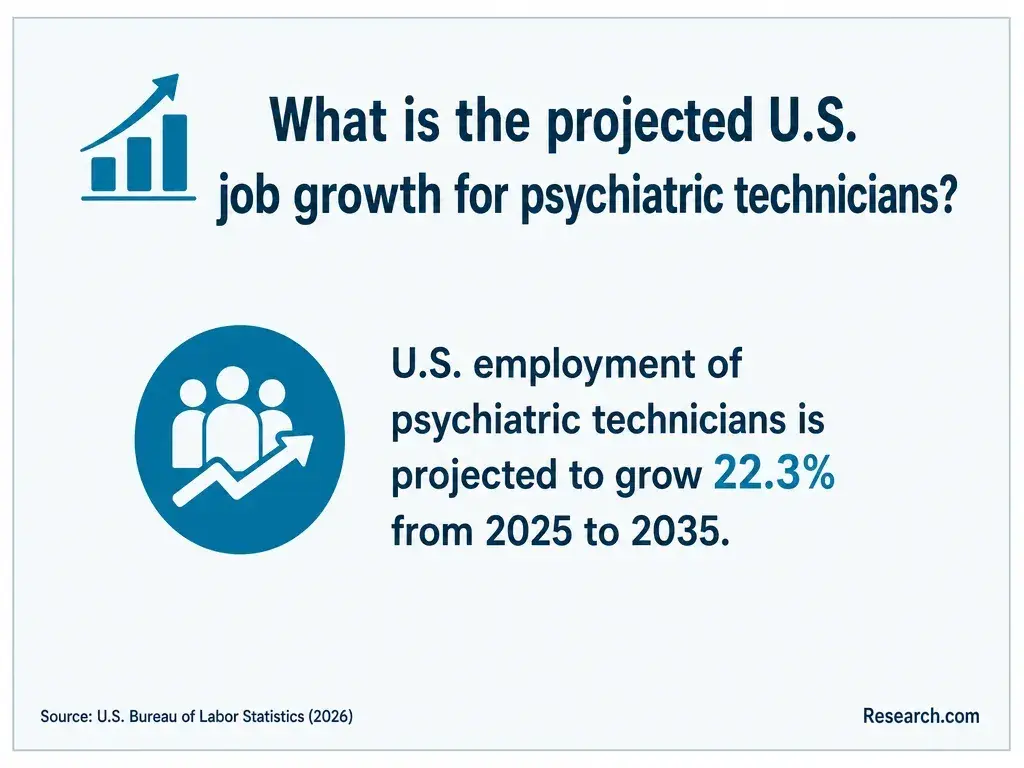
The Bureau of Labor Statistics projects employment growth for social and human service assistants over its 2024-2034 outlook period, but its forecast is for the occupation - not for graduates of either BA concentration. Local employers' staffing, funding, and credential requirements will have more immediate bearing on an applicant's prospects. Search actual postings for the duties and qualifications you want, then compare them with each program's courses and experience opportunities.
For service work, prioritize an approved placement, documentation and referral skills, and knowledge of professional boundaries. For research-oriented jobs, prioritize methods, statistics, and demonstrable project work. If the target role requires graduate study, include its full timeline and cost in the decision: time-to-degree planning for forensic psychology graduate students, for example, addresses a later educational step rather than improving the immediate job outlook of either BA.
Other Things You Should Know About Psychology
Possibly. Ask an advisor when the declaration deadline falls and whether the concentration's required courses will still fit your graduation plan.
Diploma wording is institution-specific. Request the school's current diploma and transcript policies if that distinction matters to you.
Only if the program approves the site, duties, supervision, and academic requirements. Existing employment does not automatically count as placement credit.
Consider a targeted course, employer training, or an appropriate certificate before committing to another bachelor's degree. Match the option to the skills your job actually requires.
- Estimate your college cost | usa.gov https://www.usa.gov/estimate-college-cost
- Understanding College Costs | studentaid.gov https://studentaid.gov/resources/prepare-for-college/students/choosing-schools/consider-costs
- Requirements Related to the Practice of Counseling - NCBI https://www.ncbi.nlm.nih.gov/books/NBK259170/
- What Degree Do I Need to Become a Counselor or Therapist? | Palo Alto University https://paloaltou.edu/resources/blog/what-degree-do-i-need-become-counselor-or-therapist
- Field Placements - Psychology | Academic Affairs https://uwm.edu/psychology/students/undergraduate/field-placements/
- Online Psychology Degrees | Bachelor's (BA) Programs https://www.snhu.edu/online-degrees/bachelors/ba-in-psychology
- 4.1.21 Instructional Modalities and Distance Education | Illinois State https://policy.illinoisstate.edu/academic/4-1-21
- Pursuing a Career in Clinical or Counseling Psychology | apa.org https://www.apa.org/education-career/guide/subfields/clinical/education-training
- Bachelor of Arts in Psychology | CUNY SPS https://sps.cuny.edu/academics/undergraduate/bachelor-arts-psychology-ba
- 9 Mental Health Careers You Can Pursue with a BA | New England College https://www.nec.edu/news/9-mental-health-careers-you-can-pursue-with-a-ba