2027 How To Become a Pharmaceutical Scientist: Salary & Career Paths

Co-Founder and Chief Data Scientist
Choosing a career in pharmaceutical science means deciding whether you want to work on medicines before they ever reach a pharmacy shelf. Pharmaceutical scientists study drug compounds, design formulations, test safety and effectiveness, support clinical research, and help move new therapies through manufacturing and regulatory review. The work matters because modern healthcare depends on better treatments, safer delivery systems, stronger quality controls, and faster ways to evaluate new therapies.
This guide explains how to become a pharmaceutical scientist in 2026, what the job involves, which degrees are most useful, where these professionals work, how much they earn, and how to compare career paths inside the pharmaceutical industry. It is written for students, science graduates, pharmacy-related professionals, and career changers who want a practical roadmap rather than a vague description of the field.
Quick Answer: How do you become a pharmaceutical scientist?
To become a pharmaceutical scientist, you typically need a bachelor’s degree in pharmaceutical sciences, chemistry, biology, biochemistry, pharmacology, chemical engineering, or a related field, followed by laboratory experience and, for many research or leadership roles, a master’s degree or PhD. Some professionals enter through clinical or regulatory routes with a PharmD, while others specialize in formulation, drug discovery, quality control, pharmacokinetics, clinical trials, or regulatory affairs. According to Zippia, 63% of pharmaceutical scientists in the United States have a bachelor’s degree, 23% have a master’s degree, 11% have a doctorate, and 3% have an associate degree.
Key Things You Should Know About Becoming a Pharmaceutical Scientist in 2026
- A pharmaceutical scientist is a research-focused professional who uses chemistry, biology, pharmacology, and engineering to discover, test, formulate, and help manufacture drugs and therapies.
- Medical scientist employment, which includes pharmaceutical scientists, is projected to grow by 11% from 2023 to 2033.
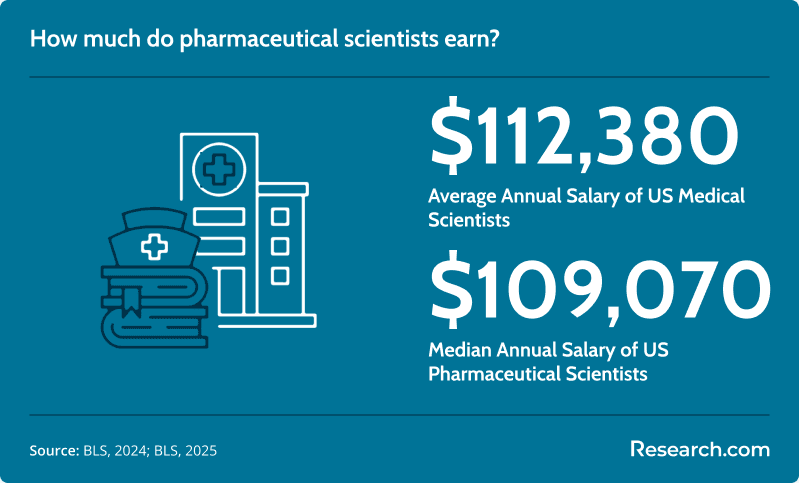
- The average annual salary for medical scientists, including pharmaceutical scientists, is $112,380, while the median annual salary for pharmaceutical scientists is $109,070.
- Among medical scientist categories, pharmaceutical scientists have the second-highest median annual salary.
- Degree expectations vary by role: bachelor’s degrees can support entry-level lab jobs, while advanced research, principal scientist, academic, and leadership roles commonly require graduate education.
- What does a pharmaceutical scientist do?
- How does one become a pharmaceutical scientist?
- What are the degrees needed to become a pharmaceutical scientist?
- What are the skills needed to become a successful pharmaceutical scientist?
- Where do pharmaceutical scientists work?
- What are the stages of pharmaceutical drug development?
- What are the career paths for pharmaceutical scientists?
- What are the career advancement opportunities for pharmaceutical scientists?
- Are professional certifications beneficial for pharmaceutical scientists?
- How can I fast-track my education to become a pharmaceutical scientist?
- What challenges do pharmaceutical scientists face?
- How can interdisciplinary education strengthen a pharmaceutical scientist’s career?
- What is the job outlook for pharmaceutical scientists?
- What is the average salary of pharmaceutical scientists?
- What are the emerging trends in pharmaceutical science?
- Can management skills help pharmaceutical scientists move into leadership?
What does a pharmaceutical scientist do?
A pharmaceutical scientist researches how medicines are discovered, developed, delivered, tested, regulated, and produced. The role is not the same as being a pharmacist. Pharmacists focus on dispensing medications and advising patients on drug use, while pharmaceutical scientists usually work earlier in the medication lifecycle, often in laboratories, research teams, clinical development groups, manufacturing organizations, or regulatory settings.
The pharmaceutical field is large and highly specialized. In the United States, the projected revenue of the pharmaceutical industry in 2025 is $660.04 billion, and pharmaceutical scientists contribute to the research and development work behind that sector. Their work may involve a potential cancer therapy, a new vaccine platform, a safer tablet formulation, a biologic medicine, or a manufacturing process that improves consistency and quality.
For readers exploring healthcare careers that do not require direct patient care, pharmaceutical science is one of several non medical healthcare jobs worth considering. Common responsibilities include the following:
- Identifying and designing drug candidates: Pharmaceutical scientists study biological targets, test chemical compounds, and refine promising molecules to improve therapeutic activity and reduce unwanted effects.
- Developing drug formulations: They determine how a medicine should be delivered, such as through tablets, capsules, injections, topical products, or advanced delivery systems, while considering stability, absorption, dosage, and patient use.
- Studying pharmacokinetics and pharmacodynamics: These professionals examine how the body absorbs, distributes, metabolizes, and eliminates a drug, as well as how the drug affects the body at different concentrations.
- Supporting preclinical and clinical testing: Pharmaceutical scientists may design or analyze laboratory studies, animal studies, and human trial data to evaluate whether a drug is safe and effective enough to move forward.
- Preparing regulatory documentation: Many roles require accurate scientific records, reports, and submissions that support review by agencies such as the FDA.
- Analyzing scientific and medical data: They interpret experimental results, clinical findings, formulation data, safety signals, and manufacturing information to guide next steps in development.
- Improving manufacturing methods: Some pharmaceutical scientists focus on scale-up, process optimization, quality control, and Good Manufacturing Practice expectations.
- Monitoring safety issues: They help identify adverse reactions, population-specific risks, product variability, and other safety concerns that may affect public health.
- Collaborating across disciplines: Drug development usually requires chemists, biologists, clinicians, engineers, statisticians, regulatory experts, quality professionals, and business teams working together.
| Pharmaceutical scientist task | Why it matters | Typical work setting |
| Drug discovery | Finds promising compounds or biological targets for future therapies | Pharmaceutical companies, biotech firms, academic labs |
| Formulation development | Turns an active ingredient into a usable and stable medicine | R&D laboratories, product development teams |
| Clinical research support | Helps evaluate safety, dosage, effectiveness, and trial data | Clinical research centers, CROs, pharmaceutical companies |
| Regulatory affairs | Organizes evidence needed for review, approval, and compliance | Drug manufacturers, regulatory agencies, consulting firms |
| Manufacturing science | Ensures medicines can be produced consistently and at quality standards | Manufacturing plants, quality control laboratories |
How does one become a pharmaceutical scientist?
The most reliable path into pharmaceutical science combines formal science education, practical laboratory experience, and a clear specialization. You do not need to know your exact specialty on day one, but you should build a foundation in chemistry, biology, quantitative analysis, scientific documentation, and research methods as early as possible.
- Earn a relevant bachelor’s degree: Start with pharmaceutical sciences, chemistry, biology, biochemistry, pharmacology, chemical engineering, or a closely related field. A bachelor’s degree can qualify you for entry-level laboratory, quality control, research assistant, or technician roles.
- Get hands-on research or lab experience: Look for undergraduate research, internships, co-op placements, summer lab programs, or entry-level positions in academic laboratories, biotechnology firms, pharmaceutical manufacturers, or contract research organizations. Some students also gain healthcare-related exposure through pharmacy support roles; if that path interests you, review this guide on how to become a pharmacy technician.
- Choose a specialization: Pharmaceutical science includes drug discovery, medicinal chemistry, formulation, pharmacology, pharmacokinetics, clinical research, regulatory affairs, quality assurance, process development, and manufacturing science. Your specialization affects which graduate degree, certification, and first job will be most useful.
- Consider a master’s degree or PhD: A master’s degree can strengthen your qualifications for research scientist, formulation scientist, clinical research, and regulatory roles. A PhD is often preferred for independent research, principal scientist roles, academic research, and high-level R&D leadership. Students comparing graduate costs may also look into cheap online pharmacy doctorate programs and financial aid options, while keeping in mind that program fit, research access, and career alignment matter as much as price.
- Build marketable technical skills: Employers commonly value experience with analytical methods, data analysis, scientific writing, documentation standards, quality systems, and regulatory expectations. Skills in HPLC, formulation development, pharmacokinetic modeling, and computational tools can be especially useful depending on the role.
- Apply for entry-level industry or research roles: Common starting points include laboratory technician, research associate, quality control analyst, formulation associate, clinical research assistant, or regulatory affairs associate. These roles help you understand real drug development workflows.
- Use professional networks carefully: Organizations such as the American Association of Pharmaceutical Scientists can help you follow industry developments, attend meetings, and connect with researchers, hiring managers, and mentors.
- Add certifications only when they match your target role: Certifications are optional, but credentials in regulatory affairs, clinical research, quality, or pharmaceutical operations can help if they support your chosen specialty. For example, the Certified Pharmaceutical Industry Professional credential may be relevant for professionals focused on industry standards and pharmaceutical operations.
According to Zippia, 63% of pharmaceutical scientists in the United States have a bachelor's degree, 23% earned a master's degree, 11% hold a doctorate degree, and 3% have an associate degree. The takeaway is not that one degree works for every role. Instead, the right education level depends on whether you want an entry-level lab position, an applied research role, a regulatory career, or a senior research leadership track.
| Career goal | Typical education to consider | Best early experience |
| Entry-level lab or quality role | Bachelor’s degree in a life science, chemistry, or pharmaceutical science field | Academic lab work, internships, quality control exposure |
| Formulation or applied research scientist | Master’s degree or strong bachelor’s-level experience | Formulation lab, analytical chemistry, dosage form work |
| Independent R&D scientist or principal investigator | PhD in pharmaceutical sciences, medicinal chemistry, pharmacology, biochemistry, or related field | Graduate research, publications, specialized lab methods |
| Clinical research or translational science role | Master’s, PhD, PharmD, or related clinical/research training | Clinical trial operations, data review, regulatory documentation |
| Regulatory affairs or compliance | Bachelor’s or graduate degree plus regulatory knowledge | Documentation, quality systems, submissions, FDA-related work |
What are the degrees needed to become a pharmaceutical scientist?
There is no single required degree for every pharmaceutical scientist role. Entry-level positions may be available to bachelor’s graduates, but many research-heavy and leadership positions favor candidates with advanced degrees. The best choice depends on whether you want to work in the lab, manage clinical research, handle regulatory submissions, lead discovery programs, or bridge science and business.
- Bachelor’s Degree: A bachelor’s degree in pharmaceutical sciences, chemistry, biology, biochemistry, pharmacology, chemical engineering, or a related field can prepare you for laboratory assistant, research associate, quality control, and technical support roles. Students interested in computational drug discovery or biological data analysis may also compare bioinformatics pathways; this overview explains what you can do with a bioinformatics degree.
- Master’s Degree: A master’s in pharmaceutical sciences or a related area can help you specialize in formulation, pharmacology, clinical research, regulatory affairs, or manufacturing science. It may be a practical option for students who want stronger technical depth without committing to a PhD. If you are comparing adjacent graduate fields, consider whether these MSc biotechnology benefits match your intended pharmaceutical science path.
- Doctoral Degree (PhD): A PhD in pharmaceutical sciences, medicinal chemistry, pharmacology, biochemistry, or a related field is often the strongest option for independent research, original drug discovery, academic research, principal scientist roles, and R&D leadership.
- Doctor of Pharmacy (PharmD): A PharmD is designed primarily for pharmacy practice, but it can support careers in clinical research, pharmacovigilance, regulatory affairs, translational science, medical affairs, and roles that connect drug development with patient care. Students who need flexible study options may compare online PharmD programs, while verifying experiential requirements and career fit.
- Dual Degrees: Combinations such as PharmD/PhD or PhD/MBA can be useful for professionals who want to combine scientific research with clinical expertise, business strategy, regulatory leadership, or pharmaceutical management.
| Degree option | Best fit | Potential limitation |
| Bachelor’s degree | Students seeking entry-level lab, quality, or research support work | May not be enough for independent research leadership |
| Master’s degree | Professionals targeting applied research, formulation, regulatory, or mid-level scientific roles | May still be less competitive than a PhD for senior R&D roles |
| PhD | Future principal scientists, academic researchers, and discovery leaders | Requires a major time and research commitment |
| PharmD | Students interested in clinical research, drug safety, medical affairs, or patient-centered drug development | Less focused on laboratory research than a PhD |
| Dual degree | Professionals aiming for leadership at the intersection of science, care, policy, or business | Can add cost, time, and complexity |
What are the skills needed to become a successful pharmaceutical scientist?
Pharmaceutical scientists need more than strong grades in science courses. The work requires technical accuracy, careful documentation, problem-solving under uncertainty, and the ability to communicate findings to people who may not share the same scientific background. Employers also increasingly value candidates who can work with digital tools, large datasets, automation, and cross-functional teams.
Technical Skills
- Chemistry, biology, and pharmacology knowledge: These subjects help scientists understand drug structure, biological activity, toxicity, mechanisms of action, and therapeutic potential.
- Laboratory methods: Useful techniques may include chromatography, spectroscopy, synthesis, dissolution testing, cell culture, assay development, and other experimental methods relevant to the specialty.
- Pharmacokinetics and pharmacodynamics: Pharmaceutical scientists must understand drug exposure, dose-response relationships, metabolism, elimination, safety margins, and therapeutic effects.
- Formulation and drug delivery: Formulation work requires knowledge of dosage forms, excipients, stability, solubility, bioavailability, and delivery systems.
- Data analysis and computational tools: Statistical reasoning, bioinformatics, modeling, machine learning awareness, and software skills can help scientists interpret complex experimental or clinical data.
- Regulatory and quality knowledge: Understanding FDA expectations, documentation practices, Good Manufacturing Practice, validation, and compliance is important in industry-facing roles.
- Manufacturing and process development: Scientists involved in scale-up must understand how laboratory methods translate into reliable commercial production.
Soft Skills
- Critical thinking: Drug development rarely follows a straight line, so scientists must evaluate evidence, test assumptions, and decide when a compound, method, or formulation needs revision.
- Attention to detail: Small errors in measurement, labeling, documentation, or interpretation can affect results, compliance, and safety.
- Organization and time management: Pharmaceutical research often involves parallel experiments, strict timelines, controlled procedures, and detailed reporting.
- Scientific communication: Professionals must write clear reports, present data, prepare regulatory documents, explain limitations, and communicate uncertainty honestly.
- Collaboration: Pharmaceutical scientists work with chemists, biologists, clinicians, statisticians, engineers, quality teams, and business stakeholders.
- Adaptability: New technologies, regulations, therapeutic platforms, and analytical methods require continuous learning.
- Ethical judgment: Patient safety, research integrity, accurate reporting, and responsible data handling are central to the role.
- Creativity: Innovation is needed to solve formulation problems, design better assays, improve delivery systems, and address unmet medical needs.
Based on a Zippia report, the skills that most frequently appear on pharmaceutical scientist resumes are dosage forms (13.2%), pharmaceutical sciences (6.5%), formulation development (6.2%), HPLC (6%), DSC (5.4%), FTIR (4.9%), and FDA (4.6%). These terms also show why practical lab exposure and role-specific technical skills can matter as much as the degree title.
Where do pharmaceutical scientists work?
Pharmaceutical scientists work wherever medicines are researched, tested, reviewed, manufactured, or monitored. The best work environment depends on whether you prefer discovery science, applied development, clinical evidence, regulatory review, manufacturing operations, or teaching and research.
- Pharmaceutical and biotechnology companies: These employers hire scientists for drug discovery, formulation, toxicology, clinical development, regulatory support, quality control, and manufacturing science.
- Academic and research institutions: Universities and research centers employ pharmaceutical scientists to conduct basic and applied research, publish findings, teach, and secure grant-funded projects.
- Government agencies and regulatory bodies: Agencies such as the FDA, NIH, and CDC employ scientists for drug review, public health research, safety evaluation, policy support, and regulatory oversight.
- Contract Research Organizations: CROs support pharmaceutical and biotechnology companies by providing outsourced services in clinical trials, laboratory testing, data analysis, and regulatory consulting.
- Hospitals and clinical research centers: Some pharmaceutical scientists work on clinical trials, translational research, medication safety, or evidence generation in patient-care environments.
- Nonprofit organizations and foundations: These roles may focus on global health, neglected diseases, public-interest research, or access-oriented therapeutic development.
| Workplace | Best for people who enjoy | Possible trade-off |
| Pharmaceutical or biotech company | Product-focused research, industry timelines, cross-functional development | Projects may shift based on business and pipeline decisions |
| Academic research institution | Independent inquiry, teaching, publishing, grant-funded research | Funding pressure and academic competition can be significant |
| Government or regulatory agency | Public health, evidence review, safety, compliance | Work may involve less hands-on bench research |
| CRO | Client projects, clinical trials, varied assignments | Deadlines and sponsor requirements can be demanding |
| Manufacturing or quality environment | Process improvement, documentation, compliance, product consistency | Work may be more procedural than exploratory |
The chart below shows the US states that offer the highest average annual salaries to pharmaceutical scientists.
What are the stages of pharmaceutical drug development?
Drug development is a structured process for moving a scientific idea toward an approved medicine. Pharmaceutical scientists may participate in one stage or specialize deeply in a single part of the process. Understanding the full lifecycle helps students choose the right degree, skills, and first job.
- Discovery and preclinical research: Scientists identify disease targets, screen compounds, modify molecules, and evaluate promising candidates through laboratory and animal studies. This stage examines biological activity, early safety signals, and pharmacokinetic behavior.
- Clinical development: If preclinical results support further testing, the drug moves into human clinical trials. Phase I assesses safety and dosage in a small group of healthy volunteers. Phase II evaluates effectiveness and side effects in a larger patient population. Phase III confirms efficacy, monitors adverse reactions, and compares the new drug with existing treatments in a large-scale study.
- Regulatory review and approval: After successful clinical trials, sponsors submit a New Drug Application or Biologics License Application to agencies such as the FDA in the United States or EMA in Europe. Reviewers examine safety, efficacy, manufacturing controls, labeling, and supporting evidence before approval.
- Manufacturing and quality control: Once approved, production must meet strict quality and Good Manufacturing Practice standards. Scientists and engineers help ensure the medicine is made consistently, safely, and according to validated processes.
- Post-marketing surveillance: After a drug reaches the market, safety monitoring continues. Scientists may examine rare side effects, long-term outcomes, real-world use, new indications, or population-specific risks.
What are the career paths for pharmaceutical scientists?
Pharmaceutical science is not a single-track career. Your path should reflect the kind of problems you want to solve. Some professionals want to design molecules, while others prefer clinical evidence, manufacturing reliability, regulatory strategy, or scientific communication. Unlike clinical practice pathways such as how to become a functional medicine nurse practitioner, pharmaceutical science usually centers on products, research systems, and development decisions rather than direct patient care.
- Drug discovery and medicinal chemistry: Scientists in this area design and optimize molecules, study disease targets, and evaluate how compounds interact with biological systems.
- Formulation and drug delivery: These professionals develop dosage forms and delivery systems that help active ingredients remain stable, absorb properly, and reach the intended site of action.
- Preclinical research: Scientists assess toxicity, biological activity, metabolism, and early safety evidence before human testing begins.
- Clinical research and development: Professionals in this path support trial design, data interpretation, safety monitoring, and evidence generation in human studies.
- Regulatory affairs: Regulatory professionals prepare submissions, track requirements, communicate with agencies, and help ensure that products meet approval and compliance standards.
- Quality control and quality assurance: These roles focus on testing, documentation, validation, audits, and procedures that protect product quality and patient safety.
- Manufacturing and process development: Scientists help scale processes from laboratory batches to commercial production while improving reliability, efficiency, and quality.
- Medical affairs and scientific communication: These roles translate scientific evidence for healthcare professionals, internal teams, publications, and regulatory or commercial stakeholders.
- Intellectual property and business development: Professionals with strong science backgrounds may support patents, licensing, partnerships, product strategy, and market evaluation.
- Academia and research institutions: Academic pharmaceutical scientists teach, publish, mentor students, and lead independent research projects.
- Consulting and data science: Consultants and data-focused scientists may support drug development strategy, regulatory planning, clinical trial optimization, bioinformatics, and AI-enabled research. Healthcare professionals from other specialties, such as those reviewing a GNP career guide, may also find pharmaceutical research relevant if they want to move into clinical trials or medical affairs.
What are the career advancement opportunities for pharmaceutical scientists?
Advancement in pharmaceutical science usually comes from deeper technical expertise, stronger project leadership, a record of reliable results, and the ability to work across scientific, regulatory, clinical, and commercial functions. The path is different from clinical transitions such as how to start a career in holistic nursing, because progression often depends on research impact, product development experience, and team leadership.
- Research and development leadership: Pharmaceutical scientists may move from research associate or scientist roles into senior scientist, principal scientist, project leader, group leader, or research director positions.
- Specialized technical expert roles: Deep expertise in formulation, pharmacokinetics, biologics, drug delivery, computational modeling, or manufacturing science can lead to high-value specialist roles.
- AI, computational biology, and data-centered roles: As digital tools become more common in drug discovery and clinical development, scientists with computational skills may move into AI-enabled research, modeling, bioinformatics, or data science positions.
- Regulatory affairs management: Experienced scientists can transition into regulatory strategy, submissions leadership, compliance management, or agency-facing roles. Credentials such as RAC may strengthen this path when paired with relevant experience.
- Quality, pharmacovigilance, and medical writing leadership: Growth is possible in safety monitoring, quality systems, clinical documentation, regulatory writing, and post-market evidence roles.
- Clinical development leadership: Scientists with clinical research experience may advance into trial strategy, clinical operations leadership, translational science, or medical affairs.
- Business, product, and commercial strategy: Some professionals move into business development, technical marketing, licensing, portfolio strategy, or product management. As with the best therapy specializations for high income, specialized expertise can influence compensation, but salaries are not guaranteed and vary by role, employer, location, and experience.
- Executive and cross-functional leadership: Senior professionals may lead departments, manage global programs, oversee partnerships, or move into broader scientific and operational leadership.
| If you want to advance into... | Build experience in... | Consider adding... |
| Senior R&D leadership | Drug discovery, publications, project ownership, team science | PhD, leadership training, computational skills |
| Regulatory affairs management | Submissions, FDA interactions, compliance documentation | Regulatory certification or continuing education |
| Manufacturing or quality leadership | GMP, validation, process improvement, audits | Quality systems training and project management |
| Medical affairs | Clinical evidence, scientific communication, therapeutic area expertise | Advanced degree, writing experience, presentation skills |
| Business development | Product strategy, partnerships, market evaluation, IP awareness | MBA coursework or management education |
Are professional certifications beneficial for pharmaceutical scientists?
Certifications are not a substitute for a strong science degree or real laboratory and industry experience, but they can be useful when they match a specific career direction. They are most helpful in areas where employers value standardized knowledge, such as regulatory affairs, clinical research, quality assurance, Good Manufacturing Practice, project management, and pharmaceutical operations.
Before paying for a certification, ask three questions: Does it appear in job postings for your target role? Is it recognized by employers in your specialty? Will it teach skills you cannot easily gain through your degree or current job? Students comparing healthcare education costs more broadly may also review the medical assistant program cost as a reminder that tuition, fees, supplies, time away from work, and career value should all be part of any education decision.
How can I fast-track my education to become a pharmaceutical scientist?
You can shorten your timeline by choosing a focused program, using transfer credits when available, gaining research experience while enrolled, and targeting internships that align with your preferred specialty. Some students compare accelerated pharmacy-related programs, including the fastest PharmD program, but a faster credential is only worthwhile if it supports the job you actually want.
When evaluating an accelerated route, check accreditation, laboratory or experiential requirements, research opportunities, faculty expertise, placement support, and whether graduates enter the types of roles you are targeting. A shorter program with weak research access may not be the best choice for a student aiming for pharmaceutical R&D.
What challenges do pharmaceutical scientists face?
Pharmaceutical science can be rewarding, but it is not an easy field. Drug development is slow, regulated, expensive, and uncertain. Many promising compounds fail. Experiments may produce conflicting results. Regulatory expectations can change. Manufacturing scale-up can reveal problems that were not obvious in the lab. Scientists also need to document work carefully because patient safety, product quality, and legal compliance depend on reliable records.
Technology creates another challenge. Professionals must keep learning as AI tools, digital simulations, biologics, real-world evidence, automation, and advanced analytics become more important. Some learners explore adjacent healthcare administration or data-focused skills, while others use programs such as cheap online schools for medical billing and coding courses to understand healthcare documentation and reimbursement contexts. However, any additional education should directly support your career target rather than simply adding another credential.
How can interdisciplinary education strengthen a pharmaceutical scientist’s career?
Interdisciplinary education can be valuable when it helps you solve pharmaceutical problems from a broader perspective. Coursework in bioinformatics, biotechnology, engineering, statistics, healthcare administration, ethics, business, or clinical science can expand your ability to work with cross-functional teams. For example, an online bachelors kinesiology program may be relevant for someone interested in human movement, rehabilitation-related therapeutics, or patient-centered outcomes, though it would not replace core pharmaceutical science preparation.
The key is alignment. Extra education should help you qualify for a clearer role, such as clinical research, medical affairs, regulatory affairs, digital health, product strategy, or translational science. Avoid collecting unrelated credentials without a plan.
What is the job outlook for pharmaceutical scientists?
According to the United States Bureau of Labor Statistics, employment of medical scientists, including pharmaceutical scientists, is projected to climb by 11% from 2023 to 2033, nearly three times higher than the national average of 4%. The number of these professionals is expected to increase from 146,600 in 2023 to 163,400 by 2033.
During that period, aspirants can expect around 8,900 job openings for medical scientists yearly. Based on the latest data from Indeed, there are over 3,000 pharmaceutical scientist openings in the United States and more than 17,000 openings for pharmaceutical science, including entry-level and closely related jobs.
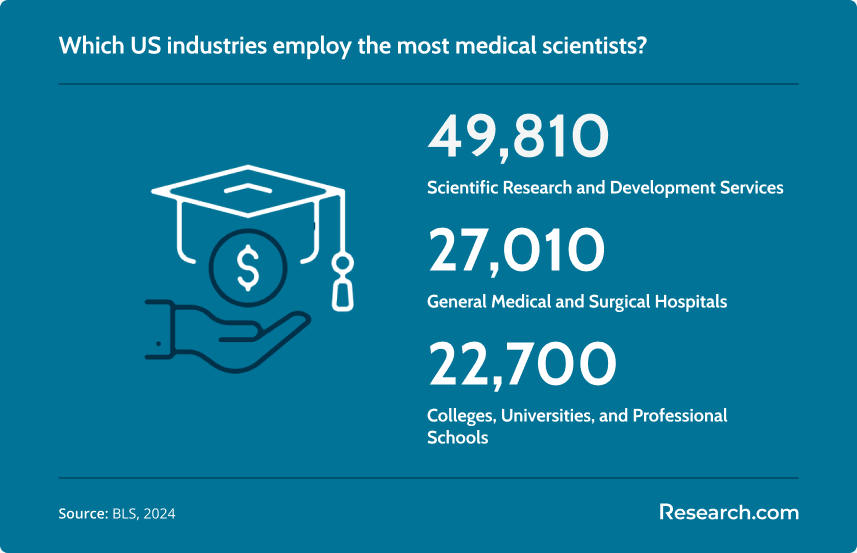
Hiring is not evenly distributed. The industries with the highest employment levels for medical scientists are scientific research and development services (49,810), general medical and surgical hospitals (27,010), and colleges, universities, and professional schools (22,700). The states that employ the most medical scientists are California (22,520), Massachusetts (17,570), and Texas (10,940).
What is the average salary of pharmaceutical scientists?
According to the BLS, the average annual salary of medical scientists, including pharmaceutical scientists, is $112,380, while the median annual salary of pharmaceutical scientists is $109,070. That compensation is one reason many science students consider pharmaceutical science, but earnings vary by education level, specialty, employer, location, experience, and whether the role is in industry, academia, government, or a clinical research setting.
Pharmaceutical scientists have the second-highest median annual salary among medical scientists, behind those working in research and development in the physical, engineering, and life sciences ($121,240). Their median annual salary is higher than medical scientists working in medical and diagnostic laboratories ($95,140), hospitals ($95,080), and colleges, universities, and professional schools ($67,280).
The sectors with the highest average annual salaries for medical scientists are wholesale trade agents and brokers ($185,880), merchant wholesalers of nondurable goods ($167,130), and federal, state, and local government units ($154,140). The US states with the highest average annual salaries are New Jersey ($129,410), California ($129,330), and the District of Columbia ($126,570).
| Salary factor | How it can affect pay |
| Industry | R&D, wholesale, government, hospital, academic, and laboratory settings can pay differently. |
| Location | States with large pharmaceutical and biotechnology hubs may offer more opportunities but may also have higher living costs. |
| Education level | Advanced degrees can be important for senior research and leadership roles, though they do not guarantee a specific salary. |
| Specialization | Fields such as regulatory strategy, biologics, pharmacokinetics, formulation, AI-enabled discovery, and quality leadership may lead to different compensation patterns. |
| Experience | Entry-level research associates, mid-level scientists, principal scientists, and directors typically have different responsibility and pay levels. |
What are the emerging trends in pharmaceutical science?
Pharmaceutical science is changing as drug pipelines, data tools, and healthcare priorities evolve. Students entering the field should understand these trends because they influence hiring, research priorities, and the skills employers may value.
- AI and machine learning: Artificial intelligence is increasingly used to analyze data, predict molecular interactions, support clinical trial design, and improve drug discovery workflows. Scientists who understand both biology and data tools may be better positioned for emerging roles.
- Personalized and precision medicine: Genomics and biotechnology are supporting treatments tailored to genetic profiles, disease subtypes, and individual patient factors. This trend affects discovery, trial design, diagnostics, and therapeutic monitoring.
- New drug modalities: Pharmaceutical pipelines now include approaches such as fusion proteins, oligonucleotide therapies, multispecific antibodies, antibody-drug conjugates, radioligand therapies, and oncolytic viruses.
- In silico trials and simulation: Computer-based models are being used to predict safety, effectiveness, dosing, and biological behavior, which can complement traditional laboratory and clinical methods.
- Sustainability and supply chain resilience: Pharmaceutical companies are paying closer attention to environmental impact, manufacturing efficiency, and supply chain risk.
- Real-world evidence: Data from sources beyond traditional clinical trials, including electronic health records, wearable devices, and patient surveys, is becoming more important in evaluating treatment performance.
- mRNA technology and biologics: Building on the success of mRNA vaccines, researchers are exploring mRNA and biologic platforms in additional therapeutic areas, including oncology, immunology, and rare diseases.
Can management skills help pharmaceutical scientists move into leadership?
Yes. Management skills can help pharmaceutical scientists move from individual contributor roles into project leadership, team management, regulatory strategy, product development, and executive tracks. Scientific expertise remains essential, but leaders also need budgeting, communication, risk management, hiring, timeline planning, vendor coordination, and stakeholder management skills.
Professionals who want to lead cross-functional teams may benefit from business or healthcare management education. A program such as a healthcare administration degree online may be useful for scientists interested in healthcare operations, project coordination, organizational leadership, or administrative roles connected to pharmaceutical and clinical systems.
How to choose the right pharmaceutical science pathway
The best pathway is the one that matches your preferred work, education timeline, risk tolerance, and long-term goals. A student who enjoys bench chemistry may need a different plan from someone who prefers clinical trial documentation or regulatory submissions.
- Start with the work you want to do: Decide whether you prefer discovery, formulation, clinical research, quality, manufacturing, regulatory affairs, medical affairs, or data science.
- Review real job postings: Look at required degrees, preferred techniques, software, certifications, and years of experience for roles you want.
- Choose a degree based on target roles: Do not pursue a PhD only because it sounds prestigious, and do not stop at a bachelor’s degree if your target jobs consistently require graduate research training.
- Prioritize research and lab access: Programs with strong faculty research, internships, industry partnerships, and hands-on laboratories can be more useful than programs that only offer broad coursework.
- Evaluate cost and opportunity cost: Include tuition, fees, lost income, relocation, research funding, assistantships, and how long it may take to reach your first target role.
- Check accreditation and institutional reputation: Make sure the school is properly accredited and that the program has credible science training, not just a marketable title.
- Build a portfolio of evidence: Publications, posters, lab projects, internships, SOP writing, validated methods, and data analysis projects can help show employers what you can do.
Common mistakes to avoid
- Choosing a degree without checking job requirements: A program may sound relevant but fail to match the qualifications employers want for your target role.
- Focusing only on tuition: A low-cost program is not a good value if it lacks laboratory access, research mentorship, internship connections, or credible outcomes.
- Assuming every pharmacy-related degree leads to pharmaceutical R&D: PharmD, PhD, master’s, and bachelor’s pathways serve different purposes.
- Ignoring hands-on experience: Laboratory and research experience can be decisive, especially for entry-level scientist and research associate roles.
- Collecting unrelated credentials: Certifications and extra degrees should support a defined career target, not replace a coherent plan.
- Underestimating documentation skills: In regulated pharmaceutical environments, clear records, accurate reports, and compliance awareness are core job skills.
- Assuming salary outcomes are guaranteed: Published salary figures are useful benchmarks, but individual pay depends on role, location, employer, education, and experience.
Questions to ask before pursuing pharmaceutical science
- Do I enjoy laboratory work, data analysis, scientific writing, or regulated product development enough to build a career around it?
- Which specialty interests me most: discovery, formulation, clinical research, quality, manufacturing, regulatory affairs, medical affairs, or data science?
- Do the jobs I want require a bachelor’s degree, master’s degree, PhD, PharmD, certification, or specific technical experience?
- Can the program I am considering provide real research, internship, or industry exposure?
- What are the total costs of the education path, including tuition, fees, living expenses, and time out of the workforce?
- Does the school have appropriate accreditation and a credible science curriculum?
- What skills appear repeatedly in job postings for my target roles?
- Am I willing to keep learning as pharmaceutical technologies, regulations, and tools change?
Key Insights
- Pharmaceutical scientists work on the research, testing, formulation, regulation, and manufacturing of medicines; they are not the same as pharmacists who dispense medications.
- A bachelor’s degree can open entry-level doors, but many research-intensive and leadership roles favor a master’s degree, PhD, PharmD, or specialized experience.
- The field has a strong employment outlook: medical scientist jobs, including pharmaceutical scientists, are projected to grow by 11% from 2023 to 2033.
- The average annual salary for medical scientists, including pharmaceutical scientists, is $112,380, and the median annual salary for pharmaceutical scientists is $109,070.
- The best pathway depends on your target role. Drug discovery, formulation, clinical research, regulatory affairs, quality, manufacturing, and medical affairs require different skill combinations.
- Hands-on research experience, technical methods, data skills, and scientific documentation can be as important as the degree title.
- AI, precision medicine, biologics, mRNA technology, in silico modeling, and real-world evidence are reshaping the field and increasing the value of interdisciplinary skills.
- Before choosing a program, verify accreditation, research access, internship opportunities, total cost, faculty expertise, and alignment with actual job postings.
References:
- BLS (2024, April 3). 19-1042 Medical Scientists, Except Epidemiologists. BLS occupational employment and wage statistics
- BLS (2025, April 18). Medical Scientists. BLS Occupational Outlook Handbook
- Statista (2025). Pharmaceuticals United States. Statista pharmaceutical market outlook
- Zippia (2025, January 8). Pharmaceutical Scientist Education Requirements. Zippia education data
- Zippia (2025, January 8). Pharmaceutical Scientist skills for your resume and career. Zippia skills data
Other Things You Should About Becoming a Pharmaceutical Scientist
Strong pharmaceutical scientists need analytical thinking, clear scientific writing, teamwork, and careful attention to data and regulations. Employers also value problem-solving and communication, because scientists often work with chemists, toxicologists, clinicians, and regulatory teams on drug development and safety studies.
To become a pharmaceutical scientist in 2027, a bachelor’s degree in pharmaceutical sciences, biology, or chemistry is essential. Advanced positions may require a master's or doctoral degree, with coursework in pharmacology, drug development, and biotechnology. Practical lab experience and internships are highly beneficial for career advancement.