2027 Best Accredited Online Medical Billing & Coding Degree Programs: Compare Tuition, Admissions, and Career Outcomes

Co-Founder and Chief Data Scientist
Choosing an online medical billing and coding degree is really a cost, credential, and career-fit decision. Medical records specialists earned a median annual wage of $50,250 in May 2024, according to the U. S. Bureau of Labor Statistics, making this a practical healthcare path for students who want office-based work without clinical licensure. This guide is for first-time college students, working adults, and career changers comparing accredited online options. You'll learn how to evaluate tuition, admissions, accreditation, flexibility, support, and outcomes so you can choose a program that fits your budget and goals.
Key Things You Should Know
- The best overall value usually comes from regionally accredited public colleges offering online associate degrees or stackable certificates, especially when credits transfer into health information management or healthcare administration pathways.
- Programmatic accreditation is not always required for billing and coding jobs, but CAHIIM accreditation matters if you want eligibility for certain health information credentials such as RHIT.
- Use total cost, not tuition alone: the Federal Pell Grant maximum is $7,395 for the 2024-2025 award year, which can meaningfully reduce out-of-pocket cost for eligible students.
Which Accredited Online Medical Billing & Coding Degree Programs Offer the Best Overall Value?
The best accredited online medical billing and coding degree program is not simply the cheapest program. The strongest value usually combines recognized institutional accreditation, reasonable tuition, certification preparation, transfer-friendly credits, career support, and a schedule that lets students finish without stopping work.
Medical billing and coding programs may be offered as certificates, diplomas, associate degrees, or health information technology degrees with coding coursework. For students specifically searching for a degree, an online associate program is often the most practical choice because it can support entry-level employment while preserving transfer options for a bachelor's degree later.
The table below summarizes the main online program types students typically compare and when each one offers the best value. Use it to identify the model that fits your goal before comparing individual schools.
| Program type | Typical credential | Best fit | Value signal to look for |
| Public community college medical coding program | Certificate or associate degree | Cost-conscious students and working adults | Low per-credit tuition, online asynchronous courses, transfer agreements |
| Health information technology associate degree | Associate of Applied Science or Associate of Science | Students who may want broader HIM roles beyond coding | CAHIIM accreditation, coding sequence, professional practice experience |
| Private nonprofit or private career-focused college | Associate degree or diploma | Students who need frequent starts and structured advising | Transparent total cost, strong certification support, clear withdrawal and transfer policies |
| Stackable certificate-to-degree pathway | Certificate first, associate degree later | Students who want faster job entry and long-term mobility | Credits apply fully toward the associate degree without repetition |
Examples of schools students commonly compare include public community colleges with online medical coding associate pathways, online health information technology programs at public institutions, and career-focused colleges offering medical reimbursement or coding degrees. Because availability, tuition, and accreditation can change, verify each program directly through the school catalog and recognized accreditation databases before applying.
A value-focused shortlist should prioritize these features, because they affect both near-term affordability and long-term mobility:
- Institutional accreditation recognized by the U.S. Department of Education or CHEA.
- Curriculum covering ICD-10-CM, CPT, HCPCS, reimbursement, health data privacy, anatomy, pathophysiology, and electronic health records.
- Preparation for industry credentials such as CPC, CCA, CCS, CBCS, or RHIT when applicable.
- Transfer policies that protect credits if you later pursue a bachelor's degree in health information management, healthcare administration, or a related field.
- Published completion requirements, including whether any practicum, professional practice, or proctored exam must be completed in person.
Students who want management roles eventually may outgrow a coding-only curriculum. In that case, a coding associate degree can be a first step before broader healthcare leadership study, including options such as accelerated MHA programs online.
What Accreditation Should Students Look for in an Online Medical Billing & Coding Degree Program?
Accreditation is the first filter students should apply. It affects financial aid eligibility, credit transfer, employer confidence, and whether a degree will be recognized if you continue your education.
There are two main accreditation layers to understand. Institutional accreditation applies to the college or university as a whole. Programmatic accreditation applies to a specific academic program, and in this field the most relevant specialized accreditor is CAHIIM for health informatics and health information management programs.
The table below explains which accreditation signals matter and how they affect your decision.
| Accreditation or recognition | What it means | Why it matters |
| Institutional accreditation | The college meets recognized academic and administrative standards | Usually required for federal financial aid and transfer credit consideration |
| CAHIIM accreditation | A health information management or health information technology program meets specialized standards | Important for students seeking certain HIM credentials, especially RHIT eligibility |
| Certification exam alignment | The curriculum prepares students for exams from organizations such as AHIMA, AAPC, or NHA | Helpful for employability, but it is not the same as accreditation |
| State authorization | The school is authorized to enroll online students in your state | Important for distance learners because not every online program can serve every state |
A common mistake is assuming that "certification-prep" language means the program is accredited. Certification bodies and accrediting agencies serve different purposes. A school can prepare students for a coding exam without holding specialized programmatic accreditation, and that may still be acceptable for many entry-level billing and coding roles.
Use this short verification process before you apply:
- Confirm the college's institutional accreditation through the U.S. Department of Education Database of Accredited Postsecondary Institutions and Programs or CHEA.
- If the program is labeled health information technology or health information management, check whether it appears in the CAHIIM program directory.
- Ask the admissions office which certification exams the curriculum prepares students to take and whether exam vouchers are included in tuition or fees.
- Confirm that online students in your state are eligible to enroll and complete all requirements.
- Request written confirmation of transfer credit policies if you plan to continue into a bachelor's program.
Accreditation rules vary across health fields. For example, students comparing clinical nutrition paths should evaluate specialized standards differently when reviewing dietitian graduate programs.
How Do Tuition Costs Compare Across Accredited Online Medical Billing & Coding Degree Programs?
Tuition varies widely because online medical billing and coding degrees are offered by community colleges, public universities, private nonprofit colleges, and career-focused institutions. The most useful comparison is total program cost, including tuition, fees, books, technology charges, certification exams, background checks, and any proctoring or practicum expenses.
College Board's 2024 pricing report placed average published tuition and fees for public two-year in-district students at about $4,050 for a full academic year. That matters because many online medical coding associate pathways are housed in community colleges, where students may pay substantially less than at private institutions if they qualify for resident or in-district rates.
Use the following current planning benchmarks to frame your budget before you request school-specific cost sheets:
- Public two-year in-district average published tuition and fees: about $4,050 for one academic year.
- Public four-year in-state average published tuition and fees: about $11,610 for one academic year.
- Private nonprofit four-year average published tuition and fees: about $43,350 for one academic year.
Those figures are broad higher education averages, not guaranteed medical coding program prices. They are useful because they show why institution type and residency status can change the return on investment before you even compare curriculum quality.
The table below shows cost factors that can make two programs with similar tuition produce very different final bills.
| Cost factor | Why it changes total cost | Question to ask the school |
| Per-credit tuition | Associate degrees commonly require far more credits than short certificates | What is the total tuition for all required credits? |
| Online course fees | Some schools add distance-learning, platform, or technology fees | Are online fees charged per course, per credit, or per term? |
| Certification exam costs | Exam fees may or may not be included | Does tuition include CPC, CCA, CBCS, CCS, or RHIT exam preparation or vouchers? |
| Books and coding manuals | Current coding manuals and software access can add recurring costs | Which materials must be purchased new, and which are included digitally? |
| Transfer credit limits | Rejected credits can force students to repeat courses | How many credits can I transfer, and will they apply to major requirements? |
Lower tuition is usually worth prioritizing when two programs have similar accreditation, certification preparation, and support. Paying more can make sense when the higher-cost program offers a faster completion path, stronger transfer structure, included certification fees, or advising that helps you finish on time. It is rarely wise to pay a premium only for brand recognition if the program does not publish clear outcomes or credential alignment.
How Competitive Is Admission to Accredited Online Medical Billing & Coding Degree Programs?
Admission to online medical billing and coding degree programs is usually less selective than admission to nursing, radiography, or other clinical programs. Many community colleges and career-focused schools use open or broad-access admissions for the college, then require placement, prerequisites, or minimum grades before students enter advanced coding or health information courses.
Less selective does not mean lower quality. In this field, academic success depends heavily on accuracy, persistence, medical terminology, anatomy, coding guidelines, compliance rules, and comfort with health data systems. A program can be accessible at admission and still be academically demanding once coding coursework begins.
The table below compares common admissions requirements and what each one tells you about program fit.
| Requirement | How common it is | What it means for applicants |
| High school diploma or GED | Very common | Baseline eligibility for certificates and associate degrees |
| Placement testing or prior college coursework | Common at community colleges | May determine whether you begin with college-level English, math, or support courses |
| Prerequisite medical terminology or anatomy | Common for coding sequences | Can delay entry into advanced coding courses if not completed early |
| Minimum GPA for program progression | Varies by school | Important for students transferring credits or returning after academic difficulty |
| Background check or immunization record | Sometimes required | More likely if the program includes a professional practice experience |
Students should prioritize admissions flexibility when they need a realistic entry point, especially if they have been out of school for several years. Students should prioritize structured admissions when they want clearer academic milestones, cohort support, and a defined timeline.
Before applying, complete these steps to avoid delays:
- Request an unofficial transcript review before submitting a deposit.
- Ask whether prerequisites are embedded in the degree plan or must be completed first.
- Confirm whether courses are offered every term or only once per year.
- Check whether poor grades in prior college work affect admission to the major.
- Ask whether certification exam eligibility requires graduation, specific coursework, or professional experience.
A red flag is an admissions process that emphasizes speed but does not provide a written degree plan, total cost estimate, or explanation of certification options. Fast enrollment should not replace careful program comparison.
Which Learning Formats Offer the Greatest Flexibility in Online Medical Billing & Coding Degree Programs?
The most flexible online medical billing and coding programs are usually asynchronous, meaning students can complete weekly coursework without attending live class at a fixed time. This format is especially useful for working adults, parents, military-affiliated students, and students balancing unpredictable schedules.
Flexibility should not be confused with low structure. Coding is detail-heavy, and many students benefit from weekly deadlines, instructor feedback, practice cases, and exam-prep milestones. The right format gives you schedule control without leaving you unsupported.
The table below compares the major online formats and the students they tend to serve best.
| Format | How it works | Best for | Watch out for |
| Asynchronous online | Students complete assignments by weekly deadlines | Working adults and students in different time zones | Requires strong self-management |
| Synchronous online | Students attend live virtual classes | Learners who want real-time interaction | Less convenient for shift workers |
| Hybrid | Most coursework is online with limited campus or site requirements | Students near campus who want some in-person support | May not work for out-of-state students |
| Competency-based | Students progress by demonstrating mastery | Experienced healthcare workers and fast learners | Not ideal for students who need frequent instructor pacing |
| Accelerated terms | Courses run in shorter sessions | Students who can focus intensely on fewer courses at once | Heavy reading and practice workload |
Online coding courses often include virtual labs, EHR simulations, encoder software, coding case studies, discussion boards, and proctored assessments. Ask whether proctoring can be completed remotely, because an otherwise online program may still require local testing arrangements.
Students who are unsure whether they want health data work or a more movement-based health path should compare the learning experience carefully. A records-focused coding program is very different from exercise science or kinesiology certification online options, which may involve human performance, coaching, or wellness applications.
What Student Support Services Improve Success in Online Medical Billing & Coding Degree Programs?
Strong support services can determine whether an online student finishes. Medical billing and coding programs require precision, repetition, and confidence using unfamiliar terminology, so students should look beyond the course list and evaluate the support system behind the degree.
The most useful services are those tied directly to persistence, academic accuracy, and employment preparation. A program with slightly higher tuition may be a better value if it helps students avoid failed courses, delayed graduation, or unsupported certification preparation.
The table below identifies support services that can materially affect student success.
| Support service | Why it matters | Evidence of quality |
| Dedicated online advising | Helps students sequence prerequisites and avoid missed course rotations | Advisors can provide a term-by-term plan before enrollment |
| Coding tutoring or faculty office hours | Supports students when coding guidelines become complex | Help is available outside standard business hours or by appointment |
| Certification exam preparation | Connects coursework to employer-recognized credentials | Practice exams, review modules, and exam guidance are included |
| Career services | Helps students translate coursework into resumes and interviews | Resume reviews, mock interviews, employer connections, and job-search coaching |
| Technical support | Prevents software problems from interrupting coursework | Evening or weekend help is available for online systems |
Ask direct questions about outcomes support, not just general student services. A career office that mainly serves campus students may not provide the same value to online learners in another state.
Good questions to ask include:
- Do online students receive the same tutoring and career services as campus students?
- Are coding practice tools and exam-prep materials included in required fees?
- Can I meet with an advisor before each registration period?
- Does the program help students identify entry-level remote, hybrid, and local healthcare revenue cycle roles?
- Will career services review resumes for coding, billing, claims, patient accounts, and health information technician roles?
A major red flag is a program that cannot explain how students prepare for certification exams or find practicum, internship, or professional practice opportunities when those experiences are required.
Which Financial Aid Options Are Available for Accredited Online Medical Billing & Coding Degree Students?
Financial aid depends on the school's accreditation, the credential level, enrollment status, and the student's eligibility. Degree-seeking students at accredited institutions may qualify for federal aid, while some short nondegree programs may have more limited options.
For the 2024-2025 award year, the maximum Federal Pell Grant is $7,395. For eligible students in lower-cost public programs, that amount can cover a substantial share of tuition and fees, but it may not cover books, certification exams, technology, or living expenses.
The table below summarizes common aid sources and when they are most useful.
| Aid option | Who may qualify | Best use |
| Federal Pell Grant | Undergraduate students with financial need | Reducing tuition and fee costs without repayment |
| Federal student loans | Eligible students enrolled at participating accredited schools | Covering remaining costs after grants and scholarships |
| State grants | Residents meeting state-specific rules | Lowering cost at public colleges or approved institutions |
| Institutional scholarships | Students meeting school-defined criteria | Offsetting tuition, fees, or program materials |
| Employer tuition assistance | Employees of hospitals, clinics, insurers, or healthcare vendors | Career advancement for current healthcare workers |
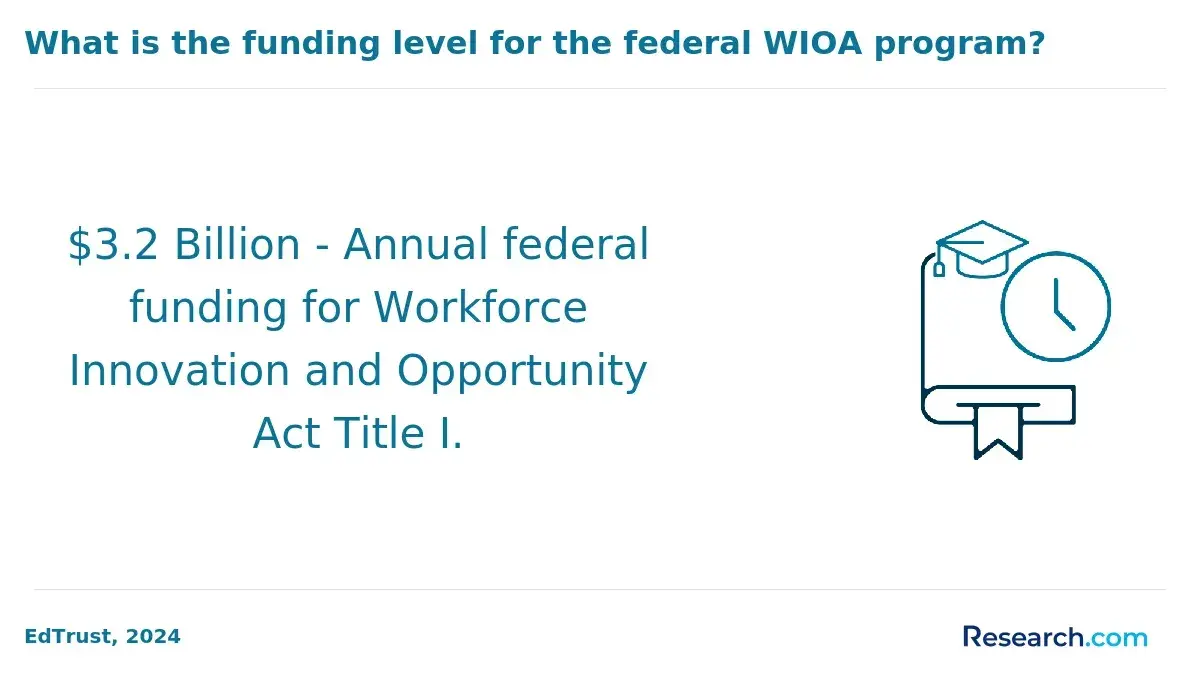
| Workforce funding | Dislocated workers or students in approved career-training programs | Shorter credentials tied to local labor demand |
Comparing aid offers requires more than looking at the largest award. Students should compare net cost, borrowing, renewal rules, and whether aid applies to summer terms or accelerated sessions.
Follow this process before committing to a program:
- Submit the FAFSA if the school participates in federal aid programs.
- Request a full cost of attendance estimate, not just tuition.
- Ask whether aid applies to online, part-time, summer, or accelerated enrollment.
- Compare grant aid separately from loans, because loans must be repaid.
- Ask whether certification exams, coding manuals, and software access are included in aid-eligible charges.
Avoid choosing a higher-cost program because the monthly payment looks manageable. The better comparison is total debt at graduation, likely completion timeline, and whether the credential supports the roles you actually want.
Which Career Outcomes Are Associated With Accredited Online Medical Billing & Coding Degree Programs?
Online medical billing and coding degree programs can lead to entry-level roles in hospitals, physician practices, insurance companies, billing services, outpatient centers, and revenue cycle departments. Common job titles include medical coder, medical biller, medical records specialist, claims analyst, reimbursement specialist, patient accounts representative, coding auditor trainee, and health information technician.
The U.S. Bureau of Labor Statistics reported a May 2024 median annual wage of $50,250 for medical records specialists. This figure is a national median, so actual pay varies by experience, certification, employer type, location, remote-work availability, and whether the role focuses on coding, billing, auditing, compliance, or broader health information management.
The table below connects program features to career outcomes students often seek.
| Career goal | Program feature to prioritize | Why it matters |
| Entry-level medical coding | Strong ICD-10-CM, CPT, HCPCS, anatomy, and coding practice sequence | Employers often look for coding accuracy and certification readiness |
| Medical billing or claims | Revenue cycle, insurance, reimbursement, and compliance coursework | Billing roles require payer knowledge and documentation accuracy |
| Health information technician | Broader HIT or HIM associate degree | Supports records management, privacy, data quality, and coding-adjacent roles |
| Coding auditor or compliance pathway | Advanced coding, quality review, and regulatory coursework | Auditing roles usually require experience and strong guideline knowledge |
| Healthcare administration pathway | Transferable general education and health administration credits | Helps students continue into bachelor's or graduate-level management study |
AI and automation are changing the field, but they have not eliminated the need for trained coders. Computer-assisted coding can suggest codes, flag documentation issues, and speed review, but employers still need people who understand payer rules, clinical terminology, compliance, denials, and documentation quality. Students should look for programs that teach both coding fundamentals and technology-supported workflows.
Certification can improve competitiveness, but requirements vary by employer. Some entry-level jobs accept graduates preparing for a credential, while others prefer or require credentials such as CPC, CCA, CCS, CBCS, or RHIT. Ask programs which exams their graduates typically pursue and whether exam preparation is embedded in the curriculum.
How Do Online and Campus-Based Medical Billing & Coding Degree Programs Compare?
Online and campus-based medical billing and coding programs can cover the same academic content, but the student experience differs. Because coding work is computer-based and documentation-driven, this field is generally well suited to online learning when the program includes enough practice, instructor feedback, and technical support.
The best format depends on how you learn, how much structure you need, and whether you can travel to campus. Online programs usually offer stronger schedule flexibility, while campus programs may provide more immediate face-to-face support.
The table below compares the practical trade-offs.
| Factor | Online program | Campus-based program |
| Schedule | Often more flexible, especially asynchronous courses | Usually fixed class meeting times |
| Location | Accessible from home if state authorization allows enrollment | Requires commuting or relocation |
| Interaction | Uses discussion boards, video meetings, email, and virtual office hours | Offers in-person classroom and advising interaction |
| Technology | Requires reliable internet, computer access, and comfort with online systems | May provide more on-campus lab access |
| Best fit | Working adults, parents, rural students, and self-directed learners | Students who want a structured campus routine |
Online study is not automatically easier. Students must manage deadlines, read carefully, practice coding regularly, and ask for help early. Campus study is not automatically better either; a weak campus program with limited coding practice may be less useful than a well-designed online program with strong faculty feedback.
Students comparing healthcare degrees should also recognize that not every field translates to online learning in the same way. Medical billing and coding is records-focused, while advanced clinical tracks such as DNP online programs may still involve substantial clinical placement requirements even when coursework is online.
How Should Students Choose the Best Accredited Online Medical Billing & Coding Degree Program?
Students should choose an accredited online medical billing and coding degree by matching the program to a specific outcome: fast entry into billing, coding certification preparation, broader health information roles, transfer to a bachelor's degree, or long-term healthcare administration. A program that is excellent for one goal may be inefficient for another.
Start with fit, then compare cost. The lowest-cost program is not a good value if credits do not transfer, courses are unavailable when you need them, or the curriculum does not prepare you for the credential employers prefer. The most expensive program is not automatically stronger unless it offers measurable benefits such as included exam support, better advising, or a faster completion path.
Use this decision sequence when building your shortlist:
- Define your target role: billing, coding, claims, health information, revenue cycle, or transfer-focused healthcare management.
- Verify institutional accreditation and, when relevant, CAHIIM accreditation.
- Compare total program cost, including fees, manuals, software, exam costs, and transfer credit impact.
- Review curriculum alignment with ICD-10-CM, CPT, HCPCS, reimbursement, compliance, anatomy, and EHR systems.
- Ask about certification preparation and which exams the program is designed to support.
- Check online format, required login times, proctoring rules, and any in-person requirements.
- Compare student support, including tutoring, advising, career services, and technical help.
- Request graduation, retention, certification, or job-placement information if the school publishes it.
Several mistakes can lead to poor ROI. Avoid choosing a program based only on tuition, assuming all accredited programs are equal, ignoring fees, overlooking transfer limits, enrolling before verifying state authorization, or selecting a format that does not match your schedule. Also be cautious with programs that promise quick jobs, guaranteed salaries, or vague certification outcomes.
Who should choose this path? It can fit students who like detail-oriented work, healthcare documentation, computer-based tasks, privacy rules, and administrative problem-solving. It may not fit students who want direct patient care, laboratory work, counseling, or advanced clinical research. Those goals may require very different education paths, such as nursing, allied health, or even nursing PhD programs for research-focused nursing careers.
The strongest overall choice is usually the accredited program that helps you finish with the least unnecessary debt while preparing you for the credential, transfer pathway, and work setting you actually want.
Other Things You Should Know About Medical Billing & Coding
In 2027, some of the best accredited online medical billing and coding degree programs include those offered by the University of Cincinnati, Herzing University, and Keiser University. These programs are recognized for their affordability, comprehensive curriculum, and strong student support services, setting graduates up for successful careers in healthcare administration.
The estimated cost for completing the best online medical billing and coding programs in 2027 ranges from $5,000 to $15,000. This includes tuition, fees, and study materials, although prices vary between institutions. Some programs may offer financial aid or payment plans to help manage expenses.
You do not usually need advanced anatomy before admission, but anatomy, physiology, and medical terminology are central to coding accuracy. Strong programs either require these courses early or integrate them into the curriculum.
The typical duration for completing an accredited online medical billing and coding degree program in 2027 ranges from 1 to 2 years. This depends on whether you enroll full-time or part-time, with many programs offering flexible scheduling to accommodate working students.
References
- How Can I Tell if a Medical Billing and Coding School is Accredited? https://www.medicalbillingandcoding.org/qnas/how-can-i-tell-if-a-medical-billing-and-coding-school-is-accredited/
- Medical Billing & Coding Salary in 2025 | Job Outlook & Pay Guide https://calregional.com/blog/what-is-the-salary-for-medical-billing-and-coding-in-2025/
- Medical Billing and Coding Career Guide (2022) | UMA https://www.ultimatemedical.edu/blog/how-to-start-career-in-medical-billing-and-coding/
- Learn How to Use Social Media Responsibly in College https://www.edumed.org/online-schools/medical-billing-coding/most-affordable/
- Top 45 Medical Billing and Coding Programs Online https://www.healthcaresystemcareersedu.org/top-45-medical-billing-and-coding-programs-online/
- The Real Cost of Medical Billing and Coding School — Advanced Coding Services https://www.advancedcodingservices.com/resources-and-knowledge/unlock-your-career-the-real-cost-of-medical-billing-and-coding-school
- Online Medical Coding & Billing Program | Self-Paced Course https://www.uscareerinstitute.edu/online-medical-coding-and-billing-school
- Online Healthcare Certifications in Medical coding & billing - AAPC https://www.aapc.com/certifications
- Online Medical Billing and Coding Certification Prep | MSU Denver https://www.msudenver.edu/innovative-lifelong-learning/professional-development/ed2go/medical-billing-coding/
- Online Medical Billing and Coding Certification Prep | Georgia Piedmont Technical College https://www.gptc.edu/online-medical-billing-and-coding-certification-prep