2027 Cheapest Accredited Online Medical Billing & Coding Degree Programs That Accept FAFSA

Co-Founder and Chief Data Scientist
This guide is for students who want an accredited, FAFSA-eligible online program without overborrowing. You will learn how to compare schools by total cost, aid, accreditation, transfer credit, flexibility, and career value.
Key Things You Should Know
- The cheapest FAFSA-eligible online medical billing and coding options are usually public community colleges or technical colleges offering associate degrees or coding-focused health information technology programs, often with lower per-credit tuition than private career schools.
- FAFSA participation does not mean a program is free; for the 2024-25 award year, the maximum Federal Pell Grant is $7,395, and eligibility depends on financial need, enrollment intensity, program eligibility, and satisfactory academic progress.
- Career ROI depends on total borrowing, completion speed, certification preparation, and employer recognition; the BLS 2024 median pay for medical records specialists is $50,250, so keeping debt low is especially important.
Which Are the Cheapest Accredited Online Medical Billing & Coding Degree Programs That Accept FAFSA?
The cheapest accredited online medical billing and coding degree programs that accept FAFSA are typically offered by regionally accredited public colleges with eligible associate degree or diploma pathways in medical coding, medical billing, health information technology, or health information management.
Many schools do not title the credential exactly "medical billing and coding degree," so students should also search for online associate programs in health information technology with coding, reimbursement, ICD-10-CM, CPT, anatomy, medical terminology, and revenue-cycle coursework.
The table below highlights affordable online options to investigate first. Costs can change by residency, fees, course load, and whether the credential is a certificate, diploma, or associate degree, so use each school's net price calculator and financial aid office before enrolling.
| School | Online credential to review | Institutional accreditation | Why it may be low-cost | FAFSA consideration |
| Hutchinson Community College | Medical Coding Specialist AAS or related coding pathway | Higher Learning Commission | Public community college pricing and online coursework can make total tuition lower than many private options | Confirm the specific program is Title IV-eligible and ask whether online students qualify for the same aid packaging |
| Central Georgia Technical College | Health information management technology or coding-related associate pathway | Southern Association of Colleges and Schools Commission on Colleges | Technical college tuition can be competitive for in-state students, especially with state and federal grants | Check program eligibility, residency tuition, and whether any required clinical or practicum components affect online completion |
| San Juan College | Health Information Technology AAS with coding and reimbursement coursework | Higher Learning Commission | Public two-year college tuition and an online HIT pathway may support a lower total credential cost | Verify current federal-aid participation and whether the program's CAHIIM-related status aligns with your certification goals |
| Northwest Technical College | Medical Coding diploma or associate-level pathway | Higher Learning Commission | Online technical programs can be cost-effective for students who want coding-focused training without relocating | Ask whether your chosen credential length qualifies for Pell Grants and federal loans |
| Minnesota State Community and Technical College | Medical coding and insurance or health information technology pathway | Higher Learning Commission | Public college tuition and transfer options may reduce the cost of moving from a diploma to an associate degree | Confirm aid eligibility by credential level because short certificates and longer degree programs may be treated differently |
| Georgia Northwestern Technical College | Health information management technology or coding-related online pathway | Southern Association of Colleges and Schools Commission on Colleges | Public technical college pricing may be especially strong for Georgia residents who qualify for state aid | Ask the financial aid office to calculate aid using your enrollment level and exact program code |
How Does FAFSA Eligibility Work for Online Medical Billing & Coding Degree Programs?
FAFSA eligibility means a school and program can participate in federal student aid programs under Title IV rules. It does not automatically mean every student receives a grant, every online program at the school qualifies, or the full cost will be covered. The FAFSA is the application used to determine eligibility for federal grants, federal loans, work-study, and often state or institutional aid.
For an online medical billing and coding degree, three layers must line up before federal aid can be applied. These checks help you avoid enrolling in a program that looks affordable but cannot actually use the aid you expected:
- Confirm the college participates in federal student aid and has a valid federal school code.
- Confirm the specific medical billing, medical coding, or health information program is eligible for Title IV aid.
- Confirm your enrollment intensity, academic progress, citizenship or eligible noncitizen status, and prior aid history to support the amount of aid you expect.
The biggest mistake is assuming "accepts FAFSA" means "covered by FAFSA." FAFSA is an application, not a funding source. Your offer may include grants, loans, work-study, scholarships, or no grant aid at all, depending on your Student Aid Index, cost of attendance, dependency status, enrollment level, and school policies.
Online students should also ask whether any required practicum, proctored exam, background check, coding software, or onsite requirement affects aid eligibility or total cost. A program can be online and FAFSA-eligible but still have required expenses that are not obvious on the tuition page.
How Much Does an Online Medical Billing & Coding Degree Cost After Financial Aid?
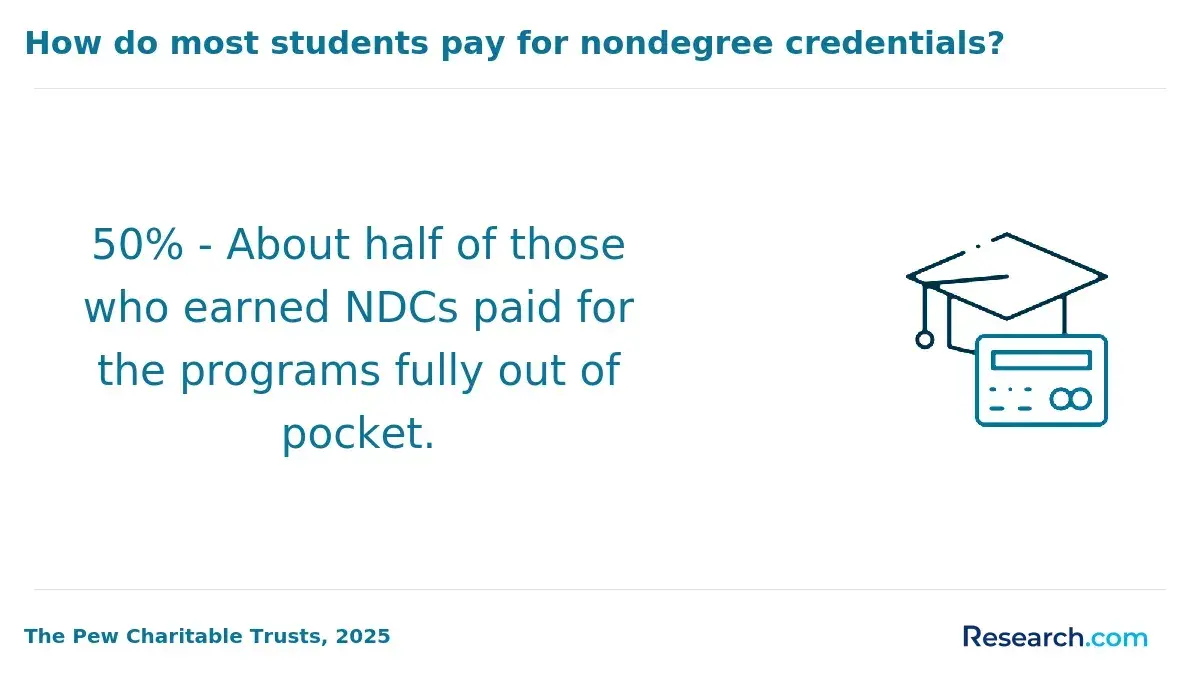
The cost after financial aid depends on the gap between the school's full cost of attendance and your grants, scholarships, employer benefits, and loans. For low-cost public online programs, tuition may be manageable, but fees, books, coding manuals, virtual lab tools, certification exam prep, and technology costs can still change the final price.
The table below shows how students should think about out-of-pocket cost. It is a decision framework rather than a promise because each student's aid package is individualized.
| Cost factor | How it affects real affordability | What to verify before enrolling |
| Tuition per credit | Usually the largest published cost, especially for associate degrees requiring about two years of coursework | Ask whether online tuition differs from in-district, in-state, or out-of-state tuition |
| Program fees | Health information, technology, online learning, and lab fees can raise the total price | Request a full program cost sheet, not just the tuition rate |
| Books and coding manuals | ICD, CPT, HCPCS, anatomy, and reimbursement materials may be required and updated regularly | Ask whether digital materials are included or billed separately |
| Grants and scholarships | Gift aid lowers net cost without repayment | Compare the grant amount you personally qualify for, not the maximum advertised amount |
| Federal loans | Loans can make enrollment possible but increase long-term cost through repayment and interest | Estimate total borrowing for the entire credential before accepting loans |
| Transfer credits | Accepted credits can shorten completion time and reduce tuition | Get a written transfer evaluation before committing |
A practical way to compare programs is to calculate net cost for the full credential, not just the first semester. Subtract grants, scholarships, employer assistance, and accepted transfer credit value from the full cost of attendance, then review how much remains as cash payments or loans.
Be cautious with programs that advertise very low monthly payments but do not clearly show total program cost. A low monthly payment can still lead to more borrowing if the program is longer, has higher fees, or accepts fewer transfer credits.
Which Affordable Online Medical Billing & Coding Degree Programs Offer the Best Value?
The best value program is not always the cheapest program on a tuition chart. For medical billing and coding, value comes from a combination of low net price, recognized accreditation, coding-relevant curriculum, certification preparation, schedule flexibility, student support, and a realistic path to completion.
Use the following comparison to decide which affordable option fits your situation. This is especially important if you are comparing a short coding diploma with a broader associate degree in health information technology.
| Program type | Best fit | Main value advantage | Possible drawback |
| Online certificate or diploma | Students who want focused coding and billing training quickly | Shorter timeline may reduce tuition and opportunity cost | May offer fewer transfer options and may not meet every employer's degree preference |
| Online associate degree in medical billing and coding | Students who want a degree credential plus coding preparation | Can support entry-level roles and future bachelor's transfer planning | More credits usually mean higher total cost than a certificate |
| Online associate degree in health information technology | Students interested in coding, records, compliance, data quality, and revenue cycle | Broader curriculum may improve flexibility across healthcare office roles | May include general education and management coursework beyond coding |
| Private nonprofit or private career-school pathway | Students who need a specific format, start date, or support model | May offer frequent starts and structured online support | Total cost may be higher, so net price and borrowing need careful review |
A more expensive school can be worth considering when it accepts more transfer credits, offers stronger advising, prepares students for recognized coding exams, has better scheduling for working adults, or provides enough grant aid to make the net price competitive. Conversely, the lowest-tuition program may be a poor value if students struggle to finish, cannot access required courses when needed, or discover too late that the credential does not match employer expectations.
Students who later want to move into management may eventually compare coding work with broader healthcare administration paths, including accelerated MHA programs online. That does not mean a billing and coding degree is the wrong starting point; it means you should choose credits that can transfer if you expect to continue your education.
Are the Cheapest Online Medical Billing & Coding Degree Programs Properly Accredited?
The cheapest online medical billing and coding programs can be properly accredited, but students must verify accreditation instead of relying on marketing language. Institutional accreditation is the baseline because it affects federal aid eligibility, transfer credit, and general academic recognition. Programmatic accreditation may also matter, especially for health information technology programs that align with health information management standards.
Accreditation checks should be completed before you submit a deposit. Use this process to separate legitimate low-cost programs from risky options:
- Look up the institution in the U.S. Department of Education's accreditation database or ask the school for its accreditor name.
- Confirm the accreditor is recognized and that the institution is currently in good standing.
- Ask whether the specific online medical billing, coding, or health information program is included in the accredited institution's approved offerings.
- If the program is in health information technology, ask whether CAHIIM accreditation or candidacy applies and whether that matters for your intended certification route.
- Ask employers or local health systems which credentials they recognize for coding, billing, reimbursement, or medical records roles.
Red flags include vague claims such as "nationally recognized," unclear accreditor names, pressure to enroll before reviewing costs, refusal to provide graduation or placement information, and a financial aid office that cannot clearly explain whether the exact online program is Title IV-eligible.
Accreditation is also not the same as certification. Many billing and coding jobs value professional credentials such as CPC, CCS, CCA, or CBCS, depending on employer preference. A degree program may prepare you for these exams, but exam eligibility, fees, and requirements are set by the credentialing organization, not the college.
What FAFSA Grants and Federal Aid Can Pay for an Online Medical Billing & Coding Degree?
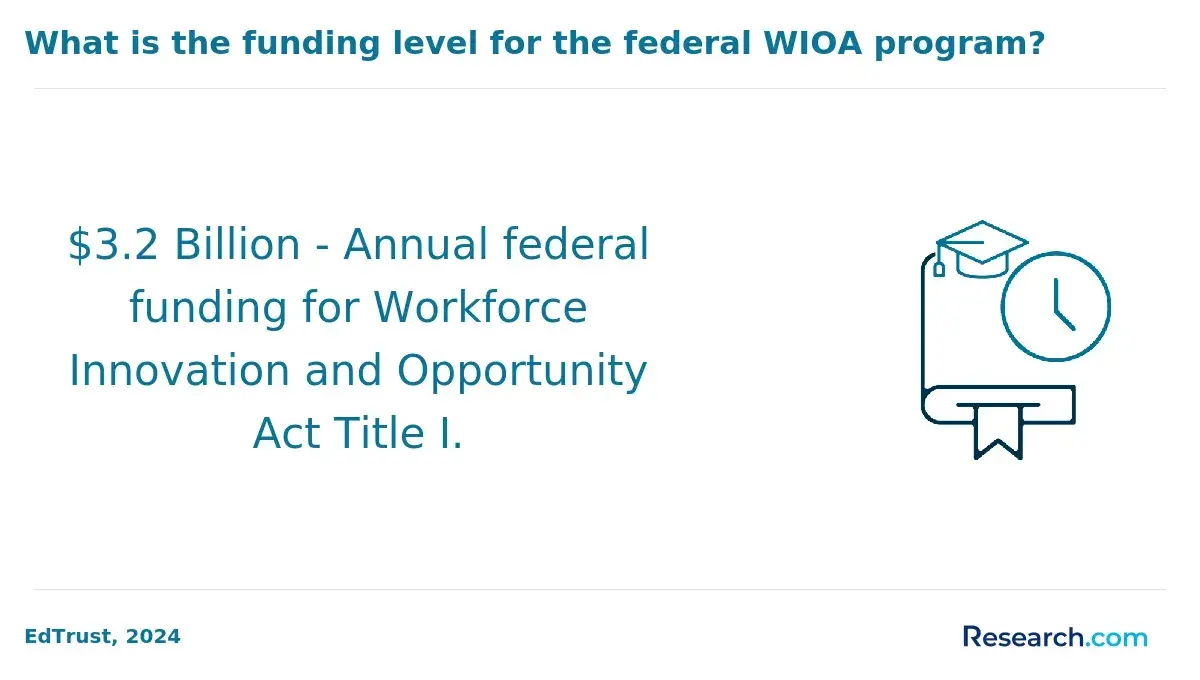
Federal aid for an online medical billing and coding degree can include grants, loans, and work-study if the school and program qualify. The most valuable aid is grant or scholarship aid because it reduces the amount you pay or borrow. Loans can help fill gaps, but they should be used carefully because medical billing and coding is a solid entry-level healthcare pathway, not usually a high-salary profession at the start.
The most common FAFSA-related aid types are listed below. Understanding the differences helps you read award letters accurately instead of focusing only on the total amount offered.
- Federal Pell Grant: Need-based grant aid for eligible undergraduates; the 2024-25 maximum is $7,395, but many students receive less depending on financial need and enrollment intensity.
- Federal Supplemental Educational Opportunity Grant: Campus-based grant aid for students with exceptional financial need, available only if the school participates and still has funds.
- Federal Direct Subsidized Loan: Need-based loan for eligible undergraduate students, with interest benefits while enrolled at least half time.
- Federal Direct Unsubsidized Loan: Non-need-based federal loan that accrues interest, often included in aid offers even when grant aid is limited.
- Federal Work-Study: Part-time employment aid that may be available through participating schools, though online students should ask whether remote or local placements exist.
- State and institutional aid: Many schools use FAFSA information to award state grants, workforce grants, tuition waivers, or college scholarships.
If your long-term healthcare goal changes, keep borrowing low enough to preserve future options. For example, students who later move into advanced clinical or administrative pathways may need additional education, just as nurses comparing DNP online programs must weigh graduate tuition against career goals and repayment capacity.
A common mistake is accepting the full loan amount just because it appears in the award letter. Instead, accept only what you need after grants, scholarships, payment plans, savings, and employer tuition assistance are considered.
How Do Transfer Credits Lower the Cost of an Online Medical Billing & Coding Degree?
Transfer credits can lower the cost of an online medical billing and coding degree by reducing the number of credits you must pay for and the time you spend enrolled. This matters most for adult learners who already completed general education courses, anatomy, medical terminology, computer applications, or healthcare coursework at another accredited college.
Before choosing between a cheaper school and a more expensive transfer-friendly school, ask for a written credit evaluation. Follow these steps before enrollment so the cost comparison reflects your real completion plan.
- Send official transcripts from every prior college, even if you attended years ago.
- Ask which credits apply directly to the medical billing, coding, or health information curriculum rather than only counting as electives.
- Confirm minimum grade requirements, credit age limits, and whether science or technology courses expire.
- Ask whether certifications, military training, prior learning assessment, or workplace training can earn credit.
- Recalculate the total cost after accepted credits, then compare the remaining tuition and fees across schools.
A higher per-credit program may become cheaper overall if it accepts substantially more transfer credits. On the other hand, a low-tuition program that rejects many prior credits may cost more in both time and money.
Transfer planning is also useful if you may continue beyond billing and coding. Healthcare students often build stackable pathways into administration, nursing, nutrition, or rehabilitation-related fields; for example, those exploring broader wellness careers may compare this route with kinesiology certification online programs to see which credits and credentials support their goals.
Which Students Benefit Most From a Low-Cost Online Medical Billing & Coding Degree With FAFSA?
A low-cost FAFSA-eligible online medical billing and coding degree is most helpful for students who need a recognized credential, want to avoid relocation, and cannot pay tuition upfront. It can be especially practical for working adults, parents, rural students, military-connected learners, and people entering healthcare from customer service, office administration, insurance, or data-entry roles.
This type of program tends to work best for students with the following priorities. The key is matching the credential to the job you actually want, not just choosing the cheapest school available.
- Career starters: Students who want entry-level roles in billing, coding support, claims follow-up, medical records, patient accounts, or revenue-cycle operations.
- Working adults: Learners who need asynchronous coursework, part-time pacing, and the ability to keep earning while enrolled.
- Cost-sensitive students: Those who qualify for Pell Grants, state grants, scholarships, employer support, or transfer credits that can reduce borrowing.
- Future stackers: Students who may later pursue health information management, healthcare administration, compliance, nursing, or public health and want credits that can transfer.
Students should avoid choosing mainly by low cost if they need extensive hands-on support, struggle with self-paced online learning, or are targeting employers that strongly prefer a specific certification or programmatic accreditation. In those cases, a slightly more expensive program with stronger advising, exam preparation, and employer recognition may be the better investment.
Some students eventually pivot from coding and records into clinical or research-intensive healthcare education. If that is a possibility, keep undergraduate debt low so future options such as nursing PhD programs or other graduate pathways remain financially realistic.
How Does the Cost of an Online Medical Billing & Coding Degree Affect Career ROI?
The cost of an online medical billing and coding degree affects career ROI because starting pay in the field is moderate compared with the cost of some private programs. The BLS reported a 2024 median annual wage of $50,250 for medical records specialists, which is a useful benchmark but not a guarantee for new graduates. Entry-level pay may be lower, while experienced coders, auditors, compliance specialists, and health information professionals may see higher opportunities depending on credentials, location, employer, and experience.
ROI improves when students reduce borrowing, finish on time, prepare for recognized certifications, and choose programs that employers understand. It weakens when students borrow heavily for a credential that could have been completed at a lower-cost accredited public college.
Use this simple ROI checklist before enrolling. It helps you connect program cost to career outcomes instead of treating the degree as an isolated purchase.
- Estimate total program cost through completion, including tuition, fees, books, coding manuals, exam costs, and technology.
- Subtract grants, scholarships, employer reimbursement, and verified transfer-credit savings.
- Calculate total borrowing for the full program, not just the first term.
- Compare the remaining debt with realistic entry-level earnings in your state or target employer setting.
- Ask whether the program prepares students for coding credentials that local employers request.
- Check whether the degree can transfer into a bachelor's program if you want health information management or healthcare administration roles later.
Automation and AI are also changing the field. Computer-assisted coding and claims tools can speed up routine work, but healthcare organizations still need trained staff to review documentation, apply payer rules, manage denials, protect data quality, and support compliance. That makes strong training in anatomy, coding guidelines, reimbursement, ethics, and health information systems more valuable than a program that teaches only basic data entry.
Students interested in healthcare careers beyond the revenue cycle may compare billing and coding ROI with adjacent fields such as nutrition, administration, or clinical leadership; for example, dietitian graduate programs serve a very different licensure-driven path and should be evaluated with different cost and salary expectations.
How Should Students Choose the Cheapest FAFSA-Eligible Online Medical Billing & Coding Degree?
To choose the cheapest FAFSA-eligible online medical billing and coding degree wisely, compare net price, accreditation, aid eligibility, transfer credit, program fit, and career preparation at the same time. Do not treat the school with the lowest tuition as automatically the best option.
The following step-by-step process gives you a practical way to narrow your list and avoid expensive surprises:
- Make a shortlist of accredited public community colleges, technical colleges, and nonprofit institutions with online coding, billing, or health information programs.
- Confirm each school participates in federal student aid and that the specific online program is Title IV-eligible.
- Complete the FAFSA early and review award letters from multiple schools before choosing.
- Ask each school for a full cost estimate covering tuition, fees, books, coding manuals, technology, exam prep, and graduation fees.
- Use net price calculators, but also ask the financial aid office to explain how your enrollment status affects grants and loans.
- Submit transcripts for a transfer evaluation and compare the remaining credits required at each school.
- Review curriculum for ICD-10-CM, CPT, HCPCS, reimbursement, anatomy, medical terminology, healthcare law, compliance, EHR systems, and data quality.
- Ask which certification exams the program prepares students for and whether exam fees are included.
- Check online format, course availability, advising, tutoring, and whether you can complete the program part-time.
- Choose the program with the best combination of low net cost, recognized accreditation, realistic completion plan, and employer-relevant preparation.
Before committing, ask admissions and financial aid offices direct questions: "Is this exact program FAFSA-eligible?" "What is my estimated total cost through graduation?" "How much would I need to borrow?" "Which credits transfer?" "What happens if I enroll less than full time?" "What certifications do graduates commonly pursue?" Clear answers to these questions are a stronger sign of value than a low advertised tuition rate alone.
Other Things You Should Know About Medical Billing & Coding
Graduates with an online medical billing and coding degree can pursue roles such as medical billers, medical coders, health information technicians, or billing specialists. These positions are found in hospitals, clinics, insurance companies, and billing services, with growing demand projected through 2027.
Certification is not always legally required, but many employers prefer or request credentials such as CPC, CCS, CCA, or CBCS. Ask target employers which credentials they value before choosing a program or exam-prep pathway.
To enroll in an online medical billing and coding degree program that accepts FAFSA, you typically need a high school diploma or GED. Additional prerequisites may include completion of certain math or computer courses as specified by the program for 2027 admissions.
An associate degree commonly takes about two years of full-time study, while certificates and diplomas may take less time. Part-time enrollment, transfer credits, course availability, and required general education classes can change the timeline.
References
- Online Medical Assistant Program With Financial Aid (2026) https://www.clinicalskillsinstitute.com/post/online-medical-assistant-program-with-financial-aid
- The Real Cost of Medical Billing and Coding School — Advanced Coding Services https://www.advancedcodingservices.com/resources-and-knowledge/unlock-your-career-the-real-cost-of-medical-billing-and-coding-school
- Medical Billing and Coding Online Courses with Financial Aid https://bilnow.com/best-medical-billing-and-coding-online-courses/
- Medical Billing & Coding Schools Online with Financial Aid https://www.edumed.org/online-schools/medical-billing-coding/financial-aid/
- Online Medical Coding and Billing Professional - MedCerts https://medcerts.com/programs/healthcare/medical-coding-and-billing-professional-online-training
- Free Application for Federal Student Aid https://www.medicalbillingandcoding.org/resources/fafsa-guide/
- Medical Coding Program Ranked 11th Nationally https://www.ntcmn.edu/career-paths/health-care/health-care-support/2023/10/25/medical-coding-program-ranked-11th-nationally/
- Financial Aid for Medical School https://aiht.edu/blog/financial-aid-for-medical-school/
- Online Medical Coding & Billing Program | Self-Paced Course https://www.uscareerinstitute.edu/online-medical-coding-and-billing-school
- Top 45 Medical Billing and Coding Programs Online https://www.healthcaresystemcareersedu.org/top-45-medical-billing-and-coding-programs-online/