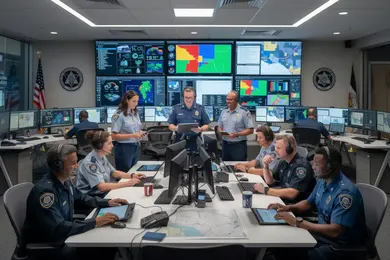
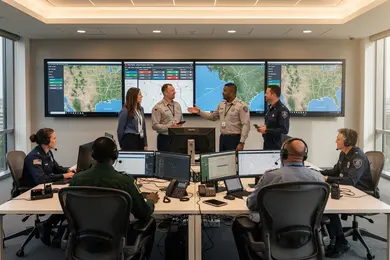
2027 Military-Friendly Online Emergency Management Bachelor's Degree Programs

Co-Founder and Chief Data Scientist
Military personnel transitioning to civilian careers often face challenges balancing service commitments with further education-especially in critical fields like Emergency Management. Online programs tailored to military students offer flexible schedules and credit for military training, addressing this need. Notably, 45% of veterans pursuing Emergency Management degrees report that military-friendly online options directly influenced their decision to enroll.
These programs also recognize the unique skills veterans bring to disaster response roles. This article explores military-friendly online Emergency Management bachelor's degree programs, highlighting how they accommodate service members and veterans while preparing them for essential roles in public safety and crisis response.
Key Things to Know About Military-Friendly Online Emergency Management Bachelor's Degree Programs
- Military-friendly online emergency management programs offer deployment deferments, flat military tuition rates, and recognize military training through credit evaluations, ensuring flexible education paths for active service members.
- These programs maximize federal education benefits by facilitating the use of the GI Bill, Military Tuition Assistance, and the Yellow Ribbon Program, reducing or eliminating out-of-pocket expenses for eligible students.
- Return on investment is strong as graduates often secure emergency management roles with median salaries around $75,000, supported by VA and BLS data confirming favorable career outcomes for military-aligned students.
What are the best military-friendly online emergency management bachelor's degree programs available today?
Genuinely military-friendly online emergency management bachelor's degree programs distinguish themselves by participating in the Yellow Ribbon Program, holding the Department of Defense Principles of Excellence designation, and providing dedicated military advising and support. T
hese programs also offer flexible deployment deferment policies, flat tuition rates tailored for military students, and recognize military training credits toward degree requirements-making them ideal for active-duty, veterans, National Guard, Reserve members, and military spouses seeking accredited online emergency management degrees. Such benefits ensure cost-effective education and minimize disruption during service obligations.
- American Public University System (APUS): Renowned for robust military support, APUS participates in Yellow Ribbon and offers tuition as low as $250 per credit hour for active duty, TA, and veterans, with seamless military credit evaluations.
- Eastern Kentucky University: Holding Principles of Excellence status, EKU charges a flat military tuition rate around $351 per credit hour and provides dedicated military advisors plus extensive military training credit transfers.
- Keiser University: Approved for TA and MyCAA benefits, Keiser's online emergency management program costs about $399 per credit hour for military students, focusing on careers in public safety and disaster planning.
- University of New Haven: A Yellow Ribbon participant with military tuition near $665 per credit hour, it offers flexible scheduling and supports military spouses through MyCAA-eligible rates and personalized advising.
- University of Maryland Global Campus (UMGC): Distinguished by both Yellow Ribbon and Principles of Excellence endorsements, UMGC charges $288 per credit hour for active duty with generous transfer credit and deployment deferment policies.
- Columbia Southern University: This fully online program features a $350 per credit flat military tuition rate and caters to military learners' scheduling needs with Yellow Ribbon participation.
- Southern New Hampshire University (SNHU): Offering military discounts reducing tuition to approximately $320 per credit hour, SNHU provides flexible enrollment and military-specific counseling with generous credit transfers.
True military-supportive programs stand out by carefully coordinating financial benefits-stacking GI Bill, Tuition Assistance, and scholarships-to minimize or eliminate out-of-pocket costs. They maintain flat-rate tuition structures, prioritize prior learning assessments, and implement clear deployment-related academic policies.
These characteristics, combined with strong career outcome data from the Bureau of Labor Statistics, the VA's College Scorecard, and institutional reports, set apart genuinely military-friendly online emergency management bachelor's degree options from those merely marketing to veterans.
For service members seeking one of the best accredited online emergency management degrees for veterans and military spouses, examining these factors is essential to making an informed choice toward a sustainable career and education path. Additionally, exploring related fields such as easy masters degrees can offer further educational opportunities maximizing federal benefits.
How do military Tuition Assistance (TA) and GI Bill benefits apply to online emergency management bachelor's programs?
Military Tuition Assistance (TA) and the GI Bill are the two primary federal education funding streams available for service members pursuing an online emergency management bachelor's degree. TA typically covers tuition costs up to $250 per semester credit hour, with an annual cap of $4,500 per fiscal year as of 2024. While TA covers tuition during active duty, it generally does not pay for fees, books, or housing, requiring students to budget for these additional expenses.
The GI Bill-whether Post-9/11 or Montgomery-offers broader benefits that apply to active duty, reserves, and veterans enrolled in online emergency management bachelor's programs. The Post-9/11 GI Bill pays full in-state tuition at public schools or up to specified caps for private and foreign institutions.
It also provides monthly housing allowances based on location and active-duty pay, plus annual book stipends, which significantly aid students managing living costs during their studies.
Benefit stacking rules require students eligible for both Military Tuition Assistance and GI Bill benefits to plan carefully. TA is billed first to cover tuition, while the remaining costs like housing and books are typically claimed through the GI Bill.
However, using TA may reduce total GI Bill entitlement because the Department of Defense coordinates benefits with the VA to prevent duplication. Many students find it essential to consult the VA's GI Bill Comparison Tool to confirm school-specific benefits for online emergency management studies.
Service members exploring military tuition assistance eligibility for online emergency management degrees can also benefit from programs featuring deployment deferments and military-friendly credit evaluations.
Financial planning should consider prior learning assessments and return on investment to minimize out-of-pocket costs. For related educational cost insights, see business administration degree online cost.
- TA Caps and Limits: Military Tuition Assistance pays up to $250 per credit hour with a $4,500 annual limit, covering tuition but excluding fees and supplies, which students must budget for separately.
- GI Bill Coverage: The Post-9/11 GI Bill pays tuition, housing allowances, and book stipends, providing broad financial support for online emergency management students whether on active duty or veterans.
- Benefit Coordination: When using both TA and GI Bill, TA is billed first; remaining costs like housing and books typically come from GI Bill benefits, but careful management is required to avoid reducing GI Bill eligibility.
- Online Program Eligibility: Both benefits apply to accredited online emergency management bachelor's programs, but exact tuition caps and stipends vary by school-consult the VA's GI Bill Comparison Tool for precise data.
- Financial Planning Advice: Understanding per-credit limits, deployment deferments, and military-friendly credit evaluations helps maximize benefits and minimize out-of-pocket costs for service members pursuing their degree online.
What is the typical duration of a military-friendly online emergency management bachelor's degree, and can active-duty students finish faster?
Most online emergency management bachelor's degree programs designed for military learners require around 120 credit hours, typically completed over a four-year period based on a traditional semester schedule. This timeline combines general education, core emergency management classes, and electives to meet degree requirements.
Military-friendly programs often offer faster alternatives that accommodate active-duty commitments. Accelerated formats include shorter course sessions like eight-week terms, competency-based models allowing self-paced progress, and continuous enrollment options without long breaks between terms.
- Accelerated Terms: Schools organize courses in compact sessions, enabling students to enroll in more classes annually, which shortens the overall time to degree completion.
- Military Credit Evaluations: Many institutions accept prior military training and experience as academic credit through ACE transcript assessments, along with CLEP and DSST exams, significantly cutting down required coursework.
- Flexible Enrollment: Year-round online availability supports deployment schedules and frequent relocations, ensuring steady academic progress despite military demands.
- Time-to-Completion Data: For instance, American Public University and Southern New Hampshire University report average completion times for military students as low as two to three years, highlighting the effectiveness of these accelerated paths.
- Benefit Preservation: Finishing faster not only lowers tuition expenses but also conserves GI Bill months, making it easier to pursue graduate education without sacrificing federally funded benefits.
A professional who completed a military-friendly online emergency management bachelor's degree shared that balancing service obligations with coursework was challenging but manageable due to flexible scheduling. He noted, "The ability to take accelerated classes meant I could move through the program faster when my deployment wasn't imminent."
He appreciated how prior military credits reduced his course load significantly, easing the pressure. "It wasn't just about finishing; it was about preserving my GI benefits for future studies. That peace of mind was critical." His experience highlights how these tailored programs help active-duty students progress steadily toward educational and career goals despite unpredictable military demands.
Which online emergency management bachelor's programs participate in the Yellow Ribbon program, and how does it benefit veterans?
The Yellow Ribbon Program helps veterans and their families cover tuition costs above the Post-9/11 GI Bill cap, especially at private or out-of-state institutions. Participating schools voluntarily contribute funds, which the Department of Veterans Affairs matches, reducing out-of-pocket expenses for military students pursuing online emergency management bachelor's degree programs with Yellow Ribbon benefits.
Several veteran-friendly Yellow Ribbon emergency management degrees are available online, including:
- American Public University System: Offers an emergency management bachelor's degree with unlimited Yellow Ribbon slots and contributions up to $10,000 annually.
- Liberty University: Provides a bachelor's in emergency management, matching $5,000 yearly with up to 100 slots.
- Southern New Hampshire University: Features an online program contributing up to $8,000 per year with limited slots.
- University of Maryland Global Campus: Military-friendly with Yellow Ribbon funds matching $5,000 annually and competitive slot availability.
- Colorado Technical University: Offers emergency management with Yellow Ribbon support of up to $6,000 yearly, subject to slot limits.
- Regent University: Matches $3,000 per year with a fixed number of Yellow Ribbon slots.
- Excelsior College: Provides up to $5,000 in Yellow Ribbon funding per academic year and limited slots for eligible veterans.
Since Yellow Ribbon slots are limited and competitive, confirming availability with a school's veterans office before enrolling is vital. Combining these benefits with military tuition assistance and credit for prior learning programs helps maximize financial aid and makes earning an online emergency management degree accessible. Military students interested in other specialized fields may also explore game design schools online as alternative career pathways.
What accreditation should a military-friendly online emergency management bachelor's program have to protect veterans' benefits?
Accreditation plays a crucial role in safeguarding veterans' education benefits when pursuing an online emergency management bachelor's degree. Most VA-approved schools require regional accreditation to qualify for federal programs like the GI Bill, Military Tuition Assistance, and the Yellow Ribbon Program.
Regional accreditation stems from seven specific organizations recognized by the U.S. Department of Education, distinguishing it from national accreditation, which often disqualifies students from these benefits and complicates credit transfers and employer acceptance.
- Higher Learning Commission (HLC): Accredits institutions predominantly in the Midwest, including Illinois and Ohio, emphasizing broad academic quality.
- Southern Association of Colleges and Schools Commission on Colleges (SACSCOC): Oversees schools across the southern United States, focusing on quality assurance and student success.
- New England Commission of Higher Education (NECHE): Supports institutions in six New England states, promoting rigorous standards and institutional integrity.
- Middle States Commission on Higher Education (MSCHE): Covers the mid-Atlantic region, aiming for continuous institutional improvement and resource management.
- Northwest Commission on Colleges and Universities (NWCCU): Accredits colleges in northwest states, prioritizing mission-driven education and accountability.
- WASC Senior College and University Commission (WSCUC): Focuses on institutions mainly in California and Hawaii, highlighting innovation and student outcomes.
- Accrediting Commission for Community and Junior Colleges (ACCJC): A WASC branch accrediting primarily two-year colleges on the west coast with standards tailored to associate degree programs.
Most emergency management degrees do not offer distinct programmatic accreditation beyond these regional bodies. Enrolling in institutions lacking regional accreditation risks loss of VA benefits and transfer difficulties when moving or advancing education.
Prospective students should verify accreditation and VA approval via the VA's WEAMS Institution Search and the U.S. Department of Education's accreditation database before committing to any program.
A professional who built her career after completing a military-friendly online emergency management bachelor's degree shared that selecting a properly accredited school was a daunting process. She recalled feeling overwhelmed initially, unsure how to confirm accreditation or its impact on her benefits.
The reassurance came from thorough research and conversations with VA advisors, which clarified the importance of accreditation and its connection to preserving her GI Bill eligibility. Her experience underscored the value of investing time upfront to avoid later setbacks, emphasizing that accreditation is not just a formality but a critical factor in securing both educational quality and financial support during service members' academic journeys.
How do military-friendly online emergency management programs accommodate deployments, PCS moves, and irregular schedules?
Military-friendly online emergency management programs set themselves apart by offering policies tailored to the realities of military life. These policies ensure that active-duty service members, veterans, and military families can maintain academic progress despite deployments and relocations.
Deployment Deferments: Many programs allow students to pause their studies during deployment without academic or financial penalties. These deferments often include guaranteed opportunities to complete coursework after deployment, aligning with the Department of Defense Voluntary Education Partnership Memorandum of Understanding (MOU) that mandates support for military withdrawal and re-enrollment.
Asynchronous Coursework: Courses are typically delivered asynchronously, enabling students to access lectures, assignments, and exams on flexible schedules. This format accommodates the unpredictable demands of military service and helps maintain consistent progress.
Rolling Enrollment: Offering multiple start dates throughout the year helps military students avoid delays caused by Permanent Change of Station (PCS) moves or enlistment cycles, so they can begin or resume classes without missing critical semesters.
Military Tuition and Credit: Schools often provide flat or reduced tuition rates for military students and recognize military training and prior learning for academic credit. This approach maximizes the efficient use of education benefits and accelerates degree completion.
Questions for Admissions:
- What deployment deferment options are available and how do they affect financial aid?
- Is course completion guaranteed without penalty if deployment occurs mid-term?
- Are all courses fully asynchronous and offered with rolling enrollment?
- How does the institution evaluate military training for credit?
According to the Council of College and Military Educators, over 70% of military students prioritize flexible scheduling and deployment support when choosing online programs, highlighting the growing need for policies that reflect military commitments.
What financial aid and scholarships are exclusively available to military students pursuing online emergency management degrees?
Military students pursuing online Emergency Management degrees can access exclusive financial aid beyond the GI Bill and Tuition Assistance (TA) to minimize education costs. These options are often combinable, allowing service members and their families to reduce or eliminate out-of-pocket tuition expenses.
- MyCAA Scholarship: Designed for military spouses, this program offers up to $4,000 toward associate degrees and certificate programs in select fields, including Emergency Management and other STEM-related areas.
- State-Level Veteran Education Grants: Numerous states provide additional grants or scholarships specifically for veterans and their families. While eligibility and award amounts vary, some focus on fields such as public safety, homeland security, and Emergency Management.
- AMVETS Scholarships: Offered by the American Veterans organization, these scholarships support veterans pursuing higher education, with certain awards targeting emergency service and disaster preparedness majors.
- VFW Scholarships: The Veterans of Foreign Wars organization provides scholarships applicable to military students, especially those studying national security, emergency planning, or homeland defense disciplines.
- Branch-Specific Education Funds: Each military branch often administers its own education funds and scholarship programs that support continuing education in Emergency Management and related fields.
Strategically stacking multiple benefits-including federal aid, state grants, private scholarships, and military tuition assistance-can substantially lower overall costs. Additionally, prior learning assessments and military credit evaluations help shorten degree completion times, increasing return on investment.
According to recent Department of Defense data, there has been a 15% increase in the number of service members enrolling in online degrees within public safety and Emergency Management over three years, reflecting rising demand and aid availability for these fields.
How many transfer credits and military training credits can online emergency management bachelor's programs accept?
Many online emergency management bachelor's degree programs recognize the value of military training by accepting transfer credits from military occupational specialties (MOS), Navy Enlisted Classification (NEC), and other official military coursework.
The American Council on Education (ACE) is instrumental in this process, evaluating military training and recommending credit equivalencies that colleges use to grant academic credits. This system helps active-duty service members, veterans, and military spouses leverage their military experience toward degree completion. Incorporating military training credit evaluations for emergency management degrees is critical for reducing both time and cost.
Some institutions-such as American Military University and Excelsior College-offer generous transfer credit policies, accepting up to 90 credits from a combination of prior college courses and military training. These schools have formal Joint Services Transcript (JST) review policies in place, which provide a clear pathway for translating military experience into academic credit. The ACE Military Programs database, frequently updated and publicly accessible, helps students identify which courses qualify for credit, streamlining the evaluation process.
To maximize transfer credits, military students should submit their JST transcripts early-preferably during the admissions phase-to enable thorough credit evaluation before enrollment. Early submission supports better academic planning and helps avoid redundant coursework. Understanding these policies is vital for making informed decisions when combining federal education benefits like the GI Bill and Military Tuition Assistance with transfer credits.
For those wondering what can I do with a masters in forensic psychology, similar credit evaluation processes apply, underscoring the broad applicability of ACE recommendations across fields.
- ACE Credit Recommendations: ACE evaluates military training and issues credit recommendations used by accredited universities to grant academic credits toward emergency management degrees.
- Joint Services Transcript (JST): JST provides an official record of military training and experience, enabling schools with formal JST review processes to convert military background into transferable credits efficiently.
- Generous Transfer Credit Policies: Leading programs accept up to 90 combined transfer credits from college courses and military training, significantly shortening degree completion times.
- Early Submission Importance: Submitting JST during or before admissions allows for a formal credit evaluation, ensuring maximum credit articulation and reduced costs.
- Military-Friendly Schools: Institutions like American Military University and Excelsior College have transparent transfer policies designed explicitly for service members and veterans.
What are the admission requirements for military-friendly online emergency management bachelor's programs?
Admission requirements for military-friendly online Emergency Management bachelor's programs generally include a high school diploma or GED and a minimum GPA, typically ranging from 2.0 to 2.5 on a 4.0 scale. Some selective programs enforce higher GPA criteria and require prerequisite coursework in subjects like political science, geography, or public administration to ensure academic readiness.
Military student eligibility criteria for online Emergency Management degrees often ask for military training credits through Joint Services Transcripts (JST) and a DD-214 to verify honorable discharge and access veteran benefits.
Many schools offer open-admission or rolling-admission policies, creating more accessible entry points for active-duty service members, veterans, and military spouses, accommodating deployment schedules and reducing bureaucratic barriers.
Selective programs may carry stronger academic reputations and employer recognition, but they also demand stricter admissions standards. In contrast, open-admission schools emphasize flexibility and broader access, which may come with fewer support services or less rigorous curricula.
Active-duty and veteran applicants should strengthen their applications by documenting military leadership experiences, submitting complete JST records, and certifying VA educational benefit eligibility early. Using military tuition assistance and stacking multiple benefits maximizes affordability and minimizes out-of-pocket expenses.
Career outcome data from sources including the Bureau of Labor Statistics and VA's College Scorecard should guide decision-making regarding program ROI and post-graduate employment.
- Academic Requirements: Most programs require a high school diploma or GED and set minimum GPA thresholds, typically around 2.0 to 2.5; selective programs may demand additional prerequisite courses.
- Military Documentation: Submission of DD-214 forms and Joint Services Transcripts is essential for benefit eligibility and prior learning credit evaluation.
- Admission Policies: Open or rolling admissions ease access for military students with deployment flexibility, while selective admissions offer stronger reputations but higher entry standards.
- Application Strengthening: Including records of military leadership and early VA certification improves chances of acceptance and maximizes available education benefits.
- Program Trade-Offs: Selective programs may enhance employer recognition and support services; open-admission schools prioritize access and flexibility for non-traditional students.
For those comparing programs, researching related accredited fields such as electrical engineering using rankings like the top online electrical engineering schools can provide additional context for evaluating academic quality and career prospects.
Which online emergency management bachelor's programs offer the best career outcomes and earning potential for military graduates?
Emergency management bachelor's degree graduates often find roles within federal agencies, state governments, and private defense contractors, where the Bureau of Labor Statistics reports a median wage near $76,000 annually. Veterans and individuals holding security clearances frequently earn salary increases of 10% to 20%, reflecting their specialized expertise and trusted status.
Programs offering concentrations in homeland security, disaster preparedness, or cybersecurity align closely with career paths in FEMA, the Department of Homeland Security, and defense contracting firms, boosting employability in these sectors.
Career Outcomes: Data from the VA's College Scorecard highlights programs with strong military enrollment typically achieve higher employment rates and median salaries above $70,000 within two years post-graduation. These outcomes demonstrate the value of selecting programs tailored to military-affiliated students seeking civilian workforce integration.
Flexible Policies: Many top-ranked programs provide deployment deferments, flat-rate tuition for service members, and generous credit transfers for military training, helping maintain academic momentum despite active duty obligations.
Financial Considerations: Military learners can combine benefits like the GI Bill, Military Tuition Assistance, and the Yellow Ribbon Program to minimize costs. Prior learning assessments further leverage military experience, enhancing return on investment and often reducing remaining expenses to nearly zero.
Industry-Relevant Skills: Incorporating crisis management simulations, cybersecurity training, and O*NET military crosswalk tools prepares graduates for the federal emergency workforce and supports a smooth transition into related civilian roles.
How do spouse and dependent education benefits extend to online emergency management bachelor's programs at military-friendly schools?
Eligible military spouses can access up to $4,000 through the MyCAA (My Career Advancement Account) scholarship to pursue portable, career-focused education at approved online emergency management programs. Institutions participating in the MyCAA program are listed on the official MyCAA school locator, ensuring recognized military-friendly options.
Other education benefits available to military dependents include the Fry Scholarship, which assists children of service members who died in the line of duty, providing valuable financial support for online emergency management degrees.
CHAMPVA education assistance offers financial help for dependents with qualifying medical conditions, aiding in covering education expenses related to online emergency management studies. In some states, military dependents may also qualify for tuition waivers or reduced rates at public colleges, further enhancing affordability.
Combining these federal and state benefits with institutional scholarships and flat military tuition rates can greatly reduce or even eliminate out-of-pocket costs.
- MyCAA Scholarship: Offers $4,000 for eligible spouses to fund career-focused online emergency management education at accredited, military-friendly schools listed on the official MyCAA school locator.
- Fry Scholarship: Provides education benefits to children of fallen service members, supporting access to online emergency management degree programs.
- CHAMPVA Education Support: Assists eligible dependents by covering education expenses tied to online emergency management degrees.
- State Tuition Waivers: Available in select states, these reduce or waive tuition for military dependents attending public institutions, improving affordability.
Current data show that over 60% of military spouses pursuing online education utilize MyCAA benefits, highlighting its essential role in accelerating degree completion and career advancement in emergency management fields.
What Graduates Say About Their Military-Friendly Online Emergency Management Bachelor's Degree Programs
- Pierce: "I chose the online emergency management bachelor's degree program because it offered the flexibility I needed while serving in the military. The ability to receive deployment deferments and have my military credits evaluated saved me time and stress. This program truly prepared me for a smooth transition to a civilian career in disaster response coordination."
- Aryan: "The flat military tuition rate was a game-changer for me-it made pursuing my emergency management degree financially feasible without added burdens. The program's understanding of military life meant I could study at my own pace, even during unpredictable assignments. After graduating, I felt confident taking on leadership roles in emergency preparedness."
- Jonathan: "Reflecting on my experience, the military-friendly policies like flexible scheduling and credit transfer made my education journey manageable alongside active duty. I appreciated how the program respected the complexities of military service without compromising academic rigor. Thanks to this degree, I advanced rapidly in my post-service career, applying what I learned in real-world crisis management situations."
Other Things You Should Know About Emergency Management Degrees
Yes. Many military-friendly programs are approved for Post-9/11 GI Bill® benefits and Department of Defense Tuition Assistance. Service members usually must enroll in a regionally accredited school, submit a VA Certificate of Eligibility, and follow branch Tuition Assistance rules, including any annual credit-hour limits.
Yes, there are specific scholarships for military members enrolled in online emergency management bachelor's programs in 2027. Many programs offer financial aid packages exclusively for active-duty service members, veterans, and their families to support educational advancement. Eligibility criteria may vary by institution.
Military-friendly online emergency management bachelor's programs in 2027 typically offer concentrations such as disaster response, homeland security, public health, and crisis management, enabling students to tailor their education to specific career interests within the field.
Yes, many military-friendly online programs recognize CLEP and DSST tests for acquiring college credit, allowing students to leverage prior knowledge and military training. Prior learning assessments also provide opportunities to translate documented experience into academic credit. This accelerates degree completion and lowers education costs.
References
- Military-Connected Scholarships | Governors State University https://www.govst.edu/MCScholarships/
- 10 Best Emergency Management Fields https://www.drury.edu/business/management-major/10-best-emergency-management-fields/
- Bachelor of Science inEmergency Management and Homeland Security Online or On Campus https://www.albany.edu/cehc/programs/bs-emergency-management-homeland-security
- Homeland Security and Emergency Management https://www.uaf.edu/academics/programs/bachelors/security-emergency-management-online.php
- Online Degrees for Military Students | EOU Online https://online.eou.edu/military-benefits/
- Exploring Military-Friendly Online Master's Programs: A Comprehensive Guide for Service Members and Veterans https://www.worldwondersgardens.co.uk/blog/Exploring_Military-Friendly_Online_Masters_Programs_A_Comprehensive_Guide_for_Service_Members_and_Veterans.html
- Information for Veterans https://www.umassglobal.edu/military-veterans/veteran-information
- Military Friendly Colleges Offering Degrees in Emergency Management https://www.militarysupportivecolleges.com/careers/guide-homeland-security-emergency-management-degrees-careers/