2027 Choosing an Online MS in Psychology - Forensic Psychology for a Future PhD in Public Policy: Prerequisites to Compare
Audited and Verified:
Our Editorial and Data Verification Process
Research.com uses government datasets, official education statistics and primary institutional information to support its career and degree guides. Our review process checks factual accuracy, occupational definitions, source dates and the requirements associated with the credentials discussed.
How This Article Was Fact-Checked
Our editorial team verifies salary estimates, employment projections, education requirements and program information against original data providers and official organizations. Salary figures are checked against the relevant occupational definitions and reporting periods. Information about licensure, accreditation and required in-person training is reviewed separately.
Fact-checked and verified on:

Co-Founder and Chief Data Scientist
An online MS in forensic psychology can deepen your understanding of courts, corrections, and victim services, but a future public policy PhD will judge more than your specialization. Doctoral programs may expect quantitative preparation, policy-relevant research, and a clear match with faculty interests. This guide is for prospective master's students deciding whether a forensic psychology degree will build that evidence - or whether targeted courses, research experience, or a different master's would be more direct. You'll learn which prerequisites and program features to compare before committing time and money.
Key Things You Should Know
- A forensic psychology MS is generally not required for a public policy PhD; its value depends on the research and quantitative skills you can demonstrate.
- Compare programs on three essentials: statistics and policy analysis coursework, supervised research with a substantial written product, and faculty access - not the concentration name alone.
- Check each target PhD's admissions rules before enrolling. A flexible online MS can still leave gaps in economics, mathematics, or research experience that require separate preparation.
What Is an Online MS in Forensic Psychology?
An online MS in forensic psychology is a graduate degree examining psychological science in legal and justice settings. Courses may cover decision-making, victimization, corrections, research methods, and the ethical limits of psychological evidence. Programs differ substantially: some emphasize applied justice-system work, while others offer a thesis and deeper research training.
The degree title does not confer authority to conduct forensic evaluations, provide psychotherapy, testify as a qualified expert, or practice law. Those activities depend on the role, qualifications, and jurisdiction. If you are still completing undergraduate study, faster online forensic psychology degree completion may be worth investigating - but prioritize statistics and research methods over speed if doctoral study is the goal.
Can an Online Forensic Psychology Master's Prepare You for a Public Policy PhD?
Yes, if it lets you produce credible policy research and address the prerequisites of your intended doctoral programs. A study of diversion programs, victim-service access, or correctional reentry can connect forensic psychology to public policy. The strongest application would explain the policy question, identify an appropriate method, acknowledge limitations, and show your own contribution.
Admission eligibility is not the same as competitiveness. A PhD may accept applicants with a bachelor's degree, while its strongest candidates have substantial quantitative coursework, research experience, and recommendations from people who can assess their scholarly work. A professionally oriented MS with no thesis, limited data analysis, and little faculty contact may add less than a research assistantship plus targeted courses.
If your undergraduate preparation is incomplete, accelerated online psychology degrees are one possible route to a bachelor's credential. Acceleration should not crowd out the methods courses or faculty relationships needed for a research application. Conversely, someone who already has a relevant bachelor's degree may not need another psychology degree at all.
What Prerequisites Are Needed for a Public Policy PhD?
Requirements vary by university and sometimes by research area. Public policy doctorates commonly assess prior academic work, research interests, writing, recommendations, and quantitative readiness; some specify mathematics, economics, tests, or other prerequisites. Read the current admissions page for each target PhD rather than treating a psychology MS as a universal bridge.
The comparison below separates requirements to verify from evidence that may strengthen an application. Neither column describes a rule shared by every program.
| Area | Requirement to verify | Useful evidence of readiness |
| Quantitative work | Specified statistics, calculus, or other mathematics | Completed coursework and an interpretable analysis |
| Economics and policy | Any economics or policy-analysis prerequisites | Ability to explain incentives, implementation, and trade-offs |
| Research | Writing sample, proposal, or prior project rules | A thesis or rigorous paper with a clear research question |
| Application | Degree, test, letter, and deadline policies | Recommendations describing independent research ability |
If you lack foundational psychology coursework, selecting an online psychology bachelor's program may help you compare routes into the field. For a policy PhD, however, an existing degree supplemented with statistics, economics, and research experience could be more efficient. Confirm whether target doctoral departments accept nondegree coursework for any stated prerequisite.
Delivery mode matters chiefly because it changes access to research, mentorship, and time - not because a campus address automatically makes an application stronger. Online study may let you keep a justice-system or public-service job and use its questions to inform a research agenda. Campus study may make regular lab participation and informal faculty contact easier. Neither advantage is guaranteed.
Ask whether an online student can join faculty projects, meet regularly with a thesis supervisor, access suitable datasets, and obtain a detailed research recommendation. Also confirm live-session times, group-work expectations, any residency, and whether a placement must be arranged locally. Online courses can have fixed commitments.
If you are comparing a forensic MS with a licensure-oriented alternative, scheduling is only one difference. Research into intensive schedules in accredited mental health counseling study illustrates why clinical placement obligations and professional accreditation must be evaluated separately from online convenience. Counseling training is not a substitute for policy research preparation.
Start with the courses that could close gaps identified by your target PhDs. Graduate statistics, research design, and program evaluation are usually more relevant to doctoral readiness than additional survey courses on forensic topics. Check whether quantitative classes involve actual analysis and interpretation, and whether a thesis option includes sustained faculty supervision.
Then examine how electives connect to your proposed policy question. Corrections, victim services, inequality, and legal decision-making can supply substantive expertise; economics, causal inference, or advanced statistics may need to be taken elsewhere. A capstone can demonstrate strong work, but verify its scope before assuming it is equivalent to a thesis.
For applicants focused specifically on substance-use policy, distance learning degrees in addiction counseling represent a different, more service-oriented route to compare. Counseling coursework may inform a policy question, but it should not replace the methods preparation a research doctorate expects.
Typically, applicants submit a completed bachelor's degree, transcripts, a statement, and recommendations; individual programs set their own GPA, prerequisite, test, and experience rules. A non-psychology major is not automatically disqualifying. Your statistics, research, criminal justice, public administration, or professional experience may be relevant, but only the admitting program can determine whether it satisfies a formal requirement.
Before applying, ask admissions which psychology or statistics courses are mandatory, whether missing courses can be completed before enrollment or conditionally, and whether the thesis track requires separate approval. Request a course sequence showing when research supervision becomes available. These details matter more to a future PhD applicant than a broad statement that the program welcomes diverse majors.
If your actual aim is psychotherapy rather than policy research, investigate faster clinical mental health counseling graduate pathways under the relevant state's licensing rules. A nonclinical forensic psychology MS is not interchangeable with a qualifying counseling degree.
Completion time depends on required credits, course availability, enrollment pace, and whether a thesis or placement adds scheduling constraints. Tuition alone understates cost: compare mandatory fees, software, travel or residency expenses, research-related costs, and charges if thesis work extends beyond standard enrollment. Ask for a written estimate based on your intended course load rather than relying on an advertised completion time.
Use an online psychology tuition comparison guide as a starting point, then obtain program-specific graduate charges directly from each institution. For a future PhD, also compare the master's net cost with the cost of taking only missing prerequisites and seeking paid research work. Check doctoral funding separately: assistantships and tuition support vary by program, appointment, and year.
Potential nonclinical directions include victim-service coordination, justice-program support, research assistance, and program evaluation. Actual eligibility depends on the employer, prior experience, technical skills, and sometimes separate credentials. In a public agency, an MS may complement existing case, administrative, or analytical work without changing civil-service hiring rules or granting investigative authority.
For a policy-minded student, the most useful job may be one that builds evidence of research responsibility: helping define measures, managing permitted data, evaluating a service, or writing a decision-ready report. Any work with client or justice-system information requires organizational authorization, confidentiality safeguards, and appropriate research review when applicable.
Career planning with a forensic psychology graduate degree can help you explore roles, but assess each posting's duties and qualifications. The master's alone does not make someone a licensed psychologist or qualified forensic evaluator.
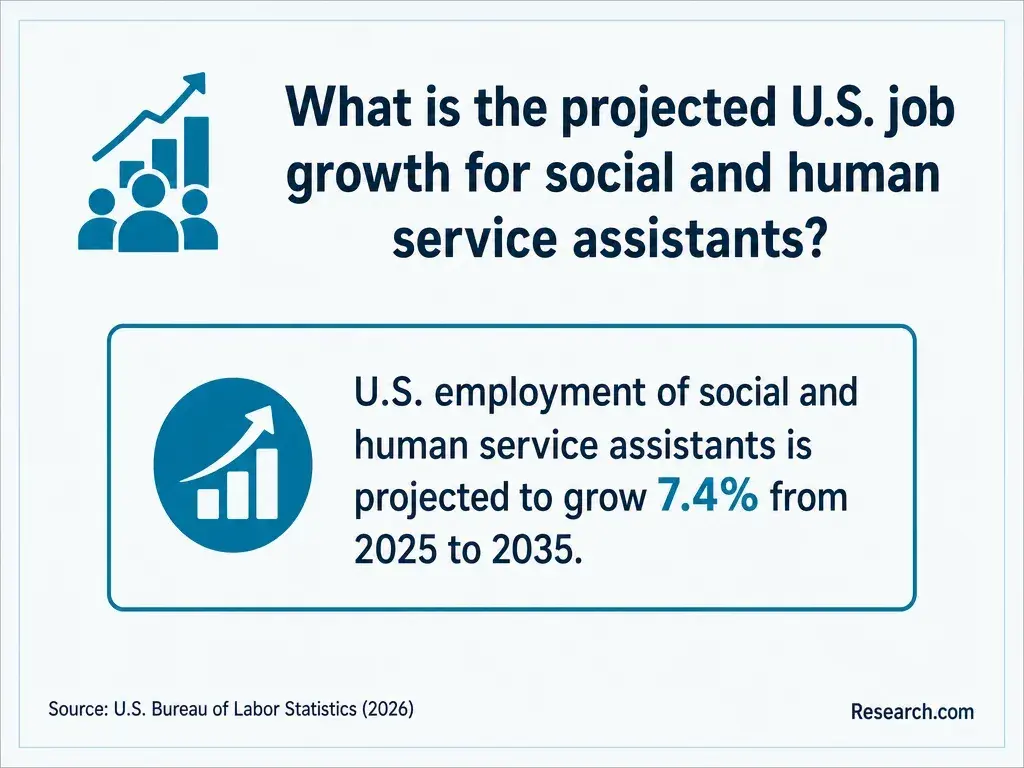
There is no single reliable salary or growth figure for "forensic psychology MS graduates." The US Bureau of Labor Statistics reports outcomes by occupation, not by this degree concentration. Its occupational information for social and human service assistants, for example, can provide context for some support roles, but it cannot predict a graduate's pay or describe research and policy jobs as a group.
For a useful comparison, identify the exact jobs you could pursue before and after the MS, then consult the current Bureau of Labor Statistics Occupational Outlook Handbook entry for each occupation's median wage, projection period, and typical entry requirements. Compare those figures with local public-sector pay schedules and actual vacancies; do not assume a master's moves you into the occupation-wide median.
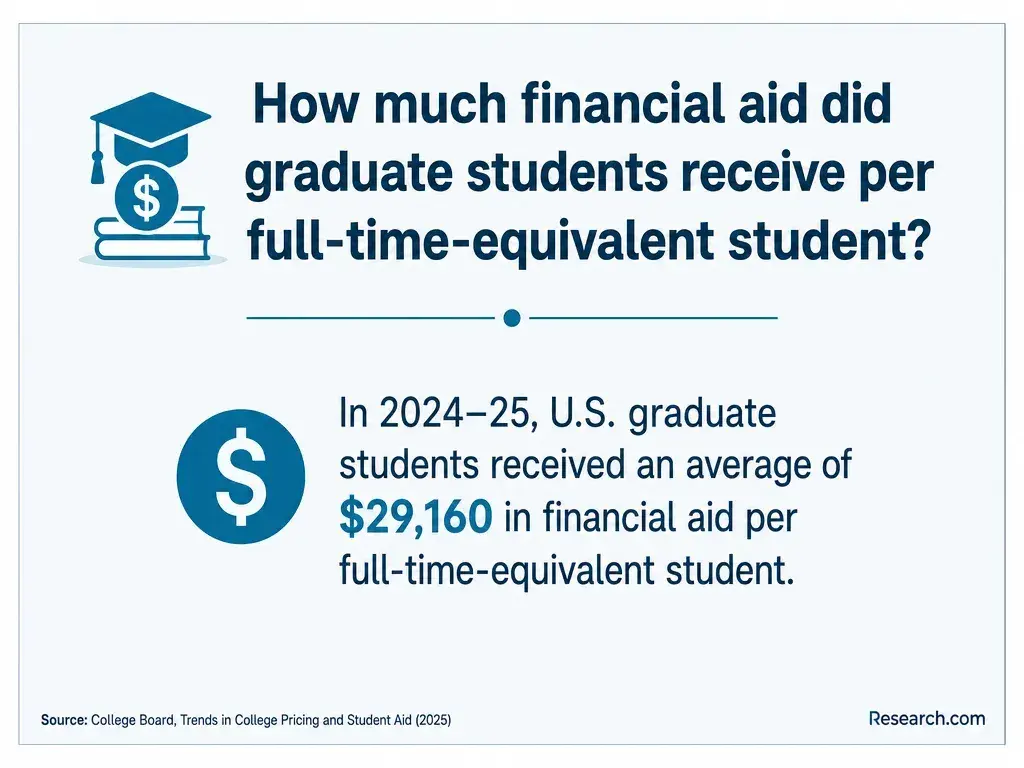
Borrowing also affects the payoff. Guidance on aid eligibility for online substance use counseling study concerns a different degree level and field, so verify graduate aid and loan terms for the forensic MS itself before using salary estimates to justify its cost.
How Can You Choose an Accredited Forensic Psychology Program?
Verify the institution's recognized accreditation and confirm that it covers the institution offering the degree. Then examine the program's curriculum and policies directly. Institutional accreditation does not establish thesis access, doctoral placement outcomes, or eligibility for psychology licensure. APA accreditation applies to specified professional psychology programs and training, not broadly to nonclinical forensic psychology master's degrees.
Build a shortlist around your intended policy research topic. For each program, obtain the current catalog, thesis or capstone rules, faculty research interests, online participation requirements, total-cost estimate, and any reported doctoral outcomes with their cohort definitions. Ask whether a prospective supervisor actually works with online master's students; a faculty biography alone is not a mentoring commitment.
Finally, compare the MS against a narrower plan of prerequisite courses and supervised research. If your goal changes to clinical practice, tuition-conscious shorter mental health counseling master's study is a separate comparison that must be checked against state licensing requirements. Choose the forensic MS when its verified research opportunities justify its cost for your doctoral goal - not because its title sounds closest to the policy issue you hope to study.
Other Things You Should Know About Psychology
Possibly, with faculty approval and any required agency permission. Employment does not itself authorize access to client records, use of agency data, or publication of findings.
Not universally. A strong writing sample and documented research contributions may demonstrate readiness. Check each program's application instructions rather than delaying solely to pursue publication.
Follow the PhD program's rules. Prioritize people who can describe your analytical work and research potential in detail; a job title alone makes a letter less useful.
Often, but flexibility depends on faculty availability, funding, and program milestones. Apply with a credible initial direction while checking how the department handles advisor changes.
- Program: Research Methodology, MEd - University of Pittsburgh https://catalog.upp.pitt.edu/preview_program.php
- PhD in Public Administration - UIC Catalog https://catalog.uic.edu/gcat/colleges-schools/urban-planning-public-affairs/pa/phd/
- What do graduate programs look for in clinical applicants? | apa.org https://www.apa.org/gradpsych/2007/11/cover-gradprograms
- Master's in Psychology Requirements | louisiana.edu https://psychology.louisiana.edu/programs/masters/requirements
- MA in Research Methodology | Loyola University Chicago https://gpem.luc.edu/portal/program
- M.S. in Research Design and Analysis | Florida International University Online https://fiuonline.fiu.edu/programs/online-graduate-degrees/master-of-science-in-research-design-and-analysis.php
- PhD in Public Policy Curriculum - Schar School | Schar School of Policy and Government https://schar.gmu.edu/programs/phd-programs/public-policy-phd/phd-public-policy-curriculum
- Courses and Policies | Public Policy Ph.D. Program https://policy.uark.edu/prospective-applicants/courses-and-policies.php
- What courses do I need to prepare for a PhD in Political Science? | Society for Political Methodology https://polmeth.org/blog/what-courses-do-i-need-prepare-phd-political-science
- Deciding if a PhD is right for you | The Abdul Latif Jameel Poverty Action Lab (J-PAL) https://www.povertyactionlab.org/resource/deciding-if-phd-right-you