2027 Choosing an Online BA in Psychology - Mental Health for a Future Family Studies Graduate Application: Prerequisites to Compare

Co-Founder and Chief Data Scientist
An online BA in psychology with a mental health focus can prepare you for family studies graduate school - but the concentration name alone will not establish that you meet a program's prerequisites. Family studies programs may emphasize child development, family relationships, research, community services, or policy in different ways. This guide is for prospective and transfer students comparing undergraduate options. It shows which courses and experiences to check, how to confirm that credits will count, and when a different undergraduate route may better support your graduate application.
Key Things You Should Know
- Compare the BA against each target graduate program's published prerequisites; prioritize lifespan or child development, statistics, research methods, and family-related coursework over a mental health label.
- Confirm institutional accreditation and obtain a written degree audit showing where transfer credits apply. An online course format does not guarantee access to research, placements, or flexible scheduling.
- A psychology BA can support a family studies application and nonclinical work, but it does not qualify graduates to provide therapy or guarantee admission to a graduate program.
What Is an Online BA in Psychology With a Mental Health Focus?
It is a psychology bachelor's degree that combines the major's study of behavior and research with coursework on subjects such as mental disorders, prevention, or behavioral health services. "Mental health focus" might mean an officially recorded concentration, a set of electives, or simply a program description. Ask whether it appears on the transcript and whether its courses are offered online often enough for your planned schedule.
For family studies applicants, the distinction matters because an appealing concentration can leave little room for child development, family relationships, or research electives. Compare the actual course list with a general psychology BA and, where available, a human development or family studies major. If your main interest is substance use rather than family systems, addiction psychology degree options for undergraduate students provide a different comparison - but their titles do not establish family studies prerequisite coverage.
How Does an Online Psychology BA Prepare You for Family Studies Graduate School?
Psychology offers a useful foundation in development, social behavior, mental health, statistics, and evaluating evidence. Family studies graduate work applies such knowledge to relationships and families across the lifespan, often alongside policy or community-service questions. A strong application therefore shows both academic preparation and a clear reason for studying families - not just an interest in mental health.
Look for a substantial research paper, supervised research assistance, or an approved nonclinical project that lets you examine a family-related question. A supervised community placement may also help you understand referral systems and the needs of children or caregivers. Confirm site approval, supervision, scheduling, confidentiality rules, and whether remote participation is possible before counting on any experience. Experience in recovery services employment pathways, for example, may inform a family-support interest, but it does not replace a required development course or authorize clinical work.
What Prerequisites Do Family Studies Graduate Programs Require?
There is no universal family studies admissions checklist. Programs may accept students from psychology and other majors while requiring, recommending, or teaching particular subjects after admission. The receiving graduate program - not the BA program - decides whether a course meets its requirement.
The comparison below separates common areas of preparation from requirements you must confirm at each target school.
| Preparation area | What to compare in the BA | What to confirm with the graduate program |
| Development and families | Lifespan or child development; family relationships or family systems electives | Whether a specific course, level, or minimum grade is required |
| Research preparation | Statistics, research methods, and opportunities to interpret or produce research | Whether psychology statistics counts and whether methods must be completed before admission |
| Social context | Social psychology, culture, inequality, or family policy coursework | Whether these are prerequisites, recommendations, or graduate-level subjects |
| Application evidence | Writing-intensive work, relevant experience, and faculty relationships | Required documents, experience expectations, and any accepted alternatives |
Choose a shortlist of graduate programs, save their current admissions and prerequisite pages, and send course descriptions or syllabi to the graduate admissions office when equivalency is unclear. Record the answer in writing. Distinguish a course required before applying from one permitted after admission; that timing can change your undergraduate plan.
Also confirm that you are comparing the right graduate degree. Family studies and clinical mental health counseling have different purposes and admissions rules. If counseling is the actual goal, review shorter accredited clinical mental health counseling study plans against the intended state's licensing requirements rather than assuming a family studies degree serves the same purpose.
First, verify the institution's current accreditation and its scope through the accreditor's own directory or the U.S. Department of Education's accreditation database. Check the institution named on the degree, not just a partner advertising the online courses. Then confirm that the specific BA and any advertised concentration are actually offered to online students at your location and entry term.
Institutional accreditation is important for evaluating the school and may matter to graduate admissions, but it does not certify that its psychology electives satisfy a particular family studies prerequisite. APA accreditation should not be expected for a general psychology BA; APA's professional accreditation has a different scope. The same distinction applies when reviewing adjacent options such as forensic psychology program review before enrollment: verify the institution and the exact credential instead of inferring professional recognition from a specialization name.
For this graduate-school goal, select mental health courses that deepen your understanding of families without displacing more relevant prerequisites. Psychopathology can introduce diagnostic concepts and their limits; developmental psychopathology can connect difficulties to age and context; community mental health can show how prevention, access, and referrals work. Courses on cultural context, trauma, or substance use can be valuable when they are taught with attention to evidence and ethical boundaries.
Check prerequisites and course rotation before choosing a sequence. A useful plan might pair developmental psychology and statistics early, followed by research methods, a family-focused elective, and a mental health elective. If your intended work is specifically substance-use counseling, compare the required education and credential rules separately; substance use counseling education and degree options address a different objective from preparing for family studies research. Studying assessment or treatment in a BA course does not qualify you to perform either independently.
First-year and transfer applicants commonly face different application and transcript requirements, and some schools have separate rules for entry to the psychology major. Check the school's requirements for your applicant category, including prior coursework and any minimum grades. Do not confuse admission to the university with approval of a mental health concentration or a completed degree plan.
If you have prior college credit, request an official evaluation showing whether each course counts toward general education, the psychology major, a prerequisite, or electives only. Ask specifically about statistics, developmental psychology, course sequencing, and credits that must be completed at the graduating institution. A transferred course can count toward the total degree without satisfying the requirement you need for graduate school.
If your long-term target is licensed counseling rather than family studies, undergraduate admission is only the first step. Comparing faster-paced online mental health counseling master's study can help clarify the later professional pathway, but its admissions and placement obligations must be checked independently of the BA.
Completion time depends on accepted credits, how those credits apply to requirements, course availability, and the number of courses you can manage each term. A school's advertised completion time may assume a particular transfer-credit balance or enrollment pace. Ask for a term-by-term plan that includes statistics, methods, and any concentration courses that are not offered every term.
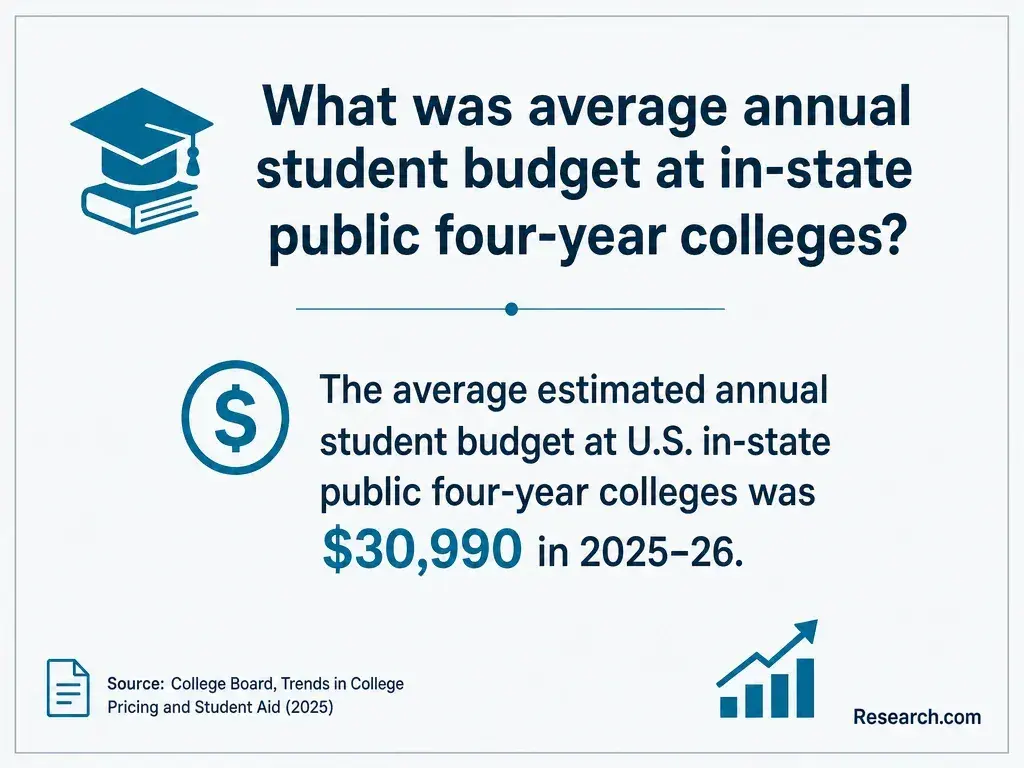
For cost, compare the price of the remaining requirements, not tuition alone. Include mandatory online fees, books, technology, possible travel for approved experiences, and the cost of courses needed for graduate prerequisites but excluded from the BA. Ask the financial aid office how your enrollment pace and any extra coursework affect eligibility. Online psychology education on a budget can help identify programs to investigate, but only a school-specific audit and current charges can establish your likely total cost.
Graduate preparation depends more on completed prerequisites, strong work, and access to faculty and experience than on whether lectures occur online or on campus. Campus students may have easier access to nearby labs and events; online students may gain scheduling and location flexibility. Neither advantage is automatic.
Before enrolling online, ask how students obtain research supervision, faculty recommendations, and approved community experiences. Check live-meeting times, group-work expectations, required visits, and whether placement sites must be local. A program that fits your weekly schedule but cannot support a relevant project may be the weaker choice for your application. Likewise, accelerated graduate options - including psychology master's programs with intensive pacing - should not be treated as a substitute for checking the specific family studies degree you hope to enter.
Before or after graduate study, a psychology BA may support applications for nonclinical roles in human services, family-serving nonprofits, research support, outreach, or service coordination. Duties may include documenting services, helping people navigate referrals, assisting with data collection, and communicating with community partners. Employers can require additional experience, training, or background checks, particularly for work involving children or sensitive records.
There is no single reliable "psychology BA salary": pay depends on the occupation, location, employer, and duties. For a meaningful comparison, identify the job title you would actually seek and consult its most recent U.S. Bureau of Labor Statistics occupational wage and outlook information, alongside local postings. An occupation-wide median is not a prediction of your pay or a reported outcome for a particular BA. The same caution applies to understanding pay and entry requirements in forensic psychology careers; adjacent psychology fields can involve very different credentials.
Does a Psychology BA Lead to Mental Health Licensure or Certification?
No. A psychology BA, including one with a mental health concentration, does not by itself authorize psychotherapy, diagnosis, independent psychological assessment, or use of a protected clinical title. Family studies graduate education also should not be assumed to meet licensing requirements simply because it addresses family relationships or mental health.
If your goal is to become a marriage and family therapist, counselor, clinical social worker, or psychologist, identify the intended state and occupation before choosing the BA. Check the responsible licensing board's educational, supervised-experience, and examination rules, then verify whether a prospective graduate program is designed to meet them. For a counseling goal, affordable accredited mental health counseling study options are a more relevant comparison than a nonclinical family studies program. If your goal is family research, policy, education, or community programs instead, choose the undergraduate path that best supplies the target graduate program's prerequisites and opportunities to demonstrate that interest.
Other Things You Should Know About Psychology
Policies differ by program and application term. Check each program's current admissions page rather than preparing for a test based on another school's requirements.
Follow the program's instructions. Faculty who can discuss your research, writing, and academic work are often useful choices; a supervisor may add evidence of relevant community experience if professional letters are accepted.
Possibly. Ask the graduate program whether it accepts post-baccalaureate or community college coursework, what grade it requires, and when the course must be completed.
No. If that credential matters to you, check the National Council on Family Relations' current eligibility routes and documentation requirements for the specific program and your planned coursework.
- Recommendations for a Sequence of Developmental | virginia.edu https://psychology.as.virginia.edu/recommendations-sequence-developmental-psychology-courses
- What's the Difference Between Asynchronous and Synchronous Learning? | Ohio State Online https://online.osu.edu/content-hub/blogs/whats-the-difference-between-asynchronous-and-synchronous-learning/
- Family Studies and Human Dev Department Courses | University of Arizona Catalog https://catalog.arizona.edu/departments/1236-FSHD/overview
- Practicum and Internship - Psychology Resources - UO Blogs https://blogs.uoregon.edu/psychologyresources/human-subjects-pool/practicum-and-internship/
- How Do Transfer Credits Work When You Go Back to School? | Whitworth Online https://online.whitworth.edu/news-articles/how-do-transfer-credits-work-when-you-go-back-to-school/
- Careers Graduate School Options for Psych Majors | Grand Valley State University https://www.gvsu.edu/psychology/careers-graduate-school-options-for-psych-majors-117
- What Are the Different Types of Psychology Degrees? | Pepperdine Online Graduate Programs https://onlinegrad.pepperdine.edu/blog/types-of-psychology-degrees/
- 4 Types of Psychology Degrees: Picking the Right Program | Bouvé College of Health Sciences https://bouve.northeastern.edu/news/4-types-of-psychology-degrees-picking-the-right-program/
- Bachelor of Arts in Psychology - Texas State's online programs https://online.txst.edu/degrees/undergraduate/ba-psychology/
- Distance Education Policy | SPSCC Policies and Procedures https://pnp.spscc.edu/policies/inst736