2027 Self-Paced Online Communication Disorders Bachelor's Degree Programs

Co-Founder and Chief Data Scientist

Reviewed by Rhea Paul, PhD
SLP Education & Research Expert
Choosing a self-paced online bachelor's degree in communication disorders is usually a scheduling decision as much as an academic one. Many prospective students are working adults, parents, caregivers, military-affiliated learners, or transfer students who need a degree path that does not depend on weekly class meetings or rigid semester pacing.
Communication disorders programs introduce students to speech, language, hearing, communication development, assessment foundations, and support roles connected to speech-language pathology and audiology. A bachelor's degree can help graduates pursue entry-level support positions, prepare for graduate study, or meet prerequisites for advanced clinical training. However, program structure matters: flexibility, accreditation, transfer credit, financial aid rules, and licensure alignment can all affect whether a program is a practical fit.
According to recent data, 43% of students enrolled in self-paced online communication disorders programs reported improved work-study balance. That benefit is meaningful, but self-paced learning is not automatically easier. It requires planning, consistent study habits, and careful review of institutional policies before enrollment. This guide explains how self-paced online communication disorders bachelor's programs work, how they compare with traditional online formats, what affects cost and completion time, and how to evaluate accreditation, transfer credit, prior learning, and specialization options.
Key Benefits of Self-Paced Online Communication Disorders Bachelor's Degree Programs
- Self-paced online communication disorders bachelor's degree programs offer flexibility for working professionals, allowing students to balance education with employment and personal commitments effectively.
- These programs enable accelerated skill acquisition by letting students progress through coursework as soon as they demonstrate mastery, reducing overall time to degree completion.
- Cost-effective pathways include lower tuition rates, elimination of commuting expenses, and options for transfer credits and prior learning assessments that minimize redundant coursework.
What Are Self-Paced Online Communication Disorders Bachelor's Degree Programs, and How Do They Differ From Traditional Online Formats?
Self-paced online communication disorders bachelor's degree programs allow students to move through coursework with more control over timing than a standard online program. Instead of following a fixed weekly schedule for every assignment, learners often progress by completing modules, assessments, or competencies when they are ready. This format is especially useful for students whose work hours, caregiving responsibilities, or health needs make traditional academic calendars difficult to manage.
The key difference is pacing. A traditional online program may still be asynchronous, but students usually have weekly discussion posts, assignment deadlines, exam windows, and semester start dates. A self-paced program reduces some of those timing constraints. In competency-based education models, students move forward after demonstrating mastery rather than simply completing a set number of weeks in a course.
- Start dates: Some self-paced programs offer open enrollment or multiple start windows, while traditional online programs commonly follow semester or term calendars.
- Deadlines: Self-paced formats may use broader milestones instead of weekly due dates. Traditional online formats usually require regular participation and timed submissions.
- Progression: In self-paced or competency-based models, advancement depends on demonstrating mastery of course outcomes. In traditional models, progress follows a course calendar.
- Faculty support: Self-paced students may receive individualized support when needed, while traditional online students may have scheduled lectures, group sessions, or weekly instructor interaction.
- Accountability: Self-paced learning offers flexibility but less external structure. Students must create their own study plan and maintain momentum without frequent reminders.
- Best-fit learners: These programs often suit working professionals, adult learners, transfer students, and students who can study independently.
Self-paced learning can shorten a degree for students with transfer credits, strong study habits, and enough weekly availability. It can also slow students down if they underestimate the workload or lack a routine. Before enrolling, compare policies on transfer credits, prior learning assessment, faculty access, tutoring, academic advising, and financial aid eligibility. Students still exploring broad academic options can also review best college majors to pursue when weighing long-term career flexibility.
The strongest self-paced programs combine flexibility with clear academic expectations. Look for transparent course maps, published assessment standards, responsive advising, and accreditation that supports future graduate study or licensure-related goals.
Which Accredited Institutions Offer Self-Paced Online Communication Disorders Bachelor's Degree Programs?
Accredited self-paced online bachelor's programs in communication disorders are designed for distance learners who need recognized academic credentials without attending campus-based classes. The most important screening factor is accreditation. Regional accreditation helps protect transferability, graduate school eligibility, financial aid access, and employer recognition.
The institutions below are described as regionally accredited options that provide flexible online bachelor's-level study in Communication Disorders, Communication Sciences and Disorders, or closely related fields. Because program formats, tuition models, and availability can change, students should verify current details directly with the school before applying.
- Western Governors University (WGU): Accredited by the Northwest Commission on Colleges and Universities (NWCCU), WGU offers a competency-based online Bachelor of Science in Communication Disorders and Sciences. Tuition is charged per six-month term, allowing students to complete as many courses as they can during that period. Average completion time ranges from 24 to 36 months depending on prior credits and pace.
- Liberty University: Accredited by the Southern Association of Colleges and Schools Commission on Colleges (SACSCOC), Liberty University provides a Bachelor of Science in Communication Sciences and Disorders fully online with a self-paced format. Tuition is priced per credit hour, and transfer policies can shorten completion time, typically from three to four years for new students.
- Post University: Regionally accredited by the New England Commission of Higher Education (NECHE), Post features an online Bachelor of Science in Communication Disorders with a subscription pricing model. Students pay a flat fee for a set period and complete as many credits as possible during that time. Motivated learners with transfer credits average a two-year completion.
- Southern New Hampshire University (SNHU): Also NECHE-accredited, SNHU offers a Bachelor of Science in Communication Sciences and Disorders with self-paced progression options. Tuition is charged per credit, and the school supports transfer credits and prior learning assessments. Graduation time varies widely but can be as quick as two and a half years.
- National University: Accredited by the WASC Senior College and University Commission (WSCUC), National University provides an online Bachelor's in Communication Sciences and Disorders using a quarter-based calendar. Tuition is charged per course or via flat-rate subscription options. The flexible schedule benefits adult learners, with typical degree completion between two and three years depending on prior credits and course load.
When comparing schools, do not look only at advertised tuition. Ask how many credits will transfer, whether prior learning can be evaluated, whether federal aid applies to the specific self-paced format, and whether the curriculum supports your intended graduate or licensure pathway. If you are comparing costs across flexible online degrees more broadly, reviewing online business degree cost comparisons can help you understand how pricing models differ across fields.
A strong program should give you a written degree plan before you commit. That plan should show accepted transfer credits, remaining requirements, estimated total tuition, required fees, and any clinical, practicum, or field experience expectations.
How Long Does It Take to Complete a Self-Paced Online Communication Disorders Bachelor's Degree?
Completion time for a self-paced online Communication Disorders bachelor's degree can range from as quickly as 18 months to the more typical four years or longer. The timeline depends on prior credits, weekly study time, program rules, course availability, and whether the school permits accelerated completion through competency-based assessments or prior learning credit.
Students entering with an associate degree or substantial prior college coursework may finish much faster than first-time college students. Programs that accept transfer coursework or associate degrees can shorten completion by up to two years, depending on credit transfer agreements and course equivalencies. Students starting with no credits should expect a longer path, even in a flexible format.
- Prior credits and transfers: Previous college credits, an associate degree, or approved military training can reduce the number of courses left to complete.
- Weekly study commitment: Students who can dedicate 20 or more hours weekly tend to progress faster. Students balancing full-time work or caregiving may need a slower pace.
- Prior learning assessments: Some programs award credit for professional experience, certifications, military training, or exams, allowing students to bypass selected requirements.
- Competency-based structure: CBE models let students advance after demonstrating mastery, which can benefit learners who already understand parts of the curriculum.
- National benchmark: According to NCES data, the average completion time for bachelor's degrees is about 4.5 years, including part-time students, but self-paced formats often reduce this duration for engaged learners.
- Realistic pacing: A fast plan is only useful if it is sustainable. Overloading can lead to burnout, failed assessments, or stop-outs.
- Support services: Advising, tutoring, library access, writing support, and technical help can make a major difference for self-directed students.
One professional who enrolled in a self-paced online Communication Disorders degree described the timeline this way: "Initially, estimating how long it would take felt overwhelming because life was unpredictable. I appreciated setting my own pace-some weeks I pushed hard, and others I slowed down when work got intense. The flexibility to use my prior healthcare certificate for credit was a game changer. Having access to advisors helped me stay motivated, especially during tough weeks when deadlines felt daunting."
Before enrolling, ask the school for a course-by-course completion estimate based on your actual transfer evaluation. A realistic plan should include your intended weekly study hours, maximum courses allowed per term, assessment retake policies, and any required sequence that could slow acceleration.
What Are the Admission Requirements for Self-Paced Online Communication Disorders Bachelor's Degree Programs?
Admission requirements for self-paced online communication disorders bachelor's degree programs are usually similar to other online bachelor's programs, but flexible programs may offer more start dates, rolling admissions, or open-enrollment pathways. Requirements vary by institution, so applicants should confirm both general university admission standards and any major-specific prerequisites.
- High school diploma or GED: Applicants usually need a high school diploma or GED certificate. This confirms basic readiness for college-level work.
- Minimum GPA requirements: Most programs expect a cumulative GPA of around 2.0 to 2.5 on a 4.0 scale. Some open-enrollment or rolling-admission programs may waive strict GPA cutoffs or admit students conditionally.
- Prerequisite courses: Programs may require or recommend English composition, biology, psychology, or introductory communication studies. These courses support later study in speech, language, hearing, and human development.
- Transcripts: First-time students submit high school records, while transfer students must provide official transcripts from each college attended.
- Admission flexibility: Open-enrollment and rolling-admission models may allow students to begin at multiple points during the year, which helps applicants who cannot wait for a traditional fall or spring start.
- Program selectivity: More selective programs may request letters of recommendation, personal essays, standardized test scores, or evidence of academic readiness. Open-access programs may have fewer barriers but can vary in advising intensity and student support.
- Strengthening an application: Applicants below minimum criteria can improve readiness by completing prerequisite courses at a community college, earning relevant certifications, gaining volunteer experience, or writing a clear statement of purpose.
Applicants should also ask whether admission to the university automatically means admission to the communication disorders major. In some schools, students enter as pre-majors and must meet GPA or prerequisite requirements before taking upper-division coursework.
Students comparing flexible graduate and undergraduate pathways in other fields can review affordable online master's programs in data science to see how admissions and cost structures differ by discipline.
How Much Does a Self-Paced Online Communication Disorders Bachelor's Degree Cost, and What Affects Tuition?
The cost of a self-paced online communication disorders bachelor's degree depends on tuition model, transfer credit, enrollment pace, required fees, and whether the institution charges by credit, course, term, or subscription period. The cheapest advertised rate is not always the lowest total cost.
- Per-credit tuition: Most programs calculate costs based on credit hours, typically charging between $300 and $700 per credit. Since a bachelor's degree usually requires 120 to 130 credits, total tuition can range from $36,000 to $91,000, depending on the institution.
- Flat-rate subscription: Some schools offer a subscription payment plan, where students pay a fixed fee for a term or quarter and can complete unlimited courses during that period. This model can save money for students who move quickly, but it can be costly for students who progress slowly.
- Bundled fee arrangements: Some programs combine tuition, fees, and learning materials-such as textbooks and software-into one upfront cost. This can simplify budgeting and reduce surprise expenses.
- Additional fees: Students should watch for technology fees, proctoring charges, software costs, graduation fees, and transcript fees. Some required expenses often range from $50 to $300 per course or term.
- Pacing and cost: A subscription model rewards acceleration. A per-credit model may be more predictable for students who need a slower pace. The right choice depends on how many credits you need and how much time you can study each week.
To compare programs accurately, request a full cost estimate based on your transfer evaluation. The estimate should separate tuition, mandatory fees, books or digital materials, proctoring, technology, and any field experience costs. Also ask whether tuition is locked for enrolled students or may increase before graduation.
One professional who earned her degree through a self-paced online communication disorders program said, "The subscription model gave me control, so I could take more classes when my schedule allowed." She also noted that software and proctoring fees required more planning than expected: "Knowing these costs upfront would have helped me budget better, but the flexibility ultimately made it worth the effort."
What Financial Aid Options Are Available for Self-Paced Online Communication Disorders Bachelor's Programs?
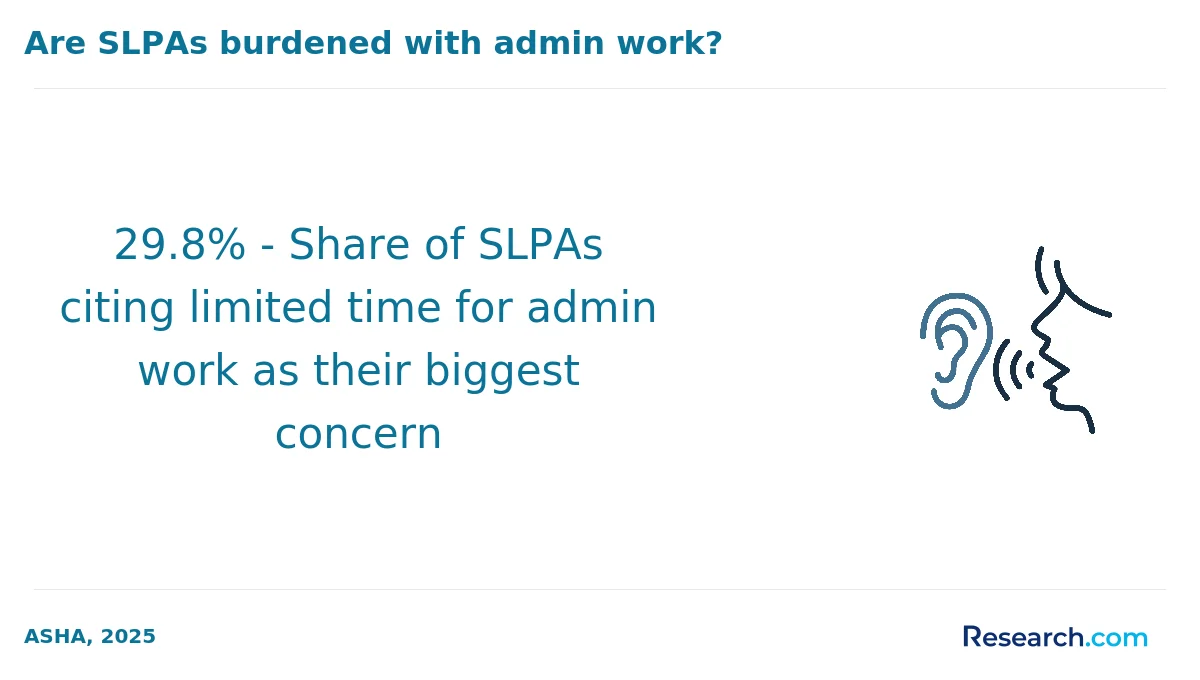
Financial aid may be available for self-paced online communication disorders bachelor's programs, but eligibility depends on the institution, accreditation, enrollment status, and how the program measures academic progress. Students should never assume that every flexible or competency-based format qualifies for the same aid as a traditional semester program.
Federal aid, including Pell Grants and Direct Loans, remains a major funding source. However, competency-based education programs often report progress through credit equivalencies rather than standard semester hours. This can affect FAFSA eligibility, disbursement timing, satisfactory academic progress calculations, and the amount of aid released in a payment period.
State grants and scholarships may also help, especially for residents attending public universities. Some state aid rules are built around semester enrollment, which can create limits for self-paced tracks. Students should check both the school financial aid office and the state aid agency before enrolling.
Institutional scholarships, tuition discounts, employer tuition assistance, military education benefits, and professional association awards can also reduce costs. Organizations such as the American Speech-Language-Hearing Association (ASHA) offer scholarships and grants for students pursuing pathways connected to speech-language pathology or audiology, though awards are typically competitive and may require membership, academic qualifications, or career-specific goals.
According to Federal Student Aid data, nearly 30% of undergraduates taking only distance education courses received federal funding in 2021. That shows that online students can access aid, but self-paced structures still require careful verification.
- Federal aid eligibility: Pell Grants and Direct Loans may be available if the school and program meet federal requirements.
- State aid: Availability varies by state and may depend on residency, enrollment intensity, and program calendar.
- Institutional scholarships: Some schools offer awards for online learners, transfer students, adult learners, or communication disorders majors.
- Professional association grants: ASHA and similar organizations may provide discipline-specific support for students pursuing communication sciences careers.
- Employer support: Students already working in healthcare, education, or human services should ask employers about tuition reimbursement or professional development funds.
- Required verification: Confirm aid eligibility, disbursement timing, refund policies, and satisfactory academic progress rules before registering.
The best question to ask is not simply, "Do you accept FAFSA?" Ask whether the exact self-paced version of the program is aid-eligible and how aid is calculated if you accelerate, pause, or complete fewer competencies than planned.
How Do Competency-Based Education (CBE) Models Work in Self-Paced Online Communication Disorders Programs?
Competency-based education (CBE) in self-paced online Communication Disorders bachelor's programs focuses on demonstrated mastery. Students move forward after proving they understand defined skills and concepts, rather than after sitting through a fixed number of class weeks. Assessments may include exams, projects, case analyses, papers, simulations, or portfolio-style demonstrations.
In communication disorders, competencies may cover speech and language development, hearing science, phonetics, anatomy and physiology related to communication, audiology foundations, intervention principles, ethics, and preparation for support roles or graduate study. The goal is to make learning outcomes explicit and measurable.
For accreditation and financial aid purposes, many CBE programs translate competencies into credit-hour equivalents. Some institutions also use direct assessment CBE programs, where progress is based on mastered skills rather than traditional seat time. Direct assessment can offer more flexibility, but students must confirm how credits are recorded, whether federal aid applies, and how transcripts are interpreted by graduate schools.
Western Governors University and Southern New Hampshire University are examples of accredited schools using CBE models for their online Communication Disorders programs. Western Governors University uses objective assessments combined with faculty mentorship to guide student progress. Southern New Hampshire University incorporates milestone assessments alongside continuous faculty interaction to support learning. Employer recognition tends to be strongest when the program clearly documents skills, assessments, and degree outcomes.
Recent data shows student enrollment in CBE programs growing by over 15% annually, reflecting increasing demand for flexible, outcomes-focused education.
- Mastery over seat time: Students advance by demonstrating competency through assessments rather than waiting for a term to end.
- Credit-hour translation: Competencies may be converted into credits for transcripts, financial aid, and transfer review.
- Faculty and mentor support: Strong CBE programs provide academic coaching, instructor access, and feedback instead of leaving students entirely on their own.
- Assessment readiness: Students who already know material may move quickly, while students new to the field may need more study time.
- Self-discipline requirement: CBE works best for learners who can plan weekly study time, track milestones, and ask for help early.
Before choosing a CBE program, ask to see a sample course structure. You should understand how assessments are graded, how many retakes are allowed, whether there are deadlines within a term, and what happens if you do not complete planned competencies on time.
What Accreditation Should a Self-Paced Online Communication Disorders Bachelor's Program Hold?
A self-paced online communication disorders bachelor's program should be offered by an institution with recognized accreditation. For most students, regional accreditation is the most important baseline because it affects transfer credit, graduate school consideration, employer recognition, and federal financial aid eligibility.
The six regional accrediting bodies recognized by the U.S. Department of Education are the Middle States Commission on Higher Education, New England Commission of Higher Education, Higher Learning Commission, Northwest Commission on Colleges and Universities, Southern Association of Colleges and Schools Commission on Colleges, and the WASC Senior College and University Commission. Many self-paced communication disorders programs maintain regional accreditation to ensure broader recognition and credit transferability.
Programmatic accreditation also matters in communication disorders, but students should read the details carefully. The Council on Academic Accreditation (CAA) is the field-specific accreditor commonly associated with professional preparation standards in speech-language pathology and audiology. Because bachelor's programs often function as pre-professional or pathway programs, applicants should verify whether programmatic accreditation applies to the bachelor's program itself, to a related graduate program, or to another credential level at the institution.
Nationally accredited or non-accredited programs can create serious limitations. Credits may not transfer easily to regionally accredited schools, graduate programs may not accept the degree as sufficient preparation, and employers may view the credential less favorably. This is especially important for students who plan to become speech-language pathologists or audiologists, since advanced education and state requirements may apply. Students considering graduate-level affordability after the bachelor's degree may also compare online masters in speech pathology options as part of long-term planning.
Prospective students should verify accreditation through the U.S. Department of Education accreditation database and the Council for Higher Education Accreditation (CHEA) directory before applying. Do not rely only on marketing language. Confirm the institution name, accreditor name, accreditation status, and whether the exact program is included.
Students comparing flexible online programs in other disciplines can also review online social media marketing degree programs to see how accreditation and program structure vary across career fields.
- Regional accreditation: This is the primary institutional accreditation to look for when evaluating transferability, graduate study, and federal aid access.
- Programmatic accreditation: CAA-related accreditation or recognition should be verified carefully, especially if the student's goal involves licensure, certification, or graduate admission.
- Risks of weak accreditation: National or non-accredited programs may limit credit transfer, graduate school options, and professional recognition.
- Verification resources: Use official U.S. Department of Education and CHEA directories before enrolling.
- Career impact: Accreditation can affect whether the degree supports future clinical certification, state requirements, and graduate-level study.
How Many Transfer Credits Can Be Applied Toward a Self-Paced Online Communication Disorders Bachelor's Degree?
Many self-paced online communication disorders bachelor's programs accept transfer credits, which can reduce both completion time and total cost. The number of credits accepted depends on the institution, the accreditation of the prior school, course grades, course age, and how well previous coursework matches the degree requirements.
Some programs accept up to 90 transfer credits. That can cover much of the general education and elective portion of a bachelor's degree, though major requirements in communication disorders may still need to be completed through the degree-granting institution. Schools typically conduct a transcript evaluation to determine which courses satisfy specific requirements and which count only as electives.
Transfer credit may come from several sources, including regionally accredited colleges, community colleges, military training evaluated through ACE recommendations, and formal articulation agreements. Students with an associate degree may benefit from smoother transfer pathways, especially if the sending and receiving institutions have established agreements.
Request a formal transfer credit evaluation before enrolling. This document should show accepted credits, remaining courses, estimated time to completion, and any credits that were denied or applied only as electives. Without this review, students may overestimate how much time and money they will save.
Students planning a broader credential strategy may also consider online certifications that can pay well alongside degree planning, especially if they need short-term career mobility while completing a bachelor's program.
- Transfer credit limits: Some programs accept up to 90 credits, but limits vary by school and degree requirement.
- Major coursework: Communication disorders core classes may have stricter transfer rules than general education courses.
- Military and ACE credit: Military training evaluated through ACE guidelines may apply toward electives or relevant requirements.
- Articulation agreements: Community college partnerships can make transfer decisions more predictable.
- Formal evaluation: A written credit evaluation helps students avoid surprises after enrollment.
Can Students Earn Credit Through Prior Learning Assessment in Self-Paced Online Communication Disorders Programs?
Yes. Some self-paced online communication disorders programs allow students to earn credit through Prior Learning Assessment (PLA). PLA evaluates college-level learning gained outside a traditional classroom, such as professional experience, military training, certifications, workplace training, independent study, or standardized exams.
Common PLA methods include portfolio review, challenge exams, CLEP, DSST, and evaluation of military or professional training using American Council on Education recommendations. These options can be valuable for adult learners who already have experience in healthcare, education, childcare, rehabilitation services, or related support roles.
Among affordable programs, Western Governors University permits up to 75% of degree credits via PLA and exams, while Excelsior College accepts multiple standardized tests and professional training credits through a simplified submission process. Both require comprehensive documentation linking prior learning to course competencies. Institutions typically limit PLA credits between 30% and 75% to uphold academic standards while promoting flexibility.
Students should not assume that work experience automatically becomes credit. The experience must usually match specific course outcomes. A strong PLA submission includes certificates, job descriptions, training records, licenses, supervisor letters, work samples, and reflective essays that explain how the learning aligns with academic competencies.
Recent trends show a growing number of universities expanding PLA options to meet the demand from adult learners seeking customizable pacing and recognition of existing knowledge.
- Portfolio review: Students submit organized evidence of prior learning for faculty evaluation.
- Standardized exams: CLEP and DSST can help students test out of selected lower-division requirements.
- Military training credit: ACE-evaluated military learning may apply toward degree requirements.
- Credit limits: PLA credits are commonly capped between 30% and 75% depending on institutional policy.
- Documentation quality: Clear evidence tied to course outcomes improves the likelihood of credit approval.
What Concentrations or Specializations Are Available in Self-Paced Online Communication Disorders Bachelor's Programs?
Self-paced online communication disorders bachelor's programs may offer concentrations or informal specialization pathways that help students align coursework with career goals. Availability varies by school. Some programs list formal concentrations, while others allow students to focus through electives, practicum choices, or capstone topics.
- Speech-Language Pathology Assistant: This focus prepares students to support licensed speech-language pathologists in clinical, school, or community settings. Graduates earn about $40,000 to $60,000 annually. Additional supervised clinical experience and certification may be necessary for state licensure.
- Audiology Support: This pathway focuses on hearing and balance disorders and prepares students to assist audiologists. Typical salaries range from $35,000 to $55,000. Internship completion and licensure exams are often required for professional practice.
- Early Intervention Specialist: This specialization emphasizes developmental communication delays in young children and family-centered services. Annual earnings commonly fall between $45,000 and $65,000. Certain states require specialized early intervention credentials beyond the degree.
- Augmentative and Alternative Communication (AAC): This track focuses on communication support for nonverbal clients and may include assistive technology and device training. Salaries span roughly $40,000 to $70,000, with certifications in assistive technologies increasing job prospects.
- Communication Sciences Research: This concentration is suited for students interested in academic, clinical, or applied research. Coursework may include experimental design and data analysis. While licensure isn't mandatory, graduate study is typical, with research assistant roles paying between $45,000 and $75,000.
The right specialization depends on your long-term goal. Students who want clinical careers should pay close attention to state requirements, supervised experience expectations, and graduate school prerequisites. Students interested in support roles may prioritize applied coursework, practicum opportunities, and employer-recognized skills.
Specializations can also affect completion time. Tracks with practicum, internship, credentialing, or state-specific requirements may take longer than general pathways. Before choosing a concentration, ask whether it appears on the transcript, whether it meets any licensing or certification requirements, and whether field experience can be completed near your location.
What Graduates Say About Self-Paced Online Communication Disorders Bachelor's Degree Programs
- : "Choosing a self-paced online communication disorders bachelor's degree was a game-changer for me because it offered the flexibility I needed while working full-time. The affordable tuition made it possible to invest in my education without financial strain, which is often a barrier for many. Graduating from this program has opened doors to new career opportunities in speech therapy, reinforcing that the investment was well worth it. — Axton"
- : "Reflecting on my experience, the primary reason I pursued a self-paced online communication disorders bachelor's degree was to balance family commitments with academic goals. The program's reasonable cost allowed me to complete my studies without accumulating overwhelming debt. Professionally, earning this degree has helped me gain credibility and advance confidently in a field I'm passionate about. — Jaime"
- : "My decision to enroll in a self-paced online communication disorders bachelor's degree program was driven by the need to jumpstart my career at my own speed. The cost-effectiveness truly stood out in comparison to traditional programs, making it accessible and practical. Since completing the degree, I've noticed significant growth in my professional skills and network, which has been invaluable for career advancement. — Roman"
Other Things You Should Know About Communication Disorders Degrees
Most programs require in-person supervised practicum or clinical observation hours before graduation, even when coursework is online and self-paced. A common benchmark is 25–50 observation hours, plus later clinic-based practica or fieldwork that must be completed through an approved site and supervisor.
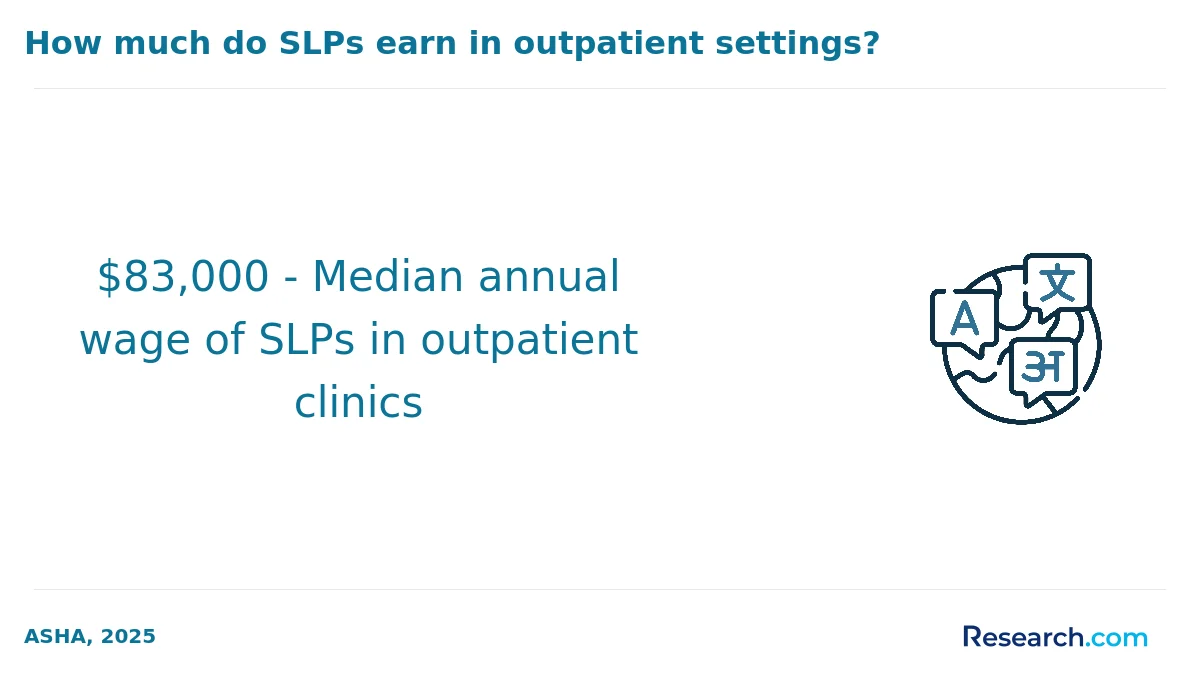
Graduates typically pursue roles such as speech-language pathology assistants, rehabilitation specialists, or communicative disorder technicians. Entry-level salaries often range from $35,000 to $50,000 annually, depending on the region and setting. While a bachelor's degree opens doors to these positions, many leadership or clinical roles in communication disorders require further certification or a master's degree.
References
- U.S. Bureau of Labor Statistics - Speech-Language Pathologists https://www.bls.gov/ooh/healthcare/speech-language-pathologists.htm
- ASHA EdFind - Accredited Speech-Language Pathology Programs https://find.asha.org/ed/
- O*NET OnLine - Speech-Language Pathologists https://www.onetonline.org/link/summary/29-1127.00
- Abilene Christian University - Master of Science in Speech-Language Pathology (Online) https://acu.edu/academics/graduate/master-of-science-in-speech-language-pathology/
- University of Wisconsin-Eau Claire - Master of Science in Speech-Language Pathology (Online) https://www.uwec.edu/speech-language-and-hearing-sciences-department/graduate-program/speech-language-pathology-online
- California State University-Northridge - Master of Science in Communicative Disorders (Online) https://tsengcollege.csun.edu/programs/CDS
- Pennsylvania Western University - Master of Science in Speech-Language Pathology https://online.pennwest.edu/programs/speech-language-pathology-grad/index.php
- University of Nebraska at Kearney - Speech-Language Pathology, Master of Science in Education (Online Track) https://www.unk.edu/online/degrees-programs/speech-language-pathology-online.php