2027 Choosing an Online BA in Psychology - Addictions for a Future Clinical Mental Health Counseling Application: Prerequisites to Compare
Audited and Verified:
Our Editorial and Data Verification Process
Research.com uses government datasets, official education statistics and primary institutional information to support its career and degree guides. Our review process checks factual accuracy, occupational definitions, source dates and the requirements associated with the credentials discussed.
How This Article Was Fact-Checked
Our editorial team verifies salary estimates, employment projections, education requirements and program information against original data providers and official organizations. Salary figures are checked against the relevant occupational definitions and reporting periods. Information about licensure, accreditation and required in-person training is reviewed separately.
Fact-checked and verified on:

Co-Founder and Chief Data Scientist
An online psychology BA with an addictions focus can be a sensible first step toward clinical mental health counseling - but the concentration name will not tell you whether it meets a master's program's prerequisites. This guide is for prospective and returning undergraduates planning to apply to a US counseling master's program. It explains which courses and experiences to compare, how to check accreditation and online requirements, and when a different bachelor's pathway may be more efficient. The goal is to choose undergraduate study that strengthens your application without paying for a specialization you do not need.
Key Things You Should Know
- A counseling master's may accept applicants from multiple undergraduate majors; check each target program's actual course requirements before choosing an addictions concentration.
- Prioritize a solid psychology foundation, statistics and research methods, relevant supervised nonclinical experience, and opportunities to earn strong recommendations.
- An accredited psychology BA can support an application, but it does not itself qualify you to provide therapy; compare the future master's program and state licensure requirements separately.
What is an online psychology addictions bachelor's degree?
It is usually a bachelor of arts in psychology with an addictions concentration, emphasis, or group of electives. Students study psychological science alongside subjects such as substance use, prevention, recovery, and behavioral health. Schools use these labels differently: an advertised "focus" might be a formal credential on the transcript or simply a suggested course selection.
The degree is undergraduate academic preparation, not a substance use counselor credential or a clinical training program. When reviewing addiction psychology bachelor's degree planning, check the actual catalog and transcript designation rather than relying on the program title. A general psychology BA with well-chosen electives may serve the same graduate-school goal.
Can this degree prepare you for a clinical mental health counseling master's?
Yes, if it supplies the prerequisites and evidence of readiness sought by your target programs. Some clinical mental health counseling master's programs consider applicants from many majors; others specify introductory psychology, statistics, developmental psychology, abnormal psychology, or related preparation. An addictions emphasis can help you explain your interests, but it does not replace required coursework, recommendations, or relevant experience.
Admission and licensure are separate decisions. Before committing to a BA, identify master's programs that fit the state where you hope to practice. Ask each graduate program which undergraduate courses it requires and whether its training meets the relevant state's educational criteria. Compare any applicable counseling-program accreditation, such as CACREP or MPCAC, at the master's level. Budgeting for lower-cost accredited counseling degree pathways can also change how much undergraduate debt is reasonable.
What prerequisites should you compare before choosing an online program?
Start with the published admissions pages for several counseling master's programs you would realistically apply to. Requirements vary, so compare the bachelor's curriculum against those specific programs - not against a generic checklist. The table separates formal requirements from features that may strengthen an application.
| Compare | What to verify | Why it matters |
| Required courses | Named subjects, minimum grades, and whether online or transferred courses count | An appealing concentration cannot make up for a missing prerequisite. |
| Research preparation | Statistics and methods requirements or recommendations | These courses build the ability to evaluate counseling evidence. |
| Applicant evidence | Experience, references, essay, and any interview expectations | Coursework alone may not show readiness to work with people. |
| Timing | Whether prerequisites must be finished before applying or before enrollment | Course sequencing can delay an application cycle. |
For each target master's, mark every requirement as met, planned, or unresolved in your prospective BA degree plan. Request written clarification about ambiguous courses. If your interests lean toward research or nonclinical employment instead, comparing affordable graduate psychology programs is a different decision: a general psychology master's should not be presumed to satisfy counseling licensure requirements.
Yes. Confirm that the degree-awarding institution holds recognized institutional accreditation and check its standing with the accreditor or US Department of Education. This matters for the degree's recognition and can affect aid and later admissions decisions. Still, institutional accreditation does not guarantee that a particular counseling master's will accept every course or that a graduate will qualify for a state credential.
Do not look for APA accreditation as a seal of approval for a general psychology BA: APA accreditation applies to specified professional psychology training programs, not ordinary undergraduate psychology majors. Also distinguish a BA in psychology from a bachelor's designed around substance use counseling. When comparing undergraduate substance use counseling costs and outcomes, verify both the institution's accreditation and any state-specific educational rules for the addiction credential you actually want.
For a future counseling application, breadth generally matters more than a long list of narrowly branded addiction electives. Look for introductory psychology; developmental, social, and abnormal psychology; biological or health-related foundations; statistics; research methods; and coursework addressing culture and ethics. Addiction courses are most useful when they examine substance use through evidence, prevention, recovery, co-occurring concerns, and service systems - not when their titles merely sound clinical.
Check whether required courses are offered often enough to fit your timeline and whether electives can accommodate a prerequisite your target master's names. A course about assessment or counseling techniques teaches concepts; it does not authorize clinical assessment or therapy. If you are weighing other concentrations, comparing faster forensic psychology undergraduate options may clarify the trade-off: an interesting specialty is worth choosing only if it leaves room for the courses your intended graduate pathway requires.
Requirements depend on whether you are entering college, transferring, or returning with previous study. Schools may request prior transcripts, proof of secondary-school completion, and materials tied to their general undergraduate admissions policy. Some admit students to the institution before they can declare or progress in the psychology major.
Transfer students should request a degree audit that shows not just which credits were accepted, but which satisfy psychology, general education, elective, and residency requirements. Ask whether previous statistics or methods courses meet the major's rules before assuming they will shorten the path. Admission is also distinct from funding eligibility; consult aid eligibility for online substance use counseling study while confirming the aid rules for your own institution, program, and enrollment status.
Completion time depends chiefly on accepted credits that apply to the degree, remaining required courses, course availability, and how many courses you can take each term. An online format does not remove prerequisites or residency-credit rules. Ask for an individualized term-by-term plan before relying on an advertised completion timeline.
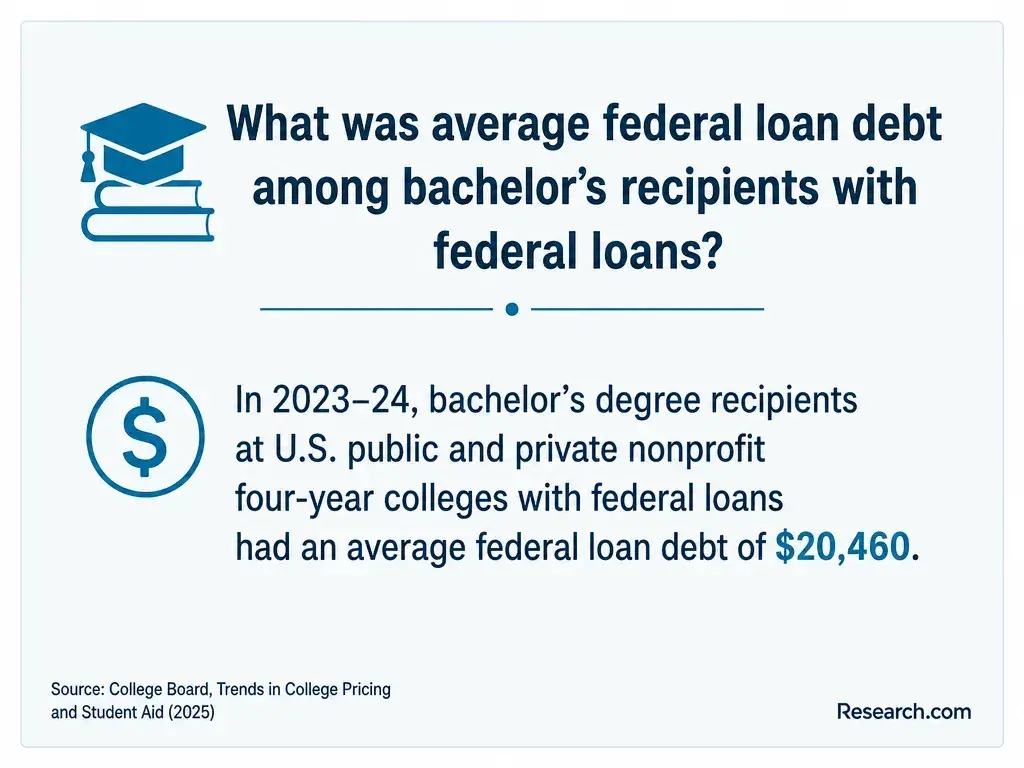
For cost, compare remaining credits multiplied by the school's applicable tuition rate, then add mandatory fees, books or software, and any travel or placement expenses. Request the same remaining-credit and total-cost estimate from each school; a low per-credit price may not be the cheapest route if fewer of your credits fulfill requirements. Cost-focused comparisons of psychology degrees are a starting point, not a substitute for your personal degree audit and aid offer.
Either format can provide appropriate undergraduate preparation if the curriculum meets your target master's requirements. The consequential differences are access to faculty, research or service experiences, and your ability to complete the schedule - not whether a lecture happens on campus.
Ask online programs which classes are asynchronous, when live meetings occur, whether exams have fixed times, and how students obtain recommendations and supervised nonclinical experience. A campus program may make it easier to join a faculty project or local organization, but its commuting and daytime demands may be harder to manage. Accelerated BA and BS psychology pathways may reduce calendar time; verify that their pace still leaves room for strong grades, relationships with instructors, and meaningful experience.
Depending on employer and state requirements, graduates may pursue nonclinical work in community outreach, recovery-service support, intake coordination, referral support, or research assistance. These roles can build communication, documentation, ethical-boundary, and evidence-evaluation skills relevant to a later counseling application. Job duties and eligibility vary; an addictions-focused BA alone does not qualify its holder to diagnose conditions or deliver independent psychotherapy.
If your immediate goal is a regulated substance use counselor role, check the state credentialing authority's education, supervised-experience, and examination rules before choosing a major. Additional study is not interchangeable across specialties: forensic psychology master's study with faster pacing, for example, should not be mistaken for a clinical mental health counseling licensure pathway.
What salary and job outlook can psychology and counseling graduates expect?
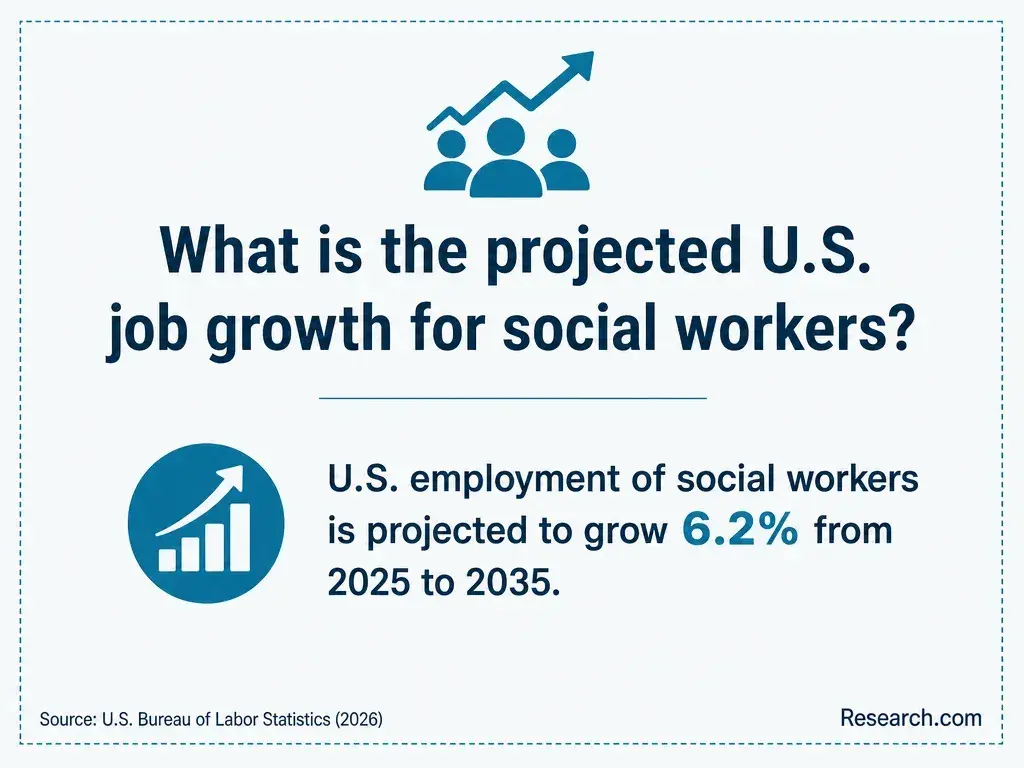
Use occupation-specific US Bureau of Labor Statistics data, not a single advertised "psychology graduate salary." Substance abuse, behavioral disorder, and mental health counselors are grouped in a BLS occupation, but its published wages and employment projections cover workers with varied credentials, experience, and duties. They are not the expected earnings or job prospects of a new psychology BA graduate - or a guarantee for someone who later completes a counseling master's.
For a financial decision, compare local openings and qualifications for the specific role you could enter after the BA with those for licensed counselors after graduate training. Then account for master's tuition, required fieldwork, possible reduced work hours, and post-degree licensure steps. Clinical counseling master's fees and graduation timelines deserve at least as much attention as the undergraduate price because the BA is only one stage of this plan.
Other Things You Should Know About Psychology
Take part in discussions, use office hours, and, where possible, complete a substantial research or writing project. Ask an instructor who can describe your work specifically rather than someone who knows only your grade.
It depends on the graduate program's GPA calculation policy. A bachelor's institution may replace a grade on its own transcript while an applicant-review process counts both attempts; ask the programs where you plan to apply.
Possibly, but confirm that the school can enroll students in your location, arrange required field placements there, and explain how its curriculum aligns with that state's licensure rules before applying.
Connect specific coursework or supervised nonclinical experience to what you hope to learn in graduate training. Describe your responsibilities accurately; do not present support, observation, or referral work as independent clinical treatment.
- Accreditation in the U.S. | ed.gov http://www.ed.gov/laws-and-policy/higher-education-laws-and-policy/college-accreditation/accreditation-in-the-us
- Online Bachelor's Degree Programs | University of Kansas https://online.ku.edu/undergraduate-programs
- How to Finish Your Degree Online | University of North Carolina Wilmington https://flex-online.uncw.edu/blog/online-degree-completion/
- New Pathways to a College Degree: How Transfer Credits Save Time | University of Arkansas Grantham https://www.uagrantham.edu/blog/transfer-college-credits-online-pathways-degree/
- Is a Master's in Counseling Competitive? | University of Bridgeport https://www.bridgeport.edu/news/how-competitive-is-a-masters-in-counseling/
- Find the Right Online Degree Program by Using a Comparison Framework | Columbia Southern University https://www.columbiasouthern.edu/blog/blog-articles/2026/august/find-the-right-online-degree-program
- Do I Need a Degree in Psychology to Apply to Graduate School? | William James College https://www.williamjames.edu/news/do-i-need-a-degree-in-psychology-to-apply.html
- Do College Credits Expire? What to Know Before You Start Over | msstate.edu https://www.cpcs.msstate.edu/news/2026/06/do-college-credits-expire
- Can You Get a Master's Degree in a Different Field Than Your Bachelor's Degree? | Siena University https://www.siena.edu/news/story/can-you-get-a-masters-degree-in-a-different-field-than-your-bachelors-degree/
- Application Instructions | College of Communication | Boston University https://www.bu.edu/com/admissions/graduate/application-instructions/