2027 Paying for an Online BA in Psychology - Addictions: Spouse Education Benefits and Degree Eligibility
Audited and Verified:
Our Editorial and Data Verification Process
Research.com uses government datasets, official education statistics and primary institutional information to support its career and degree guides. Our review process checks factual accuracy, occupational definitions, source dates and the requirements associated with the credentials discussed.
How This Article Was Fact-Checked
Our editorial team verifies salary estimates, employment projections, education requirements and program information against original data providers and official organizations. Salary figures are checked against the relevant occupational definitions and reporting periods. Information about licensure, accreditation and required in-person training is reviewed separately.
Fact-checked and verified on:

Co-Founder and Chief Data Scientist
Military spouse education benefits can make an online psychology degree affordable - but eligibility for a benefit does not mean every school, course, or career goal qualifies. If you are considering a BA with an addictions focus, you need to check both the funding rules and the degree's practical value.
This guide explains transferred GI Bill benefits, DEA, the Fry Scholarship, and MyCAA; shows how to verify program approval and estimate your remaining costs; and separates undergraduate recovery-support preparation from addiction counseling licensure.
Key Things You Should Know
- A transferred Post-9/11 GI Bill benefit, DEA, or the Fry Scholarship may support an approved online psychology BA, but each has separate spouse-eligibility and payment rules; MyCAA generally is not a funding route for a bachelor's degree.
- Confirm the exact degree and school with the VA and the school's certifying official before enrolling. Institutional accreditation alone does not establish VA approval or addiction counseling licensure eligibility.
- Compare the school's remaining credits and full charges with your individual benefit entitlement. An addictions-focused BA can prepare you for some support roles, but counseling credentials depend on state rules and often require further education or supervised experience.
What spouse education benefits can pay for an online bachelor's degree in psychology?
The most relevant federal pathways are a service member's transferred Post-9/11 GI Bill entitlement, Survivors' and Dependents' Educational Assistance (DEA, or Chapter 35), and, for eligible surviving spouses, the Fry Scholarship. The Department of Defense's My Career Advancement Account (MyCAA) can support certain portable-career training for eligible spouses, but it generally does not pay for a bachelor's degree. A school may also offer institutional aid, and eligible students can apply for federal student aid separately.
These benefits do not work like interchangeable tuition vouchers. This comparison identifies the question to settle before using a benefit for an online BA.
| Benefit | How it may help | Critical check |
| Transferred Post-9/11 GI Bill | May pay eligible tuition and fees to the school and provide other applicable allowances. | Confirm an approved transfer, remaining entitlement, benefit percentage, school charges, and online housing-allowance rules. |
| DEA (Chapter 35) | Generally provides a monthly education payment to an eligible dependent enrolled in approved training. | Confirm personal eligibility, remaining months, and whether the payment will cover actual tuition and living costs. |
| Fry Scholarship | May provide Post-9/11 GI Bill-style education benefits to an eligible surviving spouse. | Confirm eligibility and how an election between potentially available survivor benefits would affect you. |
| MyCAA | May help with an eligible associate degree, license, or certification pathway. | Do not budget it as BA tuition without confirmation from the program administrator. |
If finishing quickly would conserve months of entitlement, examine course availability before choosing a faster term schedule. Accelerated psychology curriculum planning is useful only if the pace is sustainable and your benefit covers the resulting enrollment pattern. An unpaid placement, childcare, and technology costs can change the better choice for a military household.
Who qualifies for transferred GI Bill, DEA, or Fry Scholarship benefits?
The service member must qualify for the Post-9/11 GI Bill and obtain Department of Defense approval to transfer entitlement while eligible to do so; a spouse cannot initiate a new transfer after the member has left service. Service and additional-service conditions can apply. The spouse then applies to the VA to use the transferred benefit. Ask the service member to confirm the approved allocation and ask the VA to confirm your usable entitlement and applicable dates.
Spouse eligibility generally arises from a qualifying service-connected death or a veteran's permanent and total service-connected disability, among other qualifying circumstances. This is a separate survivor benefit tied to qualifying deaths in the line of duty. Neither survivor benefit is available simply because your spouse served or has a disability rating. If you may qualify for both, obtain individualized VA guidance before electing one; choices and concurrent-use restrictions can have lasting consequences.
Benefit eligibility belongs to the person, while degree approval belongs to the educational program. Once you establish which benefit is available, compare online psychology study and degree choices against your actual entitlement - not a school's general "military-friendly" description.
Does an online psychology program qualify for VA education benefits?
Online delivery does not automatically disqualify a psychology BA. The decisive issue is whether the school and the specific program at your enrollment location are approved for the VA benefit you intend to use. A university's accreditation, a different program's approval, or an admissions adviser's assurance is not a substitute for program-specific confirmation.
Before paying a deposit, use the VA's school-comparison resources and ask the school certifying official to confirm the exact degree, concentration if formally recorded, approved online format, tuition and mandatory fees, enrollment requirements, and any courses that will not count toward the degree. Request the answer for your intended entry term. Discuss any planned transfer credits and whether a required internship, examination, or campus visit changes the cost or schedule.
With transferred Post-9/11 GI Bill benefits, fully online study can produce a different monthly housing allowance from eligible in-person study, and enrollment intensity matters. A spouse using transferred benefits while the service member is on active duty generally cannot receive the monthly housing allowance. Compare approved addiction psychology BA and BS degree options on these operational details, not just the concentration name.
There is no reliable single price for an online addictions-focused psychology BA. Your cost depends on the school's charge per credit or term, accepted credits that actually satisfy degree requirements, required fees, and your benefit's payment method and remaining entitlement. A published tuition rate is a starting input, not a net-price quote.
Use this cost breakdown to compare offers on the same basis. Ask each school for a written degree audit and a term-by-term estimate rather than multiplying an advertised rate by an assumed number of credits.
| Cost component | What to obtain from the school | Why it changes your decision |
| Remaining tuition | Credits still required after an official evaluation and the rate that applies to you | Accepted credits may not fulfill the psychology major or residency requirement. |
| Mandatory expenses | Technology, course, graduation, and other required fees | A benefit may treat these differently from optional expenses. |
| Applied learning | Any placement, travel, background-check, or supervision requirements | An online course may still create local, scheduled obligations. |
| Household gap | Expected benefit payments by term and charges due before reimbursement | Cash-flow timing matters even when aid eventually covers part of the bill. |
DEA's payment to the student may leave a larger tuition bill to pay directly than a transferred GI Bill arrangement, even if both benefits can be used at the school. Request a financial aid estimate and review financial aid planning for a substance use counseling bachelor's for additional funding questions. Confirm how any grants, scholarships, or school military discounts interact with your specific VA benefit before counting them twice.
Choose a school with institutional accreditation recognized by the U.S. Department of Education. Verify the institution and its current status through the accreditor and federal accreditation records. This is important for educational quality controls, federal aid eligibility, and later review of transfer or graduate applications - but accreditation does not ensure that another school will accept credits.
Do not require APA accreditation for a general undergraduate psychology BA: APA's professional accreditation is not a blanket designation for bachelor's psychology majors. Equally, institutional accreditation does not certify that an addictions concentration meets your state's addiction counselor standards. If counseling is the goal, compare the program's documented curriculum and supervised-experience opportunities with state rules; an addiction counseling program selection guide can help frame that separate search. Verify VA approval independently of accreditation.
A psychology BA usually combines general education with psychology foundations such as developmental, social, biological, and abnormal psychology, plus statistics and research methods. An addictions focus may add courses on substance use, prevention, recovery, co-occurring conditions, and community services. The label may mean a formal concentration at one school and only a set of electives at another; obtain the catalog requirements rather than assuming the transcript will name a specialization.
Prioritize methods and statistics if you may later pursue research-oriented study, and look for instruction in evidence appraisal, cultural responsiveness, confidentiality, and referral boundaries if you want community-facing work. An undergraduate internship may involve supervised outreach, documentation, or service coordination; it is not automatically a clinical practicum. If a future nonclinical master's is part of your plan, compare its prerequisites before selecting BA electives. Fast-track graduate psychology programs still differ in research preparation and do not, by speed or title, establish a counseling-licensure pathway.
First-time applicants commonly need evidence of secondary-school completion and the institution's application materials. Transfer applicants generally submit transcripts from every prior college; schools may set separate admission or progression standards for the psychology major. Requirements for GPA, prior coursework, and application deadlines vary, so use the rules for your entry term.
If you have previous college or military learning, ask for an official evaluation showing not only credits accepted but also which general education, psychology, statistics, and residency requirements remain. That distinction affects both completion time and benefit usage. Ask admissions about asynchronous classes, live meetings, proctored exams, and placement requirements before committing to a schedule shaped by moves or caregiving.
Admission to this BA should not be confused with admission to a professional counseling master's. If that is your eventual target, review the separate prerequisites and placement demands illustrated by shorter accredited clinical mental health counseling study plans before assuming the BA alone completes your professional preparation.
A conventional bachelor's curriculum is often designed around four years of full-time study, but your remaining time depends on the official degree audit, course sequence, enrollment pace, and when required classes are offered. Transfer credits can shorten the path only when they apply to requirements; part-time study, prerequisite sequencing, or a limited-term capstone can extend it.
Ask an adviser to map every remaining requirement onto actual upcoming terms, then have the certifying official check how that schedule affects your benefit. Taking extra courses to maintain enrollment intensity may cost entitlement without advancing graduation. Published forensic psychology undergraduate graduation timelines describe a different specialization; they are not evidence that your addictions-focused BA can follow the same schedule. A workable plan should also account for duty-station moves, childcare, and any fixed-time field experience.
The BA can support applications for nonclinical work such as behavioral-health outreach, recovery-service coordination, intake support, and human-services program assistance. Employers may also value prior military-family navigation, community service, administration, or data skills. Duties and entry requirements differ by employer and state; the degree alone does not confer a protected clinical title.
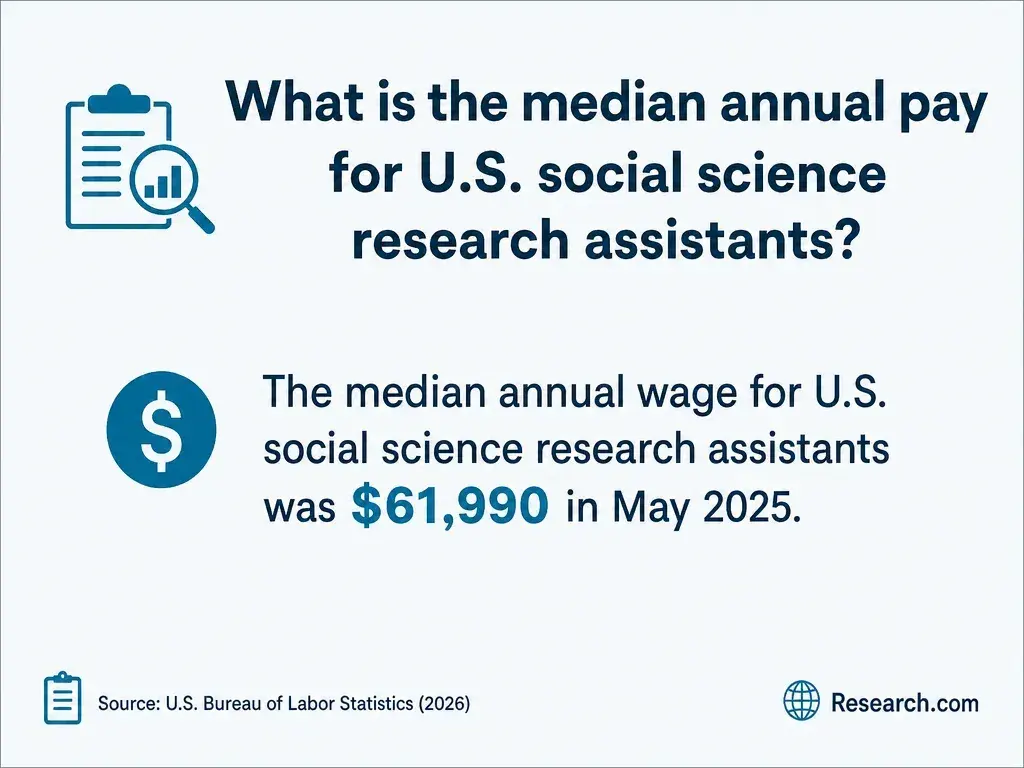
Salary comparisons need particular care. The U.S. Bureau of Labor Statistics reports a median annual wage of $59,190 in May 2024 for the combined occupation of substance abuse, behavioral disorder, and mental health counselors. That is an occupation-wide median, not an expected starting salary for psychology BA graduates; positions in that group can require different education and credentials. For a more useful estimate, compare local postings for a specific entry-level role with the skills you already have. Understanding career progression in addiction recovery can help you distinguish support work from credentialed counseling.
Does a bachelor's degree in psychology qualify you for addiction counseling licensure?
Not automatically. States set their own addiction counselor titles and requirements, which may include specified addiction coursework, a qualifying degree, supervised experience, an examination, and an application. Some jurisdictions offer credential levels with different educational thresholds. A BA concentration's name - or a course covering treatment - does not authorize independent counseling, diagnosis, or psychotherapy.
Before selecting a degree, find your intended state's licensing or certification board requirements for the exact job title you want. Ask the board or credentialing authority whether this program's courses would count, what supervision must occur after enrollment or graduation, and whether online coursework is accepted. Ask the school for written documentation of its curriculum and any state-specific disclosures; do not rely on a broad claim that graduates can work in addictions.
If your goal is licensed mental health counseling rather than a state addiction-specific credential, a qualifying counseling graduate program may be the more direct next educational step. Compare accreditation, state eligibility, and supervised-placement requirements - not just duration - when considering faster-paced online mental health counseling master's study. A less costly peer-support credential or employer training may be more appropriate if your target is nonclinical recovery support.
Other Things You Should Know About Psychology
Yes. Submit the FAFSA if you want to be considered for eligible federal student aid. Ask the school's financial aid office how its aid offer and your VA benefits will be coordinated.
Possibly, but check the school's leave, withdrawal, and course-sequencing policies first. A schedule change can affect future classes and benefit certification; tell the school certifying official before withdrawing.
It may evaluate prior college courses and documented military learning, but acceptance is not automatic. Request an official degree audit showing which requirements each awarded credit satisfies.
Do not assume an approved U.S. online program permits enrollment from every location. Check the school's location restrictions, access to required activities, and benefit certification rules for your circumstances before relocating.
- Education And Career Benefits For Family Members | Veterans Affairs https://www.va.gov/family-and-caregiver-benefits/education-and-careers/
- School Program Approval - Education and Training https://www.benefits.va.gov/GIBILL/school_program_approval.asp
- How to Transfer and Use Benefits | osd.mil https://milconnect.dmdc.osd.mil/milconnect/public/faq/Education_Benefits-How_to_Transfer_Benefits
- SpouseWorks Scholarship (formerly MyCAA) | militaryonesource.mil https://www.militaryonesource.mil/benefits/spouseworks-scholarship/
- Packaging Aid | 2025-2026 Federal Student Aid Handbook https://fsapartners.ed.gov/knowledge-center/fsa-handbook/2025-2026/vol3/ch3-packaging-aid
- Active Duty Military and Military Spouses and Dependent Residency Exception | UAMS Student Financial Services https://students.uams.edu/financial-services/bursars-office/tuition-discounts-waivers-and-residency-exceptions/active-duty-military-and-military-spouses-and-dependent-residency-exception/
- State Authorization and Programmatic Licensure | Golden Gate University https://ggu.edu/state-authorization-and-program-licensure/
- Education Benefits for Military Spouses | Purdue Global https://www.purdueglobal.edu/military/military-spouses/
- Survivors and Dependents Educational Assistance, Chapter 35 | gmu.edu https://military.gmu.edu/va-benefits/va-benefits-chapters/survivors-and-dependents-educational-assistance-chapter-35
- Online Degrees for Veterans | Online, In-person, or On-base | National University https://www.nu.edu/military-and-veterans/veterans/