2027 Online BA in Psychology - Addictions After a Competency-Based College Transcript: Compare Transfer Credit and Remaining Coursework
Audited and Verified:
Our Editorial and Data Verification Process
Research.com uses government datasets, official education statistics and primary institutional information to support its career and degree guides. Our review process checks factual accuracy, occupational definitions, source dates and the requirements associated with the credentials discussed.
How This Article Was Fact-Checked
Our editorial team verifies salary estimates, employment projections, education requirements and program information against original data providers and official organizations. Salary figures are checked against the relevant occupational definitions and reporting periods. Information about licensure, accreditation and required in-person training is reviewed separately.
Fact-checked and verified on:

Co-Founder and Chief Data Scientist
A competency-based transcript can represent substantial college learning without showing the conventional course grades or credit hours a transfer evaluator expects. If you are considering an online BA in psychology with an addictions concentration, the decision is not simply whether your credits transfer. It is whether they satisfy the right requirements and leave a realistic, affordable path to graduation.
This guide explains how to document your prior learning, compare degree audits, identify remaining psychology and addictions coursework, and check whether the program fits your career goal.
Key Things You Should Know
- Accepted transfer credit and degree-applicable credit are different. A school may accept competency-based work as electives without using it to satisfy statistics, research methods, or concentration requirements.
- Use a written, requirement-by-requirement degree audit, not a transfer-credit total, to compare remaining courses, prerequisites, residency rules, and the cost of finishing.
- An addictions concentration can support nonclinical service work, but a psychology BA alone does not authorize addiction counseling, psychotherapy, or diagnosis; credential rules depend on the state and role.
What is an online BA in psychology with an addictions concentration?
It is a bachelor of arts degree that combines a psychology major with a defined group of courses focused on substance use, prevention, recovery, and related service systems. The concentration may be formally recorded on the transcript, or a school may offer only addictions-related electives. Confirm which applies: an elective cluster is not necessarily an awarded concentration.
For a transfer student, the distinction affects the degree audit. Prior coursework might satisfy general psychology requirements but leave every concentration course outstanding. It may also affect scheduling if specialized courses are offered less often than the major's core courses.
Compare online study options for addiction counseling if your target occupation specifically requires counseling education; a psychology concentration and a counseling-oriented program may serve different purposes.
How does a competency-based college transcript affect transfer credit evaluation?
Competency-based education awards academic credit through demonstrated mastery rather than necessarily through conventional scheduled classes. An evaluator still needs to determine the level, subject, amount, and comparability of that learning. A transcript showing a competency title and a pass result may not, by itself, establish equivalence to a particular psychology course.
Gather the official transcript, the catalog applicable when you studied, course or competency descriptions, learning outcomes, assessments, and any document explaining how the college assigned credits and grades. If relevant, include a statistics syllabus or substantial assessment description.
The receiving institution's registrar or transfer-credit office decides what it accepts; the psychology department may separately decide whether accepted credit replaces a major requirement. Ask for both decisions in writing.
Watch for credits awarded by examination or other prior-learning assessment that appear on your former college's transcript. The new school may evaluate those credits under a different policy from courses completed at that college.
Its rules may also address duplicate learning, minimum grades, and whether older methods coursework is sufficiently comparable. For a broader explanation of using previous coursework toward a psychology degree, keep the same distinction in mind: posting credit is not the same as completing a requirement.
How many credits can transfer, and what coursework remains for graduation?
No reliable number follows from the transcript format alone. The receiving school must apply its transfer maximum, major rules, general education requirements, minimum grades, and residency requirement to your record. Residency means credits that must be completed at the degree-granting institution; it does not necessarily mean living on campus.
The following illustrative example, not a program estimate, shows why the accepted-credit total can mislead. Its figures are hypothetical and should not be used to predict your evaluation.
| Illustrative audit item | Credits | What it means |
| Credits required for the BA | 120 | Hypothetical graduation total |
| Prior credits accepted | 75 | Posted to the new transcript |
| Accepted credits applicable to this degree | 54 | Used in the hypothetical degree plan |
| Credits still needed under this audit | 66 | May include major, concentration, general education, and residency work |
The difference between accepted and applicable credit can arise from excess electives, repeated subjects, or credits that do not meet a specific requirement. Even the illustrated remaining total would need a course-by-course check: prerequisite order and course availability can extend completion beyond what simple division by a full-time credit load suggests.
Request an audit that identifies each unmet requirement, approved substitution, minimum upper-division credit, and required in-residence course. Compare that audit with any accelerated online psychology degrees on remaining required work, not advertised speed. Seek a written appeal or departmental review if a well-documented competency appears equivalent to a required course.
Accreditation must be checked for the institution offering the degree; the words "online" and "addictions concentration" do not establish it. Confirm the school's current institutional accreditation and that the online BA and concentration are actually offered for your intended entry term. Also check whether the institution is authorized to enroll students where you live.
Do not treat a claim of "APA-accredited psychology" as proof about this BA. American Psychological Association accreditation applies to specified professional psychology training programs and internships, not general undergraduate psychology degrees.
Nor does institutional accreditation establish that an addictions concentration meets a particular state's counselor-credential requirements. When comparing online psychology programs and academic pathways, verify accreditation scope and credential fit separately.
A typical degree plan combines general education, a psychology core, concentration coursework, and electives, but actual requirements vary. Psychology study may include introductory psychology, development, abnormal psychology, statistics, and research methods.
Addictions coursework may address substance-use science, prevention, recovery systems, and ethics. Studying assessment or treatment concepts does not qualify an undergraduate to perform restricted clinical work.
For a competency-based transfer applicant, statistics and research methods deserve separate equivalency reviews. A prior data-analysis competency might count as an elective yet lack the inferential statistics required before research methods.
Similarly, a broad behavioral-health competency may not replace a specified addictions course. Ask which courses are prerequisites, which are available online each term, and whether any applied experience requires an approved site or scheduled meetings.
Choose electives for your actual next step. A student aiming for a research-oriented graduate program may need stronger methods preparation than one seeking a nonclinical recovery-services role.
If forensic psychology is instead your intended graduate specialization, evaluate its distinct prerequisites and accelerated forensic psychology master's costs and outcomes rather than assuming addictions electives will serve the same plan.
Admission to the university, acceptance of transfer credit, and entry into the psychology major can be separate decisions. Schools commonly request an application and official transcripts; a particular program may also set a transfer GPA, minimum completed credits, or major-entry conditions. A competency-based transcript's pass or mastery marks may require a school-specific GPA interpretation rather than a conversion you calculate yourself.
Before applying, ask admissions whether your prior college and credential are eligible for review, how pass-graded work affects admission, and whether you can receive a preliminary transfer evaluation. Then ask the department whether admission to the major is automatic or conditional on completing introductory, statistics, or other prerequisite coursework. A preliminary estimate may change when official records arrive.
If you already hold a bachelor's degree, confirm whether a second BA is necessary for your goal. Targeted prerequisites or fast-track graduate psychology programs may be more direct, provided you meet their actual admissions requirements and they fit the work you want to do.
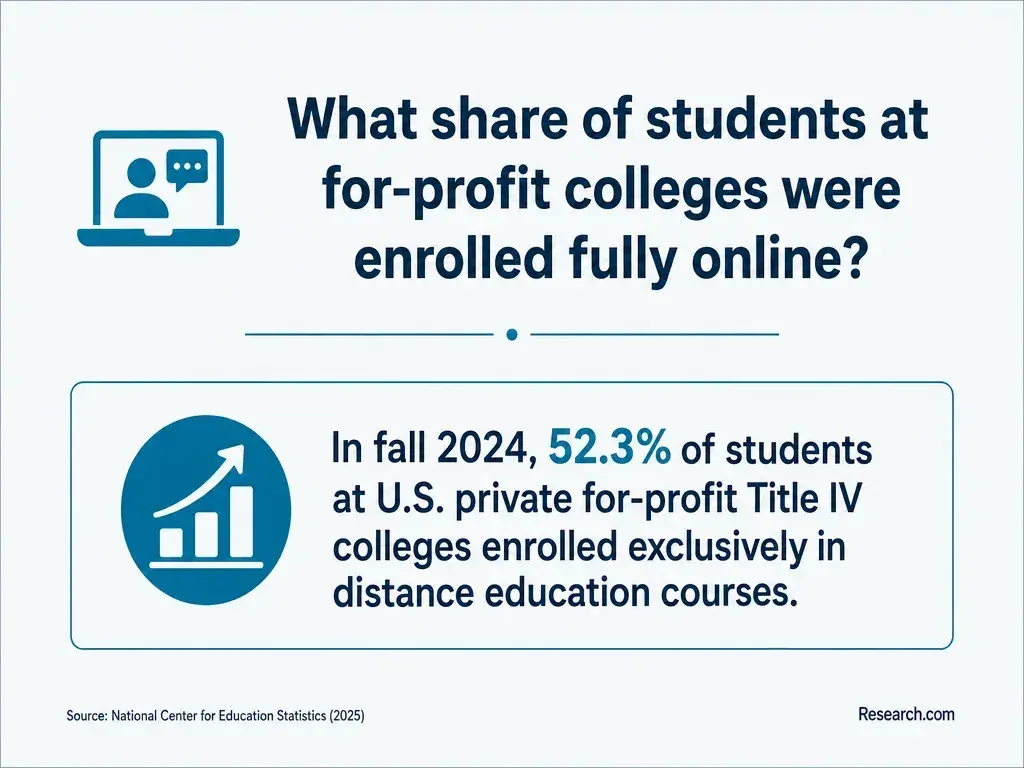
Time and cost depend on the audited courses still required, not just the credits a school accepts. Build a term-by-term plan that includes prerequisite sequencing, the frequency of concentration courses, any internship or capstone, and the pace you can sustain. Online classes may still involve live meetings, group work, or fixed placement hours.
For each school, calculate estimated tuition from its published rate and the credits you would need to take there, then add mandatory fees, materials, and any placement-related travel or lost work time. Confirm whether tuition is charged per credit, course, or term before comparing offers.
Ask the financial-aid office how your enrollment load, satisfactory academic progress, and remaining aid eligibility affect the plan. When evaluating borrowing, review grants versus loans for substance abuse counseling bachelor's students; aid eligibility and awards must be determined for your own program and circumstances.
A faster schedule is valuable only if required courses are available when needed and the added workload is manageable. Obtain a priced, term-by-term graduation plan before committing, especially if a higher-priced school accepts more credits but applies fewer of them to the degree.
The degree may support applications for nonclinical positions in behavioral-health or community organizations, such as intake coordination, program support, recovery-service administration, outreach, and some case-coordination roles.
Duties might include documenting service needs, helping people navigate referrals, supporting prevention activities, or tracking program information. Employers may require additional experience, background checks, or a specific credential.
Use job postings in your intended location to test the degree's value. Compare required education and credentials with the work you already know how to do, then look for supervised experience that fills genuine gaps. If you have community-service experience, a workplace project may be useful, but do not assume existing employment automatically satisfies an academic placement.
Justice-system victim support is a different target from substance-use services. If that is your goal, comparing costs across forensic psychology degree routes may be worthwhile, but first check whether relevant employers actually require another degree. Neither concentration grants clinical or investigative authority.
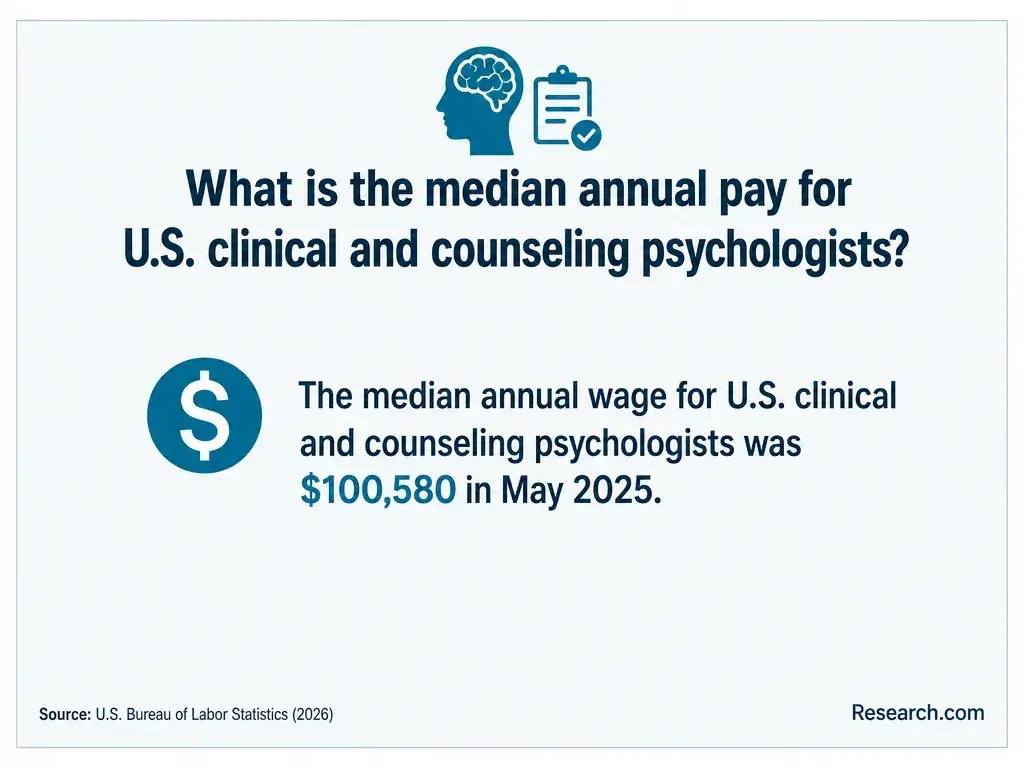
There is no single authoritative salary or growth rate for "addictions psychology BA graduates." Pay depends on the occupation, location, employer, duties, experience, and credentials. The U.S. Bureau of Labor Statistics reports occupation-wide wages and projections, not outcomes for graduates of a particular concentration.
Its substance abuse, behavioral disorder, and mental health counselor category may describe a future licensed or otherwise qualifying counseling role, but should not be presented as the expected pay for a new BA graduate in intake or program support.
For a useful comparison, identify a specific job title you would seek immediately after graduation, read local postings for its credential requirements and pay range, and compare those with your audited education cost. If your financial plan relies on later becoming a licensed counselor, include the cost and time of qualifying graduate education.
Compare affordable accredited mental health counseling study options as a separate pathway, not as an automatic outcome of this BA.
What licenses or certifications require education beyond this bachelor's degree?
A psychology BA with addictions coursework does not itself license someone to diagnose conditions, provide psychotherapy, practice independently as a psychologist, or use a protected counselor title. Licensed psychologist roles generally require doctoral-level professional preparation and additional jurisdictional requirements. Licensed professional counseling and clinical social work follow distinct qualifying degree and supervised-practice routes.
Addiction-counselor credentials are particularly state-specific: some have multiple credential levels, with differing degree, approved-coursework, supervised-hours, and examination requirements. A bachelor's degree may be relevant to one level without satisfying another.
Peer-support credentials are also distinct from clinical licensure and may have their own training and experience rules. Before choosing a concentration, obtain the current requirements directly from the board or certifying body for the state and job title you intend to pursue.
If your ultimate goal is licensed mental health counseling, investigate accredited clinical counseling timelines for working students and check whether this BA supplies useful preparation or merely adds time before a qualifying graduate program. Do not count undergraduate addictions courses or a nonclinical placement as substitute license-supervised clinical training without the responsible regulator's approval.
Other Things You Should Know About Psychology Programs
It may help an advisor discuss possibilities, but an official evaluation usually requires records sent through the school's accepted process. Do not plan graduation around an informal estimate.
Ask its state higher-education agency or designated records custodian how to obtain an official transcript. Preserve any available catalogs and competency descriptions for the receiving school's review.
Possibly, but obtain written preapproval of the exact course and its intended degree requirement first. Schools can limit outside credit earned after matriculation.
That depends on the institution. Ask whether it appears on the diploma, official transcript, both, or neither, and confirm that the concentration is formally awarded rather than simply recommended coursework.
- Cost of Attendance (Budget) | 2025-2026 Federal Student Aid Handbook https://fsapartners.ed.gov/knowledge-center/fsa-handbook/2025-2026/vol3/ch2-cost-attendance-budget
- Certified Addiction Counselor (CAC) clinical training program | colorado.gov https://bha.colorado.gov/for-service-providers/learning-and-development/certified-addiction-counselor-cac-clinical-training
- Direct Assessment (Competency-Based) Programs | ed.gov http://www.ed.gov/laws-and-policy/higher-education-laws-and-policy/higher-education-policy/direct-assessment-competency-based-programs
- Undergraduate Degree and Program Requirements | CSUSB https://catalog.csusb.edu/undergraduate-degree-programs/undergraduate-degree-program-requirements/
- Transfer Credit Evaluation | Mercy University https://mercy.edu/admissions-aid/transfer-admissions/transfer-credit-evaluation
- Applied Psychology: Addictions Studies, B.S. - CPS, CPSO | University of New Hampshire https://www.unh.edu/program/bachelor-science/applied-psychology-addictions-studies
- Transfer Credit Policies and Processes - The College | UVA College of Arts & Sciences https://college.as.virginia.edu/transfer-credit-policies-and-processes
- Competency Based Education - Online Learning | UMass Global https://www.umassglobal.edu/blog-news/competency-based-education-9-things-know-self-paced-online-learning
- Degree Requirements - Academic Catalog https://coursecat.isu.edu/undergraduate/degreerequirements/