
2027 How to Become a Financier: Step-By-Step Guide

Co-Founder and Chief Data Scientist
Becoming a financier is not one single career path. It can mean helping a family build a debt-reduction plan, advising a company on capital strategy, managing investment portfolios, analyzing credit risk, or guiding executives through major financial decisions. The right route depends on the type of finance work you want to do, the credentials employers expect, and how much responsibility you want to carry.
This guide is for students, career changers, and working professionals who want a practical roadmap into finance. You will learn what financiers do, which finance roles pay the most, what education and certifications can help, how technology is changing the field, and how to choose a finance degree without overpaying. The goal is simple: help you decide whether this career fits your strengths, goals, and risk tolerance.
Finance skills matter because money decisions are becoming more complex for both households and organizations. In 2025, the average debt for adults in the U.S. was around $104,755. That reality creates demand for professionals who understand budgeting, debt management, investment risk, compliance, and long-term financial planning.
How to Become a Financier: Table of Contents
- Why pursue a career in finance?
- Finance career outlook
- Required skills for financiers
- How to start your career in finance
- How can I advance my career in finance?
- Alternative career options for financiers
- How can networking and mentorship accelerate career growth in finance?
- Should pursuing a doctoral degree enhance my finance career?
- What challenges should financiers be prepared to face?
- How do ethics and compliance influence career success in finance?
- What emerging skills are critical for modern financiers?
- What should I consider when choosing a business degree for a finance career?
- How can technology and automation shape the future of finance careers?
- How do global trends impact the role of financiers?
- How can ESG considerations shape investment strategies?
- What are the benefits of pursuing an accelerated finance degree?
- How to find affordable finance degree programs
Quick Answer: How Do You Become a Financier?
To become a financier, you usually need a bachelor’s degree in finance, accounting, economics, business administration, or a closely related field. From there, you can specialize in areas such as financial analysis, wealth planning, investment management, banking, corporate finance, or risk management. Many professionals strengthen their prospects with certifications such as the Chartered Financial Analyst (CFA), Certified Financial Planner (CFP), or Financial Risk Manager (FRM), depending on their target role.
The fastest practical path is to earn a relevant degree, build spreadsheet and financial modeling skills, complete internships or entry-level analyst work, and pursue certifications only after you know which finance specialty you want. A certificate alone may help with support roles, but a bachelor’s degree is typically the baseline for most finance careers.
Why Pursue a Career in Finance?
A financier is a professional who helps allocate, protect, grow, or manage money. The work may involve raising capital, evaluating investments, advising clients, forecasting cash flow, planning budgets, negotiating transactions, or identifying financial risks. Some financiers work with individuals and families; others support corporations, governments, nonprofit organizations, banks, investment firms, or insurance companies.
The appeal of finance is that it combines analysis with decision-making. You are not only reading numbers; you are using them to answer high-stakes questions. Should a business expand? Is a loan too risky? Is a portfolio too exposed to market volatility? Can a family retire on schedule? Should a company acquire another business?
Finance also offers multiple career lanes. A student interested in building companies may pair finance training with a business entrepreneurship degree online. A working professional aiming for executive-level business knowledge may later compare online doctorate of business administration programs. The key is to match your education with the type of finance decisions you want to make.
Financiers are especially valuable when people or organizations face complicated trade-offs. Individuals may need help with debt, savings, retirement, taxes, or investment allocation. According to the article’s cited YouGov data, 27% of Americans are working with financial advisors, and trust is a major factor in that relationship. Businesses, meanwhile, rely on finance professionals to secure funding, control costs, comply with regulations, and plan growth without taking unnecessary risks.
Finance Career Outlook
The finance field remains broad because nearly every organization needs people who can interpret financial data and make sound money decisions. Opportunities exist in banking, corporate finance, investment firms, insurance, consulting, government, nonprofit finance, fintech, and independent advisory work. Finance and business are often included among the best degrees that pay well because many roles connect directly to revenue, risk, capital, and strategy.
Finance is also global. Professionals who understand international markets, foreign exchange, cross-border regulation, and geopolitical risk can be better positioned for multinational employers or organizations investing outside their home market. International experience is not required for every finance job, but it can become an advantage in investment banking, corporate finance, risk, treasury, and global asset management.
Salary and demand vary significantly by role, employer, location, credentials, and experience. The figures below should be read as reference points rather than guarantees.
| Finance Role | Average Salary | Demand Growth |
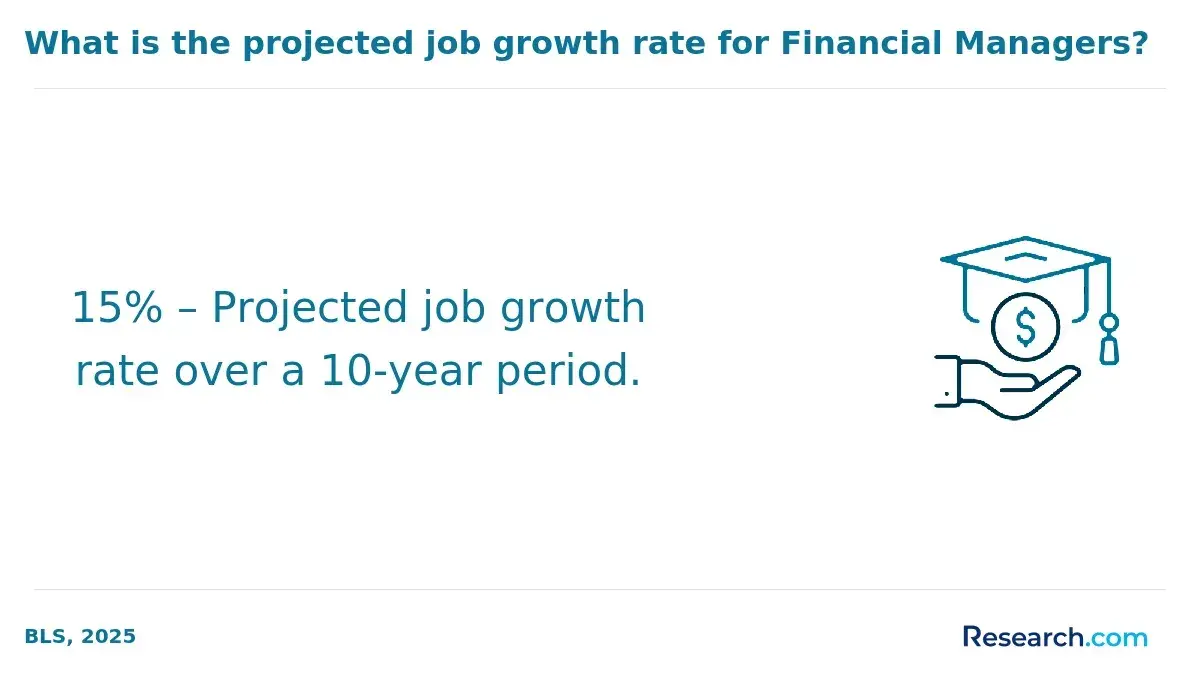
| Financial Manager | $180,470 | 15% |
| Investment Banker | $118,333 | 3% |
| Portfolio Manager | $100,458 | 15% |
| Risk Manager | $103,704 | 15% |
What the Outlook Means for Students and Career Changers
The strongest finance candidates usually combine technical ability with business judgment. Employers may be willing to train early-career employees on specific systems, but they expect candidates to understand financial statements, Excel or spreadsheet modeling, basic accounting, risk, and communication. If you are switching careers, your prior experience can still help if it connects to operations, sales, data analysis, compliance, accounting, real estate, technology, or management.
Required Skills for Financiers
Finance work rewards precision. A small modeling error, misunderstood regulation, or weak risk assumption can affect budgets, investments, loans, or strategic decisions. Successful financiers need both hard analytical skills and the professional judgment to explain uncertainty honestly.
Core Technical Skills
| Skill | Why It Matters | Where You Use It |
| Financial analysis | Helps you interpret statements, ratios, cash flow, valuation, and performance trends. | Corporate finance, banking, investment analysis, portfolio work, consulting |
| Quantitative reasoning | Supports forecasting, statistical analysis, scenario testing, and risk evaluation. | Risk management, asset management, financial modeling, credit analysis |
| Regulatory knowledge | Finance professionals must understand rules affecting markets, products, reporting, client advice, and compliance. | Banking, advisory services, securities, insurance, corporate finance, business careers |
| Business acumen | Numbers only make sense in context. Financiers must understand operations, strategy, competition, and industry economics. | Management finance, entrepreneurship, private equity, real estate, corporate planning |
| Risk management | Helps identify market, credit, liquidity, operational, and compliance risks before they become costly problems. | Banking, insurance, enterprise risk, portfolio management, treasury |
Specialized business knowledge can also widen your options. For example, combining finance training with an online real estate bachelor’s degree can be useful for careers in property investment, mortgage finance, development analysis, or real estate asset management.
Professional Skills Employers Look For
- Technology proficiency: Finance teams increasingly use analytics platforms, financial software, databases, electronic trading systems, reporting tools, and automation. This is important for finance majors and for graduates with broader business degrees.
- Problem-solving: Financiers often work with incomplete information. You must be able to compare options, test assumptions, and make recommendations despite uncertainty.
- Clear communication: Strong finance professionals can explain complex ideas to non-finance audiences, including clients, executives, regulators, and operating teams.
- Ethical judgment: Finance professionals may handle confidential data, client assets, investment recommendations, and corporate decisions. Understanding business ethics for financiers is essential for long-term credibility.
- Continuous learning: Markets, regulations, technology, and financial products change. Professionals who keep learning are better prepared for promotion and specialization. Even questions such as how to become a banker without a degree can lead to useful insight about alternative entry points and employer expectations.
How to Start Your Career in Finance
Most finance careers start with formal education, practical experience, and a clear specialty. Employers often prefer candidates with at least a bachelor’s degree in finance, accounting, economics, business administration, mathematics, statistics, or a related field. An online business degree can also provide a foundation if it includes finance, accounting, economics, analytics, and management coursework.
Step-by-Step Career Roadmap
- Choose a finance direction early, but stay flexible. Decide whether you are more interested in investments, planning, corporate finance, banking, risk, real estate, or analytics.
- Earn the right degree for your target roles. A bachelor’s degree is the common starting point. An associate degree may help with support roles, but advancement often requires further education.
- Build technical proof. Create financial models, learn spreadsheet shortcuts, practice valuation, study financial statements, and complete projects you can discuss in interviews.
- Get experience before graduation if possible. Internships, finance clubs, investment competitions, accounting assistant roles, bank teller work, or analyst projects can help you compete for entry-level jobs.
- Start in a role that teaches transferable skills. Credit analysis, financial analysis, budgeting, operations finance, audit, compliance, and banking can all lead to stronger finance roles.
- Add certifications strategically. Do not collect credentials randomly. Choose CFA, CFP, FRM, or another credential only when it supports your intended specialty.
- Track outcomes, not just titles. Look for roles where you will learn modeling, client communication, risk assessment, reporting, leadership, or deal analysis.
Common Finance Career Paths by Level
| Career Stage | Financial Analysis Path | Financial Planning Path | Risk Management Path |
| What the path involves | Reviewing financial data, modeling business performance, studying market trends, and supporting investment or management decisions. | Helping individuals or organizations build plans for savings, debt, retirement, taxes, insurance, and long-term financial goals. | Identifying, measuring, and reducing financial threats that could harm an organization’s stability or performance. |
| Entry-level jobs | Credit Analyst ($56,989) | Financial Planner ($65,679) | Risk Analyst ($61,476) |
| Mid-level jobs | Financial Analyst ($64,395) | Finance Manager ($129,109) | Risk Manager ($121,489) |
| Senior roles | Chief Investment Officer ($369,200) | Chief Financial Officer ($429,392) | Chief Risk Officer ($272,048) |
What Can I Do With an Associate Degree in Finance?
Possible job title: Credit Analyst
Some employers may consider associate degree holders for support or junior roles, although the typical requirement for credit analyst work is often a bachelor’s degree. Credit analysts review income statements, balance sheets, credit reports, loan applications, and repayment risk. They help lenders decide whether to approve credit, set limits, or adjust loan terms.
Average salary: $56,989
What Can I Do With a Bachelor’s Degree in Finance?
Possible job title: Finance Manager
Finance managers help oversee an organization’s financial operations. Their work may include budgeting, financial planning, reporting, forecasting, compliance, resource allocation, and strategic recommendations. This role requires more than math ability; it also demands leadership, business judgment, and the ability to connect financial data to organizational goals.
Average salary: $129,109
Can You Get a Finance Job With Only a Certificate?
A certificate can help you learn a specific skill, but it is usually not enough for the broader title of financier. According to the article’s cited employment data, there are around 818,620 financial managers, 219,530 cost estimators, 270,480 personal financial advisors, and 340,580 financial and investment analysts in the U.S. For many of these roles, employers typically expect a bachelor’s degree in finance, accounting, economics, business, or a related discipline.
Professional credentials can still matter. The Chartered Financial Analyst (CFA) credential is widely associated with investment analysis and portfolio management. The CFP credential is commonly connected to financial planning. Other designations may be useful for risk, accounting, government finance, or investment management. Credentials signal commitment and specialized competence, but they work best when paired with relevant experience.
How Can I Advance My Career in Finance?
Career growth in finance usually comes from deeper specialization, stronger business judgment, leadership experience, and trusted performance under pressure. Graduate education can help, but it is not automatically necessary for every role. The better question is whether an advanced degree will help you reach the specific finance job you want.
What Can I Do With a Master’s in Finance?
Possible job title: Chief Investment Officer
A chief investment officer oversees investment strategy and portfolio management for an organization, fund, or investment firm. CIOs may set investment policy, lead analysts and portfolio teams, assess risk, conduct due diligence, and monitor portfolio performance. This is a senior role that generally requires extensive experience, not only a graduate degree.
Average salary: $369,200
What Kind of Job Can I Get With a Doctorate in Finance?
Possible job title: Chief Financial Officer
A chief financial officer leads financial strategy at the executive level. CFOs oversee accounting, reporting, financial controls, capital planning, budgeting, and long-term financial direction. They advise the CEO and senior leadership on major business decisions and are accountable for financial transparency and stability.
Average salary: $429,392
Which Certification Is Best for Financiers?
The best certification depends on the work you want to do. A CFA is typically more relevant for investment analysis and portfolio management. A CFP is better aligned with personal financial planning. The Financial Risk Manager (FRM) credential is designed for professionals focused on risk. Before enrolling, compare exam requirements, work experience expectations, cost, study time, employer recognition, and renewal obligations.
| Certification | Best Fit | Use It When |
| Chartered Financial Analyst (CFA) | Investment analysis, asset management, portfolio research | You want to work with securities, investments, valuation, or institutional portfolios. |
| Certified Financial Planner (CFP) | Personal financial planning and client advisory work | You want to advise individuals or families on financial goals and planning strategies. |
| Financial Risk Manager (FRM) | Risk management, banking risk, market risk, credit risk | You want to specialize in identifying and managing financial exposures. |
| Certified Investment Management Analyst (CIMA) | Investment consulting and portfolio construction | You want to advise on asset allocation and investment management processes. |
| Certified International Investment Analyst (CIIA) | International investment analysis | You want a credential connected to global investment markets. |
| Certified Fund Specialist (CFS) | Mutual funds and fund analysis | You want to focus on fund selection, analysis, or advisory services. |
| Financial Modelling Certification | Analyst roles and valuation-heavy work | You need stronger spreadsheet, forecasting, and valuation skills. |
| Certified Government Financial Manager (CGFM) | Government finance | You want to work with public-sector budgeting, accounting, or financial management. |
| Certified Management Accountant (CMA) | Management accounting and corporate finance | You want to support internal decision-making, budgeting, and performance management. |
Alternative Career Options for Financiers
Finance training can lead to many roles beyond the title of financier. According to the most recent data cited in the original article, there are approximately 8.085 million employed professionals in the finance and insurance industries as of February 2026. That scale reflects how many different functions exist across banking, insurance, investment, corporate finance, compliance, accounting, and advisory services.
Technology has also expanded the field. Fintech, blockchain, artificial intelligence, automation, and analytics have changed how financial services are delivered and how finance teams make decisions. Professionals who understand both finance and technology can be stronger candidates for roles that involve digital banking, automated reporting, fraud detection, algorithmic analysis, and data-driven planning.
Finance Career Options to Consider
- Investment consulting: Investment consultants help individuals, companies, and institutional clients evaluate portfolio strategies, risk exposure, asset allocation, and long-term investment plans. The role often requires knowledge of markets, tax considerations, estate planning, and client communication.
- Risk management: Risk professionals identify threats such as market risk, credit risk, operational failures, liquidity problems, and regulatory exposure. They design controls and mitigation strategies to protect organizations from avoidable losses.
- International finance: International finance focuses on cross-border capital, foreign exchange, international investment, currency risk, and country-specific regulations.
- Personal finance: Personal finance professionals work with individuals and families on budgets, debt, retirement, investments, taxes, insurance, wealth management, and estate planning.
- Accounting: If you are asking, “How is accounting related to finance?”, the connection is straightforward: finance decisions depend on accurate accounting information. Accountants prepare and analyze records that financiers use to assess performance, compliance, profitability, and risk.
- Finance management: Finance managers lead budgeting, reporting, forecasting, cash flow management, financial analysis, and strategic recommendations inside organizations.
Internal Auditing as a Strategic Finance Career Path
Internal auditing is a strong option for finance professionals who enjoy controls, risk, governance, and operational improvement. Internal auditors evaluate whether an organization’s processes are accurate, compliant, efficient, and protected against misuse or failure. Their work often sits at the intersection of finance, accounting, compliance, technology, and management.
This path can be especially useful for professionals who want leadership roles in risk management, controllership, corporate governance, or strategy. Auditors gain visibility into how different parts of an organization operate, which can make the role a strong platform for advancement.
To compete in internal audit, build analytical skill, audit software familiarity, regulatory awareness, and strong documentation habits. Credentials such as the Certified Internal Auditor (CIA) or Certified Public Accountant (CPA) can improve credibility in this field.
Students and professionals interested in this specialty can review the internal audit career path to understand typical duties, challenges, and advancement options.
How Can Networking and Mentorship Accelerate Career Growth in Finance?
Networking matters in finance because many opportunities are relationship-driven. Mentors can help you understand which credentials matter, which entry-level jobs build the best skills, how to prepare for interviews, and how to avoid career moves that look impressive but offer limited growth.
Useful networking channels include finance associations, alumni groups, internships, employer events, industry conferences, online professional communities, and graduate business programs. Programs such as an AACSB accredited online MBA may also provide structured access to peers, faculty, and employer connections. The best approach is to build relationships before you need a job, not only when you are searching.
Should Pursuing a Doctoral Degree Enhance My Finance Career?
A doctorate can help if your goals involve executive leadership, research, consulting, teaching, or high-level strategy. It may not be necessary if your target is a traditional analyst, advisor, or manager role where experience and certifications carry more weight. Before committing, compare the opportunity cost, tuition, time commitment, and expected career benefit.
Flexible options such as online DBA programs may appeal to working professionals who want advanced business research training while remaining employed. A doctoral degree is most useful when it supports a clear long-term plan rather than serving as a general résumé booster.
What Challenges Should Financiers Be Prepared to Face?
Finance can be rewarding, but it is not a low-pressure field. Professionals may face volatile markets, demanding clients, long hours during reporting cycles or transactions, strict compliance expectations, and intense competition for prestigious roles. Mistakes can carry financial, legal, and reputational consequences.
Financiers also need to adapt quickly when regulations, interest rates, technology, business conditions, or global events change. Career development options such as one year MBA USA programs may help some professionals strengthen leadership and technical skills in a shorter format, but the right choice depends on cost, accreditation, curriculum, and career fit.
How Do Ethics and Compliance Influence Career Success in Finance?
Ethics and compliance are not side issues in finance; they are central to professional survival. Clients, employers, regulators, and investors need to trust that financial professionals handle information honestly, disclose conflicts, follow rules, and make recommendations based on sound analysis rather than personal gain.
Strong compliance habits can reduce legal risk and support advancement into leadership. Weak ethics can end a finance career quickly. Professionals who want management training with an ethics and leadership component may compare options such as accelerated MBA programs online, especially if they are preparing for supervisory or executive roles.
Should I Become a Financier in 2026?
You should consider becoming a financier if you enjoy analytical work, can communicate clearly, are comfortable with accountability, and want a career connected to business decisions, investments, risk, or personal financial outcomes. Finance may be a poor fit if you dislike detail-heavy work, prefer predictable routines, or are uncomfortable with market uncertainty and performance pressure.
Finance skills can also transfer into other sectors. Professionals may move into consulting, entrepreneurship, real estate, executive management, banking, insurance, fintech, or corporate strategy. If you are interested in applying finance to property markets, an online master’s degree in real estate may help you build specialized knowledge in valuation, investment, development, and real estate finance.
| You May Fit Finance If... | You May Prefer Another Path If... |
| You enjoy interpreting data and using it to make decisions. | You prefer work with fewer quantitative or compliance demands. |
| You can explain technical ideas to clients or managers. | You dislike presenting, advising, or defending recommendations. |
| You are willing to keep learning as markets and tools change. | You want a field where skills stay mostly the same over time. |
| You can handle pressure, deadlines, and accountability. | You want a lower-stakes work environment with minimal financial responsibility. |
What Emerging Skills Are Critical for Modern Financiers?
Modern financiers need more than traditional accounting and finance knowledge. Employers increasingly value professionals who can work with data, automation, forecasting tools, dashboards, and AI-supported analysis while still applying human judgment. The strongest candidates can translate complex findings into decisions that executives, clients, and non-finance teams understand.
Important emerging skills include data analytics, financial modeling, machine learning awareness, cybersecurity awareness, fintech literacy, scenario planning, and strategic communication. Professionals comparing advanced training should also consider total cost, including online MBA fees, before choosing a program.
What Should I Consider When Choosing a Business Degree for a Finance Career?
The right business degree depends on your target role. A finance-focused curriculum is usually best for investment analysis, corporate finance, banking, portfolio management, and risk. A business administration program may work well if it includes finance, accounting, analytics, economics, and management. A management-oriented degree may be better for professionals aiming at operations, leadership, or general business administration.
If you are deciding between degree types, review curriculum details instead of relying only on the program title. Compare required finance courses, accounting depth, analytics training, internship options, faculty experience, accreditation, career services, transfer credit policies, and employer connections. For a more detailed comparison, see the guide on business management degree vs business administration.
How Can Technology and Automation Shape the Future of Finance Careers?
Technology is changing finance work, but it is not eliminating the need for human judgment. Automation can process data and reduce repetitive tasks; finance professionals still need to interpret results, test assumptions, manage risk, communicate recommendations, and make ethical decisions.
- Automation of routine work: Data entry, recurring reports, reconciliations, and some tax or reporting tasks can be streamlined, allowing finance professionals to spend more time on analysis and strategy.
- AI and machine learning: AI-supported tools can help with forecasting, fraud detection, risk analysis, and market pattern recognition. Financiers need to understand both the value and limits of these tools.
- Blockchain and cryptocurrency: Blockchain and digital assets have created new finance questions around custody, transparency, regulation, risk, and decentralized finance.
- Fintech integration: Mobile banking, robo-advisors, peer-to-peer lending, payment platforms, and digital wealth tools are changing client expectations and service delivery.
- Big data and analytics: Large datasets can help finance teams understand market behavior, customer trends, credit risk, and operating performance more clearly.
How Do Global Trends Impact the Role of Financiers?
Finance professionals increasingly need to understand events beyond their own organization. Inflation, interest rates, trade tensions, political instability, energy markets, supply chains, currency changes, and global investment flows can all affect financial decisions.
- Emerging markets: Growth in regions such as Southeast Asia, Africa, and Latin America can create investment and financial services opportunities, but these markets may also carry regulatory, political, and currency risks.
- Sustainability and ESG investing: Environmental, social, and governance considerations are now part of many investment and risk discussions. Financiers may be asked to evaluate both financial returns and sustainability-related exposures.
- Geopolitical and economic volatility: Trade disputes, inflation, policy changes, and political instability can affect markets quickly. Finance professionals must monitor these shifts and adjust recommendations when risk changes.
To compare how different finance jobs compensate professionals for these demands, review the finance major salary guide.
How Can ESG Considerations Shape Investment Strategies?
ESG considerations can influence how financiers evaluate risk, opportunity, and long-term value. Environmental issues may affect energy costs, supply chains, regulation, and asset value. Social factors can influence labor practices, consumer trust, and reputational risk. Governance affects leadership quality, transparency, shareholder rights, and compliance.
ESG does not remove the need for financial discipline. A responsible investment strategy should still examine valuation, diversification, liquidity, risk tolerance, and client objectives. Professionals who want broader business training in this area may compare affordable online business programs with accreditation that include sustainability, finance, ethics, or governance coursework.
What Are the Benefits of Pursuing an Accelerated Finance Degree?
An accelerated finance degree can help students finish sooner, enter the workforce faster, or reduce the indirect cost of a longer program. It may be a good fit for disciplined learners, transfer students with credits, working adults with clear goals, or students who can handle a heavier course load.
The trade-off is pace. Accelerated programs can be demanding, and not every student benefits from compressed coursework. Before enrolling, compare accreditation, faculty support, career services, internship access, total cost, transfer credit rules, and whether the curriculum covers the finance skills employers expect. You can begin by reviewing accelerated finance degree options that align with your target career.
How to Find Affordable Finance Degree Programs
A finance career often requires formal education, but students should avoid taking on unnecessary debt for a program that does not fit their goals. The lowest tuition is not always the best value; the strongest choice is usually an accredited program with relevant coursework, reasonable cost, employer recognition, and support for internships or career placement.
When comparing cheapest online finance degree options, look beyond the advertised tuition rate. Fees, books, technology costs, transfer credit limits, and program length can all affect the real price.
Questions to Ask Before Choosing a Finance Program
| Question | Why It Matters |
| Is the institution properly accredited? | Accreditation affects employer recognition, credit transfer, graduate school options, and access to certain forms of financial aid. |
| Does the curriculum match my finance goal? | Investment, planning, corporate finance, risk, and accounting-heavy paths may require different coursework. |
| What is the total cost, not just tuition? | Fees, books, software, travel, and time away from work can change affordability. |
| Can I transfer credits? | Generous transfer policies can reduce both time and cost. |
| Does the program support internships or career placement? | Finance hiring often rewards practical experience and employer connections. |
| Are courses taught by faculty with finance experience? | Instructor background can affect how practical and current the coursework feels. |
| Does the program prepare students for relevant certifications? | Certification-aligned coursework can help if you plan to pursue CFA, CFP, FRM, or similar credentials. |
Common Mistakes to Avoid
| Mistake | Better Approach |
| Choosing a school without checking accreditation. | Verify institutional and, when relevant, business accreditation before applying. |
| Focusing only on tuition. | Calculate total program cost, including fees and materials. |
| Assuming every online finance program has the same reputation. | Compare curriculum, faculty, career outcomes, employer relationships, and student support. |
| Collecting certifications without a career plan. | Select credentials that directly support your target role. |
| Ignoring internships and early experience. | Use school projects, internships, part-time roles, and finance clubs to build proof of skill. |
| Assuming salary outcomes are guaranteed. | Treat salary data as a benchmark and consider location, experience, employer, and market conditions. |
Key Insights
- A financier is not one job title. The term can apply to professionals in investment management, corporate finance, financial planning, banking, risk, accounting, consulting, and advisory work.
- A bachelor’s degree is the usual starting point. Certificates can help with targeted skills, but most finance roles expect a degree in finance, accounting, economics, business, or a related field.
- Specialization matters. Financial analysis, financial planning, and risk management require overlapping skills but lead to different credentials, employers, and advancement paths.
- Salaries vary by role and responsibility. Reported average salaries include $180,470 for financial managers, $118,333 for investment bankers, $100,458 for portfolio managers, and $103,704 for risk managers, but individual outcomes are not guaranteed.
- Technology is changing the work. Automation, AI, fintech, blockchain, and analytics are reducing routine tasks and increasing demand for professionals who can interpret data and advise strategically.
- Ethics and compliance are career-critical. Trust, confidentiality, regulatory awareness, and conflict management are essential in roles that involve money, clients, investments, or corporate decisions.
- Affordable education requires careful comparison. Check accreditation, total cost, transfer credits, career services, curriculum fit, and certification alignment before enrolling.
- The best next step is to choose a target finance lane. Once you know whether you want investments, planning, corporate finance, risk, real estate, or banking, you can select the right degree, internships, certifications, and entry-level roles.
References:
- Ahmad, N. (2025, August 5). What Is an Investment Consultant? https://smartasset.com/financial-advisor/what-is-an-investment-consultant
- Bureau of Labor Statistics. (2025, August 28). Employment by detailed occupation. https://www.bls.gov/emp/tables/emp-by-detailed-occupation.htm
- Bureau of Labor Statistics. (2025, August 28). Financial Managers. https://www.bls.gov/ooh/management/financial-managers.htm
- Bureau of Labor Statistics. (2025, August 28). Securities, Commodities, and Financial Services Sales Agents. https://www.bls.gov/ooh/sales/securities-commodities-and-financial-services-sales-agents.htm#tab-1
- Horymski, C. (2025, November 19). Average American Debt by Age in 2025. Experian. https://www.experian.com/blogs/ask-experian/average-american-debt-by-age/
- Northwestern Mutual. Planning and progress background resource. https://news.northwesternmutual.com/planning-and-progress-2021
- Reciprocity. Regulatory compliance background resource. https://reciprocity.com/blog/heres-why-regulatory-compliance-is-important
- Salary.com. (2026, March 1). Chief Investment Officer Salary. https://www.salary.com/research/salary/alternate/chief-investment-officer-salary
- Shah, K. (2024, July 26). 27% of Americans use financial advisors, with 60% prioritizing trust as the top factor. YouGov. https://yougov.com/en-us/articles/50180-27-americans-use-financial-advisors-60-prioritizing-trust-as-the-top-factor
- YCharts. (2026, February). US Employed Persons: In Finance and Insurance. https://ycharts.com/indicators/us_employment_in_finance_and_insurance_unadjusted
- ZipRecruiter. (2026, March 31). Investment Banker Salary. https://www.ziprecruiter.com/Salaries/Investment-Banker-Salary
- ZipRecruiter. (2026, March 26). Portfolio Manager Salary. https://www.ziprecruiter.com/Salaries/Portfolio-Manager-Salary
- ZipRecruiter. (2026, March 31). Risk Management Manager Salary. https://www.ziprecruiter.com/Salaries/Risk-Management-Manager-Salary
Other Things You Should Know About Becoming a Financier
To become a financier in 2027, a bachelor's degree in finance, economics, or a related field is typically necessary. Some positions may require a master's degree or certifications like CFA. Continuous learning through workshops or online courses is vital to stay updated with industry trends.
Entry-level roles for financiers in 2027 include financial analyst, junior investment banker, and assistant portfolio manager. These positions often require a bachelor's degree in finance or related fields and offer opportunities to gain experience with financial modeling, research, and data analysis.
Key skills for financiers include strong financial analysis abilities, quantitative skills, regulatory knowledge, business acumen, and risk management expertise. Additionally, proficiency in technology, problem-solving, effective communication, and adherence to professional ethics are essential.
Certifications like Chartered Financial Analyst (CFA), Certified Financial Planner (CFP), and Financial Risk Manager (FRM) can significantly enhance your career prospects as a financier. Each certification has specific prerequisites, typically involving relevant work experience and passing a series of exams.
Yes, many financiers need licenses if they sell securities or give regulated investment advice. In the United States, common registrations include FINRA’s Series 7 and Series 63, and investment advisers often pass the Series 65 or Series 66 exam. Employers usually sponsor the registration process.
Yes, obtaining a finance job with just a certificate is possible, especially in entry-level positions. However, having a bachelor's degree or higher in finance, economics, or business administration can significantly enhance career prospects and increase advancement opportunities in 2027.


