2027 Online BA in Psychology - Addictions for Documentation in Nonclinical Recovery Services: Which Courses Should You Look For?
Audited and Verified:
Our Editorial and Data Verification Process
Research.com uses government datasets, official education statistics and primary institutional information to support its career and degree guides. Our review process checks factual accuracy, occupational definitions, source dates and the requirements associated with the credentials discussed.
How This Article Was Fact-Checked
Our editorial team verifies salary estimates, employment projections, education requirements and program information against original data providers and official organizations. Salary figures are checked against the relevant occupational definitions and reporting periods. Information about licensure, accreditation and required in-person training is reviewed separately.
Fact-checked and verified on:

Co-Founder and Chief Data Scientist
Recovery organizations need records that help teams coordinate services without confusing support work with clinical treatment. If you are considering an online BA in psychology with an addictions focus, the most useful question is whether its courses teach you to document referrals, participant contacts, and program outcomes accurately and ethically.
This guide identifies the coursework and supervised experience to look for, explains the limits of the degree, and shows how to compare programs against the documentation duties you want to perform.
Key Things You Should Know
- Prioritize research methods, professional writing, ethics and privacy, program evaluation, and addiction studies; an addictions course alone does not teach reliable recordkeeping.
- Look for supervised practice with approved, appropriately protected records or fictional cases - not an advertised concentration alone - as evidence of documentation readiness.
- A psychology BA commonly requires about 120 semester credits in total, but neither that credit count nor an addictions focus qualifies its holder to diagnose or provide substance-use counseling.
What Is an Online Psychology Bachelor's Degree for Addiction Recovery Documentation?
It is a psychology bachelor's program whose core courses and addictions-related electives can prepare a student for nonclinical documentation in recovery services. The degree may be titled BA in Psychology, with or without a formally designated addictions concentration. Check the transcript and catalog: a cluster of electives is not necessarily a named concentration.
Documentation in this context can include recording attendance, service contacts, stated goals, referrals, follow-up attempts, and aggregate program activity. The writer should distinguish what a participant reported from what staff observed and should record only what the organization authorizes and needs. Diagnoses, treatment plans, clinical progress notes, and independent risk assessments belong to appropriately qualified personnel.
This route may suit a new human-services worker or an outreach or nonprofit employee who wants stronger psychological-science and reporting skills. Compare psychology major options at online colleges by their actual course lists and applied requirements, not by the presence of "addictions" in marketing copy. If the goal is only to learn an employer's record system, workplace training may be more direct than a full BA.
Which Courses Prepare Students for Nonclinical Recovery Documentation?
The strongest curriculum combines accurate writing with evidence literacy and clear role boundaries. The table maps course content to documentation tasks; course titles vary, so request syllabi before treating a catalog description as proof that a skill is taught.
| Course or learning area | Documentation skill to look for | Evidence of useful practice |
| Research methods and statistics | Define measures, spot missing data, and avoid turning an association into a claim of impact | A data dictionary or short interpretation of aggregate service figures |
| Professional writing or human-services documentation | Write dated, factual, concise records that separate reports, observations, and actions | Instructor feedback on fictional contact and referral records |
| Ethics, privacy, and cultural psychology | Apply access limits, respectful language, and organizational confidentiality rules | Case exercises about appropriate sharing and correction of records |
| Program evaluation | Connect service activities to defined indicators without claiming that attendance proves recovery | A proposed reporting template with stated limitations |
A useful sequence is foundational psychology and writing, then methods and statistics, followed by addictions coursework and an approved applied project. If a course is framed around investigations or forensic assessment rather than service records, it may serve a different goal; forensic psychology master's accelerated curriculum planning is not a substitute for undergraduate practice in recovery-service documentation.
Is an Online Psychology Bachelor's Degree Accredited and Career-Ready?
Check that the institution holds recognized institutional accreditation and that it applies to the school awarding the online degree. Then evaluate career readiness separately: accreditation does not establish that a particular BA teaches recovery documentation, provides a placement, or meets a state credential's education rules. APA accreditation should not be presented as accreditation of a general psychology BA.
Ask for the current degree audit, syllabi, sample assignments, and placement policy. A strong applied option allows supervised drafting or review of records using fictional cases or agency-approved information, with feedback on accuracy, tone, privacy, and corrections. An existing job does not automatically count as an academic placement; the program and host organization must approve the arrangement.
Accreditation claims also need to match the specific credential under discussion. Guides to tuition and eligibility for forensic psychology programs, for example, address a different program type and cannot establish whether an addictions-focused BA prepares someone for recovery-service work. Verify the BA and the target employer's requirements independently.
Choose addiction studies courses for the decisions a documentation worker actually faces: understanding substance-use terminology, recognizing that recovery paths differ, and recording services without assigning diagnoses or making unsupported claims. Useful subjects include the psychology of substance use, prevention and recovery systems, co-occurring concerns as academic subject matter, and community referral networks.
Examine assignments rather than titles. A course that asks students to compare recovery models and describe a referral pathway is more relevant to service documentation than one that only surveys disorders. Training in motivational interviewing may improve respectful communication, but studying the approach does not authorize a BA student to provide counseling. Likewise, learning about screening instruments does not confer permission to administer or interpret restricted clinical assessments.
If your intended job is substance-use counselor rather than documentation or support staff, investigate addiction counseling programs and education requirements against the rules of the state where you intend to work. A psychology elective may be valuable background without satisfying a counselor credential requirement.
Delivery mode matters less than access to feedback and approved applied work. The comparison below highlights scheduling and practice conditions that can change whether a student can complete a documentation-focused course or placement.
| Feature | Online BA: verify | Campus-based BA: verify |
| Course schedule | Whether classes are asynchronous, have live meetings, or require group work at fixed times | Class meeting times and commuting demands |
| Documentation practice | Whether instructors review draft records and explain revisions remotely | Whether practice occurs in class or at a partner site |
| Applied experience | Whether local placements are allowed and who secures and supervises them | Whether nearby sites have available, approved supervisors |
For a working student, an asynchronous lecture is helpful only if required meetings and a placement also fit the week. Ask whether records used in assignments are fictional, appropriately authorized, or restricted from leaving the site. Do not assume a remote internship permits access to client files from a personal device.
Advertised study length can obscure these obligations. Even when comparing forensic psychology master's programs by study length, the useful lesson is to inspect course availability and experiential requirements rather than equate online delivery with flexible pacing. Apply that check to the BA you are considering.
Requirements vary by institution and by whether you enter as a first-year or transfer student. Schools generally specify prior education, transcripts, and any admission or major-entry rules. Some courses in the intended sequence may also have prerequisites, particularly statistics, research methods, and upper-level electives.
For transfer students, the consequential question is not just how many credits are accepted, but which credits satisfy general education, psychology major, and remaining graduation requirements. Request a written degree audit and confirm when the documentation-relevant courses are offered. An accepted introductory course may not replace an upper-level methods requirement.
Do not use requirements for a different professional degree as a BA admissions checklist. Intensive schedules in accredited mental health counseling study involve a distinct graduate and professional pathway. Ask the BA admissions office about entry and transfer; ask the psychology department whether the courses you need will be available in your planned sequence.
Many bachelor's degrees are structured around roughly 120 semester credits, but the credits and time you need depend on the school's requirements, approved transfer work, course sequencing, and enrollment pace. A short online term does not necessarily shorten the time until a required upper-level course or placement is available.
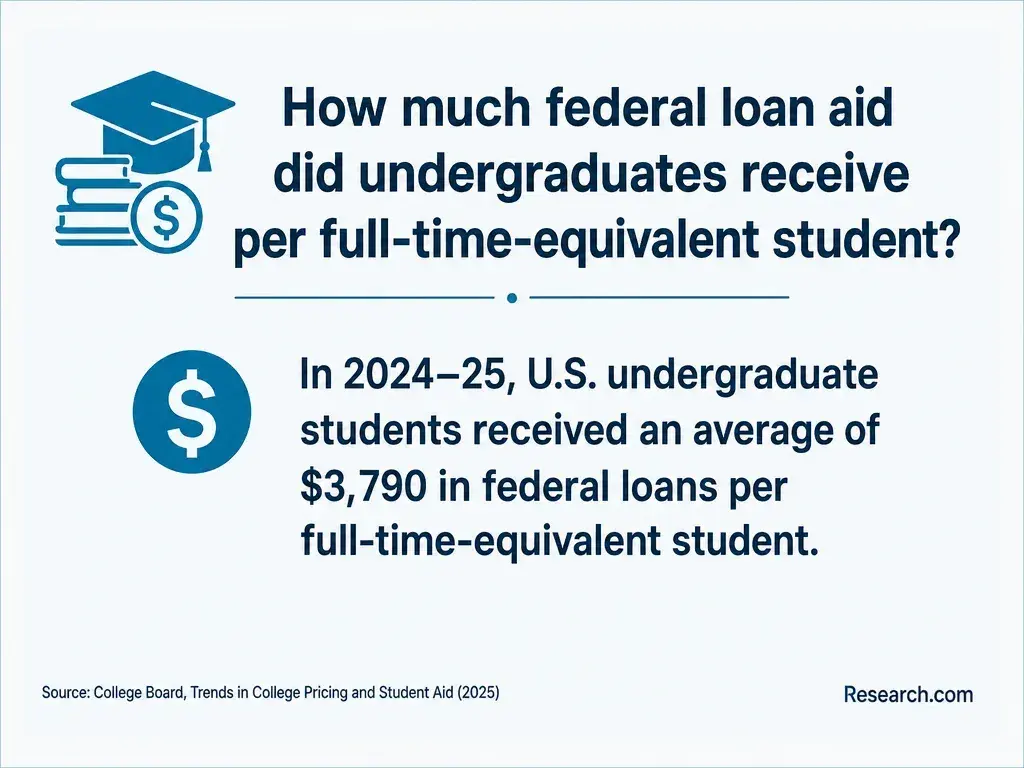
To compare costs, obtain each school's current tuition basis and mandatory fees, then calculate from a written estimate of your remaining credits. Include books or software, any placement travel, and earnings affected by work-hour changes. Do not compare advertised per-credit tuition with another school's full degree estimate.
A plan for a budget for an online psychology degree should also account for whether a less expensive route meets the goal. If an employer can provide supervised documentation training and you do not need a BA for the target position or future study, targeted coursework may cost less in time and money. Confirm financial-aid eligibility and employer assistance with the responsible offices before relying on either.
Potential job titles include recovery-support worker, outreach assistant, intake or referral coordinator, and program assistant. Titles are inconsistent across employers: read the duties for who enters records, who can view them, who reviews corrections, and whether the position includes regulated counseling. The table distinguishes plausible documentation work from functions that require separate authority.
| Role type | Possible nonclinical records | Qualification boundary to check |
| Recovery or peer-support worker | Contacts, participant-stated goals, referrals, and follow-up | Employer training and any state peer credential or supervision rule |
| Intake or referral coordinator | Requests for services, eligibility information, and referral status | Who may conduct screenings or make clinical determinations |
| Program assistant | Attendance, service counts, and aggregate reports | Data-access permissions and reporting definitions |
Experience in outreach, administration, or community services can be relevant if you can demonstrate accurate records and appropriate referrals. Review addiction recovery job families alongside local postings, then identify which roles ask for a BA, a peer credential, prior experience, or another qualification. A degree alone is not evidence that you can use a particular organization's record system.
There is no single wage or employment projection for "recovery documentation professional." Employers place these tasks in different occupations, including social and human service assistant, community health worker, and substance-use counselor. The last category often includes treatment duties and credential requirements that a documentation-focused BA does not meet.
For a useful comparison, match a job posting's duties to the closest occupation in the US Bureau of Labor Statistics Occupational Outlook Handbook, then check its wage reference year, projection period, location, and typical entry requirements. An occupation-wide median is not an offer for an entry-level applicant or an outcome for graduates of a particular program. Local public-agency pay scales and nonprofit budgets may matter more to an individual decision.
Be particularly cautious about using forensic psychology master's education and job earning prospects to estimate pay for recovery documentation: the degree level, work, and potentially regulated roles differ. Compare local postings for the precise support or coordination job instead.
Which Certifications and Licenses Do Recovery Documentation Professionals Need?
There is no universal license solely for writing nonclinical recovery-service records. A position may require employer privacy and record-system training, while peer-support or addiction-counselor titles may carry state-specific certification, education, supervised-experience, or licensing rules. The permitted tasks can differ even when job titles sound similar.
Before enrolling for a credential-related goal, obtain the target job description and check the applicable state board or credentialing body for its current rules. Ask whether the specific BA courses count, who supervises work, and which duties must be performed by a clinician. If the goal is independent counseling, affordable distance learning in graduate psychology is not, by itself, evidence of a qualifying licensure pathway; check programs designed for the credential you seek.
For documentation work, the most immediate test is practical: can you produce a factual, respectful, appropriately limited record under an organization's policy and supervisor's review? Choose courses and training that let you demonstrate that skill without claiming clinical authority.
Other Things You Should Know About Psychology
Use fictional cases or work you have explicit permission to share. Removing names from a real note may not sufficiently protect a participant's identity or satisfy an employer's policy.
Only if the organization authorizes the tool and the information entered. Check privacy, security, accuracy, and review rules; never paste identifiable client information into an unapproved service.
Many organizations provide system-specific training, but confirm it in the job posting or interview. Coursework should build transferable writing and data-handling skills, not promise proficiency in every platform.
Possibly, but only if the academic program approves the site, duties, supervision, and assessment requirements. Get approval before assuming prior or ongoing volunteer hours will count.
- Fact Sheet 42 CFR Part 2 Final Rule | hhs.gov https://www.hhs.gov/hipaa/for-professionals/regulatory-initiatives/fact-sheet-42-cfr-part-2-final-rule/index.html
- Electronic Health Records - Health IT Playbook https://playbook.healthit.gov/playbook/electronic-health-records/
- Behavioral Health Career Descriptions | samhsa.gov https://www.samhsa.gov/about/careers/behavioral-health-workforce/careers-by-state/descriptions
- eCFR:: 42 CFR Part 2 -- Confidentiality of Substance Use Disorder Patient Records https://www.ecfr.gov/current/title-42/chapter-I/subchapter-A/part-2
- A Guide to Professions in Addiction Studies and Recovery | University of the Cumberlands https://www.ucumberlands.edu/blog/guide-to-professions-in-addiction-studies-and-recovery
- Preparing Human Services Students for Addiction Practice | journalhumanservices.org https://journalhumanservices.org/article/156375-preparing-human-services-students-for-addiction-practice-exploring-12-step-recovery-and-community-based-support-systems
- Alcohol and Drug Programs Documentation Manual | civicplus.com https://content.civicplus.com/api/assets/87ec089f-9cff-4730-b7e7-ff0f6678529c