2027 Online BA in Psychology - Addictions: Degree Options for Recovery Workforce Training Support
Audited and Verified:
Our Editorial and Data Verification Process
Research.com uses government datasets, official education statistics and primary institutional information to support its career and degree guides. Our review process checks factual accuracy, occupational definitions, source dates and the requirements associated with the credentials discussed.
How This Article Was Fact-Checked
Our editorial team verifies salary estimates, employment projections, education requirements and program information against original data providers and official organizations. Salary figures are checked against the relevant occupational definitions and reporting periods. Information about licensure, accreditation and required in-person training is reviewed separately.
Fact-checked and verified on:

Co-Founder and Chief Data Scientist
An online psychology BA with an addictions focus can strengthen your work in recovery services, but its value depends on the job you want. For someone already working in outreach, peer support, or a community organization, the key decision is whether a broad bachelor's degree fills a real skills or hiring gap, or whether targeted training would do more for less.
This guide explains what these programs teach, how online fieldwork works, which support roles they may prepare you for, and what to check before investing in a degree.
Key Things You Should Know
- An addictions-focused psychology BA supports nonclinical recovery-workforce roles; it does not, by itself, authorize addiction counseling, diagnosis, or psychotherapy.
- Many bachelor's degrees require approximately 120 semester credits, but accepted transfer credits, major requirements, and fieldwork determine how much study remains.
- For a counseling goal, check your state's credential rules before enrolling; for an outreach or coordination goal, compare the degree with shorter, role-specific training.
=
What Is an Online Bachelor's Degree in Psychology With an Addictions Focus?
It is an undergraduate psychology degree that combines broad study of behavior and research with coursework on substance use, prevention, and recovery. The addictions focus might be a formally named concentration, a set of electives, or simply the emphasis of an applied program. Those distinctions matter: a transcript showing an official concentration is not the same as taking one addiction-related course, and neither is a professional credential.
For a recovery-services employee, the strongest reason to choose this BA is to build beyond a single job function. Psychology, statistics, and research-methods courses can help you assess evidence behind programs; addiction and community-health courses can improve how you communicate with clients and coordinate referrals. Review the exact degree designation and required courses when comparing online addiction psychology bachelor's admissions and coursework.
If your goal is solely to qualify for a state-recognized peer-support position or learn a specific documentation system, a full BA may be more education than you need. If you need a bachelor's degree for advancement and want transferable research and communication skills, it may be a better fit.
Is an Online Psychology in Addictions Degree Accredited?
Start with the institution's accreditation, not the program's marketing description. Confirm the school's current institutional accreditation and that it covers the institution awarding the online degree. Then check whether any separate recognition is actually relevant to your target credential. The American Psychological Association does not accredit general psychology bachelor's programs, so "APA-accredited psychology BA" is not an appropriate requirement.
Accreditation also does not establish addiction-counselor eligibility. A state board or certifying body may require particular addiction courses, supervised hours, or an approved training route. Counseling master's programs have their own accreditation considerations; guidance on clinical mental health counseling accreditation and pacing concerns a different degree level and should not be applied to an undergraduate psychology BA.
Before applying, obtain the school's catalog for your intended start term and send the degree plan to the authority responsible for any credential you intend to pursue. Ask for a written determination rather than relying on an admissions representative's general assurance.
What Careers Can You Pursue With an Addictions Psychology Bachelor's Degree?
The clearest fit is nonclinical recovery-workforce support, subject to each employer's requirements. Prior work in a recovery organization can matter as much as the concentration: it demonstrates experience with referral networks, documentation, and respectful communication that coursework alone cannot prove.
The table separates plausible duties from duties that require further qualification. Job titles vary, so evaluate the posting's tasks rather than its title alone.
| Potential role | Relevant work | Qualification boundary |
| Recovery-services coordinator | Organizes referrals, follows up on access to services, and maintains program records | Does not independently diagnose or provide treatment |
| Behavioral-health outreach worker | Shares resources, supports engagement, and helps people navigate services | Employer training and safety protocols may be required |
| Program or research assistant | Supports surveys, evidence reviews, reporting, or program evaluation | Data access and participant contact require approval and supervision |
| Peer recovery specialist | Provides support grounded in qualifying lived experience | State or employer certification rules may apply; a BA is not a substitute |
Do not use a degree name to infer a profession. For example, master's-level forensic psychology employment pathways concern a different specialty and degree level; they do not describe the jobs available through an addictions-focused BA. For recovery work, seek supervised opportunities to demonstrate appropriate referrals, accurate records, and clear professional boundaries.
Expect a psychology foundation, such as developmental, social, biological, and abnormal psychology, alongside statistics and research methods. Addictions-focused study may cover substance-use science, prevention, recovery systems, co-occurring concerns, and ethics. Course names and whether they are required or elective differ by school.
For recovery-workforce training, look beyond the word "addictions" in a course title. A useful curriculum teaches students to evaluate research without turning associations into claims of treatment effectiveness, communicate without stigma, protect confidential information, and recognize when a client needs referral to a qualified professional. Compare these features with online addiction counseling coursework and admissions if your goal is specifically counseling preparation; the two curricula may overlap without meeting the same credential requirements.
An internship or capstone can be valuable if it involves approved outreach, service coordination, or a carefully scoped program-evaluation task. An employee should not assume their existing job will count: the school must approve the learning objectives and supervision, while the organization must authorize any use of service data.
Possibly as one component of a pathway, but never automatically. Addiction-counselor titles, education rules, supervised-experience requirements, examinations, and permitted duties differ by state and credential level. Some routes may accept a relevant bachelor's degree with specified addiction coursework; others require a different degree or more training. Peer-support credentials have separate rules.
First identify the exact credential and state where you plan to work. Then compare the regulator's education and supervision requirements against the school's actual course descriptions and fieldwork arrangements. Ask whether completed courses count toward named requirements, who can supervise required hours, and whether hours earned during the BA can count. Get answers from the responsible board or certifying organization before committing tuition.
If you intend to provide licensed mental health counseling rather than nonclinical recovery support, investigate a qualifying graduate pathway. Comparing choosing a shorter clinical mental health counseling master's may help with future planning, but faster completion does not remove state-specific education, placement, examination, or supervised-practice requirements.
A conventional bachelor's degree commonly involves approximately 120 semester credits and four academic years of full-time study. Your remaining time depends on accepted transfer work, which credits satisfy the psychology major, course sequencing, enrollment pace, and any internship schedule. "Online" does not necessarily mean every required activity is asynchronous.
If you already work in recovery services, request a preliminary degree audit showing remaining general-education, psychology, addictions, and institution-specific credits. Ask when statistics, research methods, and any fieldwork courses are offered; a required course offered infrequently can delay graduation even when few credits remain. Compare faster psychology degree timelines online against your actual work and supervision commitments, rather than the school's fastest advertised schedule.
There is no dependable program-wide price without a school-specific tuition schedule and degree audit. Compare the cost of credits you still need, not just an advertised per-credit rate. Include mandatory online fees, books or software, possible site-related travel, and income lost if fieldwork requires time away from your job.
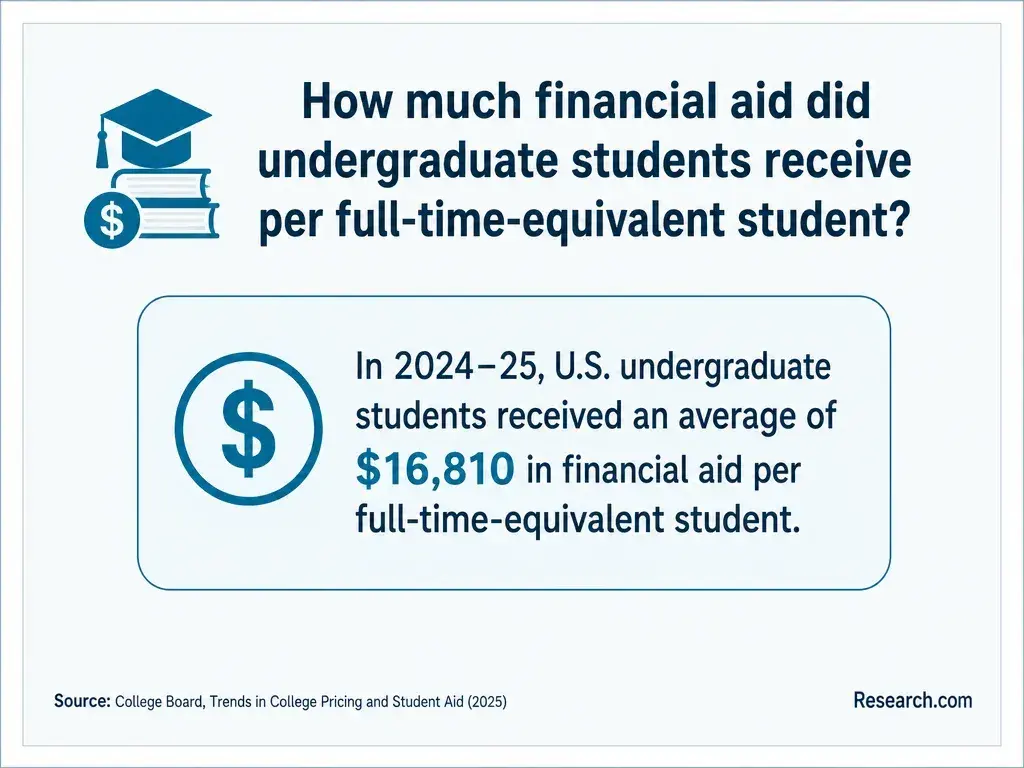
For an employed applicant, employer education assistance and federal aid eligibility can change the calculation, but neither should be assumed. Ask the financial-aid office how your enrollment pace affects eligibility and review online substance use counseling bachelor's aid resources while checking whether each option applies to your institution and degree.
A useful return-on-investment test is to compare the full remaining cost with the requirements of specific local jobs. If the positions you want require a state credential but not a psychology BA, credential training may be the more direct expense. If a bachelor's degree is required for advancement and you can use existing credits, the BA may have broader value.
First-time applicants generally need documentation of secondary-school completion; transfer applicants typically submit transcripts from prior colleges. Schools may also set GPA, application, or major-entry conditions. Admission to the institution is separate from acceptance into a particular concentration or approval of transfer courses toward graduation.
Returning students should ask for a written evaluation showing where each accepted course applies. Statistics and research-methods equivalencies deserve particular attention because a transferred elective may not replace a required major course. Use guidance on evaluating transfer options before psychology enrollment to prepare questions, but treat the receiving institution's official degree audit as authoritative.
If you have substantial nonprofit or behavioral-health experience but little prior college study, ask whether the school evaluates documented learning separately from academic transfer credit. Do not assume employment, volunteer hours, or a professional certificate will reduce degree requirements.
The better format is the one that gives you reliable access to required courses, supervision, and support while fitting your work schedule. Online lectures may reduce commuting, but live classes, group meetings, exams, or placements can still require fixed hours. Campus programs may make in-person collaboration easier without necessarily offering a placement that fits your recovery-service goals.
For either format, ask whether fieldwork must occur near campus, whether your workplace can serve as an approved site, who arranges a supervisor, and whether evening or weekend hours are acceptable. If a school advertises speed across multiple specialties, keep program comparisons separate: evaluating intensive forensic psychology graduate degree timelines addresses a different field and degree level, not evidence that an addictions BA can compress its courses or fieldwork.
What Are the Salary and Job Outlook for Addiction-Related Careers?
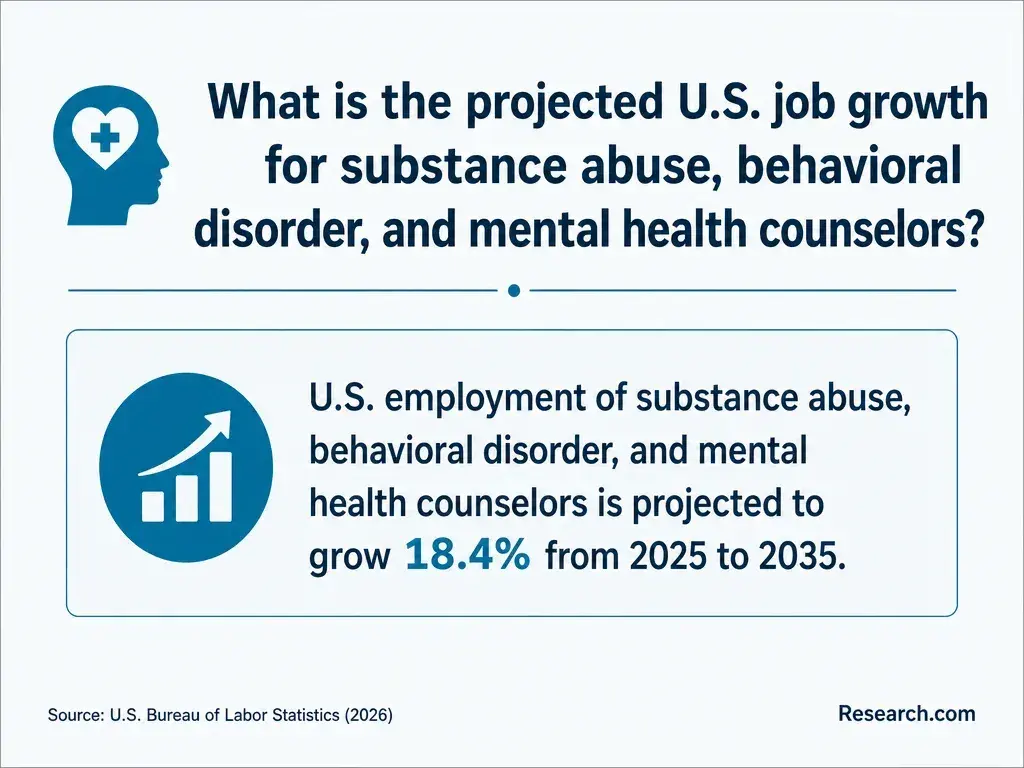
The U.S. Bureau of Labor Statistics reports a 2024 median annual wage of $59,190 for its combined occupation of substance abuse, behavioral disorder, and mental health counselors. It projects 17% employment growth from 2024 to 2034 for that combined occupation. These figures indicate demand across an occupational group; they are not the expected pay or job outlook for graduates of an addictions-focused psychology BA, and many counseling positions have additional credential requirements.
For a recovery-support or outreach target, compare local postings by job title, required credential, experience, and employer type. Public agencies and nonprofits may use defined pay bands, while a bachelor's degree may affect eligibility for some positions without changing pay in your current role. Likewise, short-duration online forensic psychology graduate options should not be used as a salary benchmark for addiction recovery support: their training and potential jobs differ.
Other Things You Should Know About Psychology
Yes. Approved outreach, service-navigation, administrative, or research-support work can demonstrate useful skills. Keep a record of duties and supervision, but do not present workplace tasks as credential-qualifying hours unless the responsible authority confirms they count.
An approved, nonclinical project might summarize published prevention evidence or develop a service-referral resource. Establish the organization's permission and privacy rules before using internal records or sharing any work publicly.
Not for every role. Some peer-support credentials specifically require qualifying lived experience; coordination, outreach, and program-support roles may have different criteria. Check the credential or job description rather than assuming one rule applies across the workforce.
Compare the actual courses and graduation requirements. A BS may require more science or quantitative study, while a BA may allow different electives, but schools define these degrees differently. Neither designation alone determines recovery-workforce readiness.
- Behavioral Health Career Descriptions | samhsa.gov https://www.samhsa.gov/about/careers/behavioral-health-workforce/careers-by-state/descriptions
- Become a Certified Recovery Peer Advocate | ny.gov https://oasas.ny.gov/recovery/become-certified-recovery-peer-advocate
- STATE LICENSURE FOR SUBSTANCE USE DISORDER COUNSELING: IMPLICATIONS FOR BILLING ELIGIBILITY | ASPE https://aspe.hhs.gov/reports/state-licensure-substance-use-disorder-counseling-implications-billing-eligibility-0
- Accreditation and Eligibility Requirements for Distance Education | Knowledge Center https://fsapartners.ed.gov/knowledge-center/library/dear-colleague-letters/2023-05-18/accreditation-and-eligibility-requirements-distance-education
- Online Bachelor's Degree in Psychology in Addictions | Purdue Global https://www.purdueglobal.edu/degree-programs/psychology/bachelor-psychology-addictions/
- Tuition in Detail - One Stop Student Services https://onestop.utk.edu/billing-payments/tuition-detail/
- What's the Difference Between Asynchronous and Synchronous Learning? | Ohio State Online https://online.osu.edu/content-hub/blogs/whats-the-difference-between-asynchronous-and-synchronous-learning/
- Human Services Addiction Studies | Long Beach City College https://www.lbcc.edu/hsas
- State Authorization & Distance Learning | Michigan State University https://aacc.msu.edu/compliance/state-authorization
- Substance Abuse Counselor - Licensure requirements by state | UC News https://www.online.uc.edu/blog/substance-abuse-counselor-licensure-requirements-by-state.html