2027 Online BA in Psychology - Mental Health for Family Education Program Design: Which Courses Should You Look For?
Audited and Verified:
Our Editorial and Data Verification Process
Research.com uses government datasets, official education statistics and primary institutional information to support its career and degree guides. Our review process checks factual accuracy, occupational definitions, source dates and the requirements associated with the credentials discussed.
How This Article Was Fact-Checked
Our editorial team verifies salary estimates, employment projections, education requirements and program information against original data providers and official organizations. Salary figures are checked against the relevant occupational definitions and reporting periods. Information about licensure, accreditation and required in-person training is reviewed separately.
Fact-checked and verified on:

Co-Founder and Chief Data Scientist
If you want to design mental health education for families, a course on psychological disorders is not enough. You also need to understand development, family and community contexts, research evidence, accessible teaching, and how to evaluate a program without crossing into clinical practice. This guide is for prospective psychology students and community-service professionals comparing online bachelor's programs. It identifies the courses and applied experiences worth prioritizing, then explains how to check whether a program's schedule, cost, and outcomes fit your goal.
Key Things You Should Know
- Prioritize a sequence covering developmental and family psychology, mental health and prevention, statistics and research methods, and program evaluation or instructional design.
- Look for a supervised, nonclinical project: an evidence-informed family workshop plan or evaluation proposal is stronger preparation than a mental-health elective alone.
- A psychology BA does not authorize therapy or diagnosis. Before enrolling, verify that the courses you need are offered online, fit your schedule, and count toward your degree.
What is an online BA in psychology focused on mental health and family education?
It is an undergraduate psychology degree used to study behavior, development, mental health, and research, with coursework selected for a particular nonclinical goal: helping organizations teach families about well-being, prevention, support resources, and when to seek professional care. "Family education" describes the intended work, not necessarily an official concentration. Check the catalog to see whether mental health or family studies is a named concentration, a set of electives, or simply a possible capstone topic.
This focus fits someone who wants to create workshops, caregiver resources, or outreach materials. It is less direct for someone whose goal is substance-use counseling, which may require a different credential under state rules; an addiction counseling degree comparison resource can help clarify that distinction. A forensic psychology focus likewise serves a different purpose, despite its overlap with mental-health coursework.
Which courses should an online psychology program include for mental health careers?
For family education program design, choose courses by the work they enable you to do, not by the concentration label. The most useful curriculum connects psychological evidence to a defined audience and a way to assess whether the education is understandable and useful.
Use this sequence to inspect a prospective program's required courses and available electives:
- Start with statistics and research methods. Learn to judge study quality, interpret findings, and distinguish an association from evidence that an educational activity caused change.
- Add lifespan development and family or social psychology. These courses help you adapt examples for caregivers of children, adolescents, or older adults without treating families as interchangeable.
- Study abnormal psychology, health psychology, or prevention. Look for coverage of mental-health concepts, stigma, help-seeking, and service systems; academic study is not training to diagnose.
- Build teaching and evaluation skills. Seek courses in learning, communication, community psychology, public health, instructional design, or program evaluation, even if some are outside the psychology department.
- Finish with an approved applied project. A capstone or supervised placement should let you produce and revise a nonclinical educational resource using appropriate evidence and feedback.
If addiction is the primary subject of the planned education, compare the actual recovery, prevention, and service-system coursework with lower-cost addiction counseling bachelor's career preparation. A specialized degree may be more relevant, but its title alone does not establish counseling eligibility.
How does an online psychology bachelor's degree prepare students for family education program design?
The strongest preparation is a chance to turn coursework into a nonclinical program plan. A student might define an audience, review evidence on a topic such as caregiver stress, draft learning objectives and accessible materials, identify local referral information, and propose a way to collect feedback. That is program design - not proof that a workshop works or permission to provide treatment.
For an applied project, ask whether a faculty member and community partner can review the plan. Clarify who may approve outreach, what information may be collected, and whether institutional review or other permissions are needed. Avoid using identifiable family or client records without authorization. If an organization needs sophisticated outcome research rather than an educational prototype, compare the needed expertise and expense with online master's psychology programs by affordability; a bachelor's project should not be presented as a substitute for qualified evaluation work.
Verify the institution's accreditation through the institution and the recognized accreditor, then confirm that it covers the institution offering the online degree. The American Psychological Association does not accredit general psychology bachelor's programs. Institutional accreditation supports a degree's recognition, but it does not guarantee that graduate schools will accept every course or that a graduate program will meet licensure requirements.
If graduate study is possible, compare your intended programs' prerequisites with the BA's transcript-level offerings: statistics, research methods, relevant psychology courses, and any required supervised experience. Ask whether online students can obtain research mentorship and academic references. For a future licensed counseling role, examine the requirements of qualifying graduate programs and your state board separately; paying for an online mental health counseling degree is a separate planning decision from choosing this BA.
Requirements vary by institution and by whether you are a first-year or transfer applicant. Schools commonly request evidence of prior secondary or college study; some have separate transfer or major-entry rules. A prospective student does not usually need prior clinical experience to study undergraduate psychology.
If you have college credits, request a written degree audit before relying on an estimated completion date. Ask which credits satisfy general education, psychology prerequisites, electives, and residency requirements - not merely how many credits the school accepts. A statistics course, for example, may transfer as elective credit without replacing the major's required course. If you are comparing this family-education route with a different specialty, use the same audit questions when choosing forensic psychology study by cost and entry criteria; admission and degree completion are distinct decisions.
Time and cost depend on accepted credits that apply to requirements, course load, tuition rules, fees, and the availability of sequenced courses. An online format does not remove prerequisites: statistics may need to come before research methods, and a capstone may be offered only in certain terms. Request a term-by-term plan showing when every required course is available.
Compare the full remaining cost, including technology fees, books, any travel or placement expense, and reduced work hours. Ask the financial-aid office how your planned enrollment level affects eligibility, then compare the school's award information with guidance on FAFSA for online substance use counseling undergraduates where relevant. Aid eligibility and the final price are individual determinations; neither should be assumed from an advertised tuition rate.
Either format can teach the academic foundations. The meaningful differences for this goal are access to faculty feedback, community partners, supervised projects, and courses outside psychology - especially education or public health. Online study may reduce travel while adding scheduled video meetings, group-work coordination, or an in-person placement. Campus study may make local partnerships easier but can be harder to fit around employment or caregiving.
Ask each program for a sample schedule and its rules for arranging a project near home. Do not infer pace from the delivery format: discussions of forensic psychology undergraduate graduation timelines illustrate how heavily completion depends on transfer evaluation and course availability, not simply whether classes are online.
Potential nonclinical work includes family-program assistant, community outreach coordinator, resource navigator, human-services staff member, and program-evaluation assistant. Duties may involve preparing educational materials, organizing sessions, documenting participation, sharing approved referral information, or helping analyze feedback. Employers may also expect experience with families, a particular population, grant reporting, or another credential; the BA alone does not establish eligibility for every posting.
Build evidence of the tasks you want to perform: a reviewed workshop outline, accessible handout, literature summary, or evaluation plan can be more persuasive than a concentration name. If a posting instead calls for forensic or justice-system work, examine its actual duties rather than assuming that mental-health coursework transfers directly; forensic psychology graduate occupations and salary considerations concern a different set of roles and qualifications.
A psychology BA does not qualify someone to diagnose mental disorders, provide psychotherapy, independently perform restricted psychological assessments, or use a protected clinical title. Licensed professional counselors, clinical social workers, marriage and family therapists, and psychologists follow distinct educational, supervised-practice, examination, and state-licensure pathways. Addiction and peer-support credentials also have jurisdiction-specific rules; some can be pursued without a psychology BA, while others require additional preparation.
Start with the state regulator for the exact role you want, then check whether a prospective graduate program meets that jurisdiction's educational criteria. If counseling is the goal, compare qualifying programs and placement demands rather than relying on a BA concentration; accelerated accredited clinical mental health counseling programs still require careful review of their supervised-training and licensure fit.
What are the salary expectations and job outlook for psychology graduates?
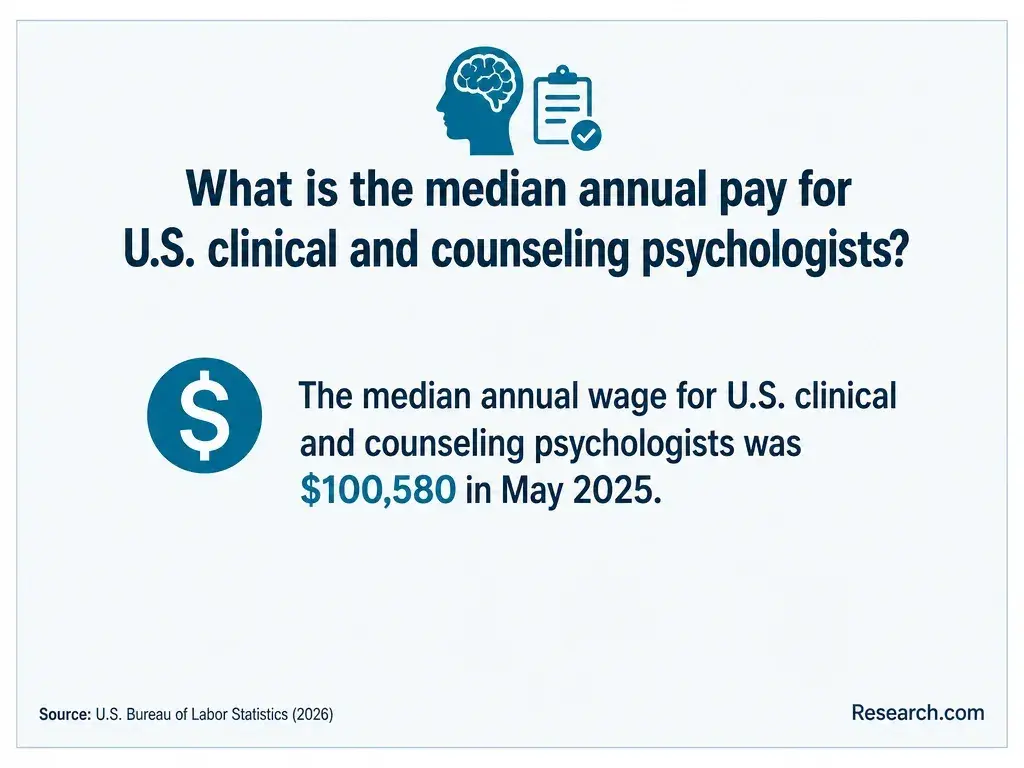
There is no single salary or employment projection for graduates of a psychology BA focused on family education. Pay depends on the occupation, location, employer, experience, and whether the position is a support, coordination, evaluation, or licensed clinical role. For a defensible comparison, identify the job titles you would actually apply for and consult the U.S. Bureau of Labor Statistics occupational wage and outlook data alongside local postings. An occupation-wide median is not the expected pay for a new BA graduate.
Compare likely entry-level duties and pay with the total cost of finishing the degree, rather than comparing your tuition with a licensed clinician's wage. Further education can change the available roles but also adds cost and time; short counseling master's formats and career planning should be evaluated against the requirements of the particular state and occupation.
Other Things You Should Know About Psychology
No. Adapting an existing evidence-informed resource may be more feasible. Check its permissions, intended audience, and evidence base before changing it or claiming it has been validated for a new population.
Yes, when participation is appropriate and authorized. Explain how feedback will be used, make participation voluntary, and follow the organization's privacy and safeguarding procedures.
Not by default. Screening creates questions about instrument permissions, interpretation, privacy, and follow-up. An educational workshop can instead provide clear information about how to contact qualified services.
Keep materials you have permission to share, such as a draft lesson plan or a summary of your design process. Remove confidential information and distinguish proposed activities from completed, evaluated work.
- Implementing School-Based Mental Health Services - PMC https://pmc.ncbi.nlm.nih.gov/articles/PMC8948726/
- Embedding Culturally Responsive Practices into Trauma-Informed Schools | IES https://ies.ed.gov/learn/blog/embedding-culturally-responsive-practices-trauma-informed-schools
- Mental Health Education | Adolescent and School Health https://www.cdc.gov/healthy-youth/mental-health/mental-health-education.html
- School-Based Mental Health: Introduction and Considerations for Congress | Congress.gov | Library of Congress https://www.congress.gov/crs-product/R48740
- Human Development & Family Sciences (HDFS) | Texas State University https://mycatalog.txstate.edu/courses/hdfs/
- Psychology careers guide | apa.org https://www.apa.org/education-career/guide/careers
- Bachelor of Arts in Psychology - Texas State's online programs https://online.txst.edu/degrees/undergraduate/ba-psychology/
- Mental Health Literacy: Definition, Importance, and Impact | Tulane University https://online.tulane.edu/public-health/blog/mental-health-literacy
- What Can You Do with a bachelor's in Psychology? | UMass Global https://www.umassglobal.edu/blog-news/can-you-do-a-bachelors-psychology-top-careers-skills-build-your-future
- Community Tool Box Training Curriculum | ku.edu https://communityhealth.ku.edu/training-curriculum