2027 Online BA in Psychology - General Psychology After an AAS in Medical Assisting: Compare Transfer Credit and Remaining Coursework
Audited and Verified:
Our Editorial and Data Verification Process
Research.com uses government datasets, official education statistics and primary institutional information to support its career and degree guides. Our review process checks factual accuracy, occupational definitions, source dates and the requirements associated with the credentials discussed.
How This Article Was Fact-Checked
Our editorial team verifies salary estimates, employment projections, education requirements and program information against original data providers and official organizations. Salary figures are checked against the relevant occupational definitions and reporting periods. Information about licensure, accreditation and required in-person training is reviewed separately.
Fact-checked and verified on:

Co-Founder and Chief Data Scientist
An AAS in medical assisting gives you health care experience, but it may not shorten an online psychology BA as much as its credit total suggests. Clinical and administrative courses can be accepted as electives without satisfying psychology or general education requirements.
For medical assistants considering a career change or a bachelor's degree, this guide explains how to compare transfer evaluations, identify remaining coursework, estimate the real cost and timeline, and decide whether general psychology serves your next goal.
Key Things You Should Know
- Accepted credit is not the same as completed requirements: In an illustrative 120-credit BA, accepting 60 AAS credits does not mean only 60 credits remain if major, general education, or residency rules require additional courses.
- Expect a new psychology sequence: Medical assisting coursework may help with electives or health-related requirements, but introductory psychology, statistics, research methods, upper-level psychology, and a capstone may still be needed.
- Compare written degree audits, not transfer totals: Ask each school to show where every accepted course applies, which courses remain, and whether required classes are available online at your intended pace.
How Much Transfer Credit Can an AAS in Medical Assisting Apply Toward an Online Psychology Degree?
There is no reliable AAS-to-BA conversion rate. A school may accept credits from an accredited college but apply some only as free electives. An applied associate degree can also contain fewer transferable general education courses than a transfer-oriented associate degree. The receiving university—not the AAS-granting college—decides equivalencies and degree applicability.
Compare three numbers on each evaluation: credits accepted, requirements satisfied, and credits still needed to graduate. The distinction matters even when a university advertises a generous transfer maximum. The following example is illustrative, not a prediction of any school's policy:
| Illustrative audit item | What it tells you |
| 120-credit BA requirement | The total required for this hypothetical degree |
| 60 AAS credits accepted | Credits placed on the university transcript |
| Some accepted credits assigned as electives | Psychology, general education, or upper-level requirements may remain unmet |
| Final remaining credit figure on the audit | The number to use for scheduling and cost estimates |
Request a course-by-course evaluation before committing to a program. When shortlisting psychology programs that accept transfer credits, ask specifically how each treats applied-degree courses, elective limits, upper-level requirements, and credits that do not fit the BA.
What Coursework Remains After Transferring From Medical Assisting to General Psychology?
Most students should plan for two kinds of remaining work: unmet bachelor's general education requirements and the psychology major itself. A medical terminology or patient-care course may add useful context without replacing a course in psychological science. Requirements differ, so use the catalog for your entry term and the university's approved audit rather than a generic course list.
The audit should make the following distinctions visible:
- Foundations: Introductory psychology and any prerequisite required before advanced courses.
- Methods: Statistics, research methods, and possibly a laboratory or research sequence; medical-office data entry is not automatically equivalent.
- Major breadth: Courses such as developmental, social, cognitive, biological, or abnormal psychology, according to the program's rules.
- Completion requirements: Upper-level electives, writing-intensive work, a capstone, and any minimum credits that must be earned at the university.
Sequencing can matter more than the raw credit count: statistics may precede research methods, which may precede the capstone. If you are considering a specialized major instead, compare its extra requirements before assuming that forensic psychology undergraduate graduation timelines apply to a general psychology BA.
Is an Online BA in General Psychology Worth Pursuing After a Medical Assisting AAS?
It can be worthwhile if you need a bachelor's degree for a specific next step and want to build research, writing, and behavioral-science skills alongside your patient-facing experience. Medical assisting can provide relevant examples for health psychology, communication, and service coordination, but it does not substitute for psychology methods training or qualify you for clinical practice.
First name the job or graduate program you want, then check its actual entry requirements. For health-system coordination, research support, or human-services roles, a BA may broaden options, but employers may also value experience, data skills, or a different major. If your goal is substance use counseling, compare the applicable state credential and supervised-experience rules before weighing a general BA against a dedicated program; comparing undergraduate substance use counseling costs and outcomes can help frame that separate decision.
A BA is harder to justify solely for a modest change in medical-assistant duties. Ask whether employer training, a targeted course, or advancement within your current workplace would reach the goal with less time and expense.
Courses with broad academic content are often easier to match to BA requirements than occupation-specific skills courses, but titles alone do not establish equivalence. These are possibilities to investigate, not promised transfer outcomes.
| AAS course type | Possible BA application | Key uncertainty |
| College composition or communication | Writing or general education | Required level, credits, and grading standard |
| College algebra or statistics | Quantitative requirement | Whether it meets the psychology major's statistics requirement |
| Anatomy and physiology | Science requirement or elective | Laboratory requirements and program-specific science rules |
| Medical terminology, coding, or clinical procedures | Free elective, if accepted | Applicability limits for technical coursework |
| Externship | Possibly elective credit | Whether occupational placement credit is transferable at all |
Supply syllabi when a course title hides substantial academic content. In particular, ask the psychology department—not only general admissions—whether an AAS statistics course satisfies the major requirement. When reviewing psychology degree planning for prospective online students, compare the required curriculum against your transcript rather than assuming that similar course names produce the same audit.
Transfer applicants generally submit an application and official transcripts from every college attended. Schools may set minimum academic-standing or GPA rules, require high school records in some circumstances, or review admission to the university separately from admission to the psychology major. An AAS in medical assisting does not itself establish either admission decision.
Before applying, confirm whether the university evaluates your AAS institution and coursework, whether grades below its transfer threshold are excluded, and whether psychology has additional entry prerequisites. If past coursework is old or you studied on a quarter-credit calendar, ask how the school handles recency and conversion.
Planning for graduate study later is a separate question. Even psychology master's programs with intensive pacing can have their own prerequisite and admission rules; bachelor's admission should not be mistaken for eligibility for a future master's program.
Use the approved remaining credits, not the AAS credit total, to estimate the timeline. Divide those credits by a realistic annual course load, then check prerequisite order, term-by-term availability, and residency rules. A course offered only once a year can delay completion even if you have room in your schedule.
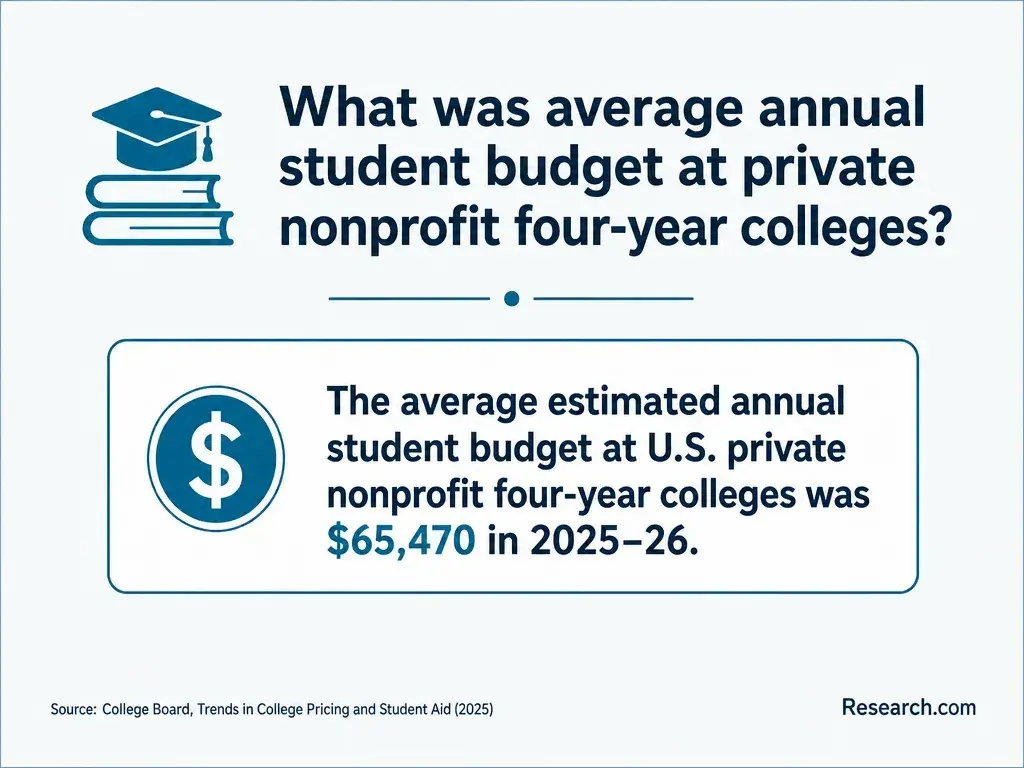
For cost, multiply the remaining billable credits by the school's published tuition rate, then add mandatory fees, books, technology, and any travel or placement expenses. Compare that total with available aid and any verified employer reimbursement. Do not assume all transferred credits lower costs equally: elective credit that leaves required courses unfinished may reduce neither the final course load nor the bill as much as expected.
If a later graduate degree is part of your plan, budget for it separately; low-cost master's degrees in psychology are a different financial comparison from completing this BA. Ask each bachelor's program for a term-by-term completion plan and an estimate based on your evaluated transcript.
An online BA may let a working medical assistant study without relocating, but "online" does not necessarily mean self-paced. Check for live classes, timed examinations, group meetings, fixed course sequences, and any campus or local internship requirements. A campus program may offer easier access to faculty research groups and scheduled advising, while a well-supported online program may offer comparable academic coursework with a different route to mentorship.
Compare the actual support available to transfer students: psychology advising, tutoring for statistics, research opportunities, and help arranging approved nonclinical experiences. If later training in counseling is your aim, do not assume its delivery will resemble an online BA; reviewing accelerated clinical counseling program formats illustrates why live instruction and supervised in-person training must be checked separately.
Confirm the university's institutional accreditation through the accreditor and the U.S. Department of Education's recognized-accreditor information. Then obtain the current BA catalog, transfer-credit policy, and a written degree audit for your entry term. Do not mistake institutional accreditation for approval of every course equivalency or a guarantee of professional licensure. APA accreditation does not generally apply to undergraduate general psychology degrees.
Use this verification sequence before paying an enrollment deposit:
- Send official AAS transcripts and request a course-by-course transfer evaluation.
- Ask the registrar or transfer office which credits are accepted, then ask psychology advising which major requirements they satisfy.
- Review general education, elective, upper-level, and residency requirements on the degree audit; submit syllabi or a formal appeal where a course appears mismatched.
- Request written confirmation of remaining courses, their online availability, and any graduation conditions.
Apply the same credential-specific scrutiny if you later consider specialized graduate study. For example, online forensic psychology master's options with compressed schedules should be checked against their actual degree requirements and career purpose, not treated as evidence that a general psychology BA carries professional accreditation.
A medical assistant who adds a psychology BA may be a candidate for some nonclinical roles in patient services, community programs, research support, or human services. Job eligibility depends on the posting, relevant experience, and any state or employer requirements—not the major name alone. Existing experience with scheduling, patient communication, documentation, and confidentiality can be valuable when paired with stronger research and analytical skills.
Look for job descriptions involving service coordination, participant recruitment under an approved research protocol, program administration, or data and records support. Compare required software, writing, and case-management skills with what you can demonstrate through coursework or supervised work. A forensic-interest career search needs the same discipline: comparing forensic psychology master's career earnings concerns a different degree level and should not be used to predict outcomes from this BA.
Neither medical assisting experience nor a general psychology BA authorizes psychotherapy, diagnosis, or independent psychological assessment.
What Salary and Licensing Requirements Apply to Psychology Graduates?
There is no single salary for "psychology graduates." Pay depends on the occupation, location, employer, experience, and credentials. For a meaningful comparison, match a specific job posting to the closest U.S. Bureau of Labor Statistics occupation, then check that occupation's wage reference year and entry requirements. An occupation-wide median is not an expected starting salary—or an outcome measure—for this BA.
Licensing depends on the work you intend to do. A general psychology BA does not qualify someone to practice as a licensed psychologist or counselor. Those roles generally require additional profession-specific education and supervised training, with rules set by the relevant state board. If counseling is your target, compare qualifying programs and state requirements before using clinical mental health master's tuition and career value to estimate a longer education pathway.
Other Things You Should Know About Psychology
No. Enrolling in a psychology BA does not itself cancel a medical assistant credential. Check your certifying organization's renewal rules if you intend to keep it active.
Yes, but ask prospective universities to confirm in writing how each proposed course would apply before enrolling. A transferable course may still count only as an elective.
Only if the program permits workplace-based learning and approves the duties, supervision, and academic work in advance. Routine employment does not automatically meet those requirements.
It can provide undergraduate psychology preparation, but future programs may require particular statistics, methods, laboratory, or other courses. Check the admission rules for your intended graduate pathway while selecting BA electives.
- .14 Evaluation and Review Process for Transfer of Courses and Credits. | Library of Maryland Regulations https://regs.maryland.gov/us/md/exec/comar/13B.06.02.14
- Frequently Asked Questions - California Board of Psychology https://www.psychology.ca.gov/licensees/faq.shtml
- Cost of Attendance (Budget) | 2025-2026 Federal Student Aid Handbook https://fsapartners.ed.gov/knowledge-center/fsa-handbook/2025-2026/vol3/ch2-cost-attendance-budget
- Transfer Credit and Degree Applicability | University of Missouri Academic Catalog https://catalog.missouri.edu/academicpolicies/transfercreditanddegreeapplicability/
- Major Requirements | Psychology - Natural Sciences https://naturalsciences.uoregon.edu/psychology/undergraduate-programs/major-requirements
- Page 1 of 13 - Policies and Procedures - Utah Valley University https://policy.uvu.edu/getDisplayFile/61802698d4c4fe6e2fe68091
- Transfer Credit Evaluation and Assignment | Carnegie Mellon University https://www.cmu.edu/policies/student-and-student-life/transfer-credit-evaluation-and-assignment.html
- Requirements for the Bachelor's Degree | University at Albany https://www.albany.edu/undergraduate-bulletin/requirements-for-bachelors-degree.php
- Academic Requirements • Psychology | SUNY Purchase https://www.purchase.edu/academics/psychology/requirements/
- Psychology Degree Requirements | University of Bridgeport https://www.bridgeport.edu/news/psychology-education-requirements/