2027 Online BA in Psychology - Mental Health for Psychology of Grief and Bereavement: Which Courses Should You Look For?
Audited and Verified:
Our Editorial and Data Verification Process
Research.com uses government datasets, official education statistics and primary institutional information to support its career and degree guides. Our review process checks factual accuracy, occupational definitions, source dates and the requirements associated with the credentials discussed.
How This Article Was Fact-Checked
Our editorial team verifies salary estimates, employment projections, education requirements and program information against original data providers and official organizations. Salary figures are checked against the relevant occupational definitions and reporting periods. Information about licensure, accreditation and required in-person training is reviewed separately.
Fact-checked and verified on:

Co-Founder and Chief Data Scientist
A program can advertise a mental health focus without teaching much about grief - or preparing students to support bereaved people responsibly. If you are comparing online psychology BA programs, the useful question is whether the curriculum connects the science of loss with development, culture, research, and appropriate service roles. This guide identifies the courses and experiences worth prioritizing, explains what a bachelor's degree can and cannot qualify you to do, and shows how to check a program's schedule, cost, and career fit before enrolling.
Key Things You Should Know
- Prioritize developmental psychology, psychopathology taught with diagnostic limits, research methods, and a substantive course on death, dying, or bereavement; a "mental health" label alone does not establish grief expertise.
- Look for supervised, nonclinical experience with referrals, confidentiality, and culturally responsive support. An online psychology BA does not qualify graduates to diagnose or provide grief therapy.
- Compare the credits you still need, the actual availability of grief-related courses, and any in-person placement obligations before judging a program's time or cost.
What Is an Online BA in Psychology Focused on Grief and Bereavement?
It is usually a psychology bachelor's degree in which a student applies broad psychological training to loss and adaptation. Grief is the response to loss; bereavement refers to the experience of having lost someone through death. Study may also address caregiving, anticipatory grief, family change, and support after a death. These subjects may appear in electives or projects rather than in a formally named concentration.
Check the exact award on the degree plan: a psychology BA, a formal mental health concentration, and a set of grief-related electives are different things. A BA can provide strong preparation for research, community support, or later professional study, but its title does not determine what graduates may do in a regulated role. When reviewing online psychology education pathways, compare the courses students can actually take - not just the themes featured on a program page.
What Courses Should You Look for in a Grief and Bereavement Psychology Program?
Start with developmental psychology and research methods, then assess the depth of the loss-related electives. Children, adults, and older people may understand death and express distress differently. Methods and statistics help you judge whether claims about grief interventions apply to the people and circumstances you hope to serve.
The table separates essential foundations from courses that add a more focused perspective. Course titles vary, so examine descriptions, assignments, prerequisites, and how often each class runs.
| Course area | Why it matters for grief and bereavement | What to check |
| Lifespan developmental psychology | Connects loss with age, family roles, and changing capacities. | Coverage of childhood through later life, rather than one age group. |
| Research methods and statistics | Builds the ability to evaluate studies, measures, and claims about support approaches. | Practice interpreting evidence and its limitations. |
| Psychopathology or abnormal psychology | Introduces mental health conditions and the distinction between grief and possible clinical concerns. | Attention to diagnostic limits; coursework is not diagnosis training. |
| Death, dying, and bereavement | Examines loss directly, including varied grief responses and social contexts. | Whether it is offered regularly or only occasionally. |
| Social, cultural, and health psychology | Explores relationships, community practices, illness, stress, and unequal access to support. | Substantive treatment of cultural variation without assuming one "normal" way to grieve. |
| Ethics and applied experience | Develops confidentiality, boundaries, referral judgment, and responsible communication. | Faculty oversight and the precise duties permitted at a placement. |
A sensible sequence is to take introductory psychology and methods before evaluating bereavement research, then use upper-level electives or a capstone to examine a specific population or setting. If the BA offers little grief content, ask whether approved electives outside the major can fill the gap; paying for an unrelated graduate degree solely to obtain one topic-specific course may be poor value. Students considering further research study can compare economical routes to graduate psychology study after checking whether advanced study is necessary for their goal.
Can an Online Psychology Bachelor's Degree Lead to Mental Health Careers?
Yes, but usually through nonclinical support roles whose requirements depend on the employer and state. A graduate might coordinate services, help people find resources, document contacts, or support a supervised community program. Compassionate listening is valuable; it is not a substitute for assessment, treatment planning, or psychotherapy qualifications.
For example, a person interested in grief alongside substance use may find that recovery-support or addiction-service jobs require a distinct state credential or supervised training. Compare those requirements with substance use counseling program pathways before selecting psychology electives. If the intended work is grief therapy, plan for an appropriate licensure-track professional degree and subsequent state requirements rather than treating the BA's mental health coursework as clinical preparation.
Confirm that the institution holds accreditation recognized for your educational purpose. That check matters for degree recognition, transfer review, and possible federal aid eligibility. It does not establish that a BA meets any mental health license's educational requirements. The American Psychological Association does not accredit general psychology bachelor's programs.
If your goal is to become a licensed counselor, social worker, or psychologist, start with the relevant state board's requirements for the specific profession and then examine qualifying programs. Professional accreditation applies to particular program types, not every degree that teaches mental health topics. For instance, someone comparing accelerated accredited clinical mental health counseling programs should still verify the program's accreditation status, placement arrangements, and eligibility in the state where they intend to practice. No grief elective waives those checks.
Online classes may reduce travel and offer access to electives unavailable nearby. Campus programs may make it easier to join a faculty research team or build relationships with local service organizations. Neither format guarantees grief-focused mentoring or an approved placement.
Ask whether classes are asynchronous, whether discussion or group meetings occur at fixed times, and whether a capstone or internship requires travel. A student balancing work or caregiving should check the weekly schedule and placement hours, not rely on the word "online." If graduate study later becomes relevant, compare research access and supervision as well as speed when considering fast-track graduate psychology programs; faster completion alone does not create clinical eligibility.
Requirements vary by institution and by whether you apply as a first-time or transfer student. Expect the school to specify its transcript, prior-education, application, and any major-entry requirements. Admission to the university is not necessarily admission to every major course or approval of previous psychology work.
For transfer applicants, the decisive document is a degree audit showing where accepted credits apply: general education, psychology foundations, methods, electives, or free electives. A statistics class can transfer as credit without satisfying the major's statistics requirement. Before paying an enrollment deposit, request a written evaluation, ask when required grief-related electives will run, and investigate evaluating transfer options before psychology enrollment if finishing efficiently is a priority.
A conventional bachelor's pathway spans several years, but your remaining time depends on accepted credits, course sequencing, enrollment pace, and whether required electives are offered when you need them. An online format does not shorten a prerequisite chain or eliminate a placement's scheduled hours.
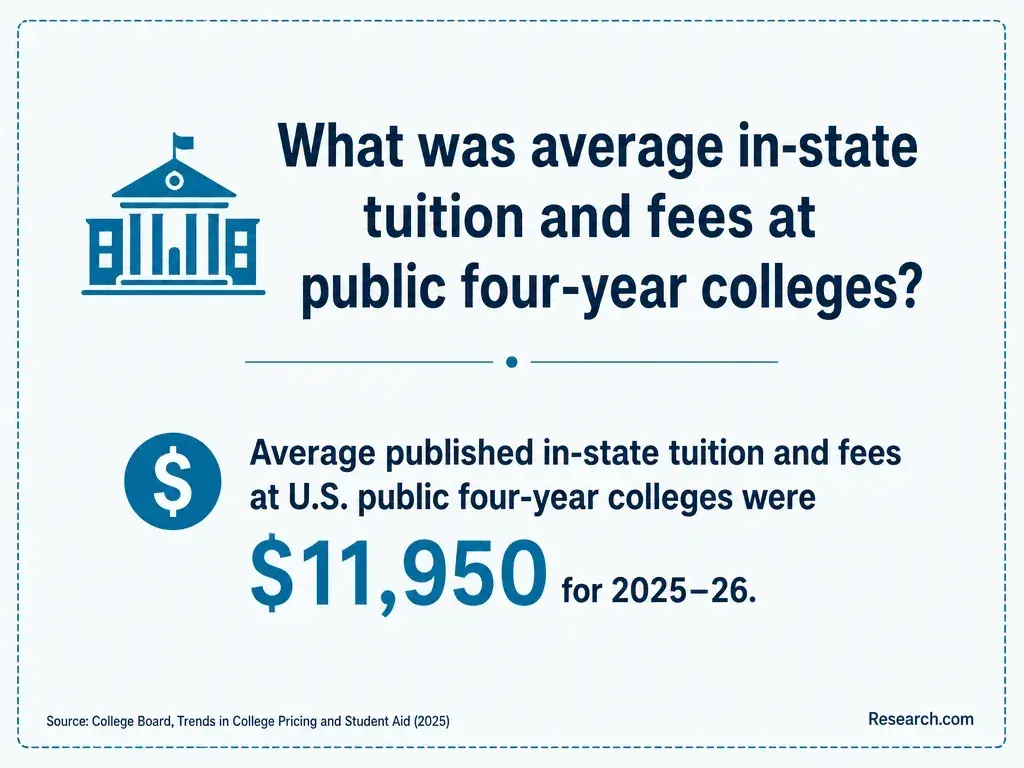
Compare a personalized estimate of tuition and mandatory fees through graduation, not an advertised price per course alone. Include technology charges, materials, potential placement travel, and the cost of taking fewer courses while working. Financial aid depends on the school and your eligibility; an overview of FAFSA for online substance use counseling undergraduates may help if you are weighing that adjacent bachelor's route, but confirm aid for the specific psychology program you choose.
Potential settings include hospice-adjacent community services, family-support organizations, victim services, and programs serving older adults. Job titles such as intake coordinator, bereavement program assistant, outreach worker, or research assistant describe different duties; the BA is relevant preparation, not automatic eligibility. Employers may require experience, background checks, training, or credentials in addition to a degree.
Look for supervised opportunities to practice resource navigation, accessible written communication, appropriate documentation, and referral when someone's needs exceed your role. A hospice volunteer position, for example, may teach respectful support but should not be presented as therapy training. If your target job is providing counseling rather than coordinating support, investigate choosing a shorter clinical mental health counseling master's only after confirming that the program and subsequent supervised steps fit your state's rules.
There is no single salary or growth rate for "grief and bereavement psychology graduates." The U.S. Bureau of Labor Statistics reports by occupation, not by undergraduate elective or concentration. Its social and human service assistants category can provide context for some support roles, but a hospice organization's coordinator job may have different duties, qualifications, and pay. Licensed counseling occupations should not be used as a BA graduate's expected outcome.
Use the current Occupational Outlook Handbook entry that matches the actual job duties, then compare local postings for required experience and offered pay. If you are considering further education to reach a regulated role, weigh those occupation-specific prospects against the additional training expense; planning the time and cost of a counseling master's is a separate calculation from the return on a psychology BA.
How Can You Choose a Reputable Online Psychology Program?
Choose by documented curriculum and feasible completion, not the prominence of "grief" in marketing. Ask an advisor for the degree map and recent course schedule, and ask a faculty member whether a bereavement-related research or capstone topic can receive appropriate supervision. If applied learning matters, request the placement rules and find out who secures a site, what duties are allowed, and whether local opportunities are realistic.
Finally, obtain an individualized degree audit and full cost estimate, confirm institutional accreditation with the accreditor, and compare student support for online research and career development. For adults returning to study, psychology degree affordability for returning adults is most useful when assessed alongside remaining credits and course availability. A cheaper program that cannot offer a needed course on schedule may be the slower, costlier choice.
Other Things You Should Know About Psychology
No. Stage models should not be treated as a fixed sequence or a test of whether someone is grieving correctly. Responses vary across people, relationships, and circumstances.
No. Grief is a human response to loss. A qualified clinician may evaluate persistent, impairing symptoms when appropriate, but students and support workers should not diagnose someone based on how they grieve.
It refers to grief-related responses that may arise before an expected loss, such as during a loved one's serious illness. It does not imply that the person's later experience is predictable.
Often, a reflective assignment may allow it, but check the instructor's expectations and your own comfort. If a project involves other people's experiences or private records, obtain the required permissions and ethical guidance first.
- Grief and Prolonged Grief Disorder - StatPearls - NCBI - NIH https://www.ncbi.nlm.nih.gov/books/NBK507832/
- Frequently Asked Questions for Mental Health Counselors | nysed.gov https://www.op.nysed.gov/professions/mental-health-counselors/faqs-education-requirements
- Coping with Bereavement and Grief | samhsa.gov https://www.samhsa.gov/communities/coping-bereavement-grief
- A public health perspective on Prolonged Grief Disorder | umich.edu https://sph.umich.edu/pursuit/2023posts/public-health-perspective-on-prolonged-grief-disorder.html
- Online Bachelor of Arts in Psychology | UML GPS https://gps.uml.edu/degrees/undergrad/online-bachelors-psychology-degree.cfm
- Online Mental Health Concentration | SNHU https://www.snhu.edu/online-degrees/bachelors/ba-in-psychology/mental-health
- Aging and Applied Thanatology, Certificate | umaryland.edu https://graduate.umaryland.edu/thanatology/
- Online Psychology B.A. or B.S. Degree Completion Program | gsu.edu https://online.gsu.edu/program/psychology-ba-or-bs-completion-program/
- Online Bachelor's in Psychology | University of Kansas https://online.ku.edu/undergraduate-programs/online-bachelors-psychology
- The Accreditation of Counseling Programs Matters | UWSuper https://online.uwsuper.edu/degrees/education/msed/counseling-accreditation-need-to-know/