2027 Online BA in Psychology - General Psychology Admissions with a College Application After Academic Bankruptcy: What to Ask Before Applying
Audited and Verified:
Our Editorial and Data Verification Process
Research.com uses government datasets, official education statistics and primary institutional information to support its career and degree guides. Our review process checks factual accuracy, occupational definitions, source dates and the requirements associated with the credentials discussed.
How This Article Was Fact-Checked
Our editorial team verifies salary estimates, employment projections, education requirements and program information against original data providers and official organizations. Salary figures are checked against the relevant occupational definitions and reporting periods. Information about licensure, accreditation and required in-person training is reviewed separately.
Fact-checked and verified on:

Co-Founder and Chief Data Scientist
Academic bankruptcy may give you a fresh start at your current college, but an online psychology program may review your earlier grades differently. If you are returning to school, the decision is not simply whether you can be admitted: it is whether your credits will count, you can afford the remaining work, and the program fits your schedule.
This guide explains what academic bankruptcy does - and does not - change, the documents to gather, and the questions to put to admissions, transfer-credit, and financial-aid staff before paying an application fee.
Key Things You Should Know
- Admission is possible, not automatic: Academic bankruptcy usually remains visible on your transcript, and a new college may calculate your admission GPA from all attempted coursework.
- Get three separate answers: Ask whether you qualify for admission, which credits satisfy the psychology degree, and whether you qualify for financial aid. Approval in one area does not settle the others.
- Request a written degree audit before enrolling: Accepted transfer credits may count only as electives; major requirements, course sequencing, and residency rules determine your remaining time and cost.
What Is an Online BA in General Psychology?
An online bachelor of arts in general psychology studies behavior and mental processes across areas such as development, cognition, social psychology, and research methods. "General" usually means a broad major rather than a formal clinical specialization. A BA may leave room for humanities, language, or other electives, but its requirements depend on the college; a BS is not automatically more rigorous or less transferable.
For a returning student, the useful distinction is between entry into the college and completion of this particular major. An introductory psychology course might transfer, while a statistics course might need departmental review before it replaces a major requirement.
Neither degree qualifies its holder to diagnose conditions or provide psychotherapy. If that is your eventual goal, compare the BA with the subsequent professional education required; comparing condensed accredited counseling study routes concerns a different, graduate-level decision, not a shortcut built into a psychology BA.
Can You Get Into an Online Psychology Bachelor's Program After Academic Bankruptcy?
Yes, potentially. Academic bankruptcy - also called academic renewal or forgiveness at some colleges - is a school policy that reduces or excludes specified older grades from that school's GPA calculation. It generally does not erase courses from an official transcript or require another institution to ignore them. The receiving college sets its own admissions and transfer rules.
Ask whether the online program reviews your cumulative GPA across all colleges, the GPA shown after renewal, your most recent coursework, or some combination. Also ask whether the psychology major has a separate admission threshold. A school could admit you but require additional coursework before you enter the major.
Bring the renewal decision and transcripts from every college attended, including coursework you hope not to transfer. For a broader look at how institutions handle prior study, consult psychology degree transfer pathways, then obtain the prospective college's own evaluation. Withholding a transcript can jeopardize an application; renewal is something to document, not conceal.
How Do You Choose an Accredited Online Psychology Bachelor's Program?
Check the institution's current accreditation with its recognized institutional accreditor and confirm that the online BA is an authorized offering of that institution. APA accreditation is not the test for a general psychology bachelor's degree: APA's program accreditation applies to specified professional psychology training, not ordinary BA majors.
Accreditation alone will not tell you whether the program is finishable with your record. Compare written policies for transfer appeals, minimum grades in the major, credits that must be completed at the institution, course rotation, leave of absence, and access to online advising. Ask whether live classes, research meetings, exams, or any campus visits are required.
If you are comparing a specialized alternative, examine its actual curriculum and degree designation rather than assuming it has the same transfer rules; guides to forensic psychology degree formats and academic requirements illustrate why the named program and its requirements matter more than a broad subject label.
Requirements vary by school and by whether you apply as a transfer or a first-time student with prior college work. Admissions staff, the registrar or transfer office, the psychology department, and financial-aid staff may each make a different decision. This table separates those decisions so you can identify the right authority.
| Decision | What may be reviewed | Responsible office |
| College admission | All prior transcripts, grades, academic standing, application materials | Admissions |
| Psychology major eligibility | Prerequisite grades and any major-specific standards | Psychology department or academic advising |
| Transfer and degree credit | Course content, grades, credit units, general education, major, and residency requirements | Registrar or transfer evaluation office |
| Financial-aid eligibility | Applicable aid rules and satisfactory academic progress | Financial-aid office |
Before applying, assemble official-transcript information, the academic-bankruptcy approval, course descriptions or syllabi for disputed equivalents, and an explanation of what changed since the earlier grades. Ask admissions how it recalculates GPA and handles prior dismissal or probation. Ask financial aid whether an appeal is needed under its satisfactory academic progress policy; admission does not establish aid eligibility.
Do not confuse this undergraduate application with graduate admission. Articles on faster pathways through graduate psychology coursework address programs that ordinarily require an eligible bachelor's degree first. The immediate task is to establish a workable undergraduate admission and completion plan.
Expect an introduction to psychology, study of several major subfields, statistics, and research methods, alongside general education and electives. Some programs require a capstone or advanced seminar; others offer optional research or nonclinical applied experiences. Read the catalog for your intended entry term rather than assuming that courses with similar names are interchangeable.
After academic bankruptcy, ask the psychology department to review statistics and methods especially carefully. An accepted statistics course may fill elective credit without meeting a psychology-major prerequisite; a failed or forgiven course may still affect whether a sequence must be repeated.
If an addictions focus interests you, addiction psychology undergraduate degree selection is a separate comparison. Coursework about substance use does not, by itself, qualify you for a regulated counseling role.
Your completion time depends on credits applied to requirements, not just credits accepted. A college may award elective credit for earlier work while still requiring psychology prerequisites, upper-level courses, and a minimum amount of study in residence. Classes offered infrequently can extend the schedule even when your total remaining credits look manageable.
Request a term-by-term plan showing required courses, prerequisites, expected availability, and a realistic course load. If you work or provide care, ask which classes have fixed meeting times and whether a slower term affects aid. Advertised fast-paced BA and BS forensic psychology pathways can provide a comparison point, but an accelerated schedule is useful only if your approved credits and weekly availability support it.
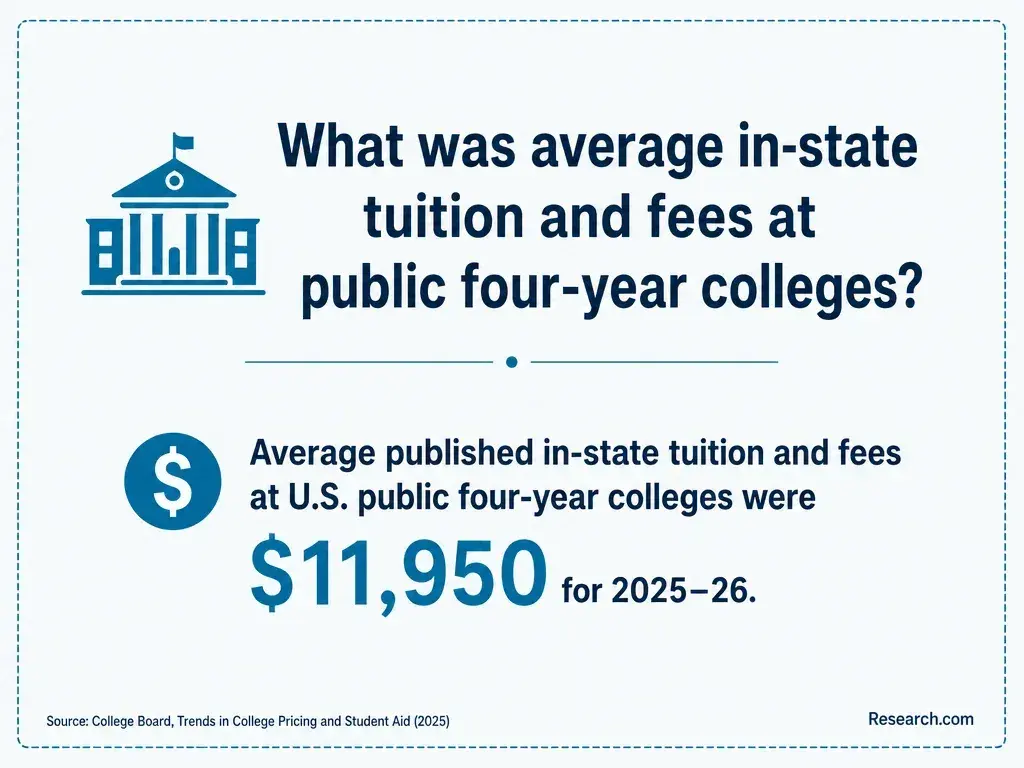
There is no reliable personal total until a school provides both its charges and your degree audit. Compare tuition for the remaining required credits, mandatory online or technology fees, books, possible travel, and the cost of repeating courses. A low per-credit price can be a poor value if fewer prior courses fulfill the degree.
Ask for a written estimate at your intended enrollment pace and a separate financial-aid review. Academic bankruptcy at a prior college does not automatically resolve a new school's satisfactory academic progress assessment, and a credit load that fits your schedule may affect aid.
If you already hold a bachelor's degree, avoid assuming a second BA is the least expensive way to reach your goal; compare targeted prerequisites or, where appropriate, low-cost master's degrees in psychology against their actual entry requirements and outcomes.
Online delivery can reduce commuting and widen your choice of schools, which matters if your local college will not apply enough prior coursework. Campus study may offer easier access to in-person research teams, peer support, or tutoring. Neither format overrides admission rules or guarantees that a class fits around work and caregiving.
Compare the timetable rather than the label: recorded lessons can coexist with live discussions, scheduled group work, or supervised experiences. Ask how online students meet faculty, obtain research experience, and access academic support after a difficult earlier enrollment.
The same distinction applies when considering later study: descriptions of forensic psychology master's completion time comparisons should not be taken as evidence that every online course - or the undergraduate degree you need now - is fully asynchronous.
A psychology BA can support applications for nonclinical work in human services, community outreach, research support, program coordination, or roles that value interviewing, writing, and data literacy. Employers may also require relevant experience, a background check, a different credential, or training specific to the position. Your previous work and any supervised project may matter as much as the major's name.
Choose electives and experience against a target job description. A prospective research assistant might prioritize methods and data handling; a community-service applicant might seek supervised experience with referrals, documentation, and respectful client interaction. Neither should represent academic study as clinical practice.
For a substantially different graduate-level specialization, forensic psychology master's careers and earning potential addresses a separate investment decision rather than an automatic outcome of this BA.
What Salary and Licensing Options Follow a Psychology Bachelor's Degree?
There is no single salary for "psychology BA graduates": pay depends on the occupation, employer, location, and experience. When evaluating a job, use wage information for its specific occupation, such as the appropriate entry in the U.S. Bureau of Labor Statistics Occupational Outlook Handbook, alongside current local postings. An occupation-wide median is not a starting-salary offer or a program outcome.
A general psychology BA does not authorize independent psychological assessment, diagnosis, or psychotherapy. If you intend to become a licensed counselor or psychologist, identify the exact occupation and state first, then check the responsible licensing board's education, supervised-experience, and examination rules.
For example, information on clinical counseling master's duration and earning potential concerns a later professional pathway, not a license conferred by the BA. If your immediate aim is advancement in an existing nonclinical role, employer training or a targeted course may be more direct than another degree.
Other Things You Should Know About Psychology
Do not assume so. It usually changes an institution's treatment of grades rather than deleting the academic record. Ask the school that granted it what appears on official transcripts, and answer application questions accurately.
If the application allows it, briefly explain the circumstances and focus on concrete evidence of readiness now, such as successful recent coursework or a sustainable study plan. Follow the school's instructions rather than sending an unsolicited statement.
Possibly, but obtain advance written approval for the specific course and requirement. A course taken without approval may transfer only as an elective or not at all.
A financial bankruptcy is different from academic bankruptcy and does not, by itself, describe your academic eligibility. Direct questions about tuition payment and aid to the prospective college's financial-aid and student-accounts offices.
- Staying Eligible | Federal Student Aid https://studentaid.gov/understand-aid/eligibility/staying-eligible
- Program Integrity Questions and Answers - Satisfactory Academic Progress | U.S. Department of Education http://www.ed.gov/laws-and-policy/higher-education-laws-and-policy/program-integrity-information-questions-and-8
- Definitions | Transfer Credit Ohio https://transfercredit.ohio.gov/educational-partners/educational-partner-initiatives/articulation-transfer-policy-policy/articulation-transfer-policy-definitions
- Course Work Taken Elsewhere - USC Catalogue https://catalogue.usc.edu/content.php
- Satisfactory Academic Progress | Office of Student Financial Aid | The University of Iowa https://financialaid.uiowa.edu/eligibility/satisfactory-academic-progress
- How law schools look at your academic record | L&S Advising https://lsadvising.berkeley.edu/news/how-law-schools-look-your-academic-record
- Transfer Credit Guidelines | Undergraduate Admissions https://admissions.uconn.edu/apply/transfer/transfer-credit-guidelines/
- Academic bankruptcy policies in higher education | uni.edu https://scholarworks.uni.edu/cgi/viewcontent.cgi
- Satisfactory Academic Progress Policy | Financial Aid https://finaid.gatech.edu/manage-aid/academic-progress
- Prospective Students | University of North Texas https://pahs.unt.edu/psychology/academics/counseling-psychology/prospective-students.html