2027 Online BA in Psychology - Addictions After an AAS in Behavioral Health: Compare Transfer Credit and Remaining Coursework
Audited and Verified:
Our Editorial and Data Verification Process
Research.com uses government datasets, official education statistics and primary institutional information to support its career and degree guides. Our review process checks factual accuracy, occupational definitions, source dates and the requirements associated with the credentials discussed.
How This Article Was Fact-Checked
Our editorial team verifies salary estimates, employment projections, education requirements and program information against original data providers and official organizations. Salary figures are checked against the relevant occupational definitions and reporting periods. Information about licensure, accreditation and required in-person training is reviewed separately.
Fact-checked and verified on:

Co-Founder and Chief Data Scientist
A behavioral health AAS can give you a head start on an online psychology bachelor's degree, but the number of credits a college accepts is not the same as the number that advances you toward graduation. That distinction matters if you are choosing between programs while working in addiction or community services.
This guide shows how to compare transfer evaluations, identify remaining psychology and addictions coursework, and estimate time and cost without relying on an advertised "credits accepted" figure. It also explains when a different credential may better serve your career goal.
Key Things You Should Know
- Ask each college for a degree audit showing where AAS courses apply - not just a total of accepted credits. General education, major requirements, upper-division credits, and residency rules can leave different amounts of work at two schools.
- For illustration, a bachelor's requiring 120 semester credits with 60 credits applied still has 60 credits remaining; prerequisites and course scheduling determine how long those credits take.
- An addictions-focused psychology BA supports study and some nonclinical roles, but it does not itself authorize addiction counseling, psychotherapy, diagnosis, or independent psychological assessment.
What Is an Online BA in Psychology With an Addictions Focus After an AAS?
It is a bachelor of arts degree combining a psychology major with addiction-related study, entered after an associate of applied science in behavioral health. The focus might be an officially named concentration, a track, or simply a set of electives; those designations are not interchangeable. Check the degree title and transcript notation rather than assuming that a course on substance use creates a formal specialization.
An AAS often emphasizes job-oriented coursework and supervised support skills. A psychology BA usually adds broader psychological science, research methods, general education, and advanced courses. If you are comparing addiction psychology BA and BS degree options, compare their actual degree requirements: a BS may require more science or quantitative work, but the letters alone do not establish a consistent difference across colleges.
This route makes sense if you want a bachelor's credential, stronger research literacy, or preparation for further study. If your immediate goal is a particular addiction-services credential, check that credential's rules first; a psychology BA is not necessarily the most direct qualifying education.
How Much Transfer Credit Can You Apply From a Behavioral Health AAS?
There is no dependable AAS-to-BA credit total without a receiving college's evaluation. A college may accept a course as elective credit yet decline to use it for a psychology requirement. Applied courses can be particularly difficult to match to upper-division psychology courses even when their subject matter overlaps.
The following comparison shows why the placement of credit matters more than an acceptance total.
| AAS coursework | Possible BA application | What the receiving college must decide |
| English composition or mathematics | General education | Whether it matches a specific requirement |
| Introduction to psychology or statistics | Major foundation or prerequisite | Whether content, level, grade, and recency meet department rules |
| Addiction services or behavioral health practice | Concentration course or elective | Whether applied content is equivalent to an academic course |
| AAS internship or practicum | Elective credit, if accepted | Whether it can satisfy any BA experiential requirement |
Request official transcripts, course descriptions, syllabi for disputed courses, and documentation of any graded fieldwork. Send them to the transfer-credit office and request a psychology department review where major equivalency is at issue. Ask for a written degree audit, and use the school's appeal process if a substantial match was overlooked. Do not enroll in a replacement statistics or methods course until its equivalency has been decided.
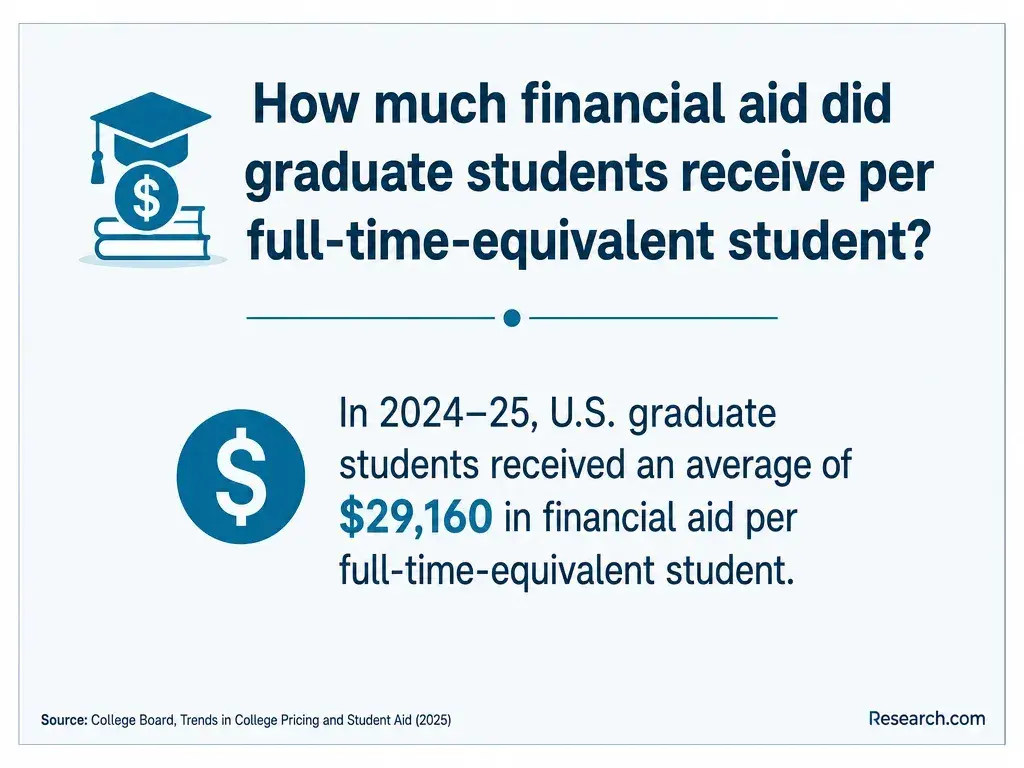
Credit decisions also affect financing: credits that do not apply to your program may not help you make progress toward aid-eligible degree completion. For funding questions, reducing undergraduate substance abuse counseling tuition through aid offers related avenues to investigate; confirm eligibility with your chosen school's financial-aid office.
How Much Coursework Remains After Transferring an AAS?
Subtract credits applied to the degree from the bachelor's total, then check requirements that the subtraction misses. As an illustration - not a prediction - if a program requires 120 semester credits and applies 60 AAS credits, 60 credits remain. Another school might accept the same coursework but apply less of it to required categories.
The remaining-work comparison below separates credit quantity from requirements that can delay graduation.
| Remaining requirement | Why it may persist after an AAS |
| General education | An applied associate degree may not include the receiving college's full distribution. |
| Psychology foundations and methods | Courses may lack an approved equivalent or be prerequisites for advanced work. |
| Upper-division psychology and addictions study | Lower-division AAS courses may transfer without meeting advanced-course rules. |
| Residency and capstone | The college may require courses completed through its own program, including a culminating course. |
Compare schools using the same AAS transcript and ask each for a term-by-term plan. A school accepting more credits may still require more semesters if a prerequisite is offered infrequently. When comparing affordable psychology colleges online, use the quoted cost of your remaining required courses, not the advertised price of an entire degree or the headline transfer maximum.
Requirements vary, but a psychology major commonly includes foundations such as developmental, social, biological, or abnormal psychology; statistics and research methods; and advanced writing or a capstone. An addictions focus may add the psychology of substance use, prevention, recovery systems, and the social and cultural context of addiction. Course titles alone do not establish clinical training.
For an AAS graduate, sequencing is as important as the course list. Ask whether your statistics course satisfies the major, whether research methods must precede upper-division electives, and whether an addictions course is offered every term. If the program includes an internship or applied project, get written confirmation before assuming your current behavioral health job can fulfill it; site approval, supervision, learning objectives, and confidentiality rules may apply.
Some online colleges offering addiction counseling study organize coursework around a different degree and occupational goal. Compare their published curriculum with the psychology BA and your state's credential rules rather than treating the two program names as equivalent.
Admission to the college, admission to the psychology major, and approval of transfer courses can be separate decisions. Colleges commonly request an application and official college transcripts; some majors set additional grade or prerequisite conditions. An AAS may qualify you to apply as a transfer student without guaranteeing junior standing in the major.
Before applying, ask admissions whether your AAS institution and coursework are eligible for review, and ask the psychology department whether any courses or grades are required for major entry. Confirm whether evaluations are preliminary or final, when official transcripts are due, and whether a transfer agreement explicitly covers your AAS and intended BA. Psychology program admissions and curriculum comparisons can help generate a shortlist, but the receiving institution's written policies and evaluation control your admission and degree plan.
Completion time depends on applied credits, remaining prerequisite sequences, course availability, and how many courses you can sustain per term. A student working in behavioral health may need a slower pace than a program's advertised fastest path, particularly if live classes or a placement conflict with shifts.
Request a proposed schedule showing when each outstanding course is actually offered, including the capstone and any internship. Check whether summer courses, shorter terms, or an approved heavier load would shorten the schedule without compromising grades or aid eligibility. Fast-track psychology degree programs online are worth comparing only after you know which of their requirements your AAS satisfies; an accelerated calendar cannot eliminate missing prerequisites or residency rules.
Your likely cost is the price of remaining required study, not the school's published tuition rate in isolation. Compare each college's per-credit or per-term charges, mandatory online fees, books or software, possible placement expenses, and any tuition change tied to enrollment status or residency. Obtain a school-specific estimate after the degree audit; without both an approved course count and a published rate for your enrollment category, a precise total would be misleading.
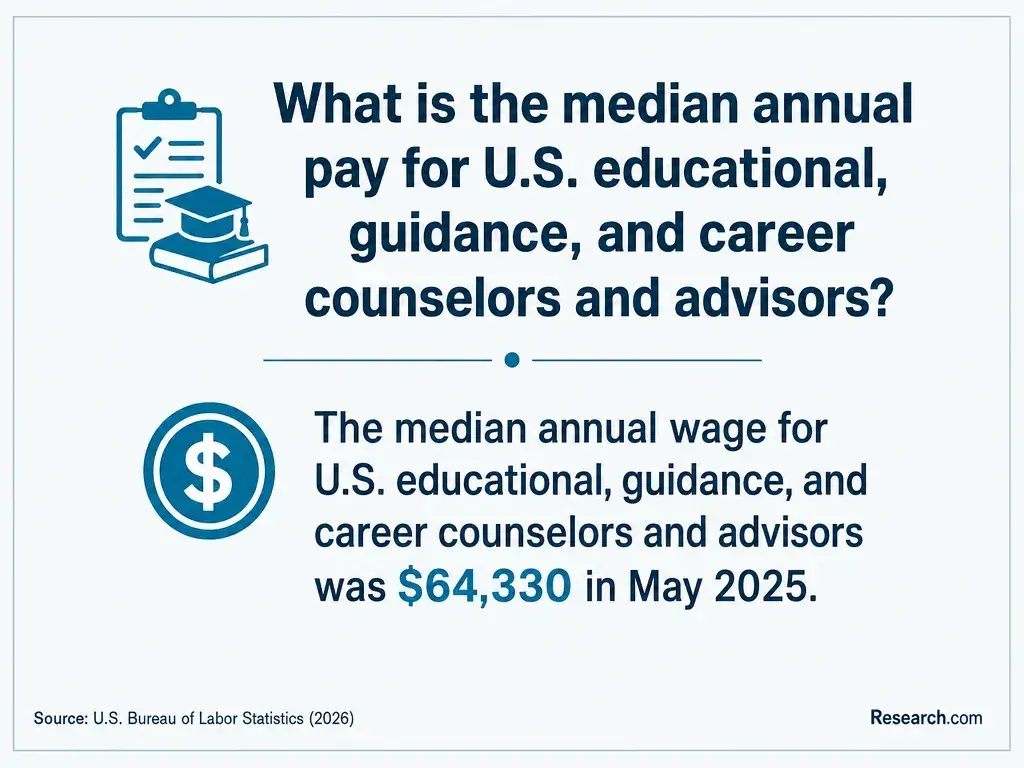
Ask financial aid to estimate eligibility at your intended course load and explain how previously attempted credits, satisfactory academic progress, and employer reimbursement affect the plan. The comparison of substance use counseling undergraduate tuition versus salary outlook may help frame the expense, but an occupation-wide wage is not a forecast of what a psychology BA graduate will earn. If a state-recognized credential rather than the bachelor's is your immediate goal, price that route separately.
An online BA can remove routine commuting, but it may still require scheduled discussions, group meetings, proctored work, or local field experience. A campus program may provide easier access to faculty, research teams, and nearby agencies. Neither format automatically offers a better transfer evaluation or a qualifying addictions placement.
Check each option's institutional accreditation, actual course schedule, advising access, internship policy, and written treatment of your AAS. Institutional accreditation matters for degree recognition and aid considerations; do not assume that the American Psychological Association accredits a general undergraduate psychology BA. If you are also considering a justice-focused alternative, resources for comparing accredited forensic psychology degree programs should be evaluated against a different career objective - not used as evidence that forensic coursework will advance an addictions-focused BA.
With an AAS and relevant experience, a BA may strengthen an application for nonclinical behavioral-health outreach, recovery-service coordination, intake support, prevention programming, or human-services case coordination. Actual duties and hiring standards depend on the employer and state. Work may involve documenting contacts, explaining services, arranging referrals, and communicating with a supervised team - not independently diagnosing or treating substance use disorders.
Assess the degree against the job you want next. Ask employers whether they require a bachelor's, a specific addiction credential, experience, or some combination; then identify which missing requirement the BA would address. A supervised project evaluating a prevention program, using authorized and appropriately protected data, may demonstrate research and communication skills without claiming clinical competence.
For a justice-system career change, short-duration online forensic psychology graduate options represent a separate educational decision, not a necessary next step from an addictions BA. Check the target job's qualifications before paying for another degree.
What Licenses and Certifications Require More Than a Psychology Bachelor's Degree?
A psychology BA with addictions coursework does not itself qualify you to practice as a psychologist, provide independent psychotherapy, or claim an addiction counselor credential. State rules for substance use disorder counselors differ: a particular credential may require specified courses, supervised experience, an examination, or a qualifying degree. Peer-support credentials can follow different rules and should not be confused with clinical counseling licenses.
If you intend to become a licensed mental health counselor, investigate a graduate program designed around the educational requirements of the state where you plan to practice, along with subsequent supervision and examinations. When budgeting for that distinct pathway, mental health counseling tuition fees and financial aid are more relevant than the BA's price alone. Before enrolling anywhere, ask the relevant state licensing or certification authority to identify its requirements and ask the program, in writing, how its curriculum maps to them.
Other Things You Should Know About Psychology
Usually, you can submit older coursework for review, but a college may apply recency rules to particular subjects or prerequisites. Ask for a course-specific decision rather than assuming the whole AAS has expired.
Only if the college formally offers and records one under its policies. Ask for the official degree and concentration wording before enrolling.
Possibly, if the program approves the site, duties, supervisor, and learning plan in advance. Employment alone does not establish internship credit.
You can ask whether an application can proceed while evaluation is pending. Before committing to a program, obtain the most complete written degree audit available so you can compare remaining work.
- Cost of Attendance (Budget) | 2025-2026 Federal Student Aid Handbook https://fsapartners.ed.gov/knowledge-center/fsa-handbook/2025-2026/vol3/ch2-cost-attendance-budget
- Counselor Certification - DHCS - CA.gov https://www.dhcs.ca.gov/providers-partners/counselor-certification/
- Transfer Resources - Texas Higher Education Coordinating Board https://www.highered.texas.gov/transfer-resources/
- Undergraduate Transfer Credit | Texas A&M University-San Antonio Catalog https://catalog.tamusa.edu/undergraduate/student-enrollment/transfer-credit/
- A-2: Transfer Student and Transfer Course Processes | psu.edu https://aappm.psu.edu/policy/a-2-transfer-student-and-transfer-course-processes
- Frequently asked questions - ASU Department of Psychology https://psychology.asu.edu/addmission/masters-admission/ms-addiction-psychology/faq
- Policy on Awarding Academic Credit, Transfers and Substitutions | uthscsa.edu https://catalog.uthscsa.edu/generalinformation/generalacademicpolicies/policyonawardingacademiccredittransfersandsubstitutions/
- Transfer Glossary - NCCCS https://www.nccommunitycolleges.edu/transfer-glossary/
- Transfer Admissions Process | Undergraduate Admissions | University of Houston https://www.uh.edu/undergraduate-admissions/apply/transfer/transfer-process/
- AAS Pathways - Transfer Admissions & Engagement https://transfer.appstate.edu/future-students/transferring-credits/aas-pathways