2027 How Fast Can You Get a Physical Therapy Assistant Degree Online?

Co-Founder and Chief Data Scientist
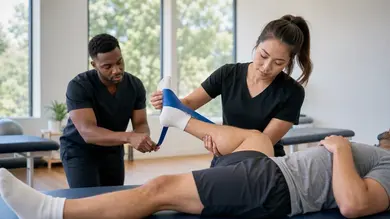
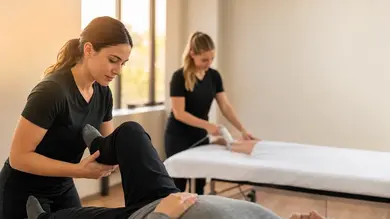
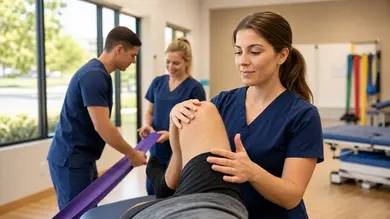
If you want to become a physical therapist assistant, the key question is not whether you can complete the degree “online” in the same way you might complete a business or general studies program. PTA training requires supervised labs and clinical education, so most online options are actually hybrid programs: academic courses may be delivered online, but hands-on skills practice and clinical rotations must be completed in person.
That distinction matters because it affects your timeline, work schedule, cost, commute, and eligibility for licensure. A faster program can help you enter the workforce sooner, but it must still meet accreditation, clinical training, and exam-preparation requirements. Cutting corners on those pieces can put your licensure path at risk.
This guide explains how long online and hybrid PTA programs usually take, what can and cannot speed up completion, how transfer credit and prior learning may help, and what to check before choosing an accelerated program.
What are the benefits of pursuing a degree in Physical Therapy Assistant online?
- Online fast-track programs enable completion in as little as 12 to 18 months, accelerating entry into the growing Physical Therapy Assistant workforce, expected to grow 27% through 2030.
- Flexible scheduling supports students balancing jobs, family, or clinical hours, with asynchronous lectures and remote coursework increasing accessibility for diverse demographics.
- Virtual labs and interactive modules provide practical skill development remotely, enhancing readiness for on-site clinical placements without compromising educational quality.
How long does it typically take to earn a degree in Physical Therapy Assistant?
Most students preparing to become a physical therapist assistant earn an Associate of Applied Science degree. For full-time students, the typical timeline is about two years. Online and hybrid PTA programs generally follow a similar schedule because accredited programs must include both classroom instruction and supervised clinical education.
The Commission on Accreditation in Physical Therapy Education (CAPTE) sets standards for PTA programs, which is why even programs with online coursework still require in-person labs, skills checks, and clinical rotations. Hybrid programs such as those at Rasmussen University and San Juan College may reduce weekly campus attendance, but they do not remove the hands-on requirements.
| Pathway | Typical completion time | What to know |
| Full-time PTA associate degree | Approximately two years | This is the standard route for initial PTA preparation. |
| Part-time PTA enrollment | Longer than full-time study | Some programs use cohort schedules, which can limit how slowly or flexibly students progress. |
| Hybrid online PTA program | Often similar to campus-based timelines | Online lectures may add flexibility, but labs and clinical rotations still occur in person. |
| Doctor of Physical Therapy pathway | Six to seven years post-high school | This is the route to becoming a licensed physical therapist, not a PTA. |
Students should be cautious of any program suggesting that initial PTA preparation can be completed almost entirely online or in an unusually short period. Because patient-care skills must be practiced and assessed in person, finishing much faster than the standard timeline is usually difficult.
Students who plan to move beyond the PTA role should also understand that a Doctor of Physical Therapy is a separate doctoral-level pathway. PTA-to-PT bridge options exist, but they are uncommon and seldom fully online.
Are there accelerated Physical Therapy Assistant online programs?
There are accelerated and flexible PTA-related programs, but students should read the details carefully. For initial PTA licensure preparation, the fastest legitimate options are usually hybrid rather than fully online. They may compress coursework, use intensive lab sessions, or accept prior credits, but they still require in-person clinical training.
Examples of accelerated or flexible PTA-related options include:
- Clarkson College: Offers a hybrid program designed for students who already have prior credits or an associate degree. Students complete online coursework and attend on-campus skills weekends, which can make the program more workable for adults who cannot relocate for a traditional campus schedule.
- San Juan College: Provides an online/hybrid PTA program designed to be completed in five semesters. Students attend campus for intensive lab sessions lasting 9 to 18 consecutive days each semester, so travel planning and time away from work are important considerations.
- Pima Medical Institute: Offers an online Bachelor of Science in Physical Therapist Assistant program for working PTAs who want to continue their education. This option takes about 16 months to complete and focuses on leadership and evidence-based practice rather than initial PTA certification.
The most important distinction is whether the program prepares new students for PTA licensure or supports already licensed PTAs seeking degree advancement. A bachelor’s completion program for current PTAs is not the same as an entry-level associate degree program.
If your broader goal is rapid educational advancement in healthcare or a related field, you may also want to compare PTA options with other short graduate pathways, including 1 year master programs online. Just be sure the credential matches the role you actually want.
How do accelerated Physical Therapy Assistant online programs compare with traditional ones?
Accelerated online or hybrid PTA programs and traditional campus-based PTA programs are designed to lead to the same professional outcome: eligibility to pursue PTA licensure after completing an accredited program and meeting exam requirements. The differences are mainly in scheduling, delivery format, pace, and how much independent planning the student must manage.
| Factor | Accelerated online or hybrid PTA program | Traditional PTA program |
| Pacing | May be completed in as little as 18 months, depending on the program and student readiness. | Typically takes about two years. |
| Course delivery | Academic content may be delivered online, with required in-person labs and clinical rotations. | More instruction is commonly scheduled on campus. |
| Flexibility | Can offer more control over when students complete lectures, readings, and assignments. | Often follows a fixed weekly class and lab schedule. |
| Workload | Usually more compressed, which can make weekly study demands heavier. | Still rigorous, but the pacing may feel more manageable for some students. |
| Hands-on training | Required in person; online delivery does not replace patient-care practice. | Required in person through labs and clinical education. |
| Licensure preparation | Should prepare students for the National Physical Therapy Examination for Physical Therapist Assistants (NPTE-PTA) if properly accredited. | Should also prepare students for the NPTE-PTA if properly accredited. |
The best choice depends on your schedule and learning style. An accelerated hybrid format may be a strong fit if you are organized, can travel for labs, and can handle a concentrated workload. A traditional format may be better if you need more predictable in-person support or prefer a steadier pace.
Students comparing PTA programs with other associate-level options can also review the easiest associates degree to get, but PTA should not be viewed as an easy shortcut. The clinical and licensure expectations make it a demanding healthcare program regardless of format.
Will competency-based online programs in Physical Therapy Assistant affect completion time?
Competency-based education can shorten a degree timeline when students are allowed to move ahead after proving mastery instead of waiting for a fixed term to end. In a PTA program, however, the effect is usually limited by required labs, clinical placements, and accreditation expectations.
In a competency-based PTA format, students may be able to move faster through some academic content if they already understand the material and can pass required assessments. This can be helpful for students with strong preparation in anatomy, physiology, medical terminology, or healthcare fundamentals.
The clinical side is different. PTA students must demonstrate safe patient-care skills under supervision, and those experiences are usually scheduled at approved sites. Even a highly motivated student cannot simply test out of supervised clinical education.
In practical terms, competency-based learning may reduce time spent on familiar coursework, but it should not be expected to eliminate the core hands-on timeline of a PTA degree. Before enrolling, ask the school which courses are truly competency-based, which requirements are fixed, and whether clinical rotations can be scheduled without delaying graduation.
Can you work full-time while completing fast-track Physical Therapy Assistant online programs?
Some students can work full-time while enrolled in a fast-track online or hybrid PTA program, but it is difficult and often depends on the flexibility of the job. The online portion may be easier to schedule around work, but labs, practical exams, and clinical rotations usually happen at set times and may conflict with standard business hours.
Before assuming you can keep a full-time schedule, estimate the weekly time required for lectures, readings, assignments, skills practice, lab travel, and clinical days. Accelerated programs compress the workload, so a course schedule that looks manageable on paper can become demanding quickly.
Questions to answer before enrolling
- Can your employer adjust your schedule during lab intensives or clinical rotations?
- Can you take time off for required campus visits or multi-day skills sessions?
- Do you have reliable transportation to clinical sites?
- Can you study consistently after work without falling behind?
- Do you have family or childcare support during high-demand weeks?
Students with flexible jobs, supportive employers, and strong time-management skills may be able to make full-time work feasible. Students with rigid shifts may need to reduce hours, use leave, or choose a less accelerated pathway.
Can prior learning assessments (PLAs) shorten Physical Therapy Assistant degree timelines?
Prior Learning Assessments can sometimes shorten a PTA degree, but they usually help most with general education or prerequisite requirements rather than core PTA courses. Because PTA programs must meet CAPTE standards and prepare students for supervised patient care, schools are cautious about awarding credit for clinical or technical courses.
Common PLA options include credit-by-examination, such as CLEP or DSST, portfolio review, and evaluation of military or professional training. A school may award credit if the prior learning clearly matches a course requirement and meets institutional policy.
The biggest limitation is that PTA-specific skills, labs, and clinical practice are difficult to replace through PLA. A student may know healthcare terminology or have patient-care experience, but the program still must verify competency in the exact skills required for PTA education and licensure preparation.
Some institutions cap the amount of PLA credit that can apply toward a degree, usually not exceeding one-third of the total degree. Students should ask each school which courses are eligible for PLA, what documentation is required, how long the review takes, and whether PLA credit affects program admission or financial aid status.
Can prior college credits help you get a degree in Physical Therapy Assistant sooner?
Prior college credit is one of the most realistic ways to shorten a PTA timeline, especially if you have already completed general education or science prerequisites. Transfer credit can reduce the number of courses you need to take before or during the program, although PTA-specific core courses rarely transfer.
Use the following steps to evaluate whether your previous coursework can help you graduate sooner:
- Compare general education requirements. PTA programs may accept prior credits in areas such as anatomy, physiology, English composition, and psychology when the courses match program requirements.
- Check course age limits. Some schools require science courses to be recent. For example, Sacramento City College requires anatomy and physiology courses be completed within the last 10 years.
- Confirm grade requirements. Many programs require a minimum GPA of 3.0 in prerequisite courses. Grades such as “P” or “CR” often convert to a “C” grade, and some schools do not accept grades below a C-minus.
- Submit official transcripts early. Transfer evaluations can take time, and incomplete records may delay admission decisions.
- Ask about petitions or substitutions. If a prior course is similar but not identical, the school may require a petition for review. Allow 2-3 weeks for processing when the school provides that timeline.
- Verify PTA course transfer limits. Even with substantial prior credit, you should expect to complete most specialized technical, lab, and clinical courses through the PTA program itself.
The best strategy is to request a transcript review before applying or as early in the admissions process as possible. Do not assume credits will transfer just because they came from an accredited college; each PTA program applies its own curriculum, grade, and recency rules.
Students comparing costs across long-term education plans may also find it useful to understand broader online degree pricing, including online phd cost. For PTA students, however, the more immediate cost question is how much transfer credit can reduce tuition and time to completion.
Can work or military experience count toward credits in a degree in Physical Therapy Assistant?
Work or military experience may count for credit in some PTA programs, but it is more likely to apply to general education, elective, or foundational healthcare requirements than to core PTA clinical training. Programs must protect patient safety and meet accreditation expectations, so they rarely allow students to bypass essential lab and clinical competencies.
Schools may evaluate prior experience through credit-by-examination, portfolio review, military transcript review, or recommendations aligned with American Council on Education (ACE) guidelines. Examples of potentially relevant experience may include military medical training, healthcare support roles, or documented professional education, depending on the school’s policies.
To improve your chances of receiving credit, gather detailed documentation before applying. Useful materials may include military transcripts, certificates, job descriptions, training records, supervisor verification, and course syllabi from previous education. Ask the program which documents it accepts and whether the credits can apply to degree requirements rather than only to electives.
Even when credit is awarded, students should expect to complete the program’s required PTA skills courses and supervised clinical education. The fastest accredited PTA programs generally combine online coursework with mandatory in-person clinical hours and can be completed in about five semesters.
What criteria should you consider when choosing accelerated Physical Therapy Assistant online programs?
The right accelerated PTA program is not simply the shortest one. It should be accredited, realistic for your schedule, transparent about in-person requirements, and strong enough to prepare you for licensure and entry-level clinical work.
Use these criteria when comparing accelerated physical therapy assistant programs online:
- CAPTE accreditation: Confirm that the program is accredited by the Commission on Accreditation in Physical Therapy Education. Accreditation is central to licensure eligibility and should be verified directly, not assumed from marketing language.
- Licensure alignment: Ask whether the program meets education requirements for the state where you plan to practice and how it prepares students for the NPTE-PTA.
- In-person requirements: Review the exact number, timing, and location of campus labs, skills weekends, and clinical rotations. A “mostly online” program may still require significant travel.
- Clinical placement support: Find out whether the school arranges clinical sites or expects students to help secure them. Delayed placements can delay graduation.
- Program pace: Accelerated schedules save time but can increase weekly workload. Ask for a sample schedule before enrolling.
- Faculty qualifications: Look for instructors with relevant clinical experience and the ability to support online learners as well as students in labs and clinical settings.
- Student support: Prioritize programs with academic advising, tutoring, technical support, clinical coordination, and career services.
- Transfer and PLA policies: If you have prior college credit, military training, or healthcare experience, ask how much can apply and which requirements cannot be waived.
- Cost and financial aid: Compare tuition, fees, travel costs, lab expenses, books, uniforms, background checks, and exam-related costs. Students seeking lower-cost options may also review the best affordable online universities that accept financial aid.
- Outcomes data: Ask for graduation rates, licensure exam pass rates, and job placement information when available. Strong outcomes are especially important in an accelerated format.
A good program should be willing to answer detailed questions before you commit. If admissions staff cannot clearly explain accreditation, clinical placements, state licensure considerations, and required campus visits, keep looking.
Are accelerated online Physical Therapy Assistant degrees respected by employers?
Employers generally care less about whether PTA coursework was delivered online and more about whether the program was accredited, whether the graduate is eligible for licensure, and whether the graduate has completed meaningful hands-on clinical training. A well-designed accelerated hybrid PTA program can be respected when it meets those expectations.
CAPTE accreditation is the key signal of program quality. Graduates must also pass the National Physical Therapy Examination (NPTE) as part of the licensure process required in all states. Employers may also consider clinical experience, references, professionalism, and how well the graduate performs in interviews or practical settings.
Accelerated online PTA programs are most credible when they combine online academic coursework with structured in-person labs and supervised clinical rotations. Programs that are vague about clinical education or imply that hands-on training can be skipped should raise concern.
Students evaluating career paths in hands-on healthcare and technical fields may also compare PTA outcomes with careers you can pursue after trade school. For PTA specifically, the safest choice is an accredited program with clear licensure preparation and strong clinical partnerships.
What Physical Therapy Assistant Graduates Say About Their Online Degree
- : "The accelerated online format helped me keep working while I completed the academic part of the program. The schedule was flexible, but the labs and clinical rotations still required serious planning. Finishing sooner was worth it because I could move into rehab therapy with a clearer career direction. — Jeremy"
- : "I expected the online courses to be convenient, but I did not expect how demanding the program would be. Anatomy, skills practice, and clinical preparation took consistent effort every week. The format worked for my family schedule, but only because I treated it like a major commitment. — Colleen"
- : "Choosing an online PTA pathway helped me manage costs and reduce time away from home, but it was not an easy shortcut. The accelerated pace required focus, and the hands-on clinical work was essential. The degree helped me pursue clinical opportunities sooner than I could have with a slower schedule. — Darwin"
Other Things to Know About Accelerating Your Online Degree in Physical Therapy Assistant
Yes, clinical hours are a mandatory component of all accredited Physical Therapy Assistant programs, including online ones. Even though coursework can be completed remotely, students must arrange in-person clinical rotations or internships at approved healthcare facilities. These hands-on experiences are required for licensure eligibility and to develop practical skills.
In 2027, students can finance an online Physical Therapy Assistant degree through federal financial aid, scholarships, grants, and student loans. Some programs may also offer payment plans or discounts for upfront payments. Researching school-specific options is essential for maximizing available support.
Applicants usually need a high school diploma or GED and may require coursework in biology and anatomy to enroll in a Physical Therapy Assistant program in 2027. Some programs might also require completion of basic math and English courses prior to admission.
References
- How to Choose the Best PTA Program | Brookline College https://www.brooklinecollege.edu/blog/how-to-choose-the-best-pta-program/
- PHYSICAL THERAPIST ASSISTANT: ASSOCIATE IN APPLIED SCIENCE - Technical College of the Lowcountry https://www.tcl.edu/academics/pathways/health-sciences/physical-therapist-assistant-associate-in-applied-science/
- Physical Therapist Assistant Associate in Science | NSCC https://www.northshore.edu/academics/programs/pta/index.html
- How Long Does it Take to Become a Physical Therapist Assistant? - The Praxis Institute https://praxis.edu/how-long-does-it-take-to-become-a-physical-therapist-assistant/
- Online PTA Programs: Choose the School for You https://www.edumed.org/online-schools/physical-therapist-assistant-programs/
- Physical Therapist Assistant (PTA) | School of Allied Health Professions https://alliedhealth.llu.edu/academics/physical-therapy/physical-therapist-assistant-pta
- Physical Therapist Assistant Associate Degree Program https://pmi.edu/on-campus-programs/associate/physical-therapist-assistant/
- How to Become a Physical Therapist Assistant (PTA) | FranU | FranU https://franu.edu/how-to-become-a-pta
- Military PT Technicians: Getting your Associate’s degree. https://medium.com/@samanthasayward/military-pt-technicians-getting-your-associates-degree-e1ce228632f2
- PTA https://www.snu.edu/pgs/pta