2027 Online Physical Therapy Assistant Degree Programs With University Scholarships: Awards, Eligibility, and Net Cost

Co-Founder and Chief Data Scientist
An advertised tuition rate does not show what an online Physical Therapy Assistant degree will actually cost you. Institutional scholarships, grants, clinical-travel expenses, and enrollment rules can change the final bill substantially. For context, the Federal Pell Grant maximum is $7,395 for the 2025-26 award year, but eligibility and institutional aid vary by student and college.
This guide helps prospective PTA students compare university-funded awards, renewal terms, program delivery requirements, and out-of-pocket costs instead of choosing based on tuition alone.
Key Things You Should Know
- Online PTA education is usually hybrid, not fully remote: accredited programs require in-person labs and supervised clinical education, which can add travel, housing, and scheduling costs beyond online-course tuition.
- There is no standard institutional scholarship amount for PTA students; the strongest offer is the one that produces the lowest verified net cost after grants, scholarships, required fees, and clinical-placement expenses.
- Federal aid can materially affect affordability: the maximum Federal Pell Grant is $7,395 for the 2025-26 award year, but FAFSA eligibility, enrollment intensity, satisfactory academic progress, and a school's aid-packaging rules determine what a student can actually receive.
Which Online Physical Therapy Assistant Degree Programs Offer University Scholarships?
Students should start with an important distinction: a Physical Therapist Assistant is generally prepared through an associate degree from a program accredited by the Commission on Accreditation in Physical Therapy Education (CAPTE), followed by state licensure requirements. Because PTA training includes hands-on skills labs and clinical rotations, programs marketed as online typically combine online academic coursework with campus visits and local or assigned clinical experiences. A program claiming to be entirely online with no in-person clinical component deserves careful scrutiny.
University scholarships may be available through public community colleges, technical colleges, private colleges, and universities that operate accredited PTA programs. The scholarship may be open to all eligible students rather than reserved for PTA majors. Some schools also limit institutional awards to degree-seeking students, first-time students, full-time enrollment, campus-based programs, or particular residency categories.
The comparison below shows where institutional aid is commonly found and what to verify before treating an award as available to an online or hybrid PTA student.
| Program setting | Typical institutional-aid approach | What a PTA applicant should verify |
| Public community or technical college | Foundation awards, local donor scholarships, need-based grants, and workforce funding may be available. | Whether hybrid PTA students qualify, residency rules, clinical fees, and whether awards cover summer terms. |
| Public university-affiliated program | May offer merit awards, transfer scholarships, departmental funds, and need-based institutional grants. | Whether the PTA major is eligible and whether the award applies to distance or off-campus enrollment. |
| Private college | May use tuition discounts and institutional grants alongside competitive scholarships. | Total published charges, discount renewal rules, and whether aid is reduced when outside scholarships arrive. |
| Employer or health-system partnership | May provide tuition assistance or workforce scholarships for employees. | Employment-service commitments, reimbursement timing, grade requirements, and taxable-benefit implications. |
Do not assume that "online student" and "online program" mean the same thing for aid purposes. Ask the financial-aid office to confirm, in writing, that students in the specific PTA program and delivery format are eligible for each institutional award you are considering.
Students comparing adjacent healthcare pathways may also find it useful to review fast track LPN programs online, but an LPN pathway is not interchangeable with PTA education or PTA licensure.
How Much Scholarship Money Can Online Physical Therapy Assistant Degree Students Receive?
Institutional scholarship amounts are not standardized across PTA programs. A college may publish a maximum award, but that number is not a guaranteed offer and may apply only to selected students, full-time enrollment, or a limited number of terms. Some awards pay a fixed amount per term; others reduce tuition by a percentage or fill part of a calculated financial need.
Use the award letter to distinguish the sources of support below. This prevents a school from appearing more affordable simply because its aid package combines different kinds of funding.
| Aid type | Who funds it | How it affects your bill |
| Institutional scholarship | The college, university, or its foundation | Usually reduces eligible charges and may be merit-based, need-based, donor-restricted, or program-specific. |
| Institutional grant | The college or university | Often based on financial need; may change when FAFSA information or enrollment changes. |
| Federal Pell Grant | Federal government | Need-based grant for eligible undergraduate students; the 2025-26 maximum is $7,395, but individual awards can be lower. |
| State grant | State government | May depend on residency, FAFSA status, enrollment level, and participation in an eligible program. |
| Outside scholarship | Employers, community groups, professional associations, or donors | Can reduce remaining costs but may trigger institutional aid adjustments under the school's packaging policy. |
A meaningful comparison uses the net direct cost, not an award headline. Calculate tuition, mandatory fees, technology charges, lab costs, background checks, immunizations, uniforms, transportation, and clinical travel; then subtract grants and scholarships that are confirmed for the same academic period. Loans and work-study can help finance a gap, but they are not scholarship reductions.
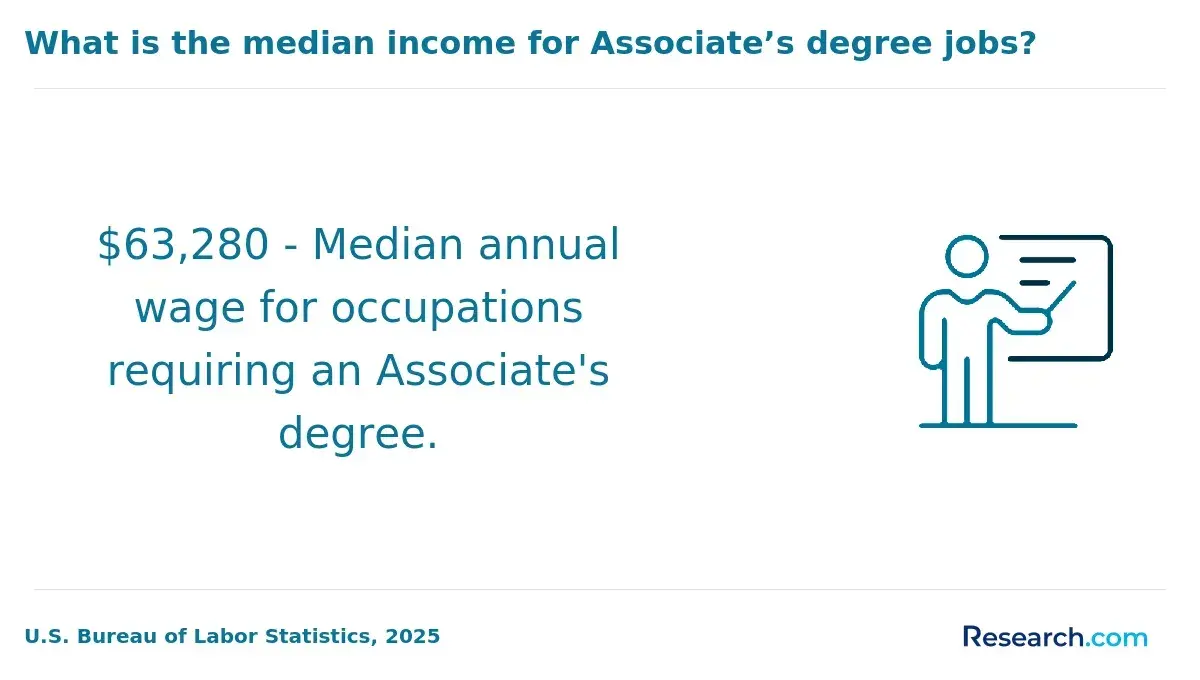
The U.S. Bureau of Labor Statistics reports a 2024 median annual wage of $65,510 for physical therapist assistants and aides combined in its occupational profile grouping. That figure is labor-market context, not a repayment guarantee: PTA earnings vary by location, setting, hours, licensure, and role, while the BLS grouping also includes aides who have different education requirements.
What Are the Eligibility Requirements for Online Physical Therapy Assistant Degree Scholarships?
Eligibility rules are set by each institution and individual scholarship donor. The most common mistake is qualifying for admission to a PTA program and assuming that admission automatically qualifies you for a scholarship. Those are usually separate decisions.
Before applying, compare the requirements that most often determine whether a hybrid or online PTA student can receive and keep institutional aid.
- Degree-seeking status in an eligible certificate or associate-degree program rather than enrollment as a nondegree student.
- Minimum cumulative or incoming GPA, which may be based on high school, transfer coursework, or college coursework.
- Minimum enrollment intensity, such as full-time status or a specified number of credits each term.
- FAFSA submission and demonstrated financial need for need-based institutional grants.
- Residency, county, campus, employer, veteran, demographic, or donor-preference criteria where applicable.
- Completion of scholarship forms, recommendation letters, essays, transcripts, or financial-aid verification by stated deadlines.
- Progression in the PTA sequence, including successful completion of prerequisite, laboratory, and clinical requirements.
Eligibility can be especially complicated when prerequisite courses are online but the professional phase is cohort-based or clinical-intensive. Ask whether the scholarship starts during prerequisites, begins only after formal PTA-program admission, or stops if you must repeat a course or delay a clinical rotation.
Students who are exploring a nursing route instead should recognize that eligibility frameworks can differ by program type; the guide to RN to BSN no clinicals programs describes a distinct completion pathway for already licensed nurses.
How Do You Apply for University Scholarships for an Online Physical Therapy Assistant Degree?
Start early because scholarship deadlines can occur before PTA cohort-admission decisions or before the academic term begins. Institutional aid often requires more than the general admission application, and a late FAFSA or missing transcript can make an otherwise eligible student ineligible for consideration.
Use this process to create comparable scholarship files for every program on your shortlist.
- Confirm that the specific PTA program is CAPTE-accredited or has an appropriate published accreditation status, and verify all required campus and clinical components.
- Request the school's current scholarship list for degree-seeking PTA students in the program's online or hybrid format.
- Submit the FAFSA as early as practical if you may qualify for federal, state, or institutional need-based aid.
- Apply separately for institutional and foundation scholarships when required, using the exact GPA, essay, reference, and transcript requirements.
- Document each deadline, renewal condition, enrollment requirement, and award notification date in one comparison file.
- Ask for a written financial-aid estimate that separates grants and scholarships from loans, work-study, and estimated indirect expenses.
- Compare final written offers only after confirming how clinical travel, labs, testing, and course-repeat charges will be handled.
A practical email to financial aid should ask: "Are students in this exact PTA program and delivery format eligible for this scholarship, what amount is renewable, what enrollment level is required, and what charges will remain after the award is applied?" A clear answer is more useful than a promotional page with a broad "up to" amount.
Are Scholarships for Online Physical Therapy Assistant Degree Programs Renewable Every Year?
Some institutional scholarships renew automatically if a student remains eligible; others require an annual application, are available for one term only, or depend on continuing funds. "Renewable" does not necessarily mean the dollar amount cannot change. Colleges may revise awards when enrollment, academic standing, funding availability, program status, or other aid changes.
The renewal terms below are the ones that most affect whether an initial PTA scholarship remains valuable through clinical education.
| Renewal condition | Why it matters for PTA students | Question to ask |
| Minimum GPA | A difficult science, lab, or clinical term can affect eligibility. | Is the GPA reviewed each term or annually, and is there an appeal process? |
| Enrollment requirement | Clinical sequencing can make part-time attendance unavoidable for some students. | Does the award continue below full-time enrollment? |
| Satisfactory academic progress | Repeating or withdrawing from required courses may affect aid eligibility. | How do repeats, incompletes, and delayed clinicals affect the award? |
| Maximum terms | A scholarship may end before a student completes prerequisites and clinical requirements. | How many semesters or credit hours are funded? |
| Program participation | Changing majors, campus locations, or program format can end an award. | Will the scholarship follow me into the professional PTA cohort? |
Get the renewal policy in the award letter or scholarship terms, not only in a verbal conversation. This is particularly important for accelerated sequences, because a missed clinical placement or required course repeat can extend the completion timeline and leave later terms unfunded.
Can You Combine an Online Physical Therapy Assistant Scholarship With FAFSA and Other Financial Aid?
Usually, yes. FAFSA is the application used to determine eligibility for federal student aid and may also be used by states and institutions for their own need-based aid. A university scholarship can often be combined with Federal Pell Grants, state grants, outside scholarships, federal loans, veterans' education benefits, employer assistance, and work-study when the student meets each program's rules.
However, aid is not always additive without limits. Federal and institutional rules generally prevent a student from receiving aid above the applicable cost of attendance, and colleges may adjust some components of an aid package after receiving an outside award. The adjustment often affects loans or work-study first, but the order is institution-specific.
Review these details before counting stacked aid toward tuition or living costs.
- Whether the institutional scholarship can be combined with Pell, state aid, veterans' benefits, employer funding, and outside awards.
- Whether the college reduces institutional grants, loans, or work-study after receiving an outside scholarship.
- Whether the award applies to tuition only or can cover required fees, books, supplies, and clinical expenses.
- Whether the scholarship is disbursed by term and what happens if credits are added, dropped, or withdrawn.
- Whether employer reimbursement arrives after you have already paid the college bill.
Students pursuing advanced nursing credentials later may face different financing structures; resources about how to become a nurse practitioner can help clarify that separate graduate-level pathway.
How Much Does an Online Physical Therapy Assistant Degree Cost After Scholarships and Financial Aid?
Your net cost is the amount you are expected to cover after gift aid, not the catalog tuition figure. For a hybrid PTA program, estimate costs across the full sequence rather than one online term. A lower per-credit tuition rate can be outweighed by repeated travel for labs, a distant clinical assignment, mandatory health clearances, or courses that must be retaken.
This illustration shows the method, not a typical or guaranteed price. Replace every figure with the school's written charges and your own confirmed awards.
| Net-cost calculation item | How to treat it | Why it should be included |
| Tuition and mandatory institutional fees | Add the amount for every required term. | These are the primary direct charges billed by the college. |
| Program-specific costs | Add labs, equipment, testing, background checks, insurance, uniforms, and health requirements. | PTA clinical participation may require costs not included in general tuition. |
| Clinical and campus travel | Estimate transportation, lodging, meals, and parking when relevant. | Online coursework does not eliminate required in-person training costs. |
| Confirmed grants and scholarships | Subtract only awards you are eligible to receive for the stated period. | Gift aid lowers out-of-pocket cost without creating repayment debt. |
| Loans and work-study | Keep separate from gift aid. | They may finance remaining costs but do not reduce the underlying price in the same way. |
A useful formula is: estimated net direct cost = required educational charges and required program expenses − confirmed grants and scholarships. Then consider indirect costs such as housing, food, lost work hours, and dependent care separately. A school's cost of attendance is helpful for financial-aid planning, but your personal cash-flow needs may be different.
Compare the same period at every school: preferably the full PTA program from prerequisites through final clinical education. If one school quotes a yearly award and another quotes a one-time award, convert both to a total amount only after verifying renewal conditions.
Are There Scholarships for Transfer, Adult, Military, and Other Online Physical Therapy Assistant Students?
Yes, many institutions maintain scholarships for transfer students, adult learners, veterans, active-duty service members, military spouses, first-generation students, returning students, and students from designated local areas. Availability and eligibility vary widely, and some awards are funded by college foundations with donor-defined criteria rather than by the PTA department.
These applicant groups should look beyond a program's general scholarship page because specialized funds may match their background more closely.
- Transfer students: Ask whether GPA is calculated from all prior institutions, whether an associate degree affects eligibility, and whether transfer-credit evaluation must be complete first.
- Adult and returning students: Look for scholarships that recognize workforce experience, career changes, caregiving responsibilities, or a gap in enrollment.
- Military-connected students: Confirm how institutional scholarships coordinate with VA education benefits, tuition assistance, residency rules, and deployment-related enrollment changes.
- Rural and local applicants: Check college foundation awards, county healthcare scholarships, and workforce-development programs tied to local service needs.
- Students with employer support: Verify whether tuition assistance is paid upfront or reimbursed later and whether a work commitment applies.
Specialized eligibility does not remove the need to review program fit. PTA students still need to plan for campus skills sessions, clinical scheduling, and licensure requirements in the state where they intend to practice.
For students comparing other health-related graduate study options after gaining clinical experience, an online nutrition masters program represents a separate field with different admissions and scholarship criteria.
What Is the Difference Between Merit-Based and Need-Based Scholarships for Online Physical Therapy Assistant Degrees?
Merit-based scholarships are typically awarded for academic performance, leadership, achievements, or other selection criteria that do not primarily depend on household financial need. Need-based scholarships and grants use financial information, often including FAFSA results, to determine whether a student has demonstrated financial need. A single institutional award can include both merit and need considerations.
Neither category is automatically better. Merit aid can be valuable for students with strong academic records who may not qualify for substantial need-based aid. Need-based aid can be more important for students whose financial resources are limited, but amounts may change when income, enrollment, or other aid changes.
This comparison identifies the practical differences to consider when evaluating a PTA aid package.
| Feature | Merit-based scholarship | Need-based scholarship or grant |
| Main selection factor | Academic record, achievement, leadership, or donor-defined accomplishment. | Documented financial need and eligibility under the institution's process. |
| FAFSA role | May not be required, though some institutions still request it. | Frequently required or strongly recommended. |
| Common renewal focus | Minimum GPA, enrollment, and academic progress. | Continued need, FAFSA completion, enrollment, and academic progress. |
| Key uncertainty | Competitive selection and whether the award is available to PTA or hybrid students. | Changes in financial circumstances, verification, or aid packaging. |
When possible, apply for both types. A student should not skip need-based aid because of a merit award or assume that a strong GPA eliminates the value of FAFSA. The combined package, its duration, and the remaining net cost matter more than the award label.
Likewise, a shortest post master's FNP program is an advanced nursing option with eligibility rules that differ substantially from entry-level PTA scholarship policies.
How Should You Compare Scholarship Offers From Online Physical Therapy Assistant Degree Programs?
Compare offers after you have the same information from each school: a written award notice, full program cost, program-delivery schedule, and renewal conditions. The largest scholarship is not necessarily the best value if it applies for only one term, excludes fees, requires full-time enrollment you cannot maintain, or comes from a higher-priced program.
Use this decision framework to rank offers on affordability and feasibility rather than marketing language.
- Verify that the program's accreditation status, clinical education structure, and state-licensure alignment fit your career plan.
- Calculate total required charges through completion, including prerequisite courses, labs, clinical requirements, travel, and likely incidental costs.
- Separate grants and scholarships from loans, payment plans, and work-study in each award letter.
- Confirm whether each institutional award is one-time, renewable, conditional, or subject to available funding.
- Test the renewal rules against your realistic schedule, including part-time terms, clinical placements, work obligations, and possible course repeats.
- Ask whether outside scholarships, employer funding, military benefits, or state grants will reduce institutional aid.
- Choose the option with the most manageable verified net cost and completion path, not merely the largest advertised award.
Common red flags include an aid estimate that does not identify loans separately, vague statements that online students are "usually eligible," no written explanation of renewal, and tuition comparisons that omit clinical travel or program fees. Ask the school to clarify these issues before paying a deposit or declining another offer.
A final comparison sheet should include the program length, required in-person dates, scholarship amount by term, renewal GPA, minimum enrollment, maximum funded terms, estimated clinical costs, and total projected net direct cost. That record makes trade-offs visible and gives you a practical basis for discussing aid with each college.
Other Things You Should Know About Physical Therapy Assistant
Usually no. PTA education requires hands-on laboratory instruction and supervised clinical education. A program may deliver some academic courses online, but prospective students should expect in-person requirements and verify accreditation before enrolling.
In most states, PTA practice requires licensure or another state authorization. Requirements vary by jurisdiction but commonly include graduating from an accredited program and passing the National Physical Therapy Examination for PTAs. Check the rules of the state where you plan to work.
Many associate-degree PTA programs are designed around two years of full-time study, although prerequisites, transfer credits, cohort sequencing, part-time attendance, and clinical availability can change the timeline.
PTAs work under the direction and supervision of physical therapists. They may help patients perform therapeutic exercises, use treatment equipment, practice mobility activities, and document aspects of patient care within applicable laws and workplace policies.
References
- Physical Therapist Assistant (A.S.) http://www.fscj.edu/program
- Hello, may scholarship po ba for 2nd year Physical... https://forms.gle/9qEWi8ZPqysYN8
- Physical Therapy Scholarships https://teach.com/online-ed/healthcare-degrees/online-dpt-programs/scholarships/
- Richmond Associate in Physical Therapist Assistant (PTA) Degree | South University, Richmond https://www.southuniversity.edu/richmond/physical-therapist-assistant-aas
- Online Resources & Scholarships for Physical Therapy Assistant (PTA) Students https://www.edumed.org/financial-aid/scholarships/physical-therapist-assistant-programs/
- Best Online Physical Therapy Degrees Of 2025 | AffordableCollegesOnline.org https://www.affordablecollegesonline.org/degrees/physical-therapy-schools/
- Scholarships https://onlinephysicaltherapyprograms.com/scholarships/
- 25 Best Physical Therapist Assistant Programs | Become With Lantern https://www.learnhowtobecome.org/best-physical-therapist-assistant-programs/
- 19 Physical Therapy Scholarships for Students and PT Residents | Rizing Tide https://rizing-tide.com/physical-therapy-scholarships-for-students-and-pt-residents/