2027 Best Online Physical Therapy Assistant Degree Programs at Nonprofit Universities

Co-Founder and Chief Data Scientist
Choosing a physical therapist assistant program requires more than finding online classes: graduates generally need a CAPTE-accredited program to qualify for state licensure. The U.S. Bureau of Labor Statistics projects 22% employment growth for physical therapist assistants from 2023 to 2033, much faster than average.
This guide helps prospective PTA students compare nonprofit public and private institutions by accreditation, required in-person training, total cost, schedule, support, and career fit before applying.
Key Things You Should Know
- There is no fully online pathway that replaces PTA labs and clinical education; the strongest options are usually hybrid associate degree programs with online coursework and required in-person training.
- CAPTE programmatic accreditation matters more than nonprofit status because it is typically essential for National Physical Therapy Examination eligibility and state licensure.
- Physical therapist assistant employment is projected to grow 22% from 2023 to 2033, and the May 2024 national median annual wage was $65,510; outcomes still vary by location, setting, licensure, and experience.
What Makes an Online Physical Therapy Assistant Degree Program at a Nonprofit University Different?
An online physical therapy assistant degree at a nonprofit institution is usually a hybrid Associate of Applied Science or Associate of Science program, not a degree completed entirely from home. Public colleges and universities are generally nonprofit, while many private universities are nonprofit as well. Their tax status may affect mission, governance, and aid options, but it does not establish that a PTA program is accredited, affordable, flexible, or appropriate for licensure.
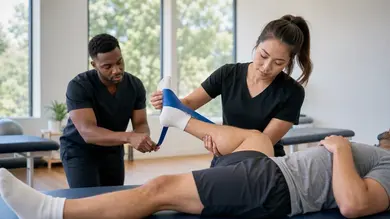
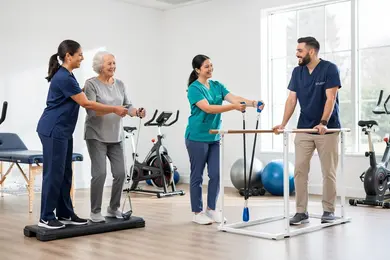
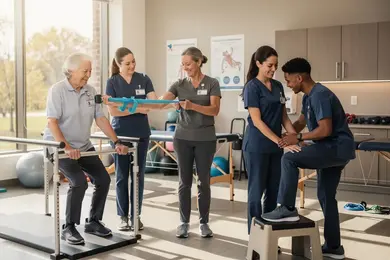
PTAs work under the direction and supervision of physical therapists. Typical duties include helping patients perform therapeutic exercises, using treatment equipment, documenting progress, and supporting safe mobility. Because these are hands-on clinical responsibilities, accredited education includes supervised skills practice, laboratory instruction, and full-time clinical experiences at healthcare sites.
The comparison below clarifies what "online" should mean for a prospective PTA student.
| Program feature | What a strong nonprofit PTA option should provide | Why it matters |
| Degree level | CAPTE-accredited associate degree designed for PTA licensure | An associate degree is the common entry-level educational route for PTAs. |
| Online learning | Online delivery for some lectures, assignments, and general education courses | It can reduce commuting but does not remove hands-on requirements. |
| In-person training | Scheduled labs, practical examinations, and clinical education | These experiences develop and assess patient-care skills. |
| Institution type | Public or private nonprofit institution with transparent pricing and student services | Nonprofit status is one factor to investigate, not a quality guarantee. |
| Licensure alignment | Clear information about graduate eligibility in the student's intended state | State boards set licensing rules, which may differ by jurisdiction. |
A PTA associate degree is career-focused and fits students seeking direct entry into rehabilitation support roles. A bachelor's degree can broaden general education or support later advancement, but a bachelor's degree alone does not replace a CAPTE-accredited PTA program for initial PTA licensure. Master's and doctoral degrees in physical therapy are generally for students pursuing physical therapist preparation, not a faster version of PTA education.
Students who want a different direct-care route should compare the duties and licensing rules before changing fields. For example, prospective practical nurses can review fast track LPN programs online, but nursing and physical therapy assisting have different scopes of practice, clinical training, and credentialing requirements.
How Can Students Verify Accreditation for an Online Physical Therapy Assistant Degree at a Nonprofit University?
Students should verify two separate forms of recognition: institutional accreditation and programmatic accreditation from the Commission on Accreditation in Physical Therapy Education (CAPTE). Institutional accreditation speaks to the college or university as a whole. CAPTE accreditation evaluates the PTA program's curriculum, faculty, clinical education, outcomes, and resources. For a student planning to become licensed, programmatic accreditation is the decisive check.
Use these steps before submitting an application. They reduce the risk of enrolling in a program whose online marketing language does not match its licensure status.
- Find the program in CAPTE's official directory and confirm its current accreditation status, campus location, and degree level.
- Ask the program whether students in your state are eligible to enroll and whether graduates meet that state's education requirement for licensure.
- Confirm that the school itself holds institutional accreditation recognized by the U.S. Department of Education or the Council for Higher Education Accreditation.
- Request the program's most recent licensure-exam pass-rate, graduation-rate, and employment-rate disclosures, including the reporting period and cohort size.
- Contact your state physical therapy licensing board directly if you plan to practice outside the school's home state.
Do not assume that a school's institutional accreditation makes every healthcare program professionally accredited. Another red flag is a program that promises a "physical therapy" credential but does not plainly state whether it leads to PTA licensure, requires on-campus labs, or has CAPTE approval. Candidates should also be cautious with programs in candidacy status: candidacy may be meaningful, but students should ask how the status affects graduation, examination eligibility, and teach-out protections.
How Rigorous Are Online Physical Therapy Assistant Degree Programs at Nonprofit Universities?
Accredited PTA programs are rigorous because online academic work is only one part of the curriculum. Students typically complete anatomy and physiology, kinesiology, pathology, therapeutic exercise, patient care procedures, documentation, ethics, communication, and clinical education. They must demonstrate practical skills safely with instructors and patients, not merely pass online quizzes.
Most students should expect a structured sequence rather than a self-paced experience. Prerequisites may include college-level anatomy and physiology, English composition, mathematics, psychology, immunization records, CPR certification, drug screening, background checks, and health-clearance requirements. Admission can also involve observation hours, an interview, entrance testing, or a minimum prerequisite GPA.
The following comparison shows why an "online" label should be evaluated alongside the required learning format.
| Learning component | Common delivery method | Student planning implication |
| General education courses | Often online, sometimes asynchronous | May offer the greatest scheduling flexibility and transfer potential. |
| PTA theory courses | Online, live online, or campus-based | Check attendance rules and time-zone expectations. |
| Skills laboratories | In person on scheduled dates | Budget for travel, parking, lodging, and time away from work if needed. |
| Clinical education | In person at assigned healthcare facilities | Expect daytime availability and limited control over placement location. |
| Practical assessments | Usually in person | Students must demonstrate safe techniques under observation. |
Accelerated cohorts may shorten calendar time by running courses year-round, but they do not reduce required competency development or clinical education. A traditional full-time cohort can suit students who can protect daytime hours for labs and placements. A part-time option, where offered, may better suit working adults but can extend the completion timeline and may still require intensive clinical blocks.
A common mistake is to choose a program based on asynchronous lectures without reviewing its clinical calendar. Ask for every mandatory campus date and the expected clinical schedule before paying an enrollment deposit.
The relevant price is the total cost to complete the credential, not the advertised per-credit tuition. Public nonprofit institutions often charge lower in-district or in-state rates, while private nonprofit institutions may use one tuition rate for all students and may offer institutional scholarships. Either model can be the better value after grants, transfer credits, required travel, and program fees are considered.
For context, the College Board reported that average published tuition and fees for in-district students at public two-year colleges were $4,050 for the 2024-25 academic year. That broad figure is not a PTA-program price: it excludes living costs and may not include healthcare-program fees, supplies, examinations, travel, or clinical requirements.
Use this cost checklist to compare written financial estimates from each school.
- Tuition for prerequisite, general education, and PTA courses that you still need to complete
- Mandatory program, laboratory, technology, testing, liability-insurance, and graduation fees
- Books, anatomy resources, uniforms, equipment, and clinical supplies
- Background checks, drug screening, immunizations, physical examinations, CPR certification, and licensure-exam expenses
- Transportation, parking, lodging, and lost work time for campus labs and clinical placements
- Housing, food, and other living expenses during full-time clinical rotations
Lower tuition is not automatically the best return on investment. A nearby program with predictable clinical placement may cost less overall than a lower-priced program that requires extensive travel. Conversely, a higher published tuition can be manageable if the student receives substantial grant aid and can transfer approved coursework. Ask each program for a net-price estimate based on your residency, transfer evaluation, and expected completion plan.
Eligible students at accredited nonprofit institutions may use federal financial aid, including Pell Grants, Direct Loans, and work-study, after filing the Free Application for Federal Student Aid (FAFSA). State grants, institutional need-based aid, merit scholarships, workforce-development awards, veterans' benefits, and employer tuition assistance may also be available. Eligibility depends on factors such as enrollment status, satisfactory academic progress, program length, citizenship or eligible noncitizen status, and institutional participation.
Financial aid should be compared as a package, not as a single scholarship headline. Before accepting loans, distinguish grants and scholarships, which generally do not require repayment when conditions are met, from loans, which generally do.
Ask the financial aid office to clarify the items below in writing. This is especially important for hybrid programs, where clinical schedules can affect employment and enrollment status.
- Whether the PTA program and its prerequisite courses qualify for federal aid at your intended enrollment level
- Whether aid continues during clinical education terms and summer enrollment
- Which fees are included in the cost of attendance used for aid calculations
- Whether institutional scholarships are renewable and what GPA or enrollment conditions apply
- How outside scholarships, employer benefits, or veterans' benefits affect other aid
- What happens if a clinical placement delays progression or requires a course repeat
Students considering other licensed health-profession pathways should avoid assuming that aid rules, clinical requirements, and degree length transfer across fields. Those exploring an advanced nursing route can compare options for how to become a nurse practitioner, while recognizing that nurse practitioner preparation follows a distinct nursing education sequence.
Hybrid PTA programs can be flexible in limited, meaningful ways: online lectures may reduce commuting, digital course materials can support independent study, and some general education classes may be asynchronous. They are not fully flexible programs because laboratory competencies, check-offs, practical exams, and clinical placements require attendance at specific times and places.
Flexibility varies more by program design than by nonprofit status. A cohort model offers a clear sequence and peer support but may allow little choice in course order. A program with evening or weekend labs can help some working adults, although clinical rotations are commonly scheduled during standard weekday daytime hours. Students should also determine whether live virtual sessions are required and whether they can attend from their time zone.
Before choosing between online, hybrid, and campus-based options, compare the realities below.
| Format | Best fit | Important limitation |
| Mostly campus-based cohort | Students who live near the school and prefer direct in-person instruction | Requires regular travel and fixed class times. |
| Hybrid cohort | Students who can complete online coursework but attend required labs and clinicals | Does not eliminate travel or daytime clinical availability. |
| Part-time pathway | Students balancing work or caregiving when the school offers an approved sequence | Completion may take longer and clinical blocks may remain full time. |
| Accelerated pathway | Students able to manage intensive, continuous study | Fast pacing can make work-hour reductions necessary. |
Do not enroll until you have matched the program calendar with work, transportation, caregiving, and financial obligations. The best format is the one that lets you attend every required in-person experience without jeopardizing progression through the cohort.
Nonprofit colleges and universities may provide academic advising, tutoring, library access, disability services, mental health counseling, financial aid guidance, career services, and technical support. For PTA students, the most consequential supports are often program-specific: clinical education coordination, skills-lab access, faculty office hours, licensure-exam preparation, and help navigating compliance requirements.
Ask not only whether a service exists, but how online and hybrid students use it. For example, a tutoring center may be valuable only if appointments are available during evenings, clinical terms, or remotely. Likewise, career services are more useful when they understand regional rehabilitation employers and can explain how placements are arranged.
Prioritize programs that can answer these practical support questions clearly.
- Who helps secure, monitor, and resolve issues at clinical placements?
- How quickly can students access faculty help after an online lecture or before a skills check-off?
- Are online tutoring, library databases, accessibility accommodations, and technology support available outside normal business hours?
- What support is available if a student fails a practical assessment, experiences a clinical interruption, or needs to repeat a course?
- Does the school provide career coaching, résumé feedback, mock interviews, and licensure-exam resources specific to PTA students?
Students already licensed in another health profession may need a different support model than first-time PTA candidates. For example, registered nurses evaluating degree completion can compare RN to BSN no clinicals options; that format is designed for licensed RNs and should not be confused with initial PTA clinical education.
Yes, a CAPTE-accredited hybrid PTA program can prepare graduates for entry-level practice when it provides the required academic, laboratory, and clinical training and the graduate meets state licensing requirements. The U.S. Bureau of Labor Statistics projects 22% growth in physical therapist assistant employment from 2023 to 2033. This outlook suggests strong national demand, but it is not a guarantee of a job in a particular city, specialty, or graduating class.
PTAs commonly work in outpatient clinics, hospitals, skilled nursing facilities, home healthcare, schools, and rehabilitation settings. Employers typically value safe patient handling, therapeutic exercise knowledge, accurate documentation, communication, teamwork, professionalism, and familiarity with electronic health records. Technology can streamline scheduling and documentation, but it does not eliminate the hands-on patient interaction that defines PTA work.
To judge career preparation, request outcomes that are specific to the program rather than relying on broad institutional claims. The following evidence is especially useful when comparing similarly priced nonprofit options.
- Recent first-time and ultimate licensure-exam pass rates, with cohort size and reporting period
- Graduation and retention figures that show how many students progress through the cohort
- Employment outcomes, including the definition of employment and the time frame used
- Clinical affiliations in settings and regions relevant to your planned job search
- Faculty credentials, clinical experience, and availability for mentoring
Physical therapy assisting is not the same as nutrition practice, nursing, or physical therapist preparation. Students whose interests center on food, wellness, and population health rather than rehabilitation may find an online nutrition masters more aligned with their goals, subject to that field's separate credentialing expectations.
A PTA associate degree can be a foundation for additional education, but it should be chosen primarily because the student wants to become a PTA. It is not automatically the shortest or most direct route to physical therapist graduate school. Doctor of Physical Therapy programs establish their own prerequisite, GPA, observation, and bachelor's-degree requirements, so prospective physical therapists should plan backward from the programs they may eventually apply to.
For a PTA who later wants a bachelor's degree, transferability matters. General education credits may transfer more readily than technical PTA coursework, and receiving institutions decide what they will accept. Students should request a written transfer evaluation whenever possible rather than relying on verbal assurances.
A bachelor's degree may make sense for students seeking broader career options, management preparation, or prerequisites for a future graduate program. A master's degree is not normally required to remain a PTA, and a doctoral physical therapy degree prepares a different role: the physical therapist. Compare the curriculum, cost, lost earnings during full-time study, and professional scope before pursuing additional credentials.
Graduate health programs also have profession-specific entry pathways. Registered nurses who already hold graduate nursing preparation and seek family nurse practitioner coursework, for example, should evaluate a shortest post master's FNP program separately rather than treating it as a PTA advancement option.
How Should Students Compare the Best Online Physical Therapy Assistant Degree Programs at Nonprofit Universities?
The best program is the one that satisfies licensure requirements in your intended state while fitting your budget, travel capacity, schedule, and career plan. Start with programs that are CAPTE-accredited and realistically accessible for labs and clinical education. Then compare program-level evidence, not institutional reputation alone.
Build a short list of three to five programs and evaluate each using the same decision sequence.
- Confirm CAPTE accreditation and ask your state board whether the program meets education requirements for licensure.
- Map every in-person lab, practical examination, orientation, and clinical term against your work, caregiving, and transportation constraints.
- Request a personalized estimate of tuition, fees, supplies, travel, and living costs through graduation.
- Submit transcripts for an official or preliminary transfer-credit review and identify all remaining prerequisites.
- Compare recent exam, graduation, retention, and employment outcomes using the same reporting period whenever possible.
- Ask how clinical sites are assigned, how far students may travel, and what support is available if a placement problem occurs.
- Review financial aid, scholarship renewal rules, and the likely need to reduce work hours during clinical education.
This final comparison framework can help prevent common mistakes such as choosing on tuition alone, assuming all online programs are asynchronous, or confusing nonprofit status with professional accreditation.
| Comparison priority | Strong evidence to seek | Potential red flag |
| Licensure readiness | Current CAPTE status and clear state-eligibility guidance | Vague statements about "physical therapy careers" without PTA licensure information |
| Total affordability | Written net-cost estimate including program and clinical expenses | Tuition quote that excludes fees, supplies, travel, or prerequisites |
| Schedule fit | Full calendar of labs, live sessions, and clinical blocks before enrollment | "Online" marketing with no detail on mandatory attendance |
| Academic quality | Transparent curriculum, faculty information, and program outcomes | Refusal to share recent outcome data or clinical structure |
| Career relevance | Established clinical partnerships and job-search support in your region | Promises of employment or salary without defining outcomes |
| Transfer planning | Documented transfer review and written articulation information | Unverified assurances that all credits will transfer |
A public nonprofit program may be the best value for local residents, especially when in-district tuition and nearby clinical sites reduce costs. A private nonprofit program may be preferable when it offers stronger aid, a workable hybrid schedule, smaller cohorts, or a location that reduces travel. Neither option is inherently superior; accreditation, total cost, completion feasibility, and outcomes should decide the comparison.
Other Things You Should Know About Physical Therapy Assistant
Students should be skeptical of that claim. PTA education requires hands-on laboratory training and clinical education, so legitimate accredited programs are generally hybrid or campus-based even when some coursework is online.
A full-time associate degree often takes about two years after admission, although prerequisites, transfer credits, cohort schedules, and part-time enrollment can change the timeline. Graduates also need to meet their state's licensing requirements.
Physical therapists evaluate patients, develop plans of care, and provide physical therapy services within their professional scope. PTAs provide treatment components under the direction and supervision of physical therapists, subject to state laws and workplace policies.
Some students work limited hours, but clinical rotations may require weekday daytime attendance and can be demanding. Review the exact clinical schedule before committing to work hours or relying on employment income to cover expenses.
- Commission on Accreditation in Physical Therapy Education https://www.capteonline.org/
- 25 Best Physical Therapist Assistant Programs | Become With Lantern https://www.learnhowtobecome.org/best-physical-therapist-assistant-programs/
- Physical Therapist Assistant - Black Hawk College https://www.bhc.edu/academics/programs/physical-therapist-assistant/
- Ask a Question https://www.lonestar.edu/physical-therapist-requirements.htm
- PTA Outcomes and Statistics https://scc.losrios.edu/academics/physical-therapist-assistant-program-details/pta-faqs/pta-outcomes-and-statistics
- PTA Programs in Alabama: Costs, Ratings and Classes for 2026 https://physical-therapy-assistant.org/pta-schools-in-alabama-al/
- PTA Programs in North Carolina https://ptaprogramsnorthcarolina.com/
- How to Choose the Best PTA Program | Brookline College https://www.brooklinecollege.edu/blog/how-to-choose-the-best-pta-program/
- Tampa Associate in Physical Therapist Assistant (PTA) Degree | South University https://www.southuniversity.edu/tampa/physical-therapist-assistant-as
- Accredited Missouri Physical Therapy Assistant Schools - Missouri Physical Therapy Association https://www.mopt.org/page/MOPTASchools/Accredited-Missouri-Physical-Therapy-Assistant-Schools.htm