2027 Online BA in Psychology - Addictions After an AS in Health Sciences: Compare Transfer Credit and Remaining Coursework

Co-Founder and Chief Data Scientist
An AS in Health Sciences can provide a useful start toward an online psychology bachelor's degree, but the number of accepted credits rarely tells you how close you are to graduation. Some courses may satisfy general education requirements while leaving psychology prerequisites and addictions coursework untouched.
This guide is for transfer students weighing an online BA in Psychology with an addictions focus. It explains how to compare degree audits, identify remaining courses, estimate time and cost, and check whether the degree fits your intended career before you commit.
Key Things You Should Know
- An AS may transfer substantial credit, but only the receiving school's degree audit can show which credits satisfy general education, psychology major, addictions focus, and graduation requirements.
- Health sciences coursework may cover biology or health electives while psychology statistics, research methods, upper-level major courses, and required credits earned at the new institution remain.
- Compare programs using the credits and courses still required - not the maximum credits advertised as transferable - and check state credential rules if your goal is addiction counseling.
What Is an Online BA in Psychology With an Addictions Focus?
It is a psychology bachelor's degree that combines core study of behavior and psychological science with coursework related to substance use, prevention, recovery, or service systems. "Addictions focus" might mean an officially named concentration, a group of electives, or simply a program emphasis. Ask whether it appears on the transcript and which courses are guaranteed to be offered online.
For an AS in Health Sciences graduate, the fit depends on the destination. A psychology BA offers broad preparation in research and behavior; a dedicated substance use counseling program may align more closely with a particular credential's coursework rules. Compare the required courses and credential implications - not just the degree titles - when weighing substance use counseling undergraduate tuition versus salary outlook. Neither degree title alone establishes counseling eligibility.
How Many Transfer Credits Apply From an AS in Health Sciences?
There is no reliable universal credit total. The receiving institution decides which AS courses it accepts; its psychology department or authorized evaluator decides which accepted courses meet major requirements. A credit can appear on your transcript yet count only as a free elective. Institutional limits on transfer and required coursework completed there can further affect graduation.
Consider an illustrative comparison: for a bachelor's degree requiring 120 credits, a student with 60 accepted AS credits might appear to need 60 more. That estimate holds only if the student can satisfy every remaining general education, major, focus, and institutional requirement within those credits. It is not a prediction for any particular program.
Request a course-by-course evaluation and a proposed degree audit from each school. Send official transcripts plus syllabi for courses that might match psychology statistics, research methods, or other disputed requirements. Check articulation agreements, minimum grades, course recency, quarter-to-semester conversions, and appeal procedures. A comparison of psychology programs that accept transfer credits can help you identify schools to ask, but only each receiving institution can approve your credits.
What Coursework Remains After Transferring an AS in Health Sciences?
Health sciences credits often fit science, general education, or elective slots. They do not automatically replace psychology's disciplinary sequence. The table separates likely areas of overlap from requirements that need an explicit equivalency decision; it is a comparison framework, not a catalog for every school.
| Requirement area | Possible AS contribution | What to check on the audit |
| General education | Writing, mathematics, natural science, and social science | Whether the associate degree fulfills a block of requirements or courses are evaluated individually |
| Psychology foundations | Introductory psychology, if completed | Required grade and whether the course is a prerequisite for advanced classes |
| Statistics and research methods | Statistics or a health research course | Psychology-major equivalency, including any required lab or research-design content |
| Addictions focus | Potentially relevant health electives | Whether they meet the focus itself rather than counting as general electives |
| Upper-level and graduation requirements | Usually limited by course level and school policy | Advanced psychology courses, capstone, and required credits at the receiving institution |
Sequence matters as much as the credit total: statistics may precede research methods, which may precede a capstone. If an AS course seems equivalent, seek a written substitution ruling before planning around it. Also decide whether addictions is the intended subject. A student whose real interest is legal-system behavior may find forensic psychology bachelor's study with accelerated pacing more relevant, but should compare its remaining requirements through the same audit process.
Check the institution's accreditation and whether it covers the institution offering the online degree. An online BA is not automatically accredited merely because its courses are online, nor does the American Psychological Association's accreditation of certain professional psychology training programs serve as the standard for a general psychology BA.
Use the U.S. Department of Education's accreditation records and the accreditor's directory to verify the school, then confirm that the advertised degree and addictions focus belong to that school. Accreditation does not settle transfer equivalencies or qualify a graduate for licensure. This distinction also matters when comparing accredited forensic psychology degree programs: the specialty label is not, by itself, a separate accreditation or professional credential.
Schools commonly request an application and transcripts from prior colleges; their minimum GPA, transferable-credit rules, deadlines, and requirements for entry to the psychology major differ. Admission to the university does not necessarily mean every AS course has been evaluated or that entry to a selective major is assured. Ask whether an associate degree satisfies general education requirements and whether introductory psychology or statistics must be completed before particular major courses.
Apply with enough time for official transcript review and submit course descriptions or syllabi when equivalency is unclear. If you eventually want a counseling master's degree, check that program's separate prerequisites before choosing BA electives. Admission and accreditation questions for professional counseling programs differ from those for a psychology BA; guides to accreditation checks for accelerated counseling programs can help frame that later comparison.
The best estimate comes from a term-by-term plan built from your approved audit. Divide the remaining courses among realistic terms, then account for prerequisites, how often upper-level and addictions classes run, enrollment limits, and any capstone or field experience. Taking more classes will not speed completion if a required course is offered only after its prerequisite.
Ask an advisor to map both full-time and part-time schedules. Confirm whether courses are asynchronous, require live attendance, or include a placement with fixed hours; "online" does not answer those questions. If graduate study is part of your timeline, evaluate it separately rather than assuming a quick bachelor's makes the full pathway quick. Even faster-paced forensic psychology master's degrees address a different specialty and set of admissions requirements, not a shortcut through the BA.
Compare the cost of the remaining approved degree plan, not a school's advertised price per credit alone. Tuition depends on the credits you must take there and the applicable online, residency, or enrollment-rate policy. Add mandatory fees, books, technology, and any travel or unpaid placement costs. A transferred elective that does not replace a required course may save no tuition.
Request a written cost estimate using your degree audit and planned pace. Ask financial aid how transfer credits and enrollment intensity affect eligibility, and check whether employer assistance applies to this school. Listings of online psychology programs ranked by affordability are useful starting points, but your personal comparison should use remaining credits and aid rather than a published sticker price alone.
With comparable curricula and approved transfer credit, the deciding difference may be access: online courses can reduce commuting, while campus study may make scheduled research activities, advising, or local agency connections easier to use. Neither format guarantees an internship or a particular level of flexibility. Ask who arranges any addictions-related experience, where it can occur, and whether your existing workplace could qualify with prior approval.
Compare total expenses alongside the weekly schedule. An online option can still require live meetings or local field hours, while a campus option may offer a workable course timetable. Financial aid is not determined simply by whether classes are online or on campus; when financing either route, understand grants versus loans for substance abuse counseling bachelor's students and confirm your own award terms with the school.
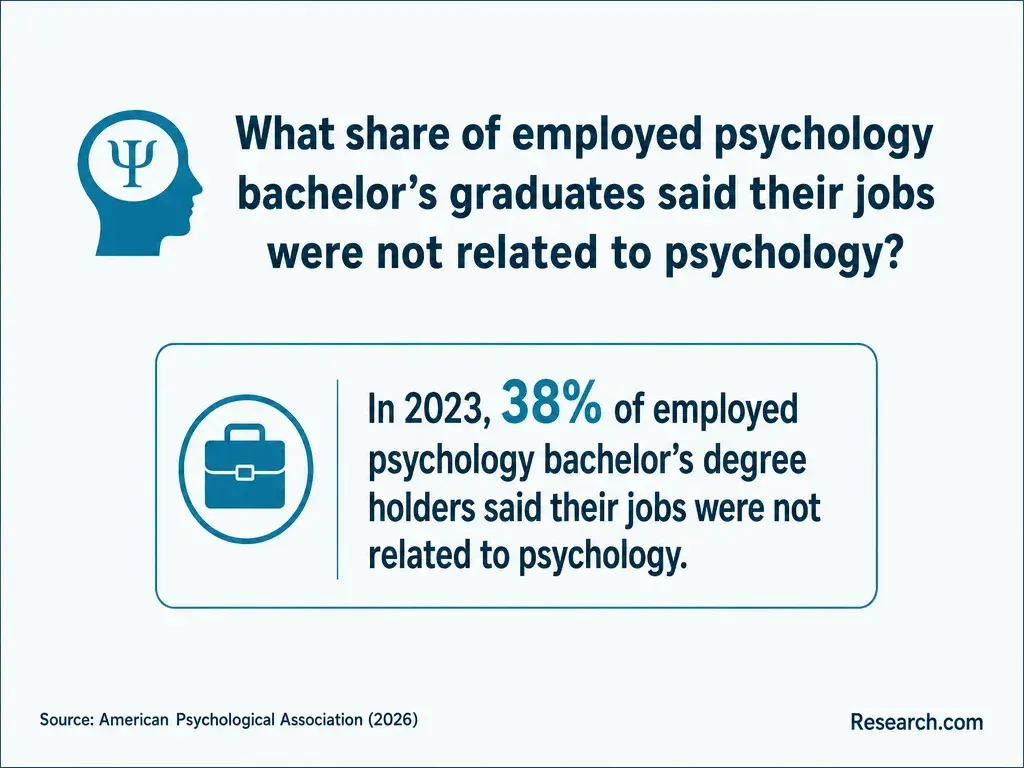
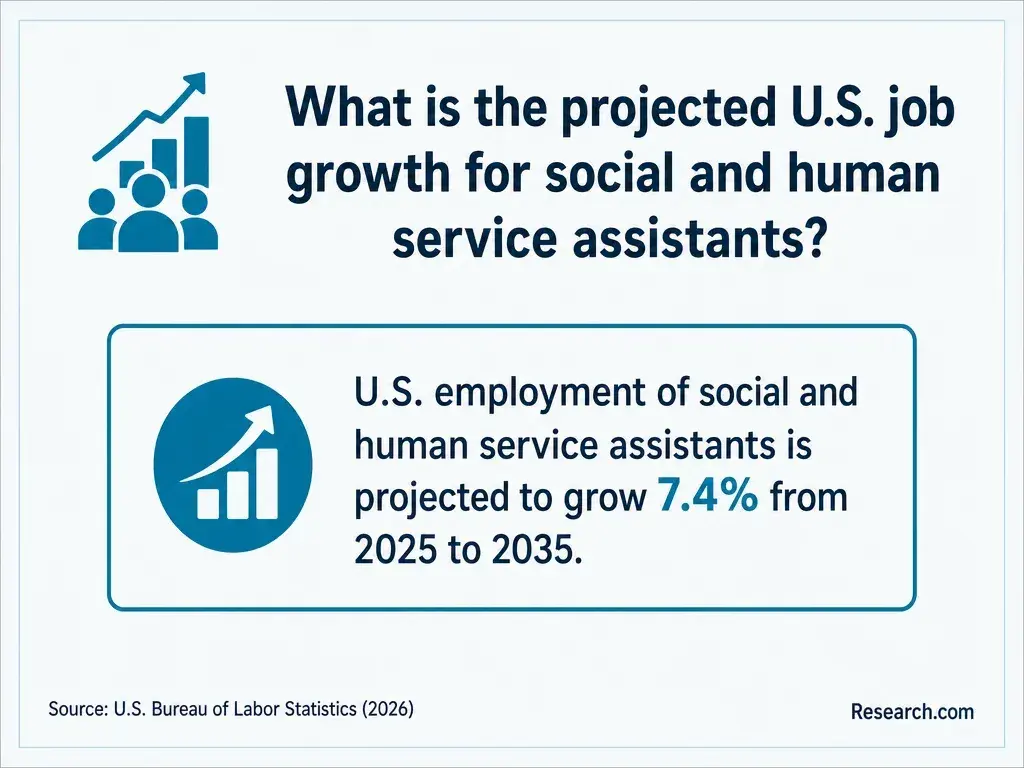
Your health sciences background plus psychology study may support applications for nonclinical roles in recovery services, community outreach, program support, intake, referrals, or case coordination. Employers may also value documented experience with communication, accurate records, confidentiality, and working across service teams. Job titles and duties vary: an opening described as an addiction counselor may require a state credential that a BA does not provide.
Before choosing courses, examine actual local postings and work in addiction recovery services. Match the required credential and duties to the program's curriculum, then seek an approved placement or supervised nonclinical experience if the gap is practical experience. Coursework about addiction does not authorize diagnosis, psychotherapy, or independent treatment.
What Licenses and Certifications Require Graduate Training?
Requirements depend on the credential and state. Licensed professional counselor and clinical social worker pathways generally involve qualifying graduate professional education, supervised experience, and examination; becoming a licensed psychologist ordinarily requires doctoral-level professional preparation and other state requirements. Addiction counselor and peer-support credentials vary more: some jurisdictions offer pathways without a graduate degree, but specify coursework, supervision, examinations, or lived-experience criteria.
Identify the exact title and state where you intend to work, then check that board's published education and supervision rules before treating an addictions focus as qualifying coursework. If psychotherapy is your goal, compare qualifying graduate programs directly, including mental health counseling education costs after aid. A psychology BA can be preparation for an application, but it is not a substitute for the required professional training.
Other Things You Should Know About Psychology
Yes. Syllabi can help an evaluator decide whether a course meets a specific psychology or statistics requirement, especially when its title does not clearly match the receiving school's course.
Many schools have a review or appeal process. Ask the registrar or transfer office who decides major equivalencies, what evidence is needed, and when a decision must be made to affect registration.
Usually the bachelor's diploma names the degree awarded by the graduating institution, not every prior credential. Your AS remains a separate credential on its issuing school's records.
Possibly, subject to the school's rules. Request a revised degree audit first: changing a concentration or elective plan can alter which transferred courses apply and when you can graduate.
- Substance Use Disorder Professional (SUDP) | Washington State Department of Health https://doh.wa.gov/licenses-permits-and-certificates/professions-new-renew-or-update/substance-use-disorder-professional/certification-requirements
- School-Determined Requirements - FSA Partner Connect https://fsapartners.ed.gov/knowledge-center/fsa-handbook/2025-2026/vol1/ch1-school-determined-requirements
- Online Substance Abuse and Addictions Degree | ASU Online https://asuonline.asu.edu/online-degree-programs/undergraduate/counseling-psychological-sciences/
- Bachelor of Arts: Psychology - UMKC Catalog https://catalog.umkc.edu/colleges-schools/educ-socwk-psychological-sciences/psychology/bachelor-of-arts-psychology/
- Applied Psychology: Addictions Studies, B.S. - CPS, CPSO | University of New Hampshire https://www.unh.edu/program/bachelor-science/applied-psychology-addictions-studies
- View Transfer Guide - AA - NCSU - Psychology (BA) https://coursetransfer.northcarolina.edu/guide/2025-2026/263
- Pathways Through Psychology | Portland State University https://www.pdx.edu/psychology/pathways-through-psychology
- Department of Psychology | The University of Texas at San Antonio Undergraduate Catalog Academic Catalog https://catalog.utsa.edu/undergraduate/healthcommunitypolicy/psychology/
- Transfer Credit Information for Students | Southern Connecticut State University https://www.southernct.edu/transfer/credit-information
- Psychology, BS | Dietrich School of Arts & Sciences Undergraduate Studies https://www.asundergrad.pitt.edu/academics/majors/psychology-bs