2027 Online MS in Psychology - Forensic Psychology: How to Evaluate Research Methods Embedded in the First Term
Audited and Verified:
Our Editorial and Data Verification Process
Research.com uses government datasets, official education statistics and primary institutional information to support its career and degree guides. Our review process checks factual accuracy, occupational definitions, source dates and the requirements associated with the credentials discussed.
How This Article Was Fact-Checked
Our editorial team verifies salary estimates, employment projections, education requirements and program information against original data providers and official organizations. Salary figures are checked against the relevant occupational definitions and reporting periods. Information about licensure, accreditation and required in-person training is reviewed separately.
Fact-checked and verified on:

Co-Founder and Chief Data Scientist
An online MS in forensic psychology can advertise research training without showing whether students actually practice it early enough to use it in later coursework. That distinction matters if you want to evaluate studies about legal settings, prepare for research work, or build toward further graduate study.
This guide shows you how to inspect the first-term syllabus and course sequence, test whether assignments teach sound methods and ethical data use, and compare that evidence with the program's cost and career claims. The goal is to help you request the right documents before enrolling - not judge a degree by its title.
Key Things You Should Know
- A strong first term teaches you to turn a forensic question into measurable constructs, assess sampling and bias, and distinguish association from causation - not just summarize articles.
- Ask for the first-term syllabus and degree plan: a methods course has less immediate value if statistics prerequisites, research feedback, or usable datasets arrive only after major project decisions.
- A forensic psychology MS generally does not confer clinical licensure; compare its research training with the qualifications required for your specific job or next degree.
What Is an Online MS in Forensic Psychology?
An online MS in forensic psychology is graduate study of psychological science in legal and justice-related contexts. Depending on the program, students may examine eyewitness memory, decision-making, victimization, correctional settings, or the evaluation of services. The degree name alone does not tell you whether the curriculum emphasizes research, nonclinical practice, or preparation for further study.
For this article, research methods embedded in the first term means that students encounter research design and evidence evaluation in their opening courses - not merely that a later capstone is listed in the catalog. A reading assignment about a court case is not equivalent to defining a construct, critiquing a measure, selecting a comparison group, and explaining what the resulting evidence can and cannot establish.
If your actual goal is direct substance-use support rather than research in justice settings, compare the target occupation before committing to this MS. A look at bachelor's-level substance use counseling tuition and career value may reveal a more direct educational question; state credential rules still control counseling eligibility.
How Do You Evaluate Research Methods in the First Term?
Start with a specific task: could you use what you learn in the first term to judge a study claiming that an interview practice improves the accuracy of eyewitness accounts? "Accuracy" must be defined and measured; the study needs an appropriate sample and comparison; and the conclusion must match its design. This is a better test of research preparation than the presence of the word methods in a course title.
Request a current syllabus, an example assignment prompt, the program's course sequence, and its policy on research ethics review. Then look for evidence of the following work:
- Question and measurement: Students identify the population, define constructs such as recall accuracy, and examine whether a measure captures the intended construct reliably and fairly.
- Design and interpretation: Students identify comparison groups, selection effects, confounders, missing data, and uncertainty. They explain why an observational association cannot by itself establish a causal effect.
- Feedback and responsible access: Students receive substantive feedback on a proposal or critique and learn when consent, institutional authorization, data-use restrictions, or human-subjects review must be checked.
For example, a class might critique a hypothetical study comparing recall after two interview procedures. If participants were assigned to procedures by case type rather than at random, differences in case complexity could distort the comparison. A useful first-term assignment asks students to spot that problem and propose a defensible alternative - not claim an intervention works from an unexamined result. It need not involve access to actual witness records or restricted psychological tests.
Finally, check whether methods instruction arrives before students must select a capstone question. If speed matters, examine forensic psychology master's course sequencing for faster completion, but do not trade away the prerequisite or feedback time needed to do responsible research.
Does an Online Forensic Psychology Master's Lead to Licensure?
Studying forensic assessment, psychopathology, or interviewing does not authorize a graduate to diagnose, provide psychotherapy, administer restricted assessments independently, or practice as a licensed forensic psychologist. Licensure depends on the profession and jurisdiction, including the qualifying degree, supervised experience, examinations, and other applicable requirements.
Ask the program to name the exact license, state, and educational requirements it claims to satisfy; then confirm that claim with the relevant licensing board. If your goal is psychotherapy, evaluate a qualifying professional pathway instead. Intensive graduate study in clinical mental health counseling addresses a different training objective, and a faster program still must satisfy applicable licensure criteria.
Course titles vary, so assess the sequence and assessed work rather than looking for one standard curriculum. An opening research-design course may teach literature appraisal and ethical study planning; statistics may be taken before or alongside it; later measurement, qualitative methods, program evaluation, or thesis work may deepen the training. None should be presumed available until you inspect the current catalog and degree plan.
A useful sequence builds from defining a forensic question to selecting measures, analyzing suitable data, and reporting limitations. For justice-system service evaluation, a qualitative interview assignment may be appropriate for understanding experiences, while administrative outcome data may help describe service use. Neither automatically establishes that a service caused an observed change. Ask whether students practice interpreting results and documenting analytic decisions, not merely operating software.
If your previous psychology or statistics study is incomplete, ask admissions which preparation is required before the first methods course and whether prior study can meet it. Guidance on using previous coursework toward a psychology degree can help frame questions, but the enrolling institution decides whether a course satisfies its graduate prerequisites.
Delivery mode affects how you obtain feedback and collaborate; it does not, by itself, establish research quality. Compare the actual learning arrangements below rather than assuming online means self-paced or campus means better supervised.
| Feature | Online program: verify | Campus program: verify |
| Methods feedback | Written critique, live consultation, and faculty availability | Seminar feedback, office hours, and faculty availability |
| Research access | Approved datasets, remote collaboration, and project supervision | Lab or community-partner access and project supervision |
| Scheduling | Live-session times, group work, and any required visits | Class times, commuting, and any site-based work |
For students balancing work or caregiving, the decisive detail may be a required live methods meeting or team assignment rather than the label "online." Ask when meetings occur, how quickly instructors respond to draft analyses, and whether a thesis supervisor is available remotely. An online psychology degree selection guide can provide broader format criteria, but verify them against this MS program's current policies.
Requirements are program-specific. Schools may assess an applicant's undergraduate degree, academic record, writing, statistics or research preparation, recommendations, and relevant experience. A non-psychology major is not automatically disqualifying; the important question is whether you can enter the first methods course with the knowledge it assumes.
Before applying, send admissions your transcripts and ask for a written distinction between required prerequisites, recommended preparation, and any permitted alternatives or conditional admission. Ask the methods instructor what statistical concepts the opening assignment uses. Professional experience in justice or human services may strengthen an application, but it does not automatically replace a formal prerequisite.
If you are still finishing an undergraduate credential and considering a substance-use service pathway instead, paying for a substance abuse counseling bachelor's degree is a separate planning issue. Do not take on graduate costs before confirming which degree your intended role requires.
Completion time depends on required credits, course availability, enrollment pace, prerequisite placement, and whether a thesis or capstone can be completed on your schedule. Request a term-by-term plan for your intended entry date. In particular, check whether delaying first-term statistics or methods also delays the final project.
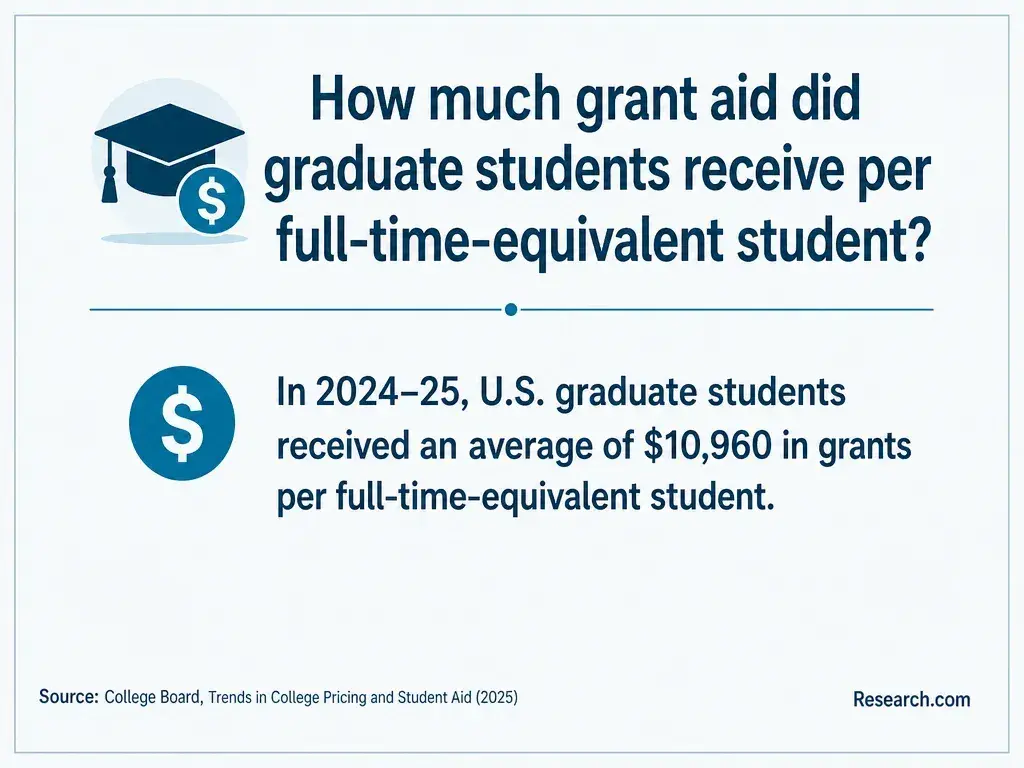
For a meaningful cost comparison, obtain each school's current tuition basis and required fees, then account for software, books, any travel or campus visits, and additional terms if a project runs long. Do not compare advertised per-credit prices without comparing the credits and fees needed to finish. If your goal is licensed counseling rather than forensic research, compare the full qualifying pathway and its financing; resources on paying for an online mental health counseling degree address that distinct decision.
Potential nonclinical directions include research or program-evaluation support, victim-services coordination, corrections-related program support, and justice-system administration. Eligibility depends on the employer's duties and requirements, your prior experience, and any agency rules. For a research-focused applicant, a supervised project showing how you evaluated measures, handled limitations, and communicated findings may be more useful than a concentration label alone.
Do not conflate these roles with independent forensic evaluation, expert testimony, law enforcement authority, or legal practice. If your interest is primarily in helping people navigate substance-use services, examine career options in recovery services and check the credentials attached to the particular job. A forensic MS may be unnecessary for that objective.
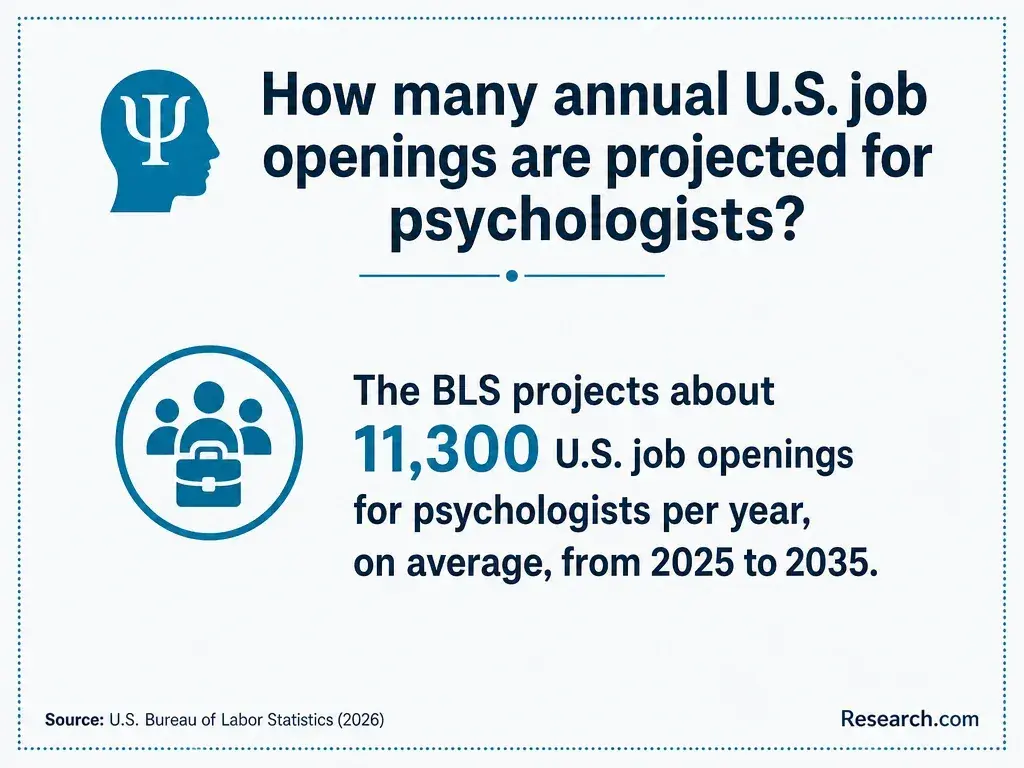
There is no single reliable salary for "forensic psychology MS graduates": graduates enter different occupations, and a degree does not make them licensed psychologists. Use the US Bureau of Labor Statistics Occupational Outlook Handbook wage and employment-projection figures for the specific occupation you intend to pursue, then read its typical entry requirements. An occupation-wide median is not a prediction of your starting pay or a program's graduate outcome.
For a closer comparison, request the school's career-outcome data, including the job titles reported, reporting period, number of graduates represented, and response rate. Then compare local job postings with your existing qualifications. If compensation is central to your decision, exploring better-paid roles related to forensic psychology can generate possibilities, but verify each role's duties, experience requirements, and any required license before treating its pay as attainable through this MS.
How Do You Choose an Accredited Forensic Psychology Program?
First verify the institution's current accreditation and the exact degree it awards. Institution-level accreditation is not proof that a nonclinical forensic psychology MS qualifies for licensure or offers intensive research supervision. Do not assume APA accredits a general or nonclinical psychology master's program.
Then compare programs on the evidence most relevant to this decision: the opening-term syllabi, prerequisite sequence, assessed methods assignments, instructor feedback, research supervision, and rules for ethical data access. Ask who approves a proposed project and what happens if a preferred dataset is unavailable. A program that supplies an alternative project route is easier to assess than one promising access without explaining the approval process.
Use choosing forensic psychology study by cost and entry criteria to build a shortlist, then request current written answers from each school. Choose the program whose documented first-term work fits your research goal and preparation - not simply the one with the most appealing forensic course titles.
Other Things You Should Know About Psychology
Public availability does not settle research ethics or responsible use. Check your instructor's requirements, institutional review rules, source restrictions, privacy risks, and whether combining records could identify vulnerable people.
Avoid reporting details that could expose individuals. Ask your instructor or data steward about disclosure rules, whether categories may be combined appropriately, and whether the resulting analysis would still answer the question.
Follow the course policy and verify every claim against the study itself. Do not enter restricted records or participant information into an unapproved tool, and do not let a generated summary substitute for checking methods and limitations.
Report the result accurately, including uncertainty and design limitations. A result that does not support a prediction is not proof that no relationship exists; explain what the study could reasonably detect and what remains unresolved.
- Read the Belmont Report | hhs.gov https://www.hhs.gov/ohrp/regulations-and-policy/belmont-report/read-the-belmont-report/index.html
- An Introduction to the Quasi-Experimental Design... - PMC https://pmc.ncbi.nlm.nih.gov/articles/PMC11741180/
- Protecting Participants of Social Science Research | Illinois Criminal Justice Information Authority https://icjia.illinois.gov/researchhub/articles/protecting-participants-of-social-science-research/
- Research Ethics and Informed Consent | Educational Research Basics by Del Siegle https://researchbasics.education.uconn.edu/ethics-and-informed-consent/
- Online Master of Science in Forensic Psychology | Touro University Worldwide https://www.tuw.edu/academics/psychology/online-masters-in-forensic-psychology/
- M.S. in Forensic Psychology Curriculum | Nova Southeastern University https://psychology.nova.edu/degrees/masters/forensic-psychology/curriculum.html
- Guide 3: Reliability, Validity, Causality, and Experiments | fsu.edu https://myweb.fsu.edu/slosh/MethodsGuide3.html
- Specialty guidelines for forensic psychology | apa.org https://www.apa.org/practice/guidelines/forensic-psychology