2027 Best Online Speech Pathology Master's Programs for Residents of Santa Clarita, CA

Co-Founder and Chief Data Scientist

Reviewed by Rhea Paul, PhD
SLP Education & Research Expert
Choosing an online speech-language pathology master's program from Santa Clarita is less about finding a school with "online" in its name and more about confirming California eligibility, CAA accreditation, clinical placement support, and required travel. This guide compares practical options and explains the questions that determine whether a program can support California licensure, ASHA certification, and work in schools or medical settings. It is designed for aspiring SLPs, career changers, and working adults who need a realistic plan before applying.
Key Things You Should Know
- A California-eligible, CAA-accredited master's degree is the essential starting point for Santa Clarita residents pursuing California SLP licensure and ASHA certification; an online format alone is not enough.
- Speech-language pathologists had a $97,870 median annual wage in May 2025, and the occupation is projected to grow 17% from 2025 to 2035, but local job access still depends on licensure, supervised clinical training, and employer requirements.
- The strongest online options are those that document California authorization, explain who secures local clinical placements, disclose required campus travel, and provide a written California licensure determination before enrollment.
Which online speech pathology master's programs accept Santa Clarita residents without relocation?
Several CAA-accredited programs use distance-learning coursework while arranging required clinical education near a student's home when feasible. Acceptance of California residents can change because of state authorization, clinical-site capacity, and university policy, so Santa Clarita applicants should obtain written confirmation before paying an application fee or deposit.
The programs below are notable options to investigate because they have established distance-delivered SLP pathways. "No relocation" should not be read as "no travel": all entry-level SLP master's programs require supervised clinical experiences, and many require short in-person immersions.
| Program to evaluate | Delivery model | Santa Clarita decision point | Important trade-off |
| Emerson College, MS in Speech-Language Pathology | Online coursework with clinical placements and in-person immersion requirements | Ask admissions to confirm California enrollment eligibility, required immersion dates, and placement procedures for Los Angeles County | Designed for distance learners, but placement geography and travel are not guaranteed |
| Baylor University, MS in Communication Sciences and Disorders | Online academic instruction with supervised clinical education | Confirm current California authorization and whether the program can support placements within commuting distance of Santa Clarita | Structured cohort model may be less flexible than an asynchronous degree |
| NYU Steinhardt, MS in Communicative Sciences and Disorders | Online graduate pathway with clinical training requirements | Verify California participation, synchronous meeting expectations, and any New York or other travel obligations | Clinical scheduling and cohort requirements may affect working students |
These are comparison candidates, not a promise of California admission or a local placement. Use a broader directory of online speech pathology programs only after narrowing choices to CAA-accredited programs that provide a current California disclosure.
For each school, ask one precise question: "May a newly admitted student who lives in Santa Clarita complete every required practicum and externship in California, and what happens if a site cannot be secured?" The answer is more useful than a general statement that the degree is online.
How do California licensure rules shape online speech-language pathology master's choices?
California licensure is governed by the Speech-Language Pathology and Audiology and Hearing Aid Dispensers Board. A master's degree is only one part of the pathway. Applicants generally need qualifying academic preparation, supervised clinical experience, a required postgraduate professional experience period, and successful completion of the applicable national examination and state requirements.
For a Santa Clarita resident, the practical implication is simple: select a program built to document clinical hours and supervised experiences in a form California can evaluate. A program may be CAA-accredited yet still require the student to complete additional state-specific steps after graduation.
The following checkpoints show why an online degree must be evaluated as a licensure pathway rather than simply as a convenient class format.
| Requirement area | Why it matters in California | What to verify with the university |
| CAA accreditation | CAA accreditation is central to ASHA's certification route and signals that the professional degree meets recognized educational standards | Current accreditation status and the program's expected graduation eligibility |
| Graduate clinical education | Clinical practicum must be supervised and documented appropriately | How observation, direct client contact, supervisors, and hours are tracked |
| Postgraduate experience | Graduation does not by itself create independent California practice authority | Whether career services explain the required supervised post-graduate pathway |
| School employment | California public-school roles can involve separate credential or employer requirements | Whether the curriculum supports school-based preparation and what additional California requirements may apply |
Do not rely on a university's general statement that graduates "may pursue licensure." Request its California professional-licensure disclosure and compare it with the state board's current requirements. Rules, forms, and interpretation can change, particularly for applicants educated through interstate distance programs.
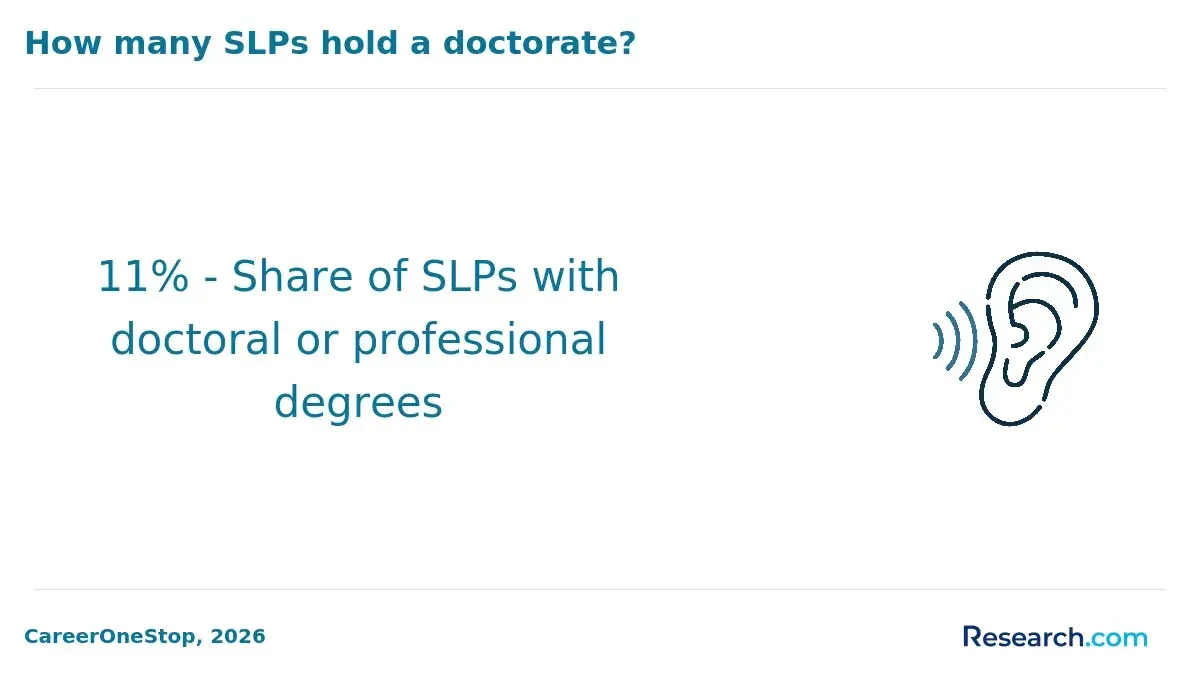
Which online CAA-accredited speech pathology programs best match Santa Clarita school and medical jobs?
The best fit depends on the setting you want after graduation. Santa Clarita residents considering school districts, pediatric clinics, hospitals, rehabilitation facilities, or skilled-nursing settings should prioritize a program's clinical breadth over marketing language about flexibility.
CAA accreditation is the baseline because it supports the educational portion of the ASHA Certificate of Clinical Competence pathway. Beyond that baseline, ask whether the school can help develop experiences with children, adults, language disorders, swallowing, voice, neurogenic communication disorders, and culturally responsive service delivery.
The labor market supports careful planning rather than rushed enrollment. The U.S. Bureau of Labor Statistics projects 17% employment growth for speech-language pathologists from 2025 to 2035, with about 12,500 openings annually on average; that demand does not eliminate the need to qualify for the specific settings where you want to work. Readers comparing career settings and compensation can review this guide to SLP salary considerations alongside California licensure and local employer expectations.
Use your target setting to guide the questions you ask programs:
- For school-based work, ask about pediatric practicum exposure, school-calendar placement timing, multilingual assessment preparation, and any California credential-related guidance.
- For medical work, ask about adult diagnostics, dysphagia education, acute-care or rehabilitation exposure, and whether placements can include medical settings rather than only outpatient clinics.
- For a career that may span both settings, ask whether the program can provide a balanced clinical sequence instead of promising a specialty placement it cannot control.
No school can ethically guarantee a hospital, district, or specialty placement in Santa Clarita. A better sign is a transparent process: named clinical-placement staff, clear student responsibilities, written site-affiliation expectations, and early notice when travel may be necessary.
What accreditation and state authorization must Santa Clarita applicants verify before enrolling online?
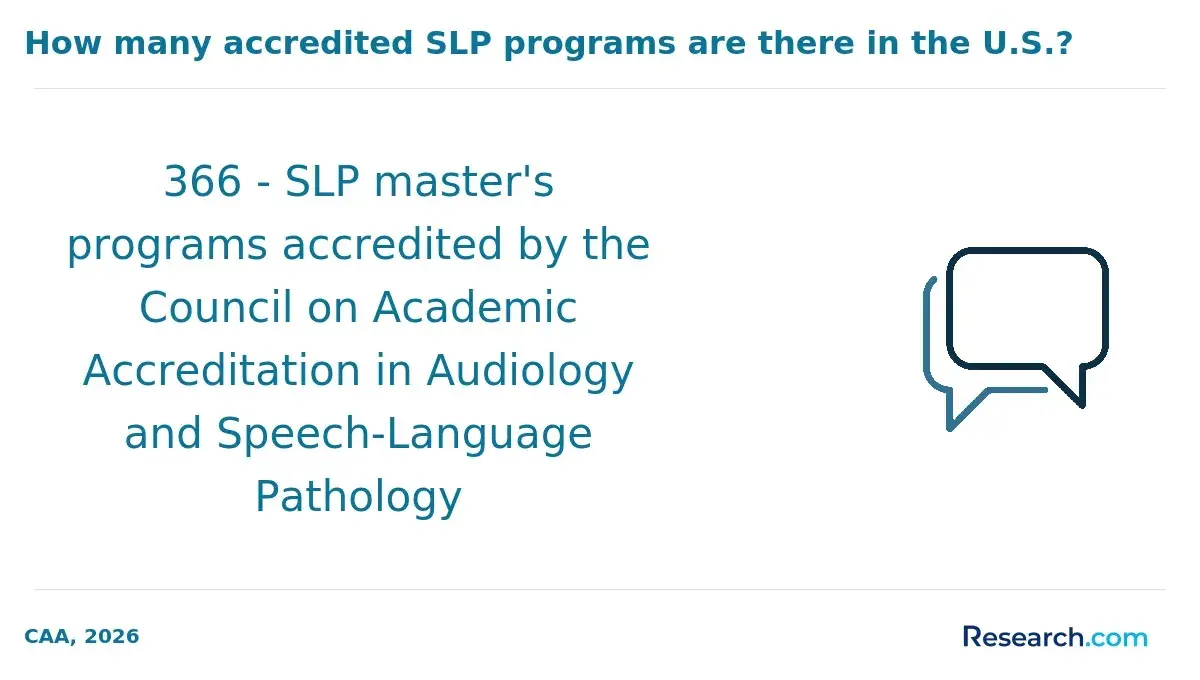
Two checks are nonnegotiable: institutional permission to educate California residents through distance learning and current programmatic accreditation through the ASHA Council on Academic Accreditation in Audiology and Speech-Language Pathology. These are related but different protections.
CAA accreditation evaluates the professional SLP program. State authorization concerns whether the university may offer distance education to a California resident. Neither item, by itself, confirms that a particular student's clinical placements or later license application will be approved.
Before accepting an offer, request the following items in writing. This protects you if web pages are revised after you enroll.
- Ask admissions whether the program currently accepts newly admitted California residents and whether any California enrollment restriction applies to your start term.
- Confirm the program's current CAA status in ASHA's official accreditation directory, including any accreditation notes or review dates.
- Request the school's California professional-licensure disclosure for the MS-SLP curriculum, not merely a general online-learning authorization statement.
- Ask whether all required clinical placements may be completed in California and what financial or academic consequences apply if travel is needed.
- Save the response, tuition estimate, curriculum plan, and placement policy with your enrollment records.
A common mistake is treating "ASHA aligned," "licensure track," or "accredited institution" as proof of CAA accreditation. Those phrases can describe very different things. Look specifically for the degree program's CAA status and verify it independently.
How do leading online speech pathology programs differ in clinical placement access near Santa Clarita?
Clinical placement is usually the deciding issue for online SLP students in Santa Clarita. Coursework can be delivered at a distance, but clinical practica require real clients, qualified supervisors, affiliation agreements, and schedules that meet program and state expectations. Placement availability can vary by term, specialty, and site capacity.
Programs generally use one of three models. The model affects workload, travel risk, and how much local networking the student must do.
| Placement model | How it works | Best fit | Risk to investigate |
| University-arranged placement | The program leads site outreach and contracting | Applicants who need substantial administrative support | "Arranged" may still mean a placement outside the preferred commute area |
| Shared placement search | The university provides support while the student helps identify leads or complete site paperwork | Students with local professional contacts and schedule flexibility | Students may underestimate the time needed to secure a compliant site |
| Student-sourced placement | The student is primarily responsible for identifying potential sites, subject to program approval | Applicants with strong local networks and a clear understanding of site requirements | There may be no guarantee that a preferred site will qualify or sign an agreement |
Ask for the program's definition of "local." A site in greater Los Angeles may be technically local while still creating a difficult daily commute from Santa Clarita, particularly for full-time externships. Also ask whether evening, weekend, telepractice, bilingual, pediatric, and adult-medical placements are realistic options or merely possible in limited circumstances.
Do not contact potential sites as though placement approval is automatic. First obtain the program's placement criteria, supervisor qualifications, affiliation-agreement process, and deadline. A clinic willing to host a student may not satisfy university or accreditation requirements.
Which online speech-language pathology master's offer in-state or regional tuition advantages for Californians?
California residency does not automatically create an in-state tuition benefit at an online SLP program. Many distance-delivered master's programs charge one online rate regardless of residence, while public universities may use different resident and nonresident structures. Because clinical education, fees, travel, and lost work hours can materially affect cost, compare the full published budget rather than a headline tuition number.
Private online programs can be attractive when they offer a predictable per-credit rate and less relocation risk, but they may not offer a California resident discount. A public California option may appear less expensive at first yet have campus attendance, commuting, or limited cohort-access considerations. Applicants seeking lower-cost options should compare cheapest SLP master's programs only after confirming CAA status, California eligibility, and the clinical-placement model.
Use the same cost categories for every offer so that the comparison is fair.
| Cost category | Why it changes the real price | Question to ask |
| Tuition and required university fees | Per-credit figures may exclude technology, clinical, graduation, or distance-learning charges | What is the estimated total tuition and mandatory fee amount for my complete degree plan? |
| Clinical education expenses | Students may pay for background checks, immunizations, liability coverage, testing, parking, or site requirements | Which clinical costs are mandatory, and which are estimates? |
| Travel and immersion costs | Flights, lodging, local transportation, and missed wages can exceed a small tuition difference | How many in-person visits are required, where are they held, and can dates change? |
| Living and opportunity costs | Full-time placements can reduce paid-work availability | During which terms should students expect daytime clinical schedules? |
Financial aid can reduce net cost, but it does not turn an unsuitable program into a low-risk choice. Compare aid offers after subtracting grants and scholarships from the same total-cost estimate, and review federal loan terms before borrowing.
How do hybrid and fully online SLP programs compare for working adults in Santa Clarita?
"Online" describes course delivery, not the entire degree experience. An entry-level SLP master's cannot be fully remote in the everyday sense because students must complete supervised clinical work. The meaningful comparison is between programs with mostly online academic coursework and hybrid programs that require recurring campus-based teaching or labs.
| Format | Potential advantage | Potential limitation | Who it may suit |
| Mostly online cohort program | Reduces routine campus commuting and can support students outside the university's region | Often includes live classes, immersive experiences, and fixed clinical schedules | Working adults who can protect recurring class and practicum hours |
| Hybrid program | More face-to-face skills practice and access to campus-based clinical resources | Regular commuting or temporary travel may be required | Students who value in-person instruction and can manage location demands |
| Traditional campus program | May offer direct access to university clinics and regional faculty networks | Least flexible for a student balancing distant commuting or full-time work | Students who want a local campus experience and can attend daytime activities |
For many working adults, the difficult period is not online coursework; it is the clinical sequence. Externships may occur during normal business hours and can require a workload similar to a full-time job. Choose a program only after mapping each term against work, caregiving, commute, and travel obligations.
Accelerated options can reduce time to graduation but intensify weekly demands. If you are considering 5 year SLP programs or other accelerated pathways, distinguish undergraduate-to-master's tracks from post-baccalaureate master's programs for career changers; they are not interchangeable.
What admission timelines and prerequisites affect when Santa Clarita residents can start SLP master's online?
Most SLP master's programs use cohort admissions, so applicants often cannot start whenever they are ready. A missed prerequisite, late transcript, incomplete observation documentation, or delayed reference can push enrollment to the next cycle. Competitive programs may also have an application deadline months before classes begin.
Applicants with a bachelor's degree in communication sciences and disorders usually have the most direct path. Career changers may need prerequisite or leveling coursework in areas such as phonetics, speech and hearing science, anatomy and physiology of speech and hearing mechanisms, language development, audiology, and statistics. Specific course names and requirements vary by program.
A realistic application sequence helps prevent last-minute decisions.
- Choose a target start term and identify every program's current deadline, application platform, and California eligibility status.
- Request official transcripts early and ask each program for a prerequisite evaluation if your degree is outside communication sciences and disorders.
- Complete any required observation hours, prerequisite classes, personal statement, recommendations, and test requirements by the school's stated deadline.
- Compare offers only after obtaining written details on tuition, travel, clinical placement support, and California licensure disclosures.
- Keep a backup plan if a prerequisite sequence or cohort calendar delays your preferred start date.
Do not assume that a program labeled "no GRE" has no admissions standards. Programs may still evaluate GPA, prerequisite grades, writing, interviews, work history, observation experience, and professional readiness.
How can Santa Clarita students confirm that an online SLP degree leads to ASHA certification?
ASHA certification, commonly called the Certificate of Clinical Competence in Speech-Language Pathology, is a national professional credential that many employers value or require. It is distinct from California state licensure, although the pathways overlap substantially. A degree should be evaluated for both outcomes.
Start by confirming that the specific graduate SLP program, not merely its university, is CAA-accredited. Then ask the program how its curriculum, clinical education records, graduate outcomes, and advising support graduates seeking the ASHA credential. Finally, verify the current ASHA requirements yourself because certification standards may change.
The most useful question is not "Will I be ASHA certified when I graduate?" Graduation generally does not equal full certification. Ask: "What additional supervised postgraduate experience, examination, documentation, and application steps will I need after graduation, and how does your program prepare me to complete them?"
Students should also keep personal copies of syllabi, clinic-hour records, supervisor information, transcripts, and placement evaluations. These records can be valuable if a licensing agency, employer, or certification body requests clarification later.
What consumer-protection steps should Santa Clarita applicants take when evaluating online SLP programs?
A careful applicant treats a master's offer as a professional-regulation decision and a financial decision. The largest avoidable mistakes are assuming that online means California-eligible, assuming a school will guarantee a nearby placement, and comparing programs using tuition figures that do not measure the same thing.
Before submitting a deposit, use this final due-diligence checklist. It focuses on facts that can affect your ability to finish the degree and enter the profession.
- Verify the program's current CAA accreditation directly and save the program-specific result.
- Obtain a written statement that the university accepts California residents for your intended cohort and has evaluated its curriculum for California licensure purposes.
- Request the clinical placement policy, including who finds sites, whether travel may be required, and what happens if a placement falls through.
- Calculate total expected cost using tuition, mandatory fees, clinical expenses, travel, technology, and likely reductions in work hours.
- Confirm live-class times in Pacific Time, required immersions, attendance rules, and the expected daytime availability for practicum terms.
- Ask whether the program has a process for career changers, prerequisite review, and academic support before the clinical sequence begins.
- Read refund, withdrawal, leave-of-absence, progression, and remediation policies before making a nonrefundable payment.
Be cautious if a representative will not provide answers in writing, makes broad claims about licensure without a California disclosure, or minimizes clinical scheduling. A transparent program may not promise every preferred outcome, but it should clearly explain limitations, responsibilities, costs, and contingency plans.
Other Things You Should Know About Speech Language Pathology
Yes, potentially, if the specific program is CAA-accredited, accepts California residents, supports required clinical education, and enables you to meet California's education, examination, supervised-experience, and application requirements. Confirm those points with both the university and the California licensing board before enrolling.
It depends on the program. Some schools arrange placements, some use a shared model, and others expect students to identify potential sites. Ask for the written policy and clarify whether the school guarantees a qualifying placement or only assists with the search.
Completion time varies by curriculum, prerequisites, cohort pacing, and clinical scheduling. Students entering with the required communication sciences background may finish sooner than career changers who first need leveling coursework. Review the term-by-term plan rather than relying on a general advertised timeline.
Some students work while completing early academic terms, but full-time employment can become difficult during intensive practicum and externship periods. Before enrolling, obtain expected clinical hours and placement schedules, then decide whether reduced work hours, flexible employment, or savings are necessary.
References
- Online Master of Speech-Language Pathology | WCU https://westcoastuniversity.edu/online-programs/master-of-speech-language-pathology
- Online MS in Speech Language Pathology (SLP) https://www.sjsu.edu/online/programs/speech-language-pathology-masters-degree.php
- Online MS in Speech-Language Pathology https://ce.csueastbay.edu/programs/speech-language-pathology/