2027 Best Online Speech Pathology Master's Programs for Residents of Kansas City, MO

Co-Founder and Chief Data Scientist

Reviewed by Rhea Paul, PhD
SLP Education & Research Expert
Kansas City residents considering an online speech-language pathology master's need more than a convenient virtual format: they need a CAA-accredited program that can support clinical training and Missouri licensure. This guide compares the factors that matter most, including state eligibility, live-class schedules, campus travel, placement support, tuition transparency, and career outcomes. It is designed for prospective SLPs, career changers, and working professionals who want to make a defensible enrollment decision before applying.
Key Things You Should Know
- A Missouri-bound SLP applicant should prioritize a master's program accredited by the Council on Academic Accreditation in Audiology and Speech-Language Pathology (CAA), because CAA accreditation is central to ASHA certification and Missouri licensure planning.
- Online delivery does not mean entirely remote training: clinical practicum, internships, skills assessments, and campus immersions may require local placement availability, daytime participation, and travel.
- The U.S. Bureau of Labor Statistics reports a $97,870 median annual wage for speech-language pathologists in May 2025 and projects 17% employment growth from 2025 to 2035; those figures support demand but do not guarantee an individual job or salary.
Which online speech pathology master's programs best serve residents of Kansas City, Missouri today?
The best online option is not necessarily the closest university. For a Kansas City, Missouri resident, a strong choice is one that is CAA-accredited, authorized to enroll Missouri residents, transparent about Missouri licensure, realistic about clinical placement responsibilities, and workable with the student's schedule.
Several established distance or hybrid pathways are commonly worth investigating, but availability, tuition, cohort openings, and state disclosures can change. The comparison below identifies the questions that matter before treating any program as a viable option.
| Program to investigate | Decision-relevant strength | Potential trade-off for Kansas City students | What to verify before applying |
| Emerson College, MS in Speech-Language Pathology | Established online-oriented pathway with clinical education built into the degree sequence | Live coursework, immersive requirements, and private-university pricing may affect working students | Current Missouri eligibility, required immersions, local placement process, and full tuition estimate |
| Baylor University, MS in Communication Sciences and Disorders | Online-focused program structure designed for aspiring clinicians | Clinical experiences may require daytime availability and travel depending on assigned requirements | Missouri disclosure, synchronous commitments, placement responsibility, and total mandatory charges |
| New York University, MS in Communicative Sciences and Disorders | Distance-learning option associated with a large clinical education infrastructure | Cost and scheduled learning activities can be substantial considerations | Missouri enrollment status, residency expectations, prerequisite rules, and clinical-site arrangements |
| University of Cincinnati, MS in Speech-Language Pathology | Public-university option that may appeal to applicants seeking a distance-learning pathway | Out-of-state tuition and cohort scheduling may reduce the apparent public-school cost advantage | Current online availability, Missouri authorization, required visits, and clinical placement support |
| University of St. Augustine for Health Sciences, MS-SLP | Health-professions-focused model with online academic delivery and clinical education | Students should carefully assess travel, clinical scheduling, and program-specific eligibility disclosures | CAA status, Missouri eligibility, term schedule, placement terms, and comprehensive cost |
These are not universal rankings. A program may be a better fit for one applicant because it accepts more prerequisite coursework, offers a compatible cohort calendar, or has clearer clinical coordination, while another applicant may prefer a lower-cost public option even if it requires more travel.
When comparing speech therapy masters online, separate the academic delivery model from professional readiness. A fully online lecture format is useful only if the program can also help you complete the supervised clinical education required for certification and state practice.
What licensure and ASHA-accredited program requirements apply to Missouri and Kansas City speech pathologists?
To practice as a speech-language pathologist in Missouri, graduates generally need a qualifying graduate degree, supervised clinical experience, a passing Praxis examination score, and state licensure through the Missouri State Board of Registration for the Healing Arts. Most applicants also plan toward the ASHA Certificate of Clinical Competence in Speech-Language Pathology (CCC-SLP), although state licensure and ASHA certification are separate credentials.
CAA accreditation is the key academic safeguard. The Council on Academic Accreditation is ASHA's specialized accreditor for entry-level graduate programs in audiology and speech-language pathology. A CAA-accredited program is designed to meet the academic and clinical education standards used in the ASHA certification pathway.
The following framework helps distinguish requirements that are often confused.
| Requirement | Why it matters | Who confirms it |
| CAA-accredited graduate program | Supports the standard academic pathway toward clinical practice and ASHA certification | CAA and the university |
| Graduate clinical practicum | Builds supervised patient-care experience before graduation | University clinical education office |
| Praxis examination | Required in the usual certification and state-licensure pathway | Missouri licensing board and ASHA requirements |
| Clinical fellowship | Postgraduate mentored practice period used in the CCC-SLP pathway | Employer, mentor, ASHA, and state board rules |
| Missouri SLP license | Legal authorization to practice in Missouri | Missouri State Board of Registration for the Healing Arts |
Applicants living in the Kansas City metro area should also note that Kansas and Missouri are different licensing jurisdictions. A person living or training on the Missouri side should review Missouri rules; a person planning to work in Kansas, including across the state line, should separately confirm Kansas requirements. Do not assume a Missouri license automatically authorizes practice in Kansas.
ASHA standards and state regulations can change. Before enrolling, obtain written confirmation from the university that its program is intended to meet Missouri educational requirements and confirm the current application pathway directly with the Missouri licensing board.
How do Kansas City-accessible online SLP master's programs differ in eligibility, format, and delivery?
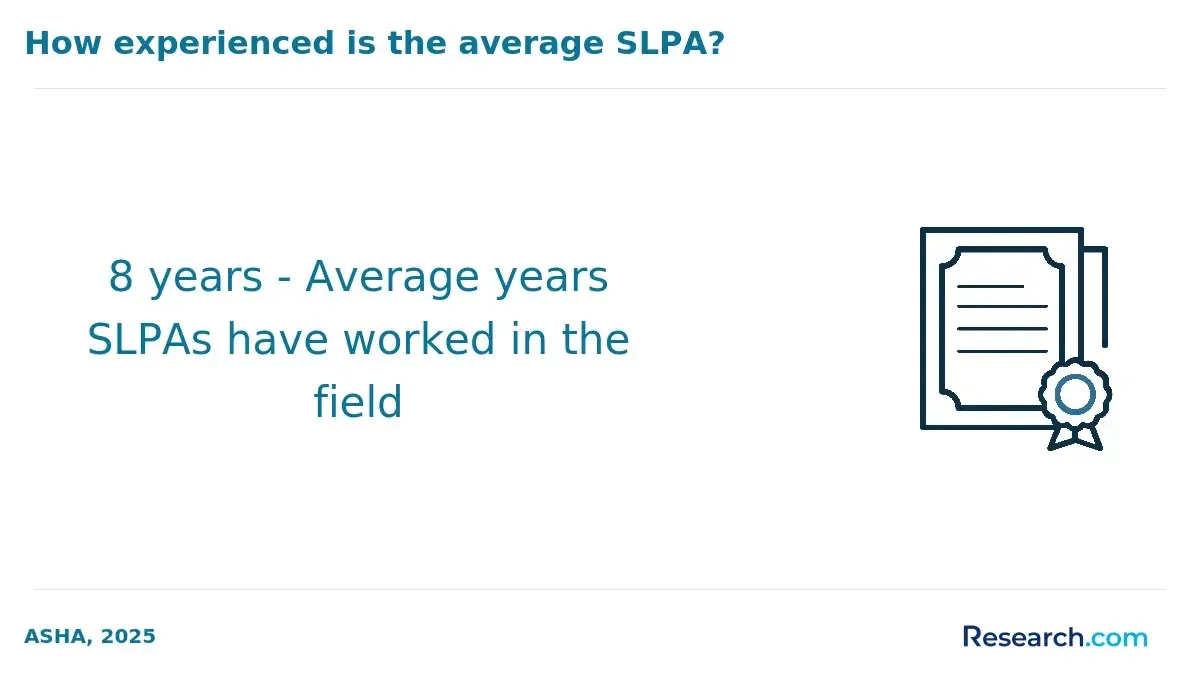
"Online" describes how much academic content is delivered remotely, not whether the degree can be completed from home without scheduling constraints. Most entry-level online SLP master's programs combine online lectures with virtual simulations, live class meetings, clinical skills checks, local practicum, and one or more campus-based or regional immersions.
Programs commonly use one of three delivery patterns. Understanding the difference helps applicants avoid selecting a format that conflicts with employment or caregiving responsibilities.
| Format | Typical experience | Best fit | Main caution |
| Mostly asynchronous online | Recorded lessons and weekly deadlines, often paired with selected live activities | Students needing geographic flexibility | Clinical work remains scheduled and may occur during business hours |
| Hybrid synchronous online | Regular live instruction, group work, and virtual faculty interaction | Students who value structure and peer contact | Meeting times may be inconvenient in Central Time or incompatible with full-time work |
| Online coursework with required immersions | Remote classes plus concentrated campus or skills-residency sessions | Students able to travel periodically | Travel, lodging, missed work, and caregiving costs are separate from tuition |
Eligibility also differs for applicants with and without a communication sciences and disorders background. Applicants who already hold the relevant undergraduate degree may enter the graduate curriculum directly. Career changers often need leveling courses in phonetics, language development, anatomy and physiology of speech and hearing, audiology, and speech science before or during admission.
Accelerated bachelor's-to-master's paths can be efficient for eligible undergraduates, but they are usually not a shortcut for adults who already have an unrelated bachelor's degree. Students exploring 5 year speech pathology programs should confirm whether the option is an undergraduate-to-graduate sequence, whether it is CAA-accredited at the graduate level, and whether it accepts transfer or post-baccalaureate applicants.
A practical rule is to request a sample term calendar. It will reveal the actual number of evenings, live meetings, immersion days, and clinical hours a student must protect on their calendar.
Which online speech pathology programs accept Kansas City residents and meet Missouri state authorization rules?
A university must be authorized to provide distance education to a student located in Missouri, and its professional-licensure disclosures should address whether the program meets, does not meet, or has not determined alignment with Missouri requirements. Admission availability can change even when a school historically accepted Missouri students.
For this reason, do not rely on a program's general statement that it serves students "nationwide." Ask the school's admissions or state-authorization office for a written answer that identifies your physical location as Missouri and names the specific MS-SLP program.
Before paying an application fee, ask each school these targeted questions.
- Are new students who are physically located in Missouri currently eligible to enroll in this exact online MS-SLP cohort?
- Is the program currently CAA-accredited, and what is the accreditation period or current status?
- Does the university state that the curriculum meets Missouri educational requirements for SLP licensure, or does it identify any gap?
- Which in-person immersions, competency checks, or clinical activities require travel, and what costs are not included in tuition?
- Will the program secure clinical placements near Kansas City, assist with a placement search, or require the student to find sites and preceptors?
- Can clinical practicum be completed while working full time, or are daytime weekday placements expected?
State authorization and professional licensure are related but different. Authorization concerns the institution's ability to teach a Missouri-based distance learner. Licensure alignment concerns whether the education supports the state's pathway to practice. You need favorable answers to both questions.
What institution-level and programmatic accreditors oversee online speech pathology master's degrees?
Two forms of quality review matter. Institutional accreditation evaluates the university as a whole, while programmatic accreditation evaluates the professional speech-language pathology curriculum. A reputable university can hold institutional accreditation without its SLP program holding the specialized accreditation needed for the standard clinical licensure pathway.
For a future clinician, CAA status should be the first screening criterion. CAA accredits graduate education programs in audiology and speech-language pathology. Its public directory and ASHA's EdFind tool are useful for confirming whether a program is accredited, has candidacy status, or has another listed status.
| Review type | What it evaluates | Why a Kansas City applicant should care |
| Institutional accreditation | University-wide academic quality, governance, and financial capacity | May affect federal financial-aid eligibility and transferability, but does not by itself establish SLP licensure readiness |
| CAA programmatic accreditation | Graduate SLP curriculum, faculty, clinical education, assessment, and student outcomes | Provides the strongest evidence that the degree follows the expected professional preparation framework |
| State authorization review | Whether the university may provide distance education in a student's state | Determines whether a Missouri resident may be eligible to enroll from Missouri |
Candidacy and accreditation are not interchangeable terms. A program with candidacy may be working toward accreditation, but applicants should ask how its status affects their graduation date, certification route, financial risk, and eligibility for Missouri licensure. Never assume that a new online program has the same standing as an established CAA-accredited program.
How do tuition, clinical fees, and total cost compare across top online SLP programs for Kansas City?
The most useful cost comparison is the estimated cost to complete the degree, not the advertised cost per credit. Many online SLP programs require roughly two to three years of full-time graduate work, and charges can include tuition, university fees, technology fees, clinical fees, background checks, immunizations, testing, supplies, travel, and housing for required immersions.
Because programs revise tuition and may charge different rates by cohort, residency, or academic year, applicants should request a written individualized estimate. The table shows the cost categories that make comparisons fair when published totals are not directly equivalent.
| Cost category | What it may include | How to compare it |
| Instructional tuition | Per-credit, per-term, or cohort-based academic charges | Multiply the current rate by required credits only when the school confirms the rate applies throughout the program |
| Mandatory university fees | Technology, student services, registration, or distance-learning charges | Ask whether fees apply every term, including clinical terms |
| Clinical education expenses | Background checks, drug screening, immunizations, liability coverage, site onboarding, and testing | Request an estimated range and identify which expenses are student-paid |
| Travel and immersion expenses | Airfare or mileage, lodging, meals, parking, and missed-work costs | Estimate separately because these expenses are rarely included in tuition |
| Living and opportunity costs | Reduced work hours, childcare, transportation, and health insurance needs | Include them in a personal cash-flow plan, especially during full-time placements |
Public programs can be less expensive, but an out-of-state rate, required travel, or longer completion schedule can narrow the difference. Private programs may have higher published tuition yet offer a more predictable cohort plan or stronger placement coordination. The lower-cost choice is the one with the lower realistic completion cost and acceptable licensure risk, not simply the lower sticker price.
Career demand can help frame the investment, but it should not replace budgeting. The national median annual wage for speech-language pathologists was $97,870 in May 2025, according to the Bureau of Labor Statistics; actual compensation varies by setting, experience, hours, employer, and location. Review current speech therapist salary information alongside tuition, borrowing needs, and the types of settings you expect to pursue.
Applicants should compare federal aid, employer tuition assistance, scholarships, graduate assistantships where available, and the timing of loan disbursements. Avoid borrowing based solely on a projected salary; clinical placements can reduce the ability to work while enrolled.
How do clinical placement arrangements work for online SLP students living in Kansas City?
Clinical placement is the most location-sensitive part of an online SLP degree. Academic lectures may be completed online, but students need supervised experiences with clients or patients in appropriate settings. Placements can involve university clinics, schools, hospitals, rehabilitation facilities, private practices, or community organizations.
Programs use different models. Some assign or actively coordinate placements, some develop sites with the student, and others expect students to identify potential sites while the university completes affiliation and supervisor approval. No model guarantees a site near a student's home, and an affiliation agreement can take time to finalize.
Before enrolling, clarify the following placement conditions with the clinical education office.
- Whether the program has recently placed students in the Kansas City metropolitan area without naming a placement as guaranteed.
- Whether students may propose sites and whether the university, rather than the student, approves contracts and supervisors.
- How far students may be expected to commute and whether an out-of-area placement is possible.
- Whether practicum and externship schedules are primarily daytime weekday commitments.
- Whether a delayed placement could extend time to graduation and increase tuition or living costs.
- Which onboarding requirements, insurance costs, screenings, and transportation expenses are the student's responsibility.
A common mistake is assuming that living in a large metro area automatically solves placement logistics. Kansas City has many potential healthcare and school-based settings, but availability depends on site capacity, contracts, supervisors, student timing, and university policies. Ask for a clear description of the school's process rather than relying on informal assurances.
What graduation rates, Praxis pass rates, and employment outcomes do leading online SLP programs report?
CAA-accredited programs are expected to publish outcome information, often including program completion rates, Praxis examination pass rates, and employment rates for recent graduating cohorts. These figures are useful because they reflect whether students progress through the program and enter the field, but they should be read with context.
Outcome reports are not always directly comparable. Schools may use different graduating cohorts, reporting windows, class sizes, and employment definitions. A small cohort can produce a very high rate that shifts substantially with only a few students, while a larger program may report a more stable but less individualized result.
| Outcome measure | What it can tell you | Question to ask |
| On-time completion rate | Whether students typically finish within the published curriculum timeline | Does the calculation include students delayed by clinical placement availability or leaves of absence? |
| Praxis pass rate | How recent graduates performed on the required national examination | Which test year, score standard, cohort size, and attempt definition does the school use? |
| Employment rate | Whether responding graduates reported jobs or further education after graduation | What counts as employment, how long after graduation was it measured, and what was the response rate? |
| Program attrition | Whether students leave before completing the degree | What academic, financial, clinical, or personal supports are available if a student falls behind? |
Use outcomes as a screening tool, not a promise. Favor programs that publish recent, clearly defined data and answer follow-up questions directly. If a school cannot explain its outcomes, clinical placement process, or Missouri eligibility in writing, that is a meaningful warning sign.
National labor-market conditions remain favorable: the Bureau of Labor Statistics projects 17% employment growth for speech-language pathologists from 2025 to 2035, with about 12,500 openings projected annually on average. That outlook reflects the occupation nationally, not a guarantee of a specific Kansas City vacancy, clinical fellowship, school-district job, or pay level.
How can Kansas City applicants verify an online SLP program's current accreditation and licensure alignment?
Verification should happen before you apply and again before you enroll, because program approval, state authorization, tuition, and delivery requirements can change by cohort. Save written responses, catalog pages, and cost estimates in one file so you can compare schools on the same evidence.
Use this sequence to complete a reliable pre-enrollment review.
- Find the exact degree in the CAA directory and confirm its current accreditation status, location, and delivery designation.
- Review the university's professional-licensure disclosure for Missouri, not merely a general statement about online learning.
- Ask the admissions office to confirm that applicants physically located in Missouri may enter the intended cohort.
- Send the clinical education office a written request for its placement model, expected travel, likely daytime requirements, and responsibility for affiliation agreements.
- Request a term-by-term tuition and fee estimate that includes required immersions, clinical courses, and non-tuition charges.
- Compare the curriculum against Missouri licensure expectations and contact the Missouri licensing board when a disclosure is unclear.
- Review recent published completion, Praxis, and employment outcomes before submitting an enrollment deposit.
Do not accept verbal assurances as the final answer to a licensure question. A useful email response identifies the program, the state, the relevant requirement, and any limitation. If a school says it has not determined whether its program meets Missouri requirements, treat that as unresolved risk rather than as confirmation.
What should midcareer Kansas City professionals consider when choosing an online speech pathology master's?
For midcareer applicants, the central issue is usually capacity, not motivation. An online SLP master's can reduce relocation needs, but it remains a clinically intensive professional degree. Coursework, labs, client preparation, documentation, supervision meetings, and placements can make a full-time job difficult to sustain, especially during later clinical terms.
Applicants entering from another field should first identify prerequisite gaps and their financial implications. A bachelor's degree in education, psychology, linguistics, healthcare, or another field may be valuable preparation, but it does not automatically substitute for communication sciences and disorders prerequisite courses. Programs differ in whether prerequisites must be completed before admission or can be taken through a leveling sequence.
A speech language pathologist degree should be evaluated as a licensure pathway rather than simply a graduate credential. The right program is one that makes its academic expectations, clinical schedule, and Missouri alignment clear enough for you to plan income, family responsibilities, transportation, and eventual licensing steps.
Midcareer professionals should favor a program when its calendar fits their available time, its clinical office provides credible support, its cost can be financed without relying on optimistic salary assumptions, and its Missouri disclosure is clear. They should pause or consider a different path when they cannot accommodate daytime clinical work, cannot absorb immersion travel, need to remain in a job with inflexible hours, or have unresolved prerequisite requirements.
Common red flags include selecting a program solely because it advertises online classes, comparing only per-credit tuition, assuming a nearby clinical placement, and overlooking the separate Kansas licensure pathway when planning to work across the metro area. A careful applicant plans for the full sequence: prerequisites, graduate study, clinical education, Praxis, fellowship, and state licensure.
Other Things You Should Know About Speech Language Pathology
Yes, an online or hybrid degree can support the pathway if the program is appropriately CAA-accredited, accepts Missouri residents, provides the required clinical education, and meets Missouri's current educational and examination requirements. Online course delivery alone is not enough; verify the program's Missouri licensure disclosure in writing.
Yes. SLP education includes supervised clinical experiences with real clients or patients. A program may arrange experiences near Kansas City when feasible, but students should not assume a specific site, commute distance, or schedule until the clinical education office explains its process.
Some students work during early coursework, but full-time employment can become difficult during clinical practicum and externship terms because placements often occur during normal weekday hours. Ask each program for a sample clinical schedule and its policy on part-time progression.
Timing varies by the program, clinical fellowship arrangement, examination schedule, and state processing. After graduation, applicants commonly complete required examination and supervised post-graduate steps before receiving full licensure. Confirm current Missouri requirements directly with the state licensing board because rules and processing timelines can change.
References
- Master of Science in Speech-Language Pathology https://www.fontbonne.edu/academics/college-education-allied-health-professions/communication-disorders-deaf-education-department/master-science-speech-language-pathology/
- Graduate Degree Programs | Speech-Language-Hearing https://splh.ku.edu/graduate-degree-programs
- Master of Arts in Speech-Language Pathology (M.A. SLP) https://www.kumc.edu/school-of-health-professions/academics/departments/hearing-and-speech/academics/speech-language-pathology-degrees/master-of-arts-in-speech-language-pathology-(m.a.slp).html
- Online Master's in Speech Pathology Programs: 2026 Guide https://speechpathologymastersprograms.com/
- Best Online Master's in Speech Pathology (SLP) Programs https://www.onlinemastersdegrees.org/best-programs/speech-language-pathology-slp/
- Masters SLP programs - preferably online: r/slpGradSchool https://www.reddit.com/r/slpGradSchool/comments/s5p0p0/masters_slp_programs_preferably_online/
- Fully online speech language pathology masters programs? https://www.facebook.com/groups/123939594310021/posts/26153063910970900/