2027 Best Online Speech Pathology Master's Programs for Residents of Aurora, CO

Co-Founder and Chief Data Scientist

Reviewed by Rhea Paul, PhD
SLP Education & Research Expert
Aurora residents looking for an online speech-language pathology master's degree need more than a convenient class schedule: they need a CAA-accredited program that can support Colorado clinical training and a route to state licensure. This guide compares credible online and hybrid options, explains the placement and travel questions that matter locally, and shows how to verify a program before paying an application fee. The decision is consequential: the U.S. Bureau of Labor Statistics projects 17% employment growth for speech-language pathologists from 2025 to 2035.
Key Things You Should Know
- For Colorado practice, prioritize a master's program accredited by the ASHA Council on Academic Accreditation in Audiology and Speech-Language Pathology (CAA), then independently confirm Colorado licensure requirements with the state licensing authority.
- The strongest online options for Aurora residents are not necessarily Colorado-based; the practical differentiators are Colorado enrollment authorization, clinical-placement support, required travel, live class times, and total tuition rather than school location alone.
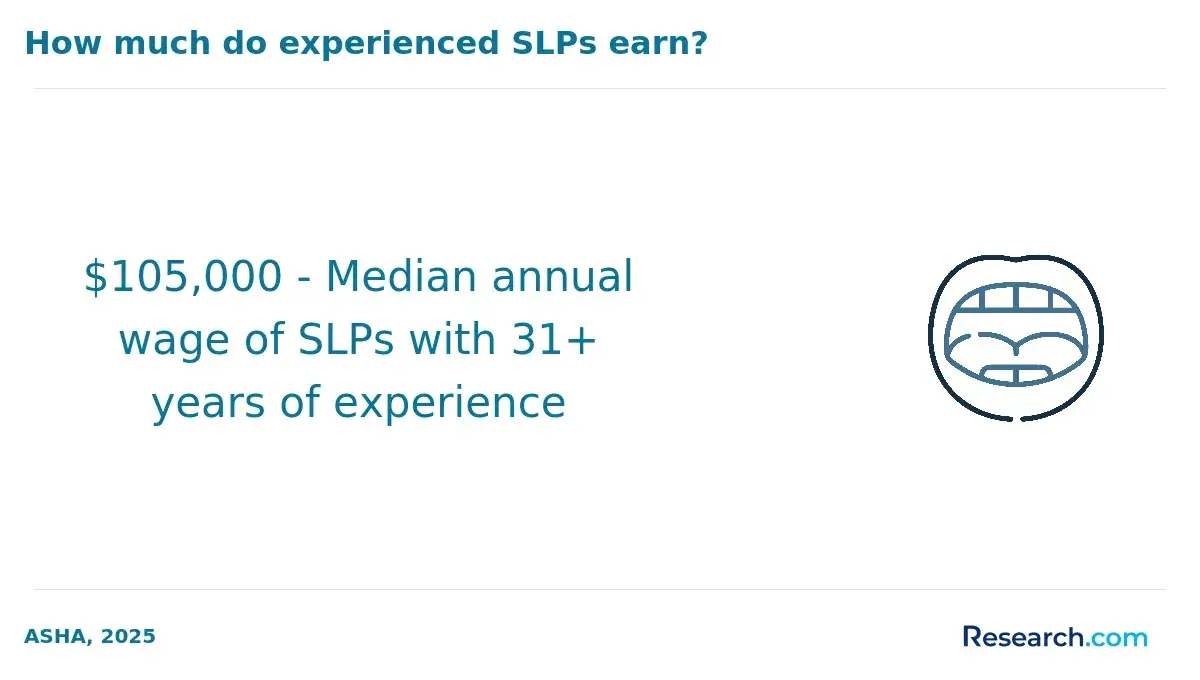
- Speech-language pathologists had a national median annual wage of $97,870 in May 2025, but a graduate degree, supervised clinical training, examination requirements, and state licensure are generally necessary before independent practice.
Which online speech pathology master's programs actually serve residents of Aurora, Colorado?
Several established programs deliver substantial coursework online, but "online" does not mean entirely remote. Speech-language pathology (SLP) students must complete supervised clinical education, and most programs require at least some travel for skills intensives, simulations, orientation, or assessment. An Aurora applicant should consider a program viable only after receiving written confirmation that Colorado residents may enroll in the intended cohort and that the school can support clinical education in Colorado.
| Program | Delivery model to investigate | Potential fit for an Aurora resident | Important verification point |
| Emerson College | Online Master of Science in Communication Disorders | May suit students seeking an established online cohort model and structured placement support. | Confirm Colorado authorization, immersion requirements, live-session expectations, and placement timing. |
| New York University | Online Master of Science in Communicative Sciences and Disorders | May fit applicants comfortable with a nationally delivered curriculum and potential travel. | Ask about required in-person experiences, Colorado clinical-site availability, and total tuition. |
| Calvin University | Online Master of Arts in Speech-Language Pathology | May appeal to students seeking a distance program with clinical education coordination. | Confirm Colorado enrollment eligibility and whether clinical placements can be completed near Aurora. |
| University of St. Augustine for Health Sciences | Online or hybrid Master of Science in Speech-Language Pathology pathway | May fit students who can plan for a structured hybrid schedule and clinical rotations. | Verify Colorado professional-licensure disclosure, required residencies, and cohort availability. |
| University of Nebraska at Kearney | Distance or hybrid graduate SLP study options | May be attractive for some western-region applicants depending on cohort and residence rules. | Confirm the precise delivery format, Colorado authorization, travel, and placement model for the current cycle. |
Do not eliminate an option simply because it is based outside Colorado. Conversely, do not assume that a nationally marketed online degree accepts Colorado students or can place them in the Denver-Aurora area. State authorization and clinical agreements are separate operational questions.
Applicants who need additional context on selectivity should review speech pathology graduate programs carefully, while recognizing that a less selective program is not automatically a lower-risk licensure choice. Accreditation, clinical support, prerequisite fit, and state eligibility should come first.
How do Colorado SLP licensure rules shape which online master's programs are viable?
Colorado licensure requirements determine whether an online master's degree is useful for the career goal, not merely whether it is academically interesting. Speech-language pathologists are regulated health professionals. A program should provide the graduate education and supervised clinical preparation expected by Colorado's licensing framework, while the applicant remains responsible for meeting examination, post-graduate supervised experience, and application requirements that apply when they seek a license.
CAA accreditation is the central educational safeguard. CAA evaluates graduate programs in speech-language pathology against standards involving curriculum, faculty, assessment, resources, and clinical education. It is different from institutional accreditation: a university can be institutionally accredited while its particular SLP program lacks CAA accreditation. For an aspiring clinician, that distinction is critical.
In practical terms, Aurora applicants should plan around four milestones: graduate degree completion, clinical practicum hours during the degree, the Praxis examination, and a supervised Clinical Fellowship or other post-graduate requirement as applicable to Colorado licensure and ASHA certification. The Certificate of Clinical Competence in Speech-Language Pathology (CCC-SLP) is an ASHA professional credential; it is not itself a Colorado license, although employers and state processes may recognize or rely on related standards.
ASHA certification standards commonly include at least 400 supervised clinical practicum hours, including at least 375 direct client-contact hours, followed by a Clinical Fellowship. Requirements can change, and Colorado may have its own application details, so use the Colorado Department of Regulatory Agencies and the current ASHA standards as the final authorities before selecting a program.
A program is a stronger Colorado option when it can answer the following questions in writing:
- Is the program currently CAA accredited, and will that status apply throughout my period of enrollment?
- Does the school's Colorado professional-licensure disclosure state that its curriculum meets, is designed to meet, or has not been determined to meet Colorado educational requirements?
- Will the program approve and supervise Colorado practicum sites, including the final clinical placements needed for graduation?
- What responsibility does the student carry for locating a site, and what happens if a Colorado placement cannot be secured on schedule?
A school that cannot answer these questions clearly may still be legitimate, but it is not yet a low-risk choice for a Colorado licensure-bound student.
Which accredited online speech pathology programs best align with Aurora's local clinical opportunities?
For this reason, the best alignment is usually not the school with the closest campus. It is the school with a documented process for approving Colorado sites, a placement team that starts early, realistic travel rules, and enough flexibility to complete full-time clinical rotations when they occur. Applicants who already work in a school district, clinic, or health system should not assume their employer can host them; university approval and supervisor qualifications still apply.
This comparison identifies the practical features that most affect whether a program can work with Aurora-area clinical training. It does not represent a promise that any school will place a student at a particular provider.
| Decision factor | Why it matters in Aurora | Stronger sign | Potential concern |
| Placement process | Clinical sites can be competitive across the Denver-Aurora region. | The school explains who sources sites, when placement begins, and how affiliation agreements are handled. | The student is told simply to "find their own site" without a written contingency plan. |
| Site variety | Students need experiences across populations and settings to build broad entry-level competence. | The program can describe how it addresses school-age and medical or adult clinical experiences when needed. | Site options appear dependent on informal personal contacts alone. |
| Travel policy | Even a Colorado placement may be outside Aurora or require commuting across the metro area. | The program specifies whether students may need to travel or relocate for a rotation. | Travel expectations are described only after enrollment. |
| Clinical schedule | Externships may conflict with a full-time job or family schedule. | The program clearly identifies daytime, full-time, or multi-day placement expectations. | Marketing emphasizes flexibility without explaining clinical-hour scheduling. |
| Supervisor approval | Not every licensed clinician qualifies under university and certification rules. | The school verifies credentials and oversees supervision. | The student must arrange supervision independently with little review. |
Students who need maximum local control may prefer a Colorado campus-based or hybrid program with established regional relationships, even if it offers less online coursework. Students who value remote academics may prefer a national online program, but should reserve more time and money for possible travel and a placement outside their immediate neighborhood.
If finishing the academic and clinical sequence sooner is the primary objective, compare program structure rather than marketing language. Resources on best 5 year speech pathology programs can help distinguish combined bachelor's-to-master's pathways from standard graduate programs for applicants who already hold a bachelor's degree.
Which online master's programs in speech pathology meet ASHA CAA accreditation standards?
CAA accreditation is the most important programmatic credential for an Aurora resident planning to become a licensed speech-language pathologist. The CAA accredits the graduate SLP program, not an online modality in the abstract. A school may offer online courses while maintaining one accredited program, or it may operate different tracks whose delivery details require careful confirmation.
Programs commonly considered by distance learners include Emerson College, New York University, Calvin University, the University of St. Augustine for Health Sciences, and selected hybrid or distance pathways at public universities. Their accreditation and admissions availability must be checked in the current ASHA EdFind directory and directly with each institution because accreditation actions, candidacy designations, enrollment status, and approved locations can change.
Applicants should understand the following labels before treating a program as licensure-ready:
- CAA accredited: The program holds accreditation from the Council on Academic Accreditation and is generally the clearest educational pathway for students pursuing ASHA certification and state licensure.
- Candidate for accreditation: The program is progressing through CAA review but does not carry the same status as a fully accredited program; applicants should ask how the status affects their cohort and future eligibility.
- Institutionally accredited only: The college or university has recognized institutional accreditation, but that fact alone does not establish that an SLP master's program meets CAA standards.
- Not listed as CAA accredited: The degree may serve another educational purpose, but it is a high-risk choice for a student intending to qualify for U.S. SLP licensure.
CAA accreditation should be treated as a threshold, not a ranking system. Once programs clear that threshold, compare their ability to serve Colorado residents, arrange appropriate clinical education, disclose total cost, and provide a schedule that fits the applicant's obligations.
How can Aurora residents verify institutional and programmatic accreditation for online SLP degrees?
Verification takes only a few steps, but it can prevent an expensive mistake. Institutional accreditation supports the legitimacy of the university and may affect federal financial aid or credit transfer. Programmatic accreditation through CAA addresses the graduate SLP curriculum and clinical training that matter most for professional preparation.
Use this sequence before applying. Save dated screenshots or emails because program claims, tuition, and state-authorization disclosures can be updated between admission and enrollment.
- Search ASHA EdFind for the exact graduate program name, degree, campus or location, and current CAA status.
- Read the university catalog and program website to confirm that the online or hybrid track is part of the CAA-accredited program rather than a separate nonclinical degree.
- Check the institution's recognized institutional accreditation through the university's accreditation disclosure and the relevant accreditor's directory.
- Read the school's Colorado professional-licensure disclosure and ask admissions to confirm Colorado eligibility for your intended start term.
- Ask for a written explanation of clinical placement responsibility, required travel, graduation requirements, and any consequences if a placement is delayed.
- Compare the written answers with Colorado licensing requirements before accepting an offer or paying a nonrefundable deposit.
Be cautious with broad phrases such as "prepares students for certification" or "designed for future clinicians." Stronger evidence is a direct statement identifying CAA status, the degree track, clinical-hour expectations, and Colorado-specific professional-licensure information.
Cost research should be completed at the same time. A list of online masters speech pathology options may help begin a price comparison, but applicants should request the current program-specific estimate that includes mandatory fees, technology charges, clinical expenses, travel, and any required on-campus sessions.
What are the clinical practicum and placement requirements for Aurora-based online SLP students?
Clinical practicum is the supervised patient- or client-facing education built into an SLP master's degree. It is not an optional internship. Students develop assessment, intervention, documentation, counseling, collaboration, and professional skills while being supervised by appropriately qualified clinicians. Programs must verify that experiences meet their curriculum and accreditation standards.
Most CAA-aligned graduate pathways are designed to support at least 400 total clinical practicum hours for ASHA certification standards, including at least 375 direct client-contact hours. A program may require more hours or distribute them differently. Simulation can be educationally valuable, but applicants should ask how much simulation is permitted and how the school ensures they meet the required direct-contact expectations.
For Aurora-based students, placements may occur in Aurora, Denver, nearby suburban communities, elsewhere in Colorado, or occasionally farther away when specialized experiences or site capacity require it. The program's placement policy matters more than a school's claim to be "online." A student may need daytime availability, a reliable vehicle or transit plan, and flexibility for rotations that do not align with a traditional evening-work schedule.
Before enrolling, obtain written answers to these clinical questions:
- How many practicum and externship terms are required, and during which terms do they occur?
- Does the program place students, assist with student-sourced sites, or require students to secure sites independently?
- Can the school confirm that it has recently approved Colorado placements without identifying confidential student details?
- What commute radius, travel, or temporary relocation may be required if local placements are unavailable?
- Are clinical experiences full-time, part-time, daytime, or variable by site?
- What costs may arise for background checks, immunizations, drug screening, liability coverage, parking, travel, and professional attire?
- What is the program's formal plan if a site withdraws or an affiliation agreement is delayed?
The common mistake is treating placement as a problem to solve after coursework begins. A better approach is to budget time and funds for clinical education before choosing between programs with similar tuition.
How do leading online speech pathology programs compare on outcomes important to Aurora residents?
There is no universally best online SLP program for Aurora residents because the best fit depends on clinical-placement risk, schedule, travel tolerance, prerequisite background, and budget. Comparing programs on the same fields is more useful than comparing reputation alone. Schools may publish outcomes in different formats, so do not treat missing or differently calculated figures as equivalent.
This table highlights the outcome and operating measures worth requesting from every shortlisted school. They directly affect whether a student can finish on time and enter the Colorado licensure process with fewer surprises.
| Comparison measure | Why it matters | How to use it |
| CAA status and review history | Supports confidence in educational and clinical standards. | Confirm current status in ASHA EdFind and ask whether any change affects the entering cohort. |
| Praxis pass-rate reporting | Shows how the program reports graduates' performance on a key professional examination. | Ask for the reporting period, number of test takers, and whether first-time or eventual pass rates are shown. |
| Program completion rate | May reveal whether students progress through the sequence as planned. | Ask how the school defines completion and whether placement delays are included. |
| Employment outcome reporting | Can indicate graduates' early entry into professional roles. | Check the time frame, response rate, geographic scope, and whether jobs require SLP licensure. |
| Clinical placement model | Can have a greater effect on completion timing than online coursework. | Request written details on placement support, travel, and contingency planning. |
| Total estimated attendance cost | Tuition alone excludes costs that can be material in hybrid clinical programs. | Compare equivalent estimates for the full degree, including mandatory fees and travel assumptions. |
| Live-session and residency requirements | Determines whether the format fits work and caregiving obligations. | Convert scheduled sessions to Mountain Time and identify mandatory travel dates before applying. |
Salary data is useful for long-term planning but should not be used as a promise of return on investment. Nationally, the Bureau of Labor Statistics reported a $97,870 median annual wage for speech-language pathologists in May 2025. Actual pay in Colorado varies by setting, experience, employer, hours, and local demand. Readers can explore the range of roles behind speech language pathology salary information while keeping in mind that entry-level compensation and school-based contracts may differ from a national median.
For most applicants, a moderately higher tuition may be justified only if the school provides stronger placement coordination, clearer Colorado disclosures, and a schedule that reduces the chance of delayed completion. A lower advertised price is less valuable if required travel, lost work time, or placement uncertainty substantially raises the real cost.
What state authorization and consumer-protection issues should Aurora students check before enrolling?
State authorization concerns whether an out-of-state institution is permitted to deliver distance education to Colorado residents. Professional-licensure disclosures address whether the curriculum is designed to meet educational requirements for a regulated occupation in Colorado. These are related but separate protections, and students need both answers.
Before paying an enrollment deposit, ask the school to identify its current Colorado authorization basis and provide its written professional-licensure disclosure for the SLP degree. Some institutions participate in interstate distance-education authorization arrangements, but participation does not automatically mean that every professional program meets every state's licensing requirements.
Consumer-protection screening should also include cancellation and refund terms, tuition-lock policies, fee schedules, leave-of-absence rules, and teach-out arrangements. A teach-out plan explains how students may complete their degree if a program closes or materially changes. It is especially relevant in cohort-based programs where a missed clinical sequence can delay graduation.
Watch for these red flags:
- A recruiter says Colorado licensure is "probably fine" but will not provide a written disclosure.
- The program advertises an online format but does not identify required immersions, clinical travel, or time-zone expectations.
- Tuition is promoted by term or credit without a full-degree estimate and a clear statement of mandatory fees.
- The school cannot explain whether it arranges placements, approves student-found sites, or guarantees neither.
- Accreditation language refers only to the university and not to the specific graduate SLP program.
- Admissions staff pressure applicants to deposit before they can review clinical-placement and state-eligibility information.
Keep copies of emails, catalogs, and disclosures that influenced the enrollment decision. If a material representation changes, those records can help the student ask informed questions through the institution's complaint process or the appropriate state oversight channel.
How do online SLP programs differ in supporting Colorado Praxis prep and CCC-SLP certification?
Online programs can prepare students for the Praxis examination and CCC-SLP pathway, but their support models vary. Some embed structured review activities and practice assessments into the curriculum; others provide optional workshops, faculty advising, or commercial study resources. These supports are valuable, but they do not replace the student's responsibility to meet current ASHA and Colorado requirements.
The Praxis examination is commonly part of the pathway toward ASHA certification and state licensure. Applicants should verify the current required score and score-reporting process directly with ASHA, the Educational Testing Service, and the Colorado licensing authority because standards and administrative procedures can change. Do not rely on a program's old brochure for an examination requirement.
CCC-SLP certification usually involves more than graduating and passing the Praxis. It also includes meeting ASHA's academic and clinical standards and completing a post-graduate Clinical Fellowship under qualified mentorship. A degree program should be able to explain how it documents practicum experiences, advises students about the fellowship transition, and assists with verification paperwork.
When comparing support, ask each program:
- Is Praxis preparation integrated into required coursework, optional, or left entirely to students?
- Does the school publish recent Praxis outcomes with a clear reporting method and cohort size?
- Who verifies clinical-hour documentation and competency records for graduates?
- Does faculty advising explain the transition from graduation to the Clinical Fellowship and Colorado licensure application?
- Are graduates able to access career services, alumni mentoring, or examination resources after graduation?
Technology is increasingly part of SLP education and practice, including telepractice platforms, digital documentation, and augmentative and alternative communication tools. These tools can expand service delivery, but they do not remove supervision, privacy, competency, or licensure obligations. A strong program teaches students to use technology ethically rather than presenting it as a substitute for clinical judgment.
What steps should Aurora residents take to screen online speech pathology programs for quality and risk?
The safest decision process is systematic. Narrow the list first by licensure viability, then compare cost and convenience among programs that have cleared that threshold. This prevents applicants from investing time in a degree that cannot support their intended professional path.
Use the following process to evaluate each program before applying:
- Confirm that the exact graduate SLP program is currently CAA accredited through ASHA EdFind.
- Request written confirmation that Colorado residents may enroll in the intended cohort and obtain the school's Colorado professional-licensure disclosure.
- Map all required travel, including orientation, assessments, simulations, residencies, and clinical rotations; convert live class times to Mountain Time.
- Ask for the full degree cost estimate, including tuition, fees, clinical expenses, background checks, health requirements, technology, and expected travel.
- Review prerequisite requirements early, especially if the bachelor's degree is outside communication sciences and disorders.
- Get a written explanation of how clinical sites are sourced, approved, supervised, and replaced if a placement falls through.
- Compare published completion, Praxis, and employment outcomes using each school's definitions and reporting periods.
- Speak with financial aid about federal aid eligibility, borrowing limits, employer tuition assistance, and the effect of clinical rotations on work hours.
- Apply only after confirming that the program's academic sequence and clinical schedule are compatible with family, work, and transportation obligations.
Applicants changing fields should also consider the time and cost of prerequisite coursework. A master's program may require foundational classes in anatomy and physiology, phonetics, language development, audiology, speech science, or related communication sciences. An apparently short graduate program can take longer if prerequisites must be completed first.
The best choice for an Aurora resident is therefore a documented fit: CAA-accredited, authorized to enroll Colorado students, transparent about licensure and clinical placement, financially understandable, and operationally realistic. Do not choose solely on rankings, marketing claims, or the word "online."
Other Things You Should Know About Speech Language Pathology
Possibly, but the degree must include required supervised clinical education and should be part of a CAA-accredited graduate SLP program. Confirm that the institution accepts Colorado residents, provides an appropriate Colorado licensure disclosure, and can support required clinical placements. Most "online" SLP degrees still involve in-person clinical training and may require travel.
Not always. Many programs accept applicants with other bachelor's degrees, but they may require prerequisite or leveling courses before or during graduate study. Ask whether prerequisites can be completed online, whether they affect the program timeline, and whether they are included in the quoted tuition.
It may be possible during some academic terms, especially in part-time programs, but clinical practicum and externship schedules often occur during standard weekday hours. Before enrolling, identify the terms that require clinical work and plan for reduced work availability if necessary.
Timing varies by prerequisite background, program pacing, clinical placement availability, examination timing, and post-graduate supervised experience. A typical pathway includes graduate coursework and practicum followed by a Clinical Fellowship or other supervised post-graduate requirement. Ask each school for the normal sequence and ask Colorado's licensing authority for current application requirements.
References
- Speech-Language Pathology Master's - UNC Extended Campus https://extended.unco.edu/programs/speech-language-pathology-master-arts-online/
- Best Online Master's in Speech-Language Pathology for 2026 https://healthscience.pepperdine.edu/online-masters-in-speech-language-pathology/article/best-online-masters-in-speech-language-pathology-programs-guide.htm
- Online Master's in Speech Pathology: Top Schools https://www.edumed.org/online-schools/masters-programs-speech-language-pathology/
- 2026 Most Affordable Online Speech Pathology Master's... https://www.onlineu.com/most-affordable-colleges/speech-pathology-masters-degrees
- Online Master's in Speech Pathology Programs: 2026 Guide https://speechpathologymastersprograms.com/
- Best Online Masters in SLP Programs | CAA-ASHA Included https://www.speechpathologydegrees.com/online/masters-slp