2027 Best Online Speech Pathology Master's Programs for Residents of Albuquerque, NM

Co-Founder and Chief Data Scientist

Reviewed by Rhea Paul, PhD
SLP Education & Research Expert
Choosing an online speech-language pathology master's program from Albuquerque is less about finding a school labeled "online" and more about confirming that it can support New Mexico licensure, supervised clinical education, and your schedule. This guide compares the factors that matter most: CAA accreditation, state eligibility, clinical placements, required travel, tuition structure, and multicultural preparation. It is designed for future SLPs who want to make a careful, licensure-focused decision before paying an application fee or committing to a cohort.
Key Things You Should Know
- For Albuquerque residents, the best online SLP master's option is one that is CAA-accredited, confirms New Mexico eligibility in writing, and has a workable plan for required in-person clinical placements and any campus immersions.
- A master's degree is only one part of the pathway: New Mexico licensure generally also involves supervised post-graduate experience, examination requirements, and Board of Examiners review; school-based jobs can add Public Education Department credential requirements.
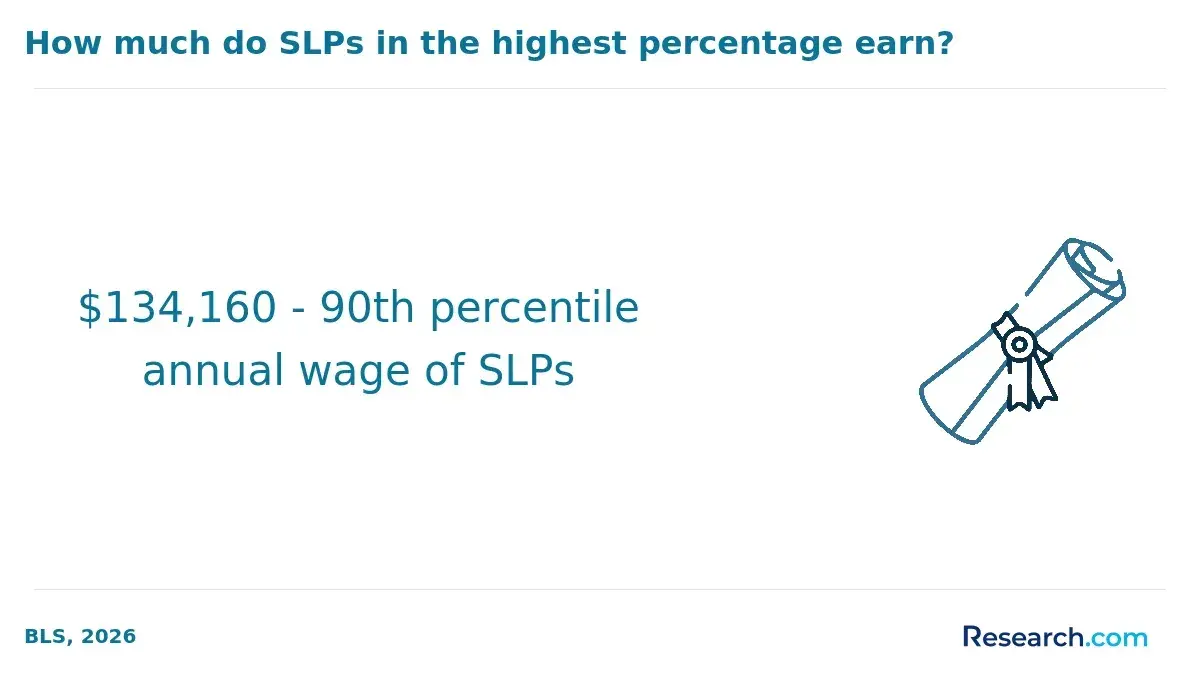
- Career demand supports careful planning: the U.S. Bureau of Labor Statistics projects 17% employment growth for speech-language pathologists from 2025 to 2035, with median annual pay of $97,870 in May 2025, but individual earnings and hiring vary by employer, setting, and experience.
Which online speech pathology master's programs accept Albuquerque residents and meet licensure requirements?
An Albuquerque applicant should not assume that a nationally marketed online program currently accepts New Mexico residents or meets New Mexico's educational requirements. Enrollment authorization, state licensure disclosures, and clinical-site capacity can change. The strongest approach is to treat a school's published information as a starting point and obtain written confirmation from admissions and the program's clinical education office before enrolling.
The programs below are examples of established online or distance-delivered SLP master's pathways that prospective New Mexico students may evaluate. They should be compared based on their current CAA status, New Mexico disclosure, placement process, travel expectations, and cost rather than on brand recognition alone.
| Program to investigate | Online delivery consideration | Clinical education consideration for Albuquerque residents | Decision point to verify |
| Emerson College, Master of Science in Communication Disorders | Distance-oriented cohort model with live-learning and fieldwork components. | Clinical experiences require in-person supervised work; local placement support and travel obligations should be confirmed early. | Current New Mexico enrollment eligibility, CAA status, immersion requirements, and the process for approving local sites. |
| Baylor University, online Master of Science in Speech-Language Pathology | Online coursework paired with required hands-on clinical education. | Placement availability depends on contracts, supervisors, and site capacity rather than a guarantee that a placement exists near a student's home. | New Mexico licensure disclosure, clinical placement timeline, required travel, and full tuition plus fees. |
| New York University Steinhardt, online Master of Science in Communicative Sciences and Disorders | Distance coursework may include scheduled live sessions and intensive experiences. | Students should ask whether school, medical, and specialty placements can be completed in New Mexico or may require travel. | State authorization, CAA accreditation status, campus immersion schedule, and clinical-site arrangements. |
A program can be an excellent academic match yet still be impractical if it cannot secure appropriate supervised experiences in the Albuquerque area. Ask each school whether it has recently placed students in New Mexico, whether students may help identify sites, and what happens if a proposed supervisor or facility is not approved.
Applicants who want a broader admissions comparison can review SLP online programs, but admission accessibility should never outweigh accreditation and licensure compatibility.
How does New Mexico's SLP licensure board shape online program choices for Albuquerque students?
New Mexico regulates speech-language pathology through the New Mexico Regulation and Licensing Department's Board of Examiners for Speech-Language Pathology, Audiology and Hearing Aid Dispensing Practices. The board - not an online university - decides whether an applicant meets requirements for a New Mexico license. That makes program selection a regulatory decision as well as an academic one.
In practical terms, an applicant should select a master's program accredited by the American Speech-Language-Hearing Association's Council on Academic Accreditation (CAA) or one whose status clearly satisfies the board's education standard. CAA accreditation is important because it evaluates whether the program meets profession-wide standards for curriculum, faculty, clinical education, and student outcomes. Institutional accreditation alone is not a substitute for CAA accreditation.
Before accepting an admission offer, request a direct answer to the following questions. These questions help distinguish a program that is merely online from one that is workable for New Mexico professional practice.
- Is the program currently CAA-accredited, and will my degree be awarded from that accredited program?
- Does the institution authorize enrollment by residents of New Mexico and state that its curriculum is designed to meet New Mexico educational licensure requirements?
- How will the program document the supervised clinical education required for licensure and later certification applications?
- What support will be provided if New Mexico placement sites cannot meet the program's specialty, supervisor, or hour requirements?
- What additional steps will I need after graduation, including the Praxis examination, clinical fellowship, and New Mexico board application?
Students targeting public-school employment should also investigate New Mexico Public Education Department requirements. A professional SLP license and a school credential are related but not always identical processes. A school district may request educator-licensure documentation, background clearance, and other employment-specific materials in addition to a state professional license.
A common mistake is relying on a general statement that a degree "prepares students for certification." Preparation is not the same as a written determination that the program is authorized for New Mexico residents and compatible with New Mexico requirements. Keep copies of the school's disclosure and your correspondence for your records.
Which accredited online speech pathology programs best serve New Mexico and Southwest regional needs?
The best fit for a New Mexico resident is usually not the closest university or the most recognizable name. It is the program that combines CAA accreditation, transparent New Mexico disclosures, realistic clinical-placement logistics, and training relevant to the communities the student intends to serve.
For Albuquerque and the broader Southwest, strong candidates often have several practical characteristics: experience coordinating off-campus clinical education, coursework in culturally responsive practice, support for bilingual service delivery, and schedules that account for Mountain Time. A school headquartered outside the Southwest can still fit well, but distance increases the importance of asking detailed placement and travel questions.
| Priority | Why it matters in New Mexico | What a strong answer looks like |
| CAA accreditation | It supports eligibility for certification and state licensure pathways. | The school identifies the accredited program, accreditation status, and any relevant review dates. |
| New Mexico disclosure | State rules and institutional authorization determine whether the program can enroll and prepare New Mexico residents. | The school provides a current, program-specific written licensure disclosure for New Mexico. |
| Clinical network | Students need varied experiences across age groups and service settings. | The program explains its placement process, site approval standards, backup plan, and student responsibilities. |
| Southwest cultural fit | Albuquerque clinicians may work with multilingual, Indigenous, rural, and medically diverse populations. | The curriculum addresses equity, language difference versus disorder, family-centered care, and culturally responsive assessment. |
| Travel burden | Immersions and distant placements create costs and scheduling constraints beyond tuition. | The school lists required visits, likely frequency, timing, and whether travel is mandatory. |
Students with a fixed Albuquerque job or family schedule should favor programs that clearly disclose synchronous attendance expectations and permit clinical work in New Mexico when approved. Students who can travel more easily may have a wider pool of programs, but they should still budget for transportation, lodging, missed work, and time away from home.
Do not confuse "regional relevance" with a promise of local placement. Even a program with Southwest-focused coursework cannot guarantee a particular Albuquerque clinic, hospital, school district, or specialty rotation.
What institutional and programmatic accreditations should Albuquerque SLP applicants verify before enrolling online?
Applicants should verify two different forms of accreditation. First, the university should hold recognized institutional accreditation. Second, and more importantly for an entry-level SLP master's degree, the speech-language pathology program should hold current CAA accreditation. These credentials answer different questions and neither should be skipped.
| Credential to verify | What it evaluates | Why it matters to an Albuquerque applicant |
| Institutional accreditation | The university's overall academic and administrative quality. | It affects financial aid eligibility, credit recognition, and the general standing of the institution. |
| CAA programmatic accreditation | Professional preparation in speech-language pathology, including curriculum and clinical education. | It is the key accreditation to examine for the education portion of SLP certification and licensure pathways. |
| State authorization | Whether an out-of-state institution may provide distance education to New Mexico residents. | It determines whether a student can legally enroll and receive the advertised educational service in New Mexico. |
| Licensure disclosure | Whether the program meets, does not meet, or has not determined requirements for a specific state. | It identifies whether the school has evaluated its curriculum against New Mexico requirements. |
Use the official CAA directory or ASHA EdFind to confirm status rather than relying on a marketing page, an older blog post, or a search-result preview. Also check whether the accreditation applies to the exact degree format and campus or distance pathway you intend to enter.
Be especially cautious with programs described as "pre-SLP," "communication disorders," "speech therapy," or "graduate certificate" programs. Those offerings may be useful for prerequisites or professional development, but they are not automatically qualifying entry-level master's degrees for SLP licensure. If a program is in candidacy or is seeking accreditation, ask what happens to students if the accreditation timeline changes and obtain the answer in writing.
How do New Mexico school and healthcare employers view online versus campus speech pathology degrees?
Most employers focus more on whether an applicant holds an appropriate graduate degree, New Mexico license or eligibility, clinical competence, and relevant experience than on whether lectures were delivered online. A CAA-accredited degree with well-documented clinical education is generally more meaningful to an employer than the online-versus-campus label.
Online learning does not mean online clinical practice. Future SLPs still complete supervised, in-person work with clients, patients, or students. Employers may examine the settings in which a candidate trained, especially when hiring for pediatric schools, acute care, rehabilitation, early intervention, bilingual services, or medically complex populations.
The following comparison shows where the format may matter operationally even when the credential itself is accepted.
| Employer concern | Online program evidence to present | Why it can matter |
| Licensure eligibility | CAA-accredited degree documentation and New Mexico licensing progress. | Employers need assurance that a new hire can meet required state credentials. |
| Clinical readiness | Practicum and externship settings, populations served, and supervisor evaluations. | Relevant experience can strengthen a candidate's fit for a particular caseload. |
| Technology skills | Experience with telepractice tools, electronic documentation, and secure communication procedures. | Healthcare and school systems increasingly use digital systems and may provide remote services where permitted. |
| Schedule and location | Clear availability for clinical fellowship and required in-person onboarding. | Rural, school-based, and medical employers may have different staffing cycles and service needs. |
The national labor market remains favorable, although it should not be interpreted as a job guarantee in Albuquerque. The Bureau of Labor Statistics projects 17% growth in SLP employment from 2025 to 2035 and about 12,500 openings annually on average over that period. For applicants, this supports investing in a credential that preserves flexibility across schools, clinics, hospitals, and telepractice-related roles rather than limiting clinical training too narrowly.
For compensation context, the national median annual wage for speech-language pathologists was $97,870 in May 2025. Readers comparing employment settings can explore speech-language pathologist salary information, while remembering that local pay can differ substantially from national figures.
Where can Albuquerque students complete required clinical placements when enrolled in an online SLP program?
Potential placement settings in and around Albuquerque can include public schools, early-intervention programs, outpatient clinics, hospitals, rehabilitation facilities, skilled nursing settings, university clinics, and specialty pediatric providers. Availability is not guaranteed: the program must approve the site and supervisor, the facility must have capacity, and the experience must fit the student's clinical sequence.
Clinical placement is often the biggest difference between an online academic plan and an online degree that is truly workable. Some programs identify and coordinate sites; others ask students to suggest potential locations while retaining final approval authority. The latter model can work for a well-connected applicant, but it carries more risk for someone new to the area or field.
Ask the clinical education office these questions before committing. They reveal whether the school has a realistic operational plan rather than a general statement about placement support.
- Has the program placed students in New Mexico recently, and in what types of settings?
- Does the program secure placements, allow students to identify sites, or use a shared model?
- Can the program provide pediatric, adult, medical, and school-based experiences needed for its curriculum?
- Who is responsible for affiliation agreements, supervisor approvals, immunization documentation, background checks, drug screening, and liability coverage?
- What occurs if a site cancels, a supervisor becomes unavailable, or no approved local placement is available?
- Will any placement, intensive, simulation, or competency assessment require travel outside Albuquerque or New Mexico?
Do not contact a potential supervisor and promise that a university can place you there. Instead, ask the school for its approved process. Facilities often have existing agreements, lead times, and capacity limits that students cannot bypass independently.
How do top online speech pathology master's programs differ in cost for New Mexico residents?
Cost comparisons are difficult because online SLP programs may publish tuition by credit, term, or academic year, and some add technology, clinical, residency, or graduation charges. A lower posted rate is not necessarily the lower total cost if the program takes longer, requires more credits, or involves repeated travel.
Rather than comparing an advertised figure in isolation, Albuquerque applicants should build a total-cost estimate for every finalist. This is particularly important for private online programs, where resident tuition discounts may not apply, and for programs requiring out-of-state intensives.
| Cost category | What to include | Why it changes the comparison |
| Tuition | Required graduate credits multiplied by the applicable online tuition rate. | Programs can have different credit totals even when their completion timelines appear similar. |
| Mandatory university fees | Technology, student services, clinical education, distance-learning, and graduation fees where applicable. | These charges may not be included in a headline tuition rate. |
| Travel and immersion costs | Airfare or mileage, lodging, meals, parking, and time away from work. | Required visits can add a meaningful non-tuition expense for an Albuquerque resident. |
| Clinical compliance expenses | Background checks, immunizations, health insurance, drug screening, equipment, and professional memberships where required. | These are often paid directly by students before placements begin. |
| Opportunity cost | Reduced work hours, childcare, and delayed income during intensive clinical semesters. | A faster program is not automatically more affordable if it prevents continued employment. |
Federal financial aid may be available to eligible graduate students, but borrowing should be evaluated against the full repayment obligation rather than a monthly payment alone. Compare scholarships, employer tuition assistance, military benefits where applicable, and whether a public university's resident rate is available to distance learners.
Applicants seeking lower-price options should use a cost-first shortlist such as these affordable online SLP programs, then independently verify CAA accreditation, New Mexico eligibility, and all travel requirements. An affordable program that cannot support required placements is not a good value.
Which online SLP programs offer bilingual or multicultural training relevant to Albuquerque's communities?
Albuquerque's linguistic and cultural diversity makes multicultural preparation more than a résumé feature. Future clinicians may work with Spanish-speaking families, Indigenous communities, multilingual children, rural populations, and patients whose communication needs are shaped by medical access, disability, culture, or socioeconomic conditions. Training should help students distinguish language difference from communication disorder and work ethically with interpreters and families.
Programs vary widely in what they mean by "multicultural." A single diversity course is useful but is not the same as sustained bilingual clinical experience, instruction in culturally responsive assessment, or supervised work with multilingual clients. Applicants should examine the curriculum, clinic opportunities, and faculty expertise rather than relying on a broad inclusion statement.
| Training feature | What to look for | Why it is useful |
| Multicultural coursework | Required content on cultural and linguistic diversity, bias, equity, and language development. | It provides a foundation for ethical assessment and intervention across populations. |
| Bilingual service-delivery training | Coursework or faculty expertise addressing bilingual assessment, intervention, and interpreter collaboration. | It is particularly relevant for clinicians serving Spanish-English multilingual communities. |
| Diverse clinical placements | Opportunities to work with clients from varied linguistic, cultural, age, and diagnostic groups. | Supervised experience helps translate theory into clinical decision-making. |
| Telepractice preparation | Training in privacy, access, clinical appropriateness, and technology-supported service delivery. | It can be valuable for rural access and continuity of care, but does not replace in-person clinical competence. |
Students who already speak Spanish or another language should ask whether the program offers structured bilingual assessment training and whether they may use their language skills under appropriate supervision. Fluency alone does not establish clinical competency to assess or treat a communication disorder in another language.
Applicants who want an accelerated route should be careful not to sacrifice this depth of preparation. Some fast track speech pathology programs may fit students with strong prerequisite preparation, but an intensive calendar can make it harder to add elective language or cultural training.
How can Albuquerque residents check authorization, complaint procedures, and student protections for online SLP programs?
Before paying a deposit, verify both the university's authority to enroll New Mexico residents and the institution's procedure for addressing complaints. State authorization protects students by confirming that an out-of-state provider is permitted to offer distance education in the state. It is separate from CAA accreditation and separate from professional licensure eligibility.
Start with the school's distance-education and professional-licensure disclosure pages. A clear disclosure should identify whether the program meets New Mexico educational requirements, does not meet them, or has not made a determination. If the language is unclear, request a written answer that identifies the exact program and degree format.
Use this sequence to create a record before you enroll.
- Save the program's current CAA accreditation listing and its New Mexico professional-licensure disclosure.
- Ask admissions to confirm in writing that the institution can enroll a student residing in New Mexico.
- Ask the clinical education office for a written explanation of placement responsibilities, travel requirements, and contingency procedures.
- Review the university catalog for tuition, refund, leave-of-absence, dismissal, transfer-credit, and teach-out policies.
- Locate the school's internal complaint process and the external New Mexico or state-authorization complaint contact identified in its disclosures.
- Keep copies of all representations that materially affected your enrollment decision.
Red flags include a school that will discuss career outcomes but will not provide a New Mexico licensure determination, cannot explain who secures placements, or gives tuition only verbally. Another warning sign is a representative who implies that national certification automatically replaces state licensing. Requirements can overlap, but they are not interchangeable.
What timelines, admissions hurdles, and preparation steps should Albuquerque applicants expect for online SLP study?
Most entry-level SLP master's programs use cohort admissions and begin once or twice a year. The full path generally takes longer than the academic calendar alone because applicants may need prerequisites before admission and supervised post-graduate experience after graduation. An online format can reduce relocation pressure, but it does not remove the clinical intensity of professional preparation.
Applicants without a bachelor's degree in communication sciences and disorders may need foundational coursework in areas such as phonetics, language development, anatomy and physiology of speech and hearing, audiology, speech science, and clinical observation. Requirements differ by program. Some schools offer leveling coursework, while others require prerequisites to be completed before enrollment.
| Stage | Typical work involved | Planning issue for Albuquerque residents |
| Pre-application preparation | Complete prerequisites, obtain transcripts, identify recommenders, and prepare a personal statement. | Confirm whether online or community-college prerequisite courses meet each target program's standards. |
| Application cycle | Submit materials through the school or a centralized application service and complete any interview or writing requirement. | Apply early enough to resolve New Mexico authorization and clinical-placement questions before a deposit deadline. |
| Graduate coursework and practicum | Complete academic classes, skills assessments, and supervised clinical experiences. | Plan around live-session times, local site hours, background checks, and possible travel. |
| Post-graduation transition | Meet examination, supervised fellowship, and board-application requirements. | Coordinate with prospective New Mexico employers and the state board well before a fellowship start date. |
Competitive programs commonly evaluate academic preparation, communication skills, recommendations, relevant observation or service experience, and evidence that the applicant understands the profession. Requirements such as a minimum GPA, GRE policy, observation hours, interviews, and prerequisite grades vary by school; do not assume one program's rules apply to another.
A practical application strategy is to build a short list with different trade-offs: one program with the strongest placement support, one with the best scheduling fit, and one with the lowest verified total cost. Avoid applying based solely on program speed. The best timeline is the one that leaves enough capacity for clinical work, licensure documentation, and financial stability.
Other Things You Should Know About Speech Language Pathology
Yes, an online degree can support the pathway if it is from a CAA-accredited program, the institution is authorized to enroll New Mexico residents, and the education and clinical requirements satisfy New Mexico licensing standards. You must also complete the state's additional licensure steps, which may include examination and supervised post-graduate requirements.
Often, yes. Requirements vary by program and may include orientations, skills intensives, simulations, assessments, or other residencies. Clinical placements are also in person. Ask for the exact number, location, duration, and timing of required visits before enrolling.
Some students work during early coursework, but full-time employment can become difficult during clinical semesters because placement schedules usually follow site hours. A part-time option may improve work compatibility, but it can extend time to graduation and total living costs.
No. Language ability can be valuable, but bilingual clinical practice also requires training in culturally and linguistically appropriate assessment, differential diagnosis, intervention, and ethical use of interpreters. Seek supervised bilingual or multilingual clinical experiences when possible.
References
- Online MS in Speech-Language Pathology (SLP) | Pepperdine https://healthscience.pepperdine.edu/online-masters-in-speech-language-pathology/
- Master of Science in Speech-Language Pathology https://shs.unm.edu/programs/master-of-science/
- Best New Mexico Speech Pathology Degrees Online for 2026 https://www.speechpathologydegrees.com/st/new-mexico