2027 Best Online Speech Pathology Master's Programs for Residents of Joliet, IL

Co-Founder and Chief Data Scientist

Reviewed by Rhea Paul, PhD
SLP Education & Research Expert
Joliet residents can pursue an online master's in speech-language pathology without limiting their search to universities in Will County, but an "online" label does not remove clinical, travel, or Illinois licensure considerations. This guide compares practical program features that matter most: CAA accreditation, Illinois eligibility, local practicum support, schedule design, cost transparency, and admissions fit. It is designed for future SLPs who want to choose a degree that can support work in Illinois schools, healthcare settings, or private practice after graduation.
Key Things You Should Know
- A licensure-oriented online SLP master's should hold CAA accreditation and include supervised clinical education; Illinois residents should also obtain a school-specific written disclosure about Illinois professional licensure alignment before enrolling.
- Online SLP programs are usually hybrid in practice: coursework may be remote, but students complete in-person clinical experiences and may need to attend required immersions or residencies away from Joliet.
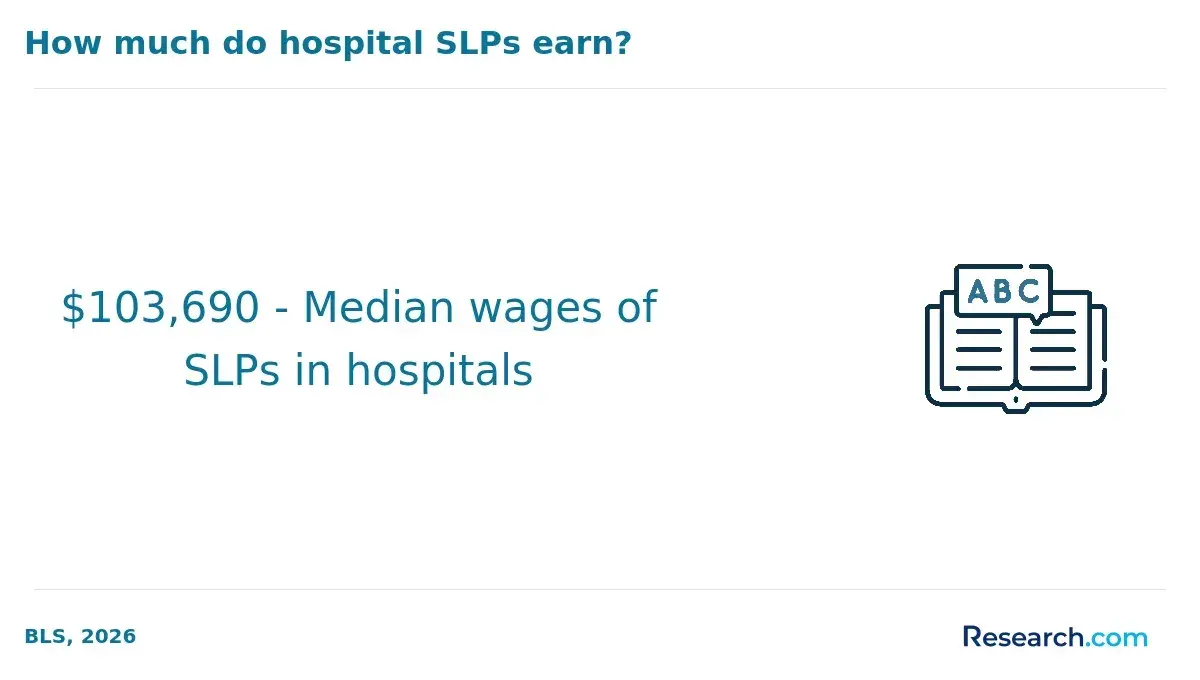
- The U.S. Bureau of Labor Statistics reports a $97,870 median annual wage for speech-language pathologists in May 2025 and projects 17% employment growth from 2025 to 2035, but a master's degree alone does not authorize independent Illinois practice.
Which online speech pathology master's programs best serve residents of Joliet, Illinois today?
The best option depends less on the university's distance from Joliet than on whether it can enroll Illinois residents, arrange or approve clinical education in Illinois, and clearly explain required travel. A qualifying program should prepare students for entry-level speech-language pathology practice, not simply offer online communication-disorders coursework.
The programs below are useful starting points because they have established online or distance-oriented master's pathways and publicly identify speech-language pathology as a CAA-accredited program area.
Enrollment authorization, tuition, residency requirements, and Illinois disclosures can change, so applicants should confirm these details directly with each university before paying an application fee.
| Program | Format considerations for a Joliet resident | Potential strength | Key question to confirm |
| Emerson College, MS in Speech-Language Pathology | Online academic coursework combined with in-person clinical education and required immersive learning experiences. | Designed specifically as an online clinical master's pathway. | Current Illinois enrollment eligibility, immersion dates, travel costs, and clinical-placement process. |
| New York University Steinhardt, MS in Communicative Sciences and Disorders | Distance-oriented study includes clinical education and program-directed requirements that may involve travel. | Established graduate program with an online pathway for future SLPs. | Whether the current cohort model accepts Illinois residents and how Illinois placements are handled. |
| Baylor University, MS in Communication Sciences and Disorders | Online learning is paired with clinical practicum and internship requirements; campus-based components may apply. | Structured cohort experience for students seeking a guided sequence. | Illinois authorization, required Waco travel, and the responsibility for securing clinical sites. |
| Calvin University, MS in Speech-Language Pathology | Distance delivery includes supervised clinical work and may include intensive in-person requirements. | May suit applicants who value a cohort-based online clinical program. | Current out-of-state availability, Michigan travel expectations, and Illinois licensure disclosure. |
For a broader look at delivery models and cost considerations, review this guide to an SLP degree online. It can help distinguish a fully online academic experience from an online clinical degree that still requires face-to-face patient care.
No program is automatically "best" for every Joliet applicant. Choose a program with a written Illinois eligibility confirmation, realistic travel requirements, and a clinical-placement model that fits your work and family obligations.
A lower advertised tuition rate is not a better value if it requires frequent long-distance travel or leaves placement logistics primarily to the student.
Which online master's in speech-language pathology meet Illinois licensure and ASHA CCC-SLP requirements?
For most entry-level SLP goals, applicants should prioritize a master's degree from a program accredited by the Council on Academic Accreditation in Audiology and Speech-Language Pathology (CAA). CAA is ASHA's specialized accreditor for graduate education in the field.
Accreditation is central because it supports eligibility for the ASHA Certificate of Clinical Competence in Speech-Language Pathology (CCC-SLP) and is widely expected by employers and state licensing systems.
Illinois professional licensure and ASHA certification are related but separate. Illinois regulates the authority to practice in the state, while ASHA administers the CCC-SLP professional credential. School-based work may also involve requirements administered through the Illinois State Board of Education, depending on the position and credential route.
| Requirement | Why it matters in Illinois | What an applicant should verify |
| CAA-accredited graduate program | Provides the educational foundation commonly needed for national certification and state licensure. | The program's current CAA status and whether accreditation covers the specific delivery location or distance pathway. |
| Graduate clinical practicum | Clinical hours are required for professional preparation and certification pathways. | How hours are supervised, documented, and completed in Illinois-area settings. |
| Postgraduate Clinical Fellowship | ASHA CCC-SLP applicants complete a mentored fellowship after the degree. | Whether prospective Illinois employers hire Clinical Fellowship candidates and provide qualifying supervision. |
| Illinois licensure application | A degree does not itself grant permission to practice as an Illinois SLP. | Current Illinois Department of Financial and Professional Regulation education, examination, and application requirements. |
| School credential pathway | Public-school roles may have separate educator-credential expectations. | Whether the program supports the credential route required for the intended Illinois school position. |
A program may say it is designed to prepare graduates for certification without guaranteeing that every state's rules are met. Ask for the university's professional licensure disclosure specifically for Illinois and retain the response with your admissions records. If a school cannot provide a clear answer, treat that as a significant enrollment risk.
What accredited online SLP programs accept students from Joliet and the broader Chicago metro?
Illinois residence does not automatically mean an applicant can enroll in every distance program. Universities must have appropriate state authorization, and some restrict admissions by state, pause enrollment while authorization is updated, or limit placements in certain jurisdictions. The only reliable answer is the program's current Illinois authorization and licensure disclosure.
When screening Emerson, NYU, Baylor, Calvin, or another distance program, ask admissions for a written answer to four location-specific questions:
- May a person physically residing in Illinois enroll in the next available cohort?
- Does the program state that its curriculum meets, or is intended to meet, Illinois educational requirements for SLP licensure?
- Can required practicum and internship experiences be completed in the Chicago metro area, subject to site availability and approval?
- What travel, synchronous attendance, background checks, immunizations, or site-specific onboarding costs are required?
CAA accreditation should be checked separately from state authorization. A CAA-accredited program can still have enrollment limitations in Illinois, and a university that is authorized to teach Illinois residents may not offer a CAA-accredited SLP clinical degree. Both checks are essential.
Joliet can be an advantage geographically because it is within reach of school districts, outpatient clinics, hospitals, skilled nursing facilities, and pediatric providers across the greater Chicago area. However, a program - not a student - ultimately determines whether a proposed site and supervisor meet its academic standards.
How does programmatic accreditation by CAA in Audiology and Speech-Language Pathology work for online SLP degrees?
CAA programmatic accreditation evaluates whether a graduate program meets educational standards for curriculum, faculty, student outcomes, clinical education, resources, and continuous improvement. It is different from institutional accreditation, which evaluates the university as a whole. For a future clinician, programmatic accreditation is the more decision-critical designation.
Distance delivery does not lower the need for clinical quality controls. An online SLP program must still ensure that students receive appropriate supervision, assessment, and clinical experiences. Courses may use live video, recorded instruction, simulations, and learning platforms, but direct clinical education remains an in-person, supervised component.
CAA status can be accredited, candidacy, or another status reflected in official CAA records. Candidacy is not the same as full accreditation, although it can be a valid route for a newer program. Applicants should understand whether their graduating cohort is expected to qualify under the applicable certification rules and should ask the program to explain this in writing.
A common mistake is relying on a university's general accreditation badge or a marketing statement that a program "follows ASHA standards." Instead, locate the exact master's program in ASHA's CAA or EdFind directory, verify its status and review date, then compare that record with the school's current catalog. If the names, delivery method, or status do not align, pause and request clarification.
Which Illinois and out-of-state universities offer Joliet residents competitive online SLP tuition and clinical access?
Competitive cost is not simply the lowest per-credit tuition. For Joliet residents, the meaningful comparison is total educational cost: tuition, mandatory university fees, clinical fees, travel for immersions, technology, health screenings, background checks, liability coverage, and potential lost work time during full-time placements.
Illinois universities may offer useful in-state pricing or shorter travel for campus obligations, but many Illinois SLP master's programs are campus-based rather than online.
Out-of-state distance programs may offer greater online flexibility, yet their total price can rise when required intensives and travel are included. Compare official cost-of-attendance figures for the same academic year and determine whether the quoted amount includes fees.
| Cost and access factor | Why it changes the Joliet comparison | Best verification source |
| Tuition basis | Programs may quote per credit, per term, or total cohort tuition, which are not interchangeable. | Official tuition and fee schedule for the applicant's start term. |
| Illinois resident rate | Public institutions may distinguish in-state and out-of-state pricing; private institutions often use one rate. | University bursar or graduate tuition page. |
| Required travel | Immersions can materially affect cost even when most classes are online. | Program handbook and admissions confirmation. |
| Clinical placement support | A placement model that requires student-led site searching can create timing and travel risk. | Clinical education office's written placement policy. |
| Financial aid timing | Graduate aid, employer support, and loans may have deadlines before enrollment. | University financial-aid office and FAFSA process. |
Students focused on speed should be careful: a faster sequence can concentrate tuition payments and make outside employment harder during clinical terms. Compare published cohort calendars rather than assuming that all accelerated speech pathology programs offer the same clinical schedule or Illinois placement flexibility.
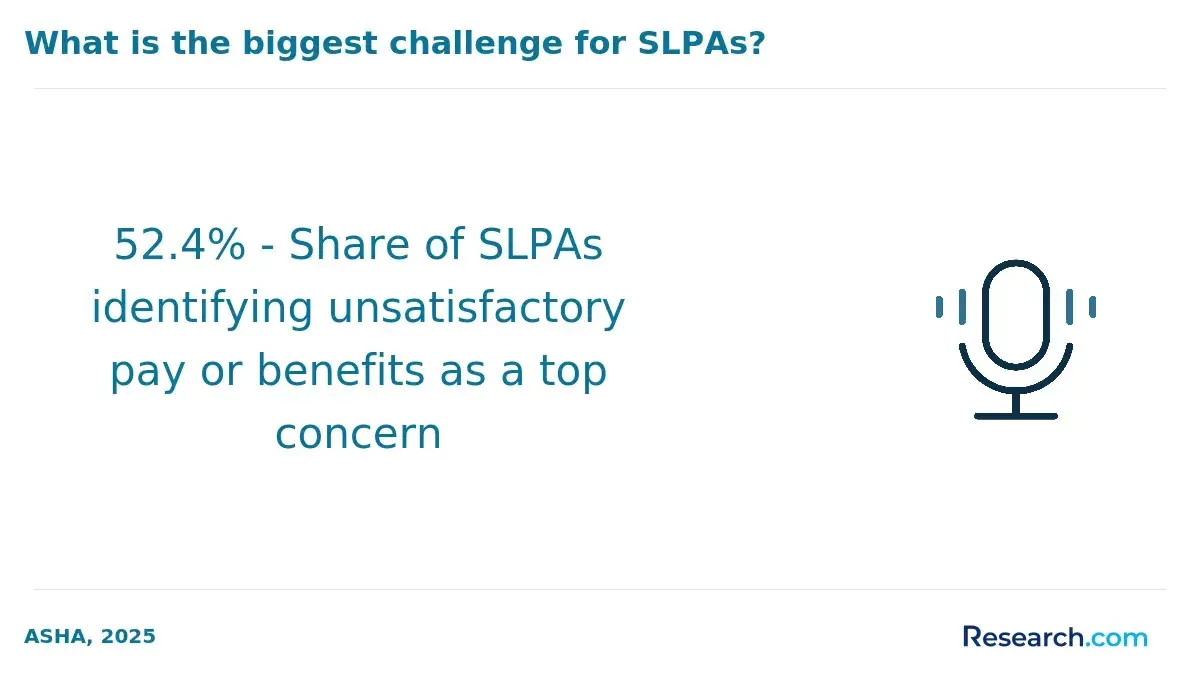
Use a personal budget that separates billed charges from unavoidable non-billed expenses. This approach is especially important for students who expect to reduce work hours during practicum or internship. Do not treat national SLP wage data as a repayment promise; location, setting, experience, and licensure status affect actual earnings.
How do Joliet-based students complete required clinical practica and externships in local Illinois settings?
Online clinical programs typically combine early practicum experiences with advanced internships or externships. A student may observe, assess, and treat clients under qualified supervision in schools, medical settings, outpatient clinics, early-intervention programs, or other approved sites. The university retains responsibility for determining whether a site, supervisor, caseload, and learning objectives are acceptable.
Some programs identify and contract with sites, while others ask students to suggest local options from their professional networks. The distinction matters. A program that offers placement support may still be unable to promise a site near Joliet or a particular specialty, while a student-driven model can require substantial outreach months before the clinical term begins.
Before committing, request a plain-language description of the placement process. Your conversation should cover the following practical points:
- Who contacts potential sites and who signs affiliation agreements.
- Whether students may complete placements in Will County, Chicago, or nearby suburbs when approved.
- How far students may be expected to commute if an appropriate local site is unavailable.
- Whether daytime availability is required and whether placements can be completed while working full time.
- What happens if a site withdraws, cannot finalize an agreement, or does not offer an appropriate caseload.
- Which onboarding requirements apply, including background checks, drug screening, immunizations, CPR training, and health insurance.
Do not contact a school district or medical provider and represent yourself as a university clinical trainee before understanding the program's affiliation policy. Uncoordinated outreach can complicate contractual relationships. A better approach is to provide the clinical education office with possible site contacts and allow it to manage approvals.
What admission prerequisites and GPA benchmarks do top online SLP programs expect from Illinois applicants?
Most master's programs expect a bachelor's degree, prerequisite coursework in communication sciences and disorders or equivalent leveling classes, transcripts, recommendations, a statement of purpose, and evidence that the applicant can succeed in graduate clinical study. Requirements differ substantially between applicants with a CSD major and career changers.
Common prerequisites often include phonetics, anatomy and physiology of speech and hearing mechanisms, language development, speech and hearing science, audiology, aural rehabilitation, and statistics.
Programs may also apply ASHA's foundational coursework expectations in biological science, physical science, statistics, and social or behavioral science. A course with a similar title is not automatically accepted; departments evaluate content and credits.
| Application element | Typical purpose | Joliet applicant action |
| Overall and prerequisite GPA | Shows readiness for science-based and clinically intensive graduate work. | Check the program's published minimum and ask whether prerequisite GPA is reviewed separately. |
| CSD prerequisites | Establishes foundational knowledge before graduate clinical courses. | Request a transcript evaluation before enrolling in costly leveling classes. |
| Observation or relevant experience | Can help demonstrate informed interest in the profession where requested. | Follow confidentiality rules and document only experiences the program permits. |
| Recommendations and essay | Provides context about academic ability, professionalism, and career goals. | Choose recommenders who can address graduate-level readiness rather than name recognition alone. |
| Interview or asynchronous assessment | May assess communication, reflection, and professional fit. | Prepare specific examples of ethical judgment, teamwork, and commitment to client-centered care. |
Published minimum GPA is an eligibility threshold, not an admission guarantee. Applicants with a lower GPA should consider improving prerequisite performance, explaining documented circumstances succinctly when permitted, and applying to programs whose requirements fit their record.
This overview of the easiest SLP masters to get into can help applicants frame options realistically, but it should not replace review of each school's current standards.
Another common mistake is submitting an application before confirming prerequisite gaps. A conditional admission offer can still require additional coursework, adding time and expense. Obtain a written list of missing courses and ask whether they can be completed online, at a community college, or through the university.
How do online SLP curricula prepare Joliet graduates for Illinois school, healthcare, and private practice roles?
A strong online SLP curriculum teaches the same core clinical reasoning expected in campus-based programs: assessment, diagnosis, intervention planning, documentation, counseling, ethics, cultural and linguistic responsiveness, and evidence-based practice. The difference is how academic content is delivered; it does not eliminate the need for supervised in-person work with clients.
Career preparation should match the setting a student expects to enter. School-based clinicians often need skill in language and literacy support, Individualized Education Program collaboration, workload management, and family communication.
Medical and healthcare settings may emphasize swallowing, cognitive-communication, voice, motor speech, and interprofessional documentation. Private practice commonly requires both broad clinical competence and business awareness.
| Employment setting | Curricular preparation to look for | Illinois-specific planning consideration |
| Public and private schools | Pediatric language, speech sound disorders, literacy, augmentative communication, and educational collaboration. | Confirm the educator credential or school-service personnel pathway required by the employer and state agency. |
| Hospitals and rehabilitation | Adult neurogenic disorders, dysphagia, cognitive communication, medical documentation, and interprofessional care. | Seek placements that expose you to the patient populations and pace of medical practice. |
| Outpatient and pediatric clinics | Family-centered intervention, developmental disorders, counseling, and progress documentation. | Ask whether the program can support pediatric clinical experience near the Chicago metro area. |
| Private practice | Generalist clinical preparation, ethics, referral management, and practical documentation skills. | Plan for Illinois licensure before independently practicing and verify payer or employer credentialing standards. |
Technology is increasingly part of SLP practice through telepractice platforms, electronic documentation, augmentative and alternative communication tools, and digital assessment workflows. These tools can expand access, but they do not replace clinical judgment, privacy safeguards, or state-specific practice rules. Students should ask how telepractice ethics and technology competencies are taught.
Employment demand supports careful planning rather than shortcuts. The BLS projects about 12,500 annual openings for speech-language pathologists on average from 2025 through 2035.
Those openings span settings and regions, so clinical experiences, Illinois credentials, and a willingness to work with needed populations can matter as much as the degree's online format. Readers exploring compensation differences by setting can review roles associated with the highest paid SLP opportunities.
What state authorization, professional licensure disclosure, and consumer-protection rules apply to Joliet SLP students?
State authorization concerns whether a university may provide distance education to a student located in Illinois. Professional licensure disclosure concerns whether the program's curriculum meets, does not meet, or has not been determined to meet Illinois educational requirements for a particular license. These are different disclosures, and both affect an online clinical degree decision.
Federal consumer-protection rules require institutions to provide certain disclosures for programs designed to lead to professional licensure or certification.
For a Joliet applicant, the practical takeaway is simple: do not rely on verbal reassurance that a program is "nationally recognized." Request the school's current Illinois-specific written disclosure for the SLP program and read any limitations carefully.
Students should also understand that their physical location matters. Moving to another state during enrollment, completing a placement across a state line, or participating in telepractice may trigger additional authorization or placement-review issues. Notify the program before changing your address or accepting a site outside Illinois.
Red flags include a school that will not state whether Illinois residents can enroll, cannot identify its accreditor, makes vague claims about licensure, or pressures applicants to deposit before providing written policies. A transparent institution should identify the responsible office, explain the clinical-placement process, and direct students to complaint procedures.
How can Joliet residents verify current accreditation, licensure alignment, and complaint procedures before enrolling?
Verification should occur before application deadlines, deposits, or prerequisite purchases. Program policies can change between cohorts, and the most reliable information comes from the accreditor, the university's formal disclosures, and the Illinois agencies responsible for licensure and school credentials.
Use this sequence to create a decision record that is more reliable than rankings or social-media comments:
- Search the exact program in ASHA's CAA accreditation directory and confirm its current status, not just the university's institutional accreditation.
- Read the university's current Illinois professional licensure disclosure for the online SLP master's program.
- Email admissions and the clinical education office asking whether Illinois residents may enroll, what travel is mandatory, and how local placements are arranged.
- Compare the official tuition schedule, mandatory fees, clinical costs, and travel expectations for your anticipated cohort.
- Review Illinois Department of Financial and Professional Regulation requirements for SLP licensure and Illinois State Board of Education requirements if your goal is a school role.
- Locate the institution's student complaint policy and determine the appropriate Illinois or accreditor complaint channel if an unresolved issue arises.
Keep dated copies of program disclosures, email responses, the catalog, and the clinical handbook.
These documents are useful if requirements later change or if you need to show what was represented when you enrolled. If written information conflicts, ask the university to resolve the conflict in writing rather than assuming the more favorable interpretation applies.
The most informed choice for a Joliet resident is typically a CAA-accredited program that confirms Illinois enrollment and licensure alignment, gives a credible explanation of clinical placement support, and has costs and travel demands that fit the student's circumstances. Accreditation and approval are necessary, but schedule realism and placement transparency determine whether the pathway is workable.
Other Things You Should Know About Speech Language Pathology
Some students work during didactic coursework, but clinical practicum and internship schedules are often daytime, intensive, and dependent on site availability. Ask each program for a sample clinical-term schedule before assuming full-time employment is feasible.
Not always. Applicants from other majors may be eligible after completing prerequisite or leveling coursework. The required courses, timing, and cost vary by program, so obtain a transcript review before applying.
Employers generally focus on whether the degree is CAA-accredited, whether the applicant can obtain Illinois licensure, clinical preparation, and fit for the role. The online format is less important than accredited training, supervised experience, and required credentials.
Timing includes prerequisite coursework if needed, the master's degree, required clinical education, a postgraduate Clinical Fellowship, and the Illinois application process. Program pace and fellowship employment timing vary, so there is no single timeline for every applicant.
References
- Online M.S. in Communication Sciences and Disorders https://onlinedegrees.elmhurst.edu/programs/ms-csd
- Best Speech-Language Pathology Programs in America https://www.usnews.com/best-graduate-schools/top-health-schools/pathology-rankings
- Premier Online Speech Pathology Master's Degrees https://resources.noodle.com/articles/best-online-masters-programs-for-speech-and-language-pathology/
- Best Online Masters in SLP Programs | CAA-ASHA Included https://www.speechpathologydegrees.com/online/masters-slp