2027 Best Online Speech Pathology Master's Programs for Residents of Bakersfield, CA

Co-Founder and Chief Data Scientist

Reviewed by Rhea Paul, PhD
SLP Education & Research Expert
Bakersfield residents can earn a speech-language pathology master's degree online, but the right choice depends on more than virtual coursework. A program must be CAA-accredited, authorized to enroll California students, compatible with California licensure rules, and able to support clinical training.
This guide compares practical online options, explains what to verify before applying, and helps prospective SLPs weigh cost, travel, scheduling, prerequisites, and placement responsibilities before committing to a graduate program.
Key Things You Should Know
- A Bakersfield applicant should prioritize a CAA-accredited master's program that confirms California enrollment eligibility and provides a clear California professional-licensure disclosure.
- California SLP licensure generally requires a qualifying master's degree, supervised clinical preparation, and a supervised required professional experience period; ASHA certification has separate clinical fellowship and examination requirements.
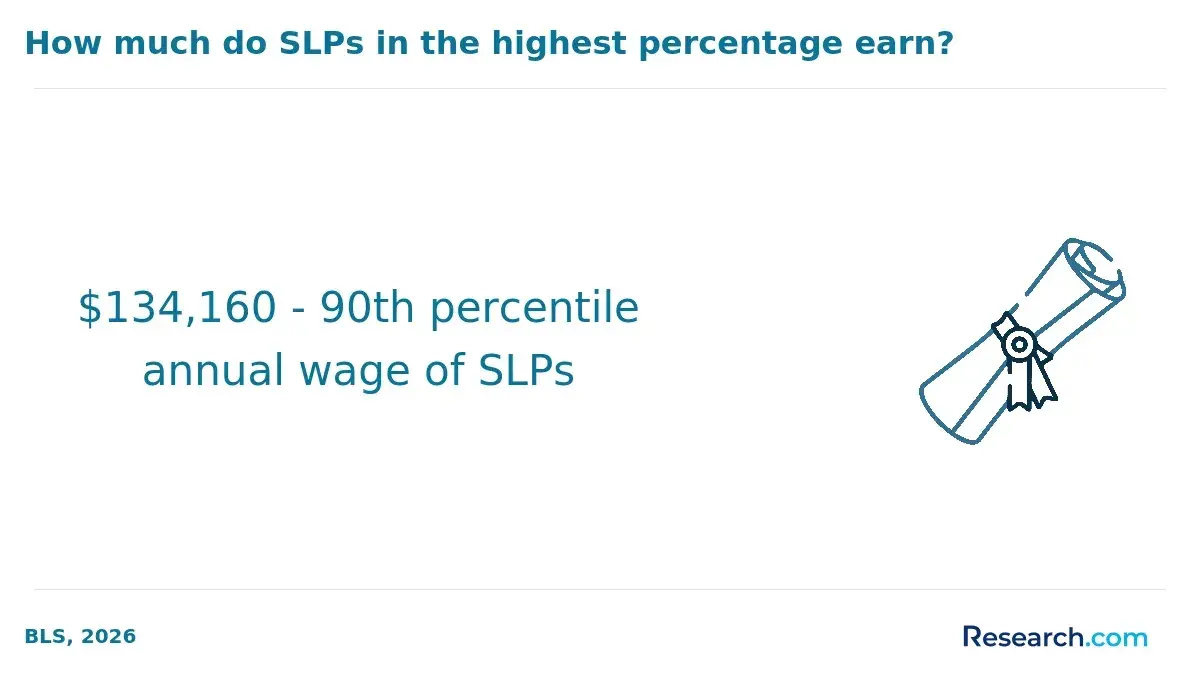
- The national median annual wage for speech-language pathologists was $97,870 in May 2025, while BLS projects 17% employment growth from 2025 to 2035; strong demand does not remove the need to verify program quality and total cost.
Which online speech pathology master's programs best serve residents of Bakersfield, California this year?
The best online SLP master's program is not necessarily the closest or least expensive one. For Bakersfield residents, the strongest options are programs with current CAA accreditation, a transparent California disclosure, an organized clinical-placement process, and a schedule that works in Pacific Time. Online SLP degrees still require in-person practicum and externship experiences.
The programs below are useful starting points because they offer distance-learning pathways and are commonly considered by applicants seeking online clinical master's education. Enrollment availability, tuition, and California authorization can change by cohort, so applicants should obtain written confirmation before paying an application deposit.
| Program | Why it may fit a Bakersfield resident | Format considerations | Key trade-off to investigate |
| Emerson College, MS in Speech-Language Pathology | Established an online-oriented pathway with clinical education support and multiple cohort options. | Online academic coursework with required in-person clinical experiences. | Ask about live-session timing, clinical-site availability in Kern County, travel expectations, and full program cost. |
| New York University, MS in Communicative Sciences and Disorders | Distance-learning option from a major private university with a structured clinical curriculum. | Online learning is paired with clinical placements and possible immersion requirements. | Private-university pricing and any required travel may materially affect affordability. |
| Baylor University, MS in Communication Sciences and Disorders | Online-focused graduate pathway that may appeal to applicants seeking a cohort model. | Clinical education is completed in person; course sequencing is structured rather than fully self-paced. | Confirm California eligibility for the intended cohort and clarify how placements are sourced and approved. |
| University of St. Augustine for Health Sciences, MS-SLP | Health-professions-focused option with a California institutional presence. | Hybrid or online elements may be combined with skills labs, clinical experiences, or campus-based requirements. | Do not assume a California campus eliminates travel or guarantees a Bakersfield-area placement. |
For a working adult, a structured cohort can be helpful because clinical requirements are sequenced for licensure preparation. It may be a poor fit, however, for someone who needs fully asynchronous coursework, cannot travel occasionally, or cannot reduce work hours during full-time practicum terms.
Program length should be compared in context. Some applicants also consider 5 year speech pathology programs when they are still completing an undergraduate degree, but these combined pathways are different from a post-baccalaureate online master's and may have campus-specific residency rules.
Before narrowing your list, request answers to these questions in writing:
- May a California resident enroll in the specific start term I want?
- Is the master's program currently CAA-accredited, and what is its current accreditation cycle or status?
- What in-person immersions, labs, examinations, or campus visits are required?
- Who is responsible for locating, contracting, and approving clinical placements near Bakersfield?
- What are the estimated tuition, mandatory fees, travel expenses, and clinical-site costs through graduation?
Which CAA-accredited online speech-language pathology master's programs accept students from California?
A CAA-accredited program is one accredited by the Council on Academic Accreditation in Audiology and Speech-Language Pathology, the specialized accreditor recognized by ASHA for graduate professional preparation. Accreditation is essential, but it is not the same as state authorization to enroll California residents or a guarantee that every graduate will satisfy California licensing requirements.
Emerson College, NYU, Baylor University, and the University of St. Augustine for Health Sciences are examples of institutions with distance-accessible SLP master's pathways that prospective California students may investigate. Because state authorization and cohort availability can change, applicants should treat a school's current admissions and professional-licensure disclosure as controlling, rather than relying on an older program list or advertisement.
This comparison shows the verification standard a California applicant should apply. It is more useful than assuming that "online" means available everywhere:
| Verification point | What a Bakersfield applicant should confirm | Why it matters |
| CAA status | The exact degree and delivery pathway appear in the current CAA program directory as accredited. | CAA accreditation supports eligibility for ASHA certification and is central to many state licensure pathways. |
| California enrollment eligibility | The school confirms it can enroll California residents in the intended term. | State authorization rules and institutional participation can change. |
| California licensure disclosure | The disclosure states whether the curriculum meets, is intended to meet, or has not been determined to meet California requirements. | Schools must distinguish curriculum information from a licensing-board decision. |
| Clinical-placement process | Whether the school places students, assists students, or expects students to secure sites and supervisors. | A placement bottleneck can delay graduation even when online courses proceed on schedule. |
| Travel requirement | All required immersions, labs, skills checks, and assessment dates. | Travel from Bakersfield can add major time and out-of-pocket costs. |
Do not confuse CAA accreditation with candidacy. A program listed as "Candidate for Accreditation" may be progressing through the accrediting process, but applicants should understand the status, the school's representations about graduate eligibility, and the risk of enrolling before full accreditation is achieved. When licensure is your goal, an already accredited program usually presents the lower-risk choice.
Applicants who need a broader admissions comparison can review speech language pathology programs, but admission accessibility should never outweigh CAA status, state eligibility, and clinical-placement feasibility.
How do Bakersfield residents verify that an online speech pathology program meets ASHA certification requirements?
ASHA's Certificate of Clinical Competence in Speech-Language Pathology, commonly called the CCC-SLP, is a national professional credential. It is not identical to a California license, although many employers value it and California applicants often pursue both. The safest approach is to verify each requirement separately rather than assuming one credential automatically provides the other.
For a standard CCC-SLP pathway, the graduate program should be CAA-accredited and should document required knowledge and skills. Applicants also need qualifying supervised clinical experience, a passing score on the Praxis examination in speech-language pathology, and completion of a clinical fellowship under qualifying supervision. ASHA requirements can change, so verify the current standards before enrollment and again before applying for certification.
Use this sequence to verify a program before accepting admission:
- Search the current CAA directory for the exact institution, degree, and campus or distance pathway.
- Ask the program director whether all required academic and clinical competencies are built into the curriculum for online students.
- Request the program's written disclosure about ASHA certification preparation and California professional licensure.
- Ask how the program tracks observation, direct client contact, supervision, and competency documentation.
- Confirm that the clinical sequence leaves enough time for a post-degree clinical fellowship rather than presenting graduation as the end of credentialing.
ASHA certification generally requires 400 total supervised clinical practicum hours, including at least 375 hours of direct client/patient contact and at least 25 hours of guided clinical observation. These are minimum framework requirements; an individual program may require additional hours, competencies, simulations, documentation, or site-specific preparation.
For a practical career perspective, review the range of the highest paying speech pathology jobs after first confirming the credentials required for each setting. Higher-paying roles may involve medical settings, specialized clinical skills, experience, geographic differences, or employer-specific expectations rather than the degree alone.
What California licensure rules must Bakersfield graduates of online speech pathology programs satisfy?
California licensure is administered by the Speech-Language Pathology and Audiology and Hearing Aid Dispensers Board. A Bakersfield graduate who plans to practice as an SLP in California should verify the Board's current requirements directly before enrolling, applying for a temporary license, or beginning post-graduate supervised work. A university can explain its curriculum, but only the Board determines licensure eligibility.
In general, California applicants need a qualifying graduate degree in speech-language pathology or communicative disorders, required supervised clinical experience, completion of a required professional experience period under an approved supervisor, and successful completion of the required national examination. The precise forms, timing, supervisor qualifications, fingerprints, and temporary-license procedures matter, so students should build a licensing timeline before their final clinical term.
California's postgraduate supervised experience should not be treated as optional. Many graduates complete an ASHA Clinical Fellowship and California Required Professional Experience in a coordinated way, but the hours, paperwork, supervision, and start-date approvals must meet each organization's rules. Confirm with both the employer and the board before assuming one arrangement satisfies both pathways.
School employment involves an additional distinction. Providing speech-language services in California public schools may require a credential issued by the California Commission on Teacher Credentialing, in addition to or in place of the professional license depending on the role and setting. Ask prospective school employers which credential they require; do not assume a clinical license alone covers every school-based position.
The employment outlook supports careful planning rather than rushed enrollment. BLS projects 17% growth in SLP employment from 2025 to 2035 and about 12,500 openings per year on average nationwide. That outlook suggests sustained opportunity, but local hiring, caseloads, school credential rules, and pay vary by employer and region.
How do public, private nonprofit, and for-profit online SLP programs differ for Bakersfield students?
Institutional control can influence tuition structure, student support model, and scheduling, but it does not by itself determine educational quality or licensure value. A public university can be expensive for out-of-state distance students, a private nonprofit can offer strong clinical support, and a for-profit institution can have legitimate accreditation but still require especially careful cost and outcome review.
The table separates useful decision factors from broad assumptions about institutional type:
| Institution type | Potential advantages | Potential limitations | Best question to ask |
| Public university | May offer lower tuition for eligible in-state students and established regional clinical networks. | Online cohorts may charge nonresident or special-program rates; enrollment can be limited by state authorization. | What is the full tuition rate for a California online student, not the campus resident rate? |
| Private nonprofit university | May have national online infrastructure, several start dates, and dedicated placement staff. | Sticker tuition can be higher, and scholarships may not offset all indirect costs. | What is the net price after typical institutional aid and mandatory fees? |
| For-profit institution | May offer adult-oriented scheduling and centralized online services. | Applicants should closely review accreditation, debt, placement processes, and state disclosures. | Is the exact degree CAA-accredited, and can the school document California licensure compatibility? |
For Bakersfield applicants, the better comparison is usually program-specific: CAA accreditation, California eligibility, clinical outcomes, total cost, faculty access, and placement support. Avoid rejecting or choosing a school solely because of its tax status.
What residency, clinical placement, and telepractice issues affect Bakersfield enrollees in online SLP programs?
"Online" describes how much academic instruction is delivered, not how clinical competence is developed. SLP students must complete supervised, in-person clinical work with real clients or patients, and programs may require campus immersions, hands-on labs, proctored assessments, or synchronous sessions. Bakersfield residents should identify these commitments before arranging work, child care, or housing.
Clinical placement is often the decisive issue. A school may provide placement coordination, but that does not necessarily mean it guarantees a site in Bakersfield, at a preferred medical facility, or during a preferred term. Local availability can be affected by supervisor capacity, contracts, onboarding rules, background checks, vaccination policies, and competition from nearby programs.
Ask admissions and clinical education staff these placement questions before enrolling:
- Will the university identify and secure a clinical site, or will I be expected to locate one?
- Has the program previously placed students in Kern County, without promising that it can do so again?
- Can a placement be outside Bakersfield or outside California if local capacity is unavailable?
- What happens if a site withdraws, a supervisor changes, or clearance processing delays my start?
- Are telepractice experiences available, and how are state, client-location, supervisor, privacy, and technology requirements managed?
Telepractice can broaden learning opportunities, but it does not eliminate regulatory complexity. The client's location, supervisor qualifications, employer policies, secure technology, and state practice rules can all affect whether a telepractice experience is permitted. It should be viewed as one possible clinical modality, not a substitute for confirming placement capacity.
Time-zone details matter as well. A program based in the Eastern or Central time zone may schedule live classes, advising, simulations, or exams at hours that conflict with a California workday. Obtain a sample weekly schedule for each term, especially the clinical-practicum terms when flexibility is usually lowest.
How should Bakersfield applicants compare tuition, fees, and total cost of online speech pathology degrees?
Compare total cost, not an advertised per-credit rate. A lower tuition figure can become less affordable after technology fees, clinical fees, travel, background checks, immunizations, liability insurance, books, lost work hours, and out-of-area placements. Conversely, a higher-priced program with reliable placement support may reduce delay risk for some students.
This cost framework helps applicants build a realistic comparison across schools without treating incomplete published figures as equivalent:
| Cost category | What to request or estimate | Why it changes the decision |
| Tuition | Total required credits multiplied by the rate applicable to the online California cohort. | Per-credit prices cannot be compared fairly when programs require different credit totals. |
| Mandatory institutional fees | Technology, distance learning, student service, graduation, and clinical course fees. | Recurring fees can materially increase the published tuition figure. |
| Clinical compliance costs | Background checks, drug screens, immunizations, CPR training, liability coverage, testing, and site onboarding. | These expenses commonly arise after enrollment and may repeat by placement. |
| Travel and lodging | Immersions, labs, orientation, relocation, and distant clinical placements. | Distance learning does not necessarily mean zero travel. |
| Income impact | Reduced work hours during practicum and full-time externship periods. | Lost earnings can be a larger affordability issue than fees. |
Request a term-by-term financial estimate from each school. Then compare the same categories across every program: required credits, tuition, fees, travel, clinical expenses, and a realistic completion timeline. Do not compare an annual tuition estimate from one school with a total-program tuition estimate from another.
Federal financial aid may be available for eligible students enrolled in qualifying programs, but borrowing limits, interest, origination fees, and personal debt capacity still matter. A sensible borrowing plan should account for the period between graduation and beginning paid postgraduate employment, when licensing and fellowship paperwork may still be underway.
Applicants seeking lower advertised tuition should start with a cost-focused review of a speech pathologist masters online option, then verify whether its published price includes the clinical and travel costs that apply to California distance learners.
What admission prerequisites and GPA standards do leading online SLP programs set for California residents?
Online SLP master's programs generally expect a bachelor's degree and substantial preparation in communication sciences and disorders or equivalent leveling coursework. Applicants from psychology, education, linguistics, health sciences, or another major may be eligible, but they often need prerequisite courses before or alongside graduate study. A non-CSD degree is not disqualifying; an incomplete prerequisite plan can be.
Common prerequisites include anatomy and physiology of speech and hearing mechanisms, phonetics, language development, speech and hearing science, audiology, speech-language disorders, research methods, and statistics. Programs may also require ASHA's general education content areas, such as biological science, behavioral or social science, statistics, and physical science.
Minimum GPA requirements vary by program, and a stated minimum is not the same as a competitive GPA. Many programs use holistic review and consider prerequisite grades, personal statements, recommendations, observation exposure, communication skills, and evidence that the applicant understands the clinical profession. Some programs no longer require the GRE, but applicants should check each cycle's official instructions rather than relying on previous-year advice.
Before applying, organize your academic records around the requirements below:
- Match each completed course to the program's prerequisite list and ask for a transcript review when available.
- Calculate overall and prerequisite GPA separately if a school requests both.
- Document observation, service, research, or relevant work accurately without representing informal exposure as supervised clinical experience.
- Plan for CSDCAS or school-specific application deadlines, transcript processing, recommendation lead time, and any interview or video requirements.
- Apply to programs whose clinical format, cost, and California eligibility fit your circumstances, not only programs with the lowest stated GPA threshold.
Applicants who need several prerequisites should compare post-baccalaureate leveling options with programs that incorporate foundational coursework. The faster route is not always the lower-risk route if it leaves inadequate time to earn strong grades or complete required content.
How can Bakersfield students protect themselves from unaccredited or noncompliant online speech pathology programs?
The most serious mistake is enrolling based on the word "online" without confirming specialized accreditation and California compatibility. A school may hold institutional accreditation while its SLP degree lacks CAA accreditation. Institutional accreditation alone does not establish that the clinical master's program supports ASHA certification or California SLP licensure.
Use these safeguards before committing money or signing an enrollment agreement:
- Verify the exact SLP degree in the current CAA directory; check the program, not merely the university name.
- Read the school's California professional-licensure disclosure and save a dated copy for your records.
- Contact the California licensing Board with questions that affect your planned pathway, especially if your degree, practicum, or post-graduate experience will be unusual.
- Get written answers about clinical placement responsibilities, required travel, tuition, fees, refund policies, and consequences of delayed placement.
- Ask whether the school has any California enrollment restrictions for your intended start date.
- Compare the answer with the official catalog and admissions materials; vague verbal assurances are not enough.
Red flags include pressure to enroll before reviewing disclosures, unclear accreditation language, promises of guaranteed local placements, an inability to explain in-person requirements, or a refusal to provide an itemized cost estimate. Another warning sign is a program that implies graduation alone confers a license. Licensure is a separate board process, and certification may add separate requirements.
If a school has accreditation candidacy rather than full accreditation, ask exactly how that status affects the cohort you would join. Do not rely on generalized claims such as "licensure eligible" without written, California-specific clarification and independent verification.
What funding, loan forgiveness, and employer sponsorship options exist for Bakersfield speech pathology students online?
Funding for an online SLP master's degree usually combines federal aid, institutional scholarships, outside scholarships, employer support, and personal savings. Availability depends on the student, school, enrollment level, and funding cycle. Start early because several options require application materials before admission decisions or before the academic year begins.
Potential funding sources include the following:
- Federal Direct Unsubsidized and Graduate PLUS loans for eligible graduate students, subject to federal rules and borrowing limits.
- Institutional merit scholarships, need-based grants, and departmental awards offered by the university.
- Professional association, community foundation, disability-services, rural-health, or communication-disorders scholarships.
- Employer tuition assistance for workers already employed by school districts, health systems, rehabilitation organizations, or related agencies.
- Service-connected opportunities that may be available through qualifying public-service, educational, or underserved-community employers after graduation.
Public Service Loan Forgiveness may be relevant after graduation for borrowers with eligible federal Direct Loans who work full time for qualifying government or nonprofit employers and meet the program's payment requirements. It is not a scholarship and does not reduce tuition upfront. Confirm current federal eligibility rules before making employment or borrowing decisions around it.
Employer sponsorship can be attractive when a school district, hospital, or agency needs future SLP staff, but read any work-commitment agreement carefully. Consider the required length of service, repayment obligation if you leave early, whether the employer controls your clinical-fellowship placement, and whether the role requires a California school credential.
For many applicants, the most effective cost-control strategy is not simply choosing the lowest tuition. It is choosing an accredited program with a feasible clinical plan, minimizing delayed terms, borrowing only what is needed, and preserving enough financial flexibility to complete practicum requirements successfully.
Other Things You Should Know About Speech Language Pathology
Yes, if the degree is from a CAA-accredited program and you complete all required supervised clinical education, examinations, and post-graduate requirements. The coursework may be largely online, but clinical training cannot be entirely virtual or self-directed.
It depends on the program. Some schools arrange placements, some provide placement support, and others expect students to help identify sites. Ask for the written policy and ask what happens if a local site is unavailable.
Many programs are structured over multiple consecutive terms and commonly take about two to three years depending on prerequisites, pacing, clinical sequencing, and any required leveling coursework. A program's advertised minimum timeline may not account for placement delays or part-time enrollment.
It can be a strong investment for applicants who want a licensed clinical career and can complete the required training. The national median annual wage for speech-language pathologists was $97,870 in May 2025, but personal return depends on tuition, debt, completion time, local employment, work setting, and licensing progress.
References
- Online MS in Speech-Language Pathology (SLP) | Pepperdine https://healthscience.pepperdine.edu/online-masters-in-speech-language-pathology/
- Online Master of Speech-Language Pathology | WCU https://westcoastuniversity.edu/online-programs/master-of-speech-language-pathology