2027 Emerson vs UW-Eau Claire Online SLP Master's: Compare Cost, Pace, and Campus Requirements

Co-Founder and Chief Data Scientist

Reviewed by Rhea Paul, PhD
SLP Education & Research Expert
Choosing between Emerson College and the University of Wisconsin-Eau Claire for an online speech-language pathology master's degree means balancing speed, cost, required travel, and your readiness for a demanding clinical program. Emerson is typically the faster, private-university option, while UW-Eau Claire generally offers a lower published tuition path with a different pacing model. This comparison explains the practical trade-offs - especially total investment, on-campus obligations, clinical placement responsibility, and state licensure planning - so prospective SLPs can choose a program that fits both their career goal and real-life constraints.
Key Things You Should Know
- Emerson's online MS in Speech-Language Pathology is structured as an accelerated, full-time cohort program; UW-Eau Claire's online MS in Communication Sciences and Disorders is generally designed around a longer part-time progression.
- UW-Eau Claire's published tuition is substantially lower on a per-credit and estimated program-tuition basis, while Emerson's shorter timeline may appeal to students seeking to enter the SLP workforce sooner.
- Neither degree should be selected on online delivery alone: both require supervised clinical education, and applicants must confirm state authorization, licensure disclosures, campus travel, prerequisites, and clinical-placement expectations before enrolling.
How do Emerson's and UW-Eau Claire's online SLP master's programs fundamentally differ in structure and format?
The central difference is not simply private versus public university. Emerson's program is built as a concentrated, full-time online cohort intended to move students through academic and clinical requirements quickly. UW-Eau Claire's online program uses a more extended sequence that can be more compatible with students who need a slower academic pace, although clinical rotations still require substantial daytime availability.
Both programs are graduate-entry pathways for students seeking preparation for clinical speech-language pathology practice. They combine online academic instruction with in-person clinical experiences because an SLP master's cannot be completed solely through independent online coursework.
The comparison below highlights the format factors that most often affect an applicant's decision.
| Comparison factor | Emerson College | University of Wisconsin-Eau Claire |
| Degree | MS in Speech-Language Pathology | MS in Communication Sciences and Disorders / Speech-Language Pathology preparation |
| Institutional model | Private nonprofit college | Public university |
| Typical pace | Accelerated, full-time cohort sequence | Extended, generally part-time online cohort sequence |
| Online learning | Online coursework with scheduled learning activities and clinical training | Online coursework with scheduled learning activities and clinical training |
| Clinical education | Combination of simulation, clinic-based learning, and external placements | Supervised clinical experiences and external placements |
| Travel expectation | Required immersion or residency experiences may apply | Required on-campus summer experiences may apply |
"Online" therefore means that much of the academic curriculum is delivered remotely; it does not mean clinical training can be completed whenever or wherever a student prefers. Students should expect coordinated cohort deadlines, live or scheduled activities, clinical supervisor availability, and placement schedules that may resemble a full-time job during later phases of training.
Emerson may fit an applicant who can reduce work commitments and values a shorter route to graduation. UW-Eau Claire may fit someone who prioritizes a lower tuition figure and a longer runway for academic coursework. Neither is automatically more flexible once external practicum begins.
What are the total and per-credit tuition costs for Emerson and UW-Eau Claire's online SLP degrees?
Tuition is one of the clearest differences between these programs, but applicants should compare equivalent figures: required program credits multiplied by the current per-credit rate, plus mandatory fees, travel, technology, books, health requirements, and clinical-related expenses.
Published tuition can change by academic year, so treat school figures as planning estimates until confirmed in writing for your entering cohort.
The following figures reflect commonly published program structures and should be verified against each university's current tuition page before application or enrollment.
| Cost item | Emerson College online SLP | UW-Eau Claire online SLP |
| Published program credit structure | Approximately 72 credits | Approximately 54 credits |
| Published per-credit tuition approach | Private-program rate; confirm the current cohort rate with Emerson | Online graduate rate commonly published at approximately $800 per credit; confirm current rate |
| Estimated tuition-only comparison | Typically materially higher because of both the private tuition rate and larger credit total | Approximately $43,200 at $800 per credit for 54 credits, before applicable fees and other expenses |
| Travel costs | Budget for required in-person immersion travel, lodging, and meals if applicable | Budget for required campus-intensive travel, lodging, and meals if applicable |
| Clinical-related costs | May include background checks, immunizations, professional liability coverage, materials, and commuting | May include background checks, immunizations, professional liability coverage, materials, and commuting |
UW-Eau Claire's estimated tuition-only total can make it a compelling affordability option. However, a lower sticker price does not eliminate the cost of reduced work hours during practicum or the expense of travel to required campus experiences. Emerson's higher tuition may be easier to justify only when its faster completion path, preferred structure, and state eligibility clearly support your plan.
Applicants comparing online speech therapy programs should calculate a personal all-in budget rather than relying on tuition alone. Include lost wages during full-time clinical rotations, childcare, local commuting, relocation risk, loan interest, and any prerequisite courses you must complete before beginning graduate work.
Before accepting an offer, ask each financial-aid office for a written estimate that separates tuition, mandatory institutional fees, anticipated clinical expenses, and travel. Also ask whether tuition is locked for a cohort or may rise while you are enrolled.
How quickly can students finish Emerson's online SLP versus UW-Eau Claire's, and what pacing options exist?
Emerson is generally the faster option. Its online SLP curriculum has been marketed as a five-term, accelerated sequence that can be completed in about 20 months by students who follow the prescribed full-time cohort plan. UW-Eau Claire's online program has generally used a longer sequence, commonly about three years, with academic work arranged over more terms.
That difference matters because graduating earlier can shorten the period before you may begin the clinical fellowship and pursue full independent practice. It also concentrates tuition payments, assignments, and clinical demands into a shorter period.
A faster calendar is not necessarily a lower-risk choice for a student who must maintain full-time employment or has limited flexibility for daytime placements.
This timing summary helps clarify the practical trade-off.
| Timing consideration | Emerson College | UW-Eau Claire |
| Advertised or typical program pace | About 20 months in a prescribed accelerated cohort | About three years in an extended cohort sequence |
| Part-time option | Do not assume one is available; the program is designed around full-time progression | Academic pacing is more extended, but students should confirm whether deviations from the cohort plan are permitted |
| Ability to work full time | Usually difficult, particularly during clinical education | May be more manageable in some academic terms, but later clinical work can still limit employment |
| Leave or deceleration policy | Must be confirmed with program staff because cohort sequencing can limit flexibility | Must be confirmed with program staff because clinical and course sequences are structured |
Students interested in rapid completion should compare Emerson with other accelerated SLP programs online, but should not equate "accelerated" with "self-paced." Clinical competencies, supervisor schedules, and sequential courses set limits on how quickly any accredited entry-level SLP degree can be completed.
A useful decision test is simple: if you cannot reserve daytime hours for practicum and possible travel, choose the program only after the school confirms how placements work for students with your employment schedule. The most common mistake is planning around online lectures while overlooking the fixed hours of patient-facing clinical education.
What campus visits, on-site intensives, or in-person requirements does each online SLP program include?
Both programs should be treated as hybrid professional degrees rather than fully remote degrees. In-person requirements can include campus immersions, skills practice, simulation, clinical assessment, orientation, and supervised clinical placements. These requirements are essential because SLP preparation involves demonstrating clinical skills, not only completing online assignments.
Emerson has used required immersion experiences as part of its online SLP model. UW-Eau Claire has also required on-campus summer clinical experiences or intensives in its online program structure. Exact dates, duration, location, and number of required visits can change by cohort, so applicants should obtain the current calendar before committing.
The travel questions below should be resolved before you compare headline tuition figures.
- How many campus or immersion visits are required for my entering cohort, and where do they occur?
- Are travel, lodging, meals, parking, and local transportation included in tuition or paid separately?
- Can an illness, military obligation, disability accommodation, or family emergency be handled through an alternative arrangement?
- When do external clinical placements begin, and must I be available during standard weekday business hours?
- Can the program place students near my home, or might I need to commute or relocate for a placement?
Do not assume that living far from Massachusetts makes Emerson impossible or that living outside Wisconsin makes UW-Eau Claire impossible. The relevant question is whether the school is authorized to enroll students in your state, whether it can support required clinical training there, and whether you can attend required in-person sessions.
Travel is also an equity and financial-planning issue. A program with lower tuition can become less economical if repeated campus trips or distant placements require airfare, hotel stays, unpaid leave, or long-distance commuting.
How do Emerson and UW-Eau Claire meet CAA accreditation, state authorization, and ASHA certification expectations?
For an entry-level SLP degree, programmatic accreditation is a core safeguard. The Council on Academic Accreditation in Audiology and Speech-Language Pathology (CAA), part of the American Speech-Language-Hearing Association (ASHA), evaluates graduate programs against educational and clinical standards.
Applicants should verify each program's current CAA status directly through ASHA's EdFind directory and the institution's current disclosures, rather than relying on older marketing pages.
CAA accreditation supports the education component of the usual pathway toward ASHA's Certificate of Clinical Competence in Speech-Language Pathology (CCC-SLP). It does not independently grant a state license, authorize practice, guarantee a clinical fellowship position, or override state board rules.
Emerson and UW-Eau Claire should each provide professional-licensure disclosures explaining whether their curriculum meets, has not been determined to meet, or does not meet educational requirements in individual states.
These disclosures matter because distance-education authorization and professional licensure are separate issues. A university may be able to enroll a resident of a state while still advising that the student must verify professional licensing requirements with that state's board.
For most graduates, the post-degree pathway includes the following steps. Requirements can vary by jurisdiction and may change.
- Graduate from a CAA-accredited program and complete required clinical education.
- Pass the Praxis examination in speech-language pathology when required for certification or licensure.
- Complete the clinical fellowship under qualified supervision.
- Apply to the relevant state licensing board and, if desired or required by an employer, apply for ASHA CCC-SLP certification.
National demand makes careful credential planning worthwhile. The U.S. Bureau of Labor Statistics projects 17% employment growth for speech-language pathologists from 2025 to 2035, with about 12,500 openings per year on average.
That demand does not remove licensure rules; it makes it even more important to select a program that aligns with the state where you expect to train and work.
Are graduates of Emerson and UW-Eau Claire eligible for SLP licensure in all states, and what varies?
No program should promise that a graduate is automatically eligible for licensure in every state. State SLP boards - not Emerson, UW-Eau Claire, ASHA, or an employer - make licensure determinations. A CAA-accredited degree is an important foundation, but states may differ in application procedures, background-check rules, supervised experience standards, examination requirements, telepractice rules, and documentation expectations.
Before enrolling, obtain the school's current disclosure for your state of residence and the state where you expect to seek initial licensure. This is especially important for students who may move during the program, complete clinical education across state lines, pursue school-based employment, or intend to provide telepractice.
These variables commonly affect a graduate's path even when both programs meet CAA standards.
| Variable | Why it matters |
| State of enrollment | The university must be authorized to provide distance education to residents of that state. |
| State of intended licensure | That board determines whether your degree, examination, fellowship, and documentation satisfy its requirements. |
| School employment | Public-school credentialing or educator licensure may be separate from a clinical SLP license. |
| Clinical placement location | Placements may require state-specific permissions, site affiliation agreements, immunization records, or background checks. |
| Telepractice plans | Telepractice may require authorization in the location of both clinician and client. |
A practical precaution is to contact the relevant licensing board with the program name, delivery format, anticipated graduation date, and state of intended practice. Ask the board which educational, examination, fellowship, and school-setting requirements apply. Keep its response with your program records.
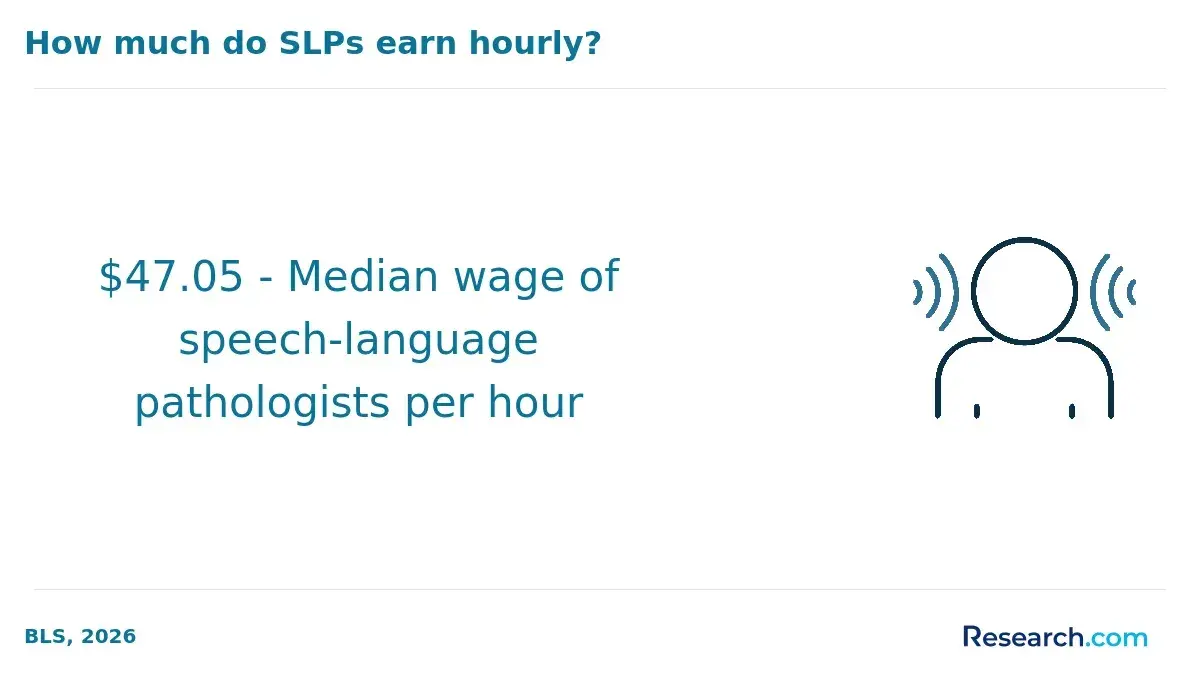
Salary should not be treated as a license-eligibility substitute. The national median annual wage for speech-language pathologists was $97,870 in May 2025, but pay varies by employer, setting, experience, and geography. If location influences your decision, review where do SLPs make the most money alongside each state's licensing and cost-of-living realities.
How do admission requirements, prerequisite coursework, and cohort selectivity compare between the two online programs?
Both programs are graduate professional programs, so applicants should expect a selective review of academic preparation, communication skills, recommendations, personal statement or purpose materials, and readiness for clinical practice. Requirements change, and an applicant should use the program's current admissions page and application instructions as the controlling source.
Students with a bachelor's degree in communication sciences and disorders generally have the most direct path.
Career changers can be competitive, but they frequently need leveling coursework in areas such as phonetics, anatomy and physiology of speech and hearing mechanisms, language development, audiology, speech science, statistics, and introductory communication disorders.
The admissions factors below are more useful than trying to label either program "easy" or "hard" to enter.
| Admissions issue | Emerson College | UW-Eau Claire |
| Relevant undergraduate major | Helpful, but applicants should review current prerequisite and leveling pathways | Helpful, but applicants should review current prerequisite and leveling pathways |
| Prerequisite coursework | Required foundational coursework may be needed before or alongside graduate study | Required foundational coursework may be needed before admission or program start |
| GRE | Confirm the current policy; test requirements can change | Confirm the current policy; test requirements can change |
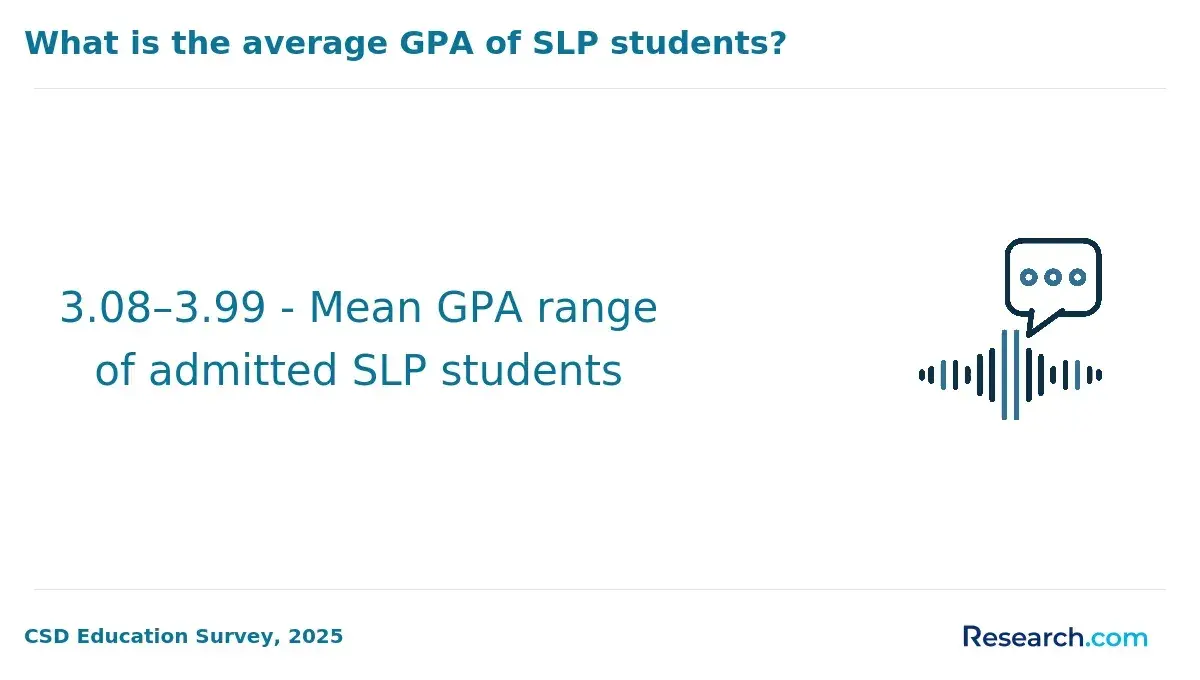
| GPA expectations | Review the current minimum and holistic admissions criteria | Review the current minimum and holistic admissions criteria |
| Interview or communication assessment | May be part of the admissions process depending on current policy | May be part of the admissions process depending on current policy |
Applicants should avoid assuming that a lower-cost public program is less selective or that an accelerated private program is easier to enter. Cohort size, prerequisite completion, application quality, and clinical-readiness evidence can all affect admission outcomes.
Applicants seeking a broader admissions comparison can review easiest SLP programs to get into, while still confirming each program's actual published standards.
A strong application plan starts early: make a prerequisite inventory, identify any missing sciences or CSD foundations, request transcripts well ahead of deadlines, and ask admissions whether courses from your institution will satisfy specific requirements. Do not pay for a sequence of leveling courses until the target program confirms how it will evaluate them.
What are the clinical placement models, supervision structures, and practicum hours for Emerson and UW-Eau Claire?
Clinical education is the part of an online SLP program that most directly shapes schedule risk. Both universities must provide supervised experiences that support CAA standards and prepare students for later certification and state licensure steps.
Programs commonly incorporate observation, simulation, university clinic experiences, and external practicum placements across settings such as schools, hospitals, rehabilitation facilities, early-intervention programs, and outpatient clinics.
ASHA certification standards have traditionally included at least 400 clock hours of supervised clinical experience, including a minimum of 375 hours of direct client/patient contact and 25 hours of guided clinical observation.
Students should confirm how each program documents hours, simulation experiences, direct contact, supervision, and site-specific requirements under the standards applicable to their cohort.
The important distinction is often placement responsibility rather than the total-hour minimum. Emerson and UW-Eau Claire may coordinate or approve placements, but availability depends on affiliation agreements, supervisor supply, local demand, site requirements, and a student's location.
A school's assistance with placement does not necessarily mean a placement is guaranteed within a short commute of the student's home. Ask each program these questions in writing before deciding.
- Does the program secure every required placement, or must students identify sites and contacts themselves?
- What happens if a site withdraws, cannot complete an affiliation agreement, or cannot provide enough hours?
- How far have students in my region typically traveled for placements, and is relocation ever necessary?
- Can I complete practicum at my workplace, and if so, what independence and supervision safeguards apply?
- How are supervisors selected, trained, evaluated, and approved?
- What are the daytime, evening, and weekly-hour expectations during each clinical phase?
A common mistake is accepting a program based on an assurance that it "works with students" on placements. Ask for the written policy, the escalation process if placement is delayed, and whether a delayed placement changes your graduation timeline or tuition obligation.
How do technology platforms, synchronous activities, and student support services differ between these online SLP degrees?
Online SLP education requires more than video lectures. Students typically use a learning-management system, videoconferencing platform, secure clinical documentation tools, digital assessment materials, simulation technology, and remote library resources. Reliable high-speed internet, a current computer, webcam, microphone, and a private space for confidential clinical work are practical necessities.
Emerson's accelerated format can make scheduled activities especially consequential because missed work may be difficult to make up within a compressed course sequence.
UW-Eau Claire's longer curriculum may spread coursework over more time, but students should not assume that it is entirely asynchronous. Required live meetings, group projects, check-ins, skills activities, and clinical supervision may still occur at set times.
Before enrolling, compare support services rather than focusing only on platform names. Ask whether each program provides:
- Orientation to online learning, clinical technology, and accessibility tools.
- Academic advising that understands cohort sequencing and prerequisite issues.
- Clinical-placement staff and a defined contact person for site or supervisor concerns.
- Writing, tutoring, library, disability, counseling, and career services available to distance students.
- Technical support during evenings or weekends if coursework or live sessions occur outside standard business hours.
- Clear policies for recording, attendance, time-zone conflicts, and missed synchronous activities.
For a working adult, the most valuable support is often a precise answer about timing: which classes are live, how often they meet, whether attendance is mandatory, and when clinical placements require daytime hours. Ask for a sample term calendar, not only a general statement that the program is flexible.
For working adults and career changers, which program offers better flexibility, risk profile, and long-term value?
UW-Eau Claire is generally the stronger value candidate for applicants whose top priority is lower published tuition and a longer academic timeline. Emerson is generally the stronger fit for applicants who can manage an intensive full-time sequence, accept a higher educational investment, and place substantial value on reaching graduation sooner.
The better choice depends on your cash flow, work flexibility, location, and ability to complete clinical requirements - not on the online label alone.
For working adults, the key risk is assuming that online coursework makes the entire degree compatible with full-time employment. Both programs may be manageable during some academic periods, but clinical rotations can require daytime availability and may involve travel.
Career changers should also account for the cost and time needed to complete undergraduate prerequisites before graduate enrollment. This final decision guide summarizes which program profile may be more practical.
| If this is your priority | Likely better starting point | Important caution |
| Lower tuition-only estimate | UW-Eau Claire | Add travel, fees, prerequisite, and lost-income costs before deciding. |
| Fastest structured completion route | Emerson | An accelerated schedule can be difficult to combine with full-time work. |
| More time to spread academic coursework | UW-Eau Claire | Clinical phases may still sharply reduce work flexibility. |
| Immediate career change with limited CSD background | Either, after prerequisite review | Confirm exactly which leveling courses are required and when they must be completed. |
| Need to remain in a particular state | Either, only after state verification | Confirm state authorization, licensure disclosure, and local clinical-placement feasibility. |
Use a three-part decision process before applying. First, obtain current written confirmation of tuition, cohort calendar, campus visits, and state eligibility. Second, map every required practicum term against your employment, caregiving, and travel obligations. Third, compare the total amount you expect to borrow with the time value of entering the field sooner.
Neither program guarantees employment or a particular salary. Still, the profession's projected 17% growth from 2025 to 2035 suggests durable demand for qualified SLPs. The best long-term value usually comes from completing a CAA-accredited program that fits your licensure state, allows you to finish without avoidable delays, and does not create unmanageable debt.
Other Things You Should Know About Speech Language Pathology
It may be possible during some coursework periods, but it is often difficult during clinical practicum. Required placements commonly occur during weekday hours and can involve commuting, documentation, and preparation outside patient-contact time. Ask each program for a term-by-term schedule before relying on full-time employment income.
Not always. Applicants from other majors may be considered, but they typically need prerequisite or leveling coursework. The exact courses, grade standards, and deadline for completing them vary by program, so obtain a formal prerequisite review from the university.
Employers generally focus on whether you meet licensing and credentialing requirements, have completed appropriate supervised clinical education, and can perform the role. A CAA-accredited degree and successful completion of state requirements matter more than whether academic courses were delivered online.
Confirm your state's enrollment and licensure status, review your prerequisite transcript, request a current tuition-and-fee estimate, identify required campus travel, and ask how clinical placements are arranged in your region. These steps can prevent costly surprises after admission.
References
- Emerson College Online Master's in Speech Pathology https://speech.emerson.edu/
- Master of Science in Speech-Language Pathology https://www.uwec.edu/academics/programs/graduate/master-science-speech-language-pathology
- U.S. Bureau of Labor Statistics - Speech-Language Pathologists https://www.bls.gov/ooh/healthcare/speech-language-pathologists.htm
- ASHA EdFind - Accredited Speech-Language Pathology Programs https://find.asha.org/ed/
- Audiology and Speech-Language Pathology Interstate Compact https://aslpcompact.com/compact-map/