2027 Best Online Speech Pathology Master's Programs for Residents of Detroit, MI

Co-Founder and Chief Data Scientist

Reviewed by Rhea Paul, PhD
SLP Education & Research Expert
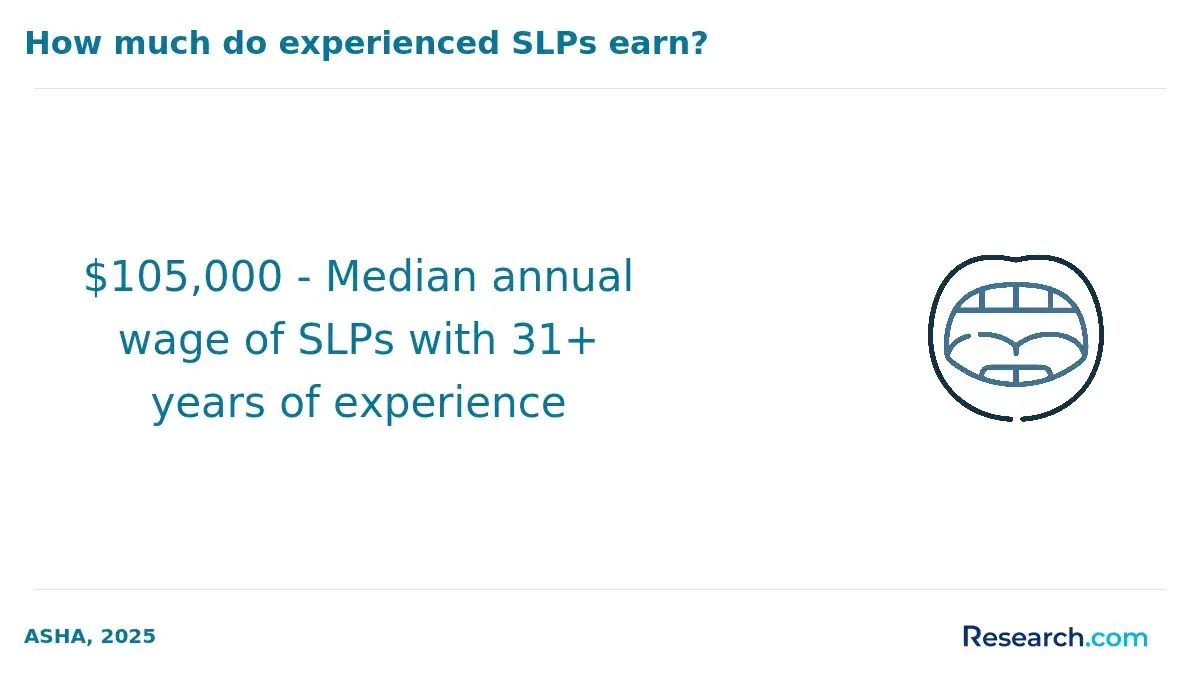
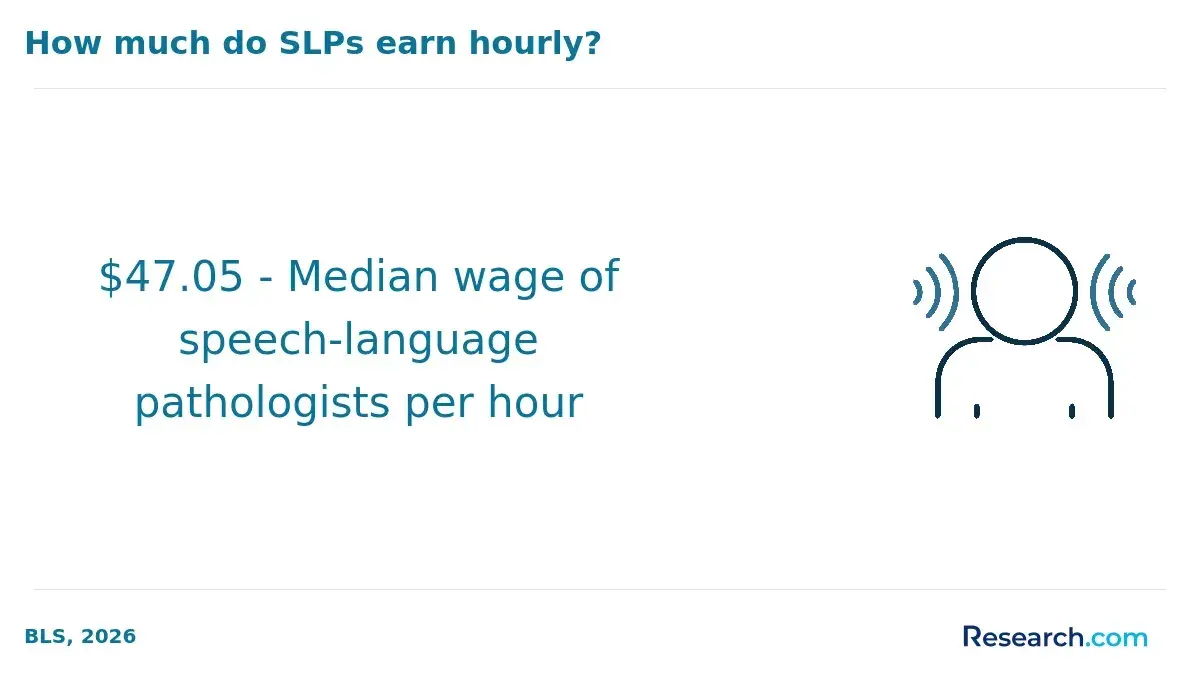
Detroit-area applicants need more than an online master's degree: they need a CAA-accredited speech-language pathology program that accepts Michigan residents, supports supervised clinical education, and fits Michigan licensure rules. The payoff can be substantial: speech-language pathologists had a national median annual wage of $97,870 in May 2025.
This guide compares practical online and hybrid options, explains the clinical-placement and state-authorization questions to ask, and shows how to avoid enrolling in a program that cannot support your intended Michigan career path.
Key Things You Should Know
- For Michigan clinical licensure, prioritize a master's or doctoral SLP program accredited by ASHA's Council on Academic Accreditation (CAA), supervised clinical education that meets required standards, the Praxis examination, and a qualifying clinical fellowship.
- Detroit residents can consider distance programs nationwide, but admission does not prove Michigan licensure eligibility or guarantee a clinical placement in metro Detroit; obtain written confirmation from both the university and prospective placement sites.
- The national outlook remains favorable: the Bureau of Labor Statistics projects 17% growth in SLP employment from 2025 to 2035, with about 12,500 openings annually, but outcomes still depend on licensure, clinical training quality, and local employer needs.
Which online speech pathology master's programs best fit Detroit residents seeking licensure-eligible training?
The best online option is not necessarily the one with the lowest advertised tuition or the fewest campus visits. For a Detroit resident, the strongest fit is a program that is CAA-accredited, expressly enrolls Michigan students, has a workable clinical-placement process, discloses Michigan licensure alignment, and fits your ability to travel for required immersions or placements.
The programs below are notable distance-learning options to investigate. Program availability, state authorization, clinical-site capacity, travel requirements, tuition, and admissions terms can change by cohort, so confirm all items directly with the university before applying.
| Program | Distance-learning model | Decision-relevant strengths | Detroit applicant trade-offs to verify |
| Emerson College - Master of Science in Communication Disorders | Online coursework with required in-person clinical experiences and immersions | Built specifically for distance learners; clinical education is integrated into the curriculum | Michigan enrollment eligibility, current immersion schedule, placement geography, live-session timing, and total tuition |
| New York University - MS in Communicative Sciences and Disorders | Online graduate pathway with hands-on clinical training requirements | Established university-based SLP curriculum and structured clinical education | Required travel, Michigan licensure disclosure, local-placement process, and whether timing works in Eastern Time |
| Baylor University - MS in Communication Sciences and Disorders | Online academic delivery with clinical experiences arranged as part of the program | Distance format designed around graduate SLP preparation and clinical progression | Michigan authorization, travel expectations, placement support, cohort calendar, and full cost |
| Idaho State University - MS in Speech-Language Pathology | Distance or hybrid options may combine online instruction with in-person requirements | May suit applicants open to a hybrid structure and planned travel | Whether the current distance pathway admits Michigan residents, required on-campus attendance, and clinical-site options |
None is universally "best." Emerson or Baylor may appeal to applicants seeking a purpose-built online cohort model; NYU may fit applicants comfortable with a larger university structure and potential travel; Idaho State may suit students willing to consider a more hybrid experience. A local or regional campus-based program can be the better choice when minimizing placement uncertainty matters more than remote coursework.
Before comparing selectivity, review the prerequisites each school expects. Many applicants without a communication sciences and disorders bachelor's degree need leveling coursework first; guides to speech pathology graduate programs can help frame that admissions question, but accreditation and Michigan eligibility should remain nonnegotiable.
How do Michigan and Detroit-specific speech-language pathology licensure rules shape online program choice?
Michigan licenses speech-language pathologists through the Department of Licensing and Regulatory Affairs (LARA). An online degree can support Michigan practice only if the underlying education and clinical training satisfy Michigan requirements. "Online" describes course delivery; it does not reduce the professional standards for graduate education, supervised clinical practice, examinations, or post-graduate fellowship experience.
For most aspiring Michigan SLPs, the practical sequence is a qualifying graduate degree, supervised clinical education, the Praxis examination in speech-language pathology, a clinical fellowship completed under appropriate supervision, and application to LARA. Requirements and application forms can change, so applicants should verify the current rules with LARA before enrolling and again before applying for licensure.
The following distinction helps prevent a costly misunderstanding.
| Credential or requirement | Why it matters in Michigan | What an online applicant should confirm |
| CAA-accredited graduate program | Supports nationally recognized academic and clinical preparation and is central to CCC-SLP eligibility | Current CAA status for the exact degree and campus/distance pathway, not merely the university |
| Graduate clinical practicum | Builds the supervised hours and competencies needed before fellowship and licensure | How sites are approved, who supervises, whether Michigan sites are feasible, and whether travel may be required |
| Praxis examination | Typically required for professional credentialing and licensure pathways | Program completion timing and support for exam preparation; do not assume a degree alone satisfies this step |
| Clinical fellowship | Provides supervised post-graduate professional experience | Whether prospective Michigan employers hire fellows and can provide qualifying supervision |
| ASHA CCC-SLP | Often preferred or required by employers and supports portability, though it is distinct from state licensure | That the program's curriculum and clinical recordkeeping support CCC-SLP application requirements |
Detroit applicants should also separate healthcare licensure from school employment. A hospital, outpatient clinic, early-intervention provider, and public school district can have different hiring processes and credential expectations. If your goal is Detroit Public Schools Community District or another Michigan school system, confirm the relevant Michigan Department of Education credential requirements before selecting a program.
Which accredited online SLP master's programs accept Detroit students and meet ASHA CCC-SLP requirements?
A CAA-accredited graduate program is the safest starting point for an applicant who wants eligibility for ASHA's Certificate of Clinical Competence in Speech-Language Pathology (CCC-SLP). ASHA certification also requires successful completion of the Praxis examination and a clinical fellowship, so no master's program by itself "meets" every CCC-SLP requirement at graduation.
Emerson College, New York University, Baylor University, and Idaho State University are examples of institutions with graduate SLP pathways that warrant direct review by Michigan applicants. The critical verification is not a school's general reputation: it is the current CAA listing and whether the particular distance-delivery pathway is available to a Michigan resident for the intended start term.
CAA standards for entry-level SLP preparation include at least 400 supervised clinical practicum hours, including at least 375 direct client-contact hours. That floor is important because it explains why legitimate online SLP degrees still require extensive in-person clinical work. A program that implies you can become an SLP entirely from home without supervised client contact should be treated as a major red flag.
Use the following questions in writing with every admissions representative. They identify whether an advertised online program is genuinely viable for a Detroit-based student.
- Is the exact master's pathway currently CAA-accredited, and does that status apply to the distance-learning format?
- May a resident of Michigan enroll in the cohort beginning in my intended term under current state-authorization rules?
- Does the institution state that its curriculum meets, or is designed to meet, Michigan professional licensure educational requirements?
- Who identifies, contracts with, and approves practicum and externship sites, and what happens if a Detroit-area placement cannot be secured on schedule?
- How many campus immersions are mandatory, where are they held, and what travel, housing, and technology expenses are not included in tuition?
Applicants who want a compressed timeline should be cautious about marketing language. An accelerated speech-language pathology program can reduce calendar time only when prerequisite completion, course sequencing, clinical availability, and personal workload all align; it cannot eliminate required competencies or supervised experiences.
What institutional and programmatic accreditations must an online speech pathology degree have for Michigan practice?
Two forms of quality assurance matter, but they serve different purposes. Institutional accreditation evaluates the university as a whole. Programmatic accreditation evaluates the professional SLP degree itself. For Michigan clinical practice and ASHA certification planning, programmatic accreditation through ASHA's Council on Academic Accreditation is the credential that deserves the closest attention.
| Type of review | What it evaluates | Why a Detroit applicant should care |
| Institutional accreditation | The university's overall academic and administrative quality | Can affect federal financial aid, credit recognition, and general degree legitimacy |
| CAA programmatic accreditation | The graduate SLP program's curriculum, faculty, assessment, clinical education, and outcomes | Supports the educational foundation typically expected for CCC-SLP and state licensure pathways |
| CAA candidate status | A developing program progressing through the accreditation process | Requires extra scrutiny because eligibility and protections depend on the program's specific status and graduating cohort |
Do not rely solely on a university webpage that says "accredited." Confirm the status of the exact program through ASHA's CAA directory and ask the school to clarify whether any accreditation change could affect your cohort. Candidates should also ask how the university will communicate a status change and what records it will provide for future Michigan licensure and CCC-SLP applications.
A degree from an institution with general accreditation but without the relevant CAA program approval may not provide the straightforward professional path most Michigan-bound applicants need. This is one situation where a lower tuition figure can become an expensive false economy.
How do clinical practicum and internship placements work for Detroit-based students in distance SLP programs?
Distance SLP programs typically deliver academic courses online but require students to complete clinical practicum and later externship-style experiences in person. Schools may have a centralized clinical-placement team, ask students to help identify possible sites, or use a shared model. The exact model matters because no program can ethically promise a specific Detroit hospital, school, or clinic unless a placement agreement and capacity already exist.
Placement availability is often the biggest operational risk in an online SLP degree. Metro Detroit offers diverse potential settings, including schools, medical centers, rehabilitation providers, private practices, and early-intervention services, but sites must have qualified supervisors, adequate caseloads, affiliation agreements, and capacity for students at the required time.
Before accepting an offer, get clear answers about the following practical issues.
- Whether the program guarantees a placement, assists with placement, or requires students to secure their own sites.
- Whether the school already has active affiliation agreements in Michigan or within commuting distance of Detroit.
- Whether a site can be outside Detroit or Michigan if local capacity is limited, and who pays related travel or temporary housing costs.
- Whether daytime availability is required, since many clinical experiences conflict with standard full-time work schedules.
- How the program verifies supervisor credentials, records hours, addresses a failed placement, and handles a delayed clinical sequence.
Clinical education should be evaluated as carefully as tuition. A program with more predictable placement administration may be worth a higher price if it reduces the risk of delayed graduation, unexpected travel, or lost income from extending your studies.
Which online speech pathology programs most reliably support Michigan educator certification and school-based practice?
For school-based practice, choose a program that can document more than general clinical competence. Michigan school employers may require state school credentialing in addition to professional SLP licensure, and requirements can differ between public schools, charter schools, early-intervention programs, and private employers. The Michigan Department of Education, not the university alone, determines state educator credential rules.
A program is more likely to be a strong school-practice fit when it includes pediatric and school-age clinical experiences, gives students access to school-based practicum where appropriate, and has staff who can explain Michigan-specific documentation. However, do not assume that a CAA-accredited online master's automatically confers a Michigan school credential.
Ask a prospective program to explain its support in the following areas before you enroll.
- Whether the curriculum and clinical records support Michigan school speech-language pathologist credential applications.
- Whether the program can arrange or approve a school-based placement in Michigan when that experience is needed.
- Whether faculty can identify additional state coursework, testing, background checks, or application steps that may apply.
- Whether the school provides an institutional recommendation or verification letter for Michigan education credentialing.
Applicants focused primarily on K-12 work should compare online programs with Michigan-based campus or hybrid options. A local option may offer clearer relationships with area districts, while a national online program may offer greater academic scheduling flexibility. The better choice depends on whether predictable local school placement or remote course delivery is your higher priority.
How can Detroit applicants verify that an online SLP program complies with Michigan state authorization rules?
State authorization concerns whether an out-of-state institution is permitted to deliver distance education to a Michigan resident. It is separate from CAA accreditation and separate from professional licensure. A school can be academically credible yet be unable to enroll students from a particular state or may limit enrollment in programs leading to licensure.
Detroit applicants should complete a written verification process before paying a deposit. This protects against relying on outdated program webpages or informal verbal assurances.
- Find the university's professional-licensure disclosure for the exact MS or MA SLP program.
- Confirm that Michigan is listed as an eligible state for your intended start term and delivery format.
- Ask admissions to confirm in writing that the university may enroll a Michigan resident and that no location-based restriction applies to clinical education.
- Request the school's statement on whether the curriculum meets Michigan educational requirements for SLP licensure and, if applicable, school-based credentials.
- Independently review current Michigan LARA requirements and retain copies of the school's disclosures, catalog, clinical handbook, and email confirmation.
If the school says it has "not determined" whether the program meets Michigan requirements, treat that as unresolved rather than equivalent to approval. Ask whether the school will provide course descriptions, clinical-hour documentation, and other records needed for an individual state review. If it cannot answer, another program with a clear Michigan disclosure is usually the lower-risk choice.
What should Detroit residents know about tuition, fees, and residency-based pricing for online SLP degrees?
Online SLP tuition is often charged at a single program rate rather than traditional in-state and out-of-state rates, but that is not universal. Private institutions commonly use one rate for all students, while public universities may use resident, nonresident, online, or graduate-professional rates. Detroit residency alone does not guarantee Michigan resident pricing at an out-of-state institution.
Compare total cost rather than a single per-credit price. Mandatory fees, clinical compliance costs, background checks, immunizations, technology, textbooks, supplies, travel to immersions, and travel to placements can materially change the amount you actually pay. Lost wages during daytime clinical rotations may be an equally important budget issue.
| Cost category | Why advertised tuition can miss it | Question to ask |
| Tuition | May be quoted per credit, per term, or as a cohort estimate | What is the tuition for all required credits based on my anticipated start term? |
| University and program fees | May be charged each term or tied to distance learning, technology, or clinical courses | Which mandatory fees are excluded from the tuition figure? |
| Clinical compliance expenses | Often paid by the student before placements begin | What are the expected costs for screenings, insurance, clearances, and required equipment? |
| Travel and lodging | Online programs may require immersions or out-of-area clinical placements | How many trips are required, and what costs should I budget beyond tuition? |
| Time away from work | Clinical schedules may occur during business hours | When do full-time clinical commitments begin, and can they be completed part time? |
Federal financial aid may be available to eligible students at qualifying institutions, but borrowing decisions should be based on the full program budget and a conservative earnings plan. The national median pay for SLPs was $97,870 in May 2025, yet individual compensation varies by setting, experience, employer, and location. Review realistic career paths and speech pathologist salary with a master's degree information without treating national figures as a personal earnings guarantee.
How do online SLP program outcomes - praxis pass rates, graduation, and employment - compare for Michigan-bound students?
Outcome data can help distinguish an established program from one that simply markets flexibility. CAA-accredited programs report student outcome information, commonly including program completion, Praxis pass rates, and employment rates. These measures are useful, but only when you compare the same reporting period and definitions across programs.
A strong outcome review asks whether students finish on time, pass the Praxis within the reported window, and find work after graduation. For a Michigan-bound student, add two local questions: whether graduates have successfully pursued Michigan licensure and whether the program can document clinical placements or alumni employment in Michigan. A high national employment rate does not prove local placement access.
Use this interpretation guide when schools publish outcomes.
| Reported measure | What it can indicate | Limitation to keep in mind |
| Graduation or completion rate | Whether students generally progress through the curriculum | May not reveal delays caused by clinical-placement availability or distinguish part-time students |
| Praxis pass rate | How graduates perform on a key professional examination | Small cohorts can make annual results volatile; confirm the reporting period and denominator |
| Employment rate | Whether graduates report employment after graduation | Definitions, response rates, job settings, and geography may differ by school |
| Attrition information | Potential student-support or workload concerns | Ask for context rather than assuming every withdrawal reflects academic difficulty |
The BLS projection of 17% employment growth from 2025 to 2035 supports a favorable national demand picture, but it should not replace program-specific due diligence. The right program is one with transparent outcomes, a viable Michigan clinical plan, and a total cost that matches your financial capacity.
What consumer-protection steps should Detroit applicants take when vetting online speech pathology master's programs?
The most common mistake is treating an online program's marketing page as proof of professional eligibility. Protect yourself by collecting official answers before you commit, especially when a degree leads to a regulated health profession.
These steps create a practical enrollment record and expose unresolved issues early.
- Verify current CAA accreditation for the exact degree through ASHA's official accreditation listings.
- Read the university's Michigan professional-licensure disclosure and ask for written confirmation of Michigan enrollment eligibility.
- Request a complete cost-of-attendance estimate that includes required fees, clinical compliance costs, expected travel, and repeat-course policies.
- Read the clinical handbook before depositing; focus on placement responsibility, travel expectations, remediation, dismissal, and delay policies.
- Compare published completion, Praxis, and employment outcomes using the same reporting period across schools.
- Ask whether the program has recent experience placing students in Michigan, while recognizing that past placements do not guarantee yours.
- Keep copies of the catalog, disclosure, financial-aid offer, placement communications, and every representation that affected your decision.
Red flags include vague answers about Michigan eligibility, claims that all clinical work can be completed remotely, pressure to enroll before receiving a clinical-placement explanation, and tuition quotes that omit mandatory costs. A program that cannot clearly distinguish accreditation, authorization, licensure, certification, and placement support is not giving you enough information for a high-stakes decision.
For a broader cost-focused comparison, review online speech pathology programs alongside each school's official tuition and clinical-training policies. Affordability is meaningful only after the program clears the accreditation, Michigan eligibility, and placement-support screens.
Other Things You Should Know About Speech Language Pathology
You can complete online coursework through a qualifying distance program, but SLP preparation cannot be entirely virtual. You must complete in-person supervised clinical education, meet Michigan licensing requirements, pass the required examination, and complete the applicable clinical fellowship pathway.
Not always. Many programs accept applicants from other majors, but they often require prerequisite or leveling coursework in areas such as phonetics, language development, anatomy, audiology, and speech science. Confirm the exact prerequisite list and whether courses must be completed before enrollment.
It depends on the program. Some schools coordinate placements, some provide support while students help identify sites, and others place more responsibility on the student. Ask for the placement policy in writing and do not assume a Detroit placement is guaranteed.
Timing varies with the program's course and clinical sequence, examination timing, and clinical fellowship employment. A master's degree is only one stage; applicants should plan for post-graduate supervised fellowship requirements and the Michigan licensing application process before independent practice.
References
- Master of Arts in Speech-Language Pathology https://clas.wayne.edu/csd/grad/ma
- Best Online Master's in Speech Pathology (SLP) Programs https://www.onlinemastersdegrees.org/best-programs/speech-language-pathology-slp/
- 2026 Most Affordable Online Speech Pathology Master's... https://www.onlineu.com/most-affordable-colleges/speech-pathology-masters-degrees
- Best Online Speech Pathology Programs https://www.forbes.com/advisor/education/healthcare/best-speech-pathology-programs-online/