2027 Best Online Speech Pathology Master's Programs for Residents of Spokane, WA

Co-Founder and Chief Data Scientist

Reviewed by Rhea Paul, PhD
SLP Education & Research Expert
Spokane residents can pursue an online speech-language pathology master's degree without relocating, but "online" does not eliminate clinical, travel, accreditation, or Washington licensure requirements. The right choice depends on whether a program can enroll Washington students, arrange appropriate supervised placements, and support the route to ASHA certification and state licensure. This guide compares the factors that matter most: program authorization, CAA accreditation, clinical training, timing, cost, prerequisites, and career preparation.
Key Things You Should Know
- Choose only a program with current ASHA Council on Academic Accreditation recognition and written confirmation that it can enroll Washington residents; online delivery alone does not establish Washington licensure eligibility.
- Expect substantial in-person training: entry-level SLP master's programs generally include at least 400 supervised clinical practicum hours, followed by a post-graduate Clinical Fellowship for ASHA CCC-SLP certification.
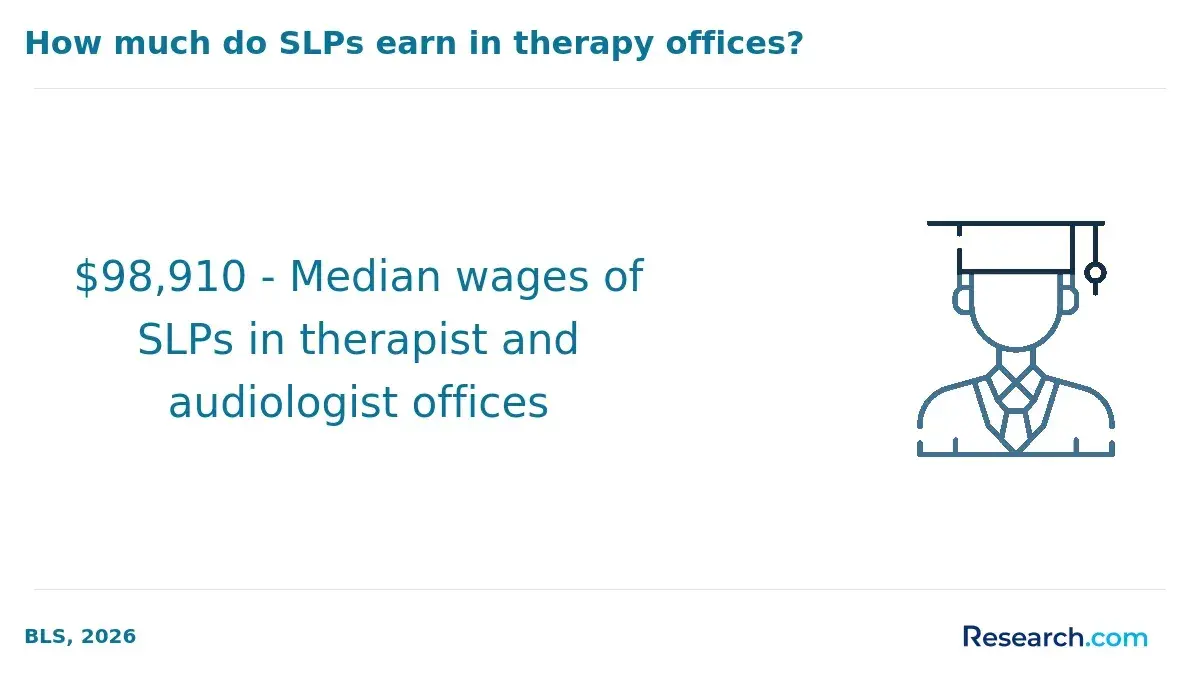
- Speech-language pathology remains a high-demand field: the U.S. Bureau of Labor Statistics projects 17% employment growth from 2025 to 2035, with median annual pay of $97,870 in May 2025.
Which online speech pathology master's programs enroll Spokane residents and accept Washington licensure candidates?
The strongest options for Spokane applicants are not necessarily the closest universities. A suitable program must be CAA-accredited or appropriately recognized, authorized to teach students located in Washington, and willing to provide clear Washington professional-licensure disclosures. Applicants should obtain those confirmations in writing for the term in which they intend to begin.
The programs below are widely known for distance or hybrid graduate SLP delivery, but availability, state authorization, cohorts, and disclosure language can change. Treat this as a comparison starting point rather than a substitute for a school's current written eligibility review.
| Program | Delivery model | Spokane-relevant strengths | Important trade-off to verify |
| Emerson College | Online MS in Speech-Language Pathology with required in-person clinical education and residencies | Established online cohort model and structured clinical-placement support | Residency travel, Washington eligibility, placement availability, and full-time versus part-time pacing |
| New York University | Online MS in Communicative Sciences and Disorders with immersions and local clinical placements | National online format designed for students outside New York | Required immersion travel, Washington licensure disclosure, and total private-university cost |
| Baylor University | Online MS in Communication Sciences and Disorders with clinical experiences and required on-campus components | Cohort-based online pathway with clinical education support | Washington authorization, travel schedule, prerequisite fit, and site availability |
| University of St. Augustine for Health Sciences | Online/hybrid MS-SLP format with clinical education requirements | Health-professions-focused delivery model and multiple start opportunities may appeal to career changers | Current CAA status, Washington disclosures, campus requirements, and clinical-placement process |
For a Spokane applicant, "best" means the program that provides documented eligibility and a workable clinical plan, not simply the program with the lowest advertised tuition or fewest online class hours. A lower-cost option becomes less economical if repeated travel, delayed placements, or out-of-state licensure complications extend the timeline.
How do Washington and Idaho licensure rules shape online speech-language pathology program choices for Spokane students?
Spokane sits near the Idaho border, so some students may consider clinical education or employment in either state. Washington and Idaho each regulate speech-language pathology licensure separately. A degree that supports one state's requirements does not automatically establish eligibility in the other, although an accredited graduate degree and ASHA-aligned preparation are valuable foundations in both states.
Washington applicants should plan around the Washington Department of Health's requirements for graduate education, supervised clinical experience, examination, and post-graduate professional experience. Idaho applicants should separately review the Idaho licensing board's requirements before accepting an Idaho placement or planning to work there after graduation.
This comparison shows why state-specific verification matters before an applicant deposits.
| Decision area | Washington planning question | Idaho planning question |
| Graduate degree | Does the program's CAA status and curriculum support Washington's education requirement? | Does the program meet Idaho's graduate education standard for SLP licensure? |
| Clinical practicum | Can the program secure or approve supervised sites that meet its standards and Washington practice rules? | Will an Idaho site, supervisor, and school arrangement be approved before placement begins? |
| Post-graduate experience | What supervised experience is required after graduation before independent practice? | What fellowship or supervised practice documentation is required for Idaho licensure? |
| Exam and certification | When should the Praxis examination be completed for state and ASHA timelines? | Are there separate Idaho application, examination, or documentation steps? |
A common mistake is assuming a Spokane-addressed clinical placement can be arranged across the border without additional approval. Students should tell each school early if they may seek a placement in Idaho, because site contracts, supervisor credentials, university authorization, and state rules may affect whether that plan is feasible.
Which accredited online speech pathology programs offer Spokane residents the fastest path to ASHA CCC-SLP?
The fastest credible route is usually a full-time CAA-accredited master's program that accepts a student's prior coursework and has the capacity to schedule clinical training without delays. Completion speed should not be measured only by academic terms. Required residencies, clinical placements, Praxis timing, graduation processing, and the Clinical Fellowship all affect the time to CCC-SLP eligibility.
Many online entry-level SLP programs use a cohort sequence of roughly five to nine terms, depending on full-time or part-time enrollment. Full-time study may shorten coursework, but it can be difficult to combine with full-time employment because clinical placements commonly occur during weekday business hours. Applicants considering accelerated speech pathology programs online should distinguish an accelerated schedule from a reduced clinical requirement; accredited programs cannot simply omit required professional preparation.
The practical timeline below helps Spokane residents evaluate "fastest" claims.
| Stage | What determines timing | Potential Spokane planning issue |
| Prerequisite completion | Prior CSD coursework, grades, and school-specific leveling rules | Applicants from unrelated majors may need one or more terms before entering the graduate sequence |
| Graduate coursework | Full-time or part-time cohort plan and required synchronous attendance | Pacific Time scheduling and work commitments can affect feasibility |
| Clinical practicum | Site availability, supervisor capacity, university approvals, and student readiness | Local placement is not guaranteed; commuting or temporary travel may be necessary |
| Praxis and graduation | Program testing milestones and degree conferral schedule | Confirm whether the program includes structured Praxis preparation |
| Clinical Fellowship | Employer hiring cycle, supervisor availability, and state credentialing timeline | Begin searching before graduation, especially if remaining in the Inland Northwest |
A shorter academic program is best for applicants with complete prerequisites, flexible daytime availability, and a realistic travel budget. A part-time pathway may be a better overall choice for working adults if it reduces the risk of withdrawing or postponing clinical education.
What accreditation and ASHA CAA recognition should Spokane applicants verify before choosing an online SLP program?
CAA accreditation is the most important quality and licensure-screening factor for an entry-level SLP master's degree. The Council on Academic Accreditation in Audiology and Speech-Language Pathology is ASHA's specialized accreditor for graduate education programs. A school's general institutional accreditation is not the same thing as CAA accreditation.
Before applying, distinguish among these status descriptions. They have materially different implications for risk, portability, and timing.
| Status to review | What it means | How Spokane applicants should respond |
| CAA accredited | The program has current accreditation from the specialized accreditor | Confirm the exact degree track, campus or online modality, and enrollment term are covered |
| CAA candidacy or developing status | The program may be progressing through review but does not have the same status as a fully accredited program | Request written explanation of the status, anticipated timing, student protections, and Washington licensure implications |
| Institutionally accredited only | The university is recognized institutionally, but the SLP graduate program may not hold CAA recognition | Do not assume it supports ASHA certification or Washington SLP licensure; seek board guidance before applying |
| Program no longer enrolling Washington students | State authorization or institutional policy limits participation by Washington residents | Remove it from consideration unless the school confirms your physical location is eligible |
Also ask whether the curriculum meets ASHA's current certification standards for the specific cohort. ASHA CCC-SLP certification generally involves a qualifying graduate degree, required knowledge and skills, a passing Praxis score, and a supervised Clinical Fellowship. Certification is distinct from state licensure, but the two processes are closely connected in employer expectations and interstate mobility.
Red flags include vague answers about accreditation, statements that a school is "working toward" approval without explaining student protections, and assurances that the degree is "nationally accepted" without a Washington-specific disclosure. Do not rely on a recruiter's verbal statement when a written disclosure, catalog language, or licensure office response is available.
How do top online speech pathology programs differ in clinical placements near Spokane and the Inland Northwest?
Clinical education is the least "online" part of an online SLP master's degree. Programs may identify sites, maintain affiliation agreements, approve student-suggested locations, or use a combination of these approaches. None of these models means a Spokane placement is guaranteed in a given term.
Applicants should compare clinical-placement policies rather than assuming every program offers the same local access.
| Clinical model | What the university typically does | Best fit | Main risk |
| University-coordinated placement | Works to identify and approve sites from its network | Students who want significant administrative support | Location, commute, and timing may be outside the student's control |
| Student-assisted placement search | Allows students to suggest sites while the school handles approval and contracts | Students with strong local professional connections | A suggested site may lack capacity, an eligible supervisor, or a completed agreement |
| Hybrid placement approach | Uses university support while permitting local leads | Students seeking flexibility without full responsibility | Responsibilities can be unclear unless documented before enrollment |
| Centralized campus clinic plus external placements | Requires some training at or near the university before external practicum | Students who can travel and value direct faculty observation | Higher travel, lodging, and time-away-from-work costs |
Ask each admissions or clinical education office whether students are responsible for finding sites, whether placements may occur outside Spokane, how many in-person clinical experiences are required, and what happens if a site falls through. Also ask whether the program can use school districts, hospitals, rehabilitation facilities, early-intervention programs, skilled nursing settings, or private practices in the Inland Northwest.
For students who need to remain employed, the key question is not simply whether clinical work is local. It is whether the placement schedule can accommodate employment. Most supervised clinical experiences require availability during the operating hours of the site, which often means weekday daytime participation.
Which online SLP master's programs are authorized to enroll students physically living in Spokane, WA?
State authorization concerns where the student is physically located while enrolled, not where the university is based. A school may operate online nationally yet restrict enrollment in selected states because of authorization, professional licensure, or institutional policy. Spokane residents should verify Washington eligibility before paying an application fee or accepting admission.
Request a written response that addresses all of the following points. This documentation is especially useful if state rules or university policies change later.
- State that you will be physically residing in Spokane, Washington, during online coursework and ask whether the specific SLP master's track may enroll Washington students.
- Ask whether the program's published curriculum is designed to meet Washington educational requirements for SLP licensure and request the current professional licensure disclosure.
- Confirm that required clinical practicum may be completed in Washington and ask whether Idaho placements are possible if you may use a cross-border site.
- Identify every required immersion, simulation, residency, orientation, or campus visit and request expected dates before committing.
- Ask whether a change in residence during the program would require a new authorization or affect clinical placement eligibility.
Do not confuse authorization with accreditation. Authorization determines whether the school can enroll you where you live; CAA recognition addresses specialized program quality; licensure eligibility depends on the interaction of your education, supervised practice, examination, and the state board's current rules. All three require confirmation.
How do tuition, fees, and cost-of-living compare for Spokane residents attending leading online speech pathology programs?
Online SLP tuition is often charged by credit rather than by a local in-state rate, particularly at private institutions. That means a Spokane resident should compare the complete degree budget rather than assume an online program is automatically less expensive than a campus program. Start with tuition for all required graduate credits, then add mandatory fees, travel, clinical costs, and income effects.
For applicants prioritizing affordability, this guide to online speech pathology masters can help identify programs worth investigating, but current school-specific cost sheets remain essential because charges and residency requirements change.
Use this budget framework when collecting official financial-aid estimates.
| Cost category | Why it varies for online SLP students | How to compare it fairly |
| Tuition | Programs may bill per credit, per term, or by cohort price | Calculate required credits multiplied by the current applicable rate; do not compare a per-credit figure with another school's full-program figure |
| University fees | Technology, clinical, graduation, health, and student-service charges vary | Ask for a term-by-term mandatory-fee estimate |
| Travel and lodging | Residencies, intensives, and distant placements can require flights, hotels, meals, and local transport | Price each required trip separately and include possible repeat travel |
| Clinical expenses | Background checks, immunizations, drug screening, liability coverage, attire, and commuting may be required | Request the program's clinical education cost checklist |
| Lost earnings | Daytime practicum may reduce work hours | Build a personal cash-flow plan, not just a tuition estimate |
Spokane's cost of living can make remaining local attractive, but that advantage can narrow if a program requires multiple distant intensives. Conversely, an initially higher-tuition program may be worth consideration if it offers a reliable placement process that avoids relocation or delayed graduation. Federal financial aid eligibility, scholarships, employer assistance, and loan terms should be reviewed with each school's financial-aid office before borrowing.
What prerequisite coursework and GPA do competitive online speech pathology programs require from Spokane-area applicants?
Competitive entry-level SLP master's programs usually expect a bachelor's degree plus foundational communication sciences and disorders coursework. Requirements differ substantially: one school may accept applicants from any major with specified prerequisites, while another expects a full undergraduate CSD sequence. Minimum GPA is not the same as a competitive GPA, and schools may calculate prerequisite GPA separately from cumulative GPA.
Common prerequisites often cover the following academic areas, but applicants must match each course to the receiving program's descriptions rather than relying on course titles alone.
- Anatomy and physiology of speech, hearing, and swallowing mechanisms.
- Speech and language development across the lifespan.
- Phonetics, speech science, and hearing science.
- Audiology and aural rehabilitation foundations.
- Language disorders, speech sound disorders, and clinical observation or introduction to clinical practice.
- Statistics and ASHA-required foundational content in biological sciences, physical sciences, social and behavioral sciences, and statistics.
Career changers should confirm whether they need post-baccalaureate leveling before applying or whether a program integrates prerequisites into its graduate sequence. Integrated leveling can simplify admissions, but it often lengthens the total timeline and increases cost. Students who are still early in college may also consider 5-year accelerated speech pathology programs, although these combined pathways are typically designed for students entering at the undergraduate level rather than adults who already hold unrelated degrees.
Before submitting CSDCAS or a university application, create a course-by-course audit and ask admissions to identify gaps in writing. Do not spend money on extra courses until the target program confirms they will meet its requirements. This prevents a common and expensive mistake: completing general "speech pathology prerequisites" that do not satisfy a particular school's content categories.
How do online SLP programs support Spokane students with Praxis prep, CFY placement, and early career outcomes?
A quality online SLP program should provide more than recorded lectures. Spokane students benefit from structured Praxis preparation, responsive clinical faculty, career advising, and practical support as they transition into a Clinical Fellowship. Ask what is included rather than assuming all online programs provide the same level of support.
The national employment outlook supports careful investment in professional preparation. The Bureau of Labor Statistics projects 17% growth in speech-language pathology employment from 2025 to 2035 and estimates about 12,500 openings per year on average over that period. Those figures signal demand, but they do not guarantee a Spokane job, a particular setting, or a particular wage. Local employer needs, school-year hiring cycles, medical experience, and licensure timing still matter.
As you compare return on investment, review broader career-setting and compensation context in how much do speech pathologists make. The national median annual wage was $97,870 in May 2025, but individual earnings vary by setting, experience, location, and employer.
Ask programs for specific answers about the supports below before enrolling.
- Whether Praxis preparation is embedded in coursework, offered through workshops, or left entirely to students.
- Whether the school tracks graduate Praxis outcomes and will explain how those outcomes are calculated.
- Whether career services assist with resumes, interviews, job boards, and Clinical Fellowship searches in Washington.
- Whether faculty advise students on ASHA certification and Washington license application timing.
- Whether alumni or employer connections include school districts, medical systems, rehabilitation providers, or early-intervention employers in the Inland Northwest.
AI-enabled documentation tools, telepractice platforms, and speech-analysis technology are increasingly part of healthcare and education workflows, but they do not replace clinical judgment, supervision, privacy compliance, or the licensed SLP's responsibility. Applicants should favor programs that teach ethical technology use alongside core assessment and intervention skills.
What steps should Spokane residents follow to verify program status, authorization, and licensure alignment before enrolling?
Use a written verification process before accepting an offer. It protects you from discovering too late that a program cannot enroll Washington residents, cannot support your intended placement location, or does not align with your licensure plan.
Complete these steps in order so that cost and scheduling decisions are based on confirmed eligibility rather than marketing language.
- Confirm the program's current CAA accreditation status through ASHA's official program directory and verify that the exact online or hybrid track is included.
- Read the university's Washington professional licensure disclosure and request written confirmation that students physically located in Spokane may enroll in your intended start term.
- Review Washington Department of Health SLP licensure requirements and compare them with the program's curriculum, clinical-hour plan, Praxis support, and post-graduate guidance.
- If you may complete practicum or work in Idaho, separately review Idaho requirements and ask the university whether it can approve Idaho sites and supervisors.
- Obtain a written list of required campus visits, likely travel windows, clinical placement responsibilities, and circumstances in which a student may need to travel outside Spokane.
- Request a full cost-of-attendance estimate that separates tuition, mandatory fees, travel, clinical compliance costs, and expected living expenses.
- Ask admissions to evaluate your transcript for prerequisite gaps and clarify whether your GPA meets both the published minimum and the program's usual competitive range.
- Save copies of disclosures, emails, curriculum plans, and cost estimates with the date received, policies can change between application and enrollment.
The most frequent avoidable error is enrolling after receiving only a general assurance that a degree is "online" or "ASHA-aligned." The safer standard is documented confirmation of accreditation, Washington enrollment authorization, licensure alignment, clinical-placement expectations, and total cost.
Other Things You Should Know About Speech Language Pathology
Yes, if the degree is from an appropriately CAA-accredited program, includes required supervised clinical education, and supports the education and examination requirements of the state where you seek licensure. Online coursework does not eliminate in-person clinical practicum, residencies, or the post-graduate Clinical Fellowship.
Some programs offer part-time coursework, but clinical placements commonly require weekday daytime availability. Ask for a sample clinical sequence and expected hours before assuming that full-time employment will remain practical throughout the degree.
Living in Spokane may make local or regional sites possible, but it does not guarantee them. The university, clinical site, supervisor availability, affiliation agreement, and your readiness for placement all affect the assignment.
Washington licensure requirements are set by the Washington Department of Health, not ASHA. However, CCC-SLP certification is widely recognized by employers and can support professional mobility. Review state licensure rules and employer requirements separately.
References
- M.S. in Speech-Language Pathology https://www.yu.edu/katz/slp
- 2026 Most Affordable Online Speech Pathology Master's... https://www.onlineu.com/most-affordable-colleges/speech-pathology-masters-degrees
- Best Speech-Language Pathology Programs in America https://www.usnews.com/best-graduate-schools/top-health-schools/pathology-rankings
- Online Master's in Speech Pathology Programs: 2026 Guide https://speechpathologymastersprograms.com/
- Premier Online Speech Pathology Master's Degrees https://resources.noodle.com/articles/best-online-masters-programs-for-speech-and-language-pathology/